
Overnight Seeded Sourdough Bread

Overnight seeded sourdough bread gives you a crackling crust and a soft, open crumb dotted with crunchy seeds. It’s the loaf I reach for when I want something hearty and reliable without spending the whole day babysitting dough.
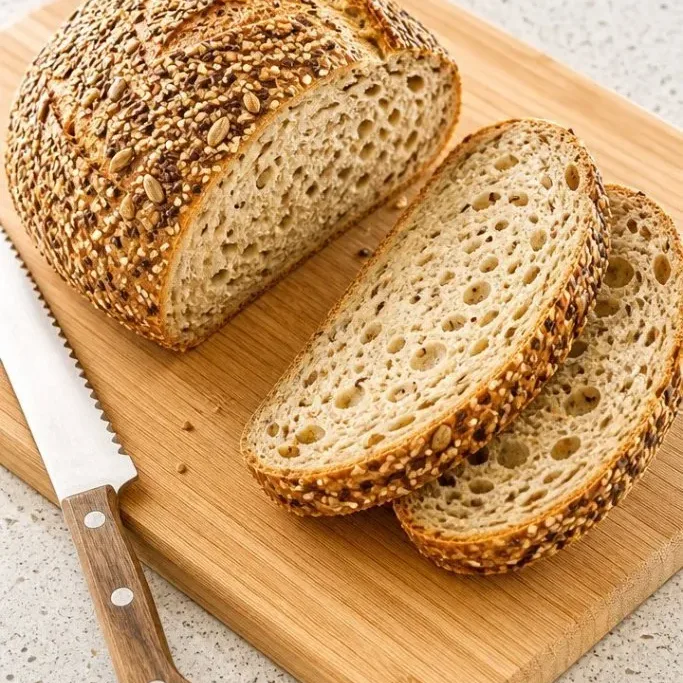
A long cold ferment builds tangy flavor and makes the dough easy to handle. The mix of sesame, sunflower, and flax seeds adds nuttiness and a satisfying crunch in every bite.
Why This Seeded Sourdough Works So Well
The dough is forgiving. Even if you’re new to sourdough, the cold overnight proof gives you a wide window for shaping and baking. The loaf springs tall and the crust crackles as it cools.
The seeds do double duty. A handful worked into the dough adds flavor and bite, while the ones pressed onto the outside toast against the hot Dutch oven and turn deeply nutty. It’s a simple change that makes every slice feel special.
Ingredients

- 500 g bread flour: high protein for the best oven spring and chew
- 50 g whole wheat flour: adds a subtle nutty depth and feeds the starter
- 400 g water, room temperature: use filtered if your tap water is heavily chlorinated
- 100 g active sourdough starter: fed 8 to 12 hours before, bubbly and doubled
- 10 g fine sea salt
- 20 g sesame seeds: plus extra for coating the crust
- 20 g sunflower seeds: raw, unsalted
- 20 g flax seeds: brown or golden, for a chewy crunch
- Mixed seeds for the crust: about 2 tablespoons (the same seed blend or mostly sesame)
Variations / Substitutions
- Swap the seeds: pumpkin seeds, poppy seeds, or hemp hearts all work well, or go with all sesame for a classic look.
- Make it with all bread flour: omit the whole wheat, but expect a slightly less complex flavor.
- Use a rye starter: if you usually maintain a rye sourdough, use it here and the bread will come out with an earthier tang.
Tender Puerto Rican Beef Stew makes a comforting soup to pair with this bread.
How to Make Overnight Seeded Sourdough Bread
Step 1: Mix and Rest the Dough
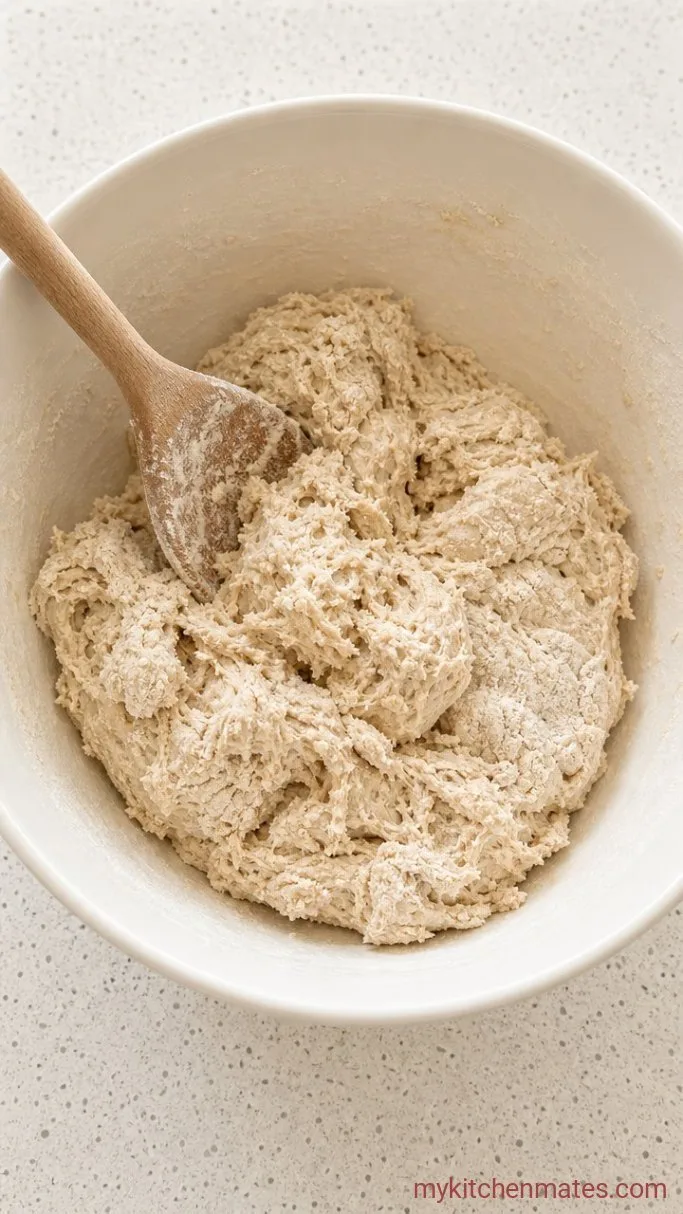
In a large bowl, combine 500 g bread flour, 50 g whole wheat flour, 400 g water, and 100 g active sourdough starter. Stir with a dough whisk or your hands until no dry flour remains. Cover and let it rest for 30 minutes. This autolyse lets the flour hydrate and starts gluten development.
The mixture will look shaggy and wet. That’s fine; it will smooth out as it rests and as you build structure later.
Skipping the autolyse will not ruin the loaf, but those extra 30 minutes give you a more open crumb with less effort.
Step 2: Add the Salt and Seeds
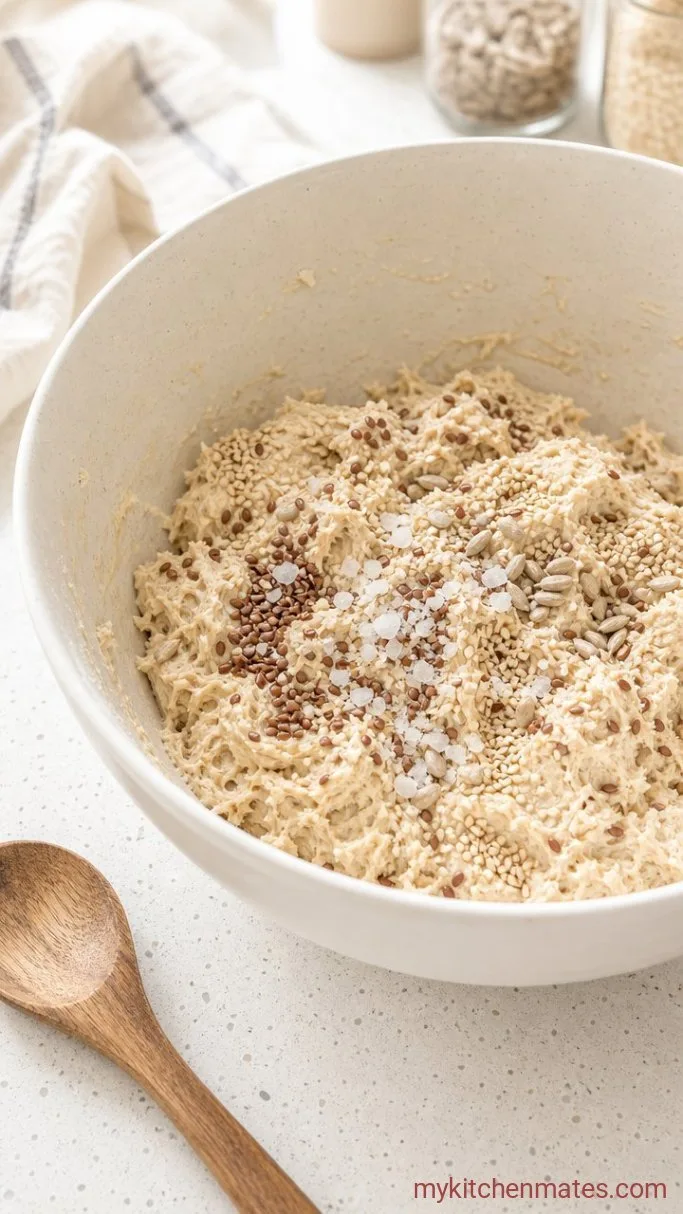
Sprinkle 10 g salt and all 60 g of the seeds (sesame, sunflower, flax) over the dough. Pinch and fold the dough repeatedly for about 2 minutes to distribute them evenly, until the salt granules dissolve.
The dough will feel slightly gritty at first, but after several folds it blends in seamlessly. You are looking for an even dispersion of seeds with no streaks of salt.
Take the extra minute to work everything in thoroughly. Salt slows fermentation if it is not fully mixed, and you want an even rise.
Step 3: Stretch and Fold During Bulk Fermentation

Cover the bowl and let the dough rise at room temperature (around 70 to 75°F) for 3 to 4 hours. During the first 2 hours, perform a set of stretch and folds every 30 minutes, 4 sets total. To stretch and fold, wet your hand, grab one side of the dough, stretch it upward, and fold it over the top. Rotate the bowl and repeat for all four sides.
After each set the dough feels tighter. By the fourth set, it should hold its shape well and show visible bubbles under the surface.
Timing is flexible here. A cooler kitchen means a longer rise. Look for the dough to double in size and jiggle when you shake the bowl.
Step 4: Shape, Seed, and Cold Proof the Loaf
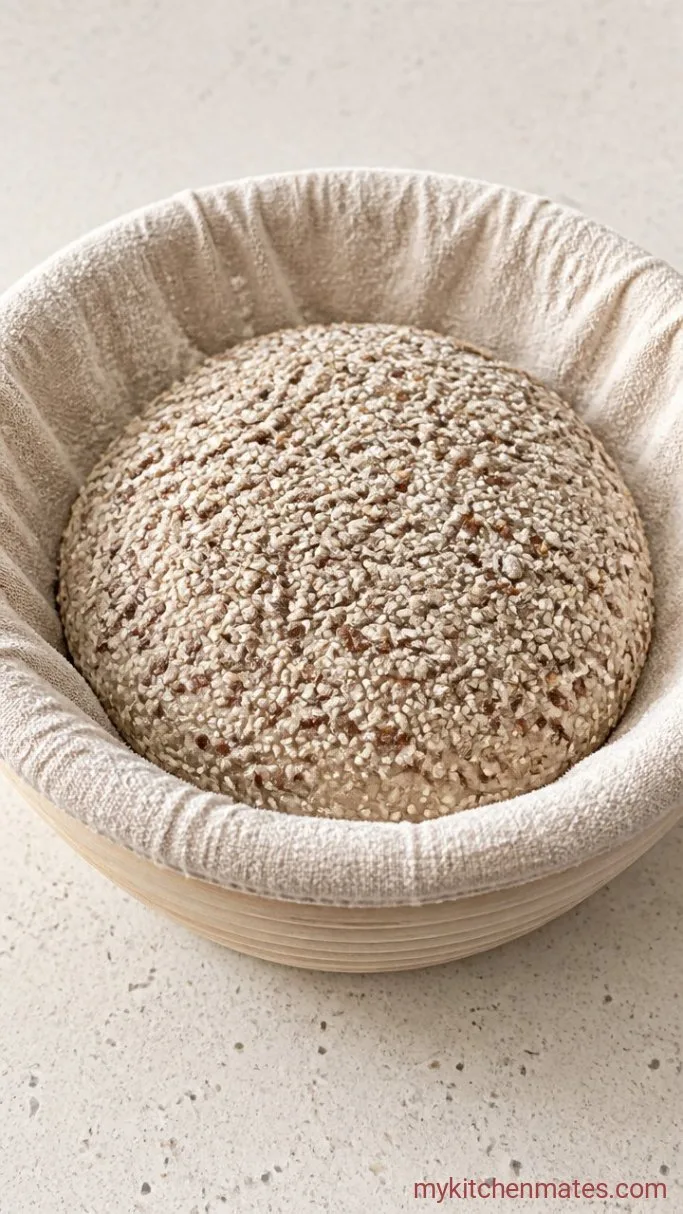
Scrape the dough onto a lightly floured surface. Shape it into a tight boule by folding the edges into the center, then flip it seam side down and use cupped hands to pull it toward you, creating surface tension. Let it rest uncovered for 15 minutes, then tighten it again.
Spread the extra 2 tablespoons of mixed seeds on a plate. Dampen the top of the shaped loaf with a wet hand or a quick spray of water, then press the damp side firmly into the seeds. Place the loaf seam side up in a floured banneton or a bowl lined with a floured tea towel.
Cover the banneton with a shower cap or plastic wrap and refrigerate for 12 to 16 hours. The cold ferment deepens the flavor and makes scoring cleaner.
Step 5: Bake with Steam
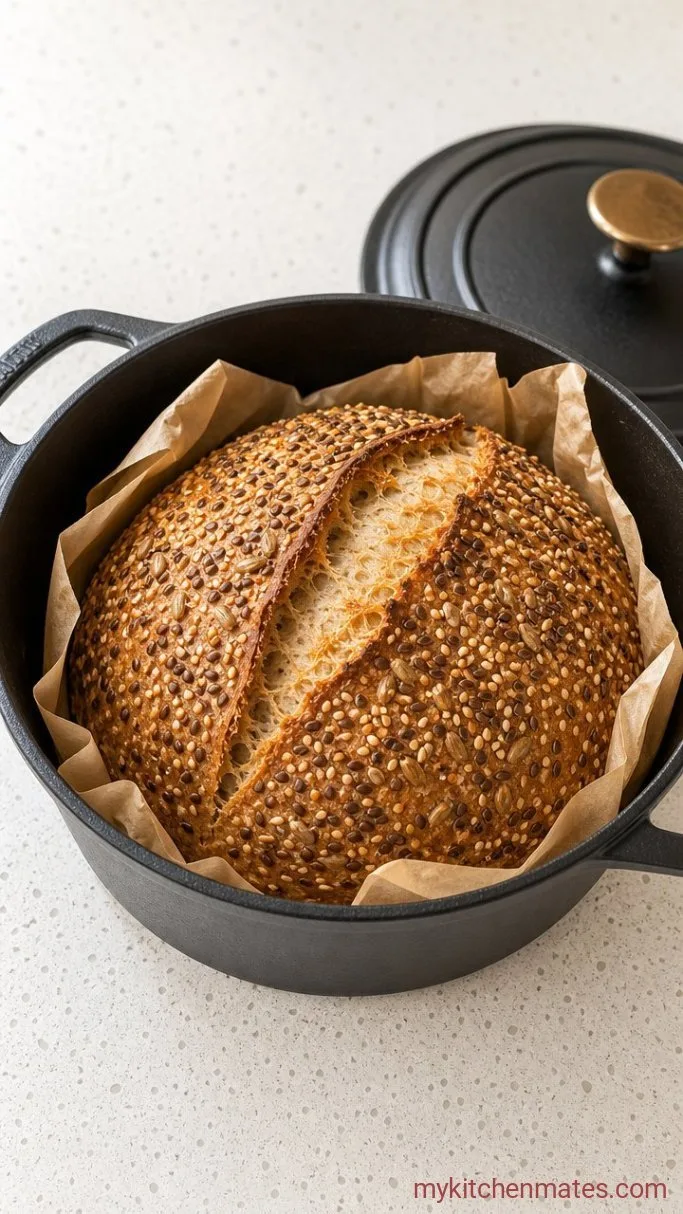
Place a Dutch oven with its lid inside the oven and preheat to 500°F (260°C) for at least 30 minutes. When the oven is ready, turn the dough out onto a piece of parchment paper, brush off any loose flour, and score the top deeply with a sharp lame or razor blade.
Carefully lower the loaf into the hot Dutch oven using the parchment as a sling. Cover with the lid and bake for 20 minutes. Then remove the lid, lower the oven temperature to 450°F (230°C), and bake for 20 to 25 minutes more, until the crust is deep chestnut brown and the seeds smell toasted.
Tap the bottom of the loaf; it should sound hollow. If you have a thermometer, the internal temperature should hit 205°F (96°C). The lid captures steam, giving you a blistered, crackling crust.
Step 6: Cool and Slice the Loaf
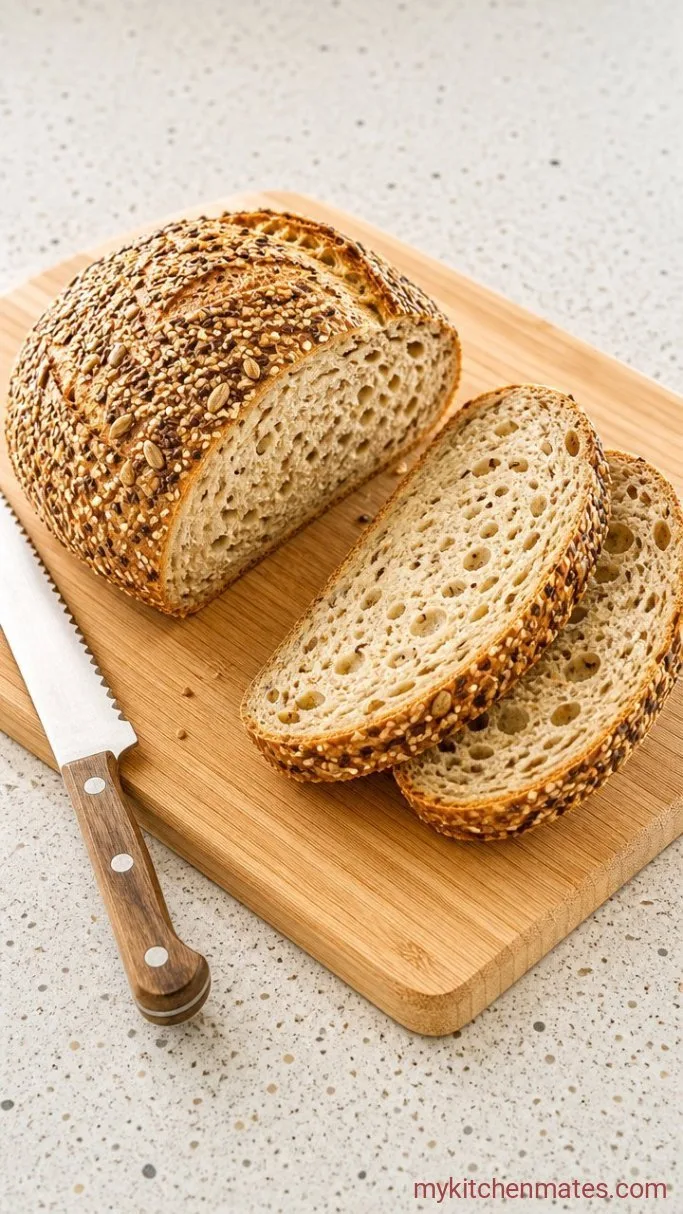
Transfer the bread to a wire rack and let it cool for at least 1 hour before slicing. Cutting too soon traps steam and makes the crumb gummy.
Once cooled, slice with a serrated knife. The crust will crackle under the blade, revealing a tender, holey interior studded with seeds. Serve right away or toast it for an extra nutty bite.
Tips for a Crusty Seeded Loaf
- Use a kitchen scale for the most consistent results. Sourdough hydration is finicky with volume measures.
- If your starter seems sluggish, feed it twice before baking day to boost its strength.
- The seeds on the outside can burn if the oven is too hot or the loaf sits too close to the element. If they darken too fast, tent the bread with foil after the lid comes off.
- For an even deeper tang, let the shaped loaf cold proof for up to 24 hours before baking.
- Steam matters. If you don’t own a Dutch oven, bake the loaf on a preheated stone with a pan of boiling water on the bottom rack.
To make two loaves, double all the ingredients except the starter; 180 g of starter is plenty for a double batch.
| Ingredient | Single Loaf | Double Batch |
|---|---|---|
| Bread flour | 500 g | 100 g |
| Whole wheat flour | 50 g | 100 g |
| Water | 400 g | 800 g |
| Starter | 100 g | 180 g |
| Salt | 10 g | 20 g |
| Seeds (inside) | 60 g | 120 g |
Storing and Reheating
- Refrigerate: This bread stays fresh on the counter in a paper bag for 2 days. For longer storage, slice and freeze it in a zip-top bag for up to 3 months.
- Reheating: Toast slices straight from the freezer, or warm the whole loaf in a 350°F (175°C) oven for 10 minutes to revive the crust.
What to Serve with Seeded Sourdough Bread
A thick slice toasted and slathered with salted butter is hard to beat, but it also stands up to hearty soups like minestrone or split pea. For a simple lunch, top it with mashed avocado, flaky salt, and a squeeze of lemon. The nutty seeds play well against creamy or tangy toppings.
Frequently Asked Questions
Can I use a stand mixer instead of folding by hand?
Yes. Mix on low speed for 3 to 4 minutes until the dough clears the sides of the bowl, then proceed with bulk fermentation. Skip the stretch and fold sets if you build enough gluten in the mixer.
Can I substitute whole wheat flour for all the flour?
No, a 100% whole wheat loaf would be dense and heavy with this hydration. You can increase the whole wheat to 100 g and reduce bread flour to 450 g for a more pronounced wheaty flavor, but don’t push it further.
My loaf didn’t rise much. What went wrong?
A weak or underfed starter is the most common culprit. Feed your starter twice before baking and make sure it passes the float test (a spoonful dropped in water should float). Also confirm your bulk fermentation went long enough; underproofed dough looks dense and tight.
Can I add dried fruit or other mix-ins?
Yes. Fold in up to 100 g of dried cranberries, chopped apricots, or toasted nuts along with the seeds in Step 2. Expect a slightly denser crumb with more add-ins.
Can I bake this in a loaf pan?
Yes. Shape the dough into a log instead of a boule and place it seam side down in a greased 9 x 5-inch loaf pan for the cold proof. Bake at 425°F (220°C), covering loosely with foil for the first 15 minutes, then uncovered for 25 to 30 minutes more.
Overnight Seeded Sourdough Bread Recipe
Ingredients
Method
- Combine flours, water, and starter in a large bowl. Stir until no dry flour remains. Cover and rest 30 minutes.
- Sprinkle salt and the 60 g of seeds over the dough. Pinch and fold for about 2 minutes to incorporate evenly.
- Cover and let rise at room temperature for 3 to 4 hours, performing 4 sets of stretch and folds during the first 2 hours, one set every 30 minutes.
- Shape the dough into a tight boule. Dampen the top and press it firmly into the 2 tbsp mixed seeds. Place seam side up in a floured banneton, cover, and refrigerate 12 to 16 hours.
- Preheat a Dutch oven with lid at 500°F for 30 minutes. Turn dough onto parchment, score, lower into the pot, cover, and bake 20 minutes. Uncover, reduce heat to 450°F, and bake 20 to 25 minutes until deep brown.
- Cool on a wire rack at least 1 hour, then slice and serve.
Notes
