
Hearty Multigrain Sourdough Bread

A loaf with real character: nutty from a mix of oats and seeds, just a little tang from a slow ferment, and a crust that crackles when you pull it out of the oven. It is the kind of bread that makes the whole kitchen smell like a bakery, and it holds up for sandwiches, toast, or a thick slab with butter.

You do need a little patience. The dough does most of the work on its own, but it takes time to build the flavour and texture that make this loaf worth it.
What Makes This Multigrain Sourdough So Good
The crumb is soft and open, with enough structure to hold a smear of avocado or a fried egg without falling apart. Every bite has a quiet chew from the rolled oats and a gentle crunch from the seeds.
Because it is naturally leavened, the bread stays fresh longer than a straight yeast loaf. The sourdough starter does more than lift. It deepens the flavour and keeps the crumb tender for days.
I bake this one on repeat because it is forgiving. You mix it by hand, give it a few folds, and let time do the rest. The oven spring is always a thrill.
Ingredients

- 300g bread flour: gives the loaf its strength and tall rise.
- 100g whole wheat flour: adds a warm, earthy note.
- 50g rolled oats: the heart of the multigrain blend, do not use instant oats.
- 25g flaxseed: whole flaxseed works, ground flaxseed makes the crumb a little denser.
- 25g sunflower seeds: raw and unsalted, they toast as the loaf bakes.
- 350g water, room temperature: a slightly wet dough rewards you with an open crumb.
- 100g active sourdough starter: fed 4 to 6 hours earlier, it should be bubbly and pass the float test.
- 10g fine sea salt: draws out the flavour of the grains.
Variations / Substitutions
- Swap the seeds: any combination of pumpkin seeds, sesame seeds, or millet works in the same total weight.
- Change the flour: use 100g rye flour in place of the whole wheat for a deeper, slightly tangier loaf.
- Add a touch of sweet: 15g of honey or maple syrup stirred in with the salt gives a softer crust and rounds out the sour notes.
- Go nut-free: leave out the sunflower seeds and add an extra 25g of oats so the loaf still feels hearty.
Spicy Vegetable Soup is a cozy soup to serve with this bread.
How To Make Multigrain Sourdough Bread
Step 1: Mix the Autolyse
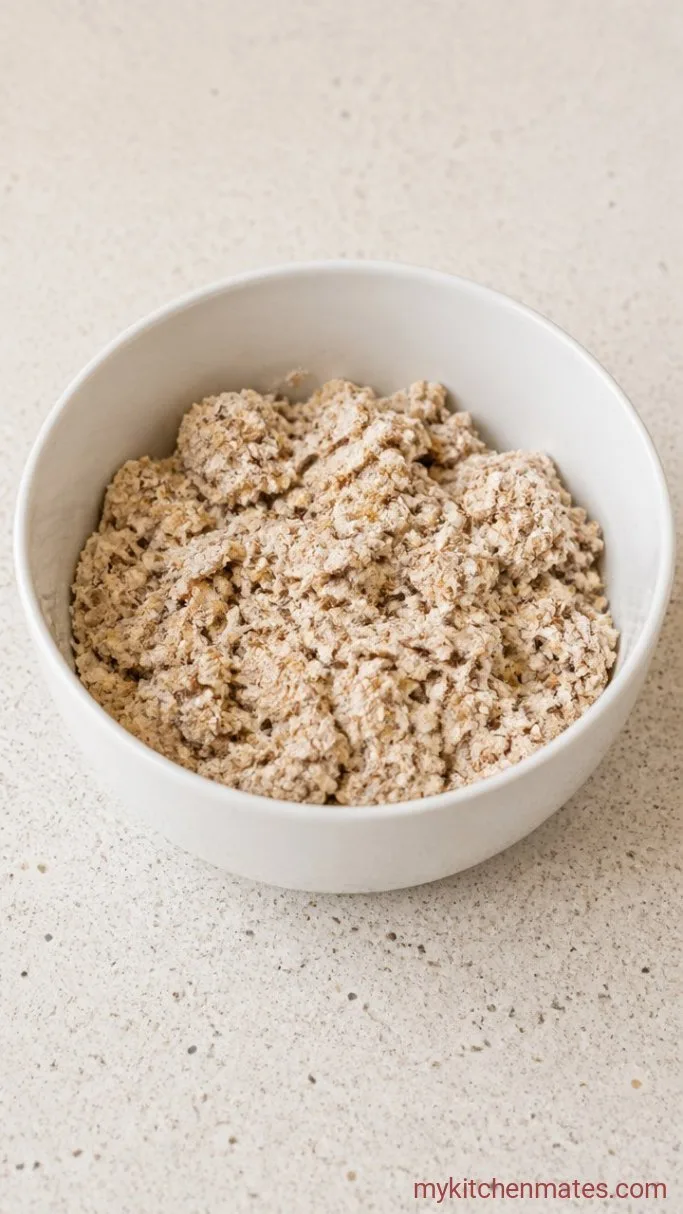
In a large bowl, stir together the 300g bread flour, 100g whole wheat flour, 50g rolled oats, 25g flaxseed, 25g sunflower seeds, and 300g of the water until no dry patches remain. Cover the bowl with a damp towel and let it sit for 30 minutes. This rest hydrates the flour and starts gluten development without any kneading.
The mixture will look shaggy at first, then relax into a thick, lumpy porridge. That is exactly right. Do not skip the rest. It makes the dough easier to handle later.
Step 2: Add the Starter and Salt

Drop the 100g of active sourdough starter and the 10g of salt onto the rested dough. Pour the remaining 50g of water right over the salt to help it dissolve. Use your hand to pinch and squeeze everything together until the starter and salt disappear and the dough feels cohesive, about 2 minutes. It will be sticky and a little messy. That is normal at this stage.
Scrape the sides of the bowl clean, cover it again, and let the dough rest for 30 minutes. You are giving the gluten a head start before the next stretch.
Step 3: Strengthen with Stretch and Folds

Keep the dough in the bowl. Wet your hand lightly, reach under one side of the dough, pull it up and fold it over the top. Rotate the bowl a quarter turn and repeat. Do this 4 times, one fold per side. Cover the bowl and rest 30 minutes.
Repeat that full set of 4 folds two more times, resting 30 minutes between each set. Over this 2-hour window you will do 3 total sets. By the last set, the dough will feel smoother, hold its shape a little longer, and have visible bubbles under the surface. Cover and let it continue to bulk ferment at room temperature until it looks puffy and has nearly doubled, another 2 to 4 hours depending on the warmth of your kitchen.
Step 4: Shape the Loaf

Lightly flour a work surface and tip the dough out. Use a bench scraper or your hands to gently shape it into a tight round. Pull the edges toward the centre in small tucks, then flip it seam-side down. Cup your hands around the dough and pull it toward you to build surface tension. Let it rest uncovered for 20 minutes on the counter. This pre-shape makes the final shape neater.
After the rest, flip the dough over, degas it just a little by pressing gently, and shape it again into a tight boule. Place it seam-side up into a floured banneton or a bowl lined with a floured tea towel. Pinch the seam closed. Cover with a damp towel.
Step 5: Cold Proof the Dough

Put the covered banneton in the refrigerator and let it proof overnight, 8 to 12 hours. A cold proof develops the flavour and makes the dough easier to score. The loaf will not rise dramatically in the fridge, but it will feel softer and look slightly fuller in the morning.
A cold loaf also gives you better oven spring because the temperature difference when it hits the hot pot is greater. You can bake it straight from the fridge, no need to bring it to room temperature.
Step 6: Bake the Loaf

Place a Dutch oven with its lid in the oven and preheat to 450°F (230°C) for at least 30 minutes. Carefully turn the cold dough out onto a piece of parchment paper. Dust the surface with a little flour and score the top deeply with a lame or a sharp serrated knife. A single slash across the top works well, or a cross for a rustic look.
Lift the parchment and lower the dough into the hot pot. Cover with the lid and bake for 25 minutes. Remove the lid and bake for another 18 to 22 minutes, until the crust is deeply golden and the loaf sounds hollow when you tap the bottom. Let it cool completely on a wire rack before you slice, at least 2 hours. Cutting too soon will make the crumb gummy.
Tips for a Loaf with a Good Ear and Open Crumb
- Start with a starter that doubles in 4 to 6 hours after feeding. A sluggish starter will give you a flat, dense loaf no matter how well you fold.
- Use a kitchen scale for everything. Flour compacts differently from scoop to scoop, and the difference between 300g and 330g changes the entire loaf.
- If your kitchen is cold, bulk fermentation will take longer. Watch the dough, not the clock. Puffy, jiggly, and dotted with bubbles is your cue.
- Soaking the oats and seeds for 30 minutes in the water you plan to use for the dough (before mixing) softens them further. Strain and use that soaking water as part of the total water weight for extra flavour.
Here is a quick timing guide for a crackly crust in different covered pots. Dutch ovens hold heat best, but a heavy lidded stainless steel pot works too.
Bake times for a deep golden crust:
| Pot Type | Covered Bake | Uncovered Bake |
|---|---|---|
| Enameled cast iron (5-6 qt) | 25 mins | 18-20 mins |
| Heavy stainless with lid | 25 mins | 20-25 mins |
| Combo cooker (cast iron) | 22 mins | 18-20 mins |
Storing Your Loaf
- Refrigerate: not ideal, the cold dries out bread fast. Keep it on the counter in a bread box or wrapped in a clean tea towel for 2 days.
- Freeze: slice the cooled loaf and freeze slices in a zip-top bag with parchment between them. Toast straight from frozen.
- Reheating: wrap whole bread in foil and warm at 350°F (175°C) for 10 minutes to revive the crust.
What To Serve With Multigrain Sourdough
This loaf is sturdy enough for a loaded turkey and avocado sandwich but just as good torn apart alongside a bowl of tomato soup. I like it as the base for an open-faced breakfast with a runny egg and a pile of sautéed greens. For a lighter pairing, toast a thick slice and spoon over a lemony white bean spread.
Frequently Asked Questions
Can I bake this without a Dutch oven?
Yes, put a baking stone or inverted sheet pan in the oven during preheating and slide the loaf onto it. Add a pan of boiling water to the bottom rack for steam and bake as directed, but check for doneness 5 minutes early.
My loaf came out flat. What went wrong?
Most often, the starter was not strong enough or the dough over-fermented and lost structure. Next time, make sure your starter passes the float test and watch the bulk ferment more than the clock.
Can I add instant yeast to speed things up?
You can, but it changes the flavour. Reduce the starter to 50g, add 3g instant yeast with the salt, and cut the bulk ferment to about 1.5 hours, or until doubled. The bread will be softer and less tangy.
How do I get the seeds to stick to the crust?
After shaping and just before the cold proof, roll the top of the dough on a damp towel, then roll it in a plate of extra oats and seeds. The moisture will help them adhere through the bake.
Multigrain Sourdough Bread Recipe
Ingredients
Method
- Mix the 300g bread flour, 100g whole wheat flour, 50g rolled oats, 25g flaxseed, 25g sunflower seeds, and 300g of the water in a large bowl. Cover and rest 30 minutes.
- Add the 100g starter, 10g salt, and remaining 50g water. Pinch and squeeze until combined. Cover and rest 30 minutes.
- Perform 3 sets of stretch and folds at 30-minute intervals. Cover and bulk ferment until puffy and nearly doubled, 2 to 4 hours more.
- Turn the dough onto a floured surface, pre-shape into a round, and rest 20 minutes. Shape tightly into a boule and place seam-side up in a floured banneton. Pinch the seam closed.
- Cover and cold proof in the refrigerator for 8 to 12 hours.
- Preheat a Dutch oven at 450°F (230°C) for 30 minutes. Turn the dough onto parchment, score, and bake covered 25 minutes. Uncover and bake 18 to 22 minutes until deeply golden. Cool completely on a wire rack before slicing.
Notes
