
Pesto Swirl Sourdough Bread

This sourdough loaf hides bold streaks of basil pesto inside a crusty, tangy crumb. The pesto bakes right into the dough, so every slice gets garlic, basil, and a little nutty parmesan.
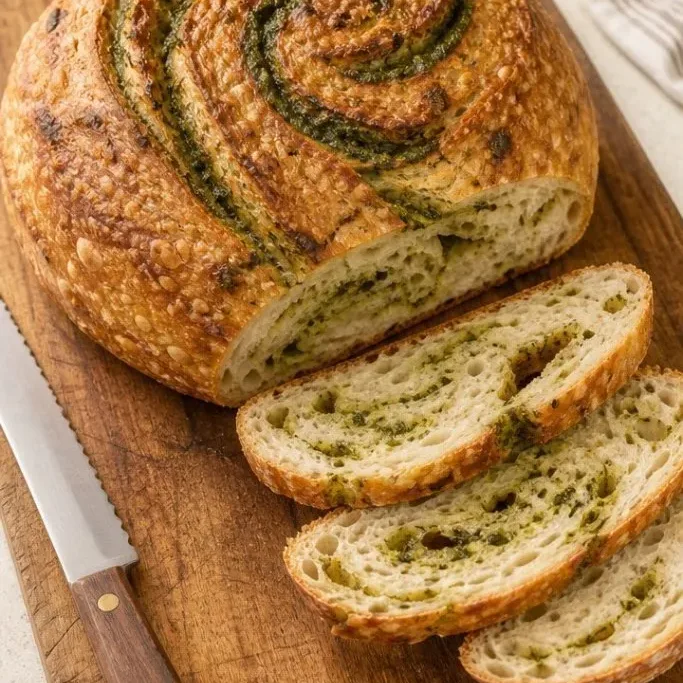
It asks for a bit of planning, but the hands-on work is short and simple. The reward is a rustic, savory bread that smells like a pizzeria oven and makes a plain bowl of soup feel like a meal.
Why This Swirl Works
The pesto gets folded into the dough during shaping, so the olive oil and herbs season the bread from the inside out. You end up with a crackly crust that has faint charred-cheese flecks where parmesan meets the hot pot.
The crumb stays light and chewy, with green ribbons that look beautiful on a cutting board. It’s also a smart way to use up leftover pesto, even a half-cup makes a big impact.
Ingredients
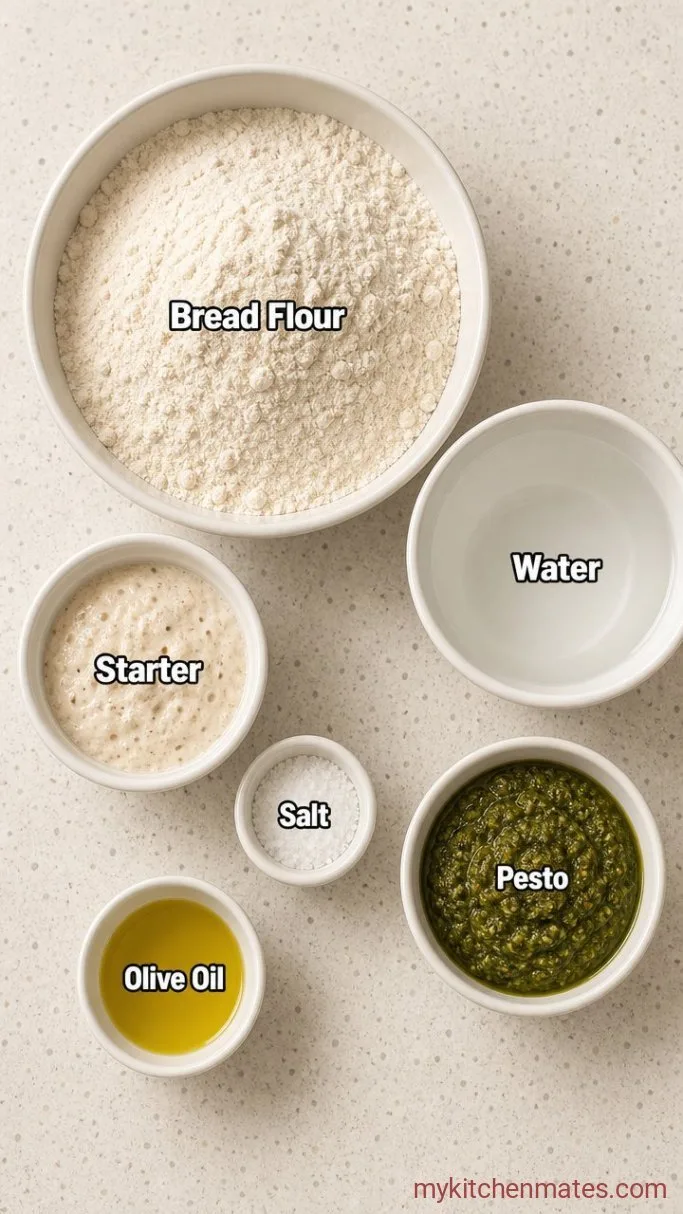
- 500g bread flour: unbleached gives the best rise.
- 350g water, room temperature: filtered if your tap water has a strong chlorine taste.
- 100g active sourdough starter: fed 4 to 6 hours before mixing, should float in water.
- 10g fine sea salt: strengthens the dough, don’t skip it.
- 1/2 cup prepared basil pesto: homemade or store-bought, any basil-based variety.
- Olive oil: for oiling the bowl and your hands.
Variations / Substitutions
- Sun-dried tomato pesto: blend half basil pesto with chopped sun-dried tomatoes for a tangy-sweet swirl.
- Vegan option: use a dairy-free pesto made with nutritional yeast instead of parmesan.
- Add-ins: fold 1/4 cup toasted pine nuts or chopped olives into the pesto before spreading.
Winter Minestrone Soup makes a comforting soup to pair with this bread.
How to Make Pesto Swirl Sourdough Bread
Step 1: Mix the Dough
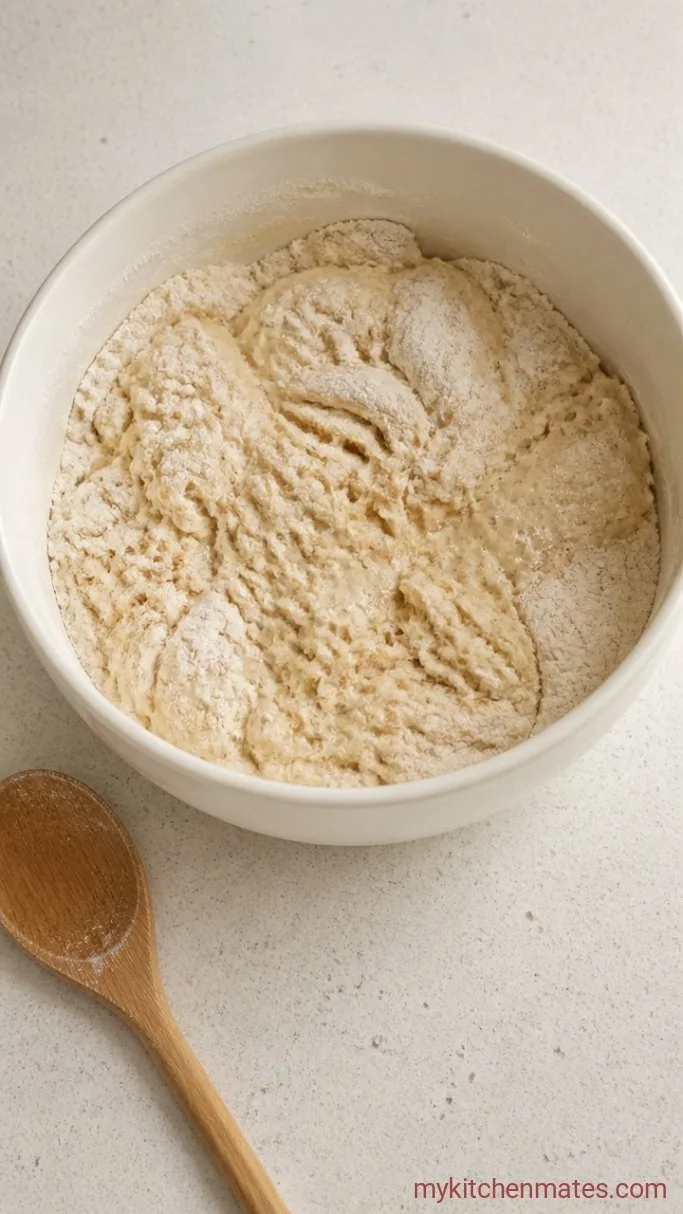
In a large bowl, combine the 500g bread flour and 350g water. Stir with a wooden spoon or your hand until no dry floury bits remain. Cover the bowl and let it sit 30 minutes. This rest gives the flour time to hydrate and makes the dough easier to work with.
After the rest, add the 100g active starter and 10g salt. Pinch and squish everything together with wet hands until you have a shaggy, lumpy mass. Cover again and leave it alone for another 30 minutes before you start folding.
Step 2: Fold and Strengthen
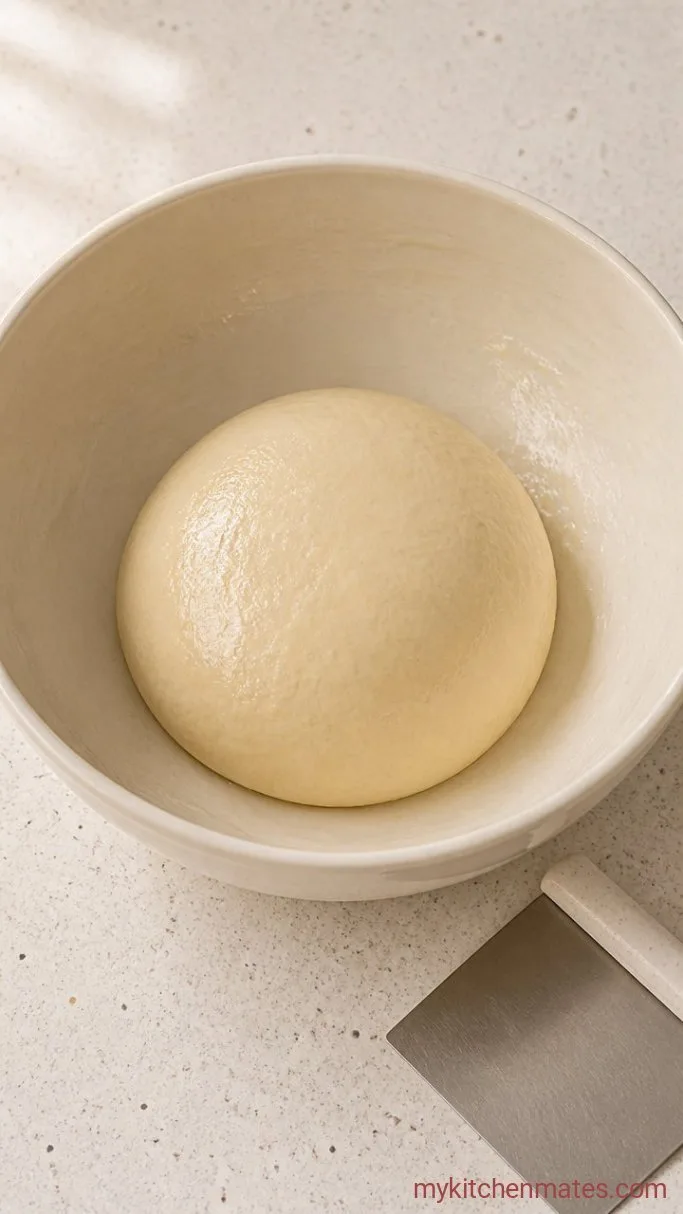
With damp hands, reach under one side of the dough, stretch it up, and fold it over the top. Rotate the bowl a quarter turn and repeat until you’ve done all four sides. Cover, wait 30 minutes, then do another set of four folds. Repeat this three to four times over the next 2 hours.
You’ll notice the dough changing. At first it tears easily and feels sticky, but by the final fold it will be smoother, springier, and hold its shape a bit better. That’s when bulk fermentation is usually done.
Step 3: Shape with Pesto
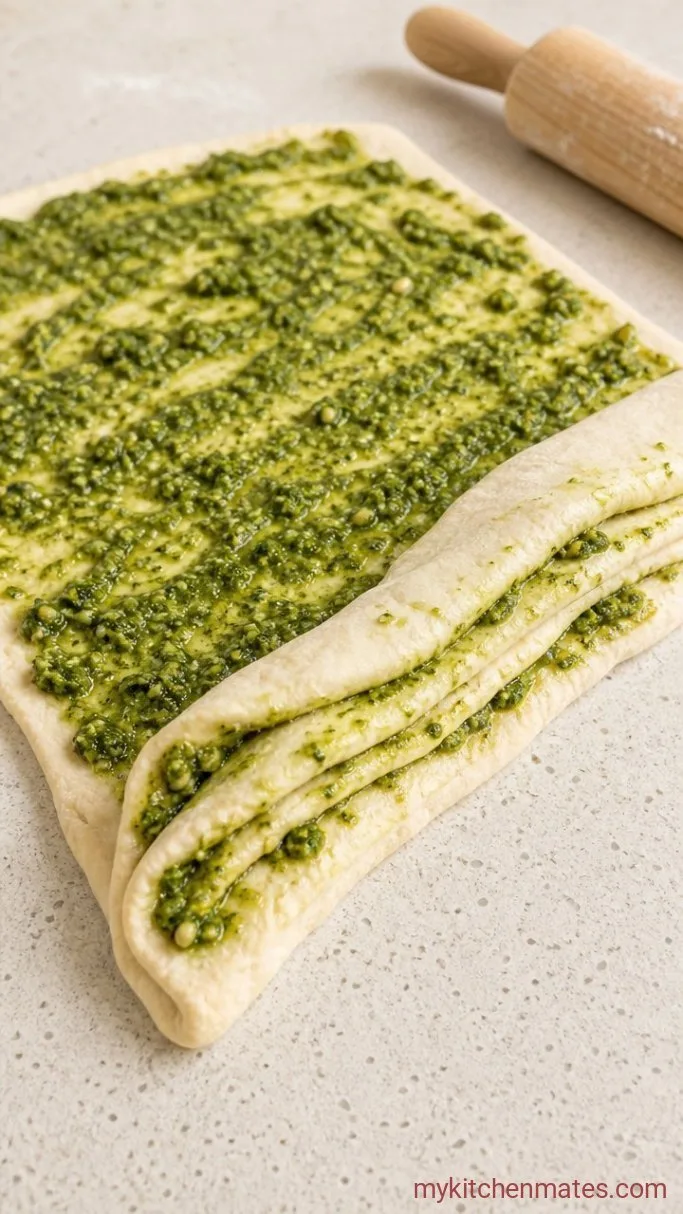
Scrape the dough onto a lightly floured surface and gently stretch it into a rough rectangle about 9 by 12 inches. Spoon the 1/2 cup pesto across the surface and spread it evenly, leaving a narrow border. Starting from a short end, roll the dough snugly into a log, then tuck the sides under to form a round boule.
Place the boule seam side down on a sheet of parchment paper. Dust the top with a little flour, cover loosely, and let it proof at room temperature until puffy and about one and a half times its original size. In a typical kitchen, that takes 60 to 90 minutes.
Step 4: Score and Bake
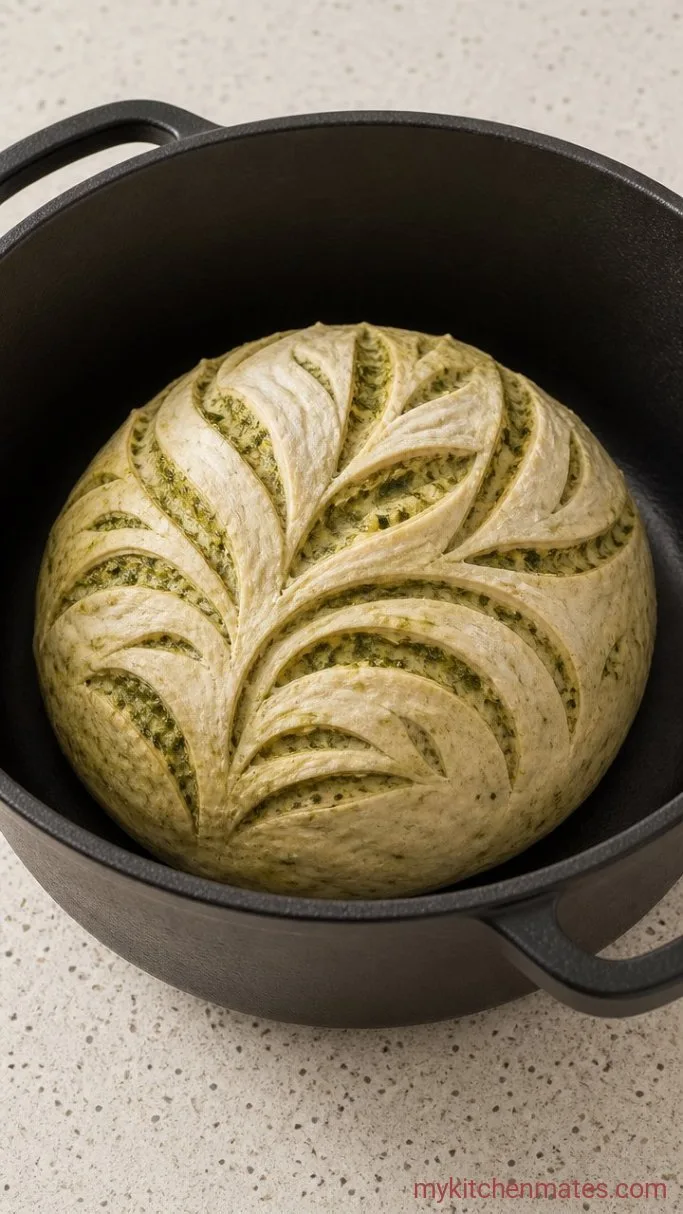
About 30 minutes before the dough finishes proofing, set a covered Dutch oven inside your oven and preheat to 450°F (230°C). When both the oven and dough are ready, carefully lift the parchment and lower the bread into the hot pot. Use a sharp blade or lame to cut a shallow slash across the top so steam can escape.
Cover the Dutch oven and bake 30 minutes. Then remove the lid and continue baking another 15 minutes, until the crust is deep golden brown and the loaf sounds hollow when tapped on the bottom.
Step 5: Slice and Serve the Bread
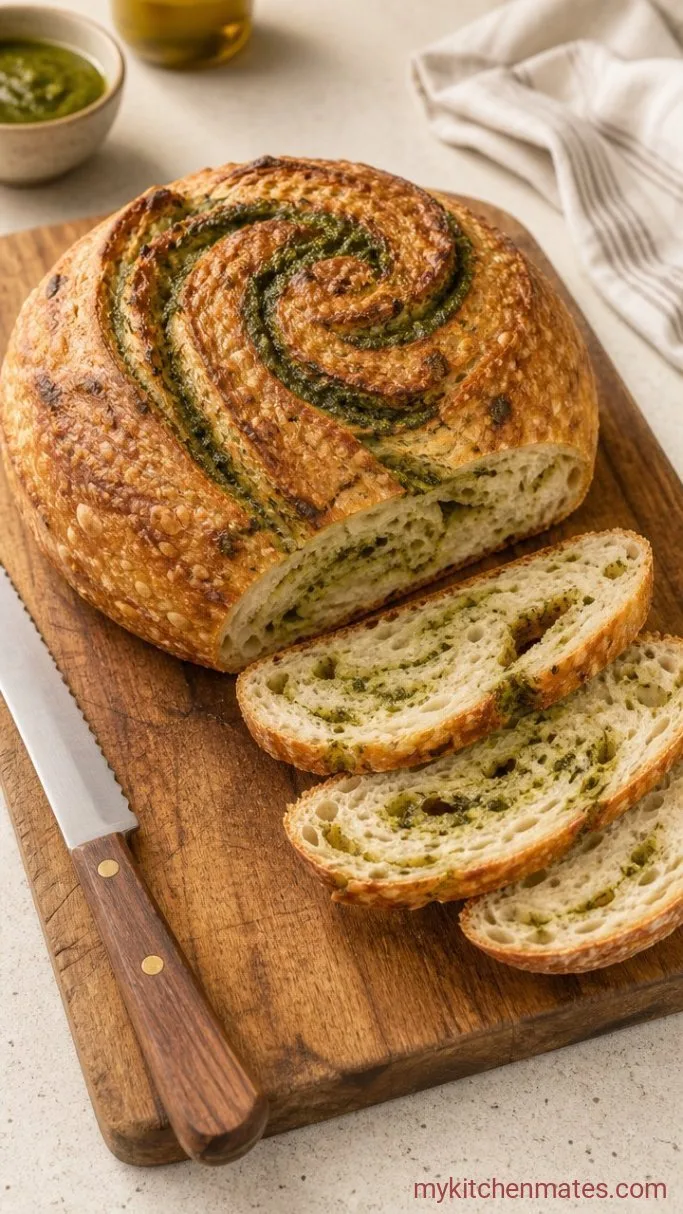
Lift the loaf out by the parchment and transfer it to a wire rack. Let it cool completely before you cut in, at least an hour, or the crumb will be gummy. Once cooled, slice straight down with a serrated knife and watch those green swirls appear.
A Few Notes for Sourdough Success
- Use an active, bubbly starter. If it doubled after feeding and passes the float test, you’re good to go.
- The dough will be sticky early on. Wet hands and a light touch make folding far less messy.
- Keep pesto spread thin and even. Puddles of oil can make the dough hard to seal tightly.
- Cool the loaf fully before slicing. Cutting too soon steams the crumb and mutes the swirl.
Bake times by Dutch oven:
| Pan | Covered | Uncovered | Total |
|---|---|---|---|
| Dutch oven | 30 mins | 15 mins | 45 mins |
Storing Your Loaf
- Room temperature: wrap the cooled bread in a clean kitchen towel or paper bag. It keeps well for 2 days. Reheat slices in a toaster or warm oven to refresh the crust.
- Freezer: slice first, then freeze separated layers in a zip-top bag. Toast straight from frozen for up to 1 month.
What to Serve with Pesto Sourdough Bread
A bowl of creamy tomato soup is the classic companion, the herby bread soaks it up without falling apart. For a lighter plate, pair it with a simple arugula salad dressed with lemon and olive oil.
Frequently Asked Questions
Can I use all-purpose flour instead of bread flour?
Yes, but bread flour has more protein and gives you a taller, chewier rise. All-purpose will still work and taste great, just expect a slightly denser loaf.
How do I know when the proofing is done?
Poke the dough lightly with a floured finger. If the indent springs back slowly and leaves a faint mark, it’s ready. If it bounces back fast, give it more time.
Can I make this without a Dutch oven?
You can, using a baking stone or inverted sheet pan. Place a pan of hot water on the lower rack for steam, and bake at the same temperature until the crust is deep brown.
What if my pesto is very oily?
Drain a little of the excess oil before spreading it on the dough. Too much oil can make the layers slip and the shaping messy.
Pesto Swirl Sourdough Bread Recipe
Ingredients
Method
- Combine flour and water and mix until no dry spots remain. Cover and rest 30 minutes.
- Add starter and salt, mix into a shaggy dough, then cover and rest 30 minutes before folding.
- Perform four sets of stretch-and-fold motions over 2 hours, spacing them about 30 minutes apart.
- Turn the dough onto a floured surface, stretch into a rectangle, spread pesto, roll, and shape into a boule. Cover and proof 60 to 90 minutes.
- Preheat a Dutch oven to 450°F (230°C). Lower the proofed loaf on parchment into the pot, score the top, then bake covered 30 minutes. Uncover and bake 15 minutes more.
- Cool the loaf completely on a rack before slicing and serving.
Notes
