
Pepperoni Sourdough Bread

Pepperoni sourdough bread takes everything you love about a tangy, crackly loaf and layers in crispy pepperoni with pockets of melted mozzarella. It is the kind of bread that turns a simple soup or salad into a full meal, but it is just as good on its own, still warm from the oven.
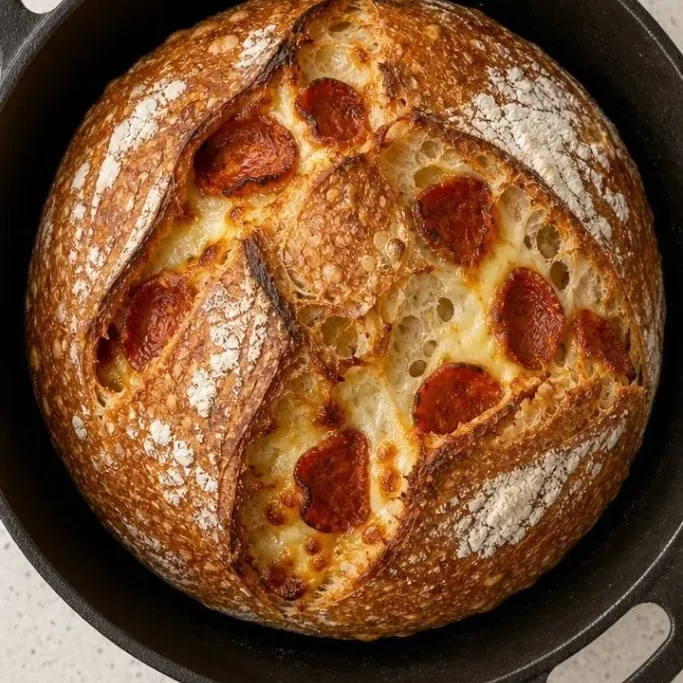
This recipe walks you through the whole process, from mixing the dough to scoring and baking, so you end up with a deep golden crust and an airy crumb studded with spicy meat.
Why This Loaf Works
The pepperoni does two things: it brings a rich, spicy kick and it creates little pockets of crispy, rendered fat that soak into the bread as it bakes. Every slice has a different mix of savory meat and melted cheese.
The sourdough tang balances the richness beautifully. Because the dough is naturally fermented, the flavor is deeper than a quick yeasted bread. And the crust? It crackles when you press it.
Ingredients
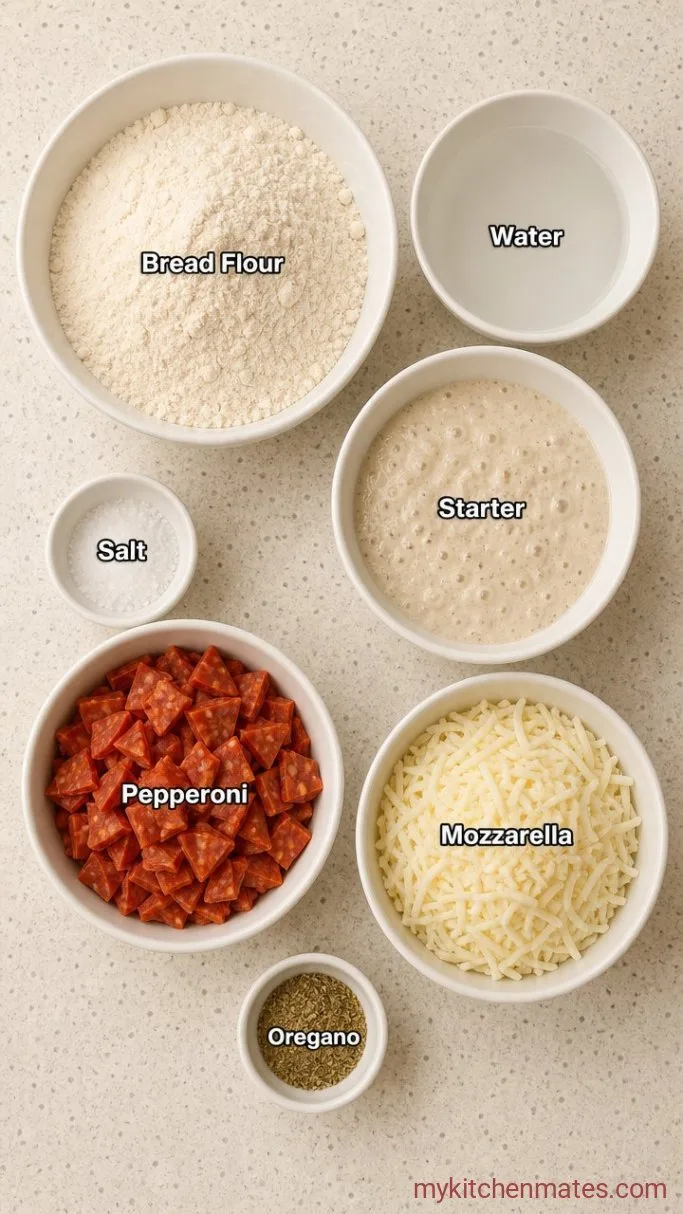
- 500g bread flour: high-protein flour gives the loaf plenty of structure.
- 350g warm water: about 90°F (32°C), for the autolyse.
- 100g active sourdough starter: fed and bubbly, at its peak.
- 10g fine sea salt.
- 1 cup (about 4 oz) sliced pepperoni: chopped into small, chunky pieces.
- 1 cup (about 4 oz) shredded low-moisture mozzarella: part-skim works best and melts cleanly.
- 1 tsp dried oregano: optional, for extra Italian flavor.
Variations / Substitutions
- Swap the cheese: provolone or fontina melt well and add a slightly sharper note.
- Change the meat: try diced salami or chopped soppressata in place of the pepperoni.
- Add a little heat: a pinch of red pepper flakes folded in with the pepperoni gives a gentle kick.
- Dairy-free option: leave out the cheese; the bread will still be flavorful and crisp.
Hearty Pioneer Woman Beef Stew is a cozy soup to serve with this bread.
How to Make Pepperoni Sourdough Bread
Step 1: Mix and Rest the Dough

In a large bowl, combine the 500g bread flour and 350g warm water. Mix with a stiff spatula or your hand until no dry bits remain. Cover the bowl and let it rest for 30 to 60 minutes.
The dough will look shaggy at first but it will smooth out as the flour absorbs the water. This rest starts gluten development and makes the dough much easier to work with.
Step 2: Incorporate the Starter and Salt
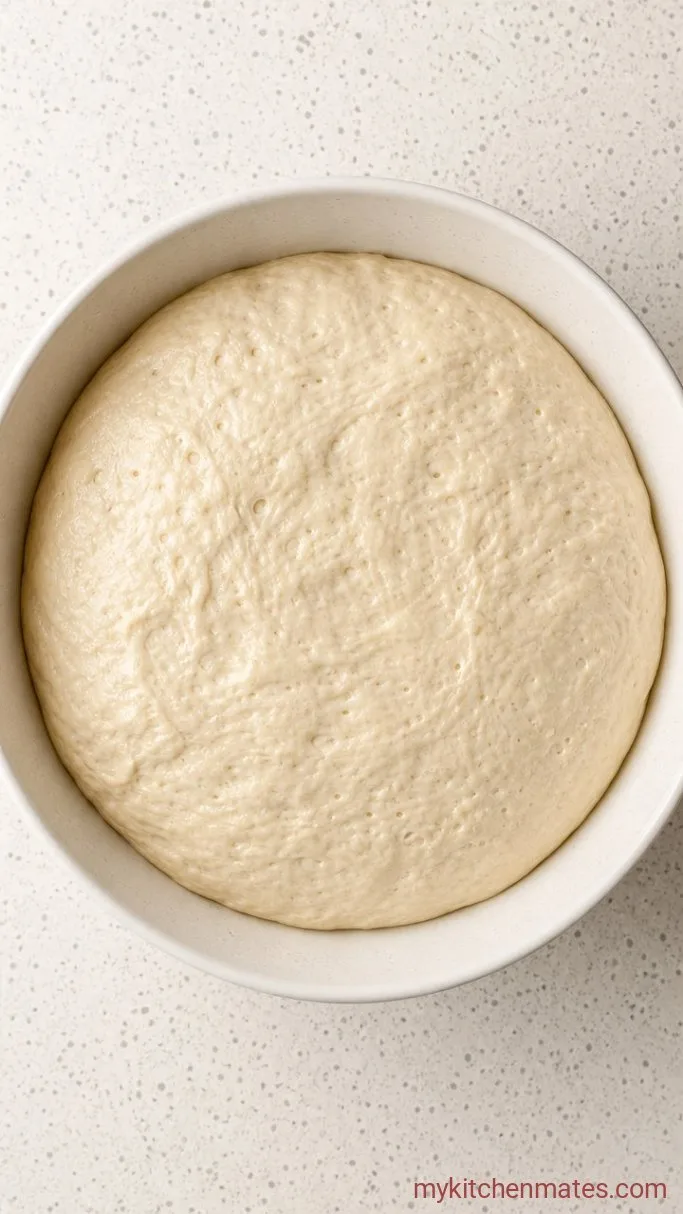
Spread the 100g active starter and 10g salt over the rested dough. Dimple them in with your fingers, then squeeze and fold the dough by hand for about 3 to 4 minutes, until it feels smooth and the starter is fully worked in. Cover the bowl and rest for 30 minutes.
You will feel the dough tighten as you work it. That is the gluten coming together, and it will get stronger after the rest.
Step 3: Fold in the Fillings

After the 30-minute rest, perform a stretch and fold: grab one side of the dough, pull it up, and fold it over the top. Rotate the bowl and repeat until you have worked all four sides. Cover and rest 30 minutes. Repeat this 3 more times, for a total of 4 sets over roughly 2 hours. During the first set, scatter the chopped pepperoni and shredded mozzarella evenly over the dough before you start folding, so they become distributed. The remaining folds will push them deeper.
By the end of the folds, the dough should feel puffy, jiggly, and nearly double in size. You might see bits of pepperoni and cheese peeking through the surface, which is exactly what you want.
Step 4: Shape the Loaf

Turn the dough out onto a lightly floured surface. Gently shape it into a tight round by folding the edges toward the center, building tension across the top. Place the round seam-side up in a well-floured banneton or in a bowl lined with a floured kitchen towel. Cover and let it proof at room temperature for 1 to 2 hours, or place it in the fridge overnight. A cold overnight proof deepens the sour flavor and makes the dough easier to score.
The loaf is ready when a gentle poke with a floured finger leaves an indentation that springs back slowly. If it snaps back fast, give it a little more time.
Step 5: Score and Bake

About 45 minutes before baking, slide a Dutch oven (with its lid) into the oven and preheat to 500°F (260°C). Turn the proofed loaf onto a sheet of parchment paper. Dust the surface lightly with flour if it feels sticky. Use a lame or a sharp serrated knife to score the top with one swift slash or a cross pattern.
Lower the dough into the hot pot using the parchment as a sling. Cover with the lid, reduce the oven temperature to 450°F (230°C), and bake for 20 minutes. Remove the lid and bake for another 25 to 30 minutes, until the crust is deep golden and the loaf sounds hollow when tapped. If you have an instant-read thermometer, the center should register between 205°F and 210°F (96°C to 99°C). Let the bread cool completely on a wire rack before slicing. The pepperoni on top will be crisp and a few bits of cheese may have oozed out, adding an extra crunch to the crust.
A Few Tips for the Best Loaf
- Weigh your ingredients with a kitchen scale. Flour amounts can vary wildly by volume, and sourdough is forgiving only when the ratios are right.
- Make sure your starter is active and passes the float test. A sluggish starter leads to dense bread.
- Watch the dough, not the clock. The times in this recipe are accurate in a 72°F (22°C) kitchen; a warmer room will speed things up, a cooler one will slow them down.
- For extra decorative pepperoni on the crust, press a few thin slices onto the surface of the loaf right before you score it, then sprinkle a pinch of oregano on top.
Proofing times vary with temperature. Use the table below as a guide, and always rely on how the dough feels.
| Kitchen Temperature | Bulk Fermentation (approx.) | Final Proof (approx.) |
|---|---|---|
| 65°F (18°C) | 5 to 6 hours | 2 to 3 hours |
| 72°F (22°C) | 3 to 4 hours | 1 to 2 hours |
| 78°F (25°C) | 2 to 3 hours | 1 hour |
Storing Leftover Bread
- Room temperature: Wrap the cooled loaf tightly in beeswax wrap or a bread bag and keep it on the counter for up to 2 days.
- Freeze: Slice the loaf and freeze pieces separated by parchment in a zip-top bag for up to 1 month. Thaw at room temperature or toast straight from frozen.
- Reheating: To restore a crisp crust, place slices or the whole loaf in a 350°F (175°C) oven for 5 to 10 minutes.
What Goes Well with Pepperoni Sourdough Bread
A dunk in creamy tomato soup is an obvious winner, because the rich broth echoes the Italian flavors in the bread. This loaf also makes incredible grilled sandwiches: the pepperoni and cheese melt further when pressed. For a simple dinner, serve thick slices alongside a big Caesar salad with extra shaved parmesan.
Frequently Asked Questions
Can I make this without a Dutch oven?
Yes. Preheat a baking stone or an inverted baking sheet in a 500°F (260°C) oven. Slide the parchment and dough onto the hot stone, then place a roasting pan of boiling water on the rack below for steam. Bake with the same times and temperatures, checking for doneness.
Why did my bread turn out dense instead of airy?
A dense loaf almost always comes from a starter that was not active enough or from under-proofing the dough. Next time, feed your starter a few hours earlier and keep a close eye on the bulk fermentation until the dough feels light and full of gas.
Can I use fresh mozzarella?
I would not recommend it. Fresh mozzarella carries a lot of moisture, and that extra water can make the crumb gummy and weigh the loaf down. Stick with a low-moisture, part-skim cheese for the best texture.
My dough felt sticky and hard to shape. What went wrong?
Sourdough doughs are naturally tacky, but if it felt unmanageable, the hydration might be too high for your flour. Next time, hold back 20g of water until after the autolyse and add it only if the dough can handle it. High-protein bread flour also absorbs more water than all-purpose, so use bread flour if you can.
Pepperoni Sourdough Bread Recipe
Ingredients
Method
- Mix the flour and water in a large bowl until no dry spots remain. Cover and rest 30 to 60 minutes.
- Spread the starter and salt over the dough, dimple them in, then squeeze and fold by hand for 3 to 4 minutes until smooth. Cover and rest 30 minutes.
- Perform 4 sets of stretch and folds over 2 hours, adding the pepperoni, mozzarella, and oregano during the first fold. After the final fold, let the dough rise until nearly doubled and jiggly.
- Shape the dough into a tight round on a floured surface, place seam-side up in a floured banneton, and proof for 1 to 2 hours at room temperature, or refrigerate overnight.
- Preheat a Dutch oven in a 500°F (260°C) oven for 45 minutes. Turn the loaf onto parchment, score the top, and lower it into the hot pot. Reduce heat to 450°F (230°C), bake covered for 20 minutes, then uncovered for 25 to 30 minutes, until deep golden and 205°F to 210°F (96°C to 99°C) inside. Cool completely on a rack.
Notes
