
Weeknight Stuffed Parwal (Bharwa Parwal)

Parwal, or pointed gourd, turns into something special when you stuff it with spiced gram flour and sear it until the edges go crisp. This bharwa parwal came together in my kitchen on a Tuesday when I needed a vegetable dish that would carry a meal without needing a dozen steps.
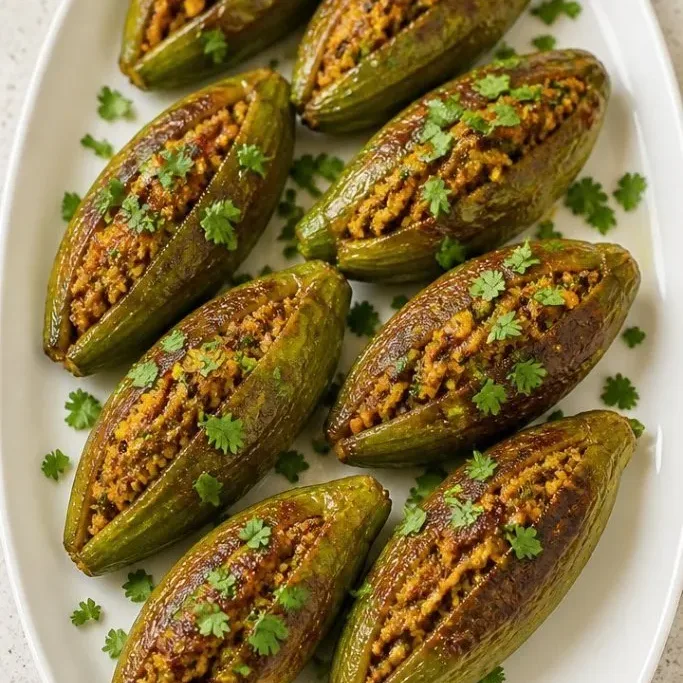
The stuffing comes together in a single bowl while the parwal gets slit and cleaned. Everything lands in one pan, and about half an hour later you have a tangy, faintly smoky dish that holds its own next to dal and roti.
What Makes This Stuffed Parwal So Reliable
The gram flour filling stays in place as the parwal cooks, so you never end up with loose spice swimming in the pan. A quick steam under a lid at the end softens the gourd just enough, no boiling or blanching beforehand.
The spices lean warm and earthy, with dried mango powder cutting through at the back. My favorite part is the contrast between the soft vegetable and the golden, slightly crisp stuffing that sticks to the pan in the best way.
Ingredients
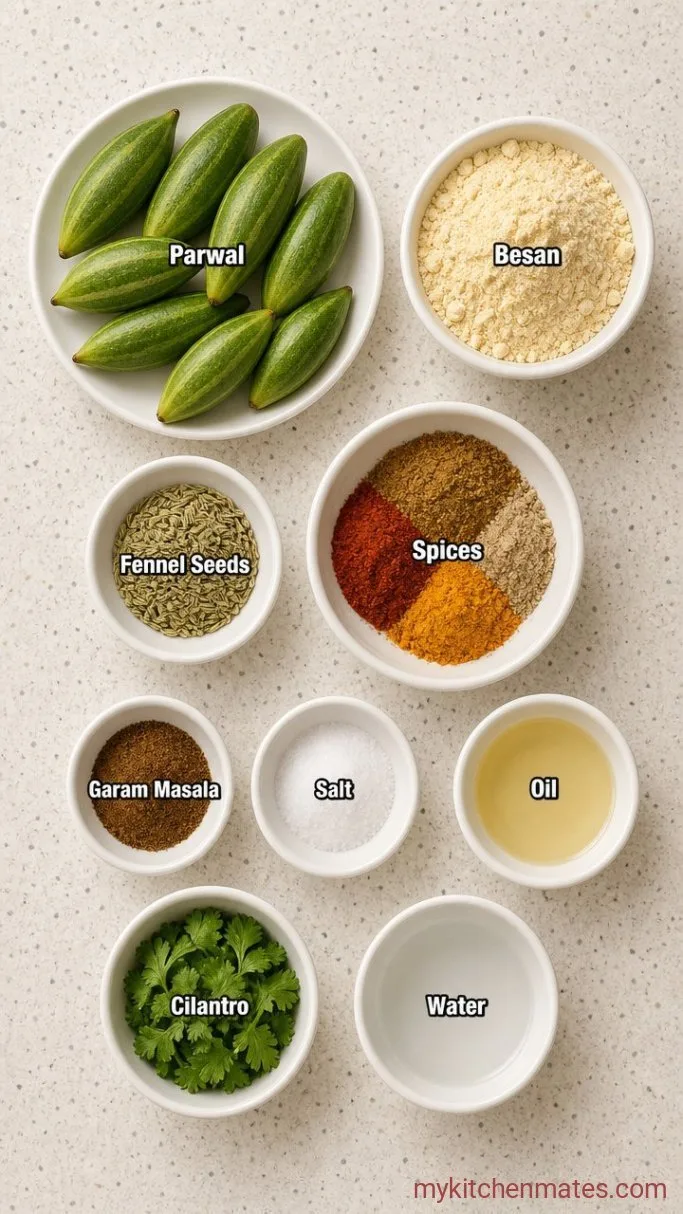
- 250g parwal (pointed gourd), about 8 to 10 pieces: choose firm, bright green ones with no soft spots
- 3 tbsp gram flour (besan): use the fine variety, not coarse chickpea flour
- 1 tsp fennel seeds: lightly crushed with a mortar or the back of a spoon
- 1 tsp coriander powder
- ½ tsp turmeric powder
- ½ tsp red chili powder: adjust to your heat preference
- 1 tsp dried mango powder (amchur): gives the tang; lemon juice works in a pinch
- ½ tsp garam masala
- ½ tsp salt: plus a small pinch for the parwal itself
- 3 tbsp neutral oil: divided, for the stuffing and the pan
- 2 tbsp water: for steaming
- Fresh cilantro leaves: a small handful for serving
Variations / Substitutions
- Swap the stuffing base: mix equal parts mashed boiled potato and crumbled paneer with the same spices for a softer, richer filling.
- Make it nut-free: the gram flour version is already nut-free; for the potato version, skip any nuts.
- No fresh parwal: frozen sliced parwal can work, but you will need to thaw, pat very dry, and spoon the stuffing into the gaps instead of stuffing whole pieces. The texture will be softer.
- Extra tang: stir 1 tbsp thick yogurt into the stuffing mix before filling for a lightly fermented note.
Cabbage Paratha makes a perfect side for this parwal.
How to Make Stuffed Parwal
Step 1: Slit and Clean the Parwal
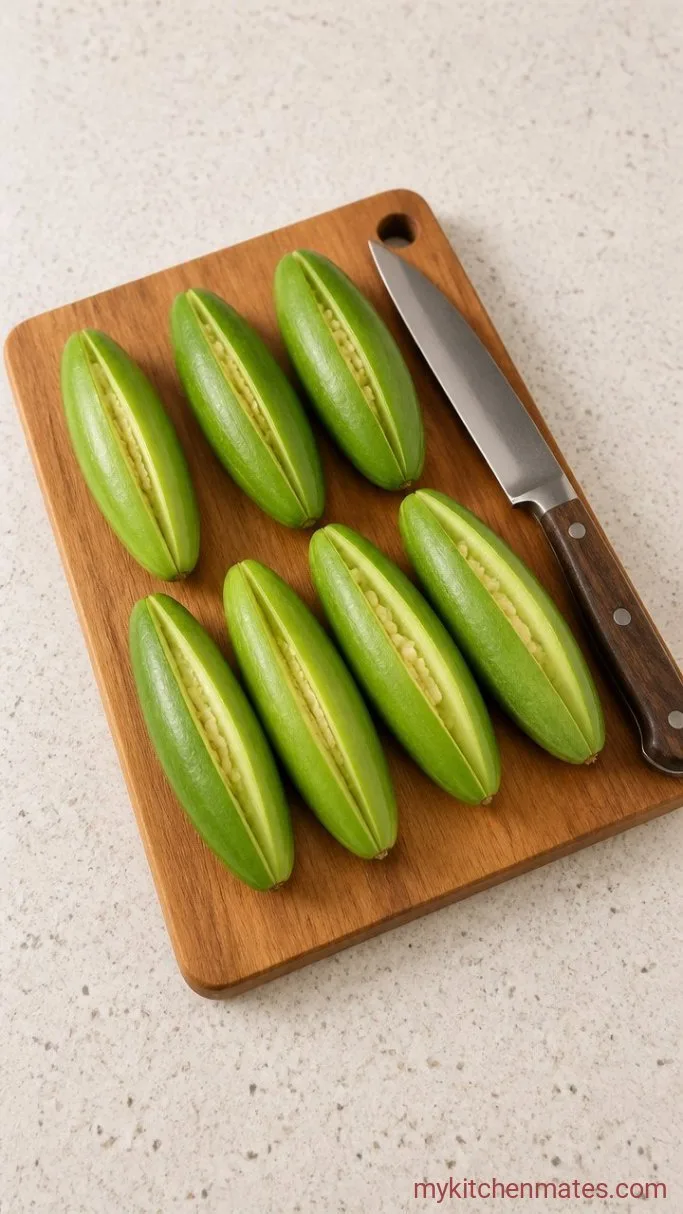
Wash 250g parwal and pat dry. Trim off both ends, then make one lengthwise slit through the skin side, stopping about half an inch from each tip so the piece holds together. Use your thumb or a small spoon to gently scrape out the seeds and any spongy core, leaving the flesh intact.
The inside should look pale green and clean. If a piece starts to tear, set it aside and stitch it closed with the stuffing later. Set the cleaned parwal on a plate and sprinkle the reserved pinch of salt lightly over the flesh side while you make the filling; this draws out a little bitterness.
Step 2: Mix the Spiced Besan Stuffing
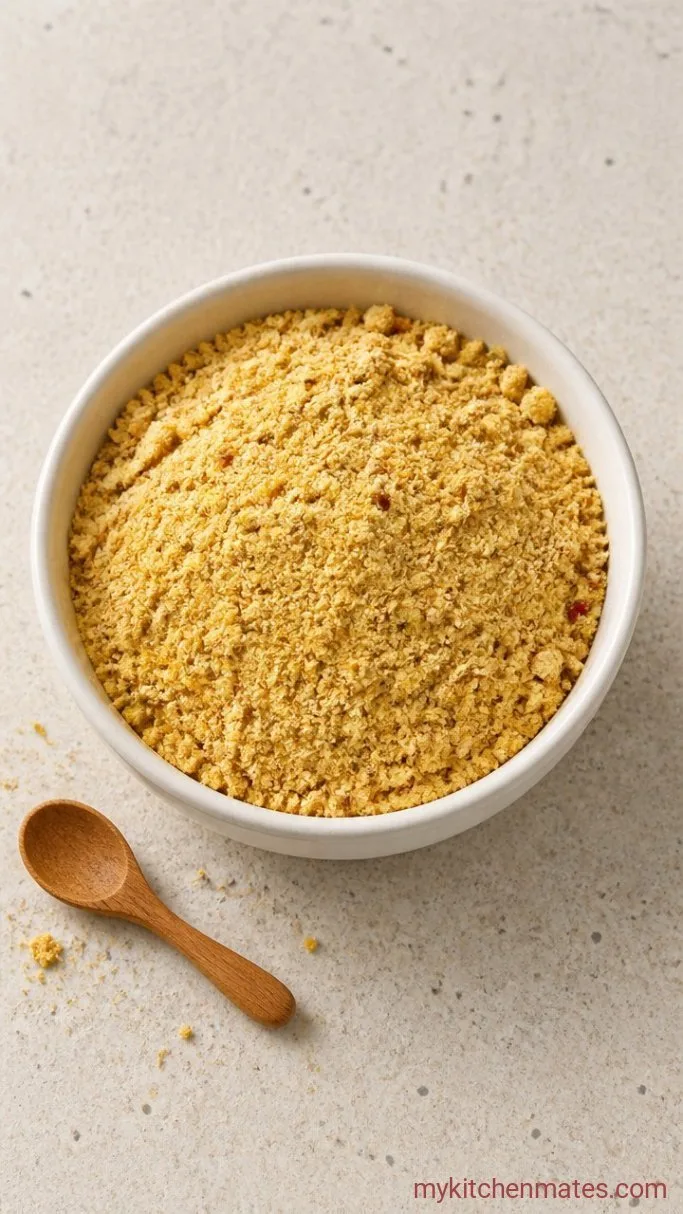
In a small bowl, combine 3 tbsp gram flour, 1 tsp crushed fennel seeds, 1 tsp coriander powder, ½ tsp turmeric, ½ tsp red chili powder, 1 tsp dried mango powder, ½ tsp garam masala, and ½ tsp salt. Drizzle in 1 tbsp of the oil and use your fingers to rub the mixture together until it looks like wet sand. It should hold together when pressed, not be dry and powdery.
Taste a pinch of the dry mix. It will be intense, but that intensity balances the mild gourd once cooked. Adjust salt or chili at this stage if needed.
Step 3: Stuff the Parwal
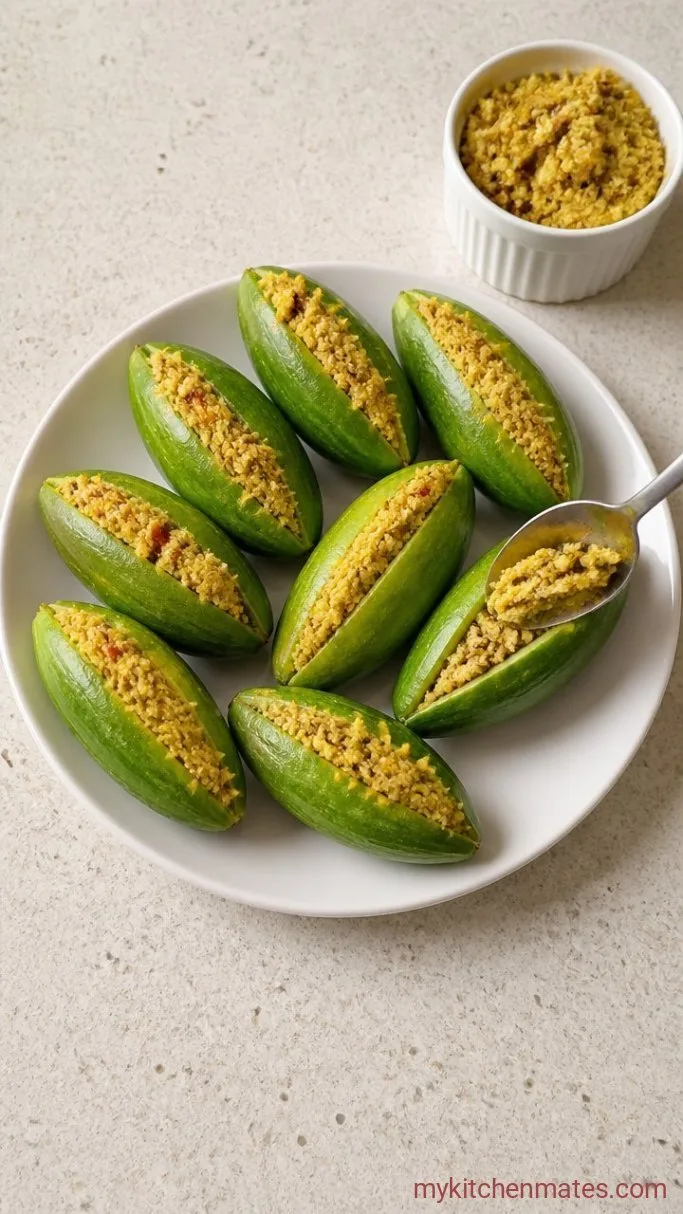
Using a small spoon or your fingers, press the spiced besan mixture firmly into the slit of each parwal. Fill until the stuffing is level with the cut edges, but do not overstuff to the point where the parwal opens flat. Wipe away any stray crumbs from the outside so they do not burn in the pan.
Line up the stuffed pieces on a tray. The goal is a neat row of parwal that look full but not bursting, ready to go into the hot pan.
Step 4: Sear the Stuffed Parwal
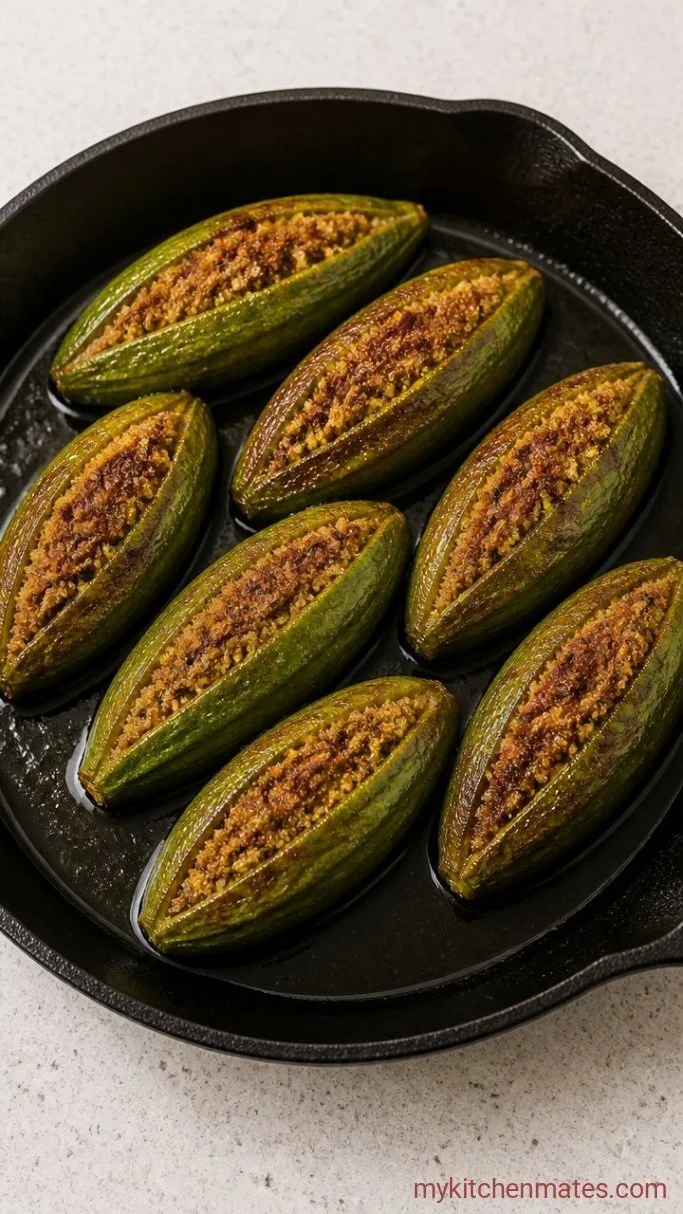
Set a wide, heavy skillet over medium heat and add the remaining 2 tbsp oil. When the oil shimmers, place the parwal in a single layer, stuffing side up first. Let them cook undisturbed for 3 to 4 minutes, until the underside looks lightly golden and blistered. Use tongs to turn each piece gently so the stuffing side hits the pan, then cook another 3 to 4 minutes.
The gram flour will smell toasty and turn a few shades darker. Now pour 2 tbsp water around the edges of the pan, immediately cover with a lid, and lower the heat to medium-low. Steam the parwal for 5 to 6 minutes, until a knife slips through the skin with no resistance. Uncover and let any remaining liquid sizzle off for 30 seconds so the stuffing crisps back up.
Step 5: Finish with Cilantro and Serve
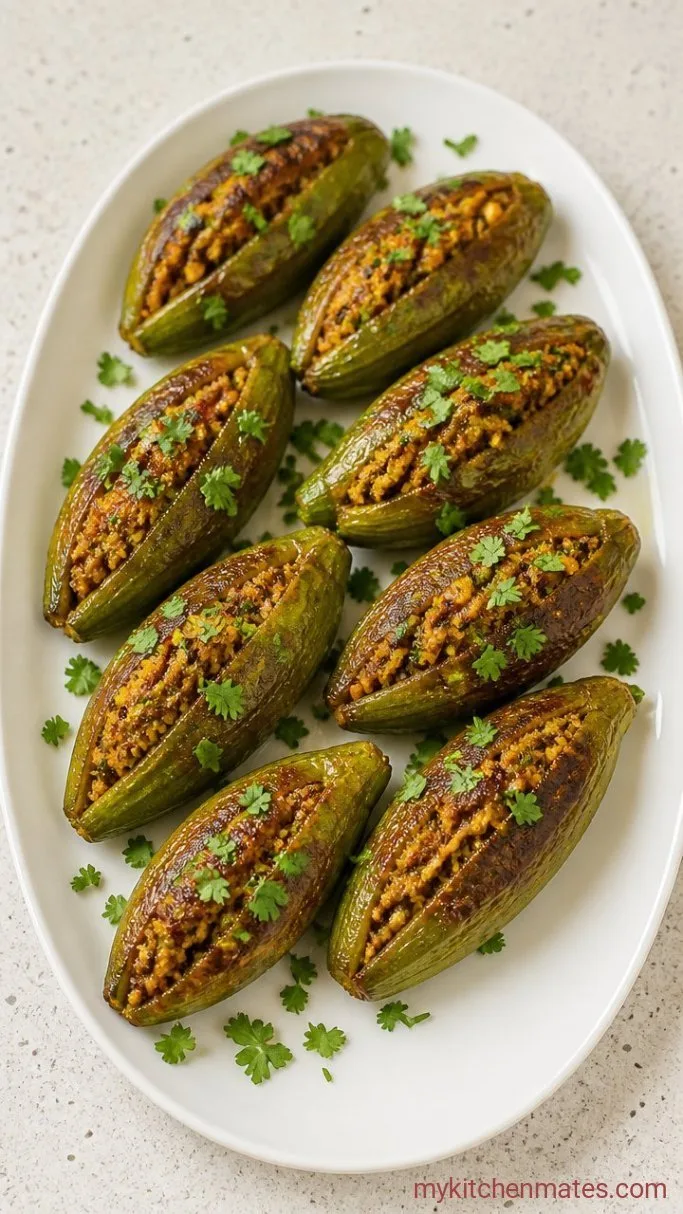
Transfer the stuffed parwal to a serving plate, stuffing side facing up. Scatter a handful of fresh cilantro leaves over the top while everything is still warm. Serve right away alongside hot roti or steamed rice, with a spoonful of the pan drippings from the skillet.
The skin should be tender and the stuffing flecked with dark golden spots. The aroma of roasted besan and fennel is your sign that everything went right.
A Few Notes for Perfect Stuffed Parwal
- Pick young, slender parwal that feel firm and have a bright green skin. Larger, thicker ones can be more fibrous and carry a bitter note that even salt does not fully fix.
- The small sprinkle of salt on the cut flesh is optional but helpful. Let it sit just 3 to 5 minutes while you make the stuffing, then pat the pieces dry before filling.
- If you taste the stuffing mix raw and worry it is too pungent, do not dial back the spices too much. The steamed parwal tones everything down, so the filling should taste bold before cooking.
- Leftover stuffing mix can be saved in an airtight jar for a few days and used to fill mushrooms or bell pepper halves.
What to Serve with Stuffed Parwal
A simple yellow dal and steamed basmati rice turn this into a full meal. I like a cooling cucumber raita on the side because the tang and chill balance the warm spice of the stuffing. If you are eating with roti, a few rings of raw red onion and a wedge of lime are enough.
Frequently Asked Questions
Can I use an air fryer for this?
You can, but the gram flour texture changes. After stuffing, brush the parwal lightly with oil and air fry at 180°C (350°F) for 12 to 14 minutes, shaking once. The skin dries out more than on the stovetop, so a quick steam at the end helps.
My parwal turned bitter even after salting. What went wrong?
Some older gourds carry a natural bitterness that is hard to remove. Next time, look for smaller, lighter green parwal and avoid any with soft spots. Soaking the cleaned, slit parwal in salted water for 10 minutes can also help draw out more bitterness.
How do I prevent the stuffing from falling out while cooking?
Make sure the stuffing is pressed firmly into the slit and not heaped above the cut edges. When you turn the pieces in the pan, do it gently with a spoon or tongs, and resist the urge to move them too often.
Can I make this dish ahead of time?
The texture is best fresh, when the stuffing still has a slight crispness. If you make it ahead, reheat gently in a covered pan with a teaspoon of water to soften the parwal again, but the stuffing will lose its crunch.
Stuffed Parwal Recipe
Ingredients
Method
- Wash and dry parwal, trim ends, then make one lengthwise slit. Scoop out seeds and sprinkle the inside with a small pinch of salt while you prepare the stuffing.
- Combine gram flour, fennel seeds, coriander, turmeric, red chili, mango powder, garam masala, and salt. Rub in 1 tbsp oil until the mixture resembles wet sand.
- Press the spiced mixture firmly into each parwal slit, making sure the stuffing is level with the cut edges.
- Heat remaining oil in a wide skillet over medium heat. Place parwal stuffing side up and cook 3 to 4 minutes until golden underneath. Turn stuffing side down and cook another 3 to 4 minutes. Pour 2 tbsp water around the edges, cover, and steam on medium-low for 5 to 6 minutes until tender. Uncover and let any liquid evaporate.
- Transfer to a plate, scatter cilantro over the top, and serve hot.
Notes
