
Orange Bundt Cake with a Sticky Orange Glaze

This orange bundt cake is soft, buttery, and packed with fresh citrus in every layer, finished with a sticky orange glaze that soaks right into the crumbs.
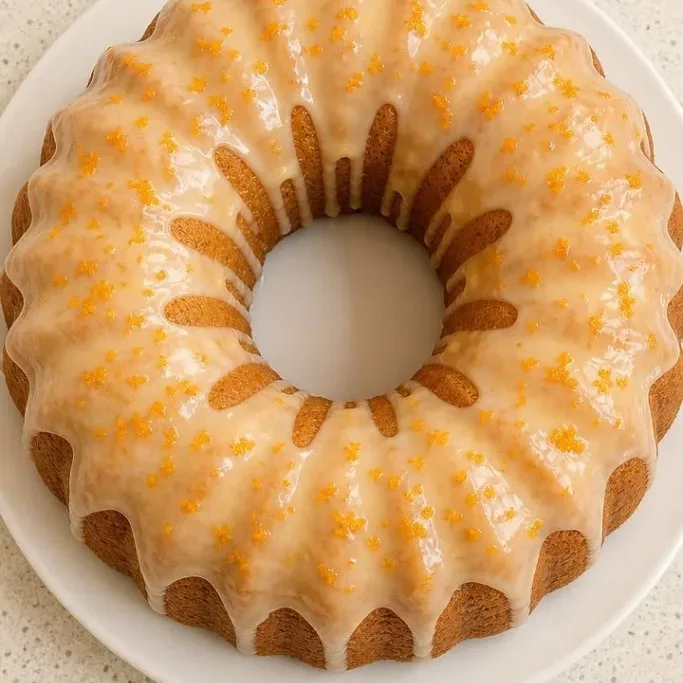
It comes together in one bowl without a mixer, which makes it just as right for a lazy Sunday as it is for a last minute dessert need.
Why This Bundt Cake Works
The crumb stays tender for a good three days thanks to the buttermilk, and the glaze brings a bright, tangy sweetness that cuts through the richness without weighing anything down.
I skip the mixer entirely and whisk everything by hand, so there’s no creaming or fussing. It’s the kind of recipe you can hand to someone who feels nervous about baking and they’ll nail it the first time.
Ingredients

- 2 ½ cups (315 g) all-purpose flour: spooned and leveled, so the cake doesn’t dry out
- 2 tsp baking powder
- ½ tsp baking soda
- ½ tsp salt
- 1 ½ cups (300 g) granulated sugar
- 2 tbsp finely grated orange zest (from about 2 large oranges): use a microplane if you have one
- ½ cup (115 g) unsalted butter, melted and cooled: no need to bring it to room temperature
- 2 large eggs, at room temperature: cold eggs can make the batter tighten up
- 1 cup (240 ml) buttermilk, at room temperature: keeps the crumb moist
- ¼ cup (60 ml) fresh orange juice
- 2 tsp vanilla extract
For the Glaze
- 1 ½ cups (180 g) powdered sugar
- 3 to 4 tbsp fresh orange juice
- 1 tsp orange zest (optional): for a stronger citrus kick
Variations / Substitutions
- Dairy-free: swap the butter for a solid dairy-free stick, and use 1 cup oat milk whisked with 1 tbsp lemon juice in place of buttermilk.
- Cardamom orange: add ½ tsp ground cardamom to the dry ingredients for a subtle floral note.
- Orange poppy seed: fold 2 tbsp poppy seeds into the batter before pouring it in the pan.
- Lemon version: replace the orange zest and juice with equal amounts lemon zest and juice.
Old-Fashioned Orange Cake is next on our list if this cake is your kind of dessert.
How To Make Orange Bundt Cake
Step 1: Whisk the Dry Ingredients

Preheat the oven to 350°F (175°C). Grease a 10-cup bundt pan well with butter or nonstick spray, then dust it with flour, tapping out the excess. In a medium bowl, whisk together the 2 ½ cups flour, 2 tsp baking powder, ½ tsp baking soda, and ½ tsp salt. Set the bowl aside.
Getting every crevice of the pan is worth the extra minute. A stuck bundt is a sad bundt, and this cake deserves a clean release.
Step 2: Mix the Wet Ingredients

In a large bowl, use your fingertips to rub the 2 tbsp orange zest into the 1 ½ cups sugar until the sugar feels damp and smells intensely of orange, about 1 minute. Pour in the melted ½ cup butter and whisk until the mixture is smooth. Whisk in the 2 eggs, one at a time, then the 1 cup buttermilk, ¼ cup orange juice, and 2 tsp vanilla. The mixture will look thin and a little curdled. That’s fine, it comes together when you add the flour.
Rubbing the zest into the sugar releases the citrus oils, so the flavor runs through the whole cake, not just the top.
Step 3: Fold the Batter Together

Tip the wet ingredients into the bowl of dry ingredients. Gently fold with a spatula until just combined and no streaks of flour remain, about 12 to 15 strokes. The batter will be thick and fluffy. Pour it into the prepared pan and smooth the top with the spatula.
You might see a few small lumps. They will bake out, so don’t keep mixing. The moment the flour disappears, stop. Overworking the batter at this stage makes the cake dense.
Step 4: Bake Until Golden and Springy
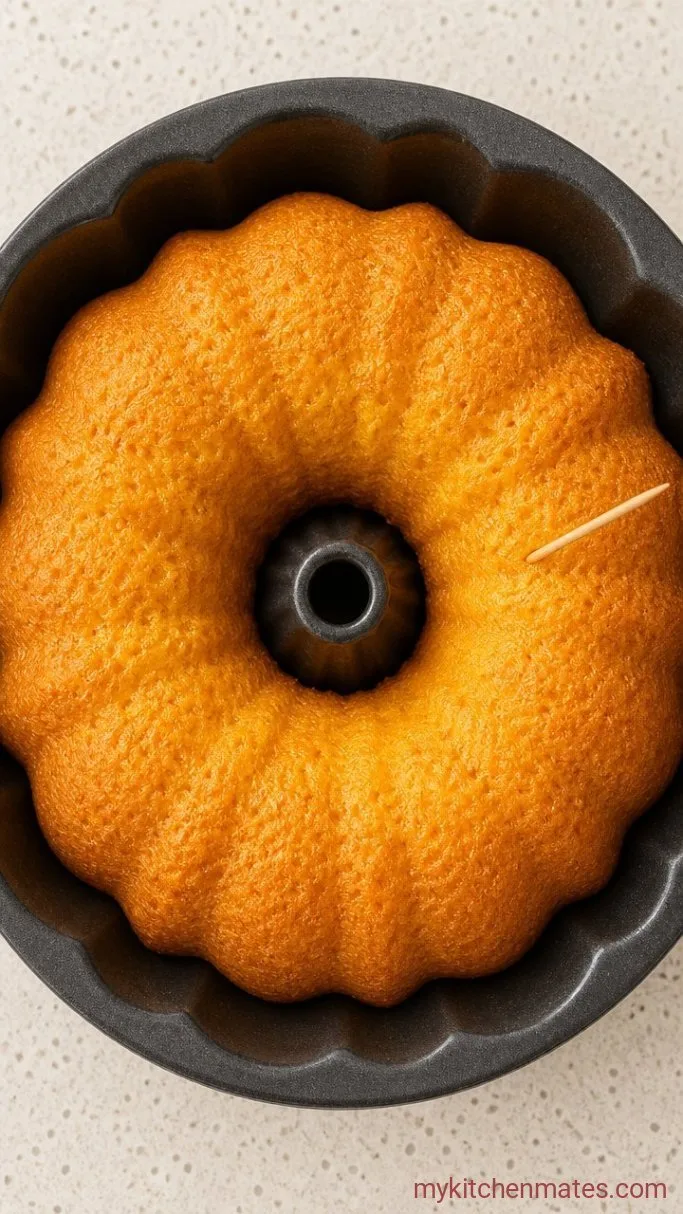
Bake the cake in the preheated oven for 45 to 50 minutes, until a toothpick pushed into the deepest part comes out clean or with a few moist crumbs clinging to it. The top will be deeply golden and the edges will just start to pull away from the sides of the pan. Let the cake cool in the pan on a wire rack for 15 minutes, then invert it onto the rack to cool completely.
If the cake seems stuck, run a thin knife around the edges and give the pan a few gentle taps on the counter. It usually drops right out. Wait until the cake is fully cool before you glaze it, or the glaze will run straight off.
Step 5: Glaze the Cooled Cake

In a small bowl, whisk the 1 ½ cups powdered sugar with 3 tbsp orange juice until smooth. Add more juice, 1 tsp at a time, until the glaze is thick but pourable. It should ribbon off the whisk and melt back into itself after a second. Stir in the optional 1 tsp zest. Set the cake (still on the rack) over a baking sheet and pour the glaze over the top, letting it drip down the sides. Let the glaze set for about 20 minutes, then slice and serve.
The glaze firms up into a thin, crackly shell that snaps lightly when you cut through it, with sticky pockets settling into the bundt’s grooves.
A Few Notes Before You Bake
- Use the microplane to zest directly over the sugar bowl. It catches every drop of citrus oil that would otherwise end up on your cutting board.
- Spoon and level the flour. Too much flour makes the crumb dry, and bundt pans don’t hide dryness well.
- Bring the eggs and buttermilk to room temperature. Cold ingredients can make the melted butter firm up, leaving you with a lumpy batter.
- If you want an even stronger orange hit, add ½ tsp orange extract to the wet ingredients. It boosts the flavor without tasting artificial.
- Don’t skip the 15 minute cooling window in the pan. Inverting too soon can tear the cake, and waiting too long can make it glue itself to the pan.
Bake times shift a bit depending on your pan.
| Pan Size & Material | Bake Time |
|---|---|
| 10-cup aluminum bundt pan | 45 to 50 mins |
| 6-cup mini bundt pan | 35 to 40 mins |
| 12-cup bundt pan | 50 to 55 mins |
Storing Leftovers
Keep the glazed cake covered at room temperature for up to 3 days. The glaze will soften slightly but the cake stays moist. For longer storage, refrigerate it for up to a week; let slices come to room temperature before eating. You can also freeze the unglazed cake tightly wrapped for up to a month, then glaze it once it thaws.
Frequently Asked Questions
Can I make this cake a day ahead?
Yes. Bake it, let it cool completely, and wrap it unglazed. Glaze it the next morning and it’ll taste just as fresh.
Can I add poppy seeds?
Definitely. Fold 2 tbsp poppy seeds into the finished batter right before you pour it into the pan.
Why did my cake dome and crack on top?
That’s normal for a bundt pan and not a fault. The bottom becomes the top when you invert it, so any cracks hide underneath the cake.
Can I turn this into a sheet cake?
You can. Pour the batter into a greased 9×13-inch pan and bake at 350°F for 25 to 30 minutes, until a tester comes out clean.
Orange Bundt Cake Recipe
Ingredients
Method
- Preheat oven to 350°F (175°C). Grease and flour a 10-cup bundt pan. Whisk flour, baking powder, baking soda, and salt in a medium bowl.
- In a large bowl, rub orange zest into sugar until fragrant. Whisk in melted butter, then eggs one at a time, followed by buttermilk, orange juice, and vanilla.
- Fold wet mixture into dry ingredients until just combined. Pour into prepared pan and smooth the top.
- Bake 45-50 minutes until a toothpick comes out clean. Cool in pan 15 minutes, then invert onto a rack to cool completely.
- Whisk powdered sugar with 3 tbsp orange juice, adding more until pourable. Stir in optional zest. Pour glaze over cooled cake, let set 20 minutes, then slice.
Notes
