
20-Minute Korean Spicy Chicken

Korean spicy chicken is a quick stir-fry that coats tender, browned chicken in a sticky, savory-sweet gochujang sauce. You get the deep, fermented chili heat without a long marinade or a pile of dishes, so it fits right into a busy weeknight.
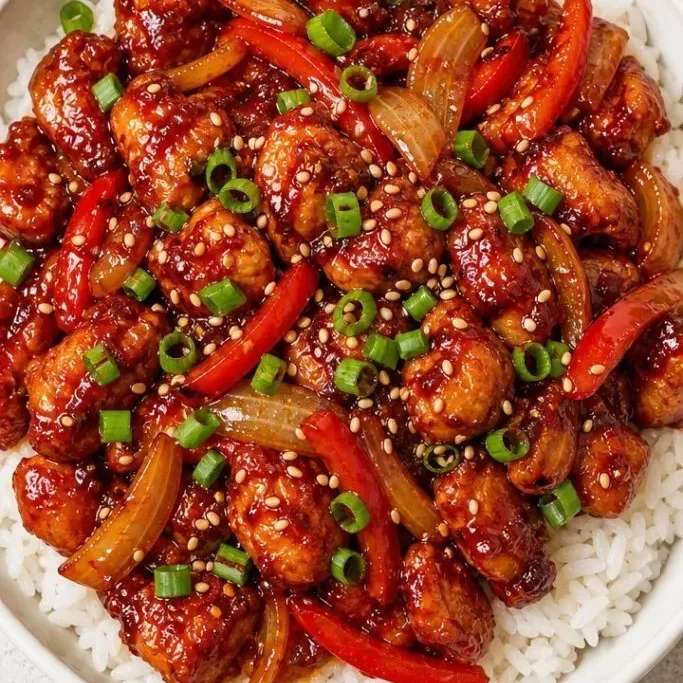
The sauce relies on pantry staples and comes together in the time it takes to slice a few things. Pile it over steamed rice and you have a dinner that feels bold and complete in about 20 minutes flat.
Why This Stir-Fry Works
The gochujang sauce does the heavy lifting. It’s thick, a little funky, and just spicy enough that you keep reaching for one more bite. Searing the chicken in a ripping hot pan first gives the pieces a browned, almost crisp edge, so the texture holds up even after the sauce glazes everything.
One skillet handles the whole dish, from the sear to the final simmer. The onion and bell pepper add sweetness and a slight crunch, making the meal feel more generous without extra work.
Ingredients
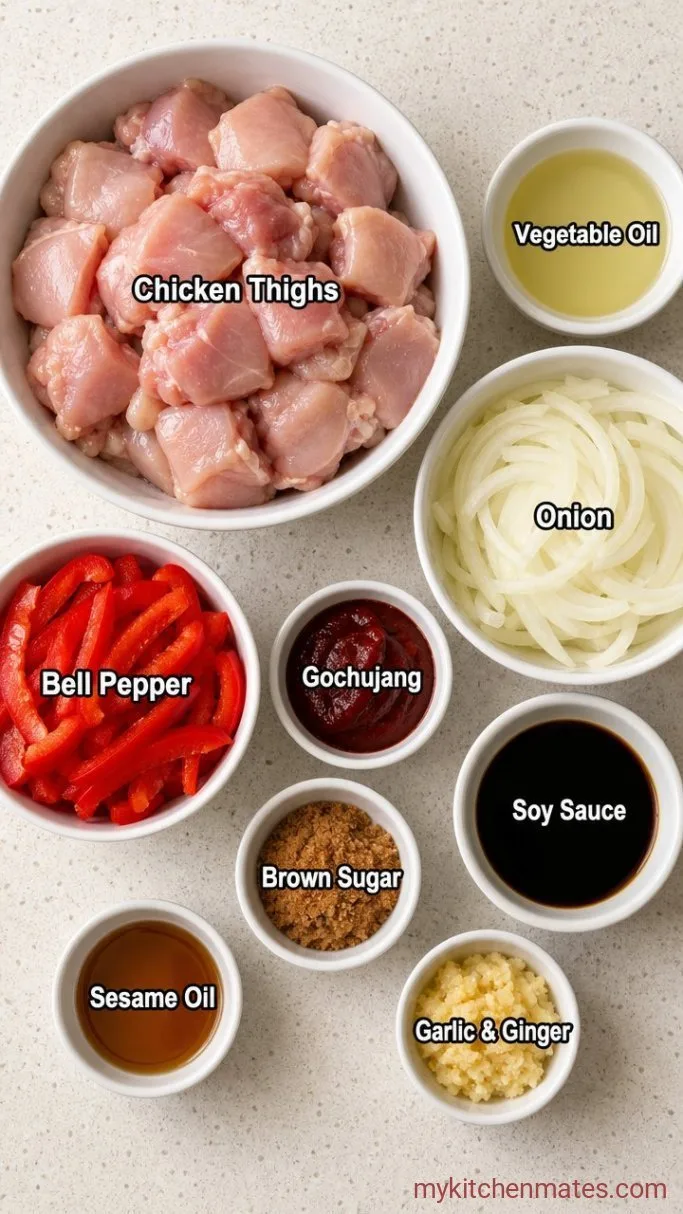
- 1.5 lbs boneless, skinless chicken thighs, cut into bite‑sized pieces: thighs stay juicy even with high heat; chicken breasts work but will cook faster.
- 1 tbsp vegetable oil (or another neutral oil): for searing.
- 1 small onion, thinly sliced: yellow or white onion both work fine.
- 1 red bell pepper, sliced into thin strips: adds color and a little sweetness.
- 3 tbsp gochujang (Korean chili paste): the heart of the sauce, sold in the Asian aisle or online.
- 2 tbsp soy sauce: regular or low‑sodium both work; adjust salt to taste.
- 1 tbsp brown sugar: balances the heat and helps the sauce turn sticky.
- 1 tbsp toasted sesame oil: for a nutty finish, added early so it infuses the sauce.
- 3 cloves garlic, minced: use fresh for the best punch.
- 1 tsp grated fresh ginger: a microplane makes this fast.
- 2 tbsp water: thins the sauce just enough to coat without burning.
- Sliced green onions and toasted sesame seeds: for serving.
Variations and Substitutions
- Protein swap: Extra‑firm tofu (pressed and cubed) work well; adjust cooking times so everything stays tender.
- No gochujang?: Mix 2 tbsp white miso with 1 tbsp sriracha or another chili paste, then taste and add more heat as needed. The flavor will be less deep but still good.
- Spice level: The recipe as written is medium spicy. Use 2 tbsp gochujang for a milder version or add a teaspoon of gochugaru (Korean chili flakes) if you want more heat.
- Dairy‑free: The whole dish is already dairy‑free.
- Extra veggies: Thin‑sliced carrot, zucchini, or bok choy can go in with the bell pepper. Add heartier veg first so everything finishes at the same time.
Tuna-Mayo Korean Rice Balls go great on the side with this chicken.
How To Make Korean Spicy Chicken
Step 1: Whisk Together the Sauce
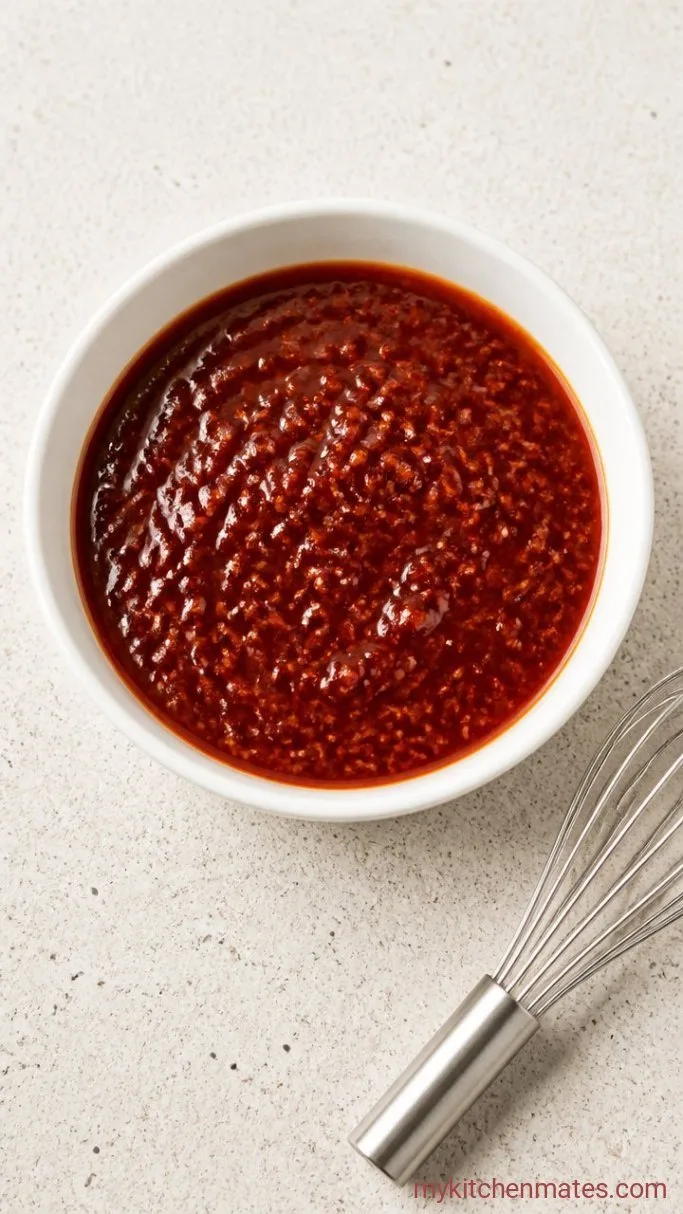
In a small bowl, whisk the 3 tbsp gochujang, 2 tbsp soy sauce, 1 tbsp brown sugar, 1 tbsp sesame oil, minced garlic, grated ginger, and 2 tbsp water until smooth. Set it near the stove so it’s ready when you need it.
The mixture will look thick and glossy, almost like a loose barbecue sauce. It smells strongly of garlic and toasted sesame, with a gentle warmth from the gochujang.
Step 2: Sear the Chicken
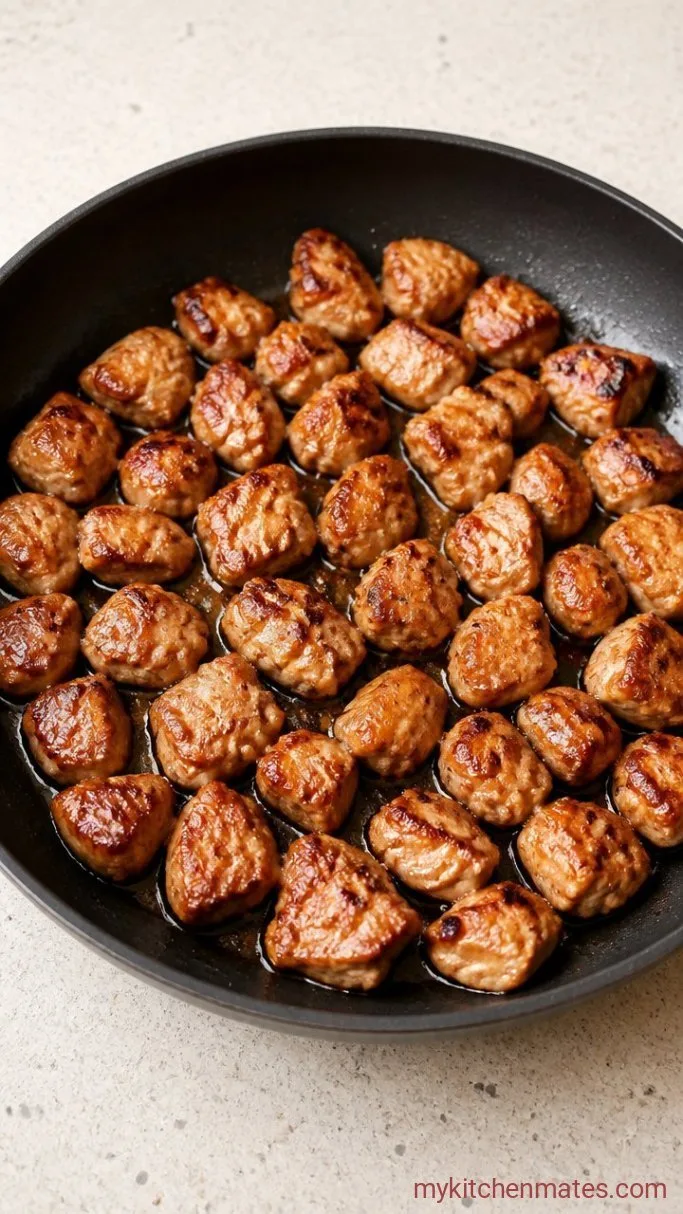
Heat 1 tbsp vegetable oil in a large skillet or wok over high heat until the oil shimmers. Add the chicken pieces in a single layer, season them lightly with a pinch of salt, and let them cook without moving for 2 to 3 minutes. When the bottoms are deeply golden, give the pan a toss and cook for another 2 to 3 minutes until no pink remains on the outside. Transfer the chicken to a plate and set aside.
You want to hear a steady sizzle the moment the chicken hits the pan. If the pieces are crowded, the pan temperature will drop and the chicken will steam instead of browning, so cook in two batches if your skillet isn’t large.
Step 3: Stir-Fry the Onion and Pepper
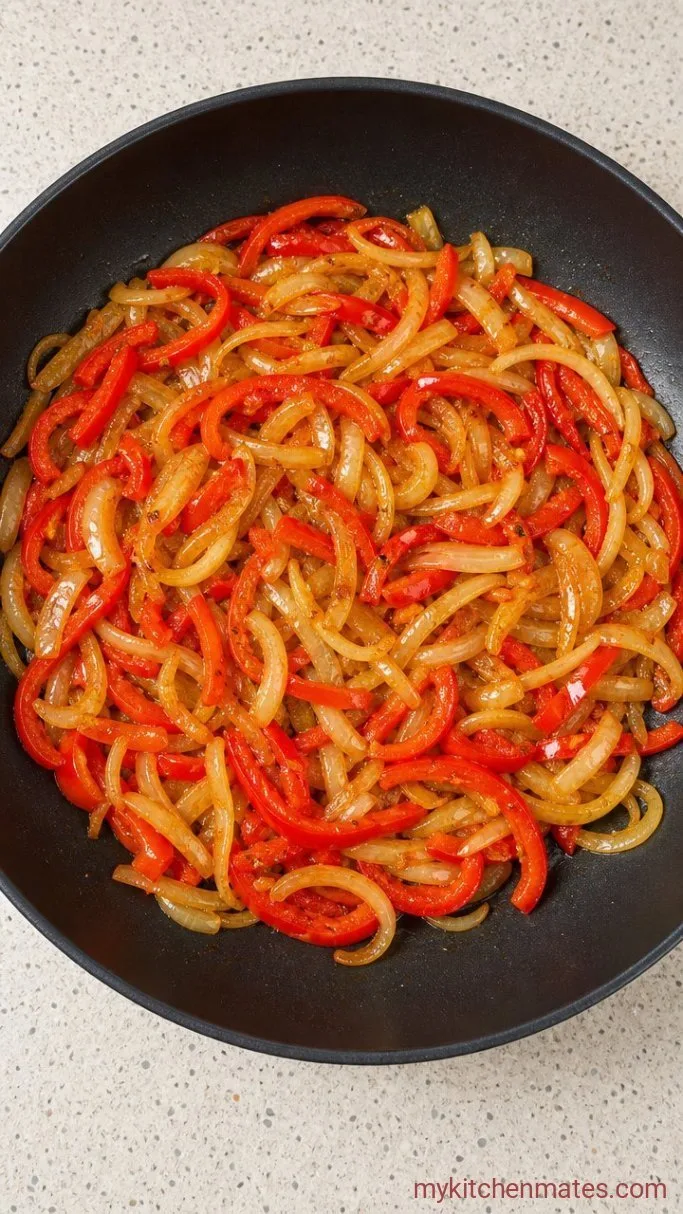
Add the sliced onion and bell pepper to the now‑empty pan. Stir‑fry over high heat for 2 to 3 minutes, just until the onion starts to soften and the pepper loses its raw crunch but still has some bite.
You should see the vegetables pick up a few brown spots from the pan, which adds a subtle charred note that works well with the gochujang. If the pan looks dry, add a tiny splash of oil.
Step 4: Simmer in the Sauce
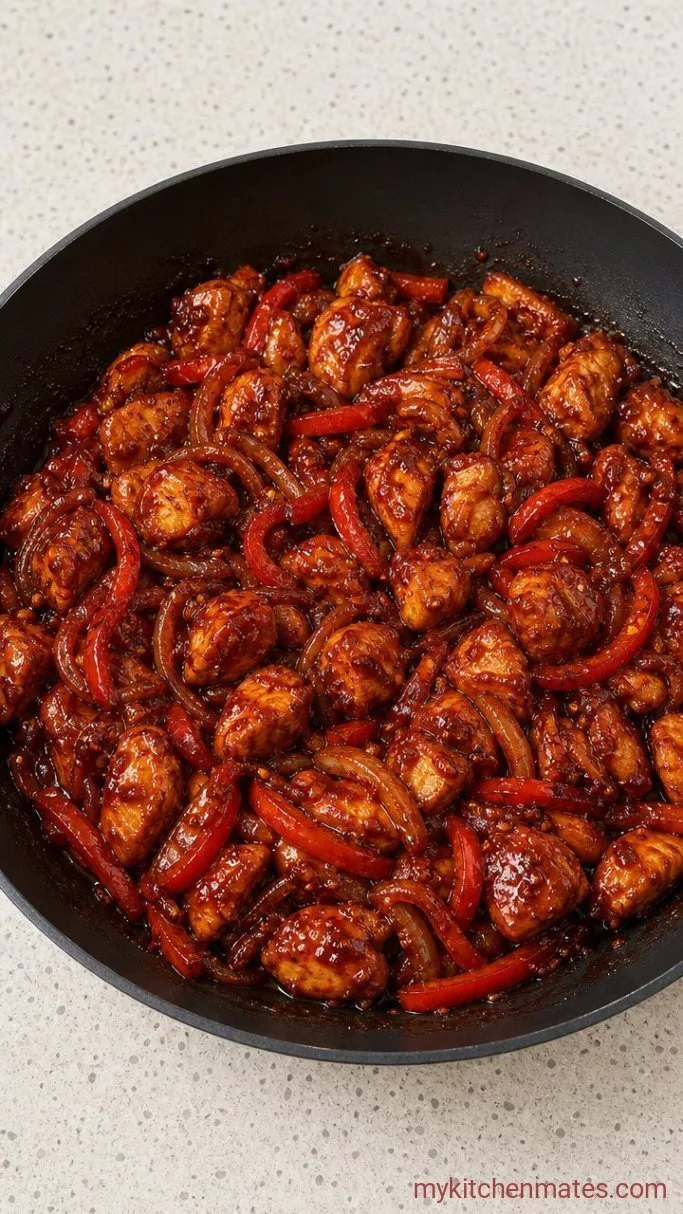
Pour the gochujang mixture into the skillet with the vegetables. Give it a quick stir, then return the chicken and any juices that collected on the plate. Let everything bubble over medium‑high heat for 2 to 3 minutes, tossing often, until the sauce thickens and clings to the chicken in a glossy coat.
Watch the sauce closely as it reduces. It will go from thin and watery to sticky and deep red in that short window. If it thickens too fast, a tablespoon of water brings it right back.
Step 5: Serve Over Rice
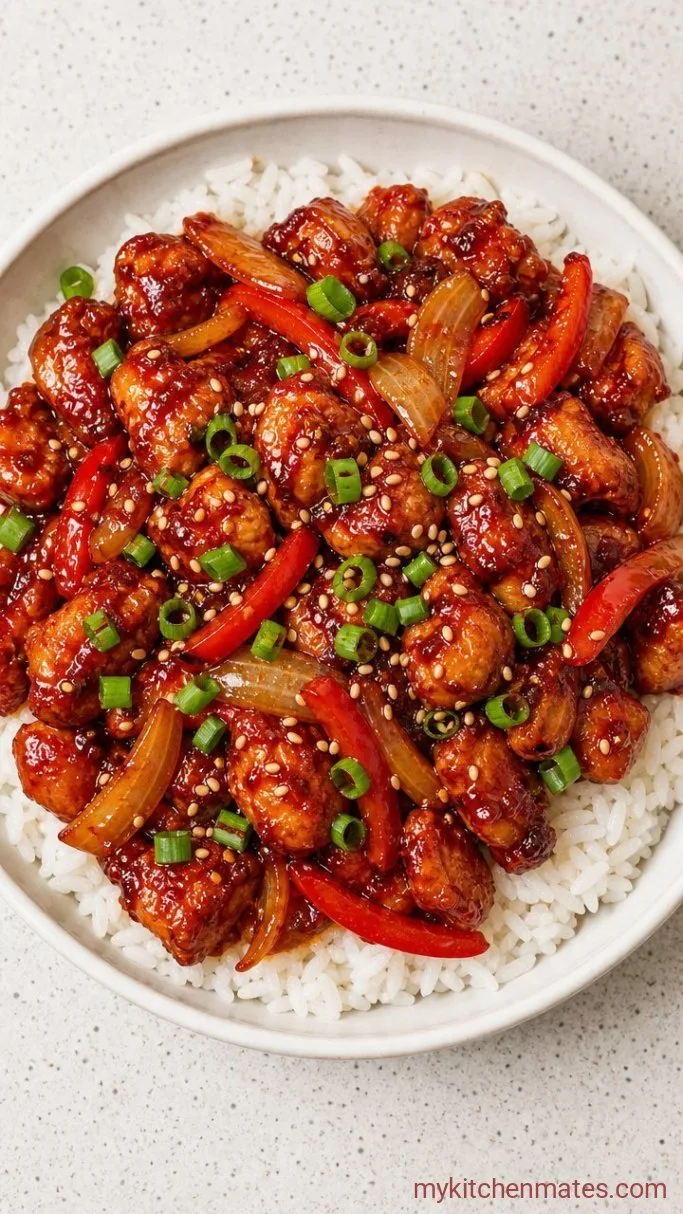
Spoon the spicy chicken over bowls of steamed rice and scatter sliced green onions and sesame seeds on top. Serve immediately while the sauce is hot and glossy.
The rice soaks up the extra sauce, so don’t be shy with it. A pile of quick‑pickled radish or a simple cucumber salad on the side cuts through the richness.
Tips for the Best Korean Spicy Chicken
- Use dark meat if you can.: Chicken thighs are more forgiving on high heat and taste richer with the gochujang sauce. If you use breasts, pull them off the heat the moment they are just cooked through, around 5 minutes total searing time.
- Don’t skip the sesame oil.: It rounds out the sauce and gives it that unmistakable Korean‑food aroma. Add it with the rest of the sauce ingredients rather than drizzling it at the end so the flavor melds.
- Keep the pan screaming hot for the sear.: A high‑heat sear is what gives you those browned, almost crisp edges. If the oil isn’t shimmering before the chicken goes in, the pieces will steam instead.
- Taste the sauce before you add the chicken back.: Gochujang brands vary in salt and heat. Dip a spoon into the bubbling sauce and adjust with a pinch more sugar or a dash of soy sauce if needed.
Storing Leftovers
- Refrigerate: Cooled spicy chicken keeps well in an airtight container for up to 3 days. The sauce may thicken further in the fridge, which is fine for reheating.
- Reheating: Warm gently in a skillet over medium heat with a splash of water to loosen the sauce. The microwave works in a pinch, but the texture is better on the stovetop.
What To Serve With Korean Spicy Chicken
Steamed white rice is the obvious partner because it tames the heat and soaks up every bit of sauce. For something fresh, a cucumber quick pickle or a crunchy Asian slaw balances the richness with acid and crunch. Store‑bought kimchi spooned right from the jar adds more fermented depth if you enjoy it.
Frequently Asked Questions
Is this dish very spicy?
It is moderately spicy, not overwhelming. Gochujang has a deep, rounded heat rather than a sharp burn. To make it milder, use 2 tbsp gochujang and increase the brown sugar by a teaspoon. For more heat, stir in a half‑teaspoon of gochugaru or a drizzle of chili oil at the table.
Can I make this ahead?
The chicken can be seared a few hours ahead and kept in the fridge, but the sauce is best made fresh. Stir‑fry the vegetables and sauce just before serving so the bell pepper keeps some crunch and the sauce stays glossy.
How do I get the chicken to brown instead of steaming?
Use a large enough pan and keep the heat high. A 12‑inch skillet or a wok works best for this amount of chicken. If the pieces fit in a snug single layer without touching, they will brown. If you see liquid pooling instead of oil sizzling, the pan is too crowded or not hot enough.
What if I can’t find gochujang?
A mix of white miso and sriracha can step in, though the taste is different. Start with 2 tbsp miso and 1 tbsp sriracha, then taste and adjust the heat. The sauce will be saltier and less fruity than the original, but it still makes a good quick chicken.
Korean Spicy Chicken Recipe
Ingredients
Method
- Whisk gochujang, soy sauce, brown sugar, sesame oil, garlic, ginger, and water in a small bowl.
- Heat vegetable oil in a large skillet over high heat. Sear chicken pieces with a pinch of salt until browned, 5 to 6 minutes total. Transfer to a plate.
- In the same pan, stir‑fry onion and bell pepper over high heat for 2 to 3 minutes until slightly softened.
- Pour sauce into the skillet, return chicken and any juices, and simmer for 2 to 3 minutes until the sauce thickens and coats the chicken.
- Serve immediately over rice, topped with green onions and sesame seeds.
Notes
