
Weeknight Pho Noodle Soup

A steaming bowl of pho doesn’t need an all-day simmer. This version builds deep, spiced beef broth in about an hour, so you can have fragrant, slurpable noodle soup on a Tuesday without regret.

The broth is rich with charred ginger, toasted star anise, and a good hit of fish sauce. Slices of raw beef cook in the bowl from the heat of the soup, keeping every bite tender and clean.
Why This One Actually Delivers
I’ve tested dozens of shortcuts, and this method gives you broth that tastes like it simmered for hours, not minutes. The secret is charring the onion and ginger until they’re blackened in spots, which adds that signature smokiness you’d miss in a rushed recipe.
You still get the layered aroma of cinnamon and clove, the silky rice noodles, and the fresh herb toppings that make pho so satisfying. It’s the real deal, just faster.
Ingredients
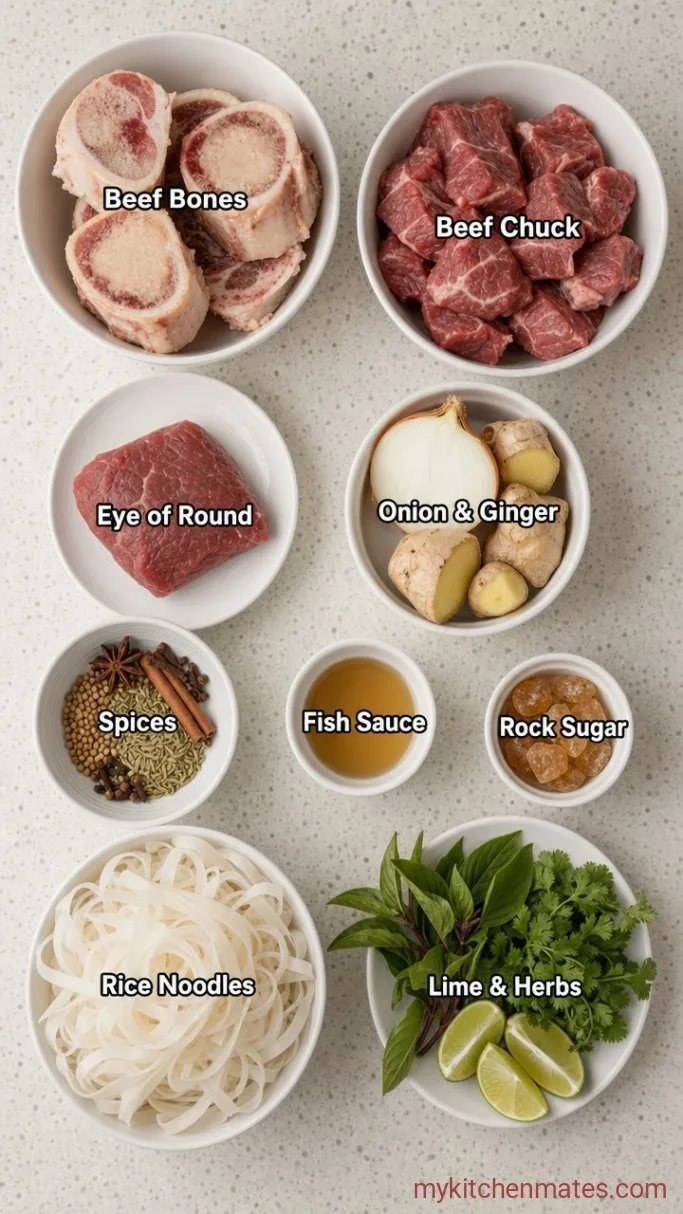
- 1 lb beef marrow or knuckle bones: adds body; you can skip in a pinch
- 1 lb beef chuck roast or brisket: this simmers into tender slices
- 1 large onion, halved
- 4-inch piece fresh ginger, halved lengthwise
- 5 star anise pods
- 1 cinnamon stick
- 3 whole cloves
- 1 tablespoon coriander seeds
- 1 teaspoon fennel seeds
- 1 black cardamom pod (optional)
- 3 tablespoons fish sauce
- 1 tablespoon rock sugar or packed brown sugar
- 8 cups low-sodium beef broth
- 4 cups water
- 1 lb flat rice noodles (banh pho)
- 8 oz beef eye of round or sirloin, for serving: chilled and sliced paper-thin
- For serving: bean sprouts, Thai basil, cilantro, jalapeño slices, lime wedges, hoisin, sriracha
Variations / Substitutions
- Swap beef for chicken thighs: use the same broth method but reduce simmer time to 40 minutes for a quick pho ga.
- Go vegetarian: replace beef broth with mushroom broth, skip fish sauce, and use soy sauce and a pinch of salt.
- Change the sweetener: palm sugar or light brown sugar both work; just use the same 1 tablespoon.
- No fish sauce?: substitute with 2 tablespoons soy sauce and an extra pinch of salt.
- Spice adjust: if you dislike anise, reduce to 3 pods; the broth will still have warmth from the cinnamon and clove.
Classic Tuna Fish Sandwich is a great main dish to serve alongside this soup.
How to Make Pho Noodle Soup
Step 1: Char the Aromatics

Set an oven rack 6 inches below the broiler and heat it to high. Place the onion halves (cut side up) and ginger on a foil-lined baking sheet and broil for 5 to 7 minutes, until the tops and edges are evenly blackened in spots. The sugar in the onion caramelizes under the heat, so you’ll smell a sweetness mixed with smoke.
The char is what gives pho broth its distinctive backbone. Don’t worry if the papery skin on the onion burns; you’ll peel that away before simmering. Trust the blackened bits: they carry the signature depth you’d otherwise only get from hours of roasting.
Step 2: Toast the Spices

Place the star anise, cinnamon stick, cloves, coriander seeds, fennel seeds, and cardamom pod (if using) in a dry skillet over medium heat. Toast for 1 to 2 minutes, shaking the pan often, until the spices smell fragrant and the coriander seeds darken a shade. Be ready to pull them off the heat the moment that aroma hits.
The kitchen will fill with a warm, sweet-spiced scent that tells you the oils have bloomed. This quick step extracts the flavors you’d normally wait all day for, so don’t skip it, even if you’re short on time.
Step 3: Simmer the Broth
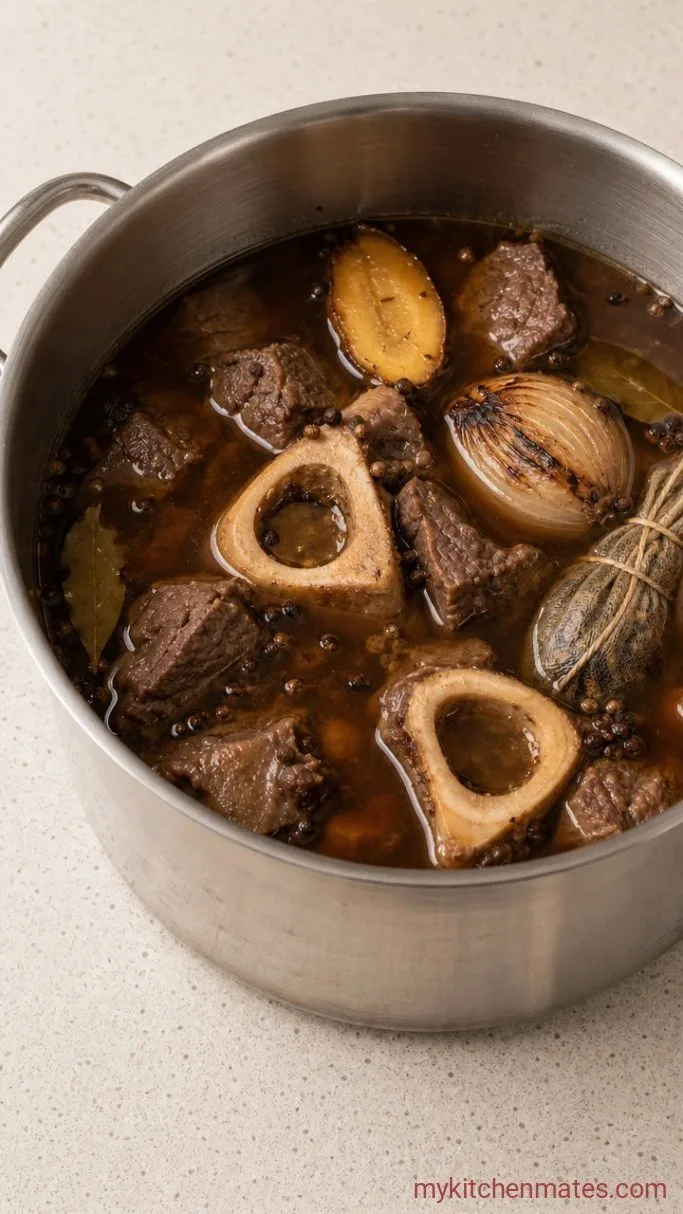
Peel away the charred outer layer of the onion and any blackened ginger skin. In a large pot, combine the onion, ginger, toasted spices, beef bones, chuck roast, beef broth, water, fish sauce, and sugar. Bring it all to a boil over high heat, then reduce the heat to a low simmer and cook uncovered for 45 minutes, skimming any foam that rises to the surface.
After about 15 minutes, the broth will shift from cloudy to a clearer amber. When it’s ready, the liquid will taste savory with a gentle sweetness and a tick of warmth from the spices. You’ll know it’s done when you can pull a piece of the chuck apart with a fork.
This is a weeknight broth, so it won’t have the full gelatinous body of a 12-hour version, but the bones and chuck still give it roundness. If you need even more silkiness, add a split trotter or extra marrow bones next time.
Step 4: Cook the Noodles and Prep Toppings

Remove the cooked chuck and any large bones from the broth, then strain the broth through a fine-mesh sieve into a clean pot. Discard the solids and keep the broth warm over low heat. Cook the rice noodles in a separate pot of boiling water for 3 to 4 minutes, just until tender but still chewy, then drain and rinse under cold water.
The noodles should be slippery and pliable, not mushy. Rinsing stops the cooking and washes off excess starch so they don’t clump in the bowl. Drain them well and divide among four large serving bowls.
Step 5: Slice the Beef
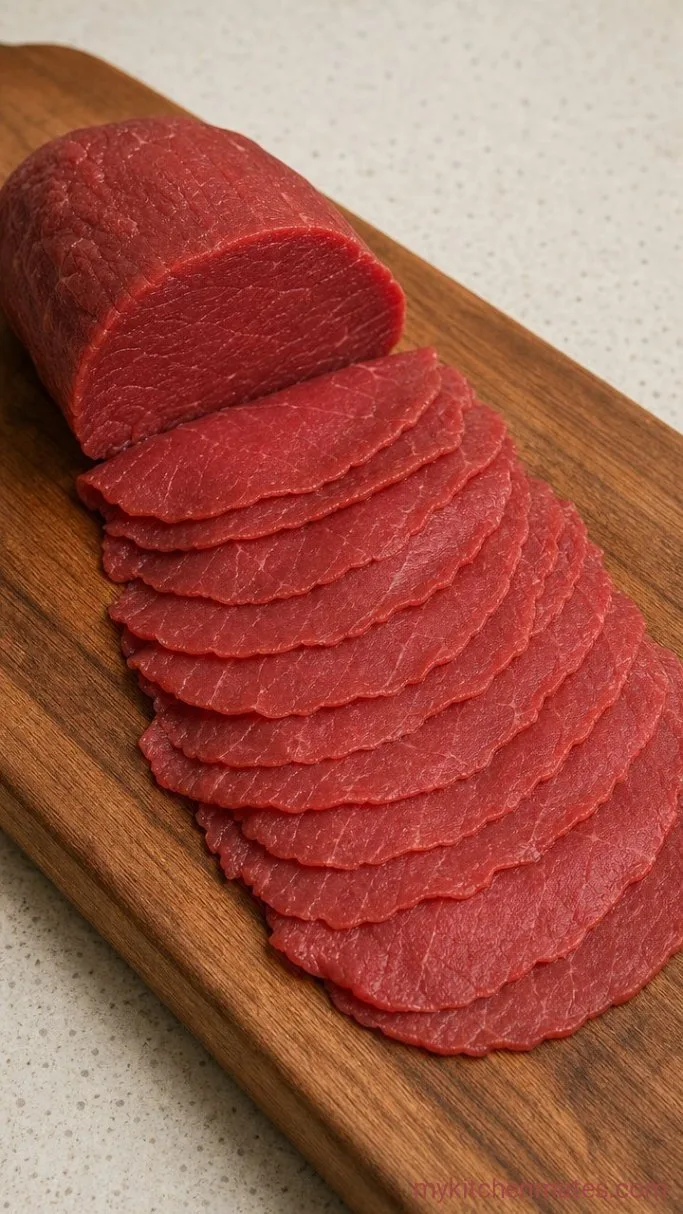
Take the chilled eye of round and slice it across the grain into paper-thin pieces using a sharp knife. If the meat is slightly firm from the refrigerator, pop it in the freezer for 10 minutes first; a firmer surface makes thin slicing far easier. Lay the raw slices in a single layer on a plate.
This beef will cook from the heat of the broth alone, so the thinner it is, the more tender the bite. Keep the slices cold until the moment the hot soup hits them—this gives you that tender, barely-pink result without any chewiness.
Step 6: Ladle and Serve the Bowls

Slice the cooked chuck against the grain and arrange it over the noodles in each bowl, then top with pieces of the raw sliced beef. Bring the broth back to a rolling boil, then ladle it directly over the raw meat. The liquid will turn the beef from red to pale brown in seconds.
Set the table with a pile of bean sprouts, herb sprigs, jalapeño rings, and lime wedges so everyone can customize their bowl. Pass hoisin and sriracha on the side, and serve while the broth is still piping hot.
A Few Notes Before You Start
- Choose your bones wisely: marrow and knuckle bones add silky texture; if you skip them, the broth will be lighter but still flavorful.
- Slice beef cold: a brief freezer stint turns a tricky slicing job into a 30-second task.
- Don’t boil the noodles ahead: cook them just before serving and keep them at room temperature; they’ll clump if they sit too long or get chilled.
- Save the leftover broth: freeze any extra in an airtight container for up to 3 months, and use it as a starter for a faster pho next time.
- Watch the fish sauce: 3 tablespoons gives a savory pop, but add the last tablespoon after tasting if you’re sensitive to salt.
Adjust the simmer to match the time you have:
| Simmer Time | Result |
|---|---|
| 45 minutes | Good weeknight broth, aromatic and clear |
| 2 hours | Deeper beef flavor, slightly richer body |
| 4+ hours | Full-bodied pho broth, tastes like an all-day simmer |
Storing Leftover Pho
- Refrigerate: Store broth and cooked beef separately from noodles and garnishes; both will keep in sealed containers for up to 4 days.
- Reheating: Gently reheat the broth in a pot, and if you have leftover raw beef, add it fresh to the hot bowl. Cooked noodles are best replaced with a fresh batch.
- Serve cold: This broth gels lightly when chilled, so you’ll get a jiggly texture that melts back into liquid once heated; that’s normal and good.
What to Serve With Pho Noodle Soup
A bowl of pho is a complete meal on its own, but a few crisp sides round out the table. Vietnamese fresh spring rolls cut the richness with crunchy vegetables and a peanut dipping sauce. A quick cucumber salad with rice vinegar and a pinch of sugar adds a refreshing contrast to the warm, spiced broth.
Frequently Asked Questions
Can I make this in an Instant Pot?
Yes. Use the sauté function to char the onion and ginger, then toast the spices. Add all broth ingredients and pressure cook on high for 20 minutes with a natural release.
Can I use chicken instead of beef?
Absolutely. Swap the beef bones and chuck for 2 lbs of bone-in chicken thighs and reduce the simmer to 40 minutes for a fragrant chicken pho.
Is fish sauce absolutely necessary?
It’s the backbone of umami here, but if you must avoid it, substitute with 2 tablespoons soy sauce and an extra pinch of salt. The flavor will shift, but it still works.
How do I reheat pho without overcooking the beef?
Reheat only the broth, bring it to a boil, and pour it over fresh room-temperature noodles and new raw beef slices. The cooked beef from the broth can be warmed gently in the pot.
Can I make the broth ahead and freeze it?
Yes. The broth freezes beautifully for up to 3 months. Thaw overnight in the fridge, then bring to a boil and proceed with fresh noodles and beef.
Pho Noodle Soup Recipe
Ingredients
Method
- Broil the onion and ginger until blackened in spots, about 5 to 7 minutes.
- Toast the star anise, cinnamon, cloves, coriander, fennel, and cardamom in a dry skillet for 1 to 2 minutes until fragrant.
- Combine charred aromatics, toasted spices, bones, chuck, broth, water, fish sauce, and sugar in a pot. Bring to a boil, then simmer for 45 minutes, skimming foam.
- Remove the chuck and bones, strain the broth, and keep it warm. Cook noodles according to package directions, rinse, and divide among bowls.
- Slice the chilled raw beef paper-thin, then slice the cooked chuck against the grain.
- Arrange meats over noodles, bring broth to a rolling boil, and ladle over the raw beef. Serve immediately with herbs, sprouts, lime, and sauces.
Notes
