
Quick Tuna-Mayo Korean Rice Balls

Korean rice balls (jumeokbap) are the fast, hand-held snack that turns leftover rice into something you actually crave. They come together in about 10 minutes with a creamy tuna-mayo center and a nutty sesame seed coat.
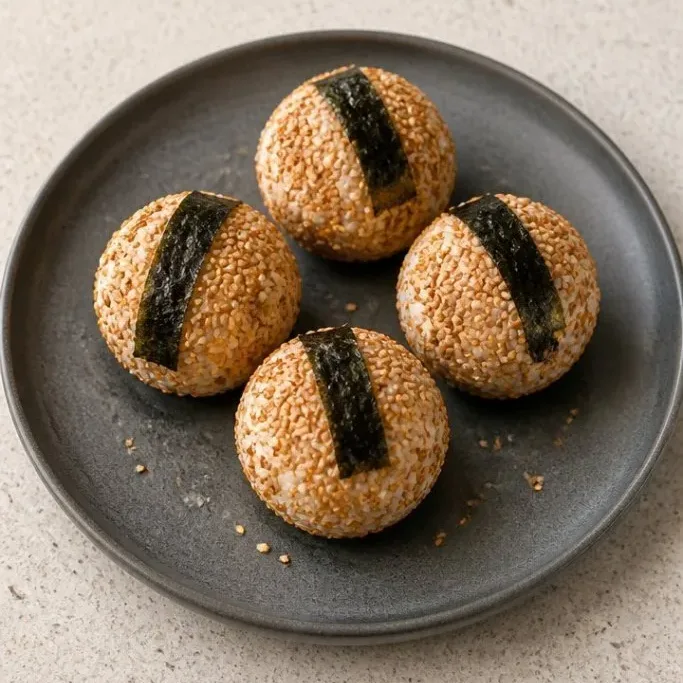
The filling gets a gentle kick from gochujang, and the rice is seasoned simply with sesame oil and salt. They work just as well for a weeknight lunchbox as they do for a lazy afternoon snack.
Why These Rice Balls Are a Weeknight Win
They come together in the time it takes to microwave leftover rice, so you are eating in minutes, not hours. The tuna-mayo filling is creamy and just a little spicy, and the toasted sesame seeds give each bite a nutty crunch.
You can mix the filling while the rice warms, and shaping them is oddly satisfying. They hold up well in the fridge, too, so you can make a batch ahead and have snacks ready for a few days.
Ingredients
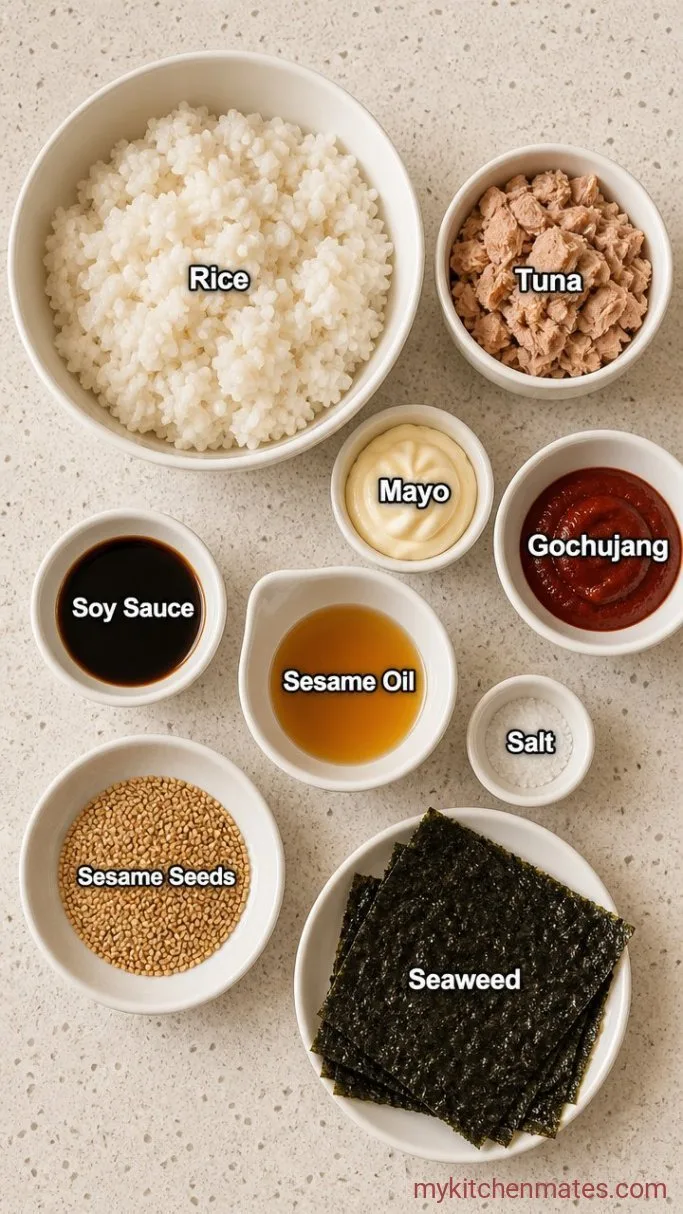
- 2 cups cooked short-grain rice, warm: day-old rice works well, just reheat it gently so it is pliable
- 1 (5 oz) can tuna, drained: oil-packed or water-packed, both work
- 2 tbsp mayonnaise: Japanese Kewpie mayo is ideal for extra richness, but any kind is fine
- 1 tsp gochujang: adds a mild kick; use more if you want more heat
- 1 tsp soy sauce: gives the filling a savory depth
- 2 tsp sesame oil: divided, one for the rice and one for your hands
- ½ tsp salt: for the rice
- 2 tbsp toasted sesame seeds: for coating
- Roasted seaweed sheets (gim), optional: to wrap or sprinkle on top
Variations / Substitutions
- Swap the protein: use canned salmon, shredded imitation crab, or even finely chopped cooked chicken
- Make it vegetarian: replace the tuna with seasoned sautéed mushrooms or well-squeezed kimchi
- Change up the heat: skip the gochujang for a mild version, or swap in sriracha or a pinch of gochugaru
- Dairy-free: use your favorite vegan mayo; the rest is already dairy-free
Korean Ground Beef Bowls make an easy main to round out the meal with this rice.
How to Make Korean Rice Balls
Step 1: Mix the Tuna Filling

In a small bowl, stir together the drained tuna, 2 tbsp mayonnaise, 1 tsp gochujang, and 1 tsp soy sauce. Break up the tuna with a fork until the mixture is creamy and every flake is coated. It should look pale orange-pink and hold together when you pinch it. Taste now and add a tiny bit more gochujang if you like things spicier.
Step 2: Season the Rice

Put the warm rice in a large bowl and drizzle over 1 tsp of the sesame oil and the ½ tsp salt. Fold gently with a spatula or rice paddle until every grain looks glossy and the salt is evenly distributed. Let it sit for about 5 minutes so it cools enough to handle without burning your hands.
Step 3: Shape and Coat the Rice Balls

Place the toasted sesame seeds in a small shallow bowl. Rub your palms with the remaining 1 tsp sesame oil so the rice does not stick. Scoop a heaping tablespoon of rice into your palm and press a shallow indent into the center. Add a small spoonful of the tuna mixture, then cover it with another spoonful of rice. Gently cup and press to form a tight ball about 1½ inches across, then roll it in the sesame seeds until coated all over. Repeat with the rest, and serve them right away while they are still slightly warm and the coating is crisp.
A Few Tips for Rice Ball Success
- Stick with short-grain rice; it has the right starch to hold its shape. Long-grain rice tends to crumble.
- Do not pack the rice too tightly, or the balls turn dense and chewy. A light but firm press is all you need.
- Keep a small bowl of water or extra sesame oil nearby: to re-wet your hands as you work. Dry hands make shaping messy.
- Use a small cookie scoop: for the rice and filling to get evenly sized balls without guesswork.
Scale the recipe for a crowd:
| Number of rice balls | Cooked rice | Tuna can (5 oz) | Mayo | Gochujang | Sesame seeds |
|---|---|---|---|---|---|
| 8 to 10 | 2 cups | 1 | 2 tbsp | 1 tsp | 2 tbsp |
| 16 to 20 | 4 cups | 2 | 4 tbsp | 2 tsp | 4 tbsp |
Storing Leftover Rice Balls
- Refrigerate: keep them in an airtight container with a sheet of parchment between layers for up to 2 days. The rice firms up but still tastes good cold.
- Serve cold: they are meant to be eaten at room temperature or straight from the fridge. No reheating needed, though a 20-second zap in the microwave will soften them if you prefer them warm.
What to Serve with Korean Rice Balls
A small bowl of miso soup turns these into a light meal, and the warm broth contrasts nicely with the cool, chewy rice. Thinly sliced cucumber tossed with a splash of rice vinegar and a pinch of sugar adds a crisp, refreshing bite that cuts through the richness of the mayo.
Frequently Asked Questions
Can I use brown rice instead?
Yes, but short-grain brown rice is best. It is less sticky than white rice, so press the balls a little more firmly and expect a slightly denser texture.
Do I really need the gochujang?
No, it is just for a gentle background heat. Leave it out for a completely mild version, and the tuna-mayo on its own is still delicious.
How long can they sit at room temperature?
About 2 hours is safe. After that, pop them in the fridge. They are just as good cold.
Can I use long-grain or basmati rice?
Long-grain rice does not have enough stickiness to hold together well. If that is all you have, mix in a small spoonful of rice flour paste while the rice is hot to help it bind.
Korean Rice Balls Recipe
Ingredients
Method
- Mix the drained tuna, mayonnaise, gochujang, and soy sauce in a small bowl until creamy.
- Combine the warm rice, 1 tsp sesame oil, and salt in a large bowl, folding gently until glossy. Let cool for 5 minutes.
- Rub your palms with the remaining 1 tsp sesame oil. For each ball, take a heaping tablespoon of rice, press an indent, add a spoonful of tuna filling, cover with more rice, shape into a ball, and roll in sesame seeds. Serve right away.
Notes
