
Braised Red Cabbage with Apple

Braised red cabbage is the kind of side dish that makes a weeknight roast feel like a quiet occasion. It cooks low and slow, turning tender and almost silky, with just enough sharpness to cut through rich meats.
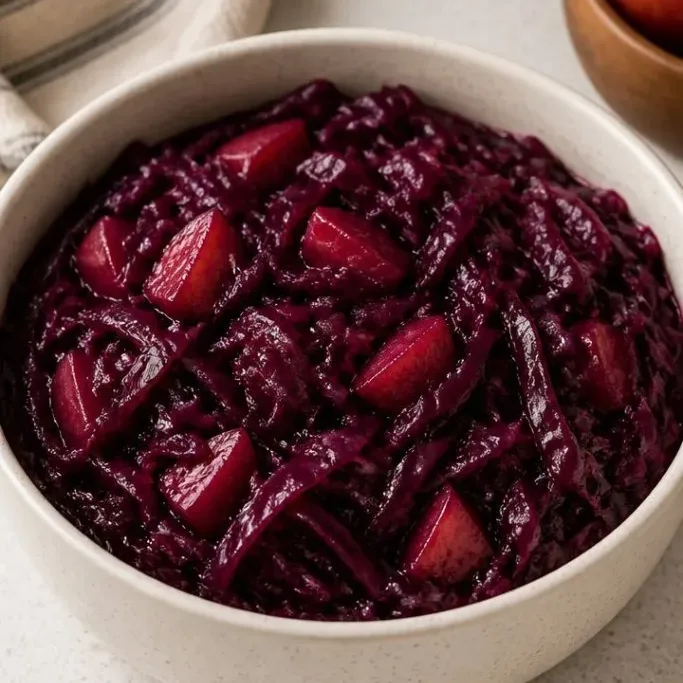
This version leans on apple and a splash of red grape juice for a sweet-tart balance that tastes more complex than the short ingredient list lets on. It’s simple enough for a Tuesday but holds its own on a holiday spread.
Why This Braised Cabbage Works So Well
The long, gentle simmer gives the cabbage a softness that never turns to mush. The apple breaks down into the liquid, coating every shred with a light, fruity glaze.
You can taste the butter and a hint of warm spice, but the finish is bright from the vinegar. It’s the kind of dish that only gets better if you make it a day ahead.
Ingredients
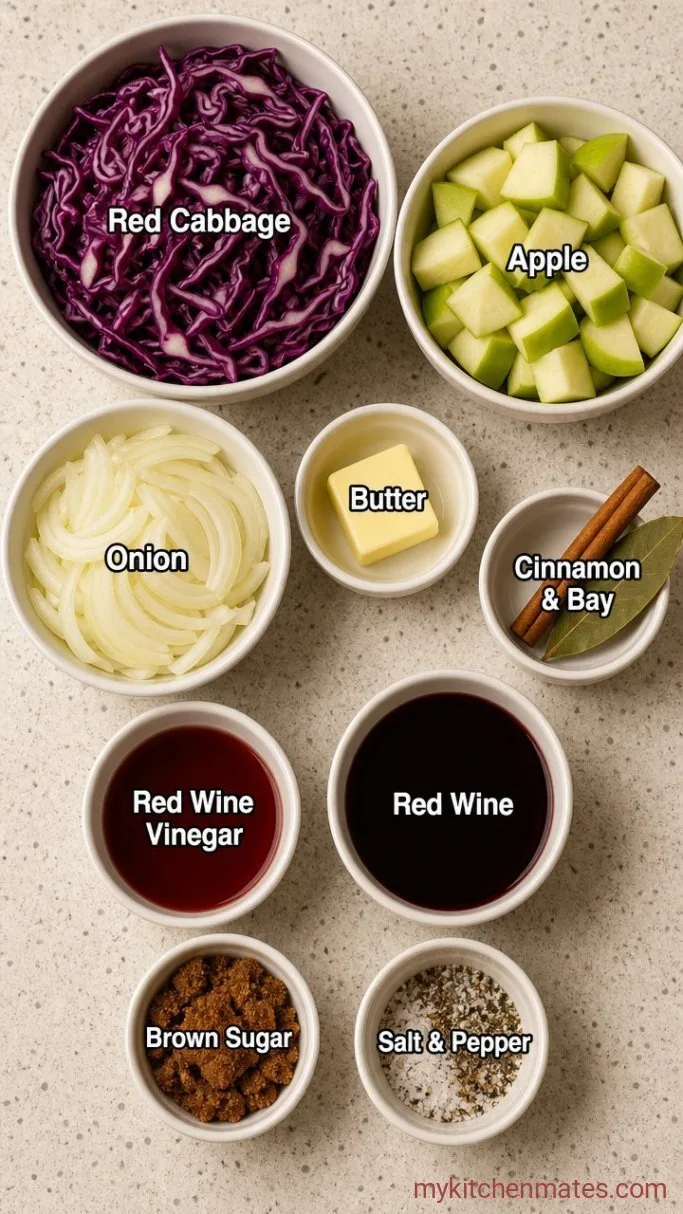
- 1 medium red cabbage (about 2 lb): thinly sliced, core removed
- 1 apple, peeled and chopped: Granny Smith or any firm, tart apple
- 1 medium yellow onion: thinly sliced
- 2 tbsp butter: or use a neutral oil for a dairy-free version
- 1 cinnamon stick: or ½ tsp ground cinnamon
- 1 bay leaf
- 3 tbsp red vinegar: plus more to taste at the end
- ¼ cup red grape juice: a dry red, or substitute apple juice
- 2 tbsp brown sugar: use more or less to your taste
- 1 tsp salt: adjust as needed
- Freshly ground black pepper, to taste
Variations / Substitutions
- Apple swap: a ripe pear works just as well and gives a softer sweetness.
- Herb swap: drop the bay leaf and add a few crushed juniper berries or a star anise for a different spice note.
- Dairy-free: use olive oil or a neutral oil in place of butter.
- Sweeter cabbage: add up to a tablespoon of honey or maple syrup along with the brown sugar.
Overnight Cinnamon Roll Casserole is a great main dish to serve alongside this cabbage.
How to Make Braised Red Cabbage with Apple and Red Grape Juice
Step 1: Sauté the Onion and Spices
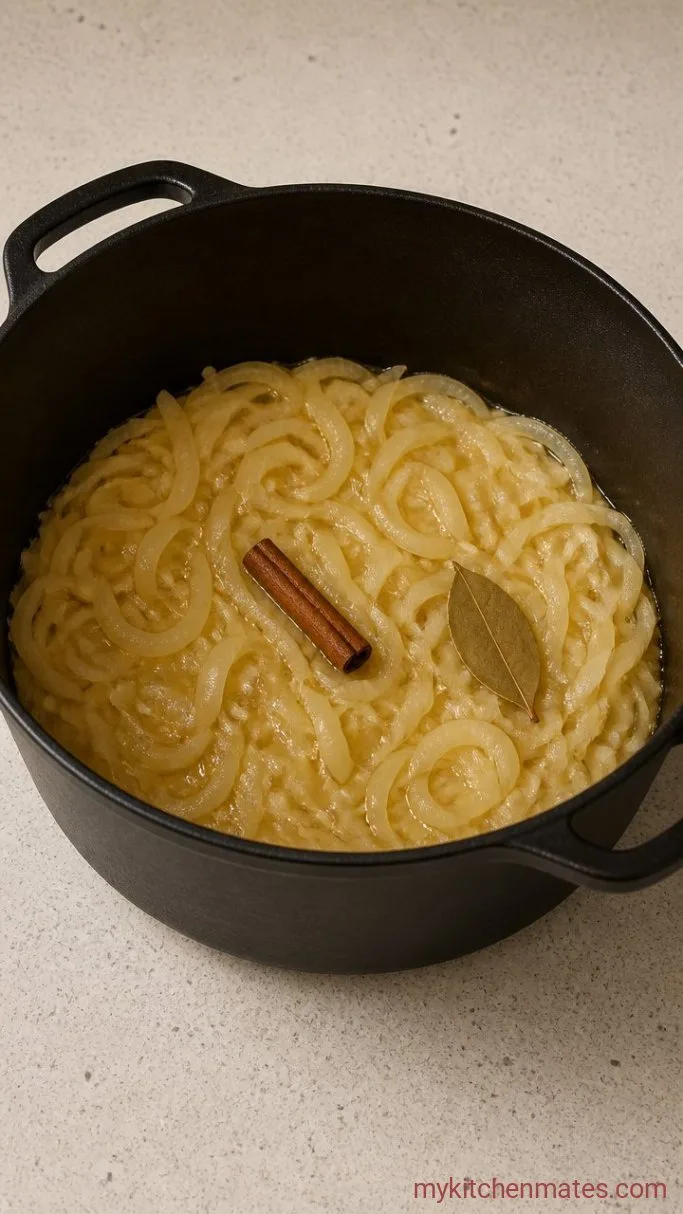
Set a large Dutch oven or wide heavy pot over medium heat and add the 2 tbsp butter. Once the butter melts, stir in the sliced onion and cook for about 5 minutes, until the onion turns soft and translucent.
Toss in the cinnamon stick and the bay leaf, and cook for another minute, stirring often. You’ll smell the spices warm up as the onion begins to take on their fragrance.
Step 2: Wilt the Cabbage
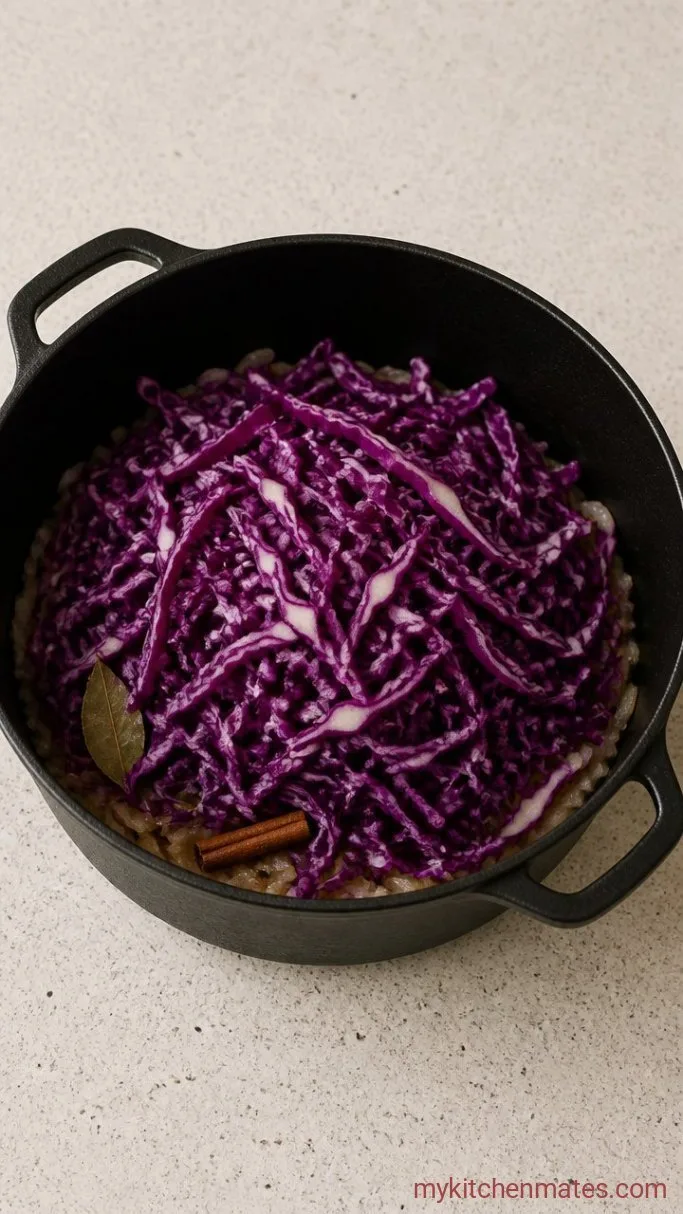
Add the sliced red cabbage to the pot and sprinkle it with the 1 tsp salt. Use tongs or a wooden spoon to turn the cabbage in the butter and onion, then let it cook over medium heat for 8 to 10 minutes.
The cabbage will shrink noticeably as it releases some of its water and softens. Stir it every couple of minutes so the bottom doesn’t catch and color too much.
Step 3: Add the Apple and Liquids
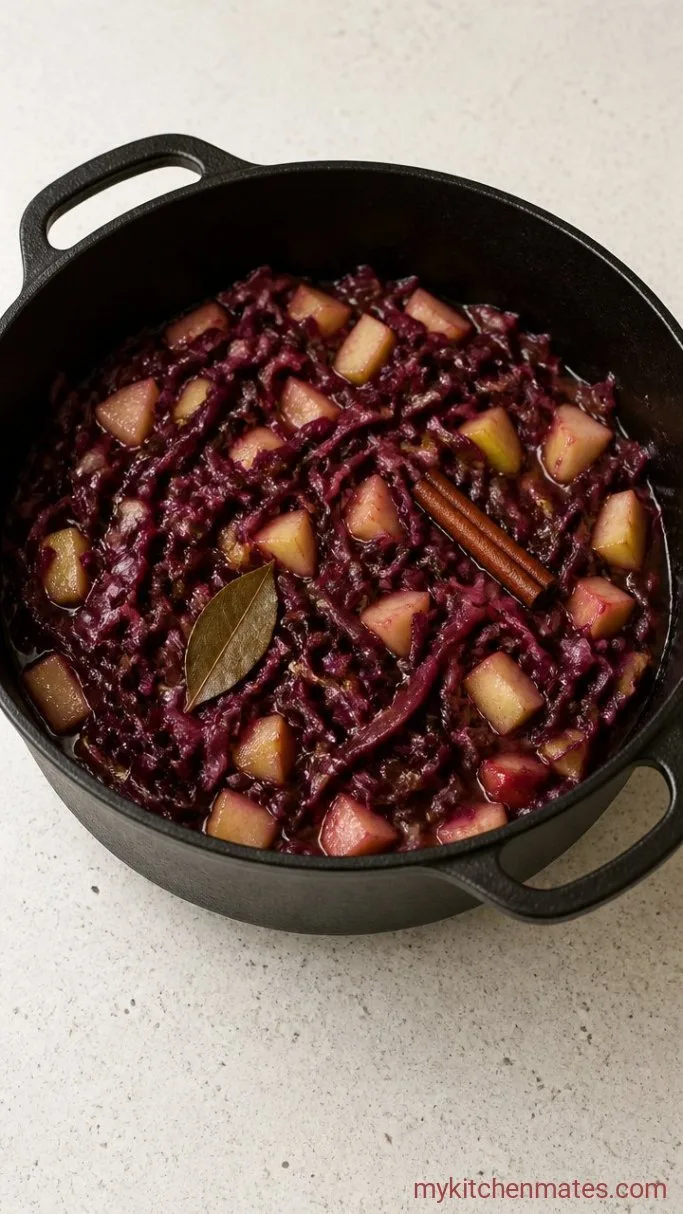
Stir in the chopped apple, the 3 tbsp red vinegar, the ¼ cup red grape juice, and the 2 tbsp brown sugar. Give everything a good mix, scraping up any browned bits from the bottom of the pot.
The liquid will look a bit thin at first, but it concentrates as the cabbage braises. The apple pieces should be scattered evenly so they cook down into the sauce.
Step 4: Braise Until Tender
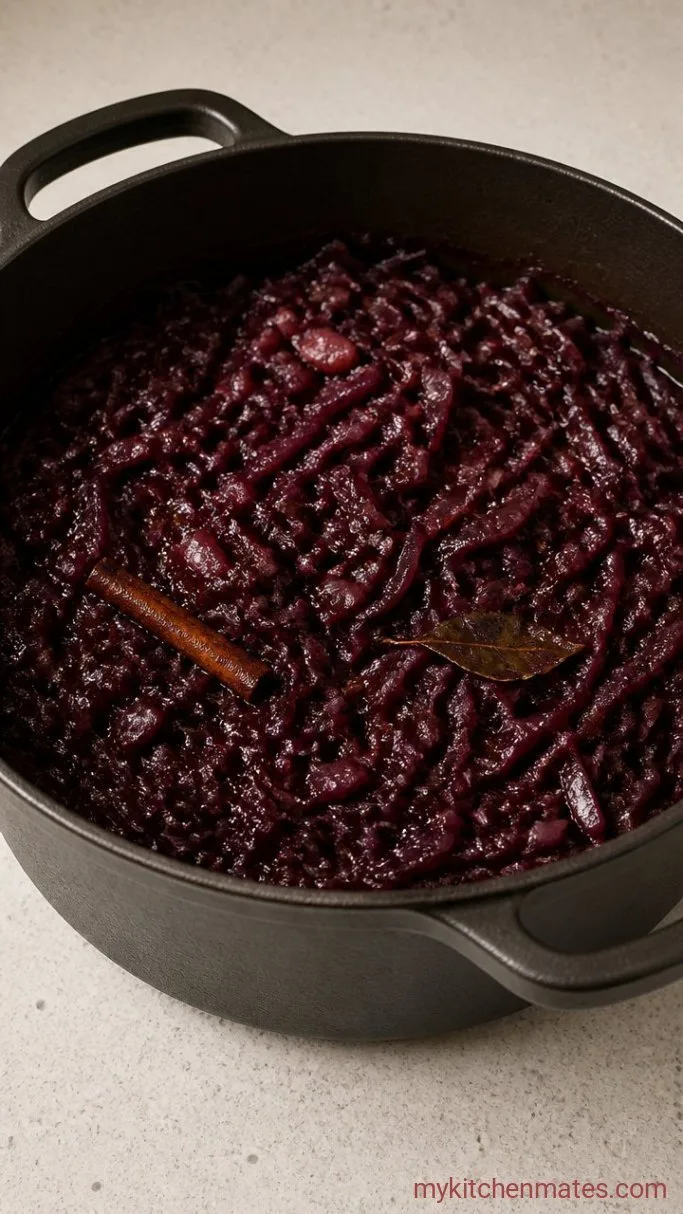
Cover the pot with a tight-fitting lid and reduce the heat to low. Let the cabbage braise gently for about 45 minutes, lifting the lid to stir once or twice.
The cabbage is done when it’s very tender and the liquid has reduced to a glossy coating. If the pot ever looks dry before that, add a splash of water and keep cooking.
Step 5: Serve It Warm
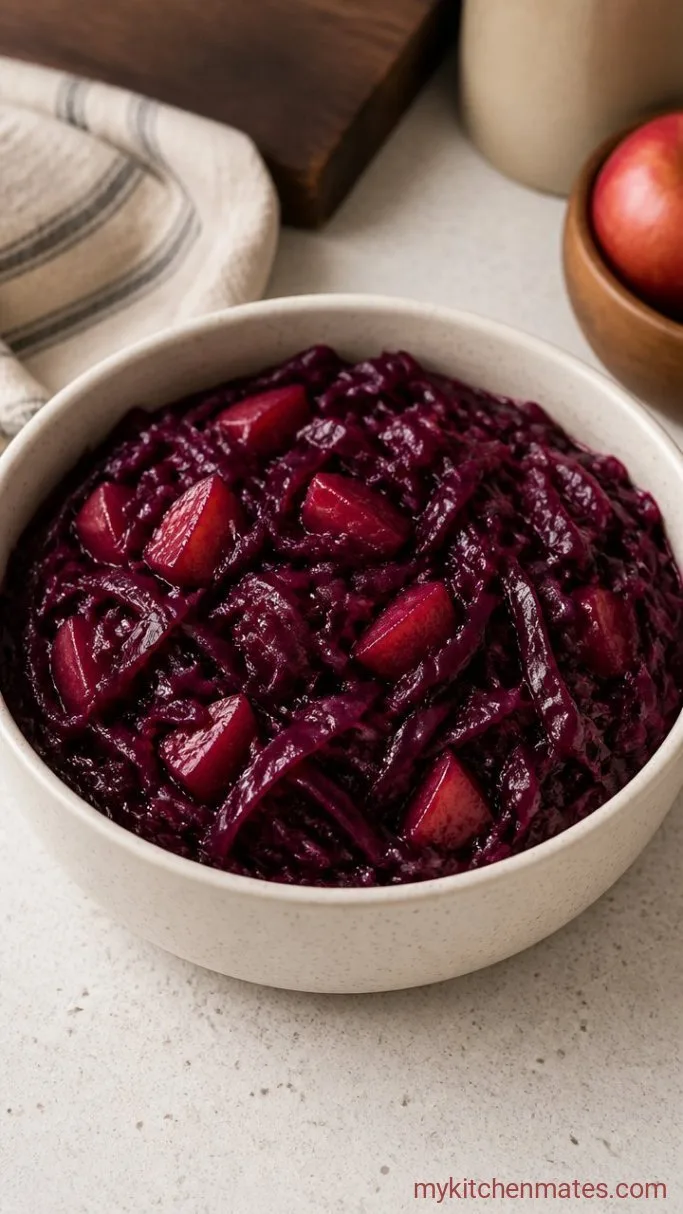
Remove the bay leaf and the cinnamon stick, then taste the cabbage. Add a little more salt, a grind of black pepper, and an extra splash of vinegar if you want more tang.
Spoon the cabbage into a warm serving bowl and serve it right away, with any pan juices spooned over the top.
Tips for the Best Braised Cabbage
- Slice the cabbage thin: aim for shreds about ¼-inch wide so they soften evenly without turning stringy.
- Taste and adjust: at the end, a small hit of extra vinegar or a pinch more brown sugar can pull the whole dish together.
- Make it ahead: the flavor deepens overnight, so cook it a day early and reheat gently on the stove.
- Don’t rush the braise: a steady, low heat is what gives the cabbage its soft, almost velvety texture.
Keeping Leftovers
- Refrigerate: store cooled cabbage in a covered container for up to 5 days.
- Reheat: warm it in a covered pot over low heat, adding a tablespoon of water if it looks dry.
What Goes Well With Braised Red Cabbage
The sweet-tart flavor cuts through fatty meats beautifully. Try it alongside pan-seared duck breast, where the richness and the tang really play off each other. It’s also a natural with good sausages and mashed potatoes, or spooned next to a thick slice of roast turkey. The bright finish balances everything.
Frequently Asked Questions
My cabbage turned out too sweet. How do I fix it?
Stir in a small splash of red vinegar right before serving. Start with half a teaspoon, taste, and add more until the balance feels right.
Can I add bacon?
Definitely. Dice a few strips of bacon, cook them until crisp in the pot first, then use the rendered fat in place of the butter. Stir the bacon back in at the end.
Will this recipe double easily?
Yes, use a larger pot so the cabbage has room to cook evenly. The braising time may stretch by about 10 minutes.
Braised Red Cabbage with Apple and Red Wine Recipe
Ingredients
Method
- Melt the butter in a large heavy pot over medium heat. Add the onion and cook 5 minutes until soft, then stir in the cinnamon stick and bay leaf for 1 minute.
- Add the sliced cabbage and 1 tsp salt. Cook, stirring often, for 8-10 minutes until the cabbage wilts and reduces.
- Stir in the apple, red wine vinegar, red wine, and brown sugar, mixing well.
- Cover, reduce heat to low, and braise for about 45 minutes, stirring once or twice, until the cabbage is very tender and the liquid is glossy.
- Remove the bay leaf and cinnamon stick. Adjust seasoning with salt, pepper, and a little more vinegar if needed. Spoon into a serving dish and serve warm.
Notes
