
Basque Burnt Cheesecake: Creamy, Caramelized, and Crustless

This Basque burnt cheesecake gets its dark, blistered top from a blazing hot oven, while the inside stays ridiculously silky. There is no crust to mess with and no water bath to fuss over, so it is one of the most low-effort showstoppers you can pull out of your oven.

It cracks and sinks as it cools, which is exactly what you want. Rustic, soft, and far from perfect, but every bite tastes like concentrated vanilla caramel cream.
Why This One Gets Made on Repeat
I make this cheesecake when I want something that feels special without any complicated steps. You just beat everything together, pour it into a parchment-lined pan, and let the oven do the rest.
The high heat does real work here. The top caramelizes into a deep amber shell that tastes faintly bittersweet, while the center barely sets. It is dense and jiggly, not like a firm New York slice, more like a warm custard that holds its shape just enough.
Leftovers keep for days in the fridge, and the flavor gets even rounder overnight. I pull it out for casual dinners, birthdays, or any time I want a dessert that looks dramatic without the effort.
Ingredients
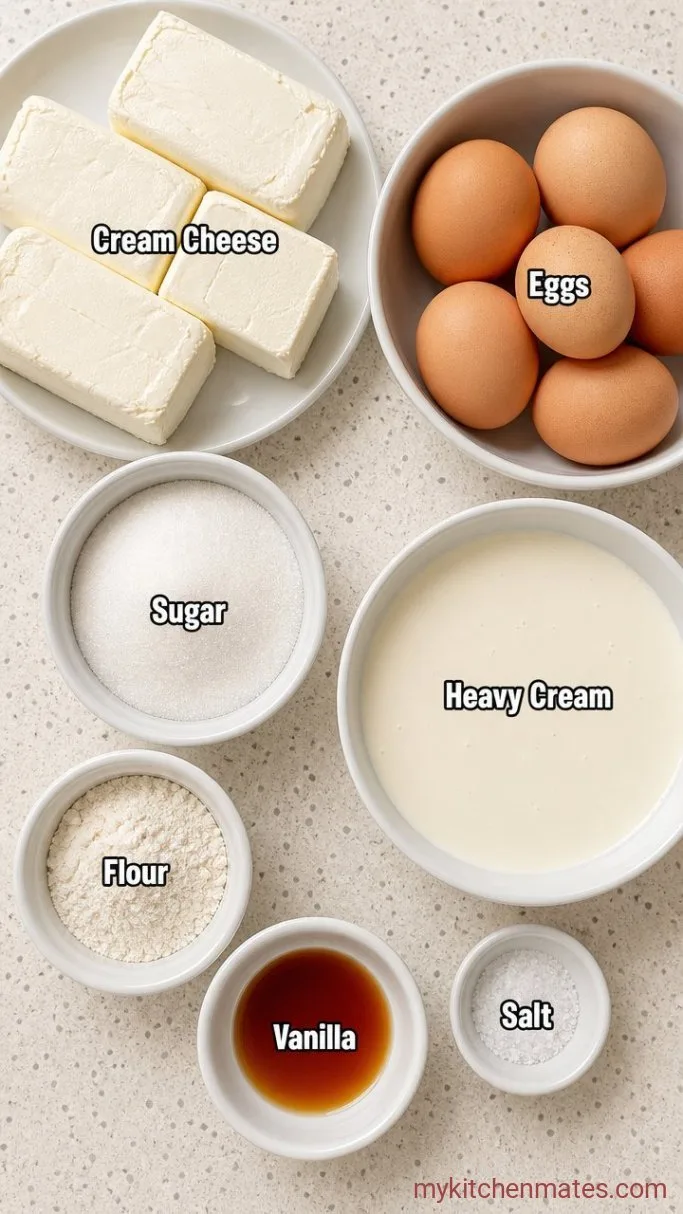
- 2 lb (four 8-oz blocks) cream cheese, softened: use full-fat bricks, not low-fat or spreadable tubs
- 1 1/2 cups granulated sugar: sweetens and helps create the dark top
- 6 large eggs: at room temperature so the batter stays smooth
- 2 cups heavy cream: contributes to the custardy, soft interior
- 1/3 cup all-purpose flour: just enough to give the center a little structure
- 2 tsp vanilla extract: a generous amount rounds out the caramel notes
- 1/2 tsp kosher salt: balances the sweetness
Variations and Substitutions
- Add lemon zest: stir the finely grated zest of one lemon into the batter for a bright, citrusy lift
- Try a different extract: swap vanilla for bourbon vanilla or add half a teaspoon of almond extract along with the vanilla
- Make it gluten-free: use a 1:1 gluten-free flour blend; the texture will be nearly identical
- Scale for a smaller pan: halve the recipe for a 6-inch springform and bake it for 35 to 40 minutes
- Top with a quick sauce: a spoonful of warm salted caramel or tart raspberry coulis contrasts the richness beautifully
Burnt Orange Cake is another dessert you’d probably love if you enjoy this cheesecake.
How to Make Basque Burnt Cheesecake
Step 1: Beat the Cream Cheese and Sugar

Preheat the oven to 400°F (200°C) and line an 8-inch springform pan with two large sheets of parchment paper. Press them in so the paper extends at least 2 inches above the rim all around; the overhang will support the batter as it rises. In a large mixing bowl, beat the 2 lb softened cream cheese and 1 1/2 cups sugar with an electric mixer on medium speed until the mixture looks completely smooth and no lumps remain, about 3 minutes.
Stop and scrape down the sides and the bottom of the bowl a couple of times. If you find any stiff streaks of cream cheese, keep beating; every bit of graininess will show in the finished cheesecake.
Step 2: Incorporate the Eggs and Cream

Crack the 6 eggs into a separate small bowl, then add them one at a time to the cheese mixture, beating on low speed after each addition just until the yolk disappears. Pour in the 2 cups heavy cream, 2 tsp vanilla, 1/2 tsp salt, and 1/3 cup flour, and mix on the lowest speed or by hand with a spatula until the batter is uniform.
The batter will look very thin and pourable at this stage, almost like a crepe batter. That liquid consistency is what creates the soft, almost pudding-like center. Overbeating after adding the eggs can whip in too much air and cause the cheesecake to puff and fall unevenly, so keep the speed low and stop as soon as no streaks remain.
Step 3: Fill the Pan

Give the batter a final gentle stir with a spatula from the bottom to catch any settled flour. Pour it into the parchment-lined pan. The batter will reach nearly to the top of the collar you created with the paper.
Tap the pan once or twice on the counter to release any large air bubbles, but do not overdo it. The cheesecake will trap some small bubbles and that is normal; they help form the craggy, organic top later.
Step 4: Bake Until Dark and Jiggly
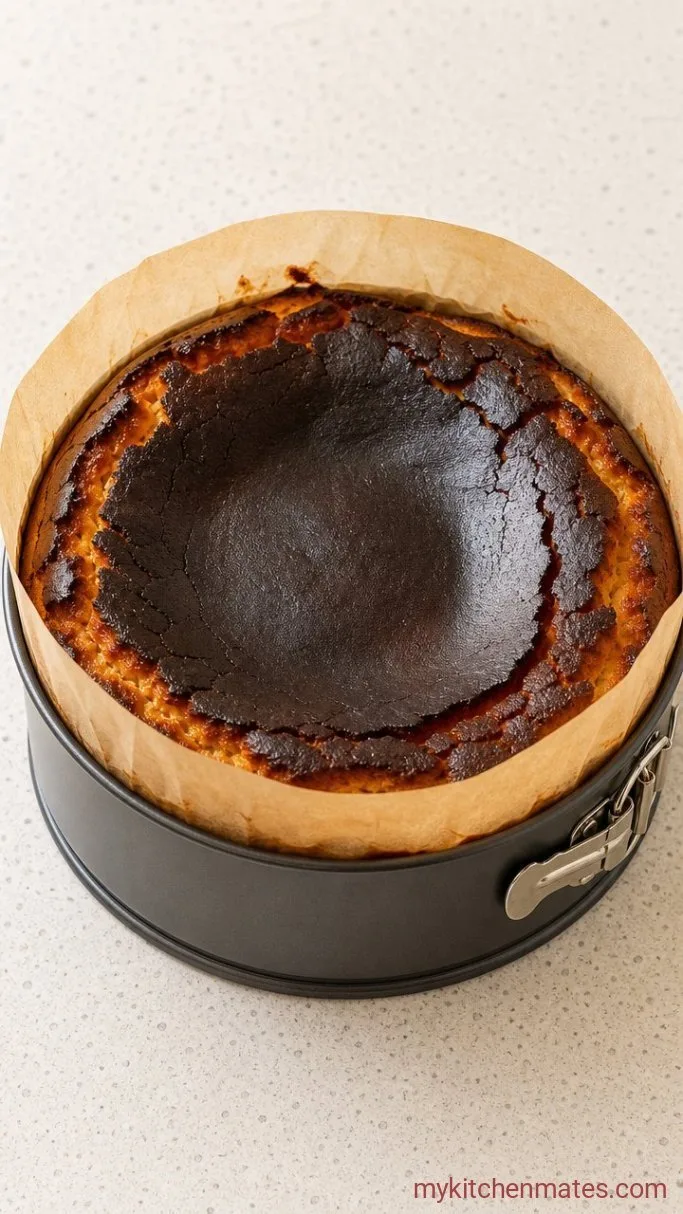
Set the pan on a baking sheet and place it in the hot oven. Bake for 50 to 60 minutes. The top will puff up and turn a very deep brown, almost black at the edges and golden amber across the center, while the whole cheesecake will still wobble with a loose jiggle when you nudge the pan.
Trust the jiggle, not the color. Even if the top looks alarmingly dark, the inside is not burning. The high heat caramelizes the sugar on the surface, and that bittersweet edge is what makes this cheesecake distinct. A slight wobble in the middle means it will set into a silky texture as it cools.
Step 5: Unmold and Slice the Cheesecake
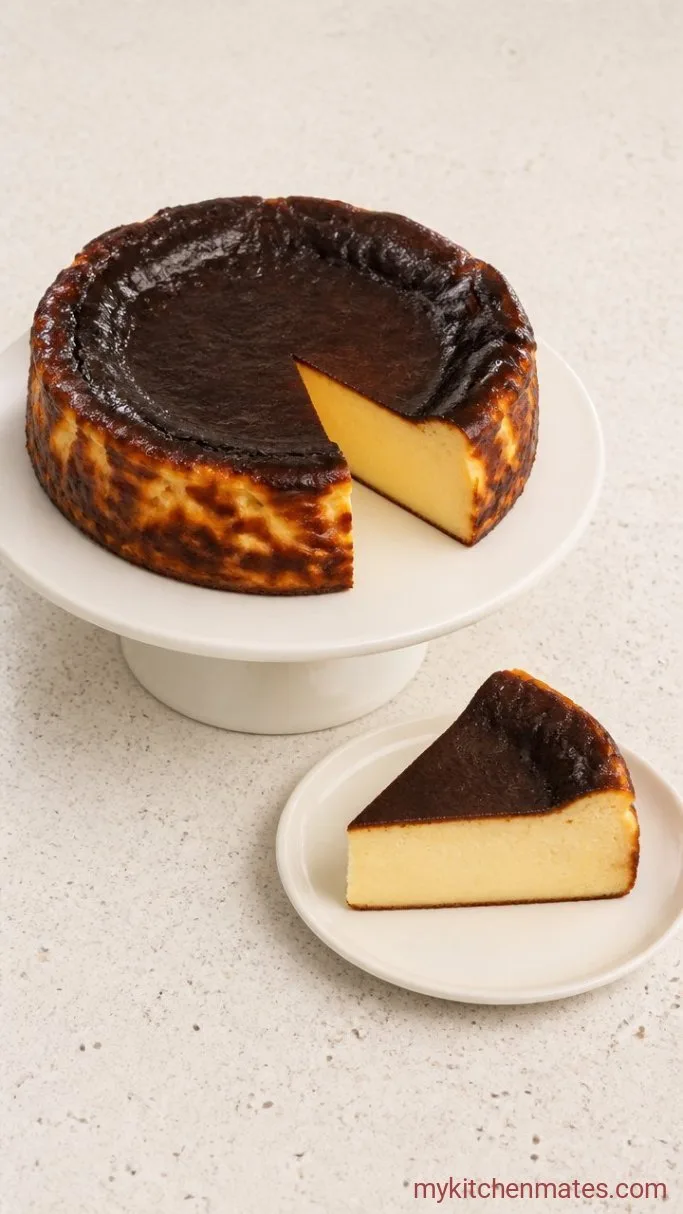
Let the cheesecake cool in the pan on a wire rack for at least 1 hour. It will sink dramatically in the center and pull away from the paper, and the top may crack; all of that is part of the rustic look. Once it reaches room temperature, unlatch the springform and gently peel away the parchment, then transfer the cheesecake to a plate.
Slice with a hot, dry knife wiped clean between cuts to get clean wedges that show off the creamy center below the nearly black exterior. Serve right away or chill it for a firmer texture.
A Few Notes for Your Best Basque Cheesecake
- Bring all your cold ingredients to room temperature before you start. Cold eggs or cream can seize the cream cheese and leave tiny lumps in the batter.
- Do not open the oven door during the first 30 minutes. The trapped high heat is what gives you that dramatic caramelized top.
- The cheesecake will deflate as it cools, so do not panic when the center sinks. That collapsed top is a hallmark, not a flaw.
- If your parchment paper is thin or wimpy, use three sheets instead of two so the collar stands up straight through the whole bake.
Bake times by oven type:
| Pan Size | Adjustments | Bake Time |
|---|---|---|
| 8-inch springform | Standard recipe, as written | 50 to 60 minutes |
| 9-inch springform | Batter will be slightly shallower; check 5 minutes earlier | 45 to 55 minutes |
Storing Leftovers
Once the cheesecake has cooled completely, wrap it tightly or transfer it to an airtight container. It keeps in the refrigerator for up to 4 days, and the flavor gets even deeper after a day. Serve it chilled straight from the fridge, or let slices sit at room temperature for 20 minutes to soften.
What Goes Well with Basque Cheesecake
Fresh raspberries or blackberries bring a tart juiciness that cuts through the richness without competing with the caramel notes. A drizzle of cold heavy cream or a dollop of barely sweetened crème fraîche adds a cool, tangy contrast. For a more decadent pairing, spoon warm salted caramel over each slice so it drips down the dark, wrinkled sides.
Frequently Asked Questions
Do I really need to use full-fat cream cheese?
Yes. Low-fat or whipped versions have too much water and will not set with the same creamy intensity.
My top turned completely black. Is that okay?
Yes, as long as the center still jiggles. The dark top tastes bittersweet and toasted, not burnt, and it is the signature of this dish.
Can I make this cheesecake ahead of time?
Absolutely. Make it a day in advance, then store it wrapped in the fridge. The texture sets overnight and the vanilla flavor becomes more pronounced.
Why did my cheesecake overflow the parchment?
If your paper collar was too short or not pressed snugly against the sides, the batter can spill over. Use generous sheets that extend at least 2 inches above the rim and set the pan on a baking sheet just in case.
Does this need a water bath?
No. The high, dry heat is what creates the burnt top and the unique texture. A water bath would prevent the intense browning you want.
Basque Burnt Cheesecake Recipe
Ingredients
Method
- Heat the oven to 400°F (200°C) and line an 8-inch springform pan with at least two large sheets of parchment, pressing them in so the paper stands 2 inches above the rim.
- Beat the cream cheese and sugar until completely smooth, about 3 minutes.
- Mix in the eggs one at a time on low speed, followed by the heavy cream, vanilla, salt, and flour just until combined and no streaks remain.
- Pour the thin batter into the prepared pan, tap it lightly on the counter, and bake for 50 to 60 minutes until the top is deeply browned and the center wobbles as one mass.
- Cool the cheesecake in the pan on a rack for at least 1 hour, then unmold, peel off the parchment, and slice.
Notes
