
Burnt Orange Cake with Caramelized Orange Slices

This burnt orange cake is a simple upside-down cake where thin orange slices cook in a hot sugar-butter caramel until they get dark, glossy edges. The “burnt” part comes from cooking the sugar just past golden into deep amber, which gives the whole thing a bittersweet kick that balances the sweet crumb underneath.

If you have oranges and a few pantry basics, the cake comes together in about an hour. It looks far more impressive than the work you put in, and it fills the kitchen with that warm caramel-and-citrus smell.
What Makes This Burnt Orange Cake So Good
The oranges turn almost jammy in the oven and take on a toasty, slightly bitter note that stops the cake from feeling heavy or cloying. I’ve tried it with lemons and grapefruit, but the orange version is the one I keep coming back to because it hits that just-right point between bright and rich.
The cake itself stays moist from the orange juice and butter, and as it cools the top gets a sticky, crisp layer. It is the kind of dessert that works just as well for a casual Tuesday dinner as it does for a weekend brunch.
Ingredients
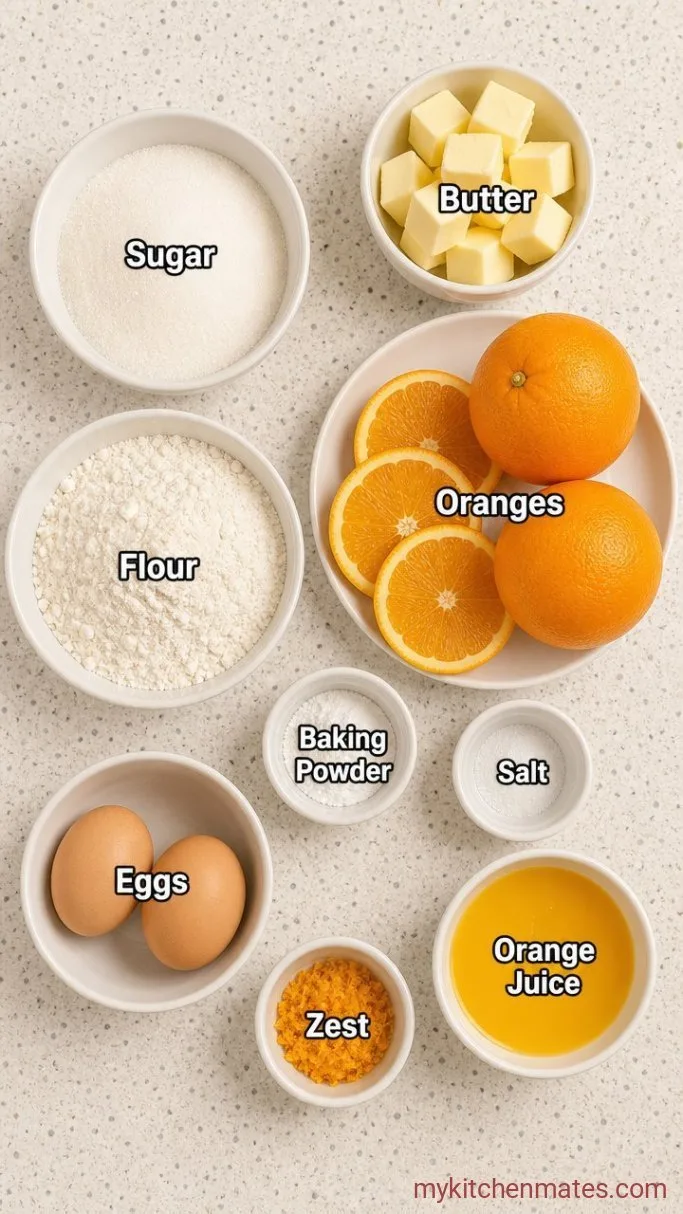
- 1 cup granulated sugar, divided: half for the caramel, half for the cake
- 5 tbsp unsalted butter, divided: 3 tbsp for the caramel, the rest softened for the batter
- 2 to 3 small navel oranges: sliced about ¼ inch thick, seeds picked out
- 1 ½ cups all-purpose flour
- 2 tsp baking powder
- ¼ tsp fine salt
- 2 large eggs, at room temperature
- 1 tbsp orange zest
- ½ cup fresh orange juice: from the oranges you sliced, or a bit more if needed
Variations / Swaps
- Gluten-free: use a 1-to-1 gluten-free flour blend and the cake will still be tender, though the crumb may feel a little softer.
- Dairy-free: swap the butter for a stick-style vegan butter and the caramel will set up just fine.
- Citrus swap: blood oranges or tangerines work, and both give a deeper red tint to the caramel layer.
- Add spice: ½ tsp cardamom or a pinch of cinnamon folded into the dry ingredients adds warmth without overwhelming the orange.
- Polenta texture: replace ¼ cup of the flour with fine polenta for a bit of sandy crunch.
Moist Orange Creamsicle Cake is another reader favorite dessert worth making next.
How to Make Burnt Orange Cake
Step 1: Caramelize the Orange Slices
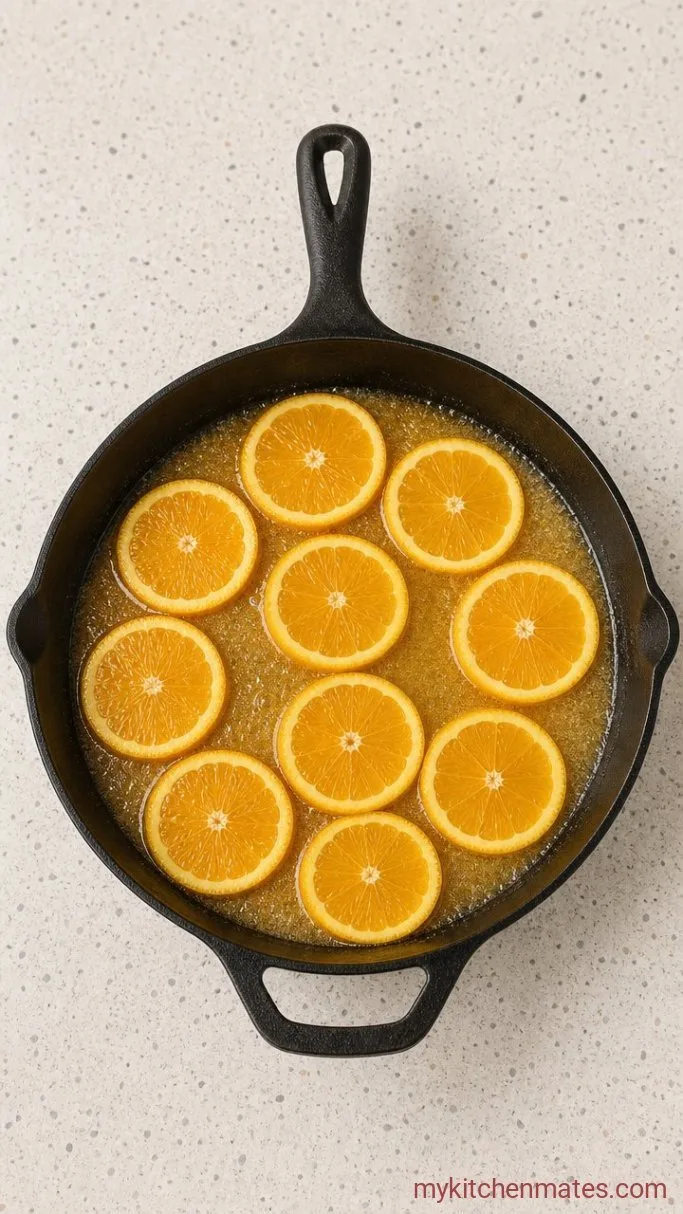
Preheat your oven to 350°F (175°C). In a 9-inch round metal cake pan set over medium heat, melt ½ cup of the sugar with the 3 tbsp butter, stirring with a wooden spoon until the mixture turns deep amber, about 5 minutes. Carefully pour it so it coats the bottom of the pan, then lay the orange slices in a single layer, overlapping them a little.
The caramel will look dark and smell almost like toasted marshmallow. That is exactly the point, so do not pull it off the heat at golden. The orange slices will sizzle when they hit the hot sugar.
Step 2: Cream the Butter and Sugar

In a large bowl, beat the remaining 6 tbsp softened butter and the remaining ½ cup sugar with a hand mixer until pale and fluffy, about 3 minutes. Beat in the eggs one at a time, then mix in the 1 tbsp orange zest.
The mixture will lighten in color and take on a thick, almost whipped texture. Scrape down the bowl once so everything is evenly creamed.
Step 3: Sift and Fold the Dry Ingredients

Whisk the 1 ½ cups flour, baking powder, and salt together in a separate bowl. Add this dry mix to the butter mixture in three additions, alternating with the ½ cup orange juice in two additions, starting and ending with the flour. Fold with a spatula just until no streaks of flour remain.
The batter should be smooth but not overworked, because too much mixing can make the crumb tough. A few small lumps are fine.
Step 4: Fill the Pan and Bake

Spoon the batter over the orange slices in the pan and spread it evenly with a spatula. Bake until the top is deep golden and a toothpick poked into the center comes out clean, about 45 minutes.
The kitchen will smell intensely of caramel and sweet citrus. Start checking for doneness at 40 minutes, especially if your pan is dark metal.
Step 5: Invert and Serve

Let the cake cool in the pan for 10 minutes, then run a knife around the edge. Place a serving plate upside-down over the pan, hold them together firmly, and flip the whole thing in one motion. Lift the pan away and rearrange any orange slices that shifted.
Serve it warm or at room temperature, while the caramel is still soft and the orange edges look like burnished glass.
A Few Notes Before You Start
- Room temperature butter: creams more easily and traps air, so the cake rises better. Pull it out of the fridge 30 minutes before you start.
- If the caramel seizes: or turns grainy when the orange slices touch it, don’t worry. It will melt into a smooth syrup again as the cake bakes.
- A light-colored metal pan: gives the most even caramelization. Dark pans can scorch the sugar before the cake is fully set.
- Use a serrated knife: to slice the cake, and wipe it clean between cuts for neat, whole orange rings on each piece.
Bake times can shift a bit with your pan’s material and size.
| Pan Type | Oven Temperature | Approx. Bake Time |
|---|---|---|
| 9-inch metal round | 350°F (175°C) | 40 to 45 minutes |
| 8-inch metal round | 350°F (175°C) | 45 to 50 minutes |
| 9-inch glass dish | 325°F (160°C) | 45 to 50 minutes |
Storing Leftover Cake
Cover the cake and keep it in the fridge for up to 4 days. The caramel layer will soften in the cold, so bring slices back to room temp or reheat them on a sheet pan in a 300°F oven for 5 minutes until the edges crisp up again. You can also serve it cold straight from the fridge, but the caramel will be firmer.
What to Serve With Burnt Orange Cake
A dollop of softly whipped cream or a spoonful of crème fraîche cuts through the richness without fighting the citrus. For a more dessert-y feel, vanilla ice cream is great against the warm, sticky caramel. A cup of strong black coffee or Earl Grey tea also works, because the bitterness lifts the whole thing.
Frequently Asked Questions
Can I make this cake gluten-free?
Yes. Use a good 1-to-1 gluten-free flour blend. The crumb will be slightly more tender, but the cake still holds together well when you flip it.
My cake stuck to the pan. What went wrong?
Likely the caramel wasn’t set enough or the pan wasn’t greased around the sides. Run a thin knife all the way around before inverting and give it the full 10-minute rest before flipping.
Can I use store-bought orange juice?
You can, but the flavor won’t be as bright. Avoid pulp-free juice because it can lack enough body to flavor the batter well. Fresh makes a real difference here.
Can I caramelize the oranges ahead of time?
Sure. Melt the sugar and butter, pour it into the pan, and lay down the orange slices. Cover and leave it at room temperature for a few hours, then add the batter and bake as usual.
Burnt Orange Cake Recipe
Ingredients
Method
- Preheat oven to 350°F. In a 9-inch metal cake pan over medium heat, melt ½ cup sugar with 3 tbsp butter, stirring until deep amber. Pour to coat the bottom, then arrange orange slices in a single layer.
- In a bowl, beat the remaining 6 tbsp butter and ½ cup sugar until fluffy, about 3 minutes. Beat in eggs one at a time, then add the orange zest.
- Whisk flour, baking powder, and salt together. Fold into the butter mixture in three additions, alternating with the orange juice in two additions, until just combined.
- Spoon the batter over the oranges, spread it smooth, and bake for 40 to 45 minutes until golden and a toothpick comes out clean.
- Cool the cake in the pan for 10 minutes. Run a knife around the edge, invert onto a plate, and serve warm or at room temperature.
Notes
