
Whole Wheat English Muffin Recipe: Soft, Skillet-Baked, and Fork-Split

These whole wheat English muffins come out soft, chewy, and full of those classic nooks and crannies. They cook entirely on the stovetop, no oven required.

Made with 100% whole wheat flour and a touch of honey, they toast up beautifully and stay fresh for days. Once you try homemade, the store-bought bag loses its appeal fast.
What Makes These Whole Wheat Muffins So Good
The texture lands right where you want it: a crisp, cornmeal-dusted crust with a tender, airy crumb inside. The whole wheat flour brings a warm, nutty flavor that plain white flour just can’t match.
Splitting them with a fork, instead of a knife, gives the craggy surface that catches butter and jam. And because the recipe is skillet-cooked, you get those browned, toasty bottoms without heating up the whole kitchen.
Ingredients

- 4 cups (480g) whole wheat flour: spooned and leveled, plus extra for kneading
- 2¼ teaspoons (1 packet) active dry yeast: works well here; instant yeast can be swapped but rise times may shorten
- 1⅓ cups (315ml) warm water: about 105°F to 110°F, warm to the touch but not hot
- ½ cup (120ml) whole milk: warmed gently to the same temperature
- 2 tablespoons honey: adds subtle sweetness and helps the yeast
- 2 tablespoons unsalted butter: melted and cooled slightly
- 1½ teaspoons fine sea salt
- Fine cornmeal: for dusting and the classic bottom crust
Variations / Substitutions
- Half whole wheat: swap 2 cups of the whole wheat flour for all-purpose flour for a lighter muffin that still has good flavor.
- Vegan version: use maple syrup instead of honey, oat milk for the dairy milk, and melted coconut oil in place of butter. The crumb will be slightly more delicate.
- Seeded muffins: knead 2 tablespoons of sesame or sunflower seeds into the dough before the first rise, then sprinkle more on top before cooking.
- Anadama twist: replace the honey with molasses and add ¼ cup cornmeal to the dough for a deeper, old New England flavor.
Egg White Frittata makes a great breakfast to go with this muffin.
How to Make Whole Wheat English Muffins
Step 1: Mix the Dough
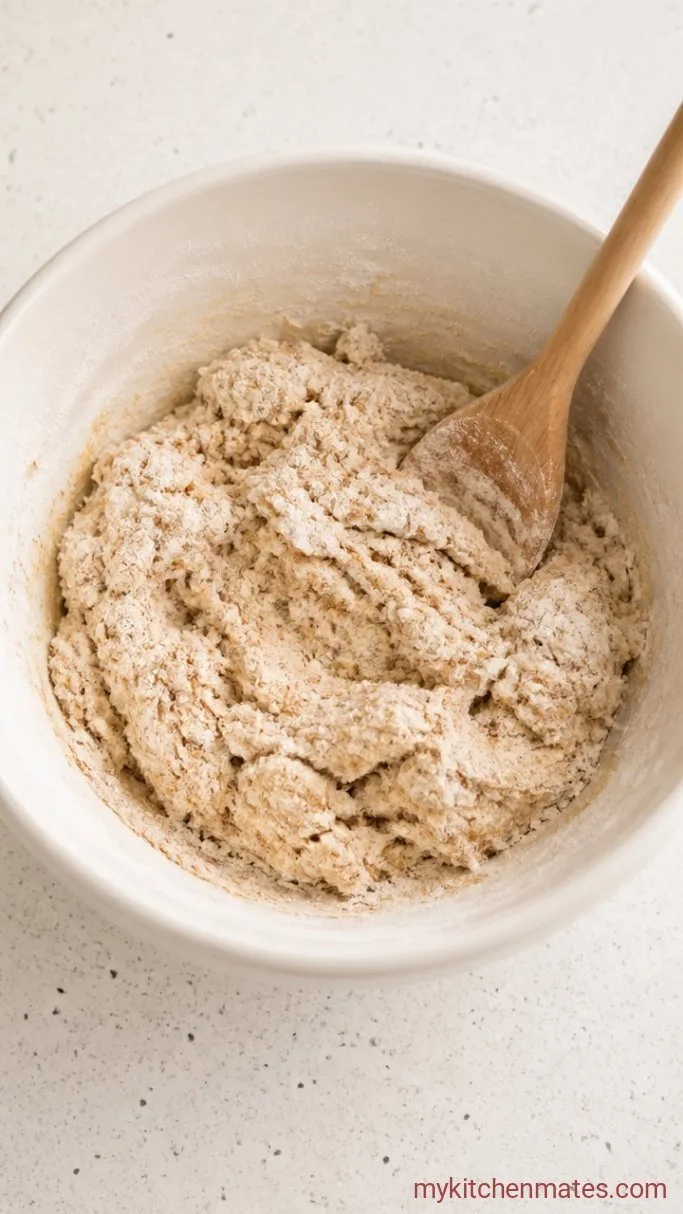
Stir the 315ml warm water, 120ml warm milk, and 2 tablespoons honey in a large bowl until the honey dissolves. Sprinkle the packet of yeast over the top and let it sit until foamy, about 5 minutes. If the mixture doesn’t foam after 10 minutes, start over with fresh yeast.
Pour in the 2 tablespoons melted butter and 1½ teaspoons salt, then add 2 cups of the whole wheat flour. Stir with a wooden spoon until a sticky batter forms. Gradually work in the remaining 2 cups of flour, ½ cup at a time, until a shaggy dough comes together that is still a little tacky.
A dough that is too dry will make dense muffins. It should feel soft and slightly sticky to the touch, not stiff.
Step 2: Knead the Dough
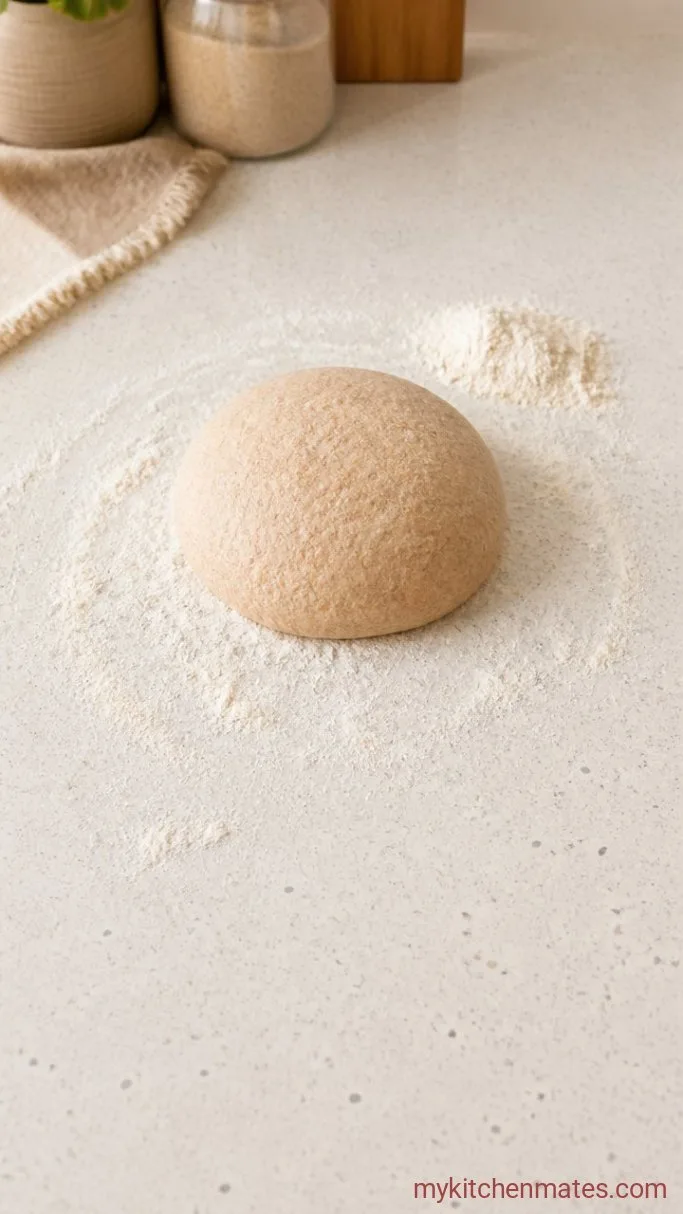
Turn the dough out onto a lightly floured surface. Knead it for about 8 minutes, adding only the smallest dusting of flour when it gets unmanageably sticky. By the end, the dough should feel smooth, supple, and bounce back when you poke it with a damp finger.
You are building the gluten structure here. The dough will go from shaggy to silky as you work it. If your arms tire, a stand mixer with a dough hook can take over; knead on medium-low speed for 5 to 6 minutes instead.
Step 3: First Rise
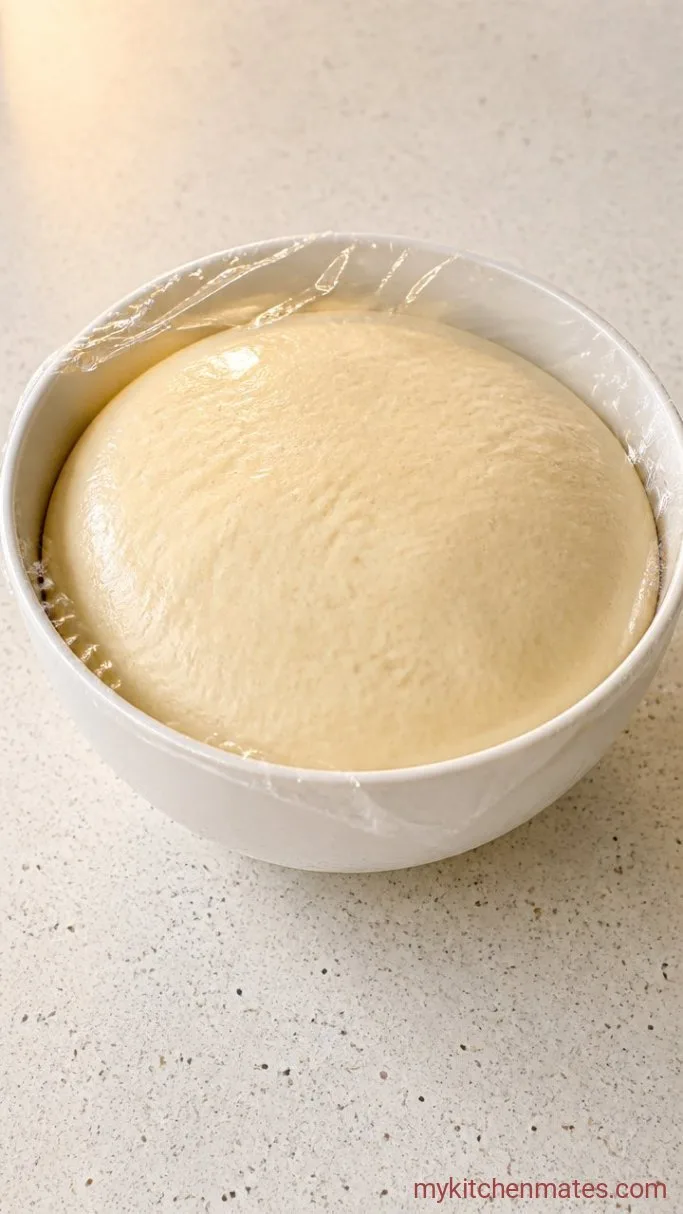
Shape the dough into a ball and place it in a clean, lightly oiled bowl. Turn it over to coat the top with oil. Cover the bowl with a damp kitchen towel or plastic wrap and set it in a warm, draft-free spot.
Let the dough rise until it has doubled in size, about 1 to 1½ hours depending on the temperature of your kitchen. A puffed, dome-like top and a finger poke that leaves a lasting indent mean it is ready.
Step 4: Shape the Muffins
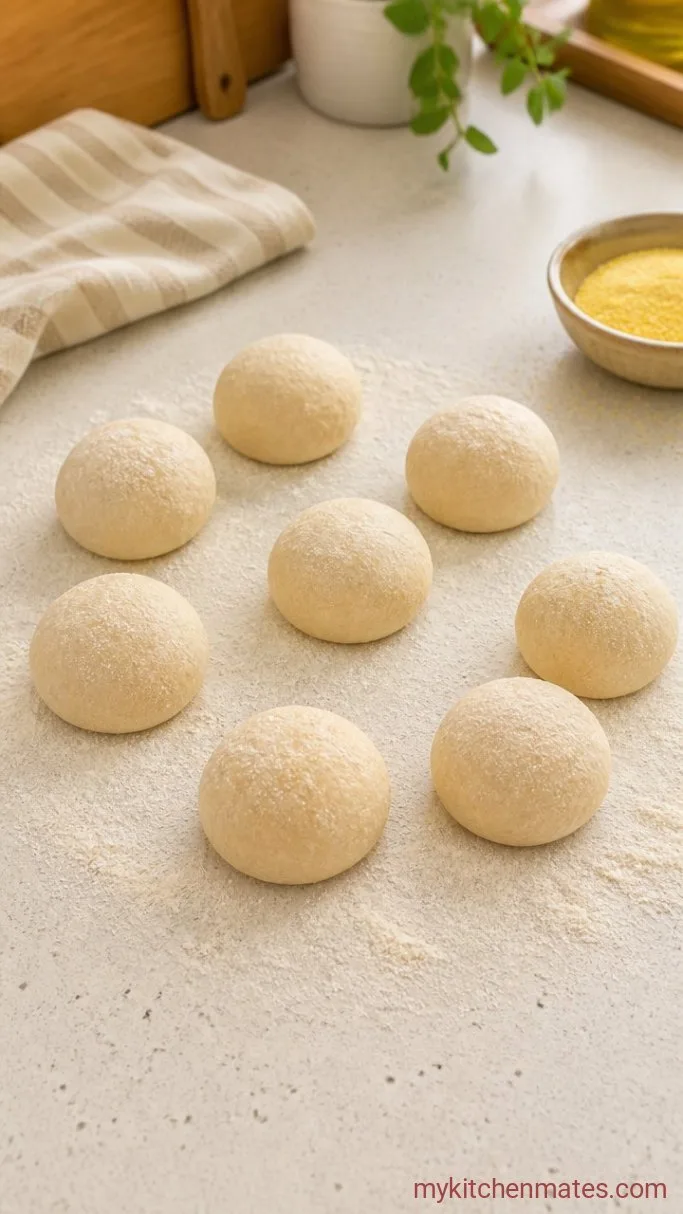
Punch the risen dough down gently to release the gas. Turn it onto a surface dusted very lightly with flour and divide it into 8 equal pieces. Roll each piece into a smooth ball, then flatten it with your palm into a round about 3½ inches across and ¾ inch thick.
Dust a baking sheet liberally with fine cornmeal. Place the rounds on the sheet with a little space between them, then sprinkle more cornmeal over the tops. The cornmeal gives the classic texture and prevents sticking during cooking.
Step 5: Proof the Shaped Muffins
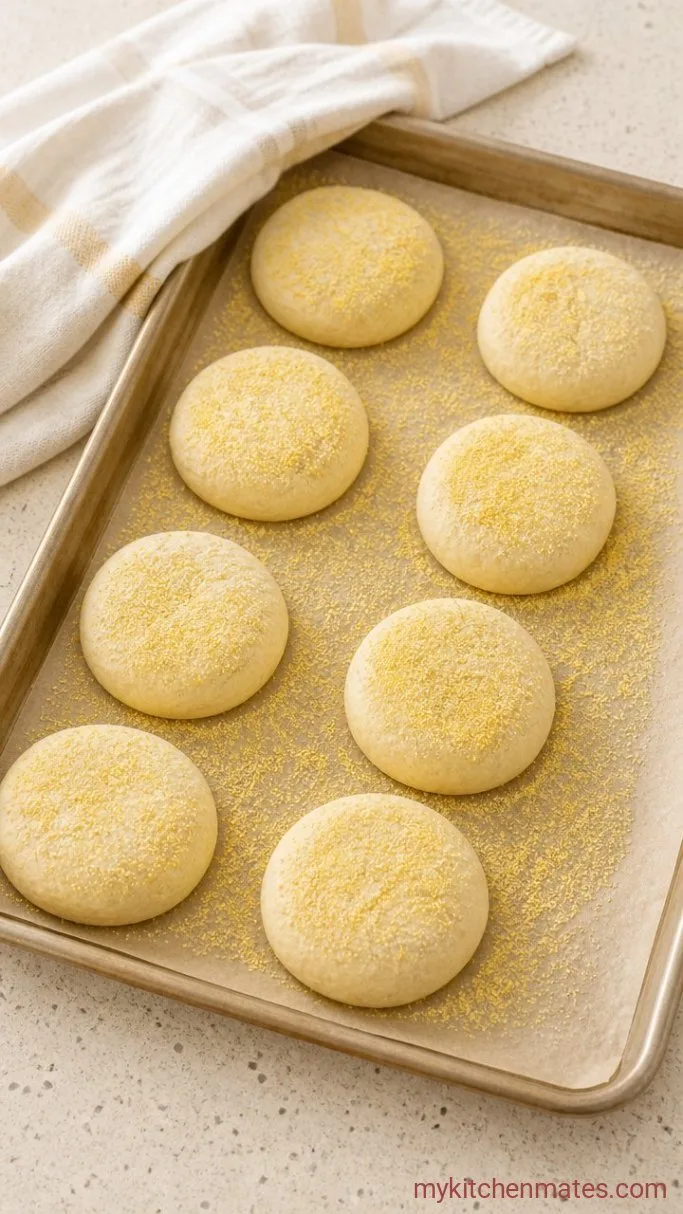
Cover the tray loosely with a towel and let the muffins rise a second time until they look noticeably puffy and airy, about 30 to 45 minutes. They will not double again, but should gain about half their height and feel soft.
If your kitchen runs cool, move the tray to a slightly warmer spot or give them up to an hour. The dough should feel light and springy before it hits the pan.
Step 6: Cook the Muffins on the Griddle
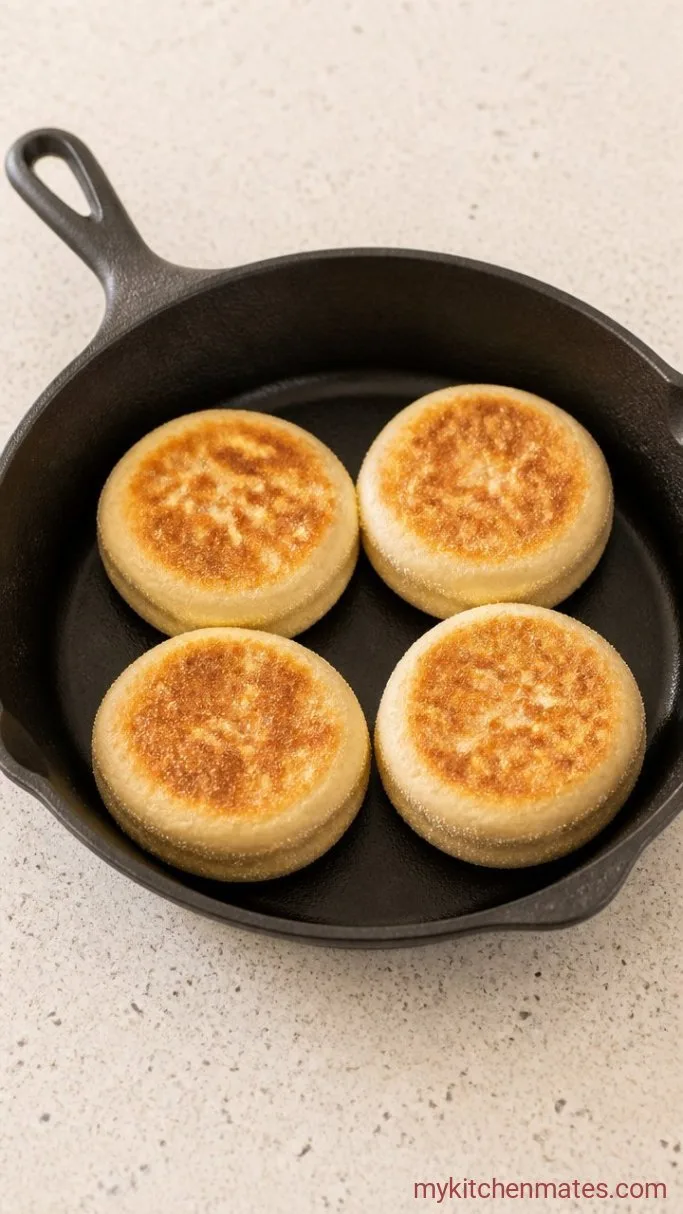
Warm a large cast-iron skillet, griddle, or heavy nonstick pan over medium-low heat. Do not grease the pan. Working in batches, carefully transfer the puffed dough rounds to the dry pan, cornmeal side down.
Cook them without moving for 6 to 8 minutes, until the bottoms are deep golden brown. Adjust the heat down if they darken too quickly; you want the insides to cook through gently. Flip each muffin and cook the second side for another 6 to 8 minutes, until equally brown and firm to the touch. An instant-read thermometer poked into the side should register about 200°F for fully baked muffins.
Step 7: Cool and Split the Muffins
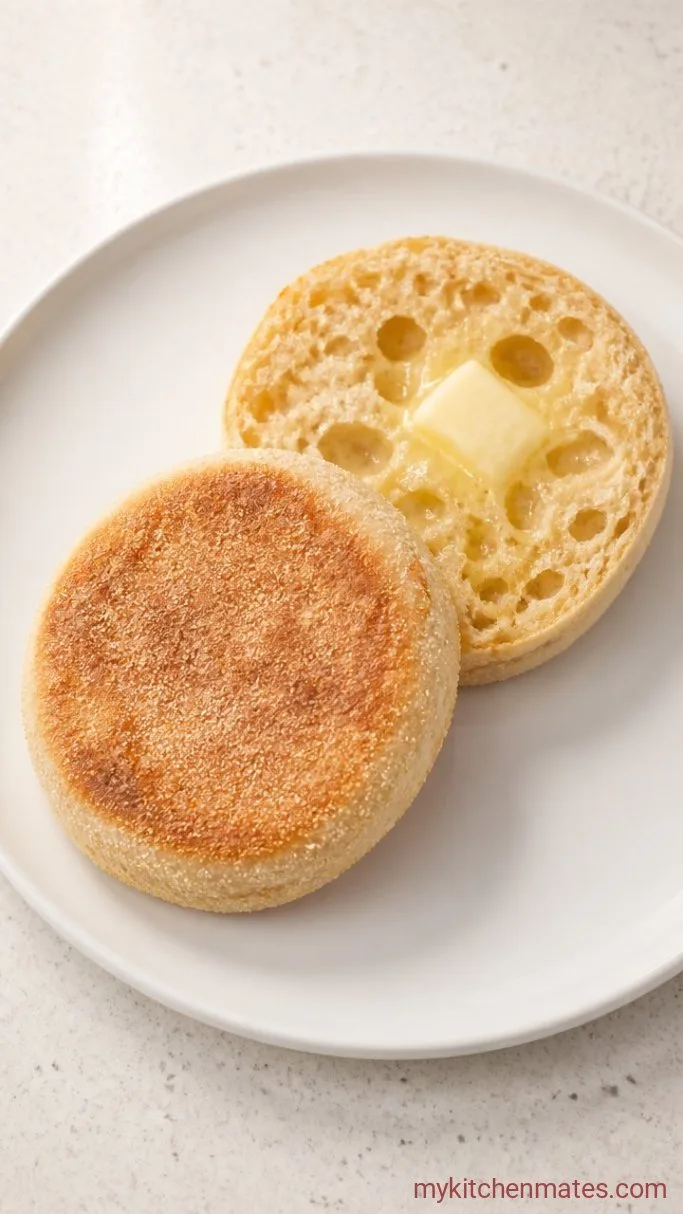
Move the finished muffins to a wire rack and let them cool completely before you do anything else. Warm muffins will tear instead of splitting cleanly.
When they are fully cooled, hold a muffin flat in your palm and pierce the sides all around with the tines of a fork, then gently pull the two halves apart. That fork-split surface is the whole point: every jagged peak will catch melted butter, jam, or a runny egg yolk. Toast the halves and use them right away.
Tips for Really Great English Muffins
- A kitchen scale makes the fluffiest muffins every time. Whole wheat flour compacts easily, so 480 grams measured is far more accurate than scooping cups. If you do use cups, spoon the flour into the cup and sweep the top.
- Watch your griddle heat. Medium-low is the safe zone. If the muffins brown before the center is cooked through, lower the heat and extend the cook time a minute or two per side.
- Do not skip the fork split. A knife cuts through the air pockets and leaves a flat surface; a fork opens them up. It makes the difference between a bakery-style muffin and a sad hockey puck.
- Use any leftover muffins for a breakfast casserole by cubing them and baking with eggs, cheese, and spinach. They soak up custard beautifully.
Rough proofing times by kitchen temperature:
| Room temperature | First rise (approx.) | Second proof (approx.) |
|---|---|---|
| 68°F (20°C) | 1½ hours | 45 to 55 minutes |
| 72°F (22°C) | 1 hour 15 minutes | 35 to 45 minutes |
| 78°F (26°C) | 1 hour | 30 to 40 minutes |
Storing and Freezing English Muffins
- Refrigerate: Once cooled, store in a sealed bag at room temperature up to 3 days, or in the fridge up to a week. The cold actually makes the crumb a bit firmer, which some people prefer for toasting.
- Freezing: Wrap each cooled muffin individually in plastic, then place in a freezer bag. They keep well for 2 months.
- Reheating: Pop a frozen muffin straight into the toaster or toaster oven. No need to thaw — a medium-dark toast cycle warms them through and recrisps the outsides.
What to Serve With Whole Wheat English Muffins
A fried egg with a slice of sharp cheddar makes the best breakfast sandwich. The yolk soaks into all the crevices while the cheese gets melty. For something brighter, top a toasted half with smashed avocado, flaky salt, and a squeeze of lime. And sometimes nothing beats a thick swipe of salted butter and a spoonful of raspberry jam while the muffin is still warm from the toaster.
Frequently Asked Questions
Can I use all-purpose flour instead?
Yes, you can substitute all-purpose flour one-for-one. The muffins will be softer, slightly less nutty, and may rise a touch more, but the method stays the same.
Why are my muffins doughy in the center?
The griddle heat was likely too high, which browned the outside before the center finished cooking. Lower the burner to medium-low next time and cook a couple minutes longer per side. Checking for an internal temp of 200°F is the surest fix.
Can I make the dough ahead and cook the next day?
You can. After shaping the rounds and dusting them with cornmeal, cover the tray tightly and refrigerate overnight, up to 12 hours. Take them out 30 minutes before cooking to lose the chill, then griddle as directed. The slow proof deepens the flavor slightly.
Do I really need to split with a fork?
Yes, that is the whole reason for the nooks and crannies. A knife glides through the bubbles and flattens the surface. A fork rips them open into that craggy texture that everyone loves.
Whole Wheat English Muffin Recipe
Ingredients
Method
- Combine warm water, warm milk, and honey in a large bowl. Sprinkle yeast over top and let foam, about 5 minutes. Stir in melted butter, salt, and 2 cups flour. Add remaining flour gradually until a soft, slightly sticky dough forms.
- Turn dough onto a floured surface and knead for 8 minutes, until smooth and elastic. Place in an oiled bowl, cover, and let rise until doubled, about 1 to 1½ hours.
- Punch down dough, divide into 8 pieces, shape into balls, and flatten into 3½-inch rounds. Dust a baking sheet generously with cornmeal. Place rounds on sheet and dust tops with more cornmeal.
- Cover and let proof until puffy, 30 to 45 minutes.
- Heat a cast-iron skillet or griddle over medium-low heat. Cook muffins in batches, 6 to 8 minutes per side, until deep golden and firm. An instant-read thermometer should read about 200°F.
- Transfer to a wire rack and cool completely. To serve, split each muffin with a fork, toast, and enjoy.
Notes
