
Sticky Caramel Upside Down Apple Pie

This pie flips the script, literally. A buttery brown sugar base melts into tender apples under a flaky crust, then you invert the whole thing so the gooey caramel drapes down over every slice.
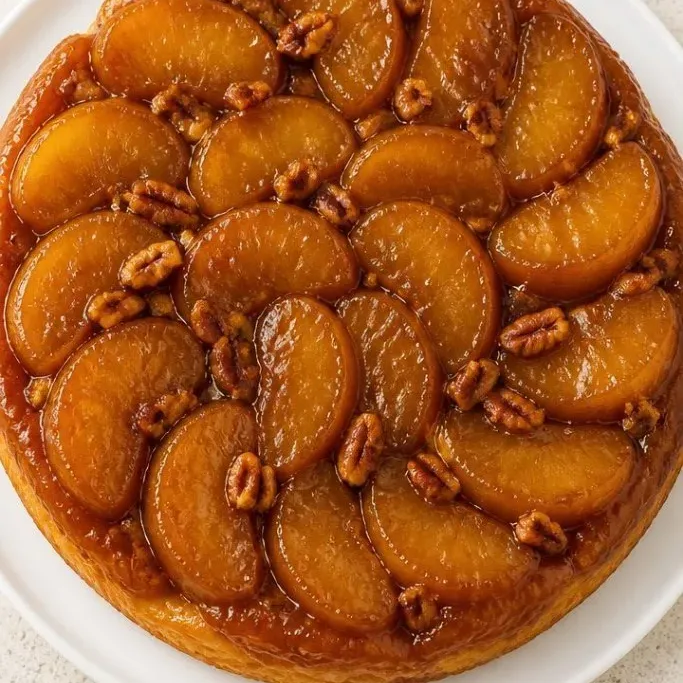
It gives you all the deep apple flavor of a classic pie, but with a crackly, sticky top that forms completely on its own. No weaving a lattice, no double crust.
Why This Apple Pie Works
You get a glossy layer of caramelized sugar and fruit juices without any extra steps. The bottom crust stays crisp because it bakes on top, away from the wet filling.
The apples soften just enough to hold their shape while absorbing the buttery caramel, so each bite has a little chew and a lot of sweet spiced flavor. And because you use a single crust, the whole thing comes together faster than a traditional double pie.
Ingredients
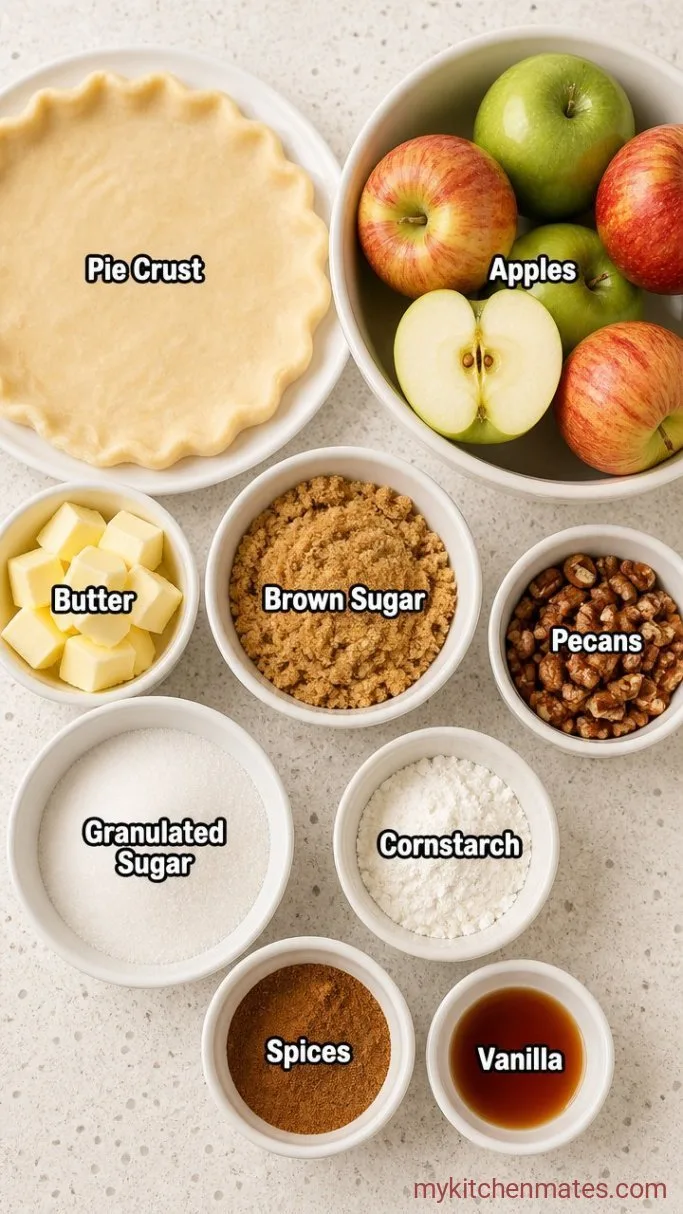
- 1 unbaked 9-inch pie crust: store-bought or your favorite homemade, kept cold
- 6 to 7 medium apples (about 2 ½ lb total): a mix of Granny Smith and Honeycrisp gives the best balance of tart and sweet
- 3 tbsp unsalted butter: cut into a few pieces
- ⅔ cup packed light brown sugar: dark brown sugar works too, for a deeper molasses note
- ¼ cup chopped pecans (optional): they toast in the caramel
- ¼ cup granulated sugar
- 2 tbsp cornstarch
- 1 tsp ground cinnamon
- ¼ tsp ground nutmeg
- ¼ tsp fine salt
- 1 tsp vanilla extract
Variations / Substitutions
- Pecans: swap in walnuts or leave them out entirely, the caramel still sets beautifully.
- Crust: use a gluten-free pie crust if needed, just keep it chilled.
- Apple types: all Granny Smith works, or try Braeburn and Pink Lady for a sweeter filling without losing structure.
- Spices: add a pinch of ground ginger or cardamom for a slightly warmer profile.
- Dried fruit: scatter 2 tbsp raisins or dried cranberries over the brown sugar layer before the apples.
Sticky Orange Upside Down Cake is another dessert you’d probably love if you enjoy this pie.
How to Make Upside Down Apple Pie
Step 1: Melt the Butter and Sugar Base
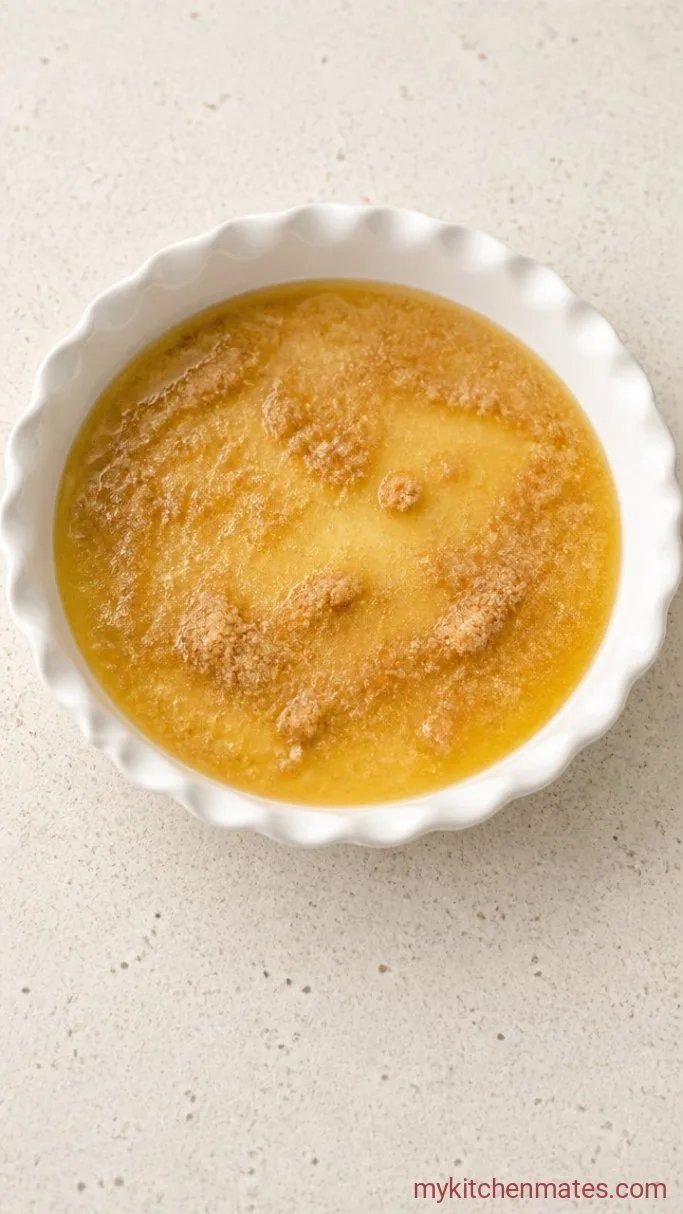
Heat the oven to 400°F (200°C). Place the 3 tbsp butter in a 9-inch pie plate and set the plate in the oven for 2 to 3 minutes, just until the butter melts.
Pull the pie plate out and immediately sprinkle the ⅔ cup brown sugar evenly over the melted butter. If you are using pecans, scatter the ¼ cup over the sugar now. The sugar will start to absorb the butter and form a wet sand-like base, which you will build the rest of the pie on.
Step 2: Toss the Apple Filling
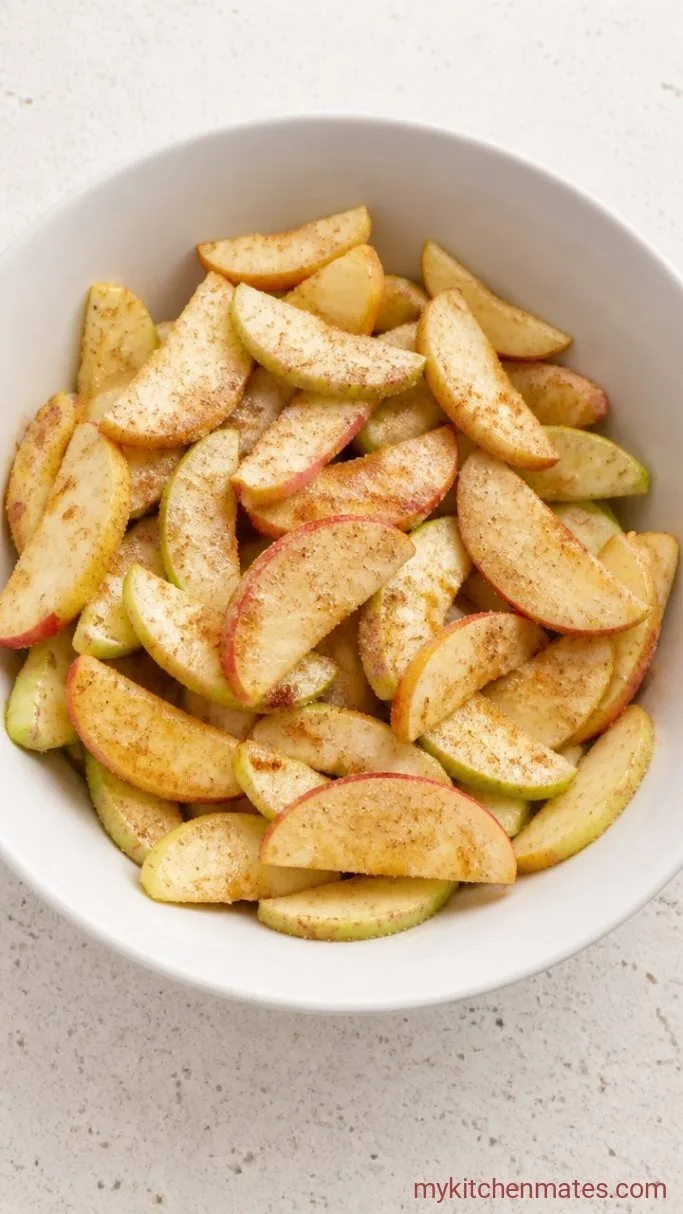
Peel, core, and slice the apples into ¼-inch thick wedges. You should have about 8 cups of apple slices. In a large bowl, toss the apples with the ¼ cup granulated sugar, 2 tbsp cornstarch, 1 tsp cinnamon, ¼ tsp nutmeg, ¼ tsp salt, and 1 tsp vanilla.
Keep tossing until the cornstarch disappears and every apple piece carries a light, even coating. The cornstarch will thicken the juices as they release, so the filling holds together and does not go watery under the crust.
Step 3: Arrange the Apples
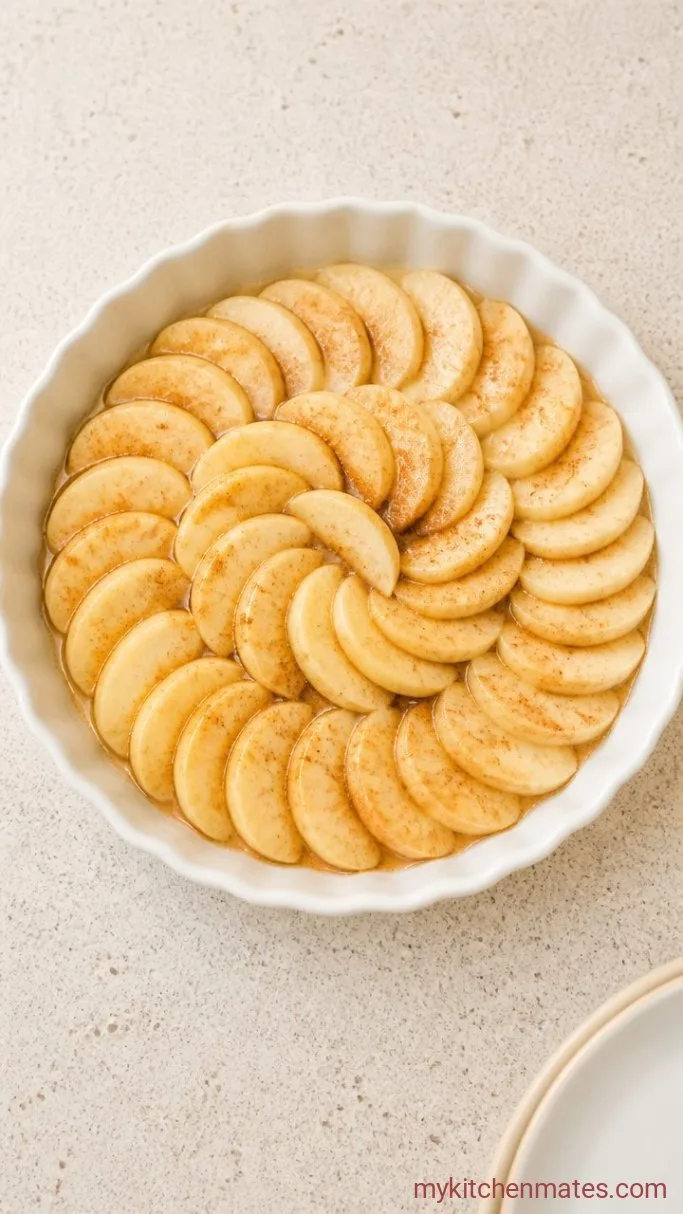
Scoop the sauced apples over the brown sugar mixture in the pie plate. Pack them in tightly, pressing down as you go. The apples will shrink during baking, so a tight pack now means a solid, lofty layer later.
Work in concentric circles for the first layer, then pile the rest on top and press with your palm to compact everything. The mound will seem tall, but it will settle under the crust.
Step 4: Drape the Crust
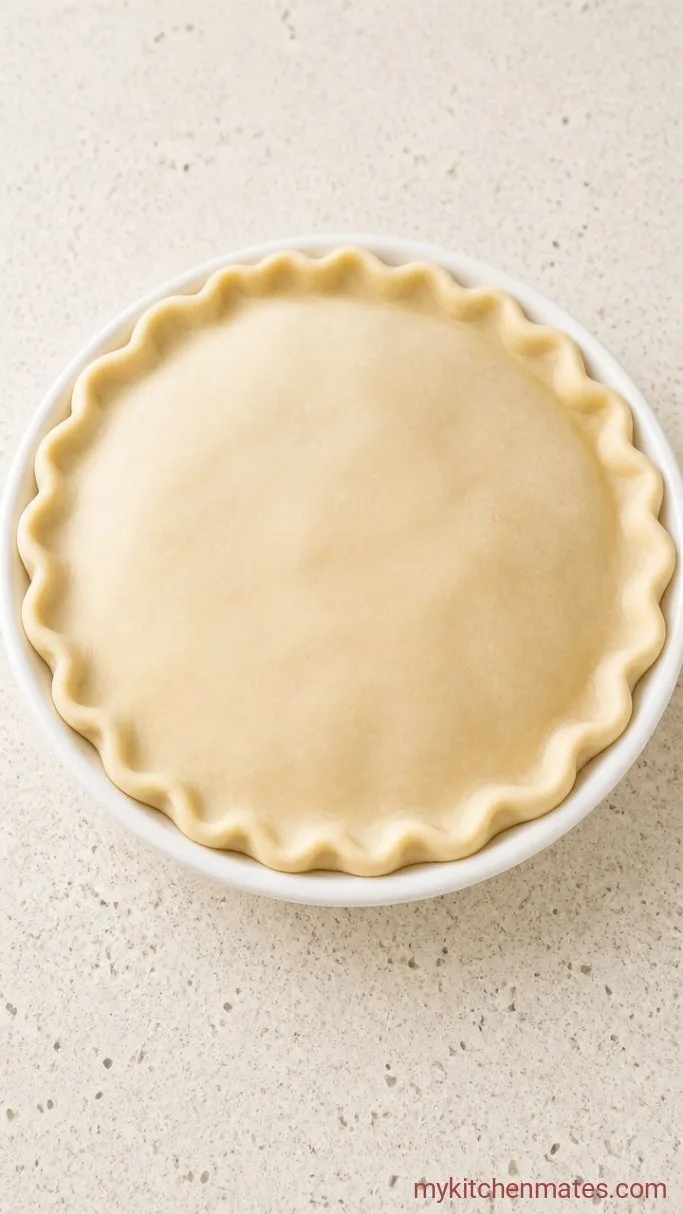
Roll your pie crust out to a 12-inch circle if it is not already that size. Drape it over the apples and tuck the edges down along the inside of the pie plate. There is no need to crimp a decorative edge because it will become the bottom after flipping.
Cut 4 or 5 small slits in the center of the dough with a sharp knife so steam can escape. Place the pie on a baking sheet lined with foil to catch any drips during baking.
Step 5: Bake the Pie
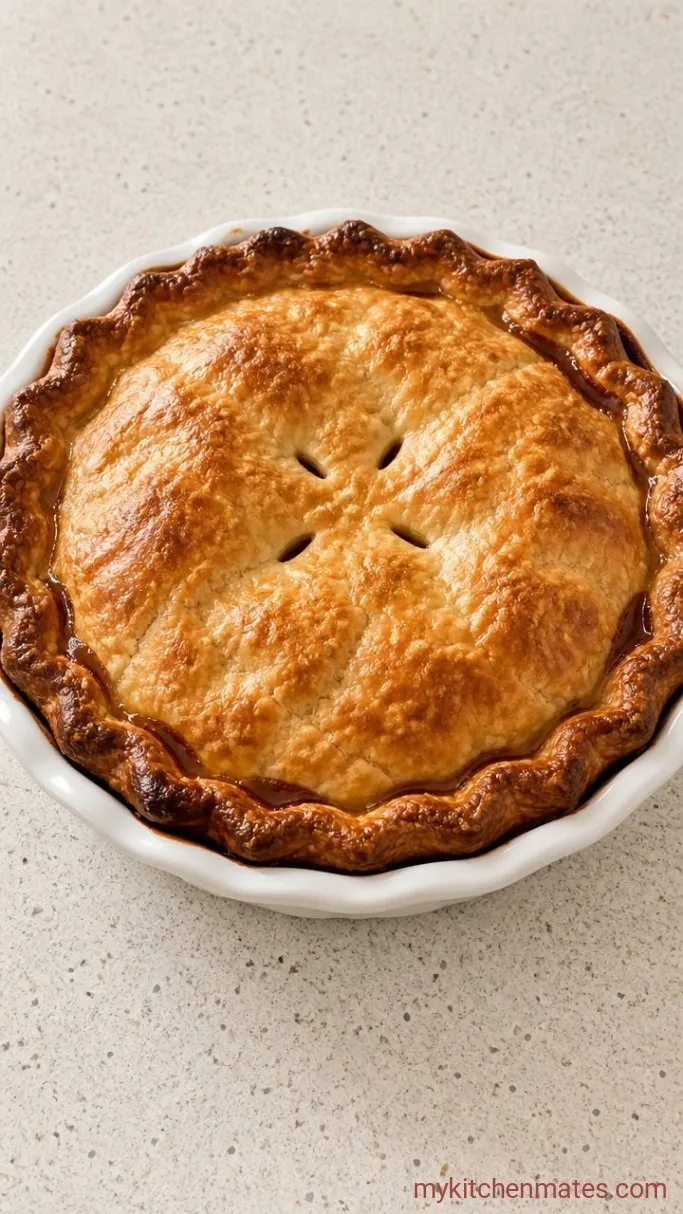
Bake on the middle rack at 400°F (200°C) for 20 minutes. You will see juices start to bubble up around the edges.
Reduce the temperature to 375°F (190°C) and continue baking for another 30 to 35 minutes, until the crust is deep golden and the juices are actively bubbling through the vents. If the crust edge darkens too fast, cover it loosely with a strip of foil after the first 30 total minutes of baking.
Step 6: Flip and Serve
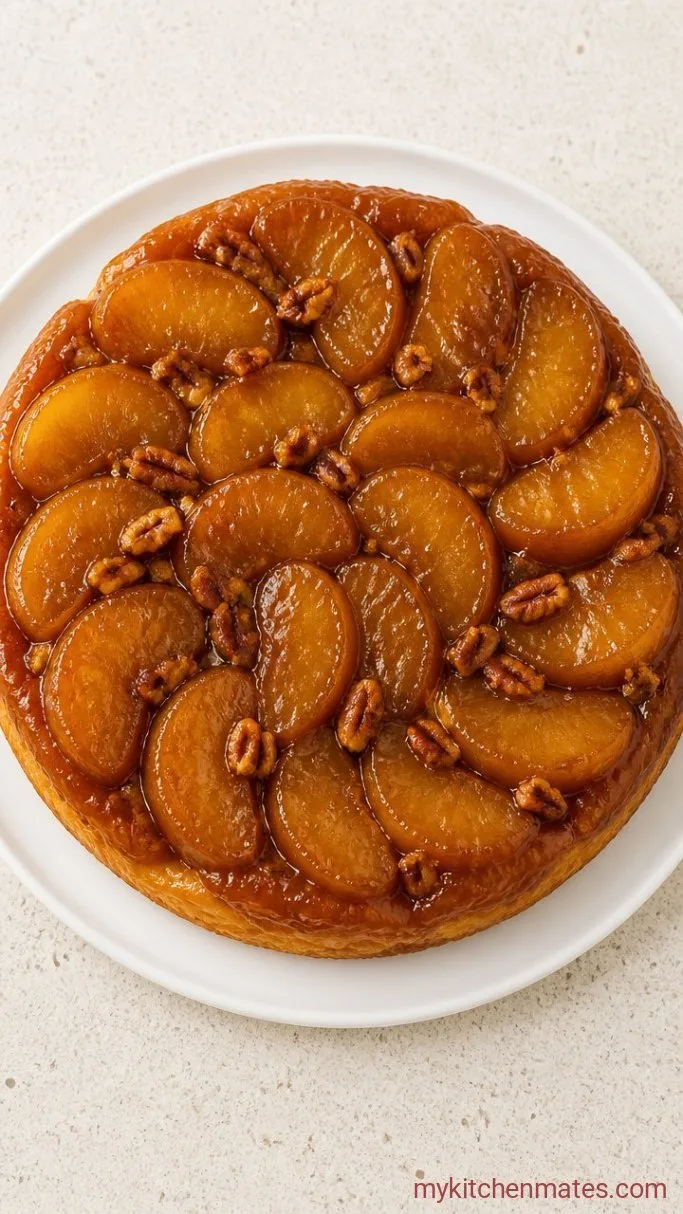
Remove the pie from the oven and let it rest on a wire rack for exactly 5 minutes. Run a thin knife around the edge of the crust to release any stuck spots. Place a large rimmed serving plate upside down over the pie plate and, holding both firmly, flip the whole thing over in one confident motion.
Lift the pie plate off slowly, letting any caramel that sticks drizzle back onto the apples. Let the pie cool another 10 minutes before slicing, so the syrup thickens to a glossy glaze on the fruit.
Tips for the Best Caramel Apple Layer
- Use firm apples that hold their shape; soft varieties like McIntosh will turn to mush under the long bake.
- A few small gaps when packing the apples are fine because the juices fill every space as the pie bakes.
- Do not skip the 5-minute rest before flipping; the caramel needs that short cool-down to thicken enough to coat the fruit rather than running off the plate.
- If you bake a day ahead, leave the pie in the pan and reheat it for 10 minutes in a 350°F oven, then flip just before serving. The crust will re-crisp.
Storing Leftovers
- Refrigerate: cover the pie loosely and keep in the fridge for up to 4 days.
- Reheating: warm individual slices on a parchment-lined sheet pan in a 350°F oven for 5 to 7 minutes to bring back the crust’s crunch. Microwaving softens the crust more, but it will still taste good in a pinch.
Frequently Asked Questions
Can I use a store-bought crust?
Yes. A refrigerated roll-out crust works well here. Look for one made with real butter for the richest flavor, but any all-butter or standard shortening crust will bake up golden.
Is it messy to flip?
A few drips of caramel may escape, which is why a rimmed plate matters. Press the plate and pie pan together tightly and flip without hesitation, and most of the syrup will stay on the fruit.
Can I assemble this ahead and bake later?
You can build the pie up through Step 4, then cover and refrigerate it for up to 6 hours. Add 5 to 10 extra minutes to the bake time because it will start cold.
What if my apples are extra juicy?
If your apples release a lot of liquid, increase the cornstarch to 2 ½ tbsp and be sure to bake until you see thick, glossy bubbles through the vents. That visual cue confirms the juices have thickened.
Can I make this with pears?
Yes, firm but ripe Bosc or Anjou pears make a lovely swap. Keep the same cornstarch amount and watch for the same bubbling cue near the end of baking.
Upside Down Apple Pie Recipe
Ingredients
Method
- Heat oven to 400°F (200°C). Put butter in a 9-inch pie plate, place in oven for 2 to 3 minutes until melted. Sprinkle brown sugar and pecans evenly over the butter.
- Peel, core, and slice the apples into ¼-inch wedges (about 8 cups). Toss with granulated sugar, cornstarch, cinnamon, nutmeg, salt, and vanilla until coated.
- Pack the apple mixture tightly over the brown sugar base in the pie plate, pressing down firmly.
- Roll pie crust to a 12-inch circle. Drape over apples, tuck edges inside the plate, and cut 4 to 5 steam vents. Set pie on a foil-lined baking sheet.
- Bake at 400°F (200°C) for 20 minutes, then reduce heat to 375°F (190°C) and bake another 30 to 35 minutes, until crust is deep golden and juices bubble thickly through vents.
- Cool the pie on a rack for 5 minutes. Run a knife around the edge, invert onto a large rimmed plate, and let the caramel drip over the apples. Cool 10 more minutes before slicing.
Notes
