
Chewy Homemade Turkish Ice Cream (Dondurma)

This Turkish ice cream is the one you’ve seen in those street vendor videos, stretchy and impossibly firm, almost like taffy. My version lands somewhere between that classic dondurma and a scoopable custard, chewy enough to pull but still soft on the spoon.
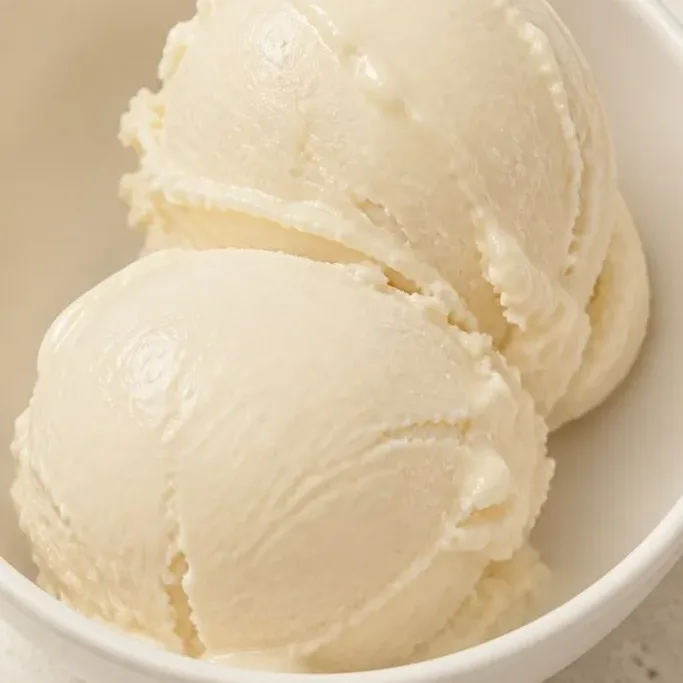
It takes a little patience, but the payoff is a dessert with real personality, a cool, floral-scented chew that melts slowly and clings to the cone. No special trip to Istanbul required.
What Makes This Homemade Dondurma So Special
The chew comes from salep, a powdered orchid root that turns milk into a thick, elastic gel when heated. Paired with the faint pine-like scent of mastic, you get an ice cream that’s nothing like the standard vanilla tub.
It’s a project, but one that rewards you with a texture you genuinely can’t buy at the grocery store. I keep coming back to it because the stretch holds up for days in the freezer, and a single scoop feels like a small event.
Ingredients
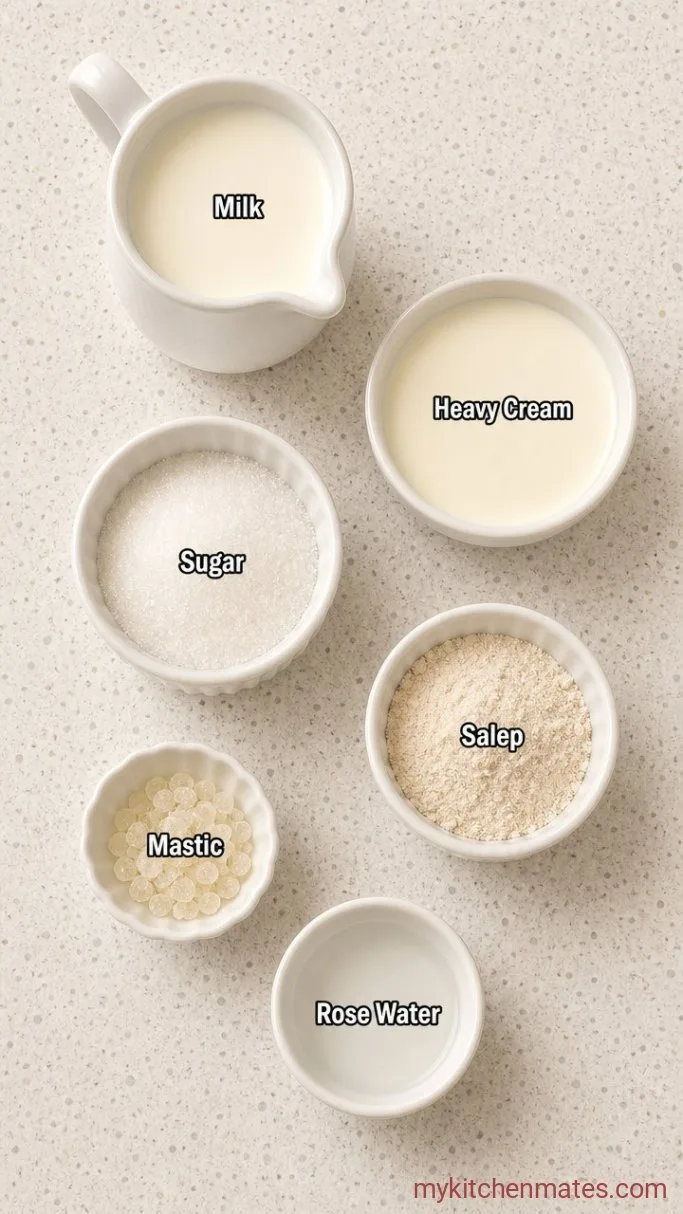
- 2 cups whole milk: the fat and protein help build structure, don’t swap for skim.
- 1 cup heavy cream: adds the rich mouthfeel so it’s not icy.
- 3/4 cup granulated sugar: just enough sweetness without hiding the delicate aromas.
- 1 tbsp salep powder: this is the key for chew, look for Turkish or Middle Eastern grocers.
- 1/2 tsp mastic crystals: the tiny translucent resin beads that give dondurma its signature pine-like note, optional but worth hunting down.
- 1/2 tsp vanilla extract or 1/4 tsp rose water: a subtle floral or classic vanilla finish, pick whichever you prefer.
Variations / Substitutions
- Salep substitute: if you can’t find salep, whisk together 2 tbsp rice flour and 1 tbsp cornstarch with 3 tbsp cold milk. You’ll lose some of the signature gumminess, but the ice cream will still be pleasantly chewy.
- Mastic substitute: omit it entirely. The ice cream will still be fragrant from vanilla or rose, just without that faint woodsy note.
- Dairy-free option: use full-fat oat milk for both the milk and cream, and expect a slightly softer texture. The salep still does its job.
- Flavor twist: swap the vanilla or rose for a teaspoon of orange blossom water. It’s brighter and pairs well with chopped pistachios on top.
Bite-Sized Mini Chocolate Chip Cookies are another reader favorite dessert worth making next.
How to Make Turkish Ice Cream
Step 1: Infuse the Milk with Mastic
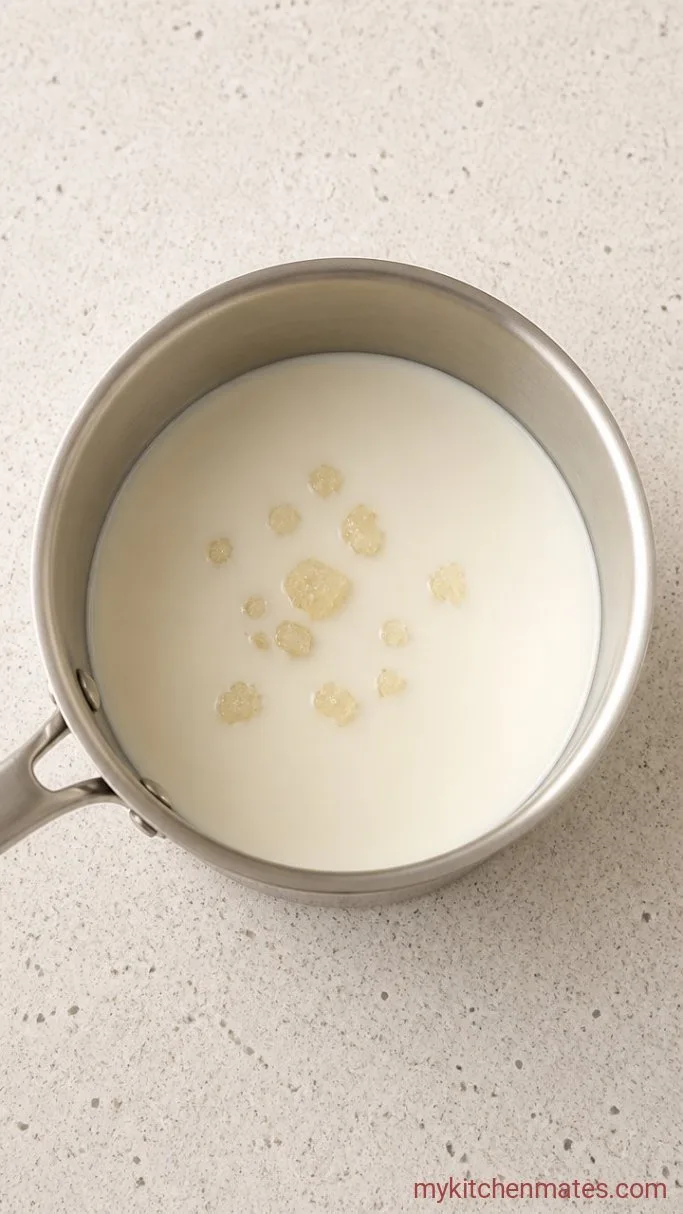
Pour the 2 cups of whole milk into a medium saucepan. Crush the 1/2 tsp mastic crystals with a pinch of the sugar in a mortar and pestle, then add the crushed mastic and the remaining 3/4 cup sugar to the milk. Warm over medium heat, stirring often, until the sugar dissolves and you can smell the faint pine aroma, about 4 minutes. Do not let it boil.
The milk will look slightly glossy and there may be tiny specks of undissolved mastic, that’s fine. They’ll melt further as you cook the custard.
Take your time here, because mastic needs gentle heat to release its fragrance without turning gritty. If the milk scalds, the pine note turns harsh.
Step 2: Whisk in the Salep
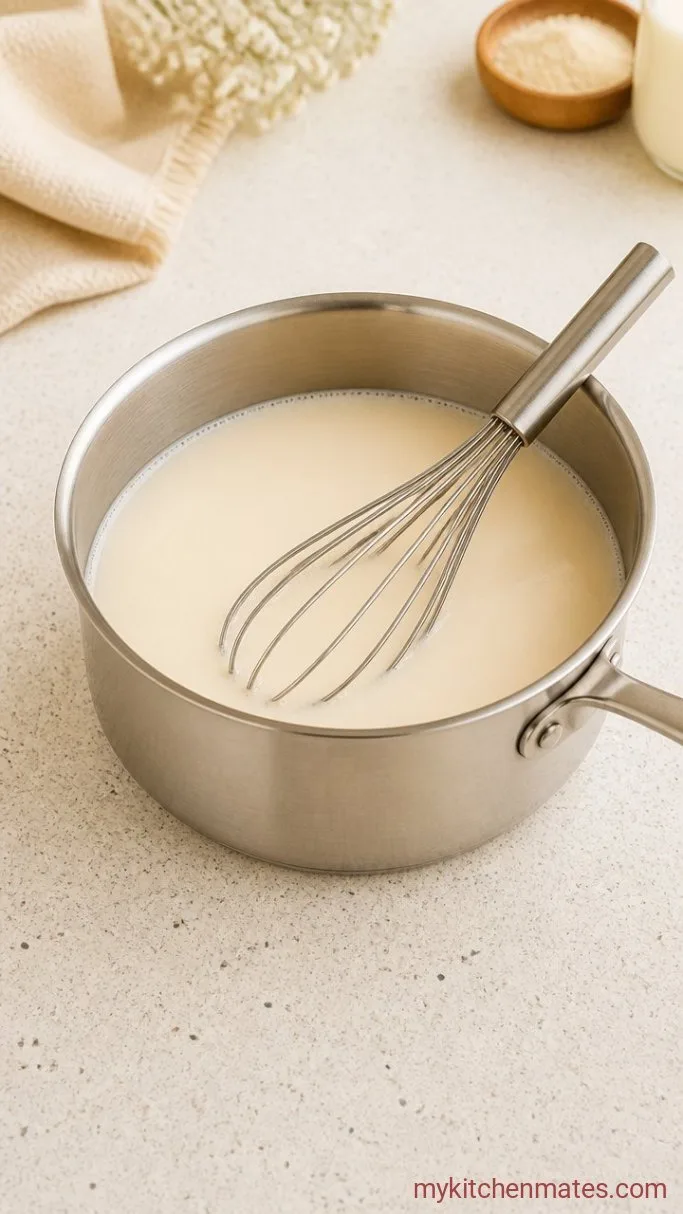
In a small bowl, stir the 1 tbsp salep powder with 3 tbsp of the hot milk until you get a smooth, milky paste. Slowly pour the paste back into the saucepan, whisking constantly so no lumps form.
Keep whisking as the mixture begins to thicken. After about 2 minutes, you’ll feel the whisk drag slightly, and the surface will look glossy and lightly coated when you lift the whisk.
If you skip the paste step and add dry salep directly, you’ll end up chasing gelatinous clumps around the pan. The extra minute to make the slurry saves you five minutes of straining later.
Step 3: Simmer the Custard
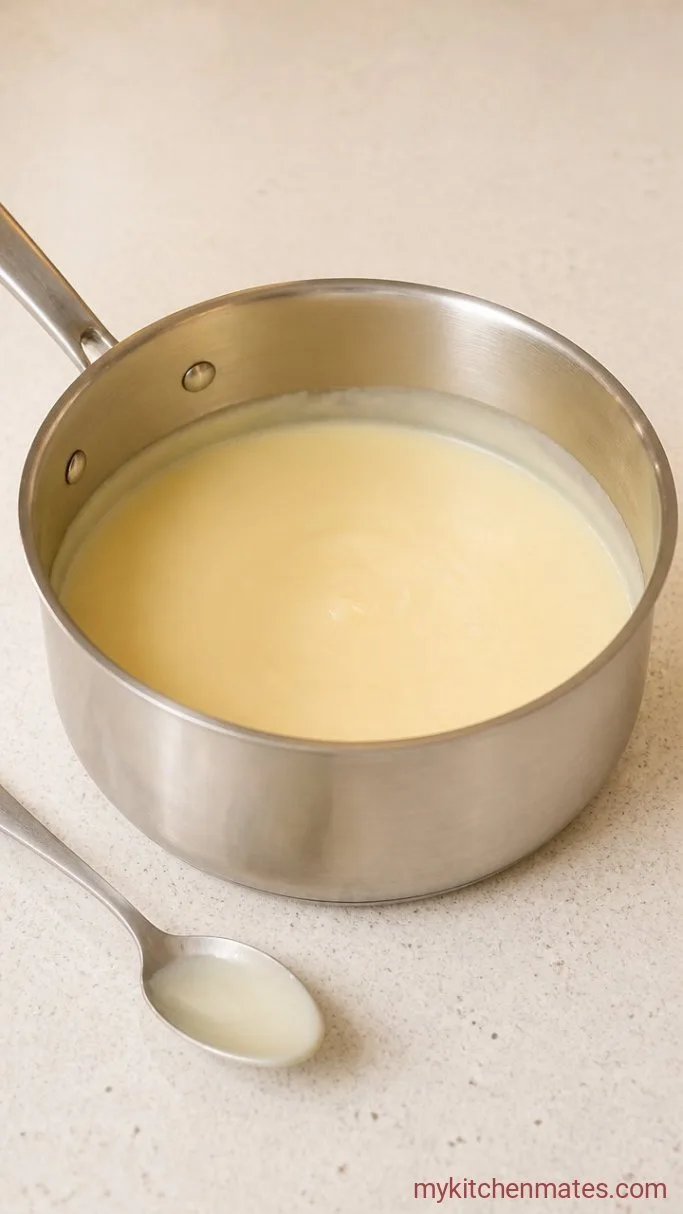
Reduce the heat to low and keep whisking gently. Let the custard simmer for 15 to 20 minutes, until it thickens enough to coat the back of a spoon. When you draw a line through it with your finger, the trail should hold cleanly.
The mixture will go from milky to a thick, stretchy cream that pulls away from the sides of the pan. It’s almost like a loose pudding at this stage.
This long, slow cook is what activates the salep’s gelling power. Shortcut it and you’ll miss the chew entirely.
Step 4: Chill the Base
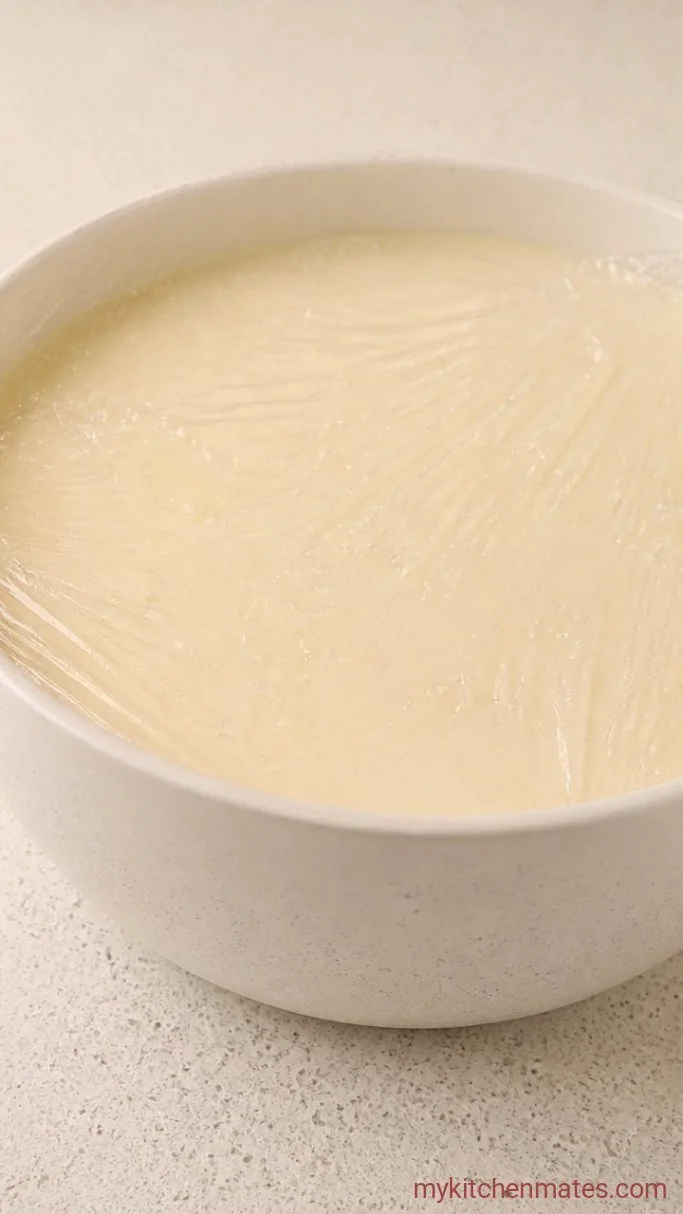
Remove the saucepan from the heat and stir in the 1 cup heavy cream and the 1/2 tsp vanilla or rose water. Pour the custard into a clean bowl and press a piece of plastic wrap directly onto the surface to stop a skin from forming. Let it cool to room temperature, then refrigerate for at least 4 hours, preferably overnight.
The chilled base will be very thick, almost like a firm yogurt. A cold base churns faster and develops smaller ice crystals, so don’t rush this.
I know waiting feels like a nuisance, but the difference in texture is real. A warm base churns into something closer to milk ice, not the smooth stretch you’re after.
Step 5: Churn the Ice Cream
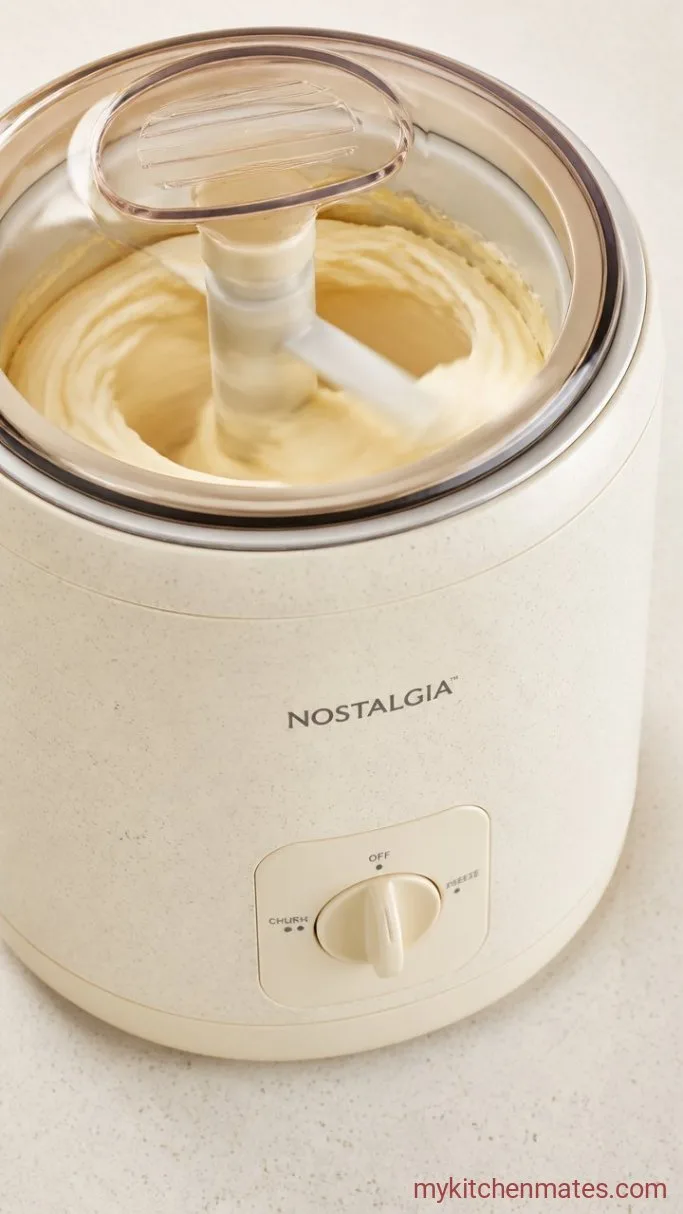
Pour the chilled base into your ice cream maker and churn according to the manufacturer’s instructions, usually 20 to 25 minutes. It will look like soft, stretchy soft-serve, pulling toward the paddle.
The machine’s job is to freeze and aerate the custard, but because of the salep, it won’t whip up as fluffy as egg-based bases. Instead, you’ll see long, ropy ribbons that snap back when you tug the paddle.
If your bowl isn’t fully frozen, the ice cream won’t firm up enough to stretch later. Freeze the bowl solid for at least 24 hours beforehand.
Step 6: Stretch for Chew
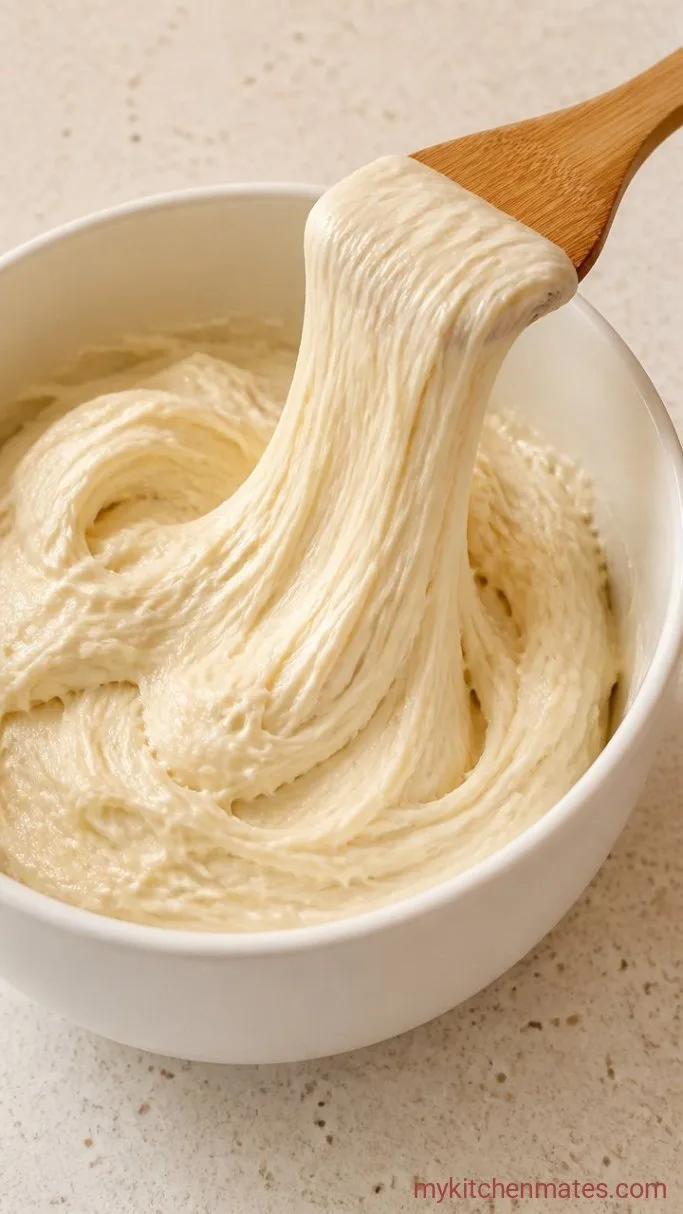
Scrape the churned ice cream into a chilled metal or glass container. Using a sturdy spatula or a wooden spoon, fold and pull the ice cream across itself for 3 to 4 minutes. Lift it high, fold it over, press down, and repeat.
It’ll feel like taffy, or a very thick, cold marshmallow cream. As you work, you’ll see long strands forming. The more you stretch, the chewier the final texture becomes.
This step is the most fun, and it’s what gives dondurma its famous resistance to dripping. Don’t skip it, even if your arms complain a little.
Step 7: Scoop and Serve
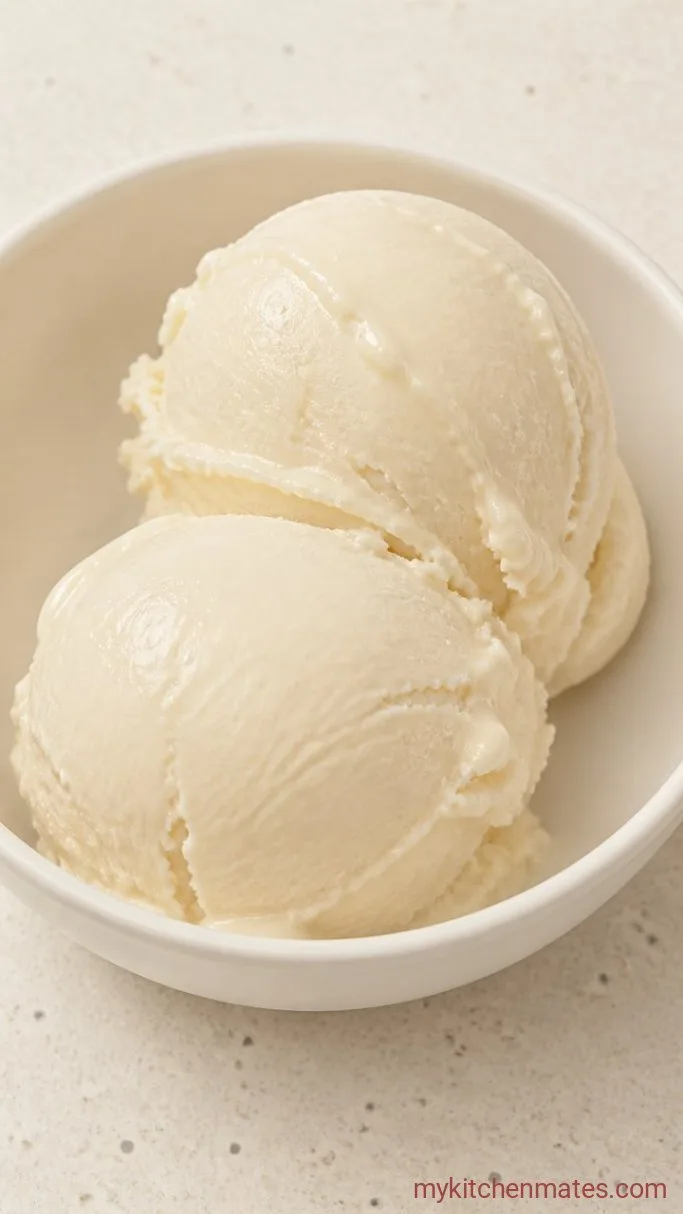
Smooth the top, cover with a lid or plastic wrap, and freeze for at least 4 hours until firm. When you’re ready, grab an ice cream scoop, dip it in hot water, and drag it through the surface to form a tight, stretchy ball. Serve immediately.
The scoop should pull into a high curl that holds its shape, and the first bite is cool, chewy, and fragrant. It’s unlike anything from a standard churn.
This dish never gets plate-and-garnish treatment. A simple scoop on a cone or in a chilled bowl lets the texture do all the talking, and that’s exactly what you want to see in a photo.
Tips for Perfectly Chewy Texture
- Chill all your tools: cold bowls, cold spatula, cold container. Any warmth melts the ice cream slightly and works against that firm pull.
- Stretch longer for more chew: 4 minutes of folding gives a noticeable tug; 6 minutes edges closer to the street vendor style. Go by feel.
- Use a scale for salep: one tablespoon can vary a lot between brands. If yours is fluffy, you might need a little less. If dense, a little more. 10 grams is a safe baseline.
- Don’t over-churn: stop the machine when the ice cream is thick enough to leave a clear trail but still slightly soft. Churning too long introduces more air and weakens the stretch.
- Avoid a granita texture: if your freezer is very cold, let the ice cream sit on the counter for 5 minutes before scooping. That rest softens it just enough to pull beautifully, without melting.
Frequently Asked Questions
I can’t find salep. What’s the closest substitute?
Use 2 tablespoons rice flour plus 1 tablespoon cornstarch whisked with 3 tablespoons cold milk. The result is chewier than standard ice cream but not as elastic as salep-based dondurma.
Do I absolutely need mastic?
No. The ice cream still works beautifully without it. If you skip it, stick with a pure vanilla extract or a floral water so the flavor isn’t flat.
I don’t have an ice cream maker, can I still do this?
Yes, pour the chilled base into a shallow container and freeze. Every 30 minutes for the first 3 hours, scrape and stir with a fork, then after 3 hours, do the folding stretch from step 6. The texture won’t be as smooth, but you’ll still get some chew.
Why did my ice cream turn out icy instead of chewy?
A few possible reasons: the custard didn’t cook long enough, the base wasn’t fully chilled before churning, or the freezer bowl wasn’t frozen solid. Icy texture usually means the salep didn’t gel fully.
How long does the chewiness last in the freezer?
About a week in a well-sealed container. After that, it gradually stiffens, but a five-minute counter rest brings back some of the stretch.
Turkish Ice Cream Recipe
Ingredients
Method
- Crush mastic with a pinch of sugar, then warm with milk and remaining sugar until dissolved.
- Make a slurry with salep and some hot milk, then whisk back into the pan.
- Simmer on low, stirring, for 15–20 minutes until thick enough to coat the back of a spoon.
- Off heat, stir in cream and vanilla or rose water, then chill base for at least 4 hours or overnight.
- Churn in an ice cream maker according to machine instructions, about 20–25 minutes.
- Transfer to a chilled container and stretch the ice cream with a spatula for 3–4 minutes.
- Freeze for at least 4 hours before scooping and serving.
Notes
