
Leftover Turkey Sourdough Bread with Cheddar and Thyme

This Turkey Sourdough Bread turns leftover holiday turkey into a crusty, savory loaf studded with sharp cheddar and fresh thyme.
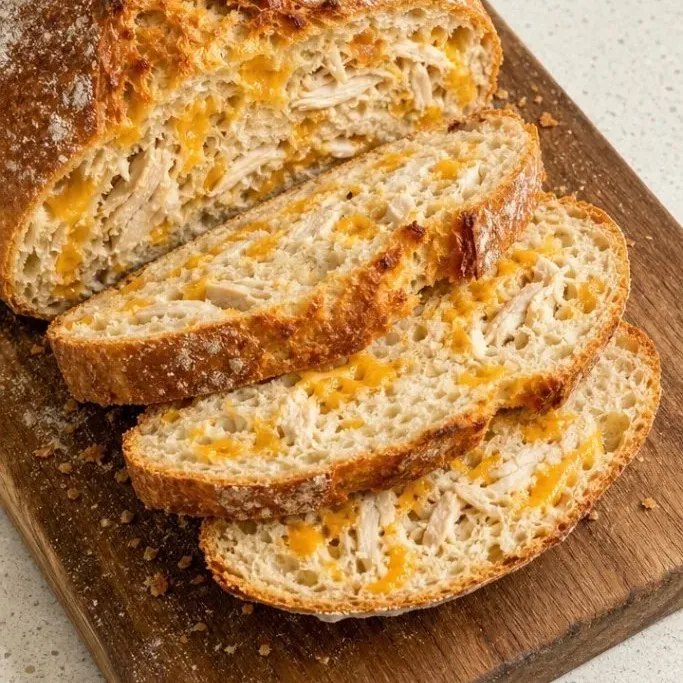
It’s the sort of loaf that makes a simple bowl of soup feel like a proper meal, and it’s surprisingly straightforward even if you’re new to sourdough.
Why This Turkey Sourdough Works
The shredded turkey stays moist inside the crumb thanks to all the steam the boule traps as it bakes. Instead of drying out, the meat softens and gives each slice a subtle, savory richness that plain sourdough never gets.
Sharp cheddar melts into little pockets, and the thyme adds an earthy note that cuts right through the richness. The crust crackles when you press it, and the inside is chewy but still soft enough for a sandwich.
It’s a bread that does double duty. Eat it warm with butter, toast it for breakfast, or pile on mustard and a few extra slices of turkey for a next-level leftover sandwich.
Ingredients

- 1 cup active sourdough starter: fed and bubbly, about 100% hydration
- 3 cups bread flour: 360g if you weigh it, plus more for dusting
- 1 ¼ cups warm water: around 85°F to 90°F
- 1 tsp fine sea salt
- 1 ½ cups shredded cooked turkey: white or dark meat, pulled into bite-sized shreds
- 1 cup shredded sharp cheddar cheese: use orange or white cheddar, whichever you have
- 1 tbsp fresh thyme leaves: or 1 tsp dried if that’s easier
- ½ tsp black pepper: fresh ground gives the best lift
Variations and Substitutions
- Chicken: swap in shredded chicken for the turkey, same amount, same texture.
- Gruyère or Swiss: use either in place of the cheddar for a nuttier, meltier bite.
- Rosemary: chopped fresh rosemary works beautifully if you don’t have thyme.
- A little heat: fold in ¼ tsp red pepper flakes along with the pepper if you like a gentle warmth.
- Dairy-free: skip the cheese and add an extra ½ tsp salt plus 2 tbsp nutritional yeast for a cheesy note without dairy.
Creamy Cheddar Potato Soup goes perfectly with this bread for a cozy meal.
How to Make Turkey Sourdough Bread
Step 1: Mix the Dough

In a large mixing bowl, combine the 3 cups bread flour, 1 ¼ cups warm water, and 1 cup active starter. Mix with a stiff spatula or your hands until no dry flour remains and the dough looks shaggy. Cover the bowl with a damp towel or plastic wrap and let it rest for 30 minutes.
After half an hour, the dough will feel smoother and more extensible even though you haven’t done any kneading. That rest, called autolyse, gives the flour time to hydrate fully and starts building gluten on its own.
Step 2: Fold in the Turkey and Cheese

Sprinkle the 1 tsp salt and a tablespoon of water over the dough, then use your hand to pinch and fold the salt in until you don’t feel any grit. Next, scatter the 1 ½ cups shredded turkey, 1 cup shredded cheddar, the thyme leaves, and the black pepper across the top. Gather the dough from the edges and fold it over the mix-ins, rotating the bowl as you go, until the turkey and cheese are roughly distributed.
The dough will look lumpy, and some bits of turkey will stick out. That’s exactly what you want. Cover again and let it rest for 15 minutes before you start the folds.
Step 3: Stretch and Fold During the Rise

With a wet hand, grab one side of the dough, stretch it upward without tearing, and fold it over the center. Rotate the bowl a quarter turn and repeat three more times so all four sides get folded. Cover the bowl and let it sit 30 minutes. Do this whole set of stretches two more times, every 30 minutes, for a total of three sets.
Each time you fold, the dough will feel tighter and hold its shape a bit longer. After the third set, the surface should look smooth and feel springy. Let it finish rising covered at room temperature, about 1 to 2 more hours, until noticeably puffed and just starting to dome.
Step 4: Shape the Loaf

Turn the dough out onto a lightly floured counter. With floured hands, gently shape it into a round, tucking the edges underneath. Let it sit uncovered for 20 minutes; this bench rest relaxes the gluten so you can do a final tight shape.
After the rest, flip the round over so the smooth side is down, then fold the edges toward the center and roll it into a tight boule. Place the boule seam side up in a well-floured banneton or a bowl lined with a floured tea towel.
Step 5: Score and Bake

Set a Dutch oven or heavy lidded pot in the oven and preheat to 475°F for at least 30 minutes. When the pot is screaming hot, tip the dough onto a piece of parchment paper so the smooth side faces up. Use a sharp lame or razor blade to score a slash about half an inch deep across the top. Lift the parchment and lower the dough into the hot pot. Cover and bake for 30 minutes, then remove the lid and bake another 15 to 20 minutes until the crust is deep amber.
An instant-read thermometer poked into the center should read around 200°F. The kitchen will smell of toasted cheese and thyme by the time it’s done.
Step 6: Cool and Slice the Loaf

Transfer the loaf to a wire rack and let it cool completely before you slice it. That means at least 1 hour. Cutting into it too soon will make the crumb gummy and the turkey wet.
When it’s rested, saw through with a serrated knife. The inside will show little shreds of turkey and small pockets of melted cheese. Serve slices warm or at room temperature, whichever you prefer.
Tips for the Best Loaf
- Use drier leftover turkey if you have a choice. Very moist meat can weigh down the dough and make the crumb heavy. If your turkey is saucy, blot it with paper towels first.
- Don’t overwork the dough after you add the turkey and cheese. Folding too aggressively can tear the meat into tiny threads and make the loaf dense in spots.
- A clean score matters. A dull knife drags the surface and closes up the slash, so use a fresh razor blade or a properly sharp laming tool.
- Weigh your flour for the most consistent dough, especially if you’re baking sourdough regularly. 360 grams of bread flour lines up exactly with the 3 cup measure used here.
Storing Leftover Turkey Sourdough
- At room temperature: Keep the cut loaf cut side down on a wooden board or wrap it loosely in a paper bag for up to 2 days. The crust stays crunchy while the crumb doesn’t dry out too fast.
- Refrigerate: After the first day at room temp, move it to a sealed bag in the fridge if you won’t finish it within another day. Chilled bread fades fast, so bring it back with heat.
- Reheating: A few minutes in a 350°F oven or a toaster oven brings back the crusty outside and warms the cheese so it softens again. Slices toast well straight from the fridge.
What to Serve With Turkey Sourdough
A creamy tomato soup and a few thick slices of this bread is a simple meal that feels complete. For something lighter, a crisp green salad with a sharp vinaigrette balances the richness of the cheese and turkey. You can also use it to build a next-day turkey sandwich with leftover cranberry sauce and a handful of arugula.
Frequently Asked Questions
Can I use sourdough discard instead of active starter?
No, discard won’t give the bread enough lift. You need an active, bubbly starter that has doubled in size after feeding so the loaf rises as it should.
Can I make this without a Dutch oven?
Yes, but the crust won’t be as crackly. Bake the loaf on a preheated baking stone or an inverted sheet pan with a steam tray underneath at the same temperature, and mist the oven with water when you load the bread.
What if I don’t have a banneton?
Line a medium bowl with a clean tea towel and dust it generously with flour. The loaf will proof just fine, and you can transfer it to parchment the same way.
Can I freeze the baked loaf?
Yes. Cool it completely, then wrap the whole loaf tightly in foil and freeze for up to 3 months. Thaw at room temperature and refresh the crust in a hot oven for 10 minutes before slicing.
Turkey Sourdough Bread Recipe
Ingredients
Method
- Mix flour, water, and starter until shaggy. Cover and rest 30 minutes.
- Sprinkle salt and 1 tbsp water over dough, fold to incorporate. Fold in turkey, cheddar, thyme, and pepper. Cover and rest 15 minutes.
- Perform 3 sets of stretch and folds, 30 minutes apart. Let rise until puffy, about 1 to 2 more hours.
- Shape dough into a boule on a floured surface, bench rest 20 minutes, then final shape into a tight boule. Place seam side up in a floured banneton.
- Preheat Dutch oven at 475°F. Turn dough onto parchment, score, and bake covered 30 minutes. Uncover and bake 15 to 20 minutes until deep amber and internal temp reaches 200°F.
- Cool on a wire rack at least 1 hour before slicing with a serrated knife.
Notes
