
Crusty Overnight Sourdough Italian Bread

This crusty overnight sourdough Italian bread has a shatteringly crisp crust and an airy, tangy crumb. It’s the kind of loaf that makes your kitchen smell like a bakery with almost no hands-on effort.
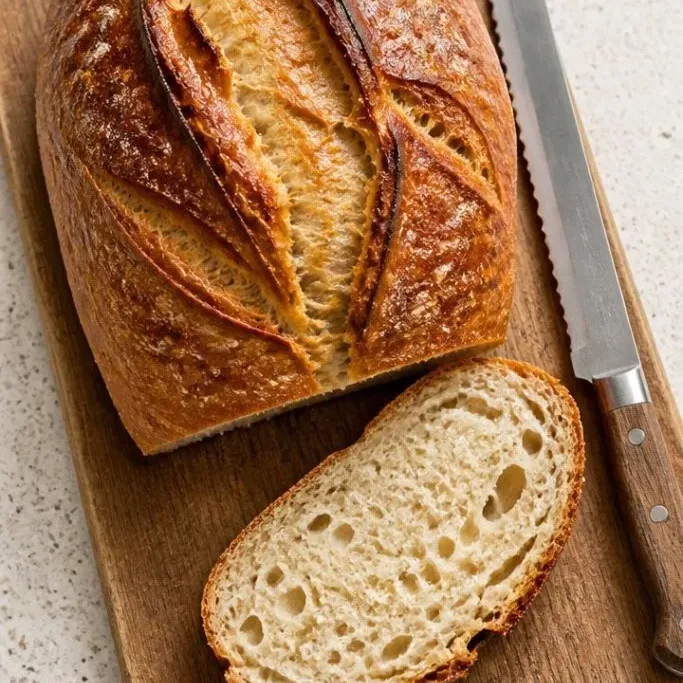
Mix the dough the night before, shape it in the morning, and by lunch you’ll pull a deep golden loaf from the oven. A Dutch oven traps steam to give you that classic crackling crust.
What Makes This Sourdough Bread So Reliable
The long, slow ferment builds flavor while you sleep, and the dough is forgiving even if your timing isn’t perfect. A small amount of olive oil keeps the crumb tender without weighing it down.
The crust crackles as it cools, and the inside has those glossy irregular holes that hold a swipe of butter. It’s the loaf I reach for when I want fresh bread with a deep sourdough tang but no commercial yeast.
Ingredients
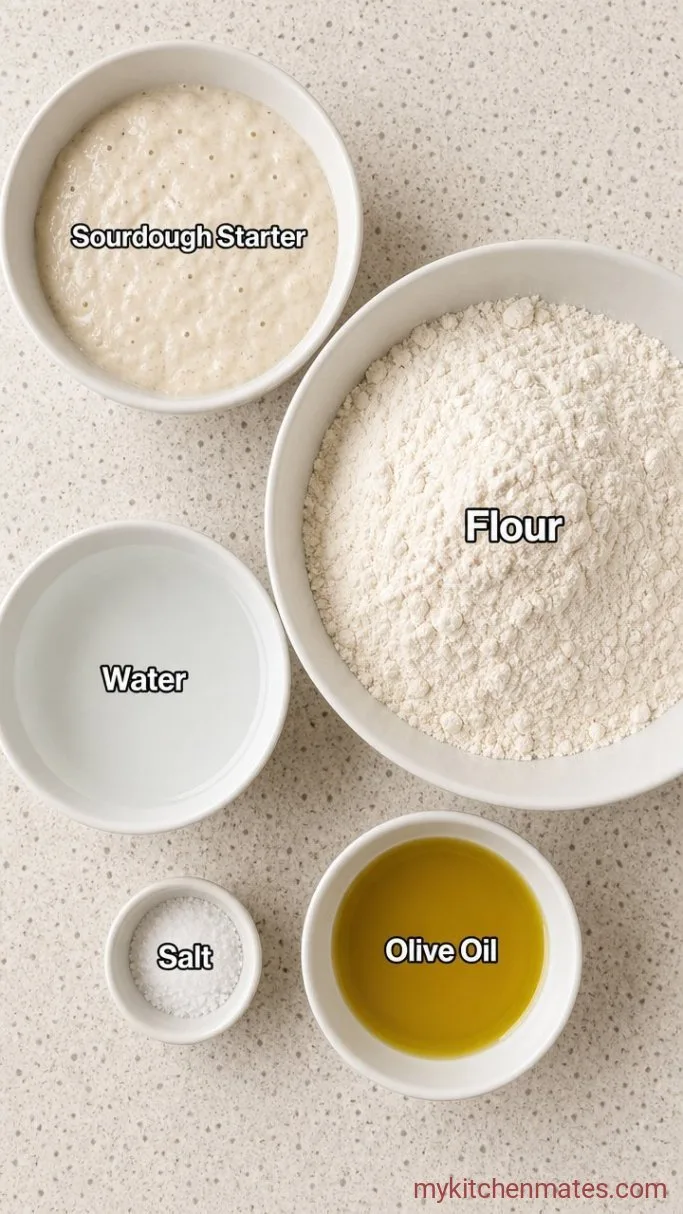
- 1 cup (240g) active sourdough starter: fed and bubbly, 100% hydration
- 3 ½ cups (420g) bread flour: gives the loaf its chewy texture
- 1 ¼ cups (295g) warm water: about 85°F (29°C)
- 2 tsp (11g) fine sea salt: adjust if using table salt, which is denser
- 1 tbsp (15g) extra-virgin olive oil: optional, adds a softer crumb and subtle fruitiness
Variations / Substitutions
- Swap half the bread flour with whole wheat flour: adds a nutty depth and makes the crumb slightly denser
- Add a teaspoon of honey or malt syrup to the water: deepens the crust color if your starter isn’t very active
- Sprinkle chopped rosemary or roasted garlic into the folds: turns it into a savory loaf that’s great with soup
- Leave out the olive oil for a leaner, chewier loaf: still excellent, just a bit more rustic
Italian Vegetable Soup is a cozy soup to serve with this bread.
How to Make Crusty Overnight Sourdough Italian Bread
Step 1: Mix the Dough
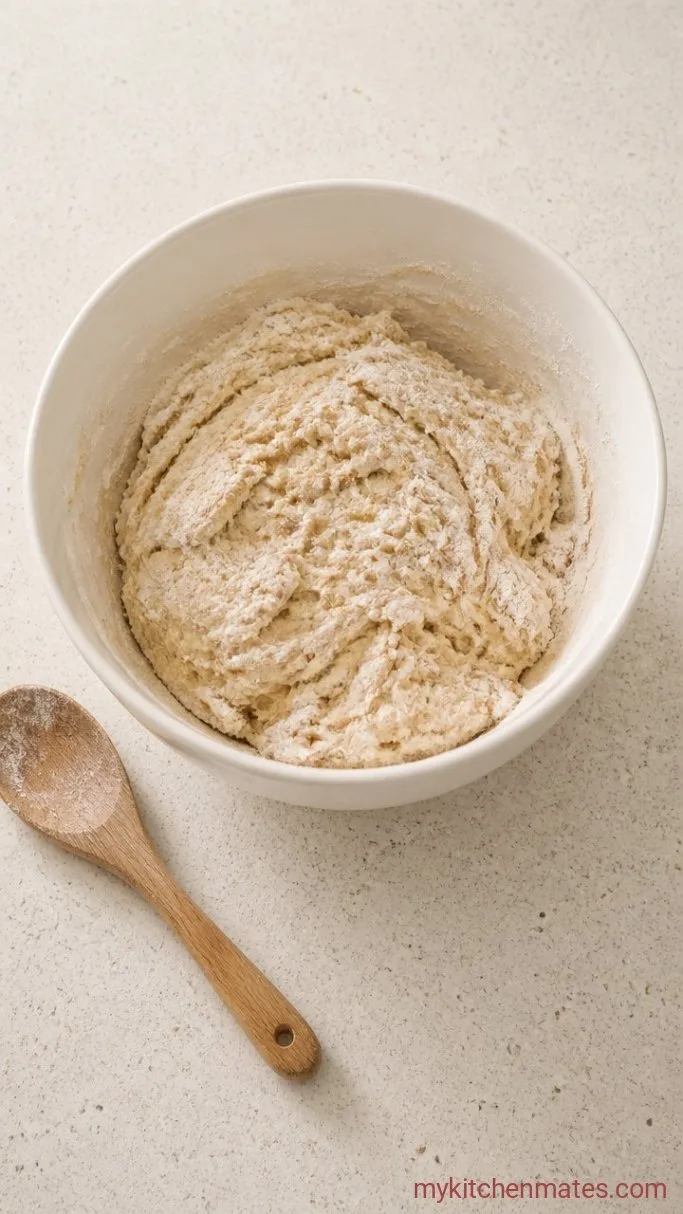
In a large bowl, combine the 1 cup active starter, 1 ¼ cups warm water, and 1 tablespoon olive oil. Stir to break up the starter, then add the 3 ½ cups bread flour and 2 teaspoons salt. Mix with a wooden spoon or your hands until no dry flour remains, about 1 minute.
The dough will look shaggy and feel quite sticky. That’s exactly what you want. Cover the bowl with a damp towel or plastic wrap and let the flour hydrate.
Step 2: Bulk Ferment Overnight
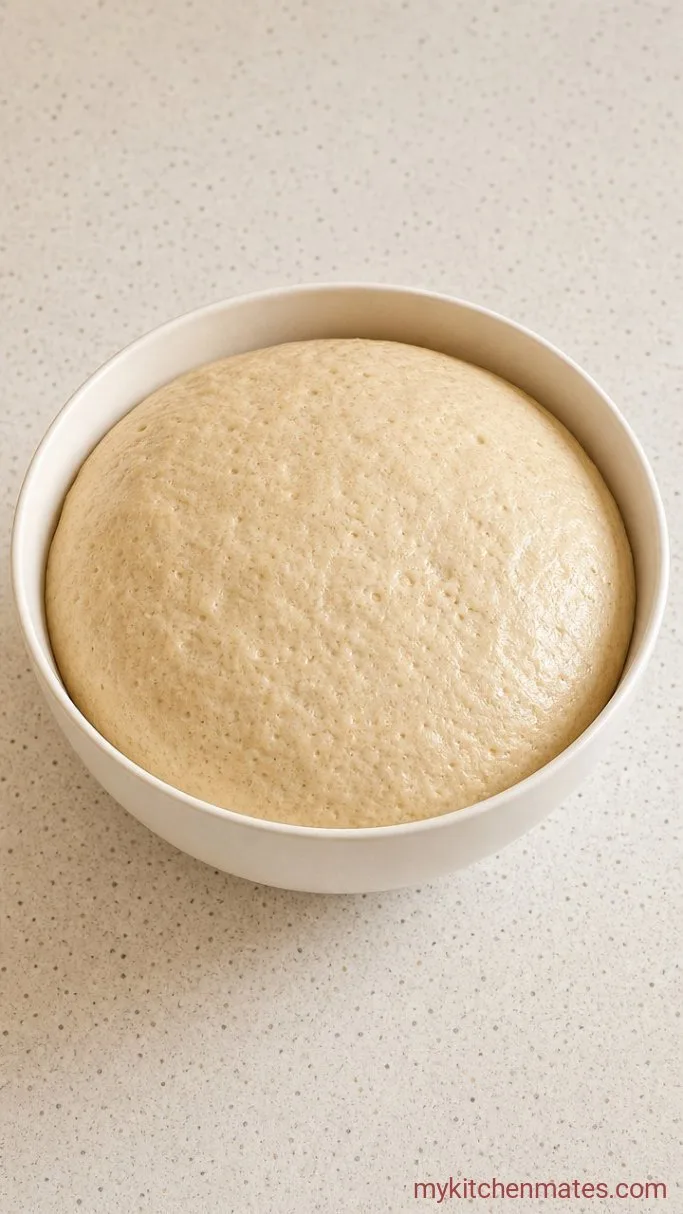
Let the dough rise at room temperature (70-75°F / 21-24°C) for 10 to 12 hours, until doubled in size and bubbly on top. If your kitchen runs cooler, it may need close to 14 hours. Warmer kitchens might see it ready in 8, so check it in the morning.
By the time it’s fully risen, the surface will look domed and dotted with small bubbles. Give the bowl a gentle shake and you’ll see the whole mass jiggle. The smell will be mildly sour and yeasty.
Step 3: Shape the Loaf
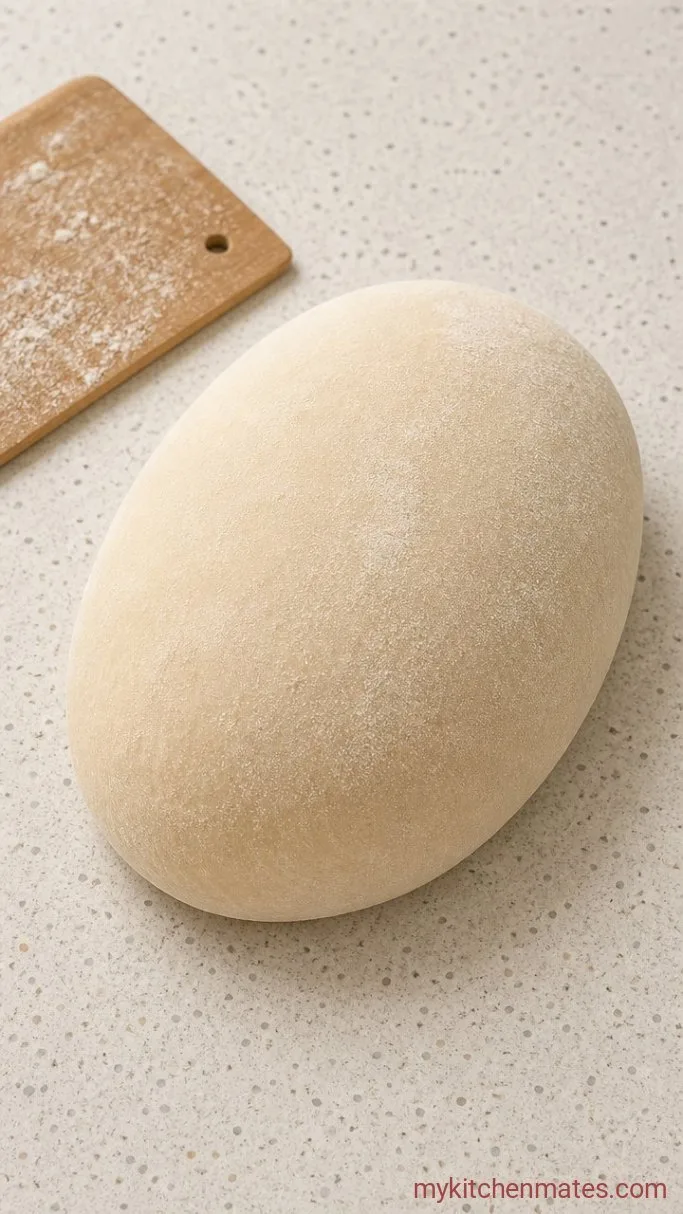
Turn the risen dough out onto a lightly floured surface. With floured hands, gently press it into a rough rectangle. Fold the top third down over the center and the bottom third up, like a letter, then roll it into a tight log, pinching the seam to seal. Place it seam-side down on a sheet of parchment paper.
The dough will deflate a bit as you shape it. Don’t worry, the oven spring will puff it right back up. Tuck the ends under slightly to create a taut skin across the top, which helps the loaf hold its shape during the final rise.
Step 4: Proof for the Second Rise
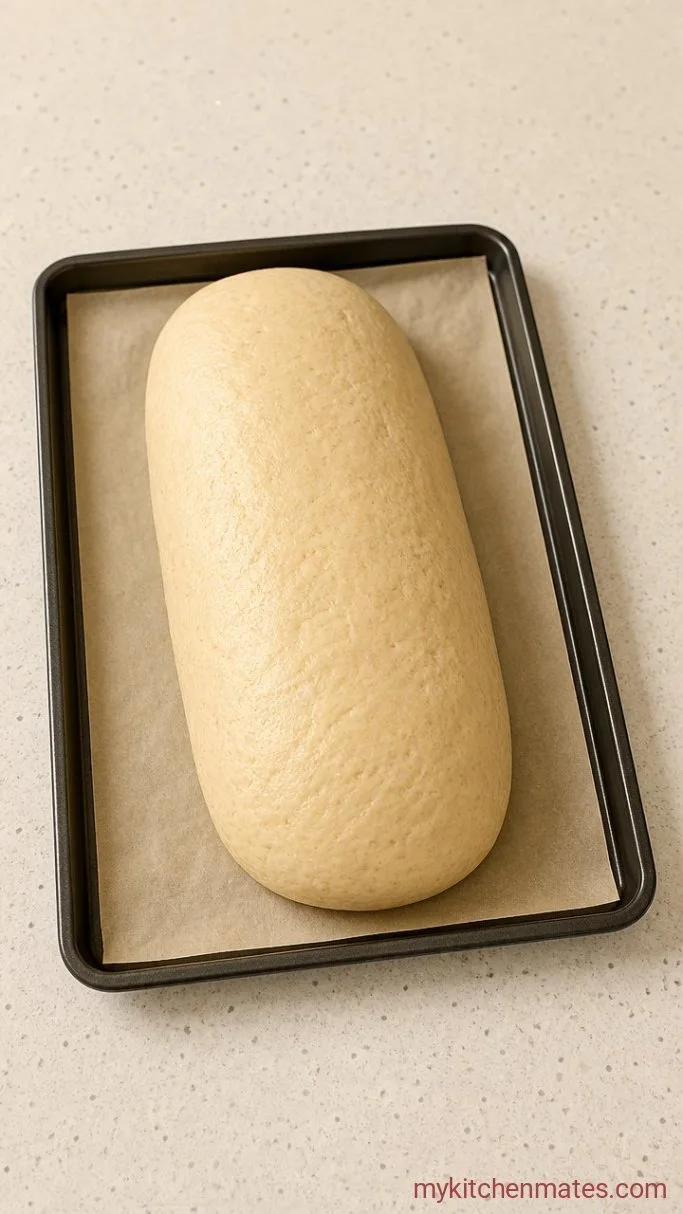
Cover the shaped loaf loosely with oiled plastic wrap and let it proof at room temperature for 1 to 1 ½ hours. It’s ready when it has puffed by about half and a floured finger pressed gently into the side leaves an indentation that springs back slowly.
While the dough proofs, place a Dutch oven or a large heavy pot with its lid in the oven and preheat to 450°F (230°C) for at least 30 minutes. The pot needs to be blazing hot before the dough goes in.
Step 5: Score and Bake the Loaf
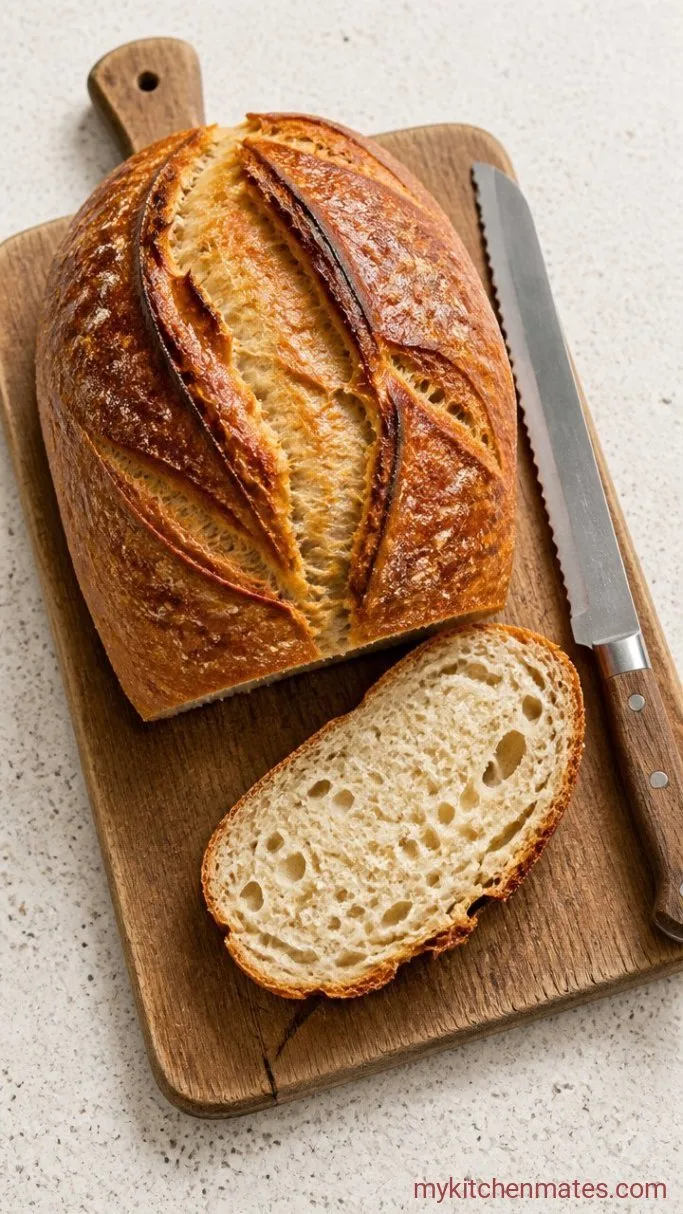
Carefully lift the parchment paper with the loaf and lower it into the hot Dutch oven. Use a sharp lame or serrated knife to slash a line about ½ inch deep down the center. Cover with the lid and bake for 30 minutes. Remove the lid and bake another 15 to 20 minutes, until the crust is deeply golden and the internal temperature reaches 205°F (96°C).
Lift the bread out by the corners of the parchment and set it on a wire rack. As it cools, you’ll hear the crust snap and crackle. Let it rest for at least 1 hour before slicing so the crumb sets and isn’t gummy.
A Few Tips Before You Start
- Starter check: your starter should pass the float test. Drop a spoonful into cool water; if it floats, it’s ready. If it sinks, feed it and wait until it’s active.
- Sticky dough rescue: wet your hands with cool water instead of adding more flour when shaping. Extra flour can make the loaf tough.
- No Dutch oven?: bake the loaf on a preheated pizza stone or inverted baking sheet. Place a shallow pan of hot water on the rack below for the first 20 minutes to create steam.
- Cool completely: cutting into a warm loaf compresses the crumb and leaves it damp. Patience pays off with a texture that’s light and open.
Bake times by your setup:
| Method | Covered Time | Uncovered Time | Target Internal Temp |
|---|---|---|---|
| Dutch oven | 30 mins | 15-20 mins | 205°F (96°C) |
| Baking stone + steam pan | N/A | 35-40 mins | 205°F (96°C) |
Keeping Sourdough Bread Fresh
Store the cooled loaf in a paper bag at room temperature for up to 2 days, cut side down on a cutting board. For longer storage, slice and freeze in a zip-top bag for up to 3 months. Frozen slices can go straight into the toaster. To refresh a day-old loaf, mist the crust lightly with water and warm it in a 350°F (180°C) oven for 10 minutes.
What Goes Well With Sourdough Italian Bread
This loaf is perfect for sopping up brothy soups like a Tuscan white bean or minestrone. Slice it thick and serve it alongside a big Italian salad with sharp vinaigrette. For a quick snack, drizzle a warm slice with good olive oil and a sprinkle of flaky salt.
Frequently Asked Questions
Can I use all-purpose flour instead of bread flour?
Yes, you can. The crumb will be slightly less chewy and the rise may be a touch lower, but you’ll still get a great loaf.
My starter isn’t very bubbly. Can I add a pinch of yeast?
You can add ¼ teaspoon instant yeast with the flour to ensure a reliable rise. The long ferment still develops plenty of sourdough flavor.
Why did my loaf stick to the Dutch oven?
The pot likely wasn’t preheated long enough, or the parchment shifted while you lowered the dough. A light dusting of cornmeal on the parchment gives extra insurance.
Can I bake this as two smaller loaves?
Yes, divide the dough in half after the bulk ferment and shape two smaller batards. Reduce baking time to 25 minutes covered and 10 to 12 minutes uncovered.
Crusty Overnight Sourdough Italian Bread Recipe
Ingredients
Method
- Mix the starter, water, and olive oil in a large bowl. Add the flour and salt and stir until no dry flour remains.
- Cover and let rest at room temperature for 10 to 12 hours, until doubled and bubbly.
- Turn the dough onto a floured surface, shape into a log, and place seam-side down on parchment.
- Cover and proof for 1 to 1 ½ hours while preheating a Dutch oven at 450°F for 30 minutes.
- Score the loaf, bake covered for 30 minutes, then uncovered for 15 to 20 minutes until deep golden and 205°F inside. Cool on a rack for 1 hour.
Notes
