
Crispy, Bubbly Sourdough Focaccia Bread

This sourdough focaccia bread bakes up golden and shatteringly crisp, with a tender, open crumb full of those signature dimples. It’s the kind of thing you’ll keep coming back to, whether you’re sopping up soup or eating it warm straight from the pan.
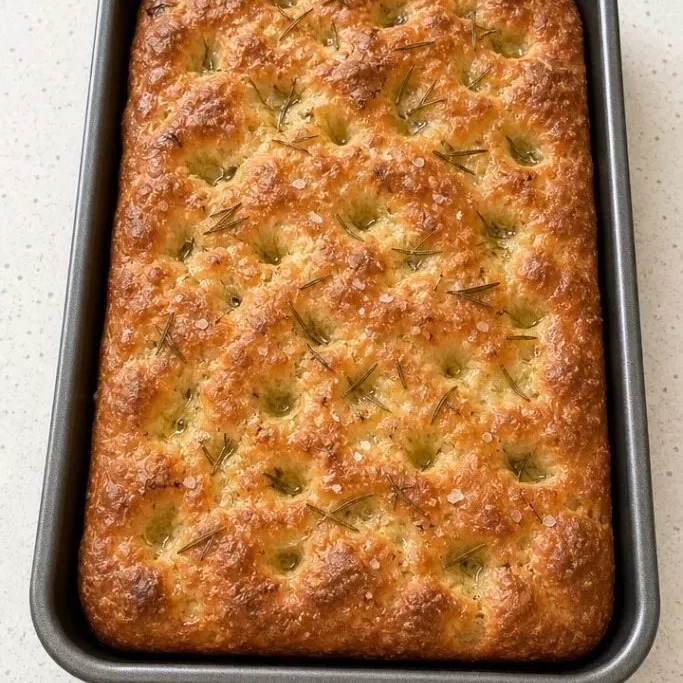
You don’t need any special flour or fancy technique. A bubbly sourdough starter, a gentle rise, and a generous amount of olive oil do all the heavy lifting.
Why This Sourdough Focaccia Wins
The crust stays crisp for a solid hour out of the oven, which feels like a small miracle for homemade bread. Underneath, the interior is pillowy and stretchy, with irregular holes that trap olive oil and salt.
Because it’s naturally leavened, you get a subtle tang that balances the richness of the oil without tasting sour. Most of the work is waiting, not fussing.
Ingredients
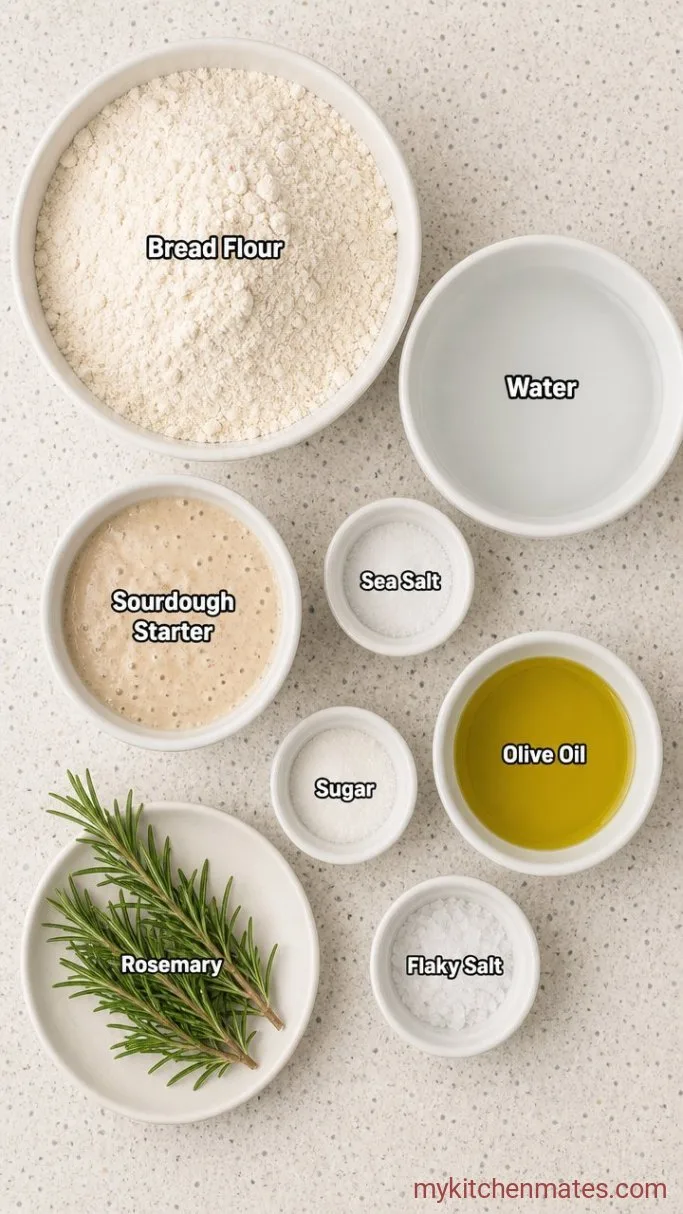
- 3¾ cups (500g) bread flour: a high-protein flour gives the best chew and structure
- 1½ cups plus 2 tbsp (375g) lukewarm water: around 80°F (27°C), to keep fermentation steady
- ½ cup (100g) active sourdough starter: fed and bubbly, at 100% hydration
- 1¾ tsp (10g) fine sea salt: brings depth and tightens the gluten
- 1 tsp granulated sugar: optional, but it helps with a deep golden crust
- 2 tbsp (30g) extra-virgin olive oil: for the dough, plus a generous amount for the pan and topping
- 2 to 3 sprigs fresh rosemary: leaves stripped from the stems
- Flaky sea salt: for sprinkling before the bake
Variations / Substitutions
- Swap the rosemary: for thyme and a little lemon zest, or use chopped oregano and cracked black pepper.
- Add flavor: by scattering halved cherry tomatoes, thinly sliced garlic, or pitted olives over the top before dimpling.
- Use up to 50% whole-wheat flour: in place of the bread flour. You’ll need an extra tablespoon or two of water because whole grains absorb more.
- No fresh herbs?: Dried rosemary works, just crush it a little to release the oils.
Hearty Blue Zone Minestrone Soup is a cozy soup to serve with this bread.
How To Make Sourdough Focaccia
Step 1: Mix the Dough
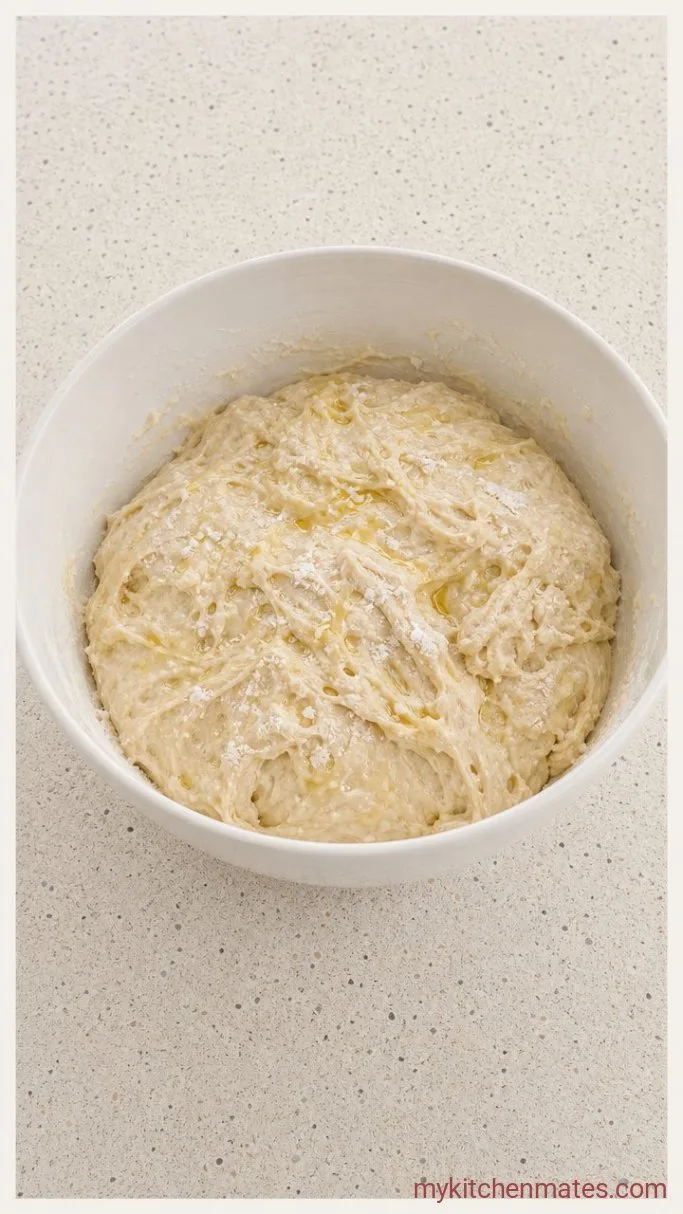
Pour the 375g lukewarm water into a large bowl and add the 100g active starter. Whisk until the starter mostly dissolves, then stir in the 10g salt, 1 tsp sugar, and 30g olive oil. Dump in the 500g bread flour and stir with a sturdy spoon or your hand until no dry flour remains. You’ll have a shaggy, sticky mass that looks messy at this point, and that’s exactly right.
Cover the bowl and let it sit at room temperature for 30 minutes. This rest gives the flour time to absorb the water before any stretching begins.
Step 2: Stretch and Fold the Dough
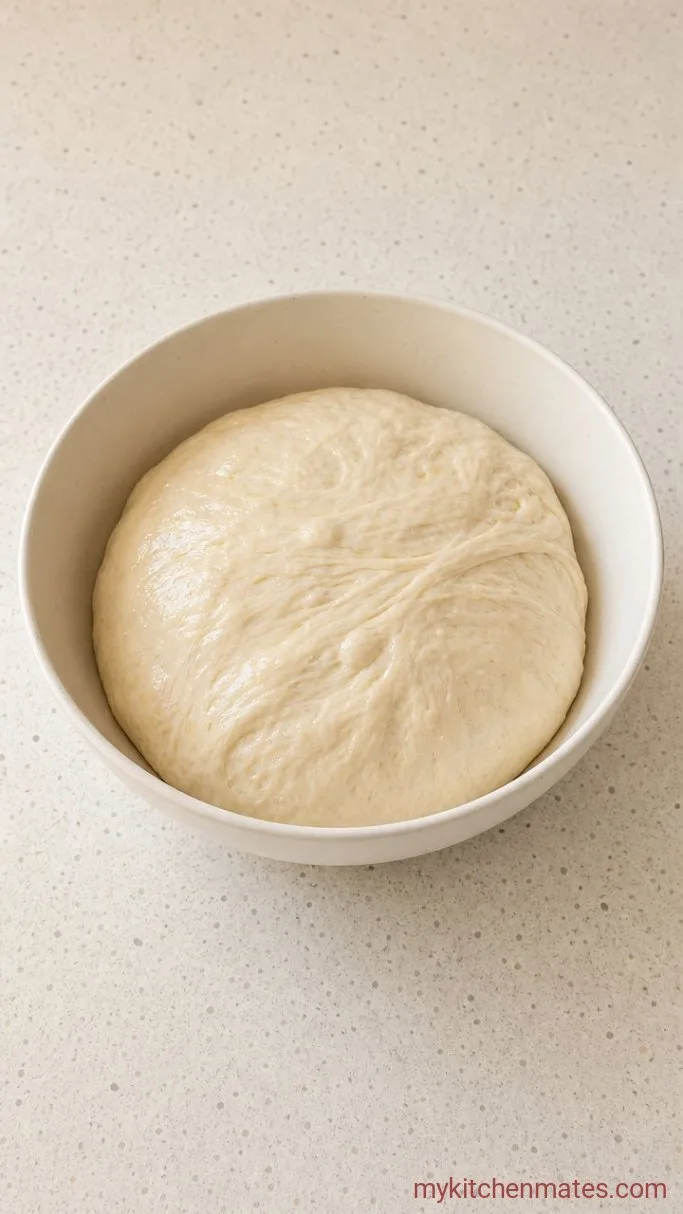
With damp fingers, grab a section of dough from one side, pull it upward, and fold it over the center. Rotate the bowl a quarter turn and repeat, doing 4 folds total. After this first set, the dough will still be loose but you’ll feel it tighten a little.
Cover and wait 30 minutes, then do another round of 4 stretch and folds. Repeat once more, for a total of 3 rounds over about 1½ hours. By the last set the dough should look smooth and hold a gentle dome.
Step 3: Transfer to the Pan
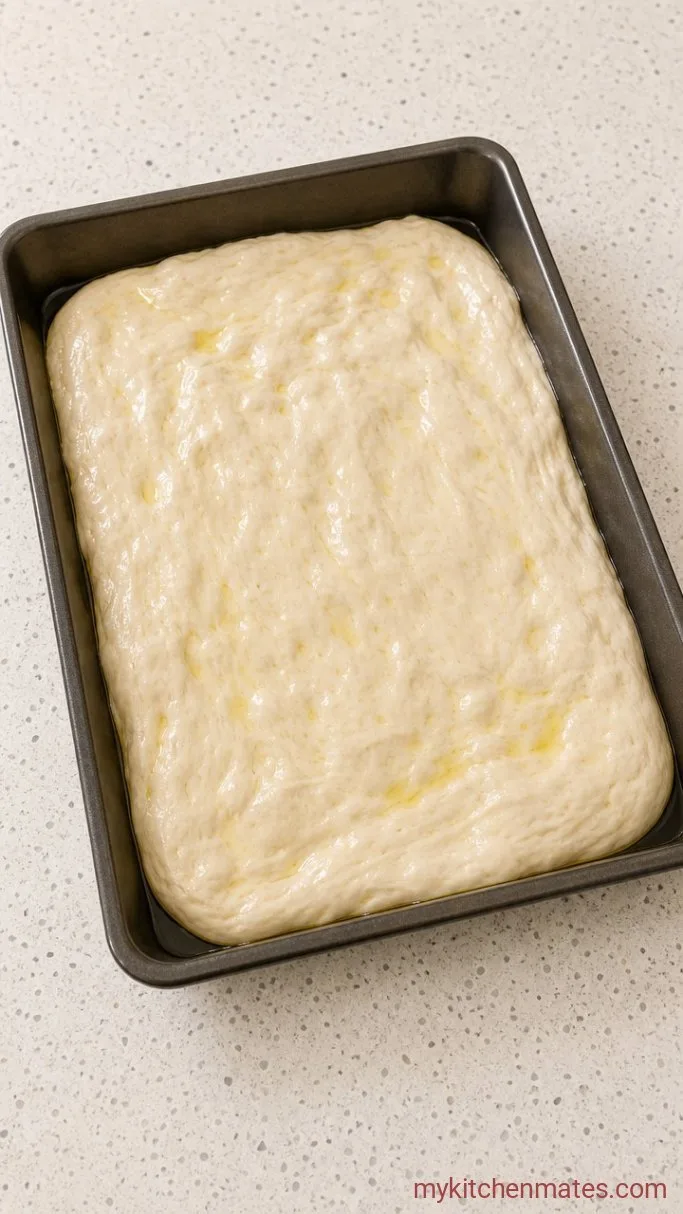
Drizzle a 9×13-inch metal baking pan with enough olive oil to coat the bottom and sides generously, about 2 to 3 tablespoons. Scrape the dough into the center of the pan, then use oily fingers to gently nudge it toward the corners. It won’t fill the pan yet, and that’s fine.
Cover with a sheet of oiled plastic wrap and leave it at room temperature for 30 minutes. After that rest, the dough will have relaxed enough that you can coax it into the corners with a light stretch. Re-cover and let it rise until puffy and nearly doubled, roughly 1½ to 2 hours depending on your kitchen’s warmth.
Step 4: Dimple and Top
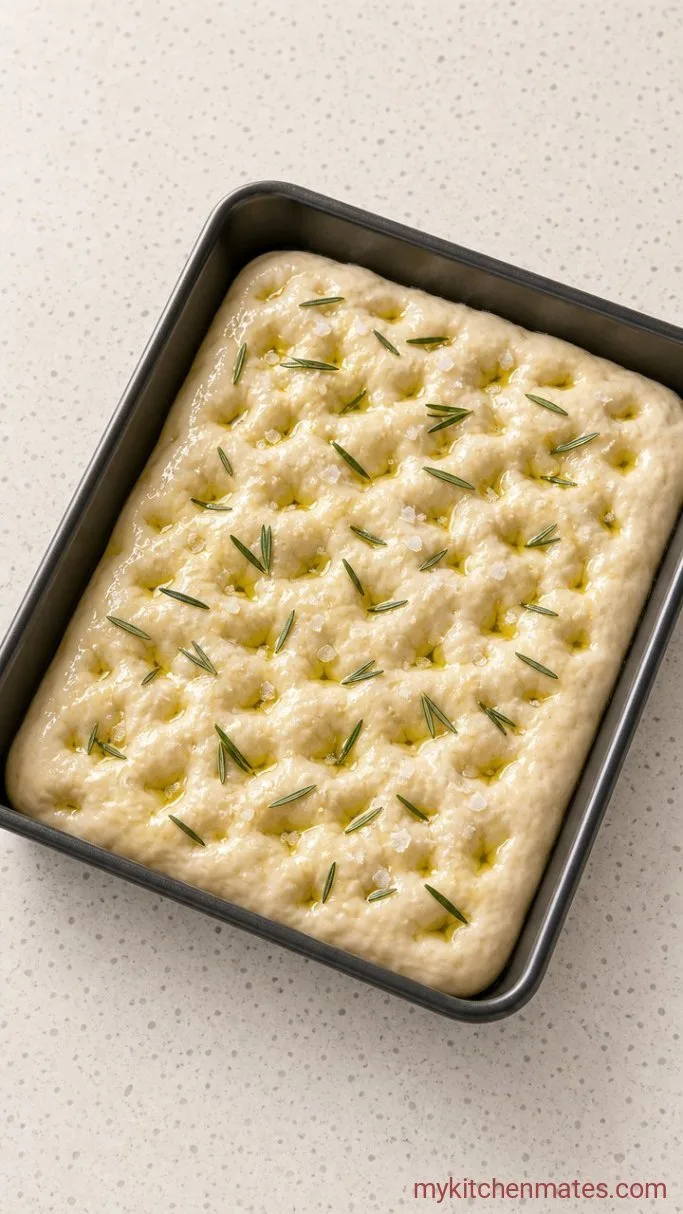
When the dough looks puffy and jiggles slightly when you shake the pan, preheat the oven to 425°F (220°C). Drizzle another glug of olive oil across the surface, then press your fingertips straight down into the dough, all the way to the bottom of the pan. The bubbles will deflate in spots, but that’s the point, it creates those iconic dimples.
Tuck the rosemary leaves into some of the holes, pressing a few below the surface so they don’t burn. Finish with a generous pinch of flaky sea salt across the whole top.
Step 5: Bake Until Deep Golden
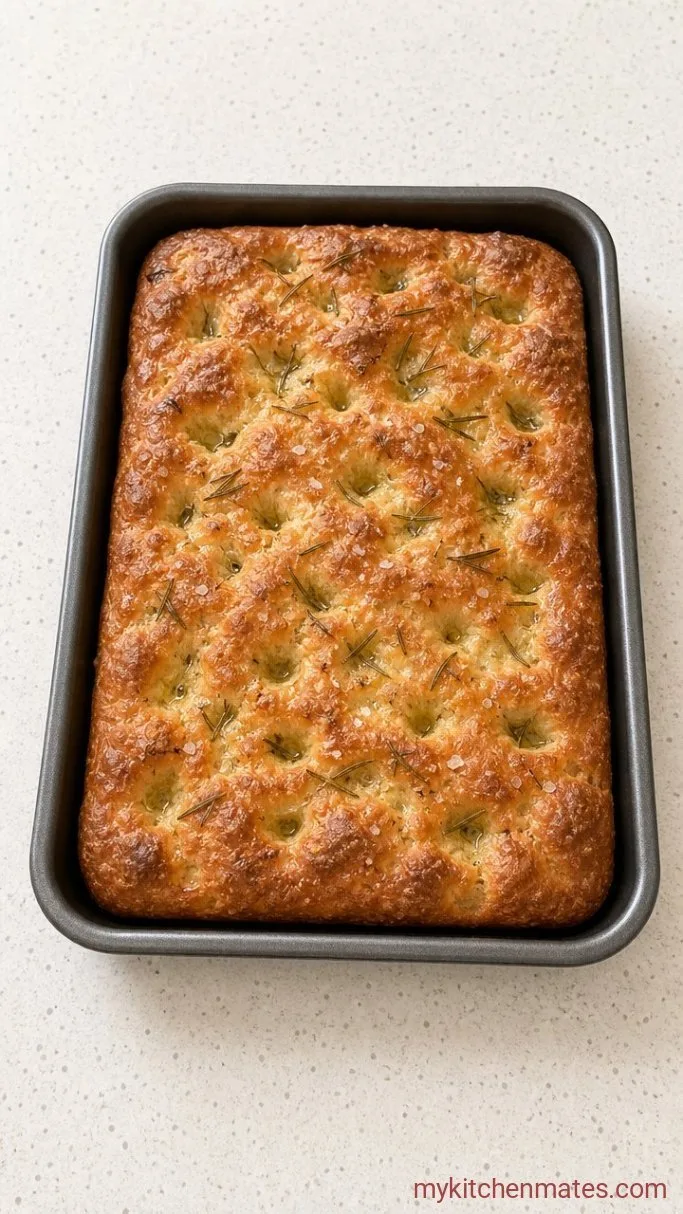
Slide the pan onto the center rack and bake for 22 to 25 minutes. Check at 22 minutes: the top should be deeply golden with darker spots around the edges, and the focaccia will sound hollow if you lift it with a spatula and tap the bottom.
Let it cool in the pan for 5 minutes, then transfer to a wire rack. Slice or tear it while it’s still warm, the bottom will be crackly and the inside steamy and soft.
Tips for the Best Oven Spring
- A metal pan makes the crispiest bottom crust. Glass or ceramic work too but won’t deliver the same crunch.
- If your kitchen is cool, place the covered pan on top of the fridge or in a turned-off oven with the light on to speed the rise.
- Wet fingers are your friend. Keep a small bowl of water nearby for the stretch and folds and dimpling so the dough doesn’t stick to your hands.
- Don’t skimp on the olive oil in the pan. It’s what fries the bottom crust as the focaccia bakes.
Bake times for common pan sizes:
| Pan Size | Baking Time at 425°F (220°C) |
|---|---|
| 9×13-inch metal | 22–25 minutes |
| 8×8-inch metal (half recipe) | 18–20 minutes |
| 9-inch round cake pan | 20–22 minutes |
Storing Leftovers
- Refrigerate: Wrap cooled focaccia tightly in foil and keep it at room temperature for up to 2 days, or in the fridge for up to 5.
- Reheating: Place slices in a 350°F (175°C) oven for 5 to 7 minutes to revive the crisp crust. A toaster oven works, too.
What to Serve With Sourdough Focaccia
This bread is happiest next to a bowl of minestrone or a simple tomato soup, where you can dunk every bite. It also stands up to a peppery arugula salad with shaved Parmesan and a sharp vinaigrette. For a quick lunch, split a square and stuff it with fresh mozzarella, ripe tomato, and basil.
Frequently Asked Questions
Can I use all-purpose flour instead of bread flour?
Yes, the crumb will be a little less chewy but still tender. The dough may need a touch less water, so hold back 2 tablespoons and add slowly if needed.
Why didn’t my focaccia get big bubbles?
The dough likely needed more time to rise, or it was too cold. A sluggish starter can also cause a dense result. Make sure your starter passes the float test before mixing.
Can I add garlic without burning it?
Yes, slice cloves paper-thin and tuck them deep into the dimples. Avoid minced garlic on the surface, which scorches quickly.
How do I know the dough is ready to dimple?
It should look puffy, feel bouncy, and wobble like gelatin when you gently shake the pan. If you poke it, the indent should fill back slowly.
Sourdough Focaccia Bread Recipe
Ingredients
Method
- Whisk water and starter until dissolved. Stir in salt, sugar, and 2 tbsp olive oil. Add flour, mix until no dry spots remain. Cover and rest 30 minutes.
- With damp fingers, perform 4 stretch and folds. Rest 30 minutes, repeat twice more for 3 total rounds over 1½ hours.
- Oil a 9×13-inch metal pan. Scrape dough in, stretch gently toward corners. Cover, rest 30 minutes, then stretch fully to edges. Cover and rise until puffy and doubled, 1½ to 2 hours.
- Preheat oven to 425°F (220°C). Drizzle dough with olive oil, dimple deeply with fingertips. Press rosemary into holes and sprinkle flaky salt on top.
- Bake 22 to 25 minutes until deep golden with darker edges. Cool in pan 5 minutes, then transfer to a rack. Serve warm.
Notes
