
Soft Sourdough Sandwich Bread

This sourdough sandwich bread stays soft for days, with a tight crumb and a gentle tang that works for everything from PB&J to a turkey club. A little honey and olive oil keep it squishy without tasting sweet, and the long fermentation means the flavor develops slowly while you do other things.
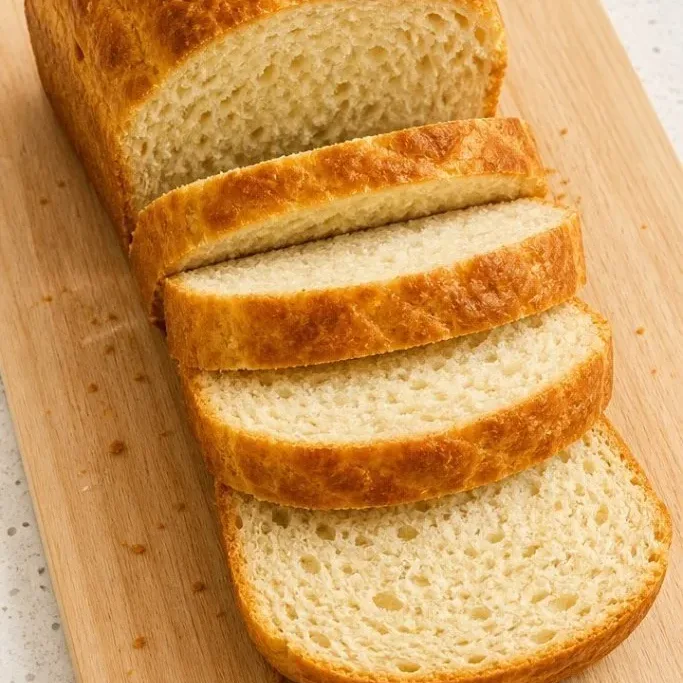
If you have wanted a sourdough loaf that actually slices like a store-bought sandwich bread, this is the one I bake most. The hands-on time is surprisingly short, and the dough forgives a forgotten fold or a cooler kitchen.
What Makes This Bread So Soft
Using a bit of honey and olive oil softens the crumb and keeps the crust from going crackly. The hydration is high enough to feel tender but not so high that the dough is a struggle to shape.
I like a 9×5-inch loaf pan for the tallest, even slices, but an 8½×4½-inch pan works and you just get a slightly taller dome. The crumb comes out even and pillowy every time because the dough is strengthened with a few gentle folds instead of heavy kneading.
Ingredients
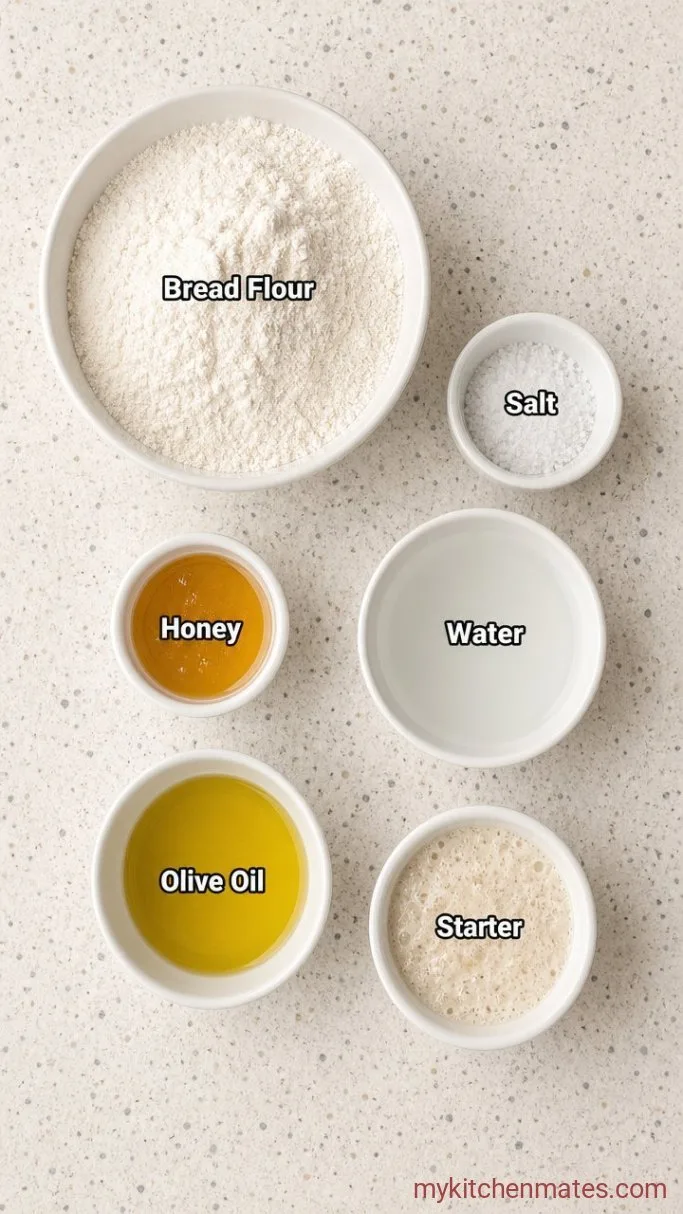
- 500g (4 cups) bread flour: high-protein flour gives the loaf structure and a soft chew.
- 350g (1½ cups) warm water: about 85°F (29°C); not hot, just warm enough to encourage fermentation.
- 100g (½ cup) active sourdough starter: fed within the last 4 to 6 hours so it is bubbly and passes the float test.
- 10g (1¾ tsp) fine sea salt
- 30g (2 Tbsp) honey: adds softness and feeds the yeast; maple syrup works in a pinch.
- 20g (1½ Tbsp) olive oil or melted unsalted butter: for a tender crumb that stays squishy for days.
Variations and Substitutions
- Use all-purpose flour: the loaf will be a little less chewy but still soft. You might need to reduce the water by 20g.
- Whole wheat flour: replace up to 150g of the bread flour with whole wheat for a nuttier taste. Add an extra 20g of water to keep the crumb tender.
- Make it dairy-free: use olive oil instead of butter, and choose maple syrup if you are avoiding honey.
- Skip the sweetener: the bread will still rise and slice well, but the crust may feel slightly firmer and the crumb will be a touch less pillowy.
- No loaf pan: you can shape the dough into a boule and bake it in a Dutch oven, but you will lose the tall sandwich slices. If you like a round loaf, try my classic no-knead sourdough.
Creamy Cabbage Soup goes perfectly with this bread for a cozy meal.
How To Make Soft Sourdough Sandwich Bread
Step 1: Mix the Dough
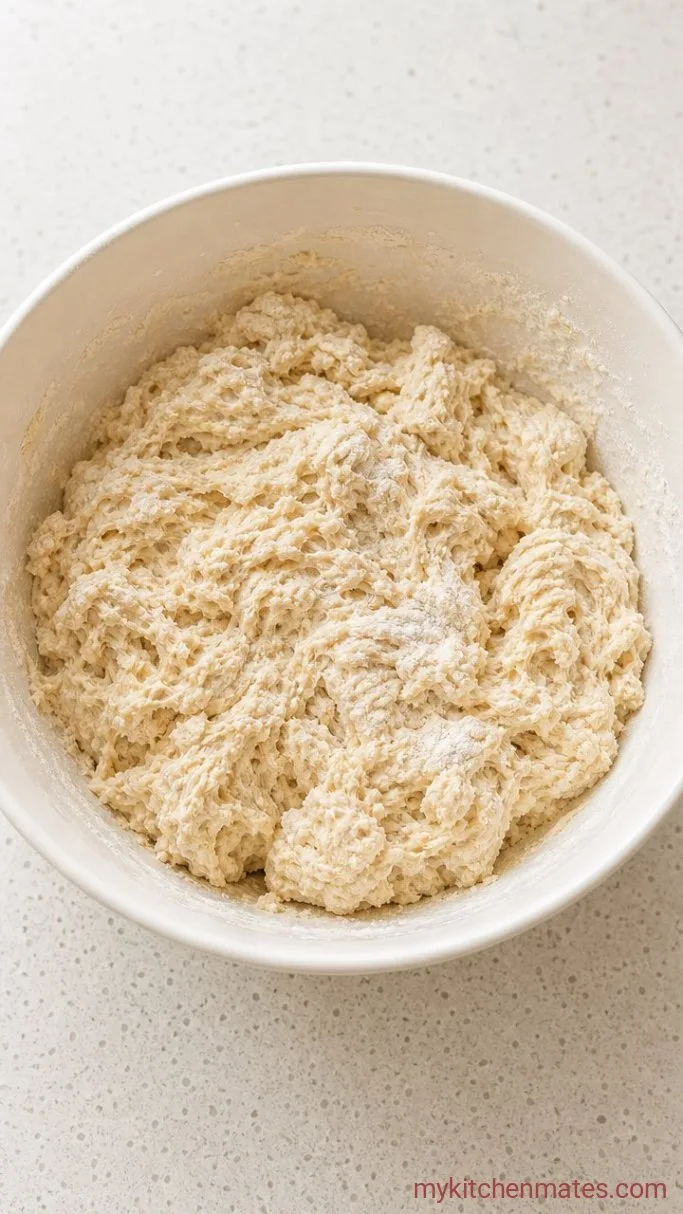
In a large bowl, stir the 500g bread flour and 350g warm water until no dry flour remains, about 1 minute. Cover with a damp towel and let the flour hydrate for 20 minutes. This quick autolyse relaxes the gluten and makes the dough easier to work with later.
Add the 100g active sourdough starter, 30g honey, 20g olive oil, and 10g salt to the bowl. Mix everything together with your hand or a dough whisk until it forms a sticky, shaggy ball and no streaks of salt or starter remain. The dough will feel wet and slack at this point, exactly how it should.
Step 2: Stretch and Fold to Build Strength
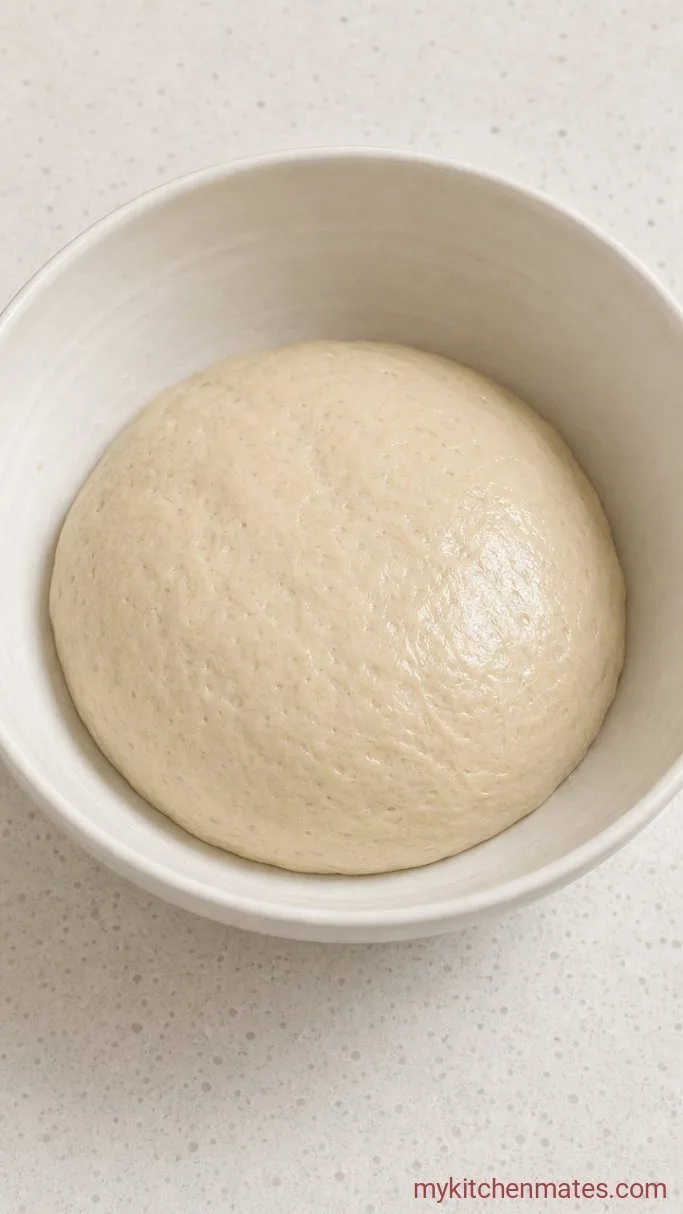
With a wet hand, grab one edge of the dough, stretch it upward, and fold it over the center. Rotate the bowl a quarter turn and repeat until you have folded all four sides. Cover and let the dough rest for 30 minutes.
Repeat this stretch and fold process two more times, spacing them 30 minutes apart. By the third set, the dough will go from shaggy and slack to noticeably smooth and elastic. That is the gluten network organizing, and it is what gives you a lofty loaf without heavy kneading.
Step 3: Shape the Loaf for the Pan
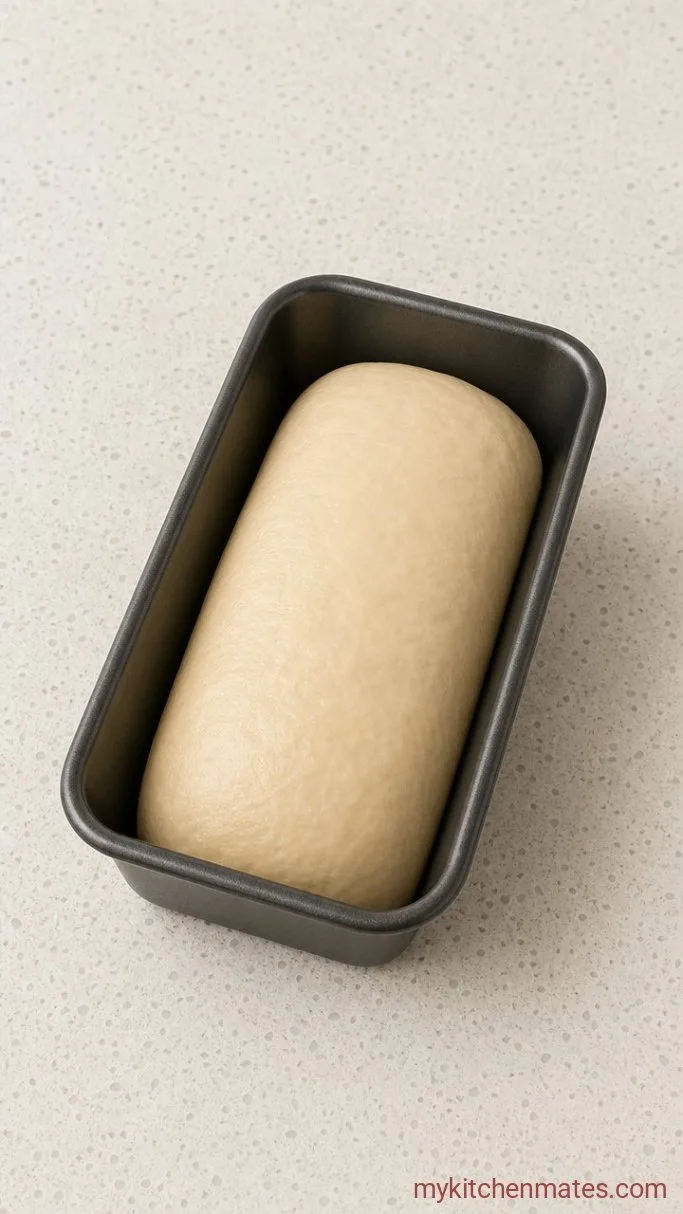
Turn the dough onto a lightly floured surface and press it into a rough 8×10-inch rectangle. From a short side, roll the dough tightly into a log, tucking it as you go to build surface tension. Pinch the seam and the ends closed.
Place the shaped dough seam-side down in a greased 9×5-inch loaf pan. The surface should feel taut but not cracked. If the dough tears, let it rest five minutes and try again.
Step 4: Proof Until Doubled
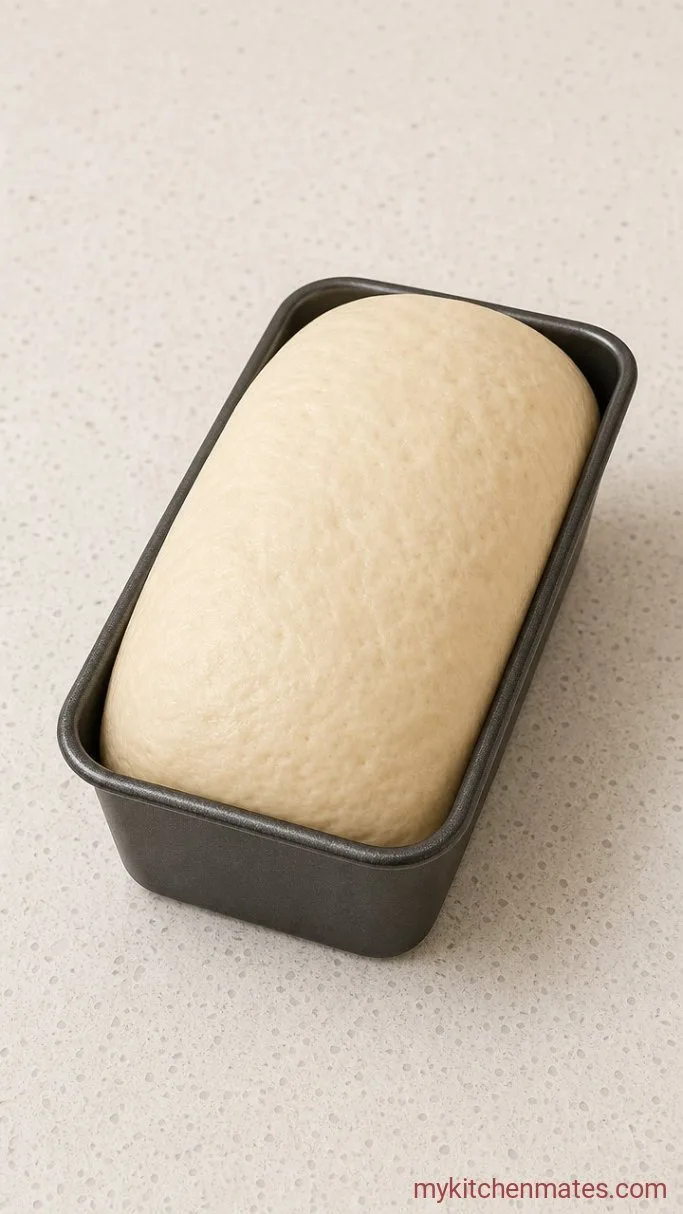
Cover the pan loosely with oiled plastic wrap or a reusable cover and let the dough rise at room temperature. It is ready when it crowns about 1 inch above the rim of the pan, which can take 2 to 4 hours depending on your kitchen temperature. A fingerprint poked into the dough should spring back slowly but leave a shallow indent.
Step 5: Bake the Loaf
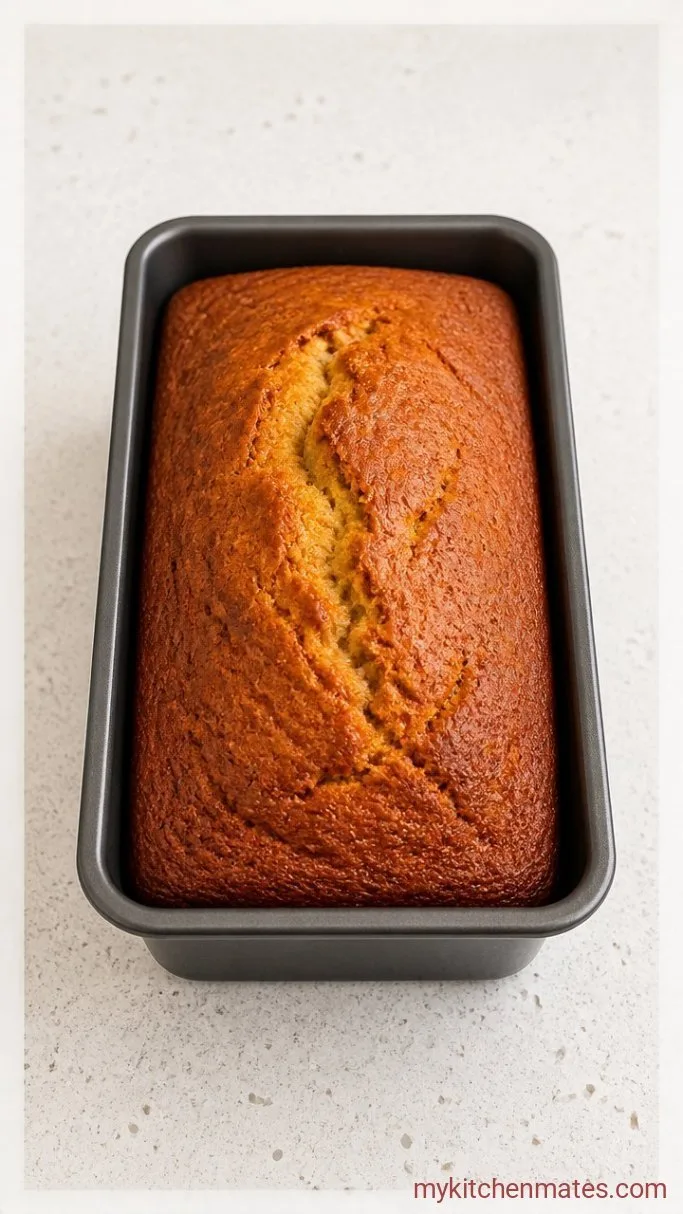
About 30 minutes before the dough finishes proofing, place a rack in the middle of the oven and preheat to 375°F (190°C). When the oven is ready and the dough has risen sufficiently, bake the pan on the center rack for 45 minutes, until the crust is deep golden brown and the internal temperature reads 200°F (93°C) on an instant-read thermometer.
The loaf will sound hollow when tapped, and the kitchen will fill with that warm, tangy bread smell.
Step 6: Cool and Slice
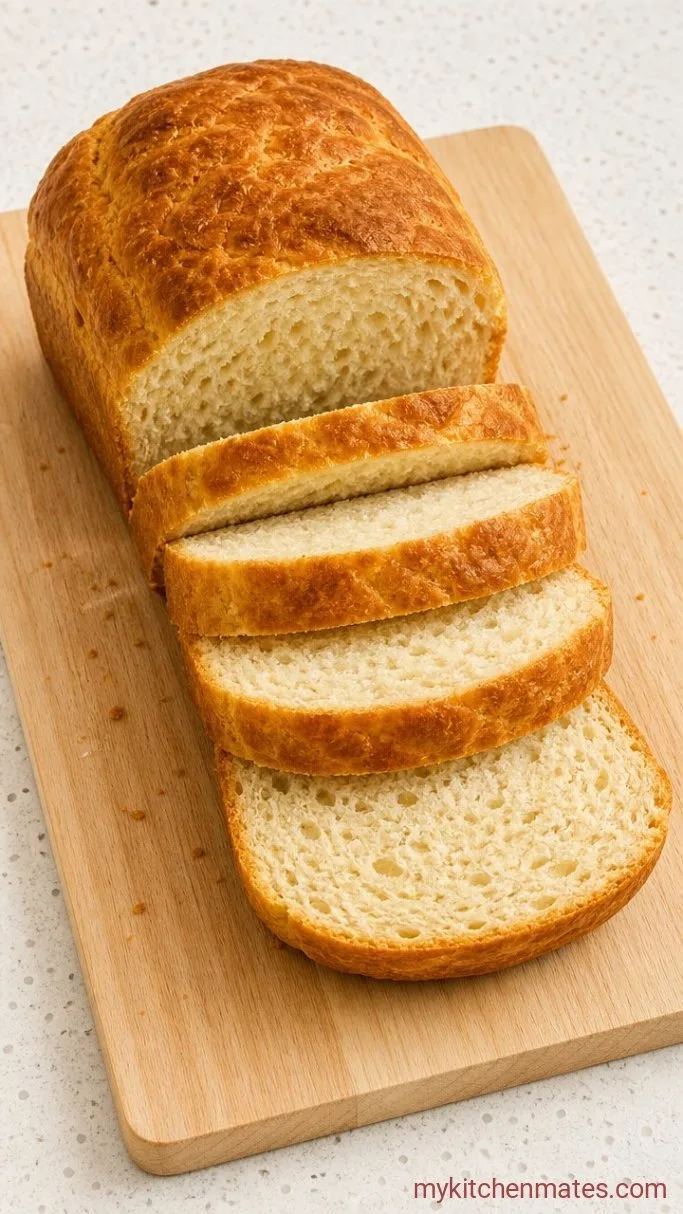
Let the loaf cool in the pan for 10 minutes, then turn it out onto a wire rack. Cool completely before slicing, usually about an hour. Cutting into warm bread makes the crumb gummy, so wait until it is barely warm or at room temperature. When you finally cut into it, the slices will be even and pillowy.
A Few Notes Before You Start
- Use a kitchen scale if you have one. Bread dough changes a lot with small measurement differences, and grams keep things consistent.
- After baking, brush the hot crust with a little melted butter if you want an extra-soft top, especially for kids who reject any hint of a crisp crust.
- If your kitchen is chilly, proof the dough in the oven with just the light turned on, or on top of the fridge where it is slightly warmer.
- Sliced bread freezes beautifully, so I often stash half the loaf in a freezer bag and pull slices out as needed.
Bake times by pan size:
| Loaf Pan Size | Bake Time |
|---|---|
| 9×5-inch | 45 to 50 mins |
| 8½x4½-inch | 50 to 55 mins |
Keeping the Bread Fresh
Store the cooled loaf in a bread box or wrapped in a clean kitchen towel at room temperature for up to 4 days. For longer storage, slice the whole loaf and freeze it in a zip-top bag; you can toast slices straight from frozen. The refrigerator tends to dry out homemade bread faster than freezing or countertop storage, so I skip it.
What To Serve With Soft Sourdough Sandwich Bread
This bread is made for sandwiches, and it holds up well to wet fillings without getting soggy. A classic turkey and avocado with lettuce and tomato is a reliable lunch, but it is just as good with a simple smear of salted butter. When the loaf is a day or two old, thick slices grilled in a little butter make a grilled cheese that stays crisp outside and soft inside. And if you have a pot of tomato soup simmering on the stove, you already know the pairing.
Frequently Asked Questions
Can I use all-purpose flour instead of bread flour?
Yes. The crumb will be a bit less chewy and the rise may be slightly shorter, but the bread will still be soft and sliceable.
My dough didn’t rise during proofing. What went wrong?
The starter likely was not at peak activity, or the room was too cold. Feed your starter and wait until it doubles within 4 hours, and keep the proofing loaf somewhere around 75°F (24°C).
Can I skip the honey?
You can, but the crust will be a little firmer and the crumb may taste a bit more acidic. A tablespoon of sugar works just as well for softness.
Do I need to score the loaf before baking?
Not for this pan loaf. The dough will open naturally along the top as it rises. If you prefer a controlled slit, a single shallow slash with a lame works, but it is not necessary.
Can I make a larger batch and bake two loaves?
Yes. Double the ingredients, divide the dough after shaping, and bake two 9×5-inch pans side by side. Add 2 to 3 minutes to the bake time and rotate pans halfway through.
Soft Sourdough Sandwich Bread Recipe
Ingredients
Method
- Stir the flour and water together and let hydrate for 20 minutes. Add the starter, salt, honey, and oil, and mix into a sticky dough.
- Perform 3 sets of stretch and folds, 30 minutes apart, until the dough is smooth and elastic.
- Press the dough into a rectangle, roll tightly into a log, and place seam-side down in a greased 9×5-inch loaf pan.
- Cover and let proof at room temperature until the dough crowns 1 inch above the pan rim, about 2 to 4 hours.
- Preheat the oven to 375°F (190°C) about 30 minutes before baking. Bake for 45 minutes until deep golden and 200°F (93°C) internal.
- Cool in the pan 10 minutes, then turn out and cool completely on a rack before slicing.
Notes
