
Buttery Scottish Shortbread Cookies

Scottish shortbread cookies are the sort of butter-rich, crumbly biscuit that makes any afternoon feel a little more settled. They come together with just a handful of pantry staples and honest patience in the oven, no mixer gymnastics required.
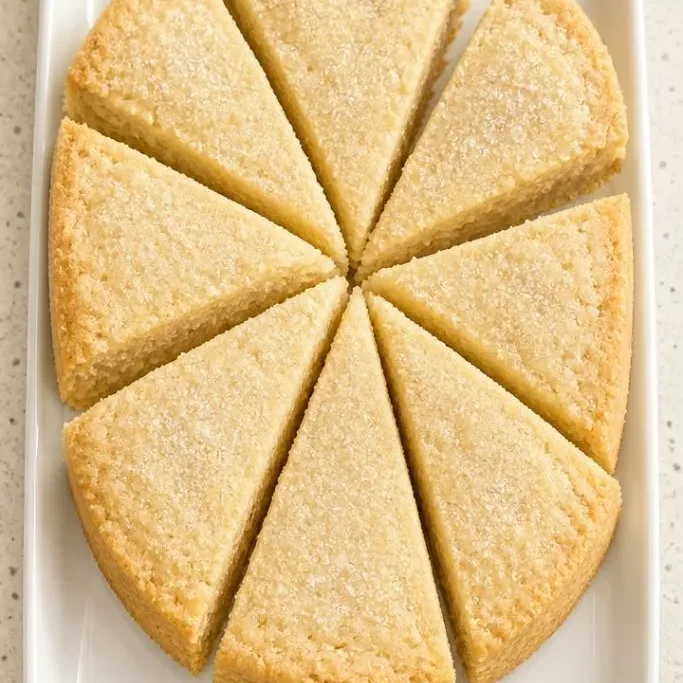
The reason to make these tonight is the payoff. A short ingredient list and a quiet bake leave you with a cookie that has sandy edges, a delicate snap, and a buttery flavour that never feels heavy. You will want a cup of tea nearby.
Why This Shortbread Never Fails Me
This is the shortbread I keep coming back to because it works every time. The texture lands right in that sweet spot: dense without being hard, tender without falling apart in your hand.
The flavour is pure butter and a gentle sweetness, nothing else shouting over the top. Once you press the dough into the tin and slide it into the oven, you can pretty much leave it alone until the kitchen smells like a bakery.
Ingredients
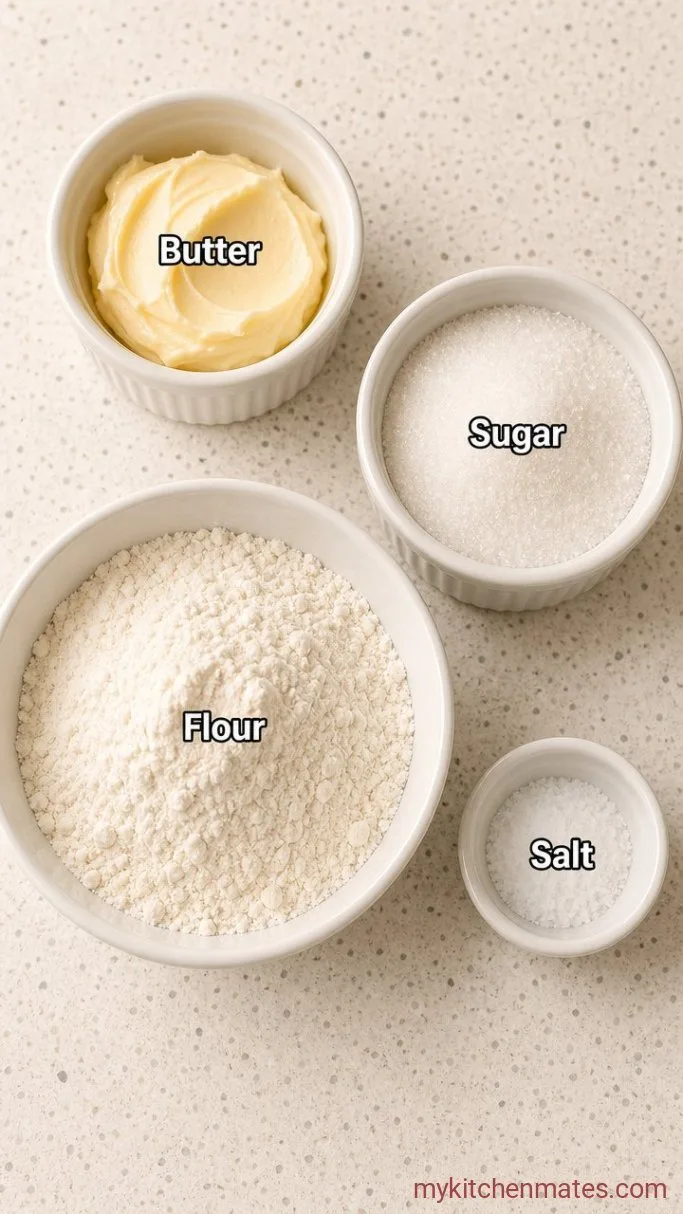
- 1 cup unsalted butter, softened: European-style butter gives a richer flavour, but any good butter works.
- ½ cup granulated sugar: plus a little extra for the final dusting.
- 2 cups all-purpose flour: spooned and levelled for accuracy, not scooped from the bag.
- ¼ teaspoon fine sea salt: omit if you are using salted butter.
Variations / Substitutions
- Use salted butter: skip the added salt for a slightly more savoury edge.
- Add 1 teaspoon vanilla extract: mix it into the butter and sugar for a faint vanilla background.
- Swap in rice flour: replace ¼ cup of the all-purpose flour with rice flour for that traditional sandier Scottish crumb.
- Sprinkle with demerara sugar: before baking for a crunchy, crackly top.
Soft and Chewy Coconut Condensed Milk Cookies are next on our list if these cookies are your kind of dessert.
How To Make Buttery Scottish Shortbread Cookies
Step 1: Cream the Butter and Sugar
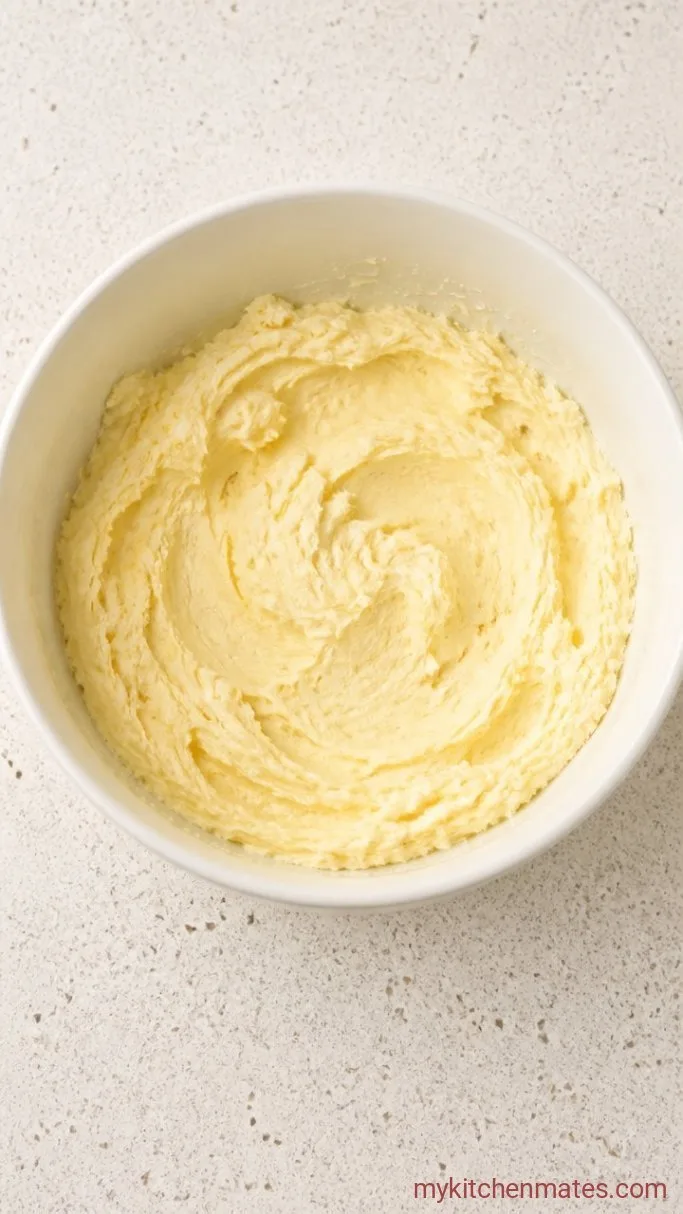
Heat your oven to 325°F (160°C). In a large bowl, beat the 1 cup softened butter and ½ cup sugar with an electric mixer until the mixture looks pale and fluffy, about 3 minutes. Scrape down the sides halfway through so everything combines evenly.
Step 2: Mix in the Flour
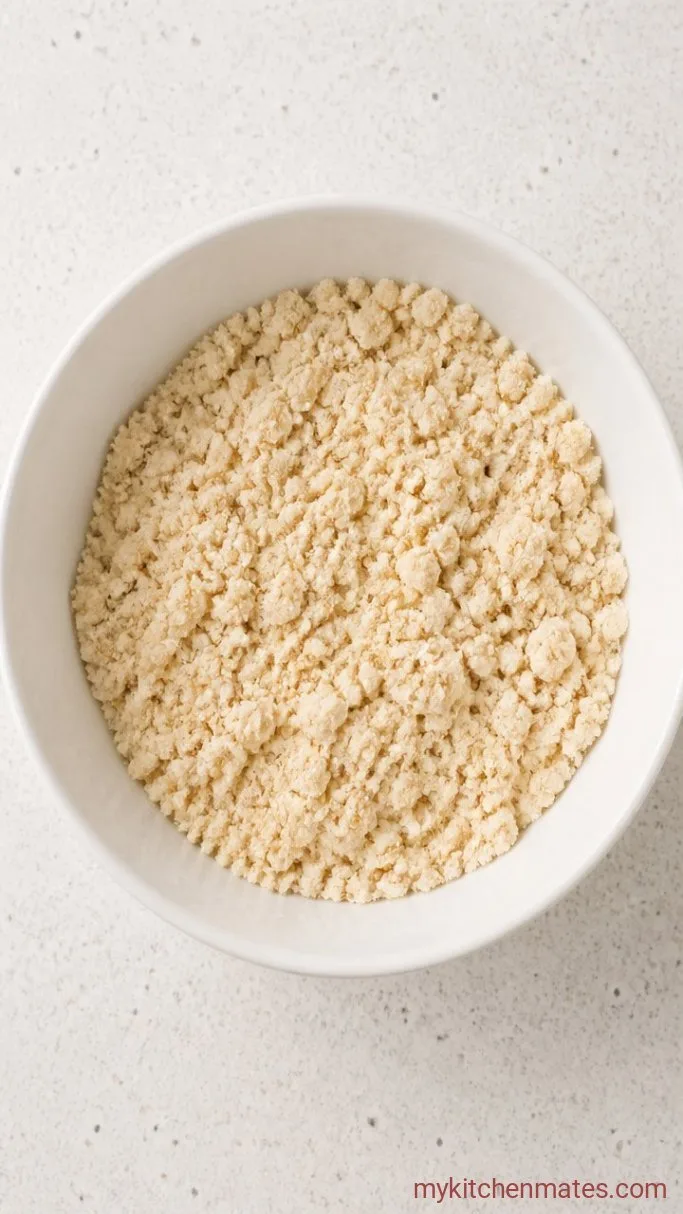
Add the 2 cups flour and the salt (if using). Mix on low speed just until the dough starts to form coarse clumps, about 30 seconds to 1 minute. Stop the moment those clumps hold together when you press them between your fingers. Overmixing at this stage makes the cookies tough.
Step 3: Press the Dough into the Pan
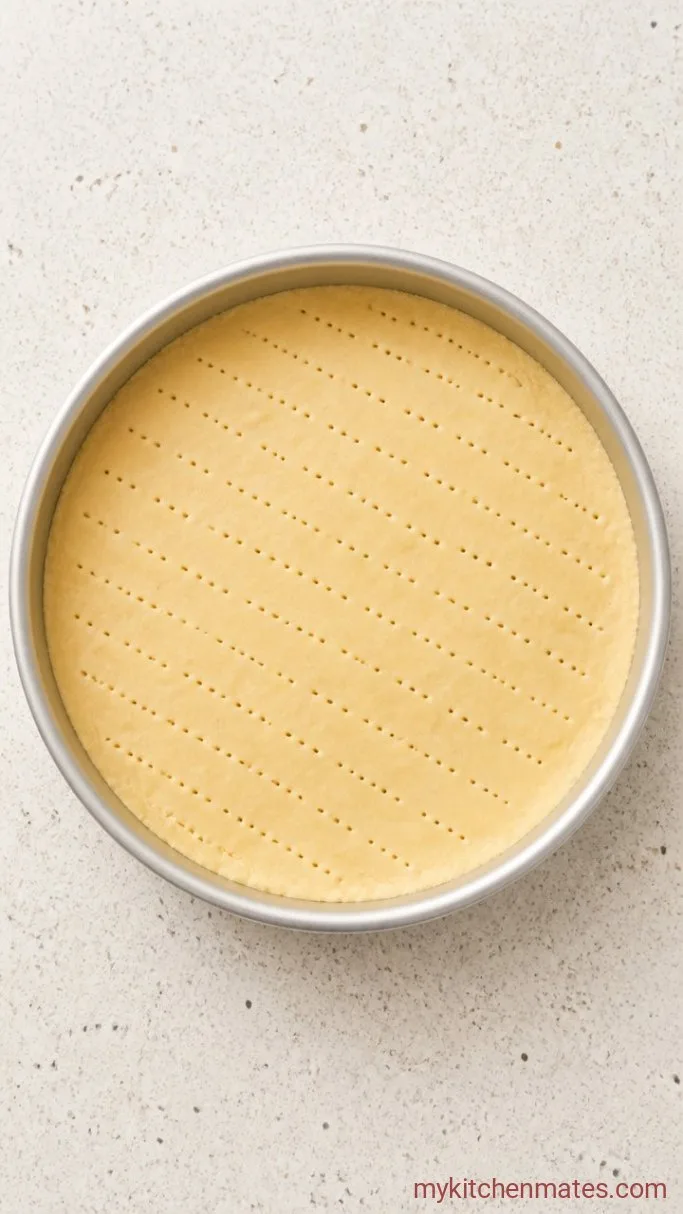
Turn the crumbly dough into a 9-inch (23 cm) round tart tin with a removable base. Using your fingers or the back of a spoon, press it down into a flat, even layer. Prick the surface all over with a fork, then score the top into 8 wedges with a sharp knife, cutting about halfway through the dough. This whole shaping process takes around 5 minutes.
Step 4: Bake Until Pale Golden
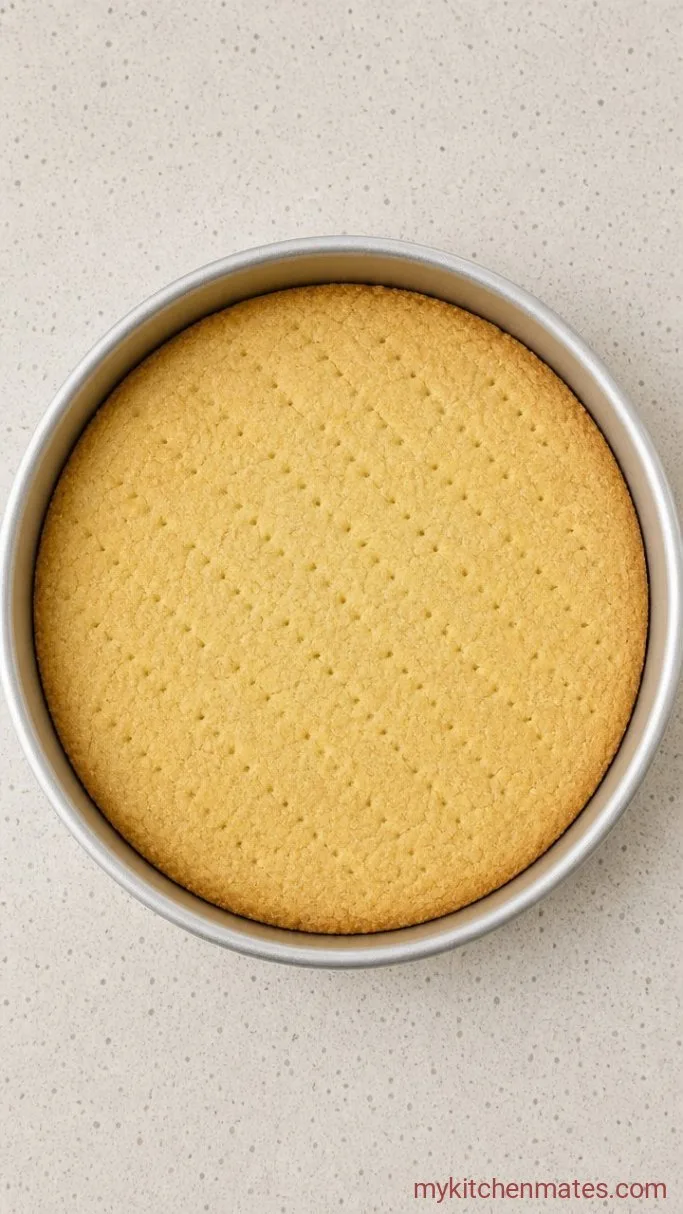
Bake the shortbread for 35 to 40 minutes, until the centre feels set and the top turns a pale straw colour. Rotate the tin halfway through so it colours evenly. The edges will look a shade darker than the middle, which is exactly what you want.
Step 5: Slice and Dust With Sugar
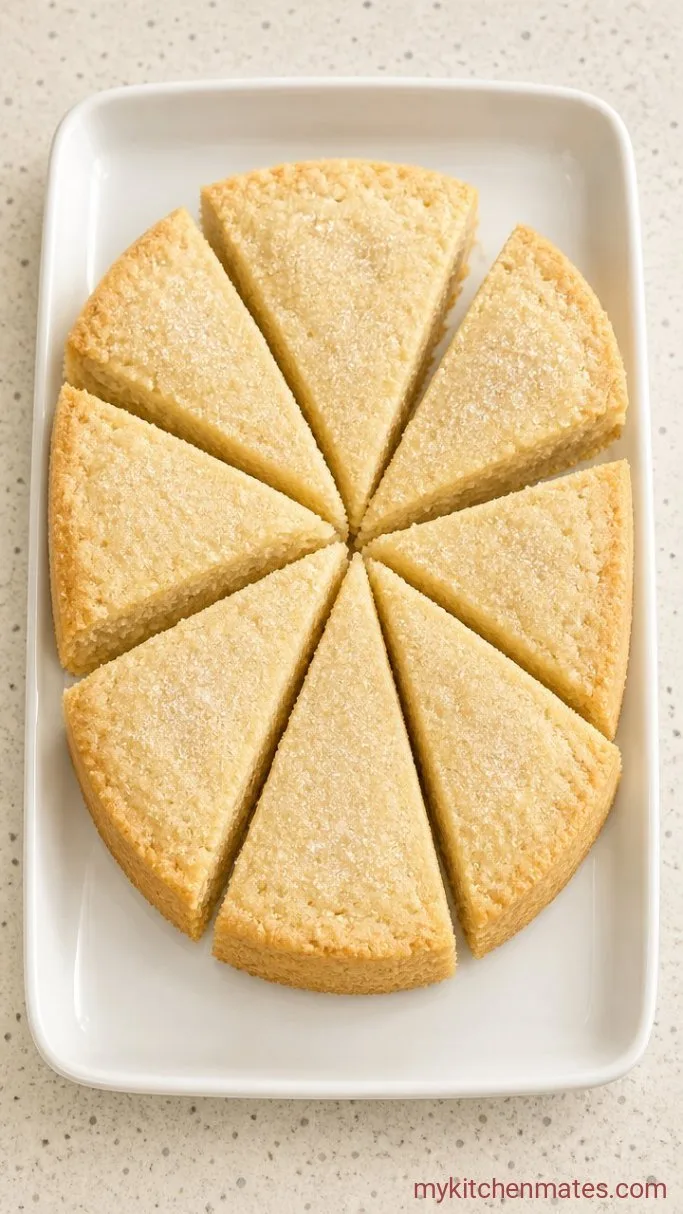
Cool the shortbread in the tin for 5 minutes, then remove the outer ring. While the cookie is still warm, take a serrated knife and cut neatly along the scored lines into wedges. Dust the top with a little extra granulated sugar. Transfer the wedges to a wire rack and let them cool completely. They will firm up as they cool.
A Few Notes Before You Start
- Soft, room-temperature butter creams easily; it should dent when you poke it, but not feel greasy or melted.
- Weighing your flour gives the most consistent result. Too much flour and the shortbread turns dry and crumbly.
- Pricking the dough is not just a decorative habit. Those fork holes let steam escape so the shortbread bakes flat and even.
Bake times will shift a little depending on the tin you grab.
| Tin Shape and Size | Material | Approximate Bake Time |
|---|---|---|
| 9-inch round tart tin | Light metal | 35 to 40 minutes |
| 8-inch square pan | Dark metal | 30 to 35 minutes |
| 9×5-inch loaf pan | Metal | 40 to 45 minutes |
Storing Leftover Cookies
Keep fresh: Once completely cool, store the shortbread in an airtight container at room temperature. It stays buttery and crisp for up to 2 weeks.
Freeze: Wrap baked wedges tightly and freeze for up to 3 months. Thaw them on the counter, and they will taste just baked.
Frequently Asked Questions
Can I use salted butter?
Yes. Simply leave out the added salt and the shortbread will have a slightly more savoury note.
Why did my shortbread turn out crumbly and dry?
Too much flour is usually the culprit. Spoon the flour into your measuring cup and level it off; do not scoop directly from the bag.
Can I make this gluten-free?
A 1:1 gluten-free baking blend works as a straight swap for the all-purpose flour. The cookies may be a touch more delicate, but they will hold their shape.
Can I double the recipe?
You can. Press the dough into a 9×13-inch (23×33 cm) pan and add 5 to 7 minutes to the bake time.
Buttery Scottish Shortbread Cookies Recipe
Ingredients
Method
- Heat oven to 325°F (160°C). Beat butter and sugar until pale and fluffy, about 3 minutes.
- Mix in flour and salt on low just until clumps form, about 30 seconds.
- Press dough into a 9-inch round tart tin, prick with a fork, and score into 8 wedges.
- Bake 35 to 40 minutes, rotating halfway, until pale golden and set in the centre.
- Cool 5 minutes, slice along scored lines while warm, dust with sugar, and cool completely on a rack.
Notes
