
Quick One-Pot Salmon Mac and Cheese

This one-pot salmon mac and cheese turns a boxed favorite into a real weeknight dinner.
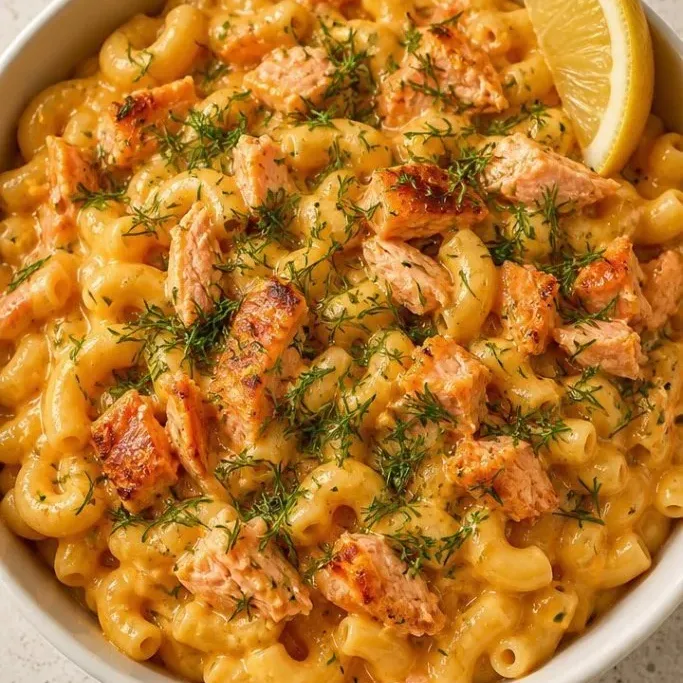
Tender flakes of salmon, a quick stovetop cheese sauce, and a handful of pantry pasta come together in under 30 minutes.
What Makes This Salmon Mac So Good
It tastes like a grown-up version of the mac you grew up on. The salmon adds a buttery richness that feels comforting without being heavy, and the cheese sauce stays silky because of a little cream cheese melted in.
I keep making it because it is genuinely fast. You sear the salmon right in the same pot, then build the whole dish from there. One pan, zero oven time, and it hits the table while the cheese is still stretchy.
Ingredients

- 8 ounces skinless salmon fillet: fresh or thawed, patted dry so it sears instead of steaming
- 1 tablespoon unsalted butter: plus a little more if the pot looks dry
- 2 cups water
- 2 cups whole milk: 2% works in a pinch, but the sauce will be slightly thinner
- 8 ounces dry elbow macaroni: about 2 cups, or any short, sturdy pasta
- 1 ½ cups shredded sharp cheddar: grate it yourself from a block for a smooth sauce
- 2 ounces cream cheese, softened: full-fat gives the best texture; pull it out of the fridge while you prep so it comes to room temperature
- ½ teaspoon garlic powder
- Salt and black pepper
- Juice of half a lemon: about 1 tablespoon, plus more for serving
- Small handful fresh dill or parsley, chopped: use what you have; chives work too
Variations / Substitutions
- Swap the salmon: Use a drained 6-ounce can of wild salmon instead of cooking fresh fillets. Fold it in at the end and warm it through gently so it does not break apart.
- Change the cheese: A mix of sharp cheddar and smoked gouda gives a deeper, smokier note that pairs well with the fish. Skip super-mild cheeses or the sauce can taste flat.
- Dairy-free version: Use unsweetened oat or almond milk and a soft vegan cream cheese, then finish with a meltable vegan cheddar shred. The sauce will be a touch looser, so cook the pasta a minute longer.
- Herb it up: Fresh dill is classic with salmon, but basil or chives are just as good. A pinch of smoked paprika folded in with the cheese adds warmth.
One-Skillet Cheesy Ground Beef and Rice Casserole is the main dish we love pairing with this mac and cheese.
How to Make Salmon Mac and Cheese
Step 1: Sear the Salmon
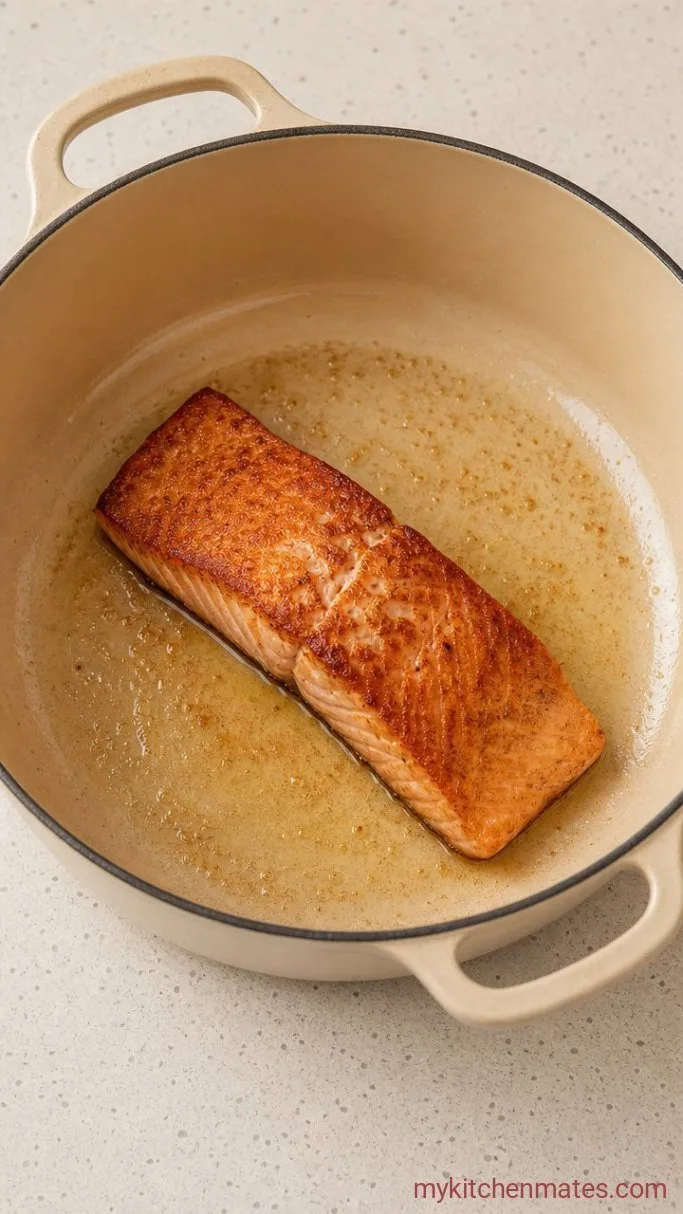
Melt the 1 tablespoon butter in a large pot or Dutch oven over medium-high heat. Once the butter foams, season the salmon fillet with a pinch of salt and pepper and set it in the pot. Sear for about 3 minutes until the underside is golden brown, then flip and cook another 3 to 4 minutes until the fish is opaque and flakes easily with a fork. Transfer the salmon to a plate and let it rest.
The salmon will finish cooking as it sits, so a slightly translucent center is fine when you pull it. That browning on the outside is what gives the dish its deep flavor later, so do not rush the sear.
Step 2: Simmer the Pasta in the Same Pot

Keep the pot over medium heat, no need to wipe it out. Pour in the 2 cups water, 2 cups whole milk, and 8 ounces dry macaroni. Stir everything together and bring it just to a simmer, then adjust the heat to maintain a gentle bubble. Cook for 10 to 12 minutes, stirring every couple minutes so the pasta does not clump or stick to the bottom.
The liquid will look thin at first. By the end, the starches from the pasta will have thickened it into a loose, creamy base. You are not draining anything here—that thickened milk is your sauce starter.
Step 3: Melt in the Cheese

Drop the heat to low. Add the 1 ½ cups shredded sharp cheddar, 2 ounces softened cream cheese (cut into small cubes if it is still cold), the ½ teaspoon garlic powder, and a generous pinch of salt. Stir gently until everything melts into a smooth, glossy sauce, about 2 minutes.
The sauce may appear a bit runny right now, but it tightens up as it sits off the heat and when you fold in the salmon. Taste it at this stage and adjust the salt before adding the fish.
Step 4: Fold in the Salmon and Serve

Flake the rested salmon into bite-size pieces, discarding any skin. Add the salmon to the pot along with the juice of half a lemon and most of your fresh dill or parsley. Fold everything together with a light hand, just enough to disperse the salmon without mashing it. Spoon into warm bowls, scatter the remaining herbs on top, and serve right away.
The lemon brightens the whole pot and keeps the richness in check, so do not skip it. Extra herbs on top make it look like you fussed, which you absolutely did not.
A Few Notes Before You Start
- Use freshly grated cheese.: Pre-shredded bags have anti-caking agents that can turn the sauce grainy. Grating a block takes a minute and the payoff is a velvety sauce.
- Don’t toss that salmon skin.: If your fillet came with skin on, peel it off after searing and crisp it in a dry pan until it crackles. Crumble it over the bowls like savory bacon bits.
- Room temperature cream cheese blends easiest.: If you forgot, cut it into small cubes so it melts before the sauce has a chance to break.
- A splash of milk at the table: wakes up any leftovers that have thickened in the bowl. Keep a little extra on hand if you plan on seconds.
If you swap in another pasta shape, adjust the cook time a bit:
| Shape | Approximate cook time |
|---|---|
| Elbows | 10 to 12 minutes |
| Shells | 11 to 13 minutes |
| Penne | 12 to 14 minutes |
Storing Leftovers
Refrigerate: Tuck leftovers into a sealed container and keep them in the fridge for up to 3 days. The sauce will firm up as it chills, so expect a thicker texture when cold.
Reheating: Warm gently on the stovetop over low heat with a splash of milk, stirring often, until the sauce loosens and the salmon is just heated through. A microwave works in a pinch; use 30-second bursts and stir between each to avoid hot spots that can dry out the fish.
What to Serve With Salmon Mac and Cheese
A crisp green salad with a tart lemon vinaigrette is the easiest side that cuts through the richness. The acidity keeps the meal from feeling heavy. Steamed broccoli or roasted asparagus work well too, and you can squeeze the same lemon you used for the pasta right over the hot vegetables. For something crunchy on top, a handful of toasted breadcrumbs or the crispy salmon skin from the tip above adds a nice contrast.
Frequently Asked Questions
Can I bake this mac and cheese instead?
Yes. After Step 3, transfer the mixture to a buttered baking dish but stop before adding the salmon. Stir the flaked salmon in, top with buttered breadcrumbs, and bake at 375°F for 15 to 20 minutes until bubbly and golden.
Why does my cheese sauce turn grainy?
High heat is usually the culprit. Keep the pot on low when melting the cheese and stir constantly. Adding cheese off the heat entirely, letting the residual warmth melt it, is another safe bet.
Can I use gluten-free pasta?
Absolutely. A sturdy gluten-free macaroni or shell works; just watch it in the last few minutes of simmering since cook times vary by brand. The starch level may be lower, so the sauce might need an extra minute of stirring to thicken.
What vegetables can I add?
Frozen peas are the simplest: stir in a handful during the last minute of the pasta cook time. Wilted baby spinach or steamed broccoli florets folded in right before serving are also good and add color without extra pans.
Salmon Mac and Cheese Recipe
Ingredients
Method
- Melt butter in a large pot over medium-high heat. Season salmon with salt and pepper, sear 3 minutes per side until golden and just cooked through, then transfer to a plate.
- In the same pot, add water, milk, and macaroni. Bring to a simmer and cook, stirring often, for 10 to 12 minutes until the pasta is tender and the liquid has thickened.
- Reduce heat to low. Stir in cheddar, cream cheese, garlic powder, and a pinch of salt until smooth, about 2 minutes.
- Flake the salmon, then fold it into the pot with lemon juice and most of the herbs. Serve hot with remaining herbs on top.
Notes
