
Old-Fashioned Rhubarb Custard Pie

This rhubarb custard pie balances the sharp tang of fresh rhubarb with a silky, sweet custard, all tucked into a buttery crust.

It’s the kind of dessert that feels both homey and a little special, perfect for spring gatherings or a quiet weeknight treat.
What Makes This Pie So Good
The contrast is what I keep coming back to. Rhubarb on its own can be mouth-puckeringly sour, but when it bakes into a rich custard, it mellows into something bright and jammy.
The custard sets just enough to hold its shape, while staying creamy, not rubbery. And the crust stays flaky right to the edge because we don’t prebake it, so the whole thing comes together without extra steps.
Ingredients
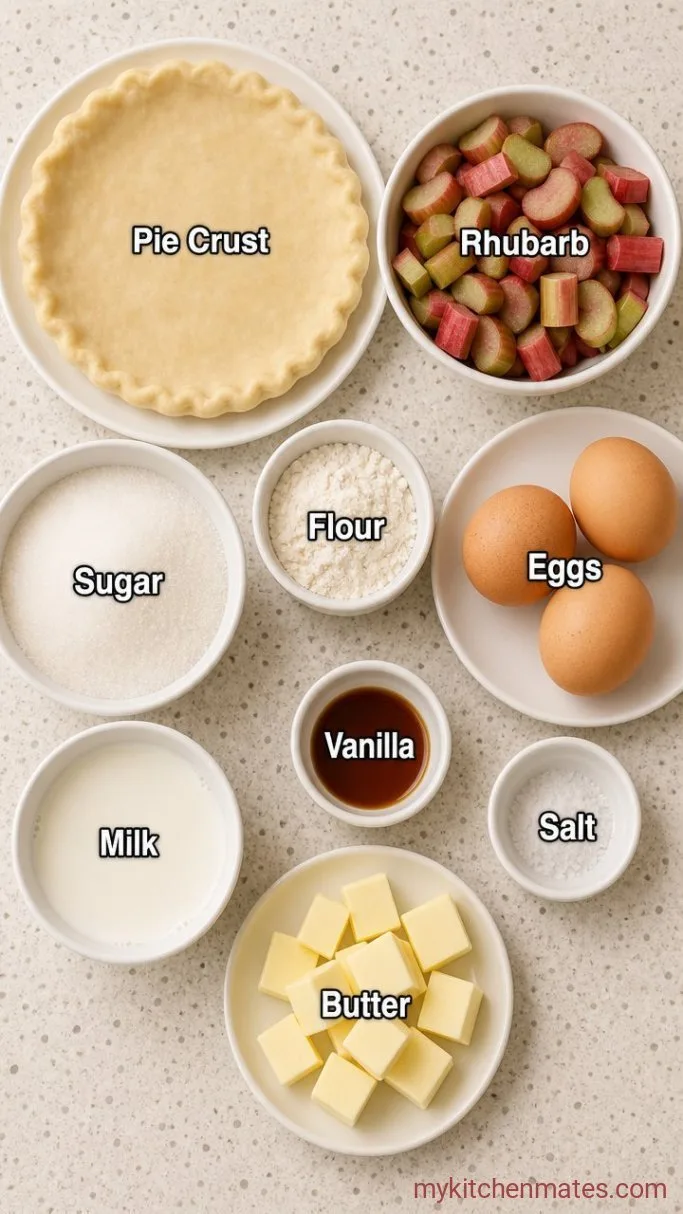
- 1 unbaked 9-inch pie crust, homemade or store-bought: deep-dish works best for the tall filling.
- 4 cups sliced rhubarb (about 1 lb/450 g): rinse and slice stalks 1/2 inch thick.
- 1 1/4 cups (250 g) granulated sugar, divided: 1/2 cup for the rhubarb, 3/4 cup for the custard.
- 3 tbsp all-purpose flour, divided: 1 tbsp for the rhubarb, 2 tbsp for the custard.
- 3 large eggs
- 1 cup (240 ml) whole milk: full-fat gives the creamiest custard.
- 1 tsp vanilla extract
- 1/4 tsp fine sea salt
- 1 tbsp unsalted butter, cut into small bits: for dotting on top before baking.
Variations / Substitutions
- Frozen rhubarb: use straight from frozen; no need to thaw, but expect 10 to 15 minutes more baking time.
- Gluten-free crust: swap in your favorite GF pie crust; replace the flour in the filling with 2 tbsp cornstarch.
- Dairy-free: use oat milk and vegan butter. The custard will be slightly softer but still delicious.
- Add strawberries: replace up to half the rhubarb with sliced strawberries for a strawberry-rhubarb custard pie.
German Apple Pie is another dessert you’d probably love if you enjoy this pie.
How to Make Rhubarb Custard Pie
Step 1: Line the Pie Plate with Crust
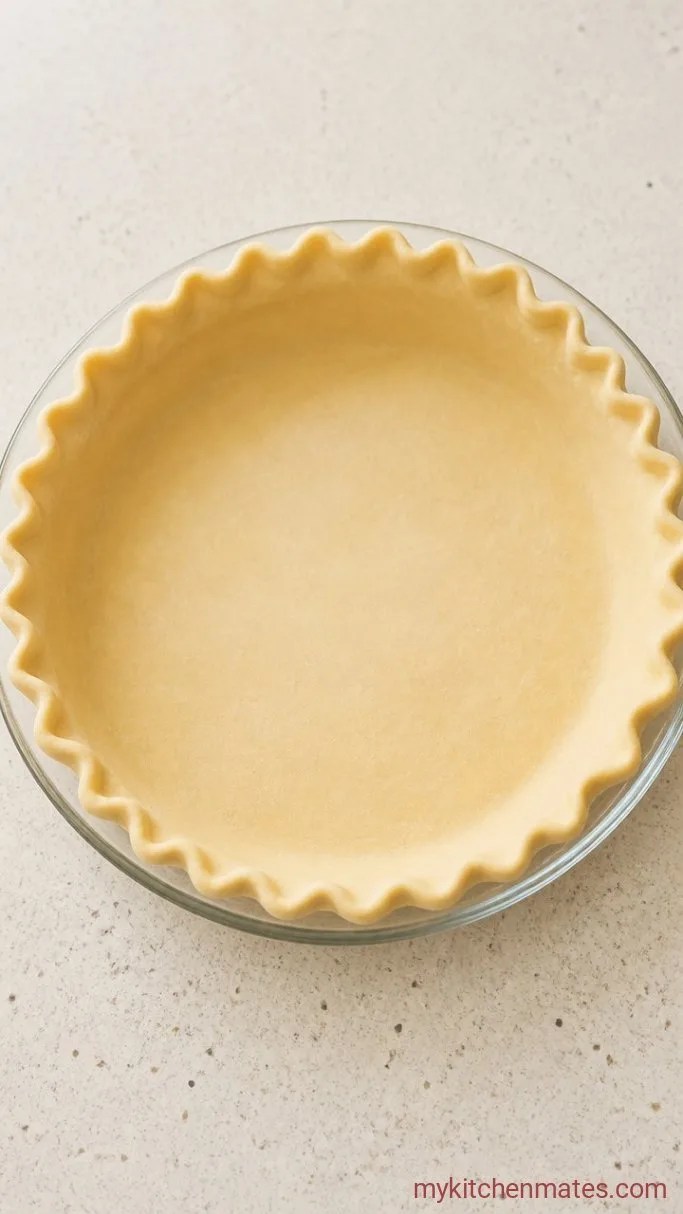
Take your chilled unbaked pie crust from the fridge and ease it into a 9-inch pie plate, preferably deep dish. Trim the overhang to about an inch, then fold it under and crimp the edges with a fork or between your thumb and forefinger for a fluted rim. Place the crust in the refrigerator while you get the filling ready.
A cold crust holds its shape better in the oven and helps the bottom bake up flaky rather than soggy. Even 15 minutes of chilling makes a noticeable difference.
Step 2: Toss the Rhubarb with Sugar
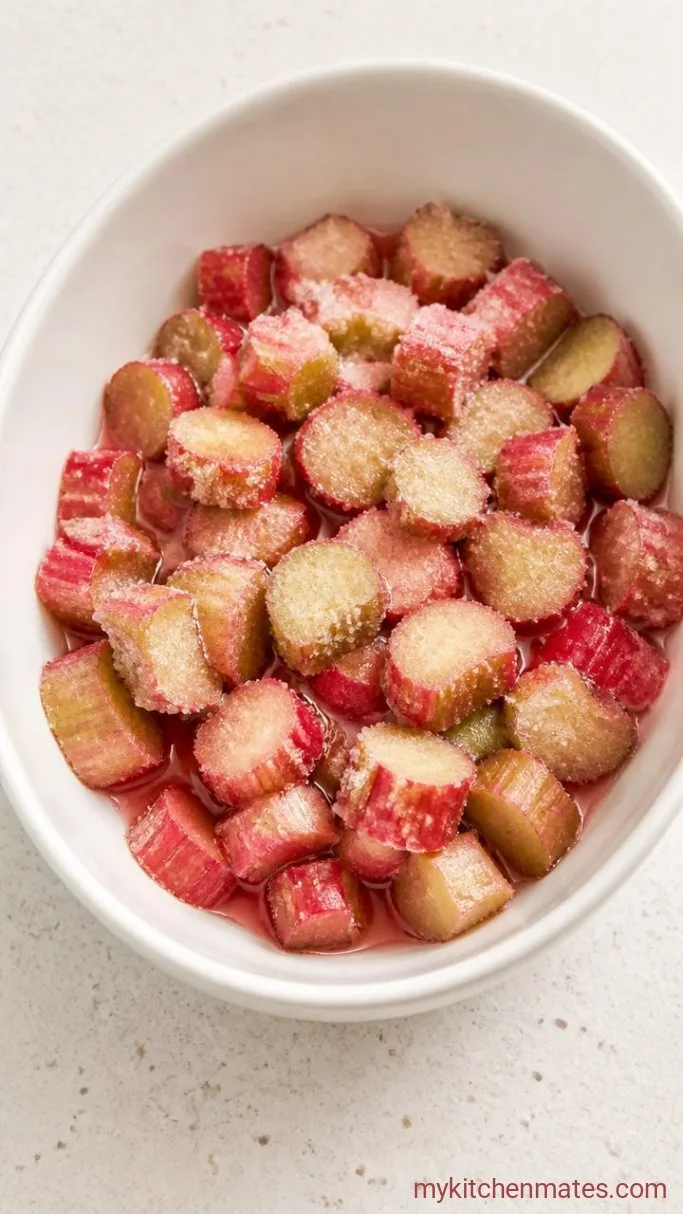
In a large bowl, toss the sliced rhubarb with 1/2 cup of the sugar and 1 tablespoon of the flour until the pieces are evenly coated. Set this aside for 15 minutes so the rhubarb can release some of its juice.
You’ll see the sugar start to dissolve and the rhubarb glisten. A little pool of pink liquid will form at the bottom, that’s exactly what you want. It carries flavor and helps start the cooking process.
Step 3: Whisk the Custard
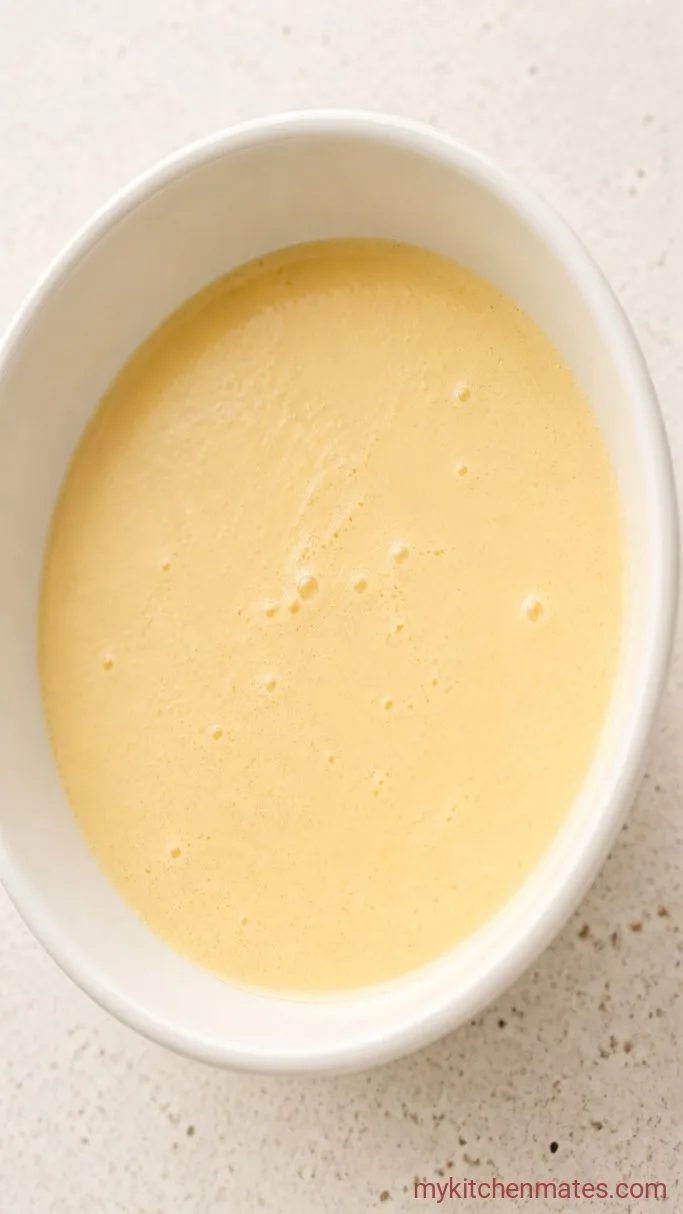
In another bowl, whisk together the 3 eggs, the remaining 3/4 cup sugar, the remaining 2 tablespoons flour, and the 1/4 teaspoon salt. Whisk until the mixture is smooth and pale yellow, about 1 minute. Then pour in the milk and vanilla, and whisk again until fully combined.
The custard will be thin and a few streaks of egg white are fine, they’ll blend right in as it bakes. No need to get every last lump, the heat of the oven will take care of it.
Step 4: Fill the Pie Shell
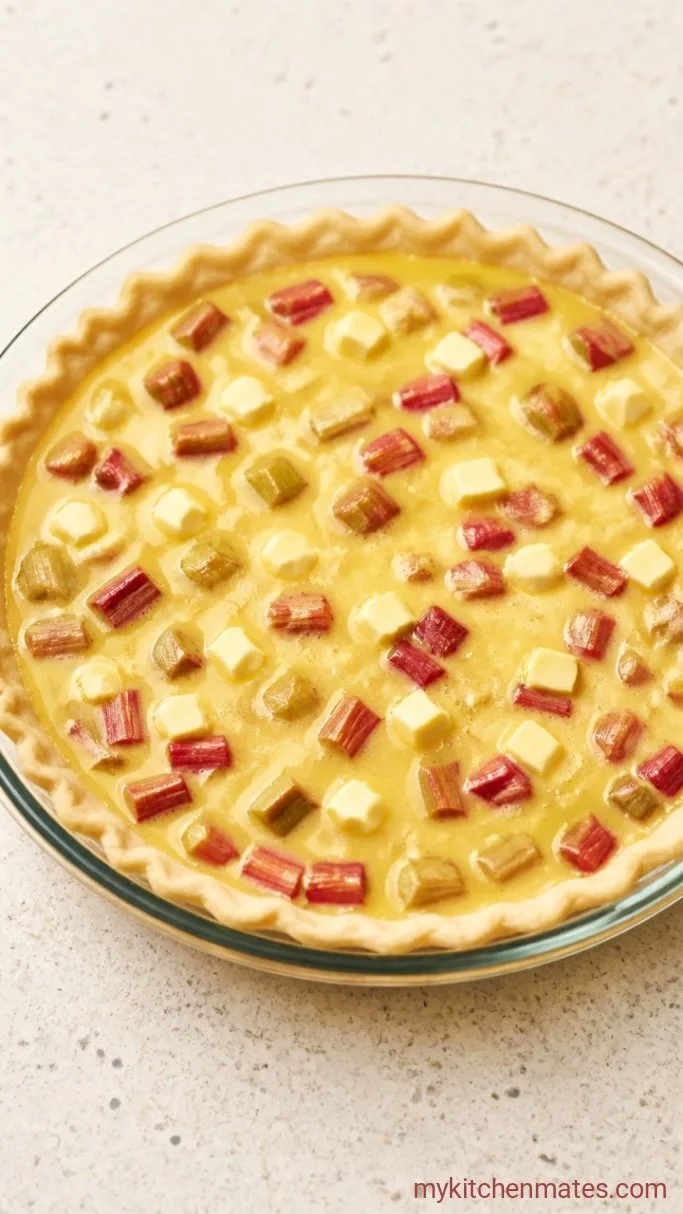
Pull the crust from the refrigerator and spread the rhubarb mixture, juices and all, evenly over the bottom. Slowly pour the custard over the rhubarb, letting it settle into all the nooks. Dot the top with the small butter pieces.
The rhubarb will poke through the surface, which is perfect. As the pie bakes, those pieces soften into jammy little pockets and the custard puffs up around them.
Step 5: Bake the Pie
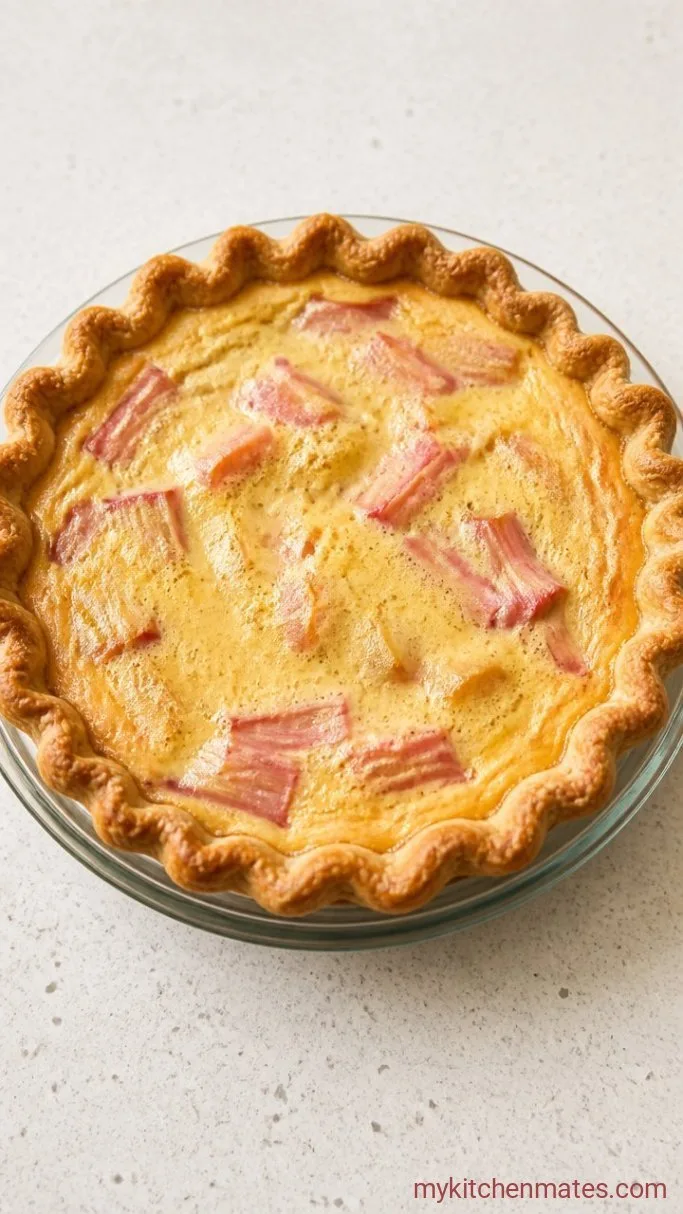
Preheat your oven to 400°F (200°C). Slide the pie onto the center rack and bake for 10 minutes, then reduce the temperature to 350°F (180°C) without opening the door. Continue baking for 40 to 50 minutes more, until the edges are set but the center still has a gentle jiggle when you nudge the pan.
After about 25 minutes at the lower temperature, check the crust edge. If it’s browning faster than you’d like, loosely tent a ring of foil around just the rim to shield it. A few cracks may appear on the custard surface; that’s normal and won’t affect the taste.
The pie is done when the outer 2 inches look firm and the center wobbles like set gelatin, not liquid custard. It will continue to set as it cools, so pulling it at the jiggle stage prevents overbaking and a watery bottom.
Step 6: Cool and Slice
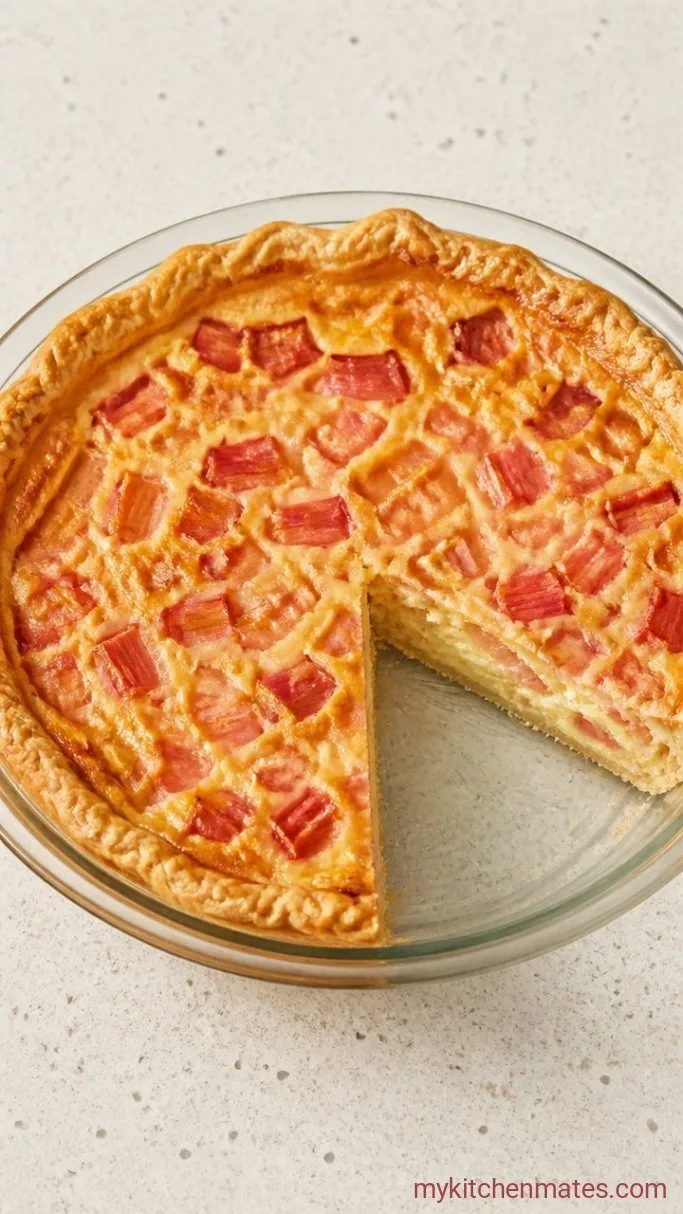
Transfer the pie to a wire rack and let it cool for at least 1 hour before cutting. The waiting is the hardest part, but the custard needs that time to firm up. Serve slices warm or at room temperature.
The first slice might slump a little, but the ones after it will hold their shape, revealing vivid ribbons of rhubarb. A dusting of powdered sugar or a dollop of whipped cream never hurts, if you feel like gilding the lily.
A Few Tips for Rhubarb Custard Pie
- For the brightest color, choose deep red rhubarb stalks. Green stalks taste just as good but yield a paler filling.
- Check the pie a few minutes before the end of the bake time; the center should tremble, not ripple. Overbaked custard can separate and weep.
- If the crust edges darken too quickly, fold strips of foil around them during the last 20 minutes of baking.
- Let the pie cool for at least 2 hours before slicing. The custard continues to set and will cut cleanly once cooled.
- A crack or two on top is normal; a spoonful of whipped cream covers it up nicely.
Bake times by pan (after the initial 10 minutes at 400°F):
| Pan Material | Oven Temp Adjustment | Total Bake Time (from start) |
|---|---|---|
| Dark metal | 350°F (180°C) | 45-50 minutes |
| Glass (Pyrex) | Reduce to 325°F (165°C) | 55-60 minutes |
| Ceramic | 350°F (180°C) | 50-55 minutes |
Storing Leftover Pie
Refrigerate: Cover loosely and keep in the fridge for up to 4 days. Reheating: To revive the crust, slice and warm in a 350°F oven for 5 to 7 minutes. Serve Cold: The pie tastes lovely chilled, straight from the fridge.
Frequently Asked Questions
Can I use frozen rhubarb?
Yes, no need to thaw it first. Add the frozen rhubarb straight to the bowl with the sugar and flour, and expect the bake time to increase by 10 to 15 minutes.
Do I need to blind bake the crust first?
No, this pie bakes long enough that the bottom crust cooks through completely without a blind bake. Chilling the crust before filling helps keep it flaky.
Can I reduce the amount of sugar?
You can cut up to 1/4 cup from the custard sugar, but I wouldn’t go lower. Rhubarb is quite tart, and sugar balances that sharpness.
How thick should I slice the rhubarb?
Aim for 1/2-inch (1.25 cm) slices. Too thin, and the pieces disappear; too thick, and they may not soften fully. Consistent thickness means even cooking.
Can I make this pie ahead of time?
Absolutely. Bake the pie the day before, cool it completely, then cover and refrigerate overnight. The flavors meld together nicely, and the custard stays creamy.
Rhubarb Custard Pie Recipe
Ingredients
Method
- Line a 9-inch pie plate with the chilled crust, trim and crimp edges, then refrigerate.
- Toss rhubarb with 1/2 cup sugar and 1 tbsp flour; let sit 15 minutes.
- Whisk eggs, remaining sugar, remaining flour, salt until smooth; add milk and vanilla and whisk again.
- Spread rhubarb mixture in the crust, pour custard on top, and dot with butter bits.
- Bake at 400°F for 10 minutes, then reduce to 350°F and bake 40 to 50 minutes, until center jiggles gently.
- Cool on a wire rack at least 1 hour, then slice and serve warm or at room temperature.
Notes
