
Flaky Portuguese Egg Tarts with Caramelized Custard

Portuguese egg tarts (pastéis de nata) are little cups of ultra-flaky pastry filled with the creamiest, blistered custard you can imagine. They’re easier than they look once you get the hang of the stove-top caramelizing trick.
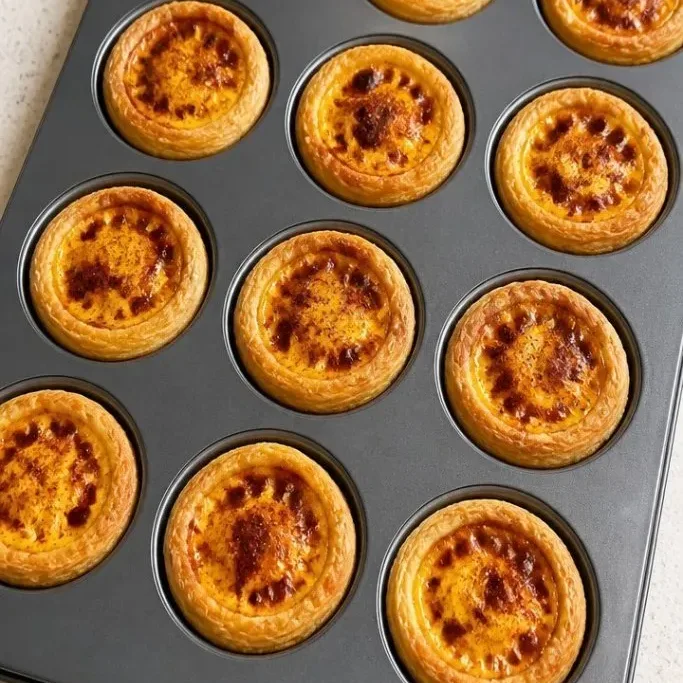
This version keeps the pastry shatteringly crisp by laminating it just once and pressing it into muffin tins, and the filling gets a good wobble and deep amber spots without a blowtorch. Make a batch and watch them disappear.
Why These Tarts Are Worth the Effort
The contrast is what gets me: a shell that flakes into a million buttery shards while the center stays just-set and trembling. It tastes like vanilla and caramelized sugar and a hint of lemon peel, nothing more.
And they’re the kind of thing that makes you look like a pastry pro even if you’re still figuring out your oven. I keep coming back to this method because the custard never weeps and the pastry stays crisp for hours.
Ingredients
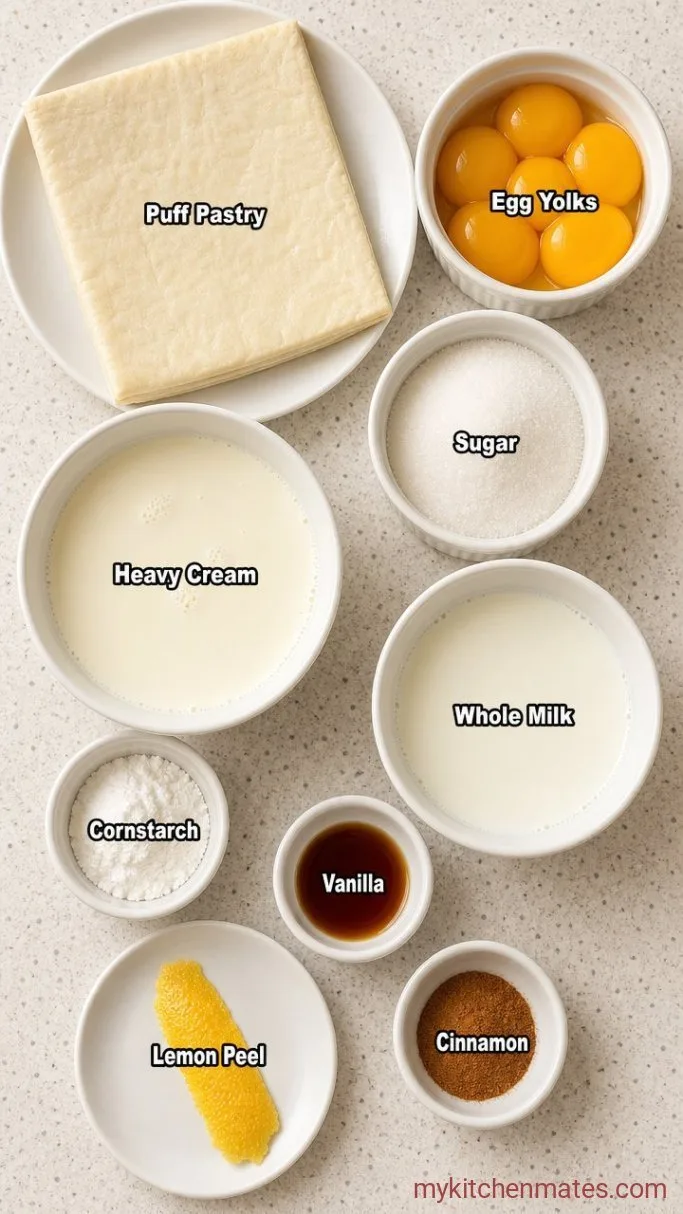
- 1 sheet frozen puff pastry, thawed: all-butter is best for the crispiest layers.
- 6 large egg yolks: room temperature so they blend smoothly.
- 1/2 cup granulated sugar: plain white sugar melts evenly.
- 1 cup heavy cream: no substitutes, it gives the custard its rich wobble.
- 1/2 cup whole milk: adds lightness so the custard isn’t cloying.
- 2 tbsp cornstarch: helps the filling set without baking too long.
- 1 tsp vanilla extract: use the real stuff for a clean flavor.
- 1 strip lemon peel: about 1 inch long, the quiet backbone of the tart.
- Ground cinnamon: for dusting.
Variations and Swaps
- Puff pastry: a good all-butter frozen sheet gives the flakiest results; crescent roll dough works too but the layers won’t be as distinct.
- Dairy-free: use one and a half cups of full-fat canned coconut milk in place of the cream and milk; the custard will set with a mild coconut note.
- Lemon: swap in a strip of orange peel, or switch to a tiny pinch of finely grated lemon zest for a brighter citrus pop.
- Spice: feel free to add a small cinnamon stick to the cream while it heats, then strain it out with the lemon peel for a warm undercurrent.
Crustless Egg Custard Pie is another dessert you’d probably love if you enjoy these tarts.
How To Make Portuguese Egg Tarts
Step 1: Shape the Pastry Shells
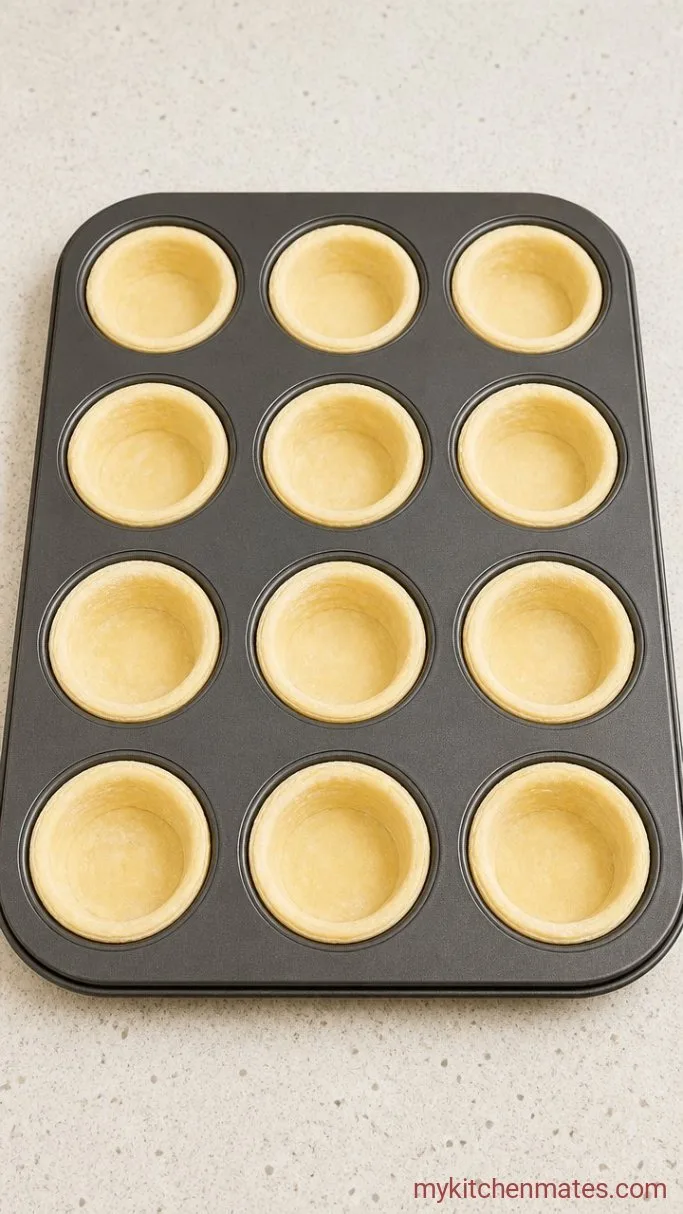
Preheat your oven to 475°F (250°C) and lightly grease a standard 12-cup muffin tin. On a floured surface, unroll the thawed puff pastry sheet and cut it into 12 even squares. Roll each square out just enough to flatten it slightly, then press one into each cup, letting the four corners hang over the rim.
The pastry should come all the way up the sides, just above the tin. Don’t trim those overhanging corners. They’ll turn into shaggy, flaky edges later that everyone fights over.
Step 2: Whisk the Custard
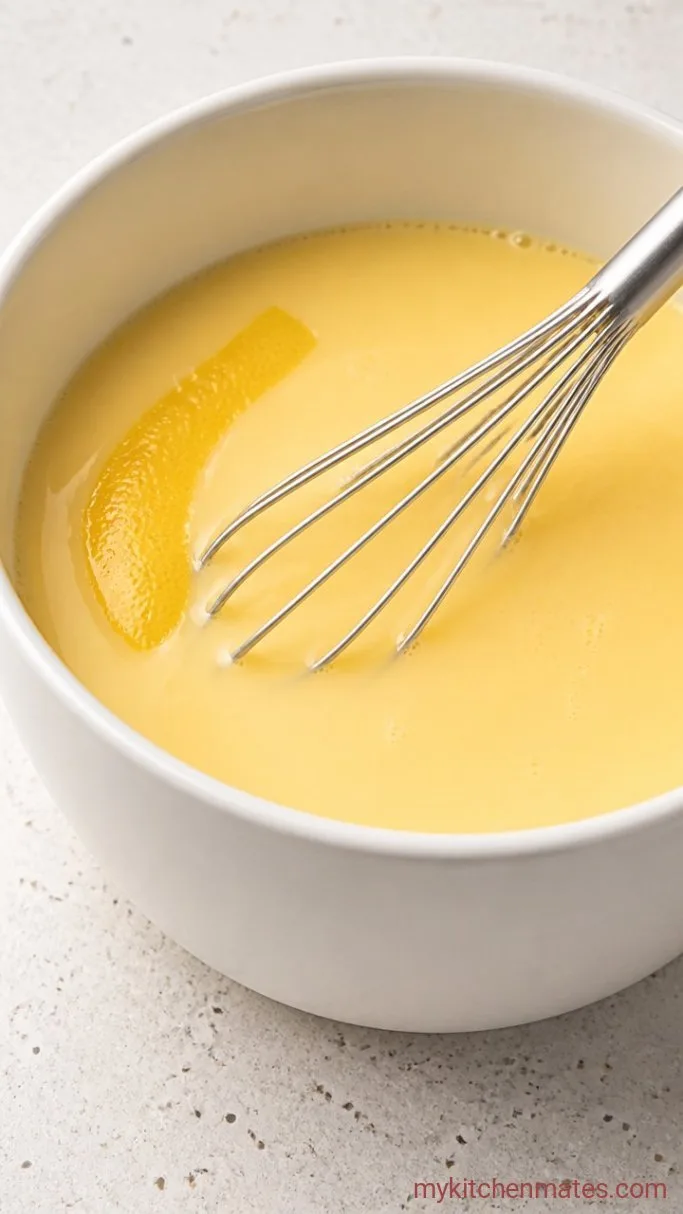
In a medium saucepan, combine the 1 cup heavy cream, 1/2 cup whole milk, 1/2 cup sugar, 2 tbsp cornstarch, 1 tsp vanilla, and the strip of lemon peel. Whisk over medium heat until the mixture starts to steam and the sugar dissolves, about 4 minutes. Don’t let it reach a boil. Remove from heat, pluck out the lemon peel, and let the pan cool for 2 minutes.
Whisk the 6 egg yolks in a separate bowl until they’re smooth. Slowly pour the warm cream mixture into the yolks, whisking constantly so the eggs don’t scramble. The finished custard will look thin and pale, that’s exactly what you want.
Step 3: Fill the Tart Shells
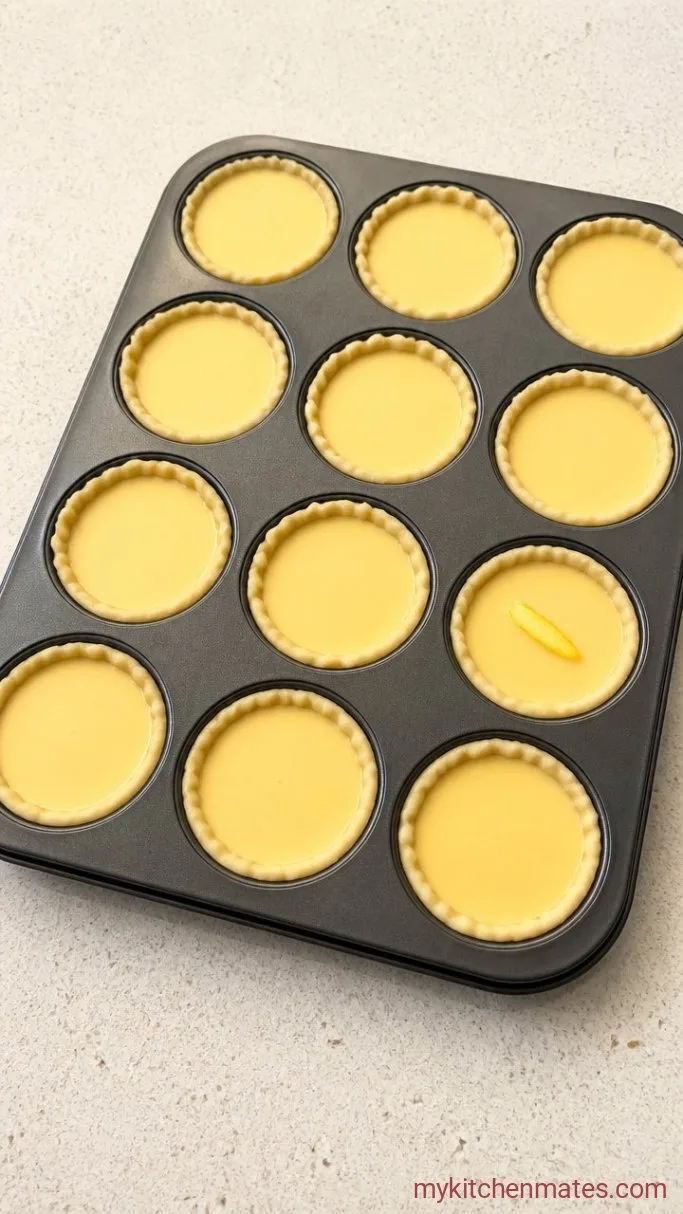
Divide the custard evenly among the 12 pastry-lined cups, pouring until it comes about halfway up the sides. A small ladle or a measuring cup with a spout keeps things neat. The custard will puff as it bakes, so don’t overfill.
Lightly dust the surface of each tart with a pinch of ground cinnamon, then carefully carry the tin to the hot oven. The filling will still be liquid at this point, don’t worry about it.
Step 4: Bake until Blistered and Caramelized
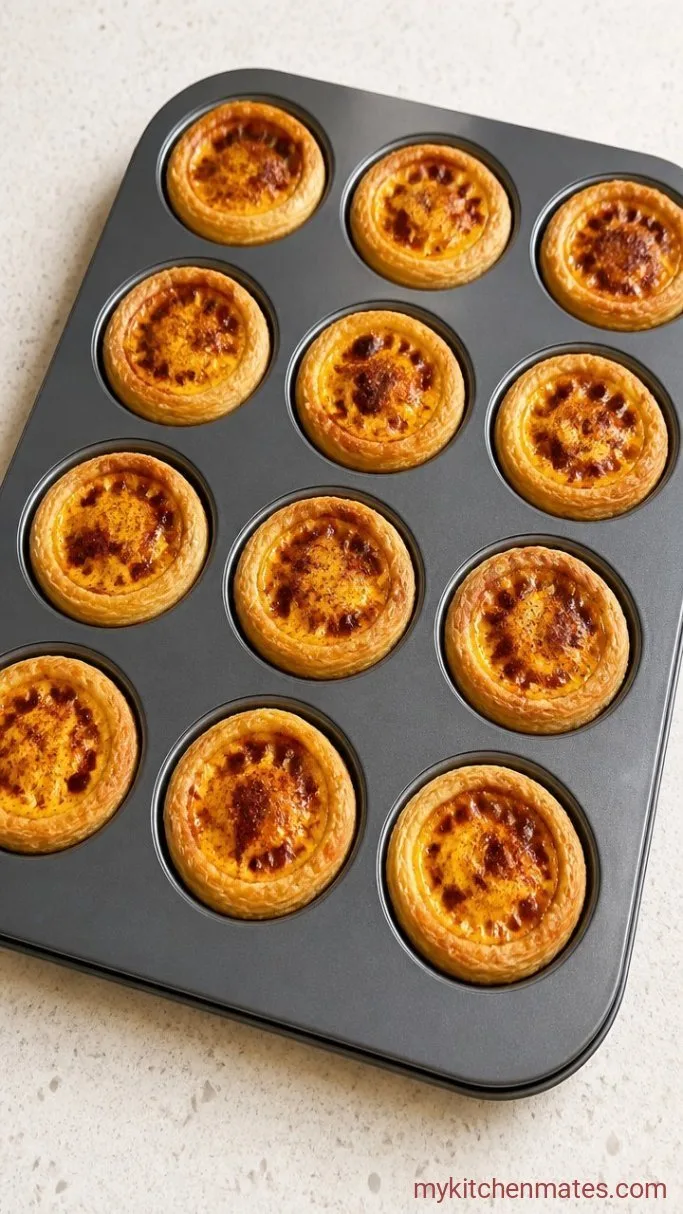
Bake the tarts at 475°F (250°C) for 15 to 20 minutes, rotating the pan once halfway through. You’re looking for deep golden pastry and dark amber spots bubbling across the custard.
The centers should still jiggle just a little when you shake the tin. They’ll finish setting as they cool. Let the tarts rest in the tin for 5 minutes, then run a small offset spatula around each one and lift them out carefully. Serve warm with an extra dusting of cinnamon if you like.
A Few Notes Before You Start
- Don’t skip the lemon peel. It doesn’t scream citrus, but you’d miss the clean, bright note it adds behind all that cream.
- For darker caramel patches, slide the pan under a preheated broiler for the final 1 to 2 minutes. Stand right there and watch, they can go from amber to burnt in seconds.
- If you want a deeper vanilla flavor, swap the extract for one vanilla bean split lengthwise. Scrape the seeds into the cream and toss in the pod while it heats, then remove it with the lemon peel.
Storing Leftovers
Refrigerate cooled tarts in an airtight container for up to 2 days. The pastry will soften a little but the flavor holds. Reheat in a 350°F (175°C) oven for 5 minutes to bring the crisp back. A microwave will turn the shell gummy.
What To Serve with Portuguese Egg Tarts
Freshly brewed espresso cuts the sweetness perfectly, and a small glass of tawny port turns these into a proper after-dinner treat. A scoop of vanilla ice cream on the side also works, the cold creaminess plays against the warm, crackly pastry.
Frequently Asked Questions
Can I use regular pie crust instead of puff pastry?
No. Puff pastry’s paper-thin butter layers are what give the tarts their shatter. A standard pie crust won’t lift and you’ll end up with a dense, short shell.
Why did my custard crack on top?
The oven was likely a little too hot or the tarts baked a minute too long. Pull them when the centers still wobble. They’ll continue to set outside the oven without splitting.
Can I make these ahead?
The custard can be whisked together a day ahead and kept covered in the fridge. The pastry shells are best pressed into the tin just before baking, but you can do that several hours earlier and refrigerate the pan until you’re ready to fill and bake.
My pastry wasn’t flaky. What happened?
The dough must be cold when it hits the hot oven, or the butter melts out before the layers can separate. If you handled the pastry for a long time or the kitchen was very warm, chill the filled tin in the fridge for 10 minutes before baking.
Portuguese Egg Tart Recipe
Ingredients
Method
- Preheat oven to 475°F (250°C) and grease a 12-cup muffin tin. Cut puff pastry into 12 squares, press each into a cup, and let corners hang over the rim.
- Combine cream, milk, sugar, cornstarch, vanilla, and lemon peel in a saucepan. Whisk over medium heat until steaming, about 4 minutes. Remove peel, cool 2 minutes, then slowly whisk into beaten egg yolks.
- Divide custard among pastry cups, filling halfway. Dust tops with cinnamon.
- Bake for 15 to 20 minutes until pastry is deep golden and custard has dark amber spots. Cool in tin 5 minutes, then remove and serve warm.
Notes
