
5-Ingredient Crustless Egg Custard Pie

A creamy, old-fashioned egg custard pie without the dough to roll. Just five everyday ingredients and a little oven time turn out a glossy, gently spiced dessert that sets up beautifully in the pan.
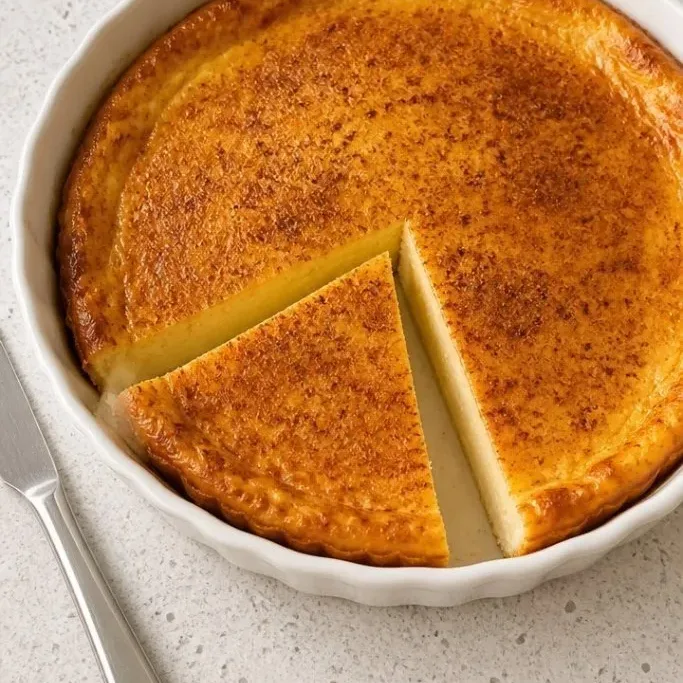
It’s the kind of recipe you pull out when you want something sweet but don’t want to fuss. No crust means no chilling, no rolling, and naturally gluten-free.
What Makes This Custard Pie So Good
The texture is what gets me every time. It’s silky and light, with a clean vanilla scent and a speckle of nutmeg on top. Because the whole thing is just eggs, milk, and sugar baked low and slow, the custard stays tender, not rubbery.
Using whole milk keeps it creamy without being heavy, and skipping the crust lets the wobble really shine. It’s the version I reach for when a pie feels right but I’m not in the mood for pastry.
Ingredients
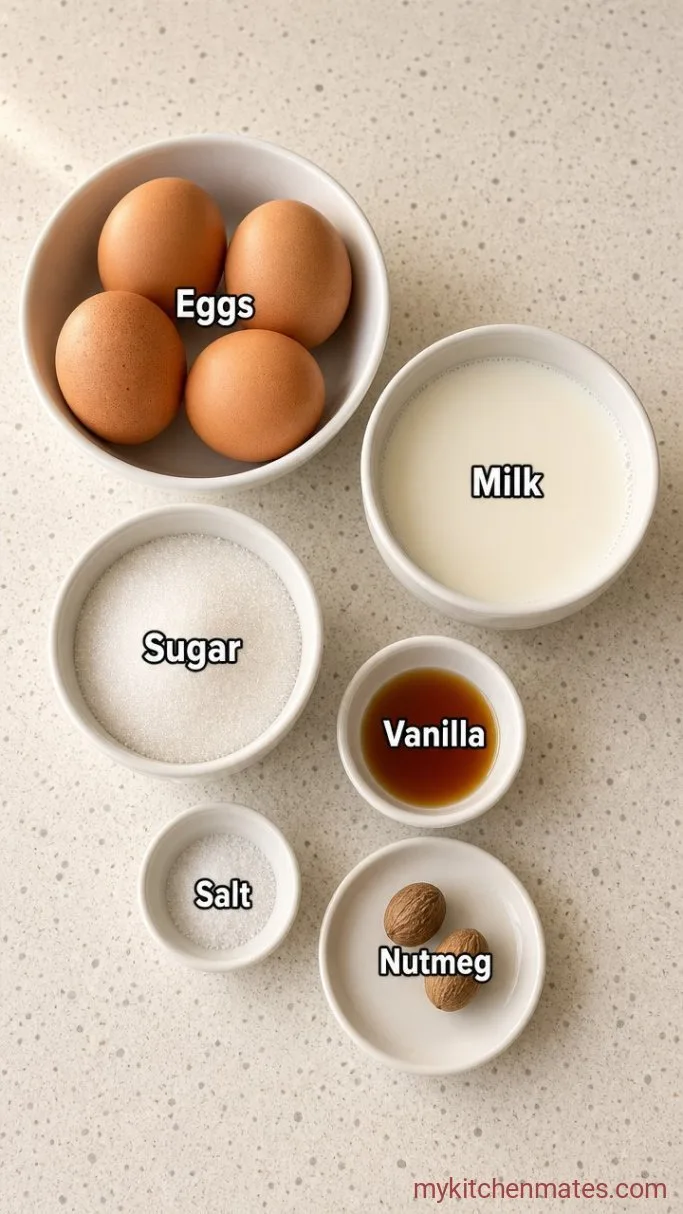
- 4 large eggs: room temperature makes blending easier
- 2 cups whole milk: you can swap in 2%, but whole milk gives the richest body
- 1/2 cup granulated sugar: just enough sweetness to balance the egg
- 2 teaspoons vanilla extract: pure vanilla is worth it here
- 1/4 teaspoon fine sea salt: brightens the custard
- Freshly grated nutmeg: for that classic speckled top, about 1/4 teaspoon
- Cooking spray: for greasing the pie dish
Variations / Substitutions
- Dairy milk swap: use unsweetened oat milk for a dairy-free version, though the custard will be a little less creamy.
- Sweetener: coconut sugar gives it a deep caramel note, but the pie will turn a darker colour.
- Flavor twist: replace the vanilla with 1 teaspoon almond extract for a nutty perfume.
- Spice it differently: cinnamon or cardamom work in place of nutmeg if you want a warmer profile.
Silky Lemon Custard Pie is another reader favorite dessert worth making next.
How to Make Crustless Egg Custard Pie
Step 1: Whisk the Custard Base
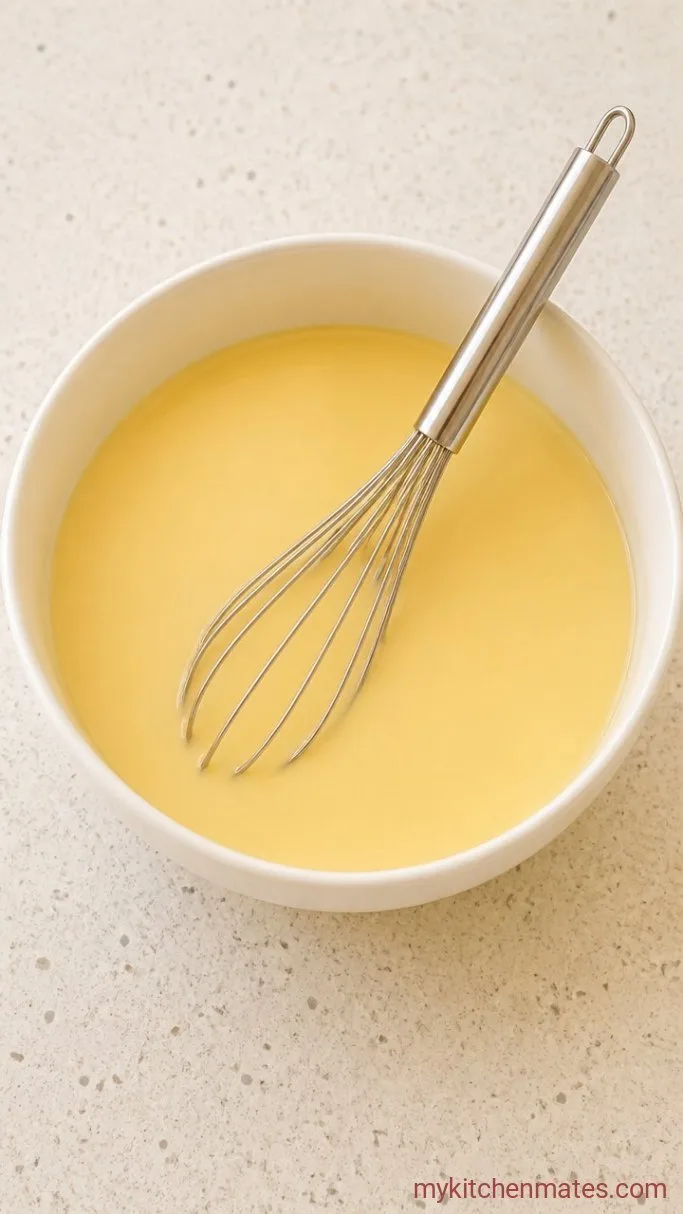
Start by preheating your oven to 325°F (165°C) and lightly coat a 9-inch pie dish with cooking spray. In a large mixing bowl, whisk the 4 eggs just until the yolks and whites are combined. Add the 1/2 cup sugar, 2 teaspoons vanilla, and 1/4 teaspoon salt, then whisk vigorously for about 1 minute, until the sugar feels dissolved and the mixture turns pale yellow.
The liquid will look smoother and a shade lighter when the sugar has really melted in. If you spot any stray bits of egg white, pour the custard through a fine-mesh sieve into a clean bowl before you pour it into the pie dish. That extra 30 seconds guarantees a seamless texture.
Step 2: Pour and Bake the Custard
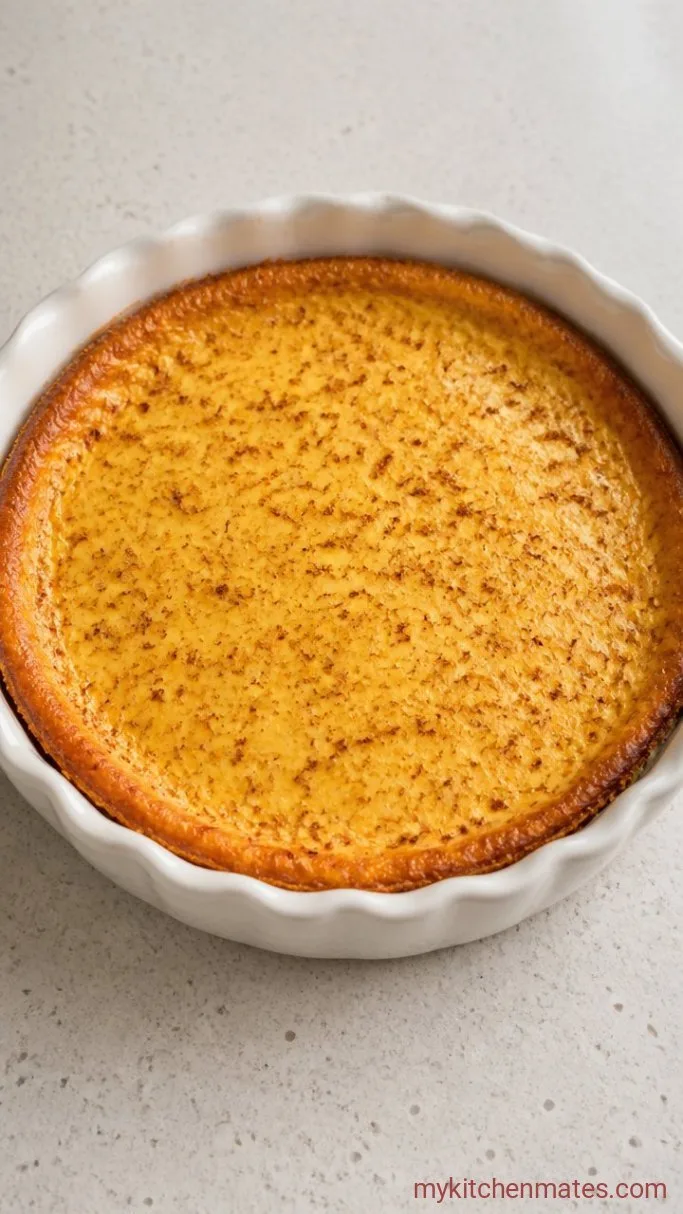
Pour the strained custard into the greased pie dish and tap the dish gently on the counter to release any air bubbles. Grate a generous 1/4 teaspoon of fresh nutmeg over the top so it covers the surface in little brown specks. Slide the dish into the preheated oven and bake for 45 to 55 minutes.
The custard is done when the edges are set and puff slightly, while the center still wobbles like jelly when you gently shake the dish. It will look underbaked in the middle, but that wobble is exactly what you want. The residual heat will finish the job out of the oven.
Step 3: Cool and Slice the Pie
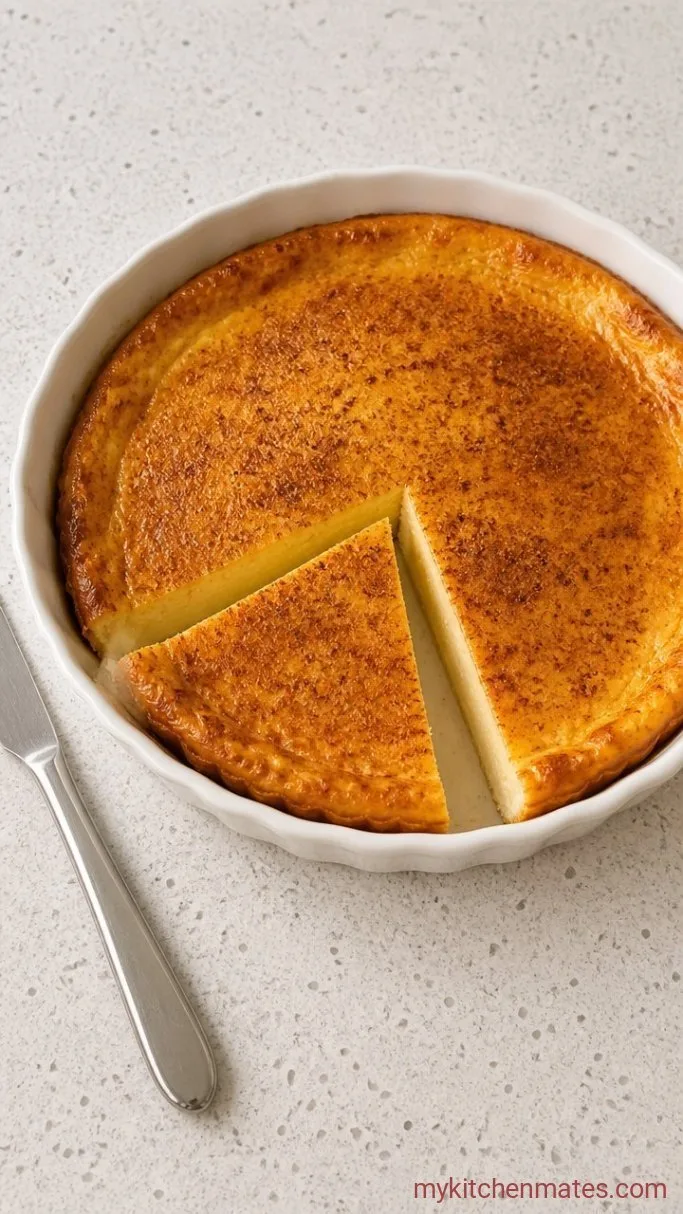
Set the pie dish on a wire rack and let it cool at room temperature for about 1 hour. Once it’s no longer hot, transfer the pie to the refrigerator and chill for at least 2 hours, until fully set. Run a thin knife around the edge, slice into wedges, and serve cold or at room temperature with an extra flick of nutmeg.
The custard firms up even more as it chills, so those slices will be clean and glossy. This is the moment it looks its most photogenic, with the pale yellow filling and dark flecks on top.
A Few Notes for the Best Custard
- Use room temperature eggs: straight from the counter. They blend more evenly and help the custard bake without separating.
- Watch the wobble. If the center is already firm when you pull it from the oven, the pie will be overcooked and may crack as it cools. A little jiggle is your friend.
- Strain if you can. Even careful whisking can leave tiny egg white strands. Pass the liquid through a sieve right before baking and you’ll get a glass-smooth result without any extra effort.
Storing Leftovers
Cover the pie dish tightly and refrigerate for up to 4 days. The custard is best served cold, so there’s no need to rewarm it. Reheating can cause the custard to weep, so enjoy right from the fridge.
What to Serve With Crustless Egg Custard Pie
A plain slice is lovely on its own, but a dollop of softly whipped cream and a handful of raspberries turn it into something a little more special. The berries’ tartness cuts through the creamy sweetness, and the nutmeg plays well with the fruit. A cup of strong black coffee or Earl Grey tea is a good match, too, because the bitter edge balances the vanilla notes.
Frequently Asked Questions
Can I use almond milk instead of dairy milk?
Yes, but the custard will be noticeably less creamy and may set a bit softer. Whole milk gives you the best texture.
Why did my custard crack on top?
Cracks happen when the custard is overbaked or cooled too quickly. Pull it from the oven while the center still wobbles, and let it cool gradually on the counter before refrigerating.
Do I need to use a water bath?
No water bath is needed for this recipe because the low oven temperature keeps the custard gentle. The jiggle method works just fine.
Is this pie gluten-free?
Yes. There’s no flour, crust, or thickener that contains gluten, so it’s naturally gluten-free as written.
Crustless Egg Custard Pie Recipe
Ingredients
Method
- Heat oven to 325°F (165°C) and grease a 9-inch pie dish. Whisk eggs, sugar, vanilla, and salt until pale and smooth, then whisk in milk. Strain if any egg white stands out.
- Pour custard into the dish, tap out air bubbles, and grate nutmeg over the surface. Bake 45 to 55 minutes until edges are set and center still wobbles.
- Cool 1 hour on a rack, then chill for at least 2 hours. Run a knife around the edge, slice, and serve cold.
Notes
