
5-Ingredient Pomodoro Sauce (Ready in 30 Minutes)

Pomodoro sauce is the kind of recipe that makes you feel like a kitchen wizard with very little effort. It takes just a handful of ingredients and about half an hour to turn canned tomatoes into a glossy, basil-scented sauce that tastes like it simmered all day.
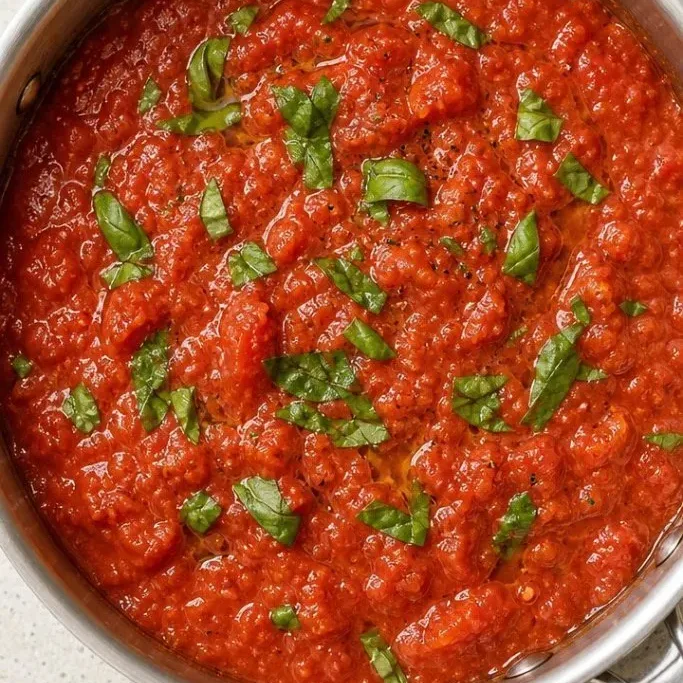
I keep a can of San Marzano tomatoes in the pantry just for this sauce. The garlic gets gently toasted in olive oil, the tomatoes break down as they simmer, and a few fresh basil leaves brighten everything up at the end. It’s simple, but it’s also the only red sauce you’ll need for pasta night from now on.
Why This Sauce Works
It starts with good canned tomatoes, which carry most of the flavor. San Marzano tomatoes are naturally sweet and low in acid, so the sauce needs barely any adjustment.
The garlic is sliced thin, not minced, so it infuses the oil without burning. And fresh basil is added at the end, just long enough to release its perfume. The result is a sauce that’s bright, slightly sweet from the tomatoes, and far more complex than its five ingredients suggest.
Ingredients
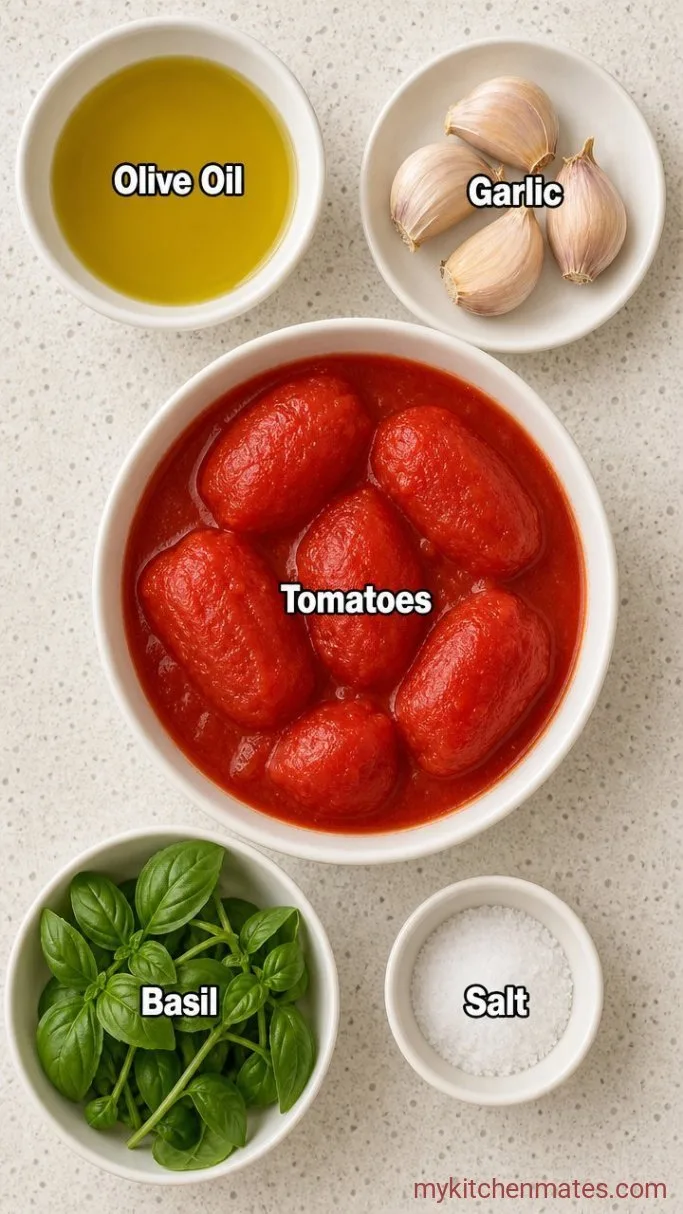
- 2 tbsp olive oil: extra-virgin for the best flavor
- 4 cloves garlic: thinly sliced, not minced, to keep its presence gentle
- 1 (28-ounce) can whole peeled tomatoes: San Marzano if you can, they’re the sweetest
- 4 to 5 fresh basil sprigs: leaves and tender stems
- 1 tsp kosher salt: plus more to taste
Variations
- Spicy Arrabbiata style: add a generous pinch of red pepper flakes with the garlic.
- Sweeter, onion-forward version: sweat 1/2 a diced yellow onion in the oil before adding the garlic.
- No fresh basil: use 1 tsp dried oregano stirred in early, or a handful of chopped fresh parsley right before serving.
- Add protein: brown a couple of Italian sausages first, then build the sauce around them.
Garlicky Eggplant Tofu is one of our favorite ways to use this sauce.
How To Make Pomodoro Sauce
Step 1: Toast the Garlic
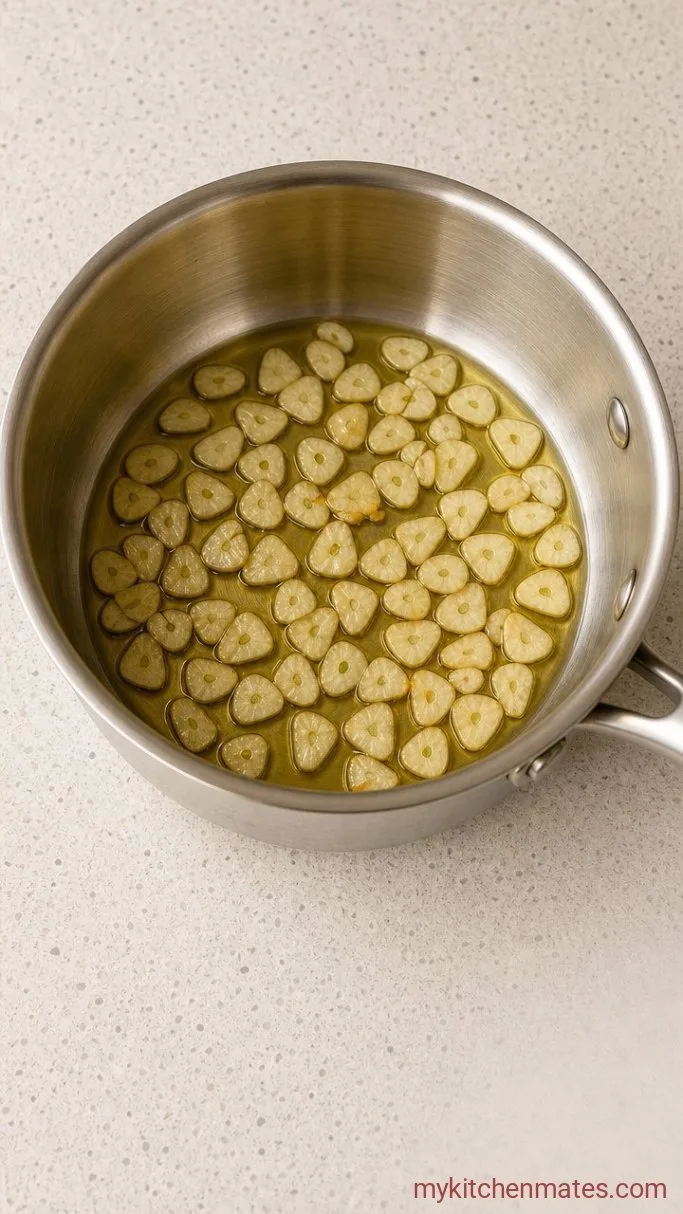
Pour the 2 tablespoons olive oil into a cold medium saucepan. Add the 4 thinly sliced garlic cloves and set the pan over medium heat. Cook, stirring often, for about 3 minutes, just until the garlic smells sweet and the edges are barely golden. Tip in the 28-ounce can of whole peeled tomatoes along with all their juices, then stir once to combine.
Step 2: Simmer the Sauce
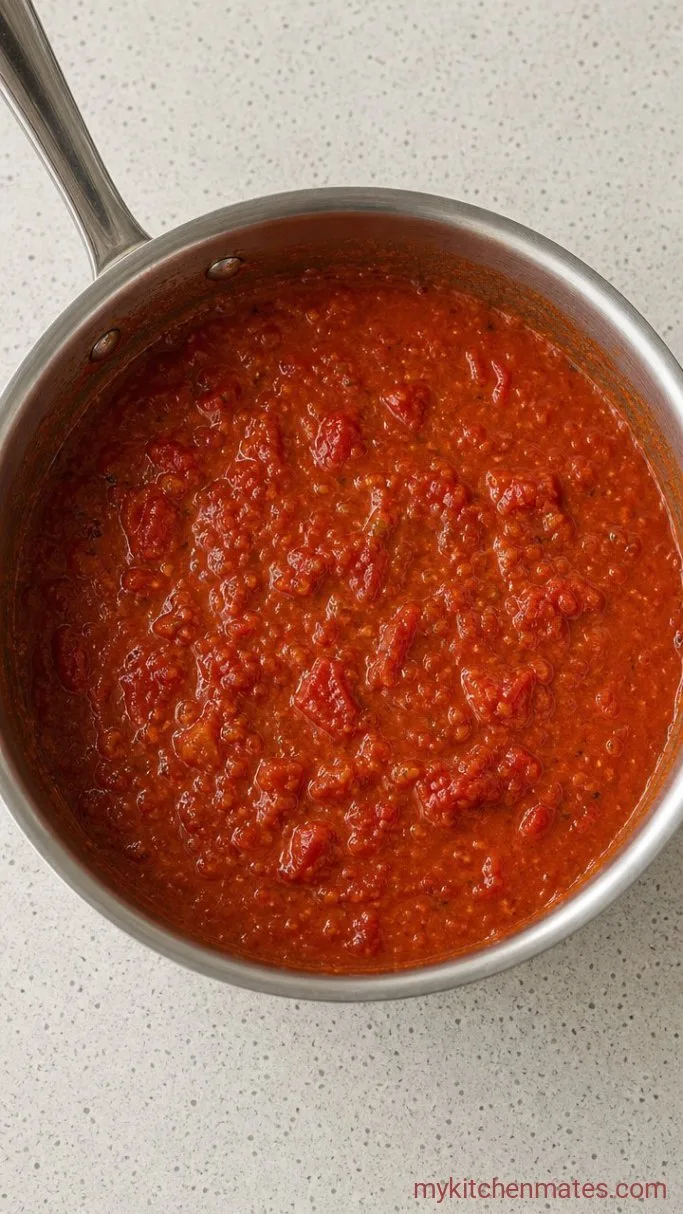
Bring the sauce to a lively simmer, then reduce the heat to low so the liquid bubbles gently. Use the back of a wooden spoon to crush the tomatoes against the side of the pot, breaking them into irregular chunks. Don’t break them up completely, a little texture is good. Let it simmer uncovered for 25 to 30 minutes, stirring occasionally, until the tomatoes have melted into a thick, glossy sauce and small pools of oil float on top.
You’ll know it’s ready when the sauce coats the back of a spoon and the edges turn a deep brick red. If it still tastes sharp or tinny, let it go another 5 minutes. The extra time melts away any raw canned flavor and deepens the sweetness.
Step 3: Finish with Basil
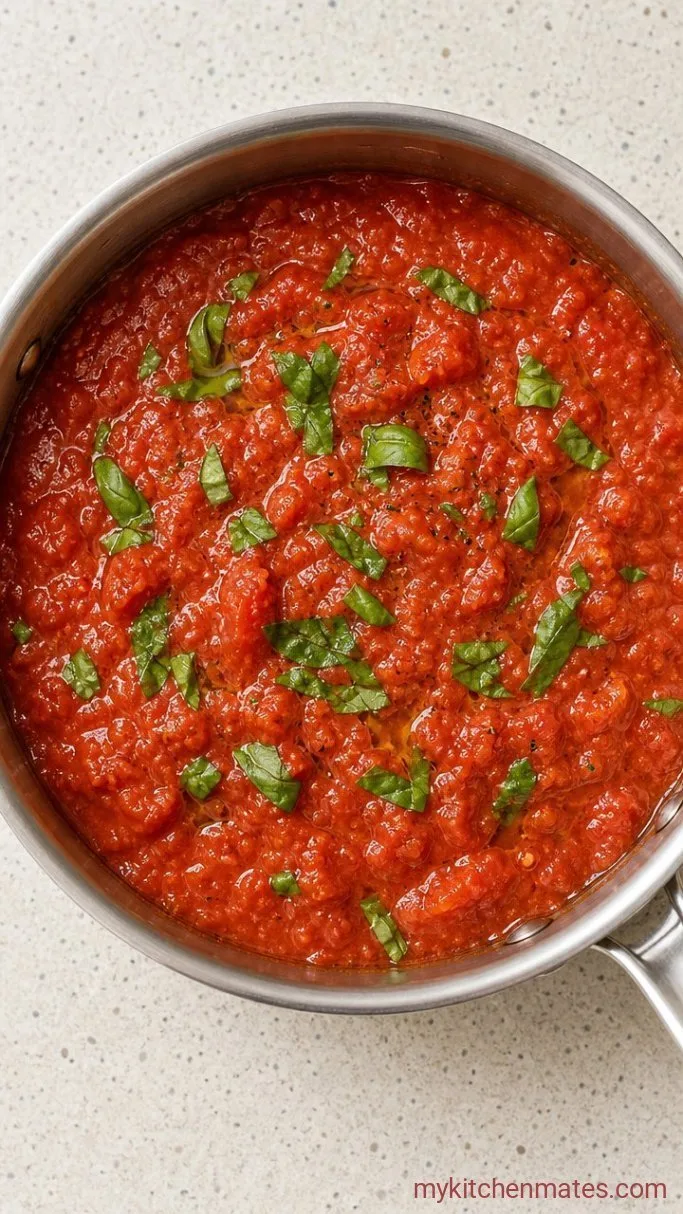
Remove the pan from the heat. Tear the 4 to 5 fresh basil sprigs into the sauce and stir them in. Let the basil sit in the hot sauce for one minute to wilt and release its perfume, then taste and add up to the 1 teaspoon kosher salt, starting with half that amount if your canned tomatoes already contained salt. Serve right away over pasta, or let it cool slightly before storing.
Tips for the Best Pomodoro Sauce
- Use whole peeled tomatoes, not crushed. Crushed tomatoes often include a thick puree that makes the sauce pasty. Whole tomatoes let you control the texture and keep the flavor bright.
- Simmer the sauce uncovered so excess water can evaporate. A lid traps steam and leaves you with a thin sauce.
- Crush the tomatoes early, then mostly leave them alone. Over-stirring later breaks them down into a muddy texture. Gentle spooning now and then is all you need.
Storing Leftover Sauce
- Refrigerate: store in an airtight container for up to 5 days. The flavor deepens overnight.
- Freeze: pour cooled sauce into a freezer-safe bag or container, leaving a little headspace. It freezes well for up to 3 months. Thaw in the fridge overnight.
- Reheating: warm gently in a saucepan over low heat, adding a splash of water if it’s too thick. Fresh basil loses its brightness after cooling, so stir in a few new torn leaves if you have them.
What To Serve With Pomodoro Sauce
Long, wide pasta shapes like pappardelle, fettuccine, or rigatoni cradle the chunky sauce best. A little starchy pasta water stirred in at the end helps it cling. Spooned over a seared chicken breast or grilled eggplant, it turns a simple protein into a full dish. Spread it thinly on pizza dough, top with fresh mozzarella, and you have a quick Margherita pizza that tastes like a wood-oven weekend.
Frequently Asked Questions
Can I use fresh tomatoes instead of canned?
Yes, but only when tomatoes are at their summer peak. You’ll need about 2 pounds, peeled, seeded, and roughly chopped. The sauce will be slightly thinner and may need a few extra minutes of simmering.
My sauce turned out too acidic. How do I fix it?
Some canned tomatoes are more acidic than others. Stir in a tiny pinch of sugar, no more than 1/2 teaspoon, or a small pat of butter right at the end. Taste before adding more salt, too, since salt can make acidity more noticeable.
Can I make this sauce ahead of time?
Absolutely. It tastes even better the next day. Just cool and refrigerate, then reheat gently on the stove.
I don’t have fresh basil. What else can I use?
A teaspoon of dried oregano or a couple of dried bay leaves added early work well. For a fresh note without basil, a sprinkle of chopped fresh parsley right before serving gives a similar pop of green.
Pomodoro Sauce Recipe
Ingredients
Method
- Pour olive oil into a cold saucepan. Add sliced garlic, set over medium heat, and cook until fragrant and lightly golden, about 3 minutes. Pour in the canned tomatoes with their juices.
- Bring to a simmer, then reduce heat to low. Use a wooden spoon to crush the tomatoes into chunky pieces. Simmer uncovered for 25 to 30 minutes, stirring occasionally, until thick and glossy.
- Remove from heat. Tear in fresh basil leaves and stir. Let sit 1 minute, then season with salt to taste. Serve warm.
Notes
