
Quick & Creamy Penne Carbonara (No Cream Needed)

Penne carbonara is the kind of weeknight pasta that feels like a special occasion, with a silky egg-and-cheese sauce that coats every tube without a drop of cream.
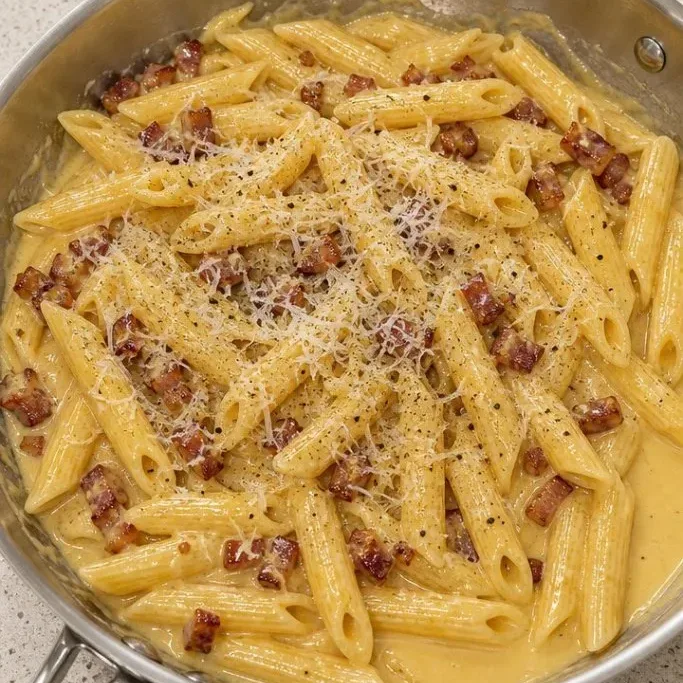
A tangle of al dente penne, crispy pancetta, and plenty of black pepper. It’s rich but never heavy, and ready before the table’s even set.
Why This Carbonara Works
The sauce comes together entirely from hot pasta water and eggs. No roux, no heavy cream, just a glossy emulsion that clings to every ridge of the penne. That simplicity means the flavor of good pancetta and sharp pecorino really shines.
I love that it uses five core ingredients and feels like a restaurant dish. The salty, crisp pancetta and the kick of black pepper do all the heavy lifting. It’s the pasta I turn to when I want something satisfying that doesn’t leave me in a food coma.
Ingredients
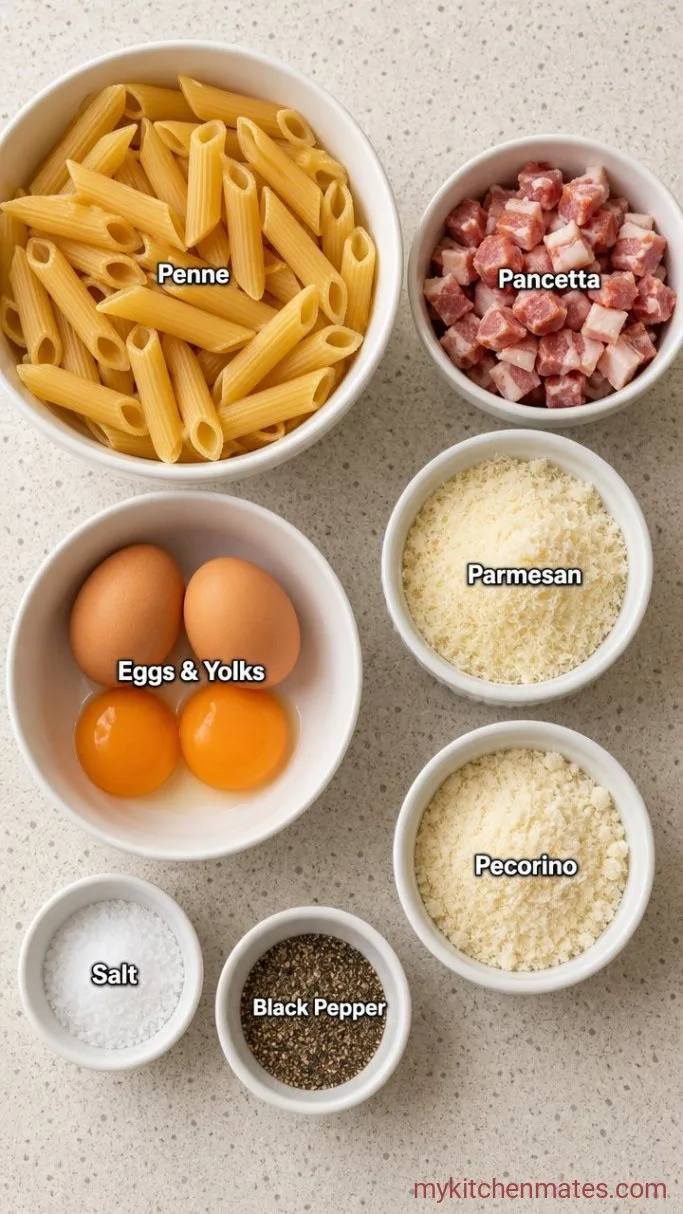
- 1 lb penne rigate: ridged ones grip the sauce better
- 6 oz pancetta, diced small: guanciale works too if you can find it
- 3 large eggs plus 2 egg yolks, at room temperature: cold eggs can shock the sauce and make it grainy
- 1 cup finely grated Parmesan: grate it yourself on a microplane or the small holes of a box grater
- 1/2 cup finely grated Pecorino Romano: adds the classic sharp, salty punch
- 1 1/2 tsp freshly cracked black pepper: pre-ground lacks the same heat
- Kosher salt: for the pasta water
Variations / Substitutions
- Bacon instead of pancetta: use thick-cut bacon and blot some of the rendered fat if it’s too smoky. The sauce will taste richer and a little sweeter.
- All Parmesan: if Pecorino is too strong, use 1 1/2 cups total Parmesan. You’ll lose some sharpness but the creaminess stays.
- Less pepper: dial back to 3/4 teaspoon if you prefer a milder kick. You can always add more at the table.
Real Carbonara Sauce is the sauce we like to serve with this recipe.
How to Make Penne Carbonara
Step 1: Boil the Penne
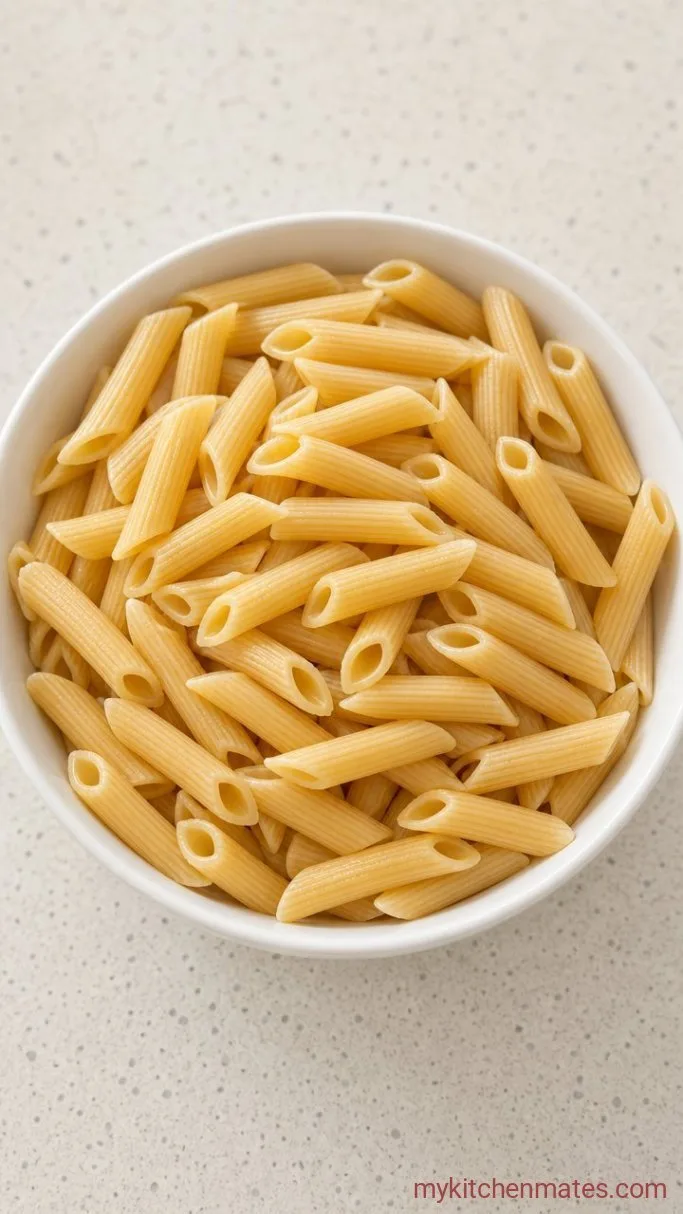
Bring a large pot of water to a rolling boil and add 2 tablespoons of kosher salt. Drop in the 1 pound of penne and cook it 1 minute less than the package says for al dente. Before you drain, scoop out a full cup of the starchy pasta water and set it aside.
The pasta will look slightly underdone in the center. That’s perfect because it finishes cooking in the sauce without turning mushy. The reserved water is the liquid gold that makes the sauce silky, so don’t forget it.
Step 2: Crisp the Pancetta
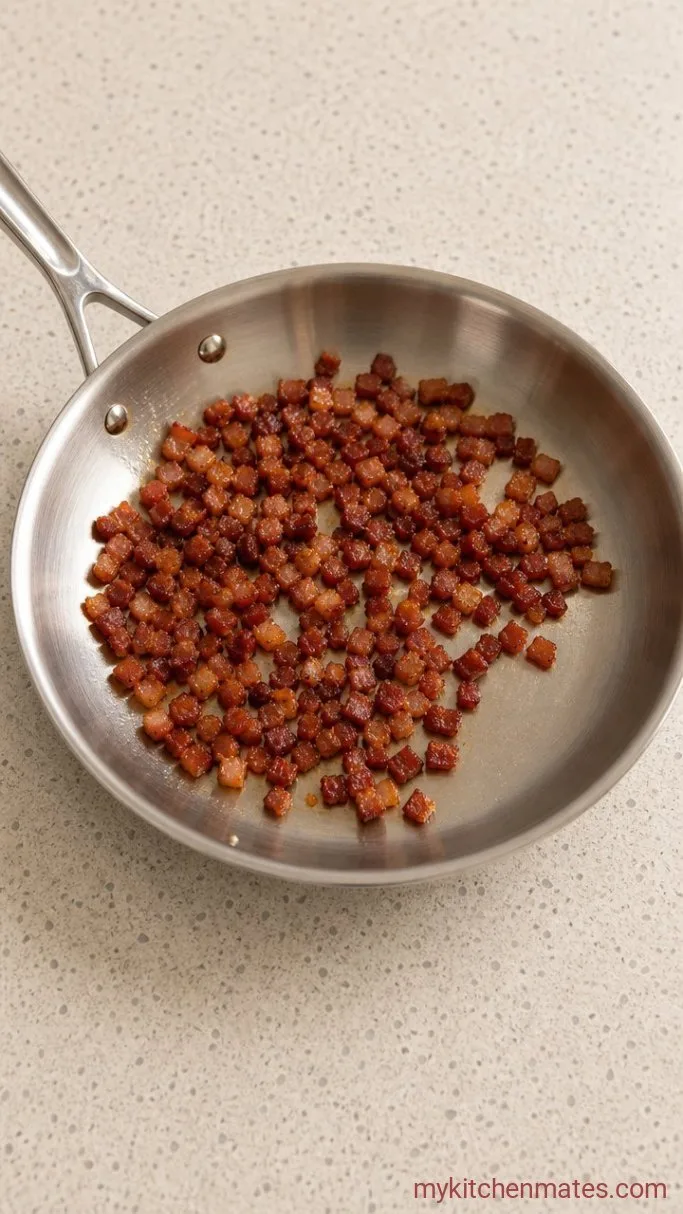
Set a large skillet over medium heat and add the 6 ounces of diced pancetta. Cook, stirring every now and then, until the pieces turn deep golden and the fat renders out completely, about 5 to 7 minutes. Take the skillet off the heat and leave the rendered fat right in the pan.
You’ll hear the sizzle quiet down as the water cooks off and the fat takes over. The pancetta should be crisp at the edges but still have a little chew. Leaving the drippings in the skillet builds the foundation of the sauce.
Step 3: Whisk the Egg Mixture
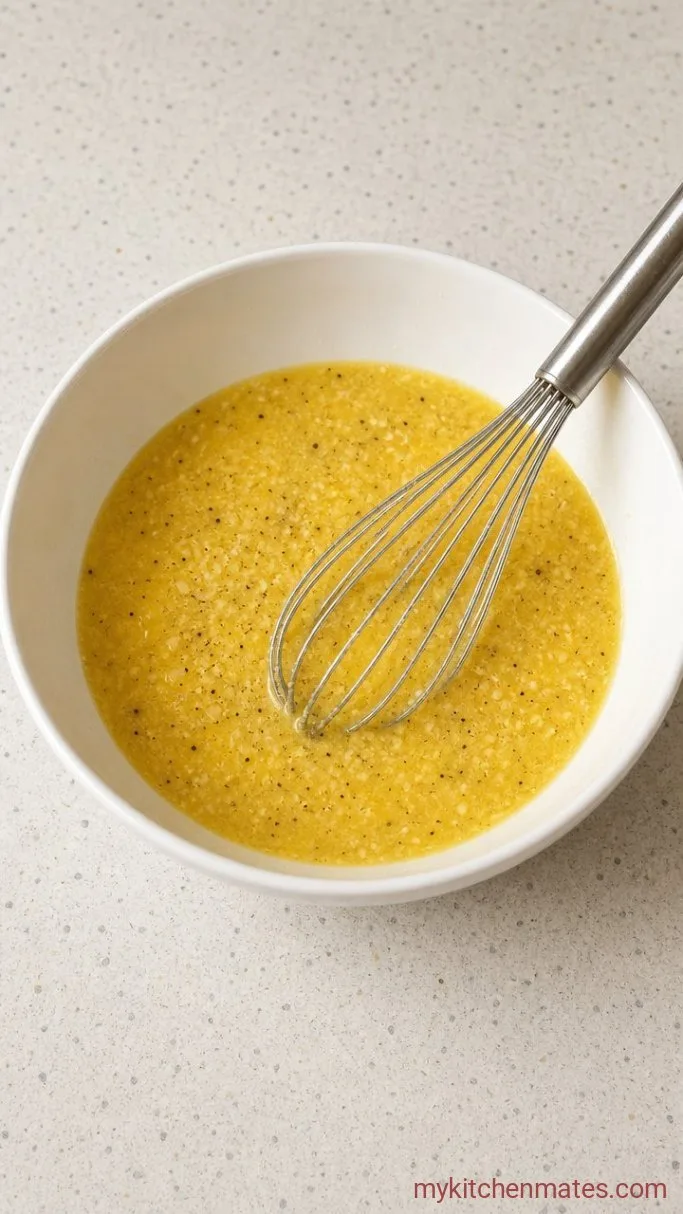
In a medium bowl, whisk together the 3 room-temperature eggs, the 2 egg yolks, 1 cup grated Parmesan, 1/2 cup Pecorino Romano, and the 1 1/2 teaspoons black pepper. Keep whisking until the mixture is a uniform, pale yellow paste with no streaks of cheese.
It will look thick and almost dry at first, like a stiff batter. That’s exactly how it should be. The hot pasta water will thin it into a smooth, pourable sauce later, so don’t be tempted to add liquid now.
Step 4: Toss and Serve
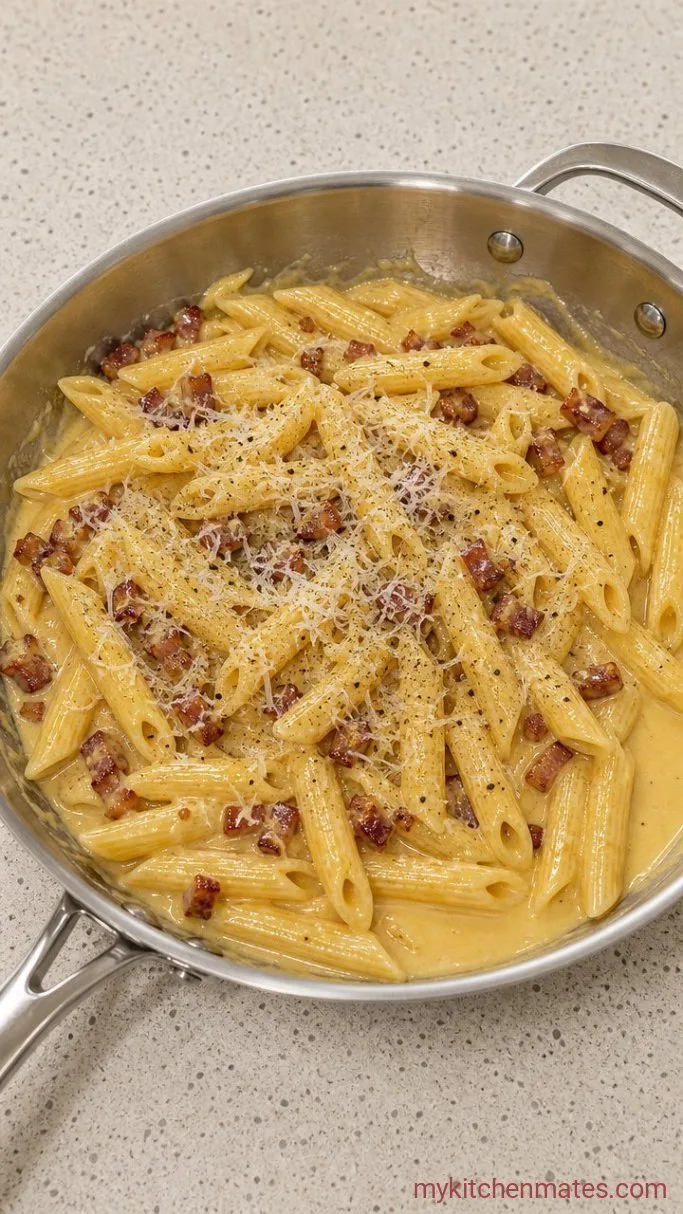
Tip the drained penne straight into the skillet with the pancetta and its fat. Toss everything together off the heat so the pasta is well coated and the residual warmth starts to drop a bit. Count to 30 slowly, then pour the egg mixture over the pasta and toss vigorously with tongs while splashing in the reserved pasta water, a few tablespoons at a time, until the sauce turns glossy and creamy and clings to every piece.
You’ll see the sauce go from a pale paste to a silky, golden film that moves with the pasta. The steam from the hot pasta cooks the eggs just enough to form a smooth sauce without scrambling. Serve immediately while it’s still loose and warm.
Tips for a Silky Carbonara
- Grate the cheese on the finest holes of a box grater or a microplane. Larger shreds don’t melt into the egg mixture cleanly and can leave a grainy texture.
- Don’t rinse the pasta after draining. The starch on the surface helps the sauce cling, and rinsing strips away the heat you need to cook the eggs.
- If the sauce tightens up too fast, splash in another tablespoon of the hot pasta water and keep tossing. The emulsion loosens right back up.
- Assemble everything right at the stove. Have the drained pasta, egg mixture, and reserved water within arm’s reach before you start the final toss so you never lose the heat.
Keeping Leftover Carbonara
- Refrigerate: store leftovers in an airtight container for up to 2 days. The sauce will thicken as it chills.
- Reheat: warm it gently in a skillet over low heat with a splash of water. Toss constantly to bring back some of the creaminess. The sauce may separate a little, but it still tastes good.
What to Serve with Penne Carbonara
A crisp green salad with a lemon vinaigrette cuts through the richness without stealing the spotlight. In spring, roasted asparagus with a squeeze of lemon and a pinch of salt makes a bright, simple side that echoes the dish’s sharp notes.
Frequently Asked Questions
My sauce turned out thick and pasty. What went wrong?
You likely didn’t add enough pasta water. Whisk in an extra tablespoon or two at a time until it loosens into a glossy coating.
Is it safe to eat pasta with raw eggs?
Yes, the residual heat from the just-drained pasta and the hot skillet cooks the eggs to a safe temperature, similar to a gentle custard. If you’re concerned, use pasteurized eggs.
Can I use a different pasta shape?
Definitely. Rigatoni and bucatini hold the sauce just as well. Spaghetti is the classic choice, but the twirl is a little messier.
Penne Carbonara Recipe
Ingredients
Method
- Boil penne in heavily salted water until 1 minute short of al dente. Reserve 1 cup pasta water, then drain.
- Cook pancetta in a large skillet over medium heat until crisp and golden, 5 to 7 minutes. Remove from heat, keeping the fat in the pan.
- Whisk eggs, yolks, both cheeses, and black pepper until a thick paste forms.
- Add drained pasta to the skillet and toss off heat. Wait 30 seconds, then pour the egg mixture over and toss vigorously, adding pasta water a little at a time until the sauce is glossy and creamy. Serve immediately.
Notes
