
15-Minute Crispy Panko Crusted Salmon

A quick salmon dinner with a crunchy golden crust that holds together and hits the table fast. This is the kind of no-fuss weeknight meal that feels a little special without any extra work.
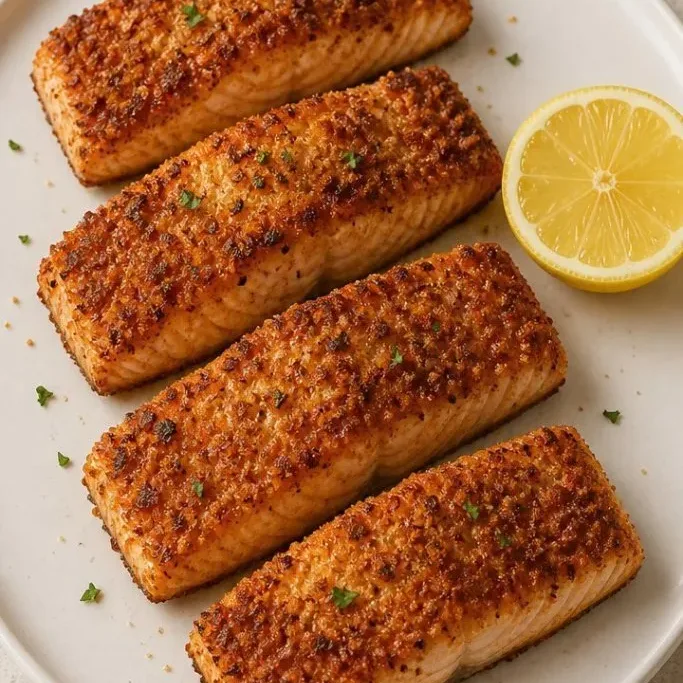
What Makes This Salmon So Reliable
The Dijon mustard does two things at once. It acts like glue so the panko stays put, and it seasons the fish with a gentle tang that cuts through the richness.
The panko comes out genuinely crisp, not just toasted. A light drizzle of olive oil on top turns it golden and crackly in the time it takes the salmon to cook through.
Ingredients
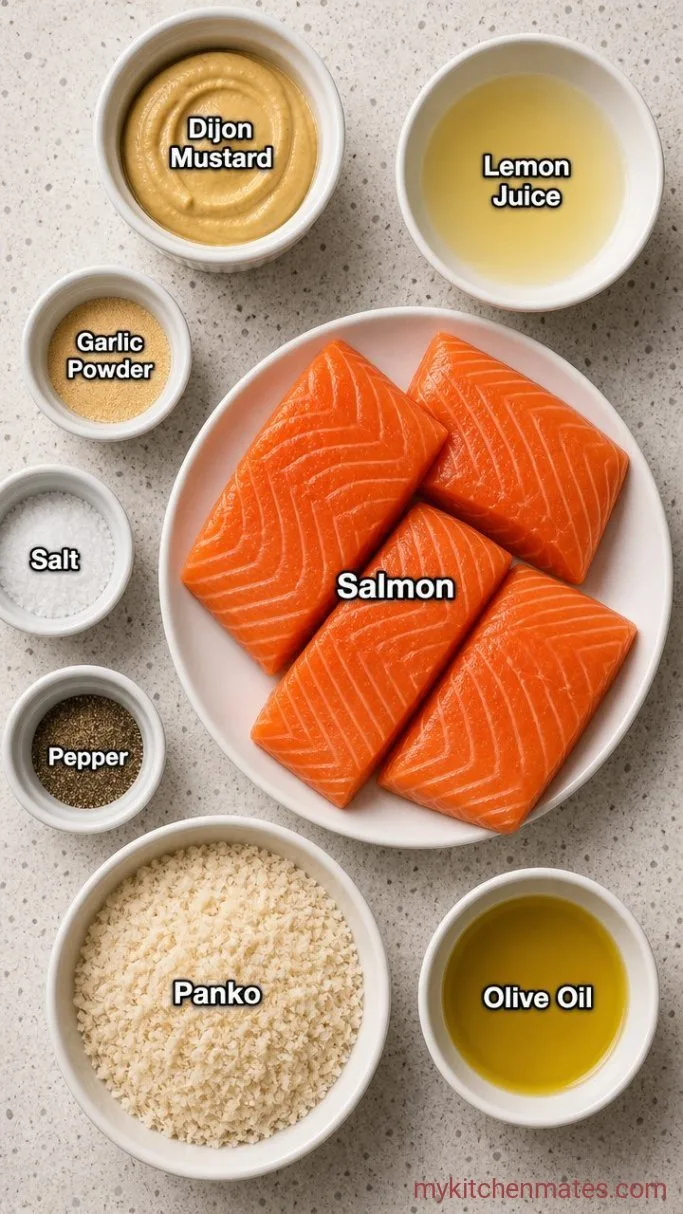
- 4 skinless salmon fillets, 6 oz each: center-cut pieces cook most evenly
- 3 tbsp Dijon mustard: smooth or whole-grain both work
- 1 tbsp lemon juice: fresh brings brightness, bottled is fine
- 1/2 tsp garlic powder: rounds out the mustard without overpowering
- Salt and freshly ground black pepper: season the mustard mix, not the fish directly
- 1/2 cup panko breadcrumbs: the plain, unseasoned kind
- 1 tbsp olive oil: for drizzling over the panko before baking
Variations / Substitutions
- Mustard swap: use an equal amount of mayonnaise for a milder, slightly sweeter crust
- Add Parmesan: stir 2 tbsp finely grated Parmesan into the panko for a cheesy, extra-crunchy top
- Fresh herbs: chopped dill or chives folded into the mustard mix add a fresh note
- Different fish: Arctic char and thick halibut fillets work well here; adjust the bake time a minute or two based on thickness
- Gluten-free: use gluten-free panko; the technique stays the same
Spicy Tuna Rice Bowl is another dinner you’d probably love if you enjoy this salmon.
How to Make Panko Crusted Salmon
Step 1: Coat the Salmon With Mustard
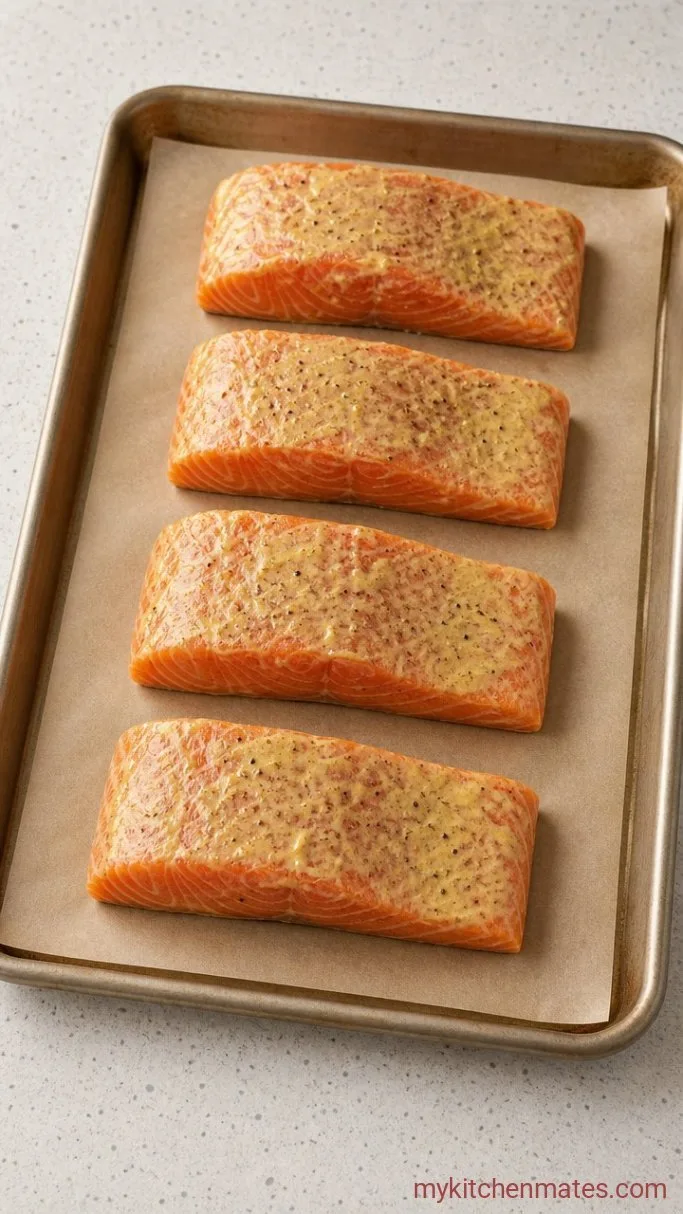
Preheat your oven to 400°F (200°C). In a small bowl, stir together the Dijon mustard, lemon juice, garlic powder, and a pinch each of salt and pepper. Set the salmon fillets on a parchment-lined baking sheet and spread the mustard mixture evenly over the top and sides of every piece.
The coating should be a thin, even layer, not a thick slab. A silicone brush makes it easy, but the back of a spoon works too.
Step 2: Press the Panko Onto the Fish
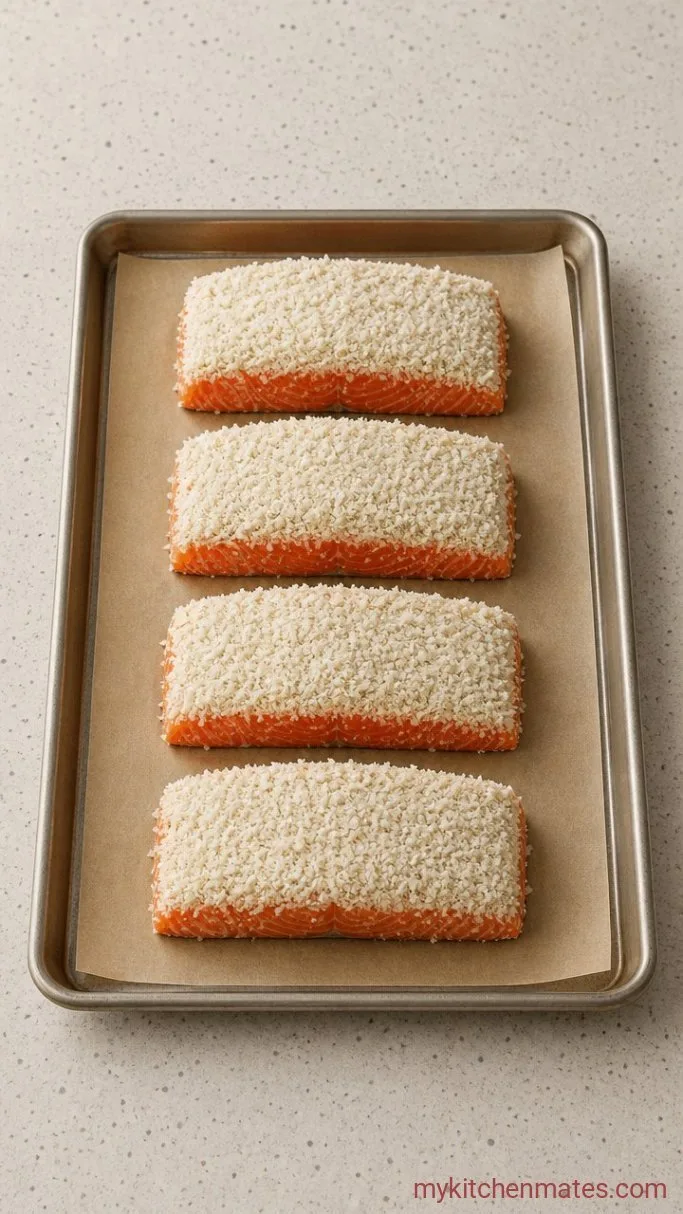
Sprinkle the panko breadcrumbs generously over the mustard-coated surfaces. Use your fingers to gently press the crumbs into the mustard so they stick in an even blanket. Drizzle the 1 tbsp olive oil across the panko, aiming for a light coat on most of the crumbs.
The panko will still look dry and pale at this point, which is exactly right. The oil is what turns it golden in the oven, so don’t skip it.
Step 3: Bake the Salmon
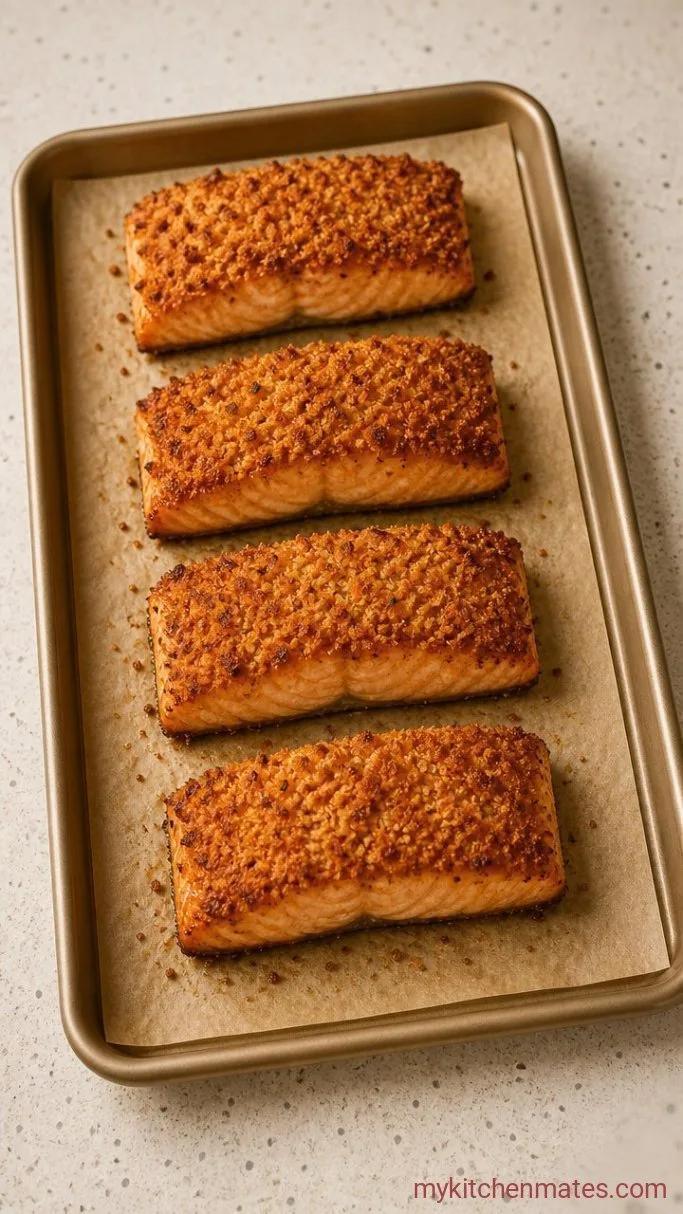
Slide the baking sheet into the oven and bake for 10 to 12 minutes. Check at 10 minutes: the salmon should flake easily when you press it with a fork, and the center should still look moist. The panko will be a deep golden brown.
Thicker fillets may need an extra minute or two. Trust the fork test over the clock; salmon goes from tender to dry quickly, so pull it as soon as it flakes.
Step 4: Serve With a Squeeze of Lemon
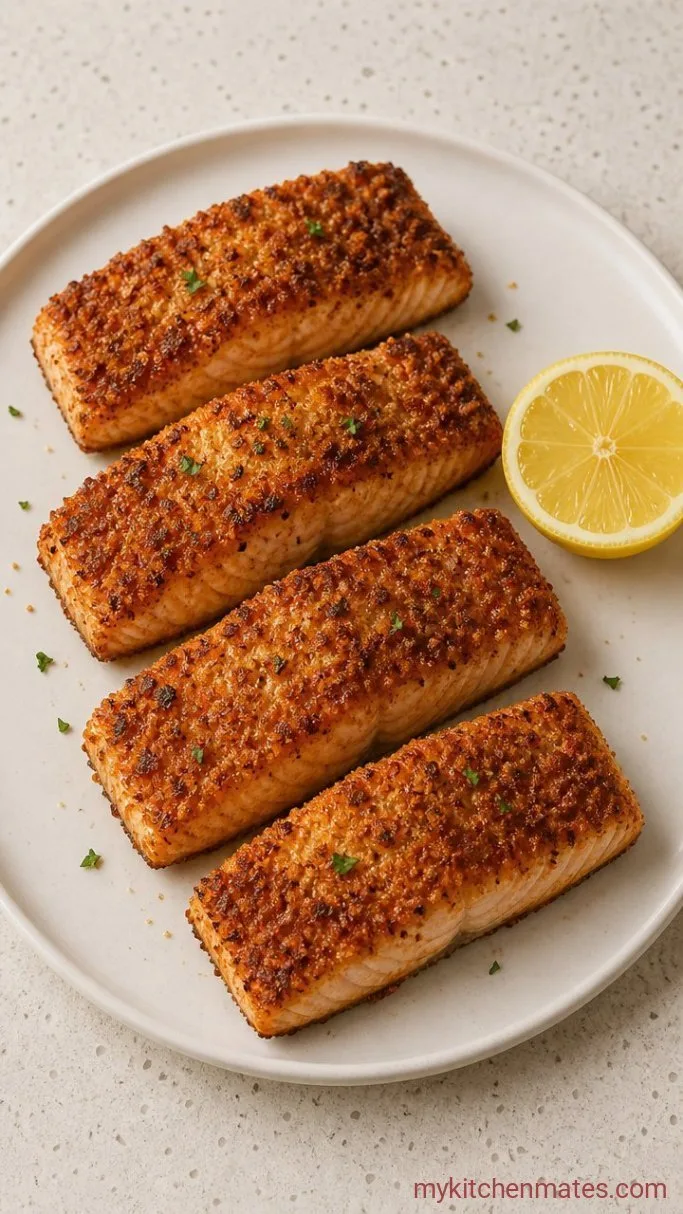
Transfer the salmon to plates and serve right away while the crust is crisp. Finish each fillet with a wedge of lemon for squeezing over the top. A few chopped fresh parsley or chives adds a little color and freshness.
A Few Tips for the Crispiest Crust
- Choose fillets that are close in size so they finish at the same time. If one is significantly thicker, give it a 2-minute head start in the oven before adding the others.
- For an extra-crunchy top, pop the baked salmon under the broiler for 1 minute at the very end, watching closely so the panko doesn’t burn.
- Leftover salmon is great cold on a salad or flaked into a grain bowl the next day.
Bake times by fillet thickness:
| Fillet thickness | Bake time at 400°F |
|---|---|
| 1 inch | 10 to 12 minutes |
| 1.5 inches | 13 to 15 minutes |
| 2 inches | 16 to 19 minutes |
Storing Leftovers
- Refrigerate: store in an airtight container for up to 3 days. The panko will soften, but it still tastes good.
- Reheating: warm in a 350°F oven or toaster oven for 5 to 7 minutes to bring back some of the crunch. A skillet over medium heat with a lid works too.
What to Serve With Panko Crusted Salmon
A simple lemony arugula salad cuts the richness, and roasted asparagus or green beans cook on a second sheet pan at the same temperature. For something more filling, spoon the salmon over steamed jasmine rice or couscous so the pan juices soak in.
Frequently Asked Questions
Can I use regular breadcrumbs instead of panko?
Yes, but the crust will be less crispy. Panko flakes are larger and drier, so they brown faster and stay crunchier.
What if I don’t have Dijon mustard?
Use an equal amount of mayonnaise or plain Greek yogurt mixed with a pinch of dry mustard powder. The taste will be milder but the crust will still hold.
How do I keep the panko from falling off?
Press it on firmly and make sure the mustard layer is sticky, not dry. A light drizzle of oil helps the crumbs fuse together in the oven.
Can I cook this in an air fryer?
Yes. Cook at 380°F for about 8 to 10 minutes, depending on fillet thickness, until the salmon flakes and the panko is golden. No preheating needed.
Panko Crusted Salmon Recipe
Ingredients
Method
- Preheat oven to 400°F (200°C). Mix the mustard, lemon juice, garlic powder, salt, and pepper, then spread over the tops and sides of the salmon on a parchment-lined sheet.
- Press the panko onto the mustard-coated salmon. Drizzle the olive oil over the crumbs.
- Bake for 10 to 12 minutes, until the salmon flakes easily and the panko is deeply golden.
- Serve immediately with lemon wedges and fresh herbs.
Notes
