
Flavorful Nigerian Vegetable Soup (Edikang Ikong)

This Nigerian vegetable soup, often called Edikang Ikong, is a deeply savory, palm oil-laced stew of leafy greens, tender meats, and dried fish. It’s the kind of meal that fills the kitchen with an aroma you can almost taste before the first spoonful.
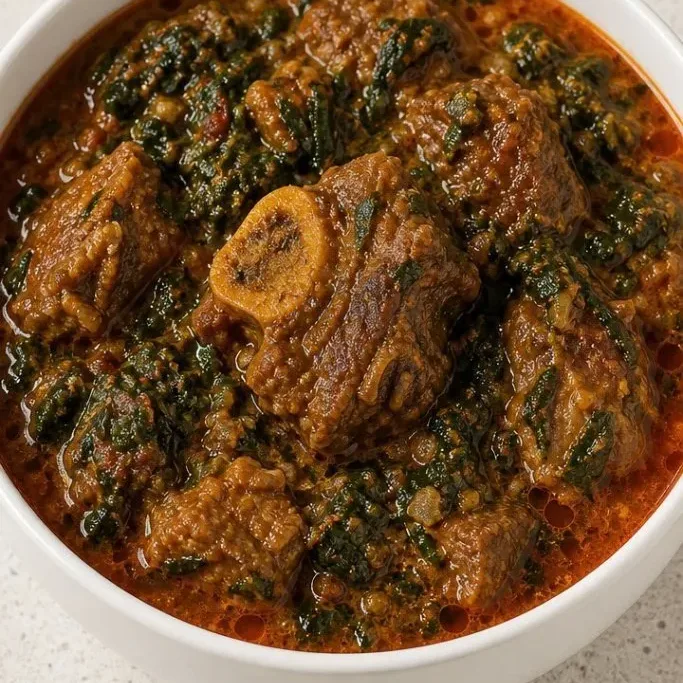
It comes together in one pot and tastes even better the next day. If you’ve been looking for a true taste of Nigerian home cooking that’s hearty without being heavy, this is it.
What Makes This Nigerian Vegetable Soup So Good
The mix of two leafy greens gives it a texture that’s part silky, part hearty. Ugu leaves soften into tender ribbons while waterleaf adds a juicy bite, and the palm oil ties everything together with a rich, earthy sweetness.
It’s also flexible. You can use whatever proteins you have on hand and swap the greens if you need to, but the base flavor stays bold and deeply satisfying.
Ingredients
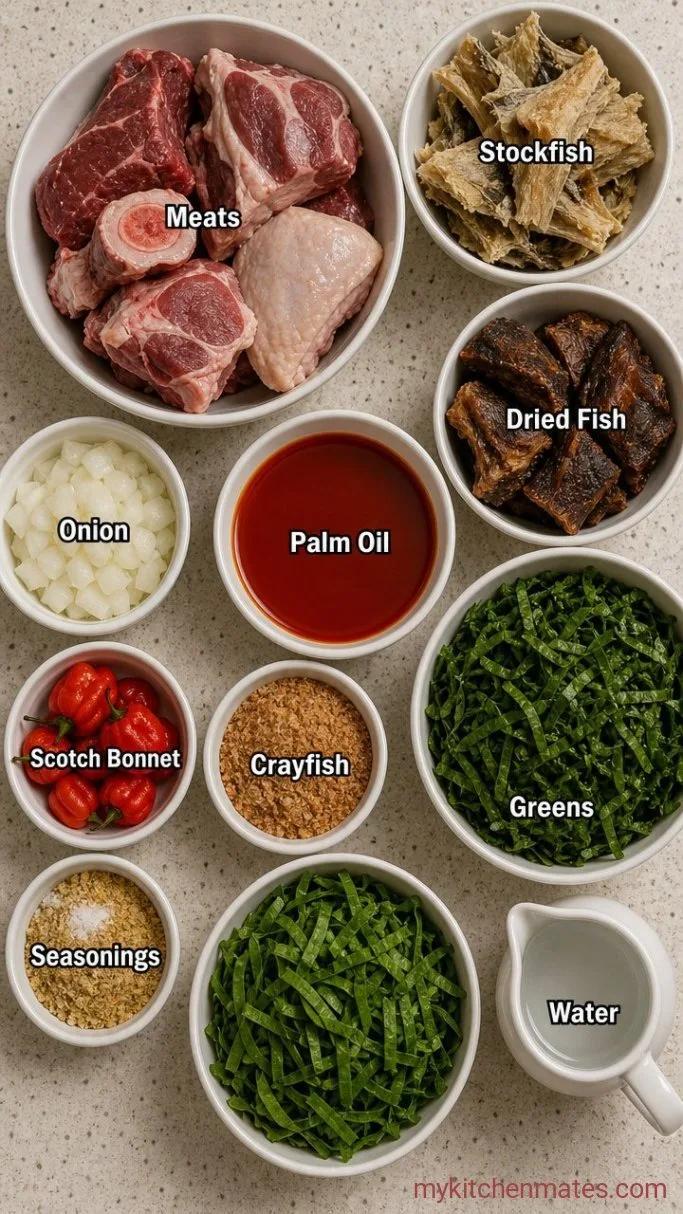
- 500g assorted meats (goat, beef, or chicken): bone-in pieces add the deepest flavor.
- 100g stockfish, soaked and cleaned: dried cod that brings a unique umami.
- 50g dried fish (optional), deboned: smoked catfish or any firm dried fish works well.
- 1 medium onion, chopped: half goes into the meat stock, half into the soup.
- 3 Scotch bonnet peppers, blended or chopped: adjust to suit your heat preference.
- 3 tbsp ground crayfish: the essential nutty seasoning.
- 2 bouillon cubes (or 2 tsp powder): I use Maggi or Knorr.
- 1 tsp salt: plus more to taste.
- 200 ml palm oil: the deep orange-red variety, not bleached.
- 300g ugu leaves (fluted pumpkin), sliced: substitute fresh spinach or kale if needed.
- 200g waterleaf (talinum triangulare), sliced: substitute lamb’s lettuce or more spinach.
- Water, as needed: about 4 cups to cook the meat and form the broth.
Variations / Substitutions
- Protein: Use only beef, or add cow tripe (shaki) for extra chew.
- Greens: If waterleaf is not available, double the ugu or use all spinach. The texture will be softer but still tasty.
- Heat: Reduce Scotch bonnet to one pepper for mild heat, or add more for a fiery kick.
- Dairy-free: This is naturally dairy-free, no swaps needed.
- Palm oil: For a lighter version, use half palm oil and half vegetable oil, but the signature color and taste will be less intense.
Sourdough Croissant Bread goes great with this soup for soaking up every last bite.
How To Make Nigerian Vegetable Soup
Step 1: Simmer the Meats
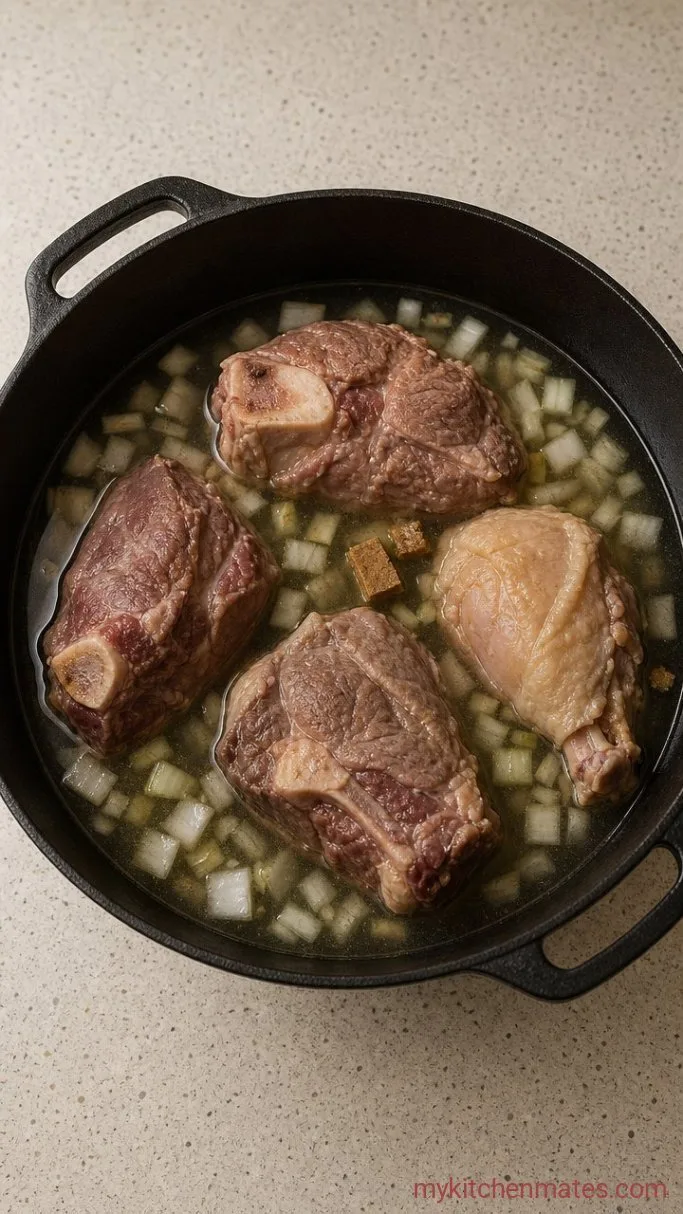
Place the 500g assorted meats, half of the chopped onion, 1 bouillon cube, and 1/2 tsp salt in a large pot. Pour in about 4 cups of water, enough to cover the meat by an inch. Bring to a rolling boil over high heat, then reduce the heat to medium-low, cover, and simmer for 30 to 40 minutes until the meat is fork-tender. Top up with a splash of water if it reduces too much.
You’ll know it’s ready when the broth has taken on a rich, meaty scent and the meat pulls apart with little resistance. If using tough cuts like cow foot or shaki, give them an extra 15 minutes before adding the other meats.
Step 2: Sauté the Aromatics
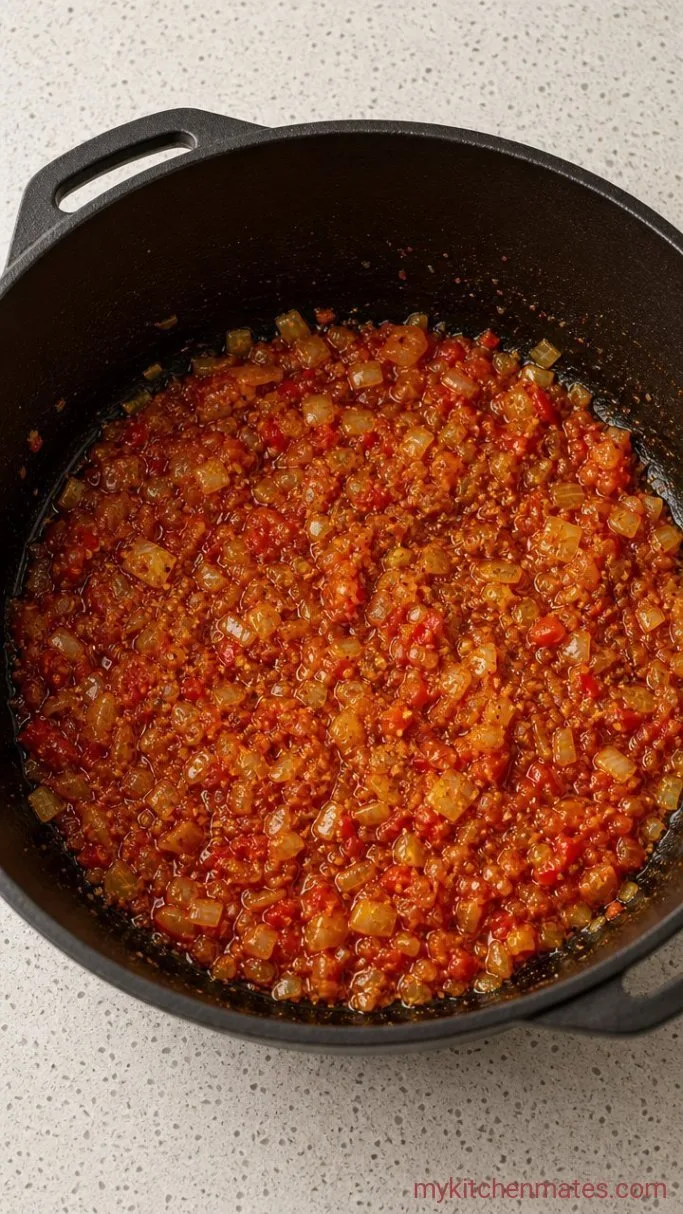
While the meat simmers, heat the 200ml palm oil in a separate large, deep pot over medium heat. Once the oil shimmers but isn’t smoking, add the remaining chopped onion and the blended Scotch bonnet peppers. Cook for about 5 minutes, stirring often, until the onion turns translucent and the air smells sweet and peppery.
At this point, add the soaked stockfish and deboned dried fish. Stir them through the oil for another 2 minutes until the fish takes on a slightly golden color. The oil will turn a deeper orange and start to smell smoky, which is exactly what you want.
Step 3: Combine the Meat and Seasonings

Carefully pour the simmered meat and all its broth into the pot with the aromatic oil base. Bring the mixture to a gentle boil, then add the second bouillon cube and the 3 tbsp ground crayfish. Let it bubble for about 3 to 4 minutes to let the crayfish dissolve and thicken the broth slightly.
Taste the broth at this stage. It should be salty, umami-rich, and carry that subtle nuttiness from the crayfish. Add more salt or bouillon if it tastes flat. The base should be quite bold because the greens will mellow it out.
Step 4: Wilt the Greens
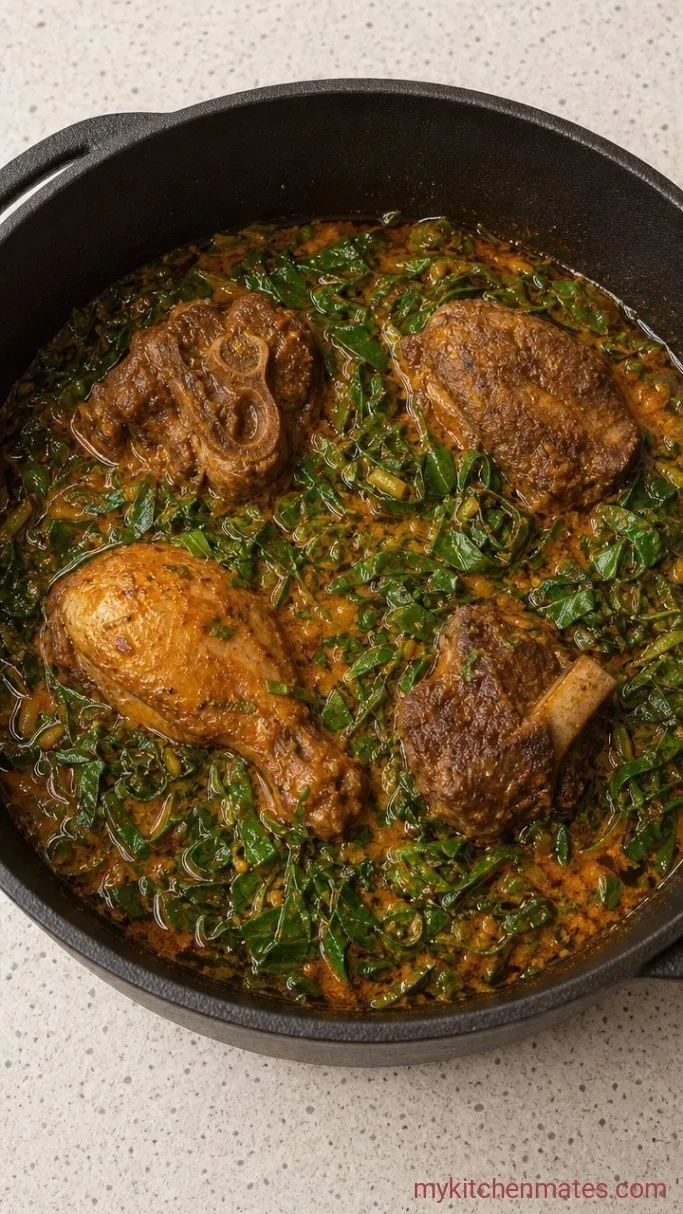
Add the 300g sliced ugu leaves and 200g waterleaf in handfuls, stirring them into the hot broth. They will wilt down almost immediately. Work in batches if your pot feels crowded. After the last handful goes in, let the soup simmer uncovered for about 2 to 3 minutes, just until the greens are fully tender but still bright green.
Don’t overcook the greens or they’ll turn olive-brown and lose their fresh bite. As soon as they collapse, turn off the heat. The palm oil will float to the top in glossy pools, a sign you’ve got it right.
Step 5: Ladle Into Bowls
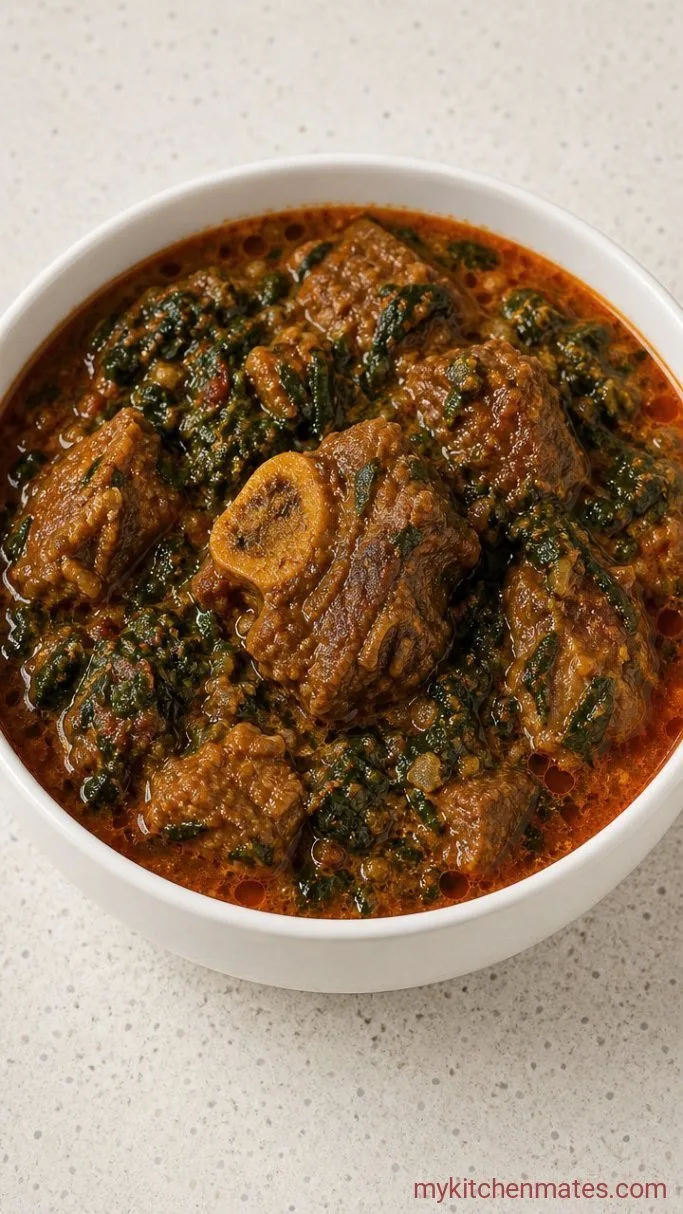
Ladle the soup into wide bowls, making sure each serving gets a mix of meat, fish, and glossy greens. Serve it piping hot with pounded yam, fufu, eba, or even a side of fluffy rice if you prefer.
Finish with an extra pinch of ground crayfish on top if you like it nuttier. The soup keeps beautifully and the flavors only get deeper overnight.
Tips for the Best Nigerian Vegetable Soup
- Soak the stockfish overnight: This softens it fully and removes excess salt. Change the water at least once.
- Use unbleached red palm oil: The deep color and earthy taste are what make the soup. Refined or bleached palm oil will leave it bland.
- Don’t cover the pot after adding greens: Covering traps steam and turns the greens olive-brown. Keep the pot uncovered to preserve the bright green color.
- If using spinach, squeeze it dry: Fresh spinach holds a lot of water. After slicing, gently squeeze out excess moisture so the soup doesn’t thin out.
Simmer times for different cuts of meat:
| Meat / Cut | Simmer Time (mins) |
|---|---|
| Beef (chunk) | 30-40 |
| Goat meat | 35-45 |
| Tripe (shaki) | 45-55 |
| Cow foot | 60+ |
Storing and Reheating Leftovers
- Refrigerate: Store in an airtight container for up to 4 days.
- Reheating: Reheat gently on the stove with a splash of water if it’s thickened. Avoid microwaving too long, which can make the greens mushy.
What To Serve With Nigerian Vegetable Soup
Traditionally, this soup is eaten with a soft swallow like pounded yam, which soaks up the rich broth. Eba (garri) and fufu are also classic pairings. For a lighter meal, spoon it over steamed jasmine rice; the broth seeps into the grains perfectly.
Frequently Asked Questions
Can I use frozen spinach instead of fresh ugu?
Yes. Thaw and squeeze out all excess water before adding. The soup will be a bit softer but just as tasty.
Where can I find ugu and waterleaf?
Look in African or international grocery stores, often in the freezer section. If you can’t find them, use spinach for ugu and lamb’s lettuce or more spinach for waterleaf.
Can I make this soup vegetarian?
Traditional flavor comes from meat and dried fish. To go vegetarian, build depth with mushrooms, smoked paprika, and a dash of liquid smoke, but expect a different result.
Can I freeze Nigerian vegetable soup?
Freezing causes the greens to become mushy. For best results, freeze the meat broth base and add fresh greens when you reheat it.
Nigerian Vegetable Soup Recipe
Ingredients
Method
- Place meats, half the onion, 1 bouillon cube, and ½ tsp salt in a pot. Add 4 cups water, boil, then simmer 30-40 mins until tender.
- Heat palm oil in a separate pot over medium heat. Sauté remaining onion and peppers for 5 mins, then add stockfish and dried fish; cook 2 mins.
- Pour in the cooked meat and broth, add second bouillon cube and crayfish; simmer 3-4 mins.
- Add ugu and waterleaf in handfuls; simmer uncovered 2-3 mins until just wilted, then remove from heat.
- Ladle into bowls and serve hot with pounded yam, fufu, or rice.
Notes
