
Sourdough Croissant Bread: Buttery Layers, Sourdough Tang

Sourdough croissant bread gives you the hundreds of flaky, buttery layers of a classic croissant, but baked as a single pull-apart loaf. It has the same golden crust and airy crumb, with that subtle sourdough tang behind all the butter.

It looks like a showstopper bakery loaf, but the process is a simple lamination and a pan bake. You can start it in the morning and pull a warm loaf from the oven by afternoon.
Why This Sourdough Loaf Works
The laminated dough traps thin sheets of butter inside a lean sourdough base. During baking, steam from the butter puffs each layer apart, so the inside becomes soft and shreddy while the outside bakes deeply golden and crisp.
Because the dough uses a long, cool fermentation from the sourdough starter, the flavor rounds out and gets a deeper, nuttier note than you get from commercial yeast alone. That tang cuts the richness just enough to keep every bite interesting.
The loaf pan keeps the shape tidy and the edges extra caramelized. Slice it thick, and you get a crumb that tears like the best croissant pastry, right into the center.
Ingredients
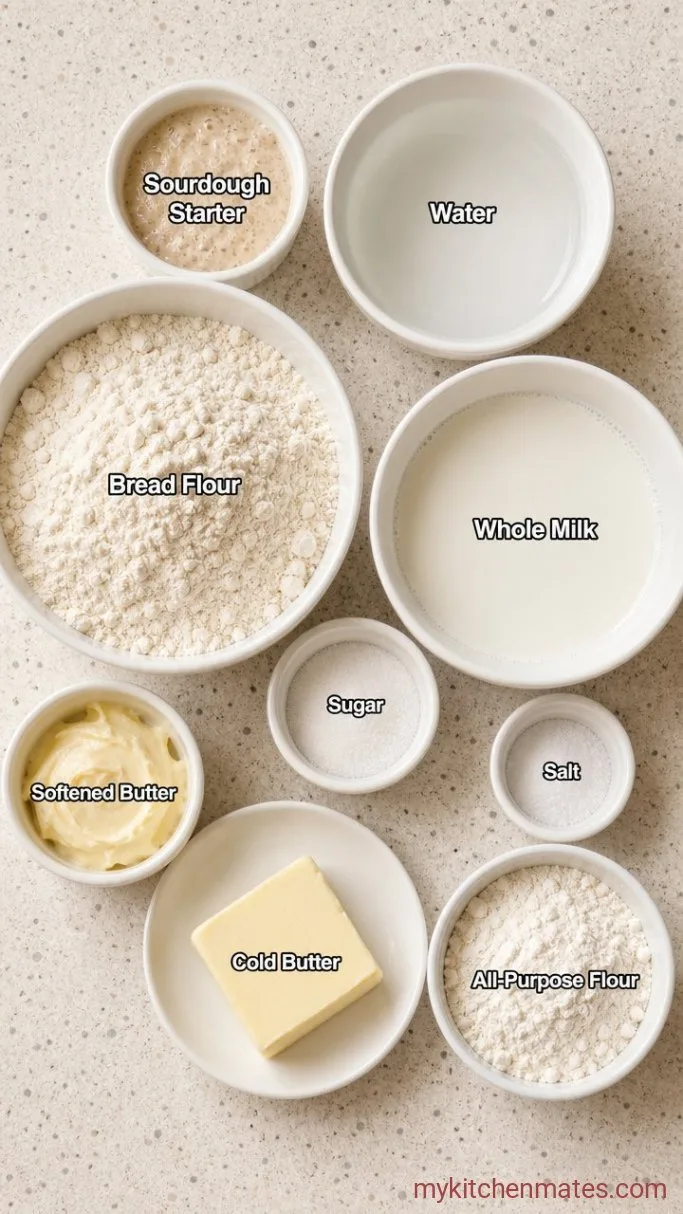
- 50g active sourdough starter: fed and doubled, bubbly and ripe
- 100g water, room temperature: for the levain
- 415g bread flour: 100g for the levain, 300g for the dough, plus 15g for the butter block, and extra for dusting
- 120g whole milk, room temperature: adds tenderness to the crumb
- 40g granulated sugar: just enough sweetness to balance the salt and tang
- 6g fine sea salt
- 50g unsalted butter, softened: goes right into the dough to keep it pliable
- 150g unsalted butter, cold: the butter block that creates all the layers
- 15g all-purpose flour: helps the butter block hold together during lamination
Variations / Substitutions
- No sourdough starter: use 100g of discard, a firm preferment, and add ¼ teaspoon instant yeast to the dough to speed the rise; flavor will be milder
- Dairy-free: replace milk with oat milk and use a good vegan butter block that stays solid when cold
- Honey version: swap the sugar for 30g mild honey; the loaf browns faster, so tent with foil halfway through baking
- Whole grain twist: sub up to 100g of the bread flour with white whole wheat flour; the crumb will be a little tighter but still layered
Hearty French Onion Beef Stew makes a comforting soup to pair with this bread.
How To Make Sourdough Croissant Bread
Step 1: Mix the Levain and Dough
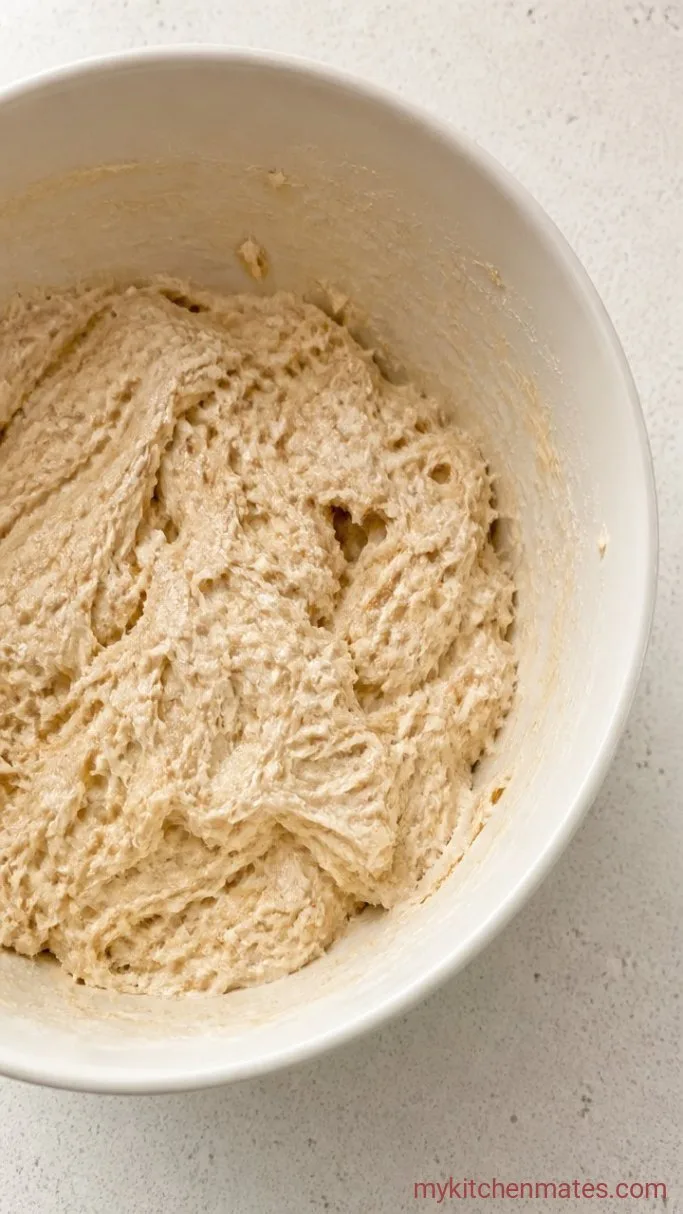
In a bowl, stir together 50g starter, 100g water, and 100g of the bread flour until no dry bits remain. Cover and let it sit at room temperature until it doubles and domes, about 4 hours at 75°F (24°C).
When the levain looks active and bubbly, add the remaining 300g bread flour, 120g milk, 40g sugar, and 6g salt. Mix with your hands or a dough hook until a shaggy dough forms, then work in the 50g softened butter a piece at a time. Knead until the dough is smooth and elastic but still slightly tacky, about 8 minutes by hand or 5 with a mixer. Cover the bowl and let it bulk ferment at cool room temperature, 68 to 70°F (20 to 21°C), until nearly doubled, 4 to 5 hours.
Step 2: Prepare the Butter Block
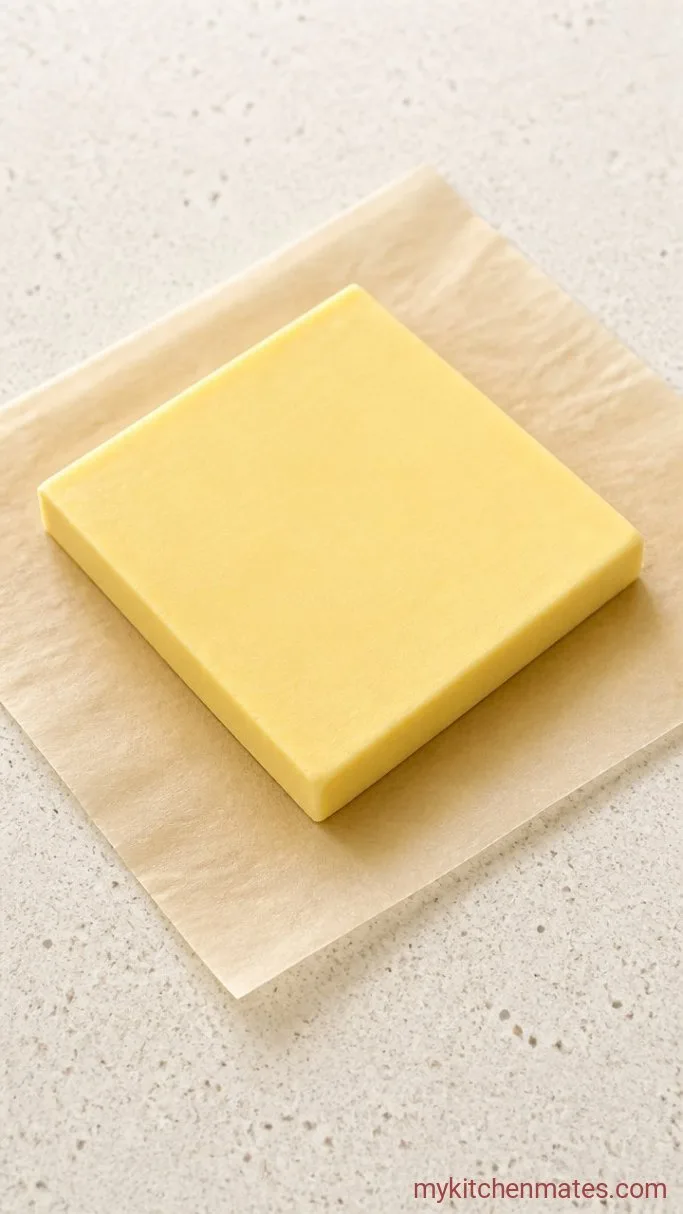
Place the 150g cold butter on a piece of parchment and sprinkle the 15g all-purpose flour over it. Beat the butter with a rolling pin until it flattens and softens just enough to become a cohesive mass, then shape it into a rectangle about 6 by 8 inches (15 by 20 cm) inside the parchment. Fold the paper around it, seal the edges, and chill the block until it is firm but still bends without cracking, about 20 minutes. You want the butter workable but not so hard it shatters when you roll the dough around it.
Step 3: Laminate the Dough
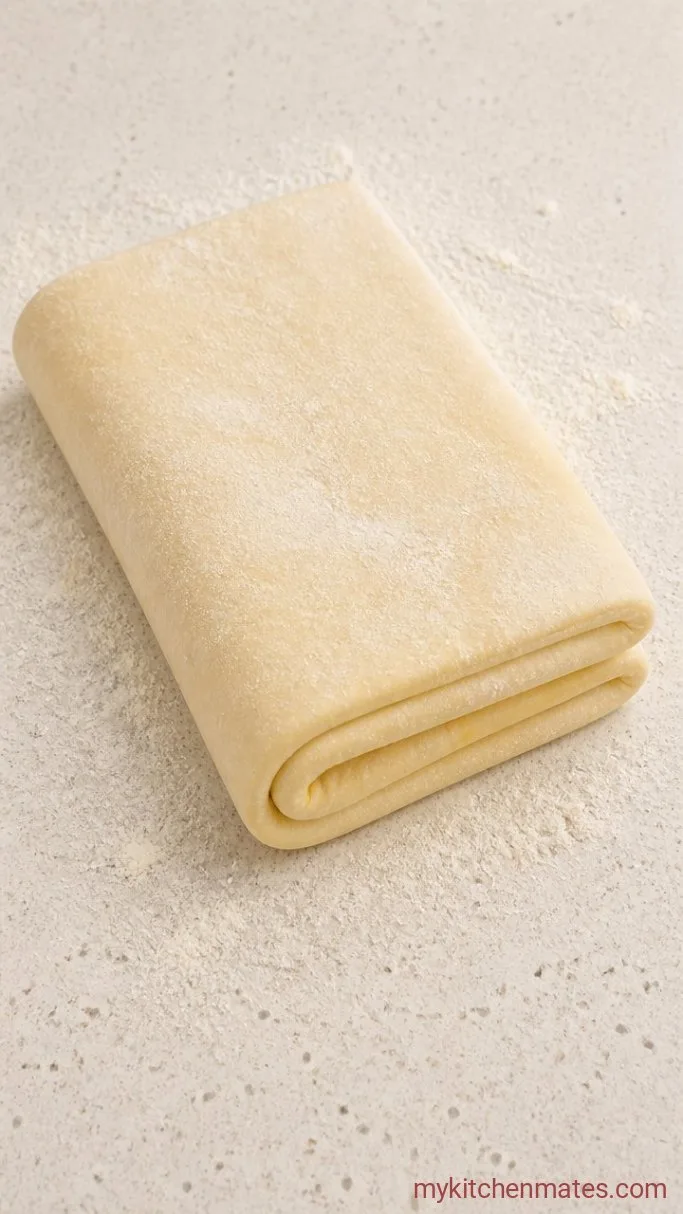
On a lightly floured surface, roll the fermented dough into a rectangle about 8 by 15 inches (20 by 38 cm). Place the cold butter block in the center, peel off the parchment, and fold the dough over the butter like an envelope, sealing the seams completely. Gently roll the packet lengthwise to about 8 by 24 inches (20 by 60 cm), then fold it in thirds like a business letter. Wrap and chill the dough for 30 minutes.
Repeat the roll and fold one more time, then chill again for 30 minutes. After the second chill, give the dough one final roll and fold, for a total of three turns. You will see faint butter patches through the dough, and it will feel cool and smooth. Wrap the dough and chill for at least 1 hour, or up to overnight, before shaping.
Step 4: Shape the Loaf
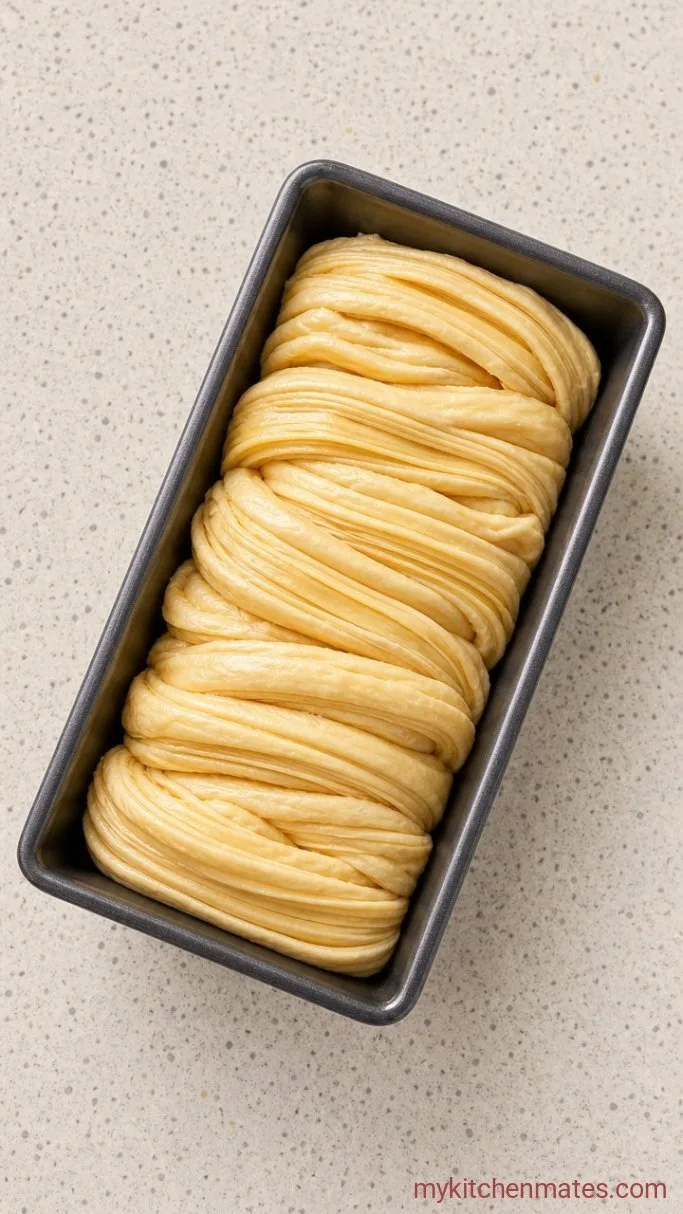
Line a 9 by 5 inch (23 by 13 cm) loaf pan with parchment, leaving overhangs on the long sides. Roll the chilled dough on a floured surface into a rough 8 by 12 inch (20 by 30 cm) rectangle, about ½ inch thick. Using a sharp knife, cut the dough into 4 long strips, each about 2 inches wide. Stack the strips on top of each other, then cut that stack crosswise into strips that match the length of your loaf pan. Bundle the pieces together, turn them cut-side up so the layers are visible from above, and tuck the bundle into the prepared pan. Press gently to make an even top.
Step 5: Proof and Bake
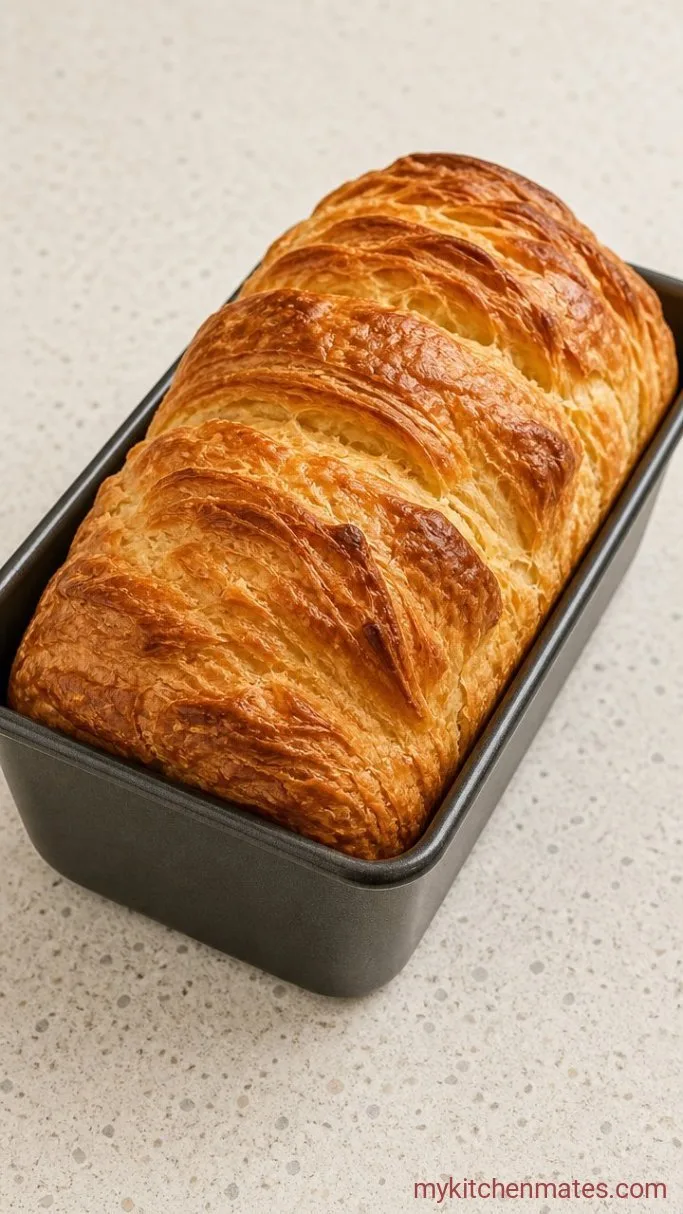
Cover the pan loosely with oiled plastic and let the loaf proof at warm room temperature, around 75°F (24°C), until the dough rises noticeably and the layers begin to separate, 1½ to 2 hours. It will look puffy and the top will feel soft with a slight jiggle.
Preheat the oven to 400°F (200°C) while the loaf finishes proofing. Set the pan on a baking sheet to catch any melting butter, then bake for 30 to 35 minutes, until the top is deep golden brown and the internal temperature reads 200 to 205°F (93 to 96°C). If the crust darkens too quickly during the final 10 minutes, tent the pan loosely with foil. The kitchen will smell intensely buttery and toasty.
Step 6: Slice and Serve
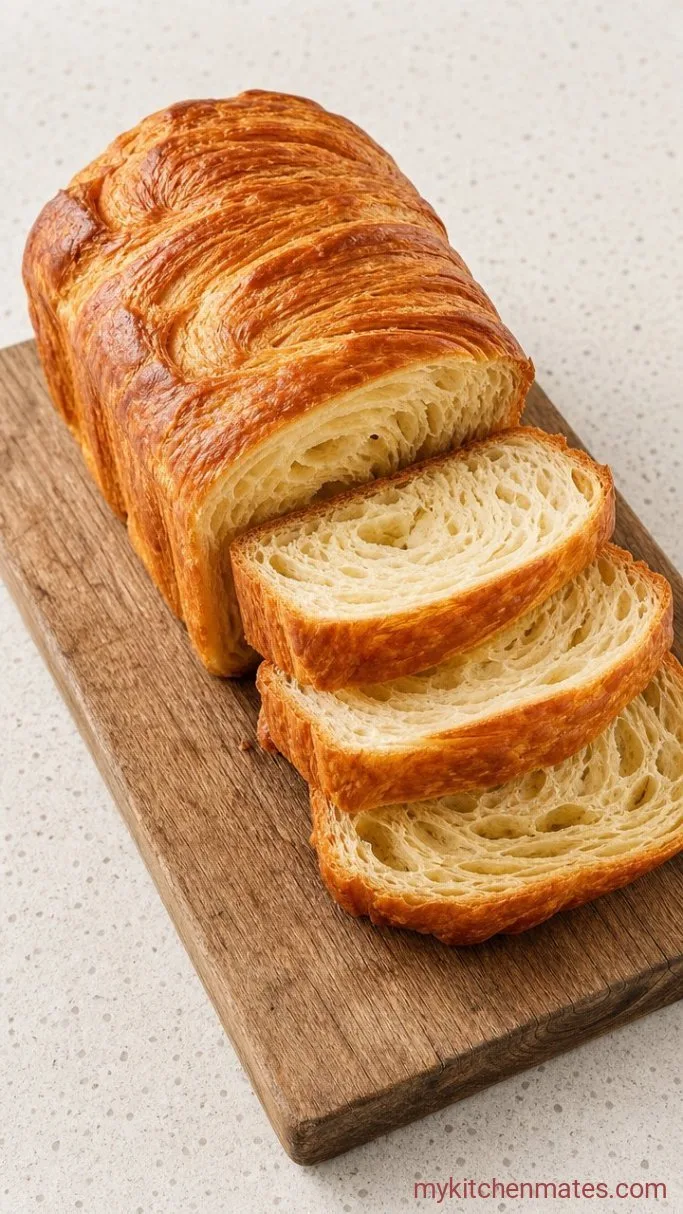
Let the loaf rest in the pan for 5 minutes, then lift it out by the parchment and transfer it to a wire rack. Slice thick while it is still warm, and the first cut will crinkle through the top crust and pull apart in soft, flaky layers. Serve right away with salted butter or jam, and save any uneven end pieces for the cook.
Tips for the Best Laminated Loaf
- Keep the dough cold between turns and before shaping. If it feels warm or sticky at any point, pause and chill for 15 minutes. Soft butter melts into the dough and you lose distinct layers.
- Use a ruler for the butter block and the first roll of the dough. Even dimensions mean even layers, and that prevents thin spots where butter leaks out.
- Watch the proofing time, not the clock. If your kitchen is on the cool side, it may take a full 2 hours. The loaf is ready when it visibly rises and the top domes, not before.
Bulk fermentation time depends on your kitchen temperature:
| Temperature | Approximate bulk rise time |
|---|---|
| 68°F (20°C) | 5 to 6 hours |
| 72°F (22°C) | 4 to 5 hours |
| 75°F (24°C) | 3 to 4 hours |
Storing Leftover Bread
- Refrigerate: The baked loaf keeps at room temperature for 2 days in a paper bag or loosely wrapped in a towel. Refrigeration dries it out, so skip the fridge.
- Reheating: Revive slices by toasting them in a hot oven or toaster oven for 3 to 4 minutes at 350°F (175°C). The butter layers recrisp and the inside warms through.
- Freeze for later: Wrap the whole cooled loaf tightly in foil and freeze up to 2 months. Thaw at room temperature and reheat as above.
What To Serve With Sourdough Croissant Bread
This bread shines next to soft scrambled eggs and fresh chives, where the eggs sink into the flaky crumb. A smear of cultured butter and a swipe of apricot or raspberry jam balance the sourdough tang with bright fruit. For a savory lunch, layer it with peppered turkey, sharp cheddar, and a few peppery arugula leaves; the crisp top crust stands up to the fillings.
Frequently Asked Questions
Can I skip the lamination and still get flaky layers?
No, the folding and rolling are what build the distinct sheets of butter and dough. Without those three turns, you will have a soft enriched loaf, not layered bread.
Why does butter leak out during baking?
A little butter pooling in the bottom of the pan is normal and gets absorbed by the crust. If it leaks heavily, the dough may have warmed up during shaping and the butter melted out. Keep everything cold, and place the pan on a baking sheet.
Can I use all-purpose flour instead of bread flour?
Yes, you can use all-purpose flour. The loaf will be slightly less chewy and the layers may separate a bit less, but it will still bake up tall and flaky.
Can I refrigerate the dough overnight during lamination?
Yes. After the final fold, wrap the dough tightly and refrigerate for up to 12 hours. This long cold rest deepens the flavor and makes the dough easier to shape the next morning.
Is this bread easy to slice cleanly?
Yes, as long as you use a sharp serrated knife and a gentle sawing motion without pressing down. Slicing while the loaf is still warm gives you the most dramatic pull-apart texture.
Sourdough Croissant Bread Recipe
Ingredients
Method
- Mix 50g starter, 100g water, and 100g bread flour for the levain; let it double, about 4 hours.
- Add 300g bread flour, 120g milk, 40g sugar, 6g salt, and 50g softened butter to the levain; knead until smooth. Bulk ferment at cool room temperature 4 to 5 hours.
- Beat 150g cold butter with 15g flour into a rectangle; chill until firm but pliable.
- Enclose the butter in the dough, roll, and fold in thirds. Repeat for 3 turns total, chilling 30 minutes between each.
- Cut the dough into strips, stack, and place in a lined 9 by 5 inch loaf pan. Proof until puffy, 1½ to 2 hours.
- Bake at 400°F (200°C) for 30 to 35 minutes until deep golden. Cool 5 minutes, then slice warm.
Notes
