
Thick and Creamy New England Clam Chowder from Scratch

This New England clam chowder is the real thing: a thick, creamy soup loaded with tender clams and chunks of potato. No thin broth and no canned soup base, just a deeply savory bowl made from scratch with fresh clams.
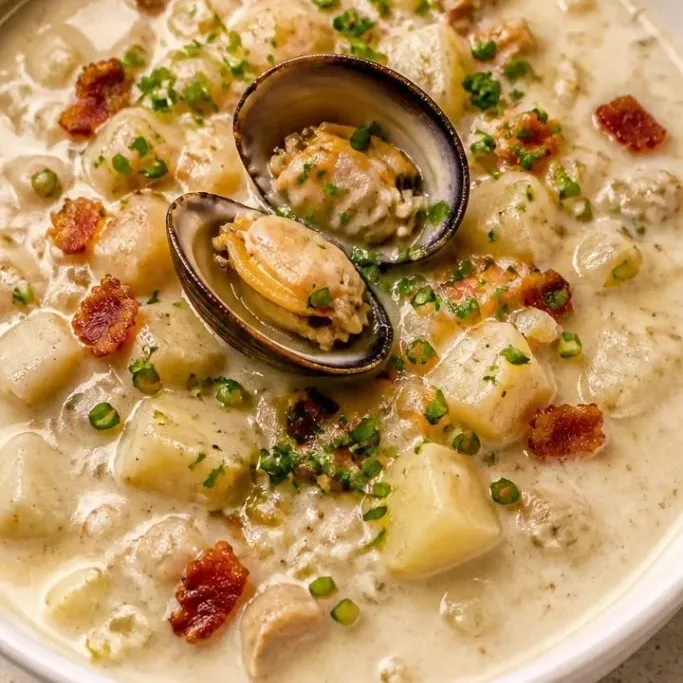
The richness comes from heavy cream and a touch of bacon fat, while the potatoes nearly melt into the broth, giving it natural body. It’s the kind of chowder that feels like a weekend project but comes together in under an hour on a weeknight.
What Makes This Clam Chowder So Good
The secret is starting with whole fresh clams. Steaming them right in the pot releases a briny, slightly sweet liquor that becomes the backbone of the chowder. It tastes like the ocean in the best way, not fishy.
Instead of relying on a heavy roux, I let the starchy potatoes do the thickening as they simmer. That keeps the texture silky and clean, not pasty, so every spoonful is all about the clams.
Bacon and a little butter round out the saltiness, and a splash of cream at the end pulls it all together. It’s the version I keep coming back to because it’s straightforward and never disappoints.
Ingredients
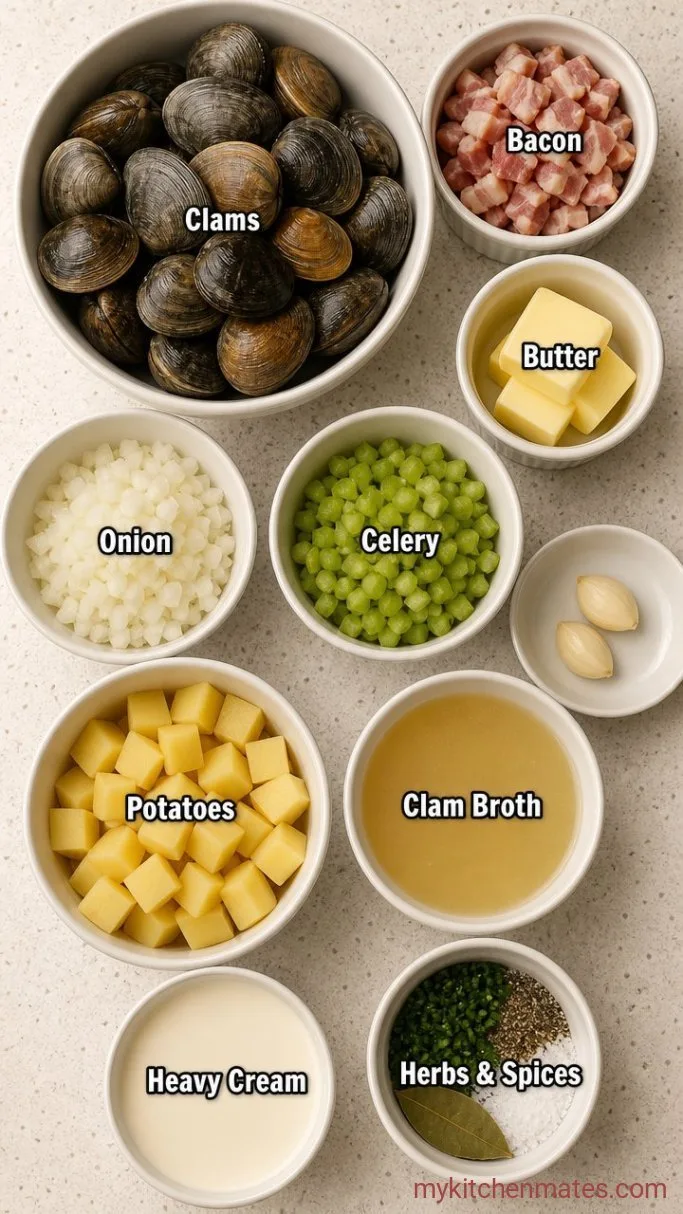
- 4 lbs fresh littleneck clams, scrubbed: they’ll release their own broth; see variations if you’re using canned
- 4 slices bacon, diced: adds smoky depth
- 2 tbsp unsalted butter
- 1 medium onion, finely chopped
- 2 celery stalks, finely chopped
- 2 cloves garlic, minced: optional but adds a gentle warmth
- 1 lb Yukon Gold potatoes, peeled and cut into 1/2-inch cubes: they break down slightly and thicken the chowder
- 2 cups clam broth: from steaming the clams, plus bottled clam juice as needed
- 1 cup heavy cream: for richness
- 1 bay leaf
- Salt and freshly ground black pepper
- Fresh chives or flat-leaf parsley, chopped, for serving
Variations / Substitutions
- No fresh clams: Use 4 (6.5 oz) cans chopped clams in their juice. Drain and reserve the liquid, then supplement with bottled clam juice to make 2 cups. Add the clams at the very end so they don’t overcook.
- Corn chowder twist: Add 1 cup fresh or frozen corn kernels with the potatoes for a sweet pop.
- Herb swap: Trade the bay leaf for a few sprigs of fresh thyme, or stir in a teaspoon of chopped dill at the end.
- Dairy-free version: Swap the butter for olive oil and the heavy cream for full-fat canned coconut milk. The flavor will be richer and slightly sweeter, but still creamy.
Crisp Buttery Christmas Biscuits go great with this chowder for soaking up every last bite.
How to Make New England Clam Chowder
Step 1: Steam the Clams
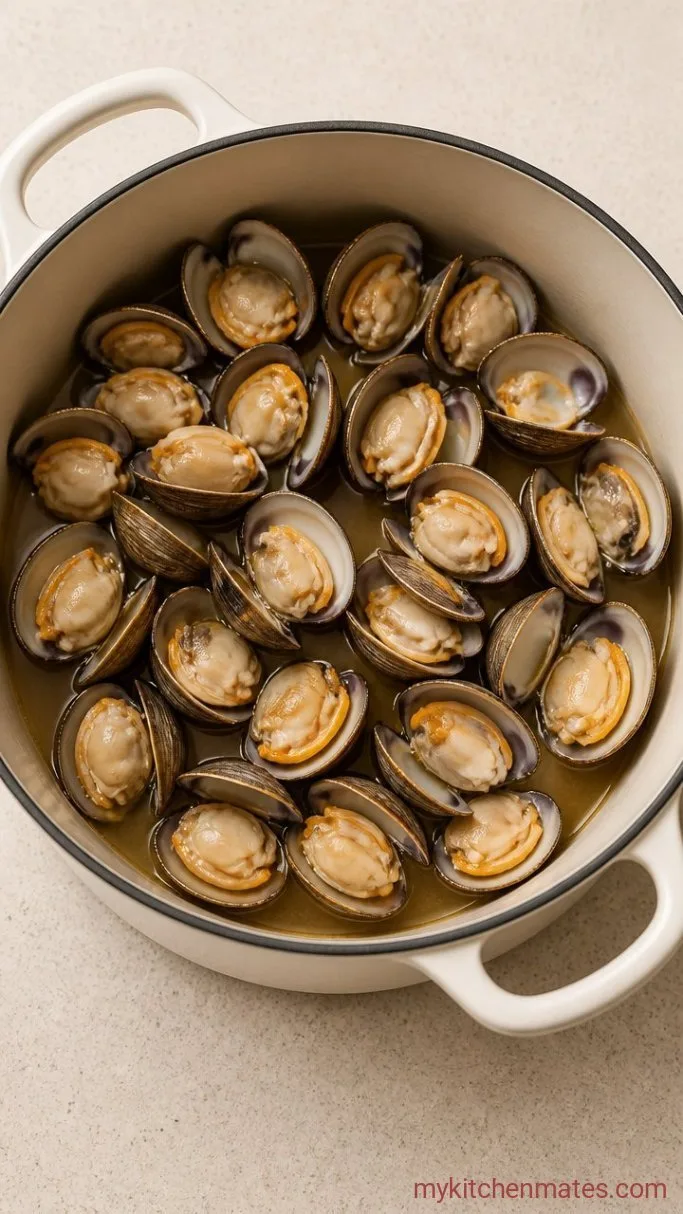
Place a large heavy-bottomed pot over high heat. Add the scrubbed clams and 1 cup of water, cover, and cook for 5 to 7 minutes. Give the pot a shake once or twice so they cook evenly.
The clams will pop open, releasing their liquor. As soon as most are open, remove them with a slotted spoon to a bowl, discarding any that stay shut. Strain the broth through a fine-mesh sieve lined with a coffee filter or cheesecloth to catch any grit. You should have about 2 cups of broth; if not, top up with bottled clam juice. Set the clams and broth aside.
Step 2: Sauté the Aromatics
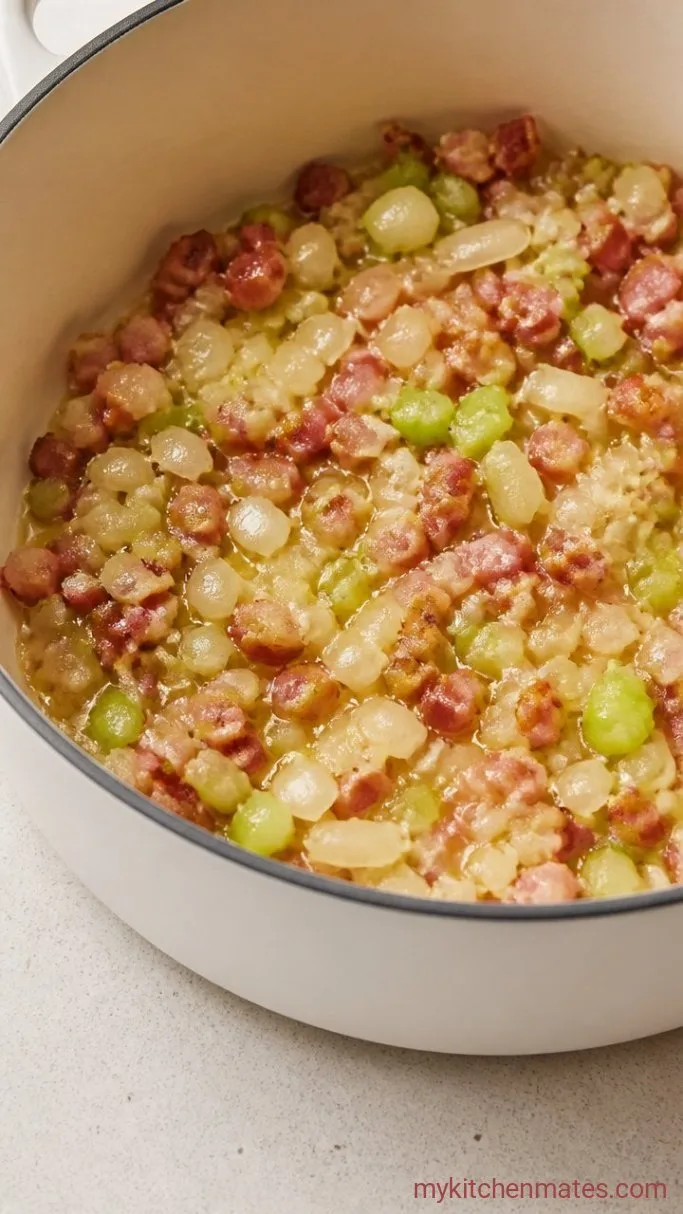
Wipe the pot clean and set it over medium heat. Add the diced bacon and cook for about 5 minutes, until the fat renders and the bacon turns crisp. Lift out the bacon with a slotted spoon and set it aside on a paper towel, leaving the fat in the pot.
Melt the 2 tablespoons butter into the bacon fat. Add the chopped onion, celery, and a pinch of salt. Cook, stirring often, for 6 to 8 minutes until the vegetables are soft and translucent but not browned. Stir in the minced garlic and cook 30 seconds more, just until fragrant.
Step 3: Simmer the Potatoes
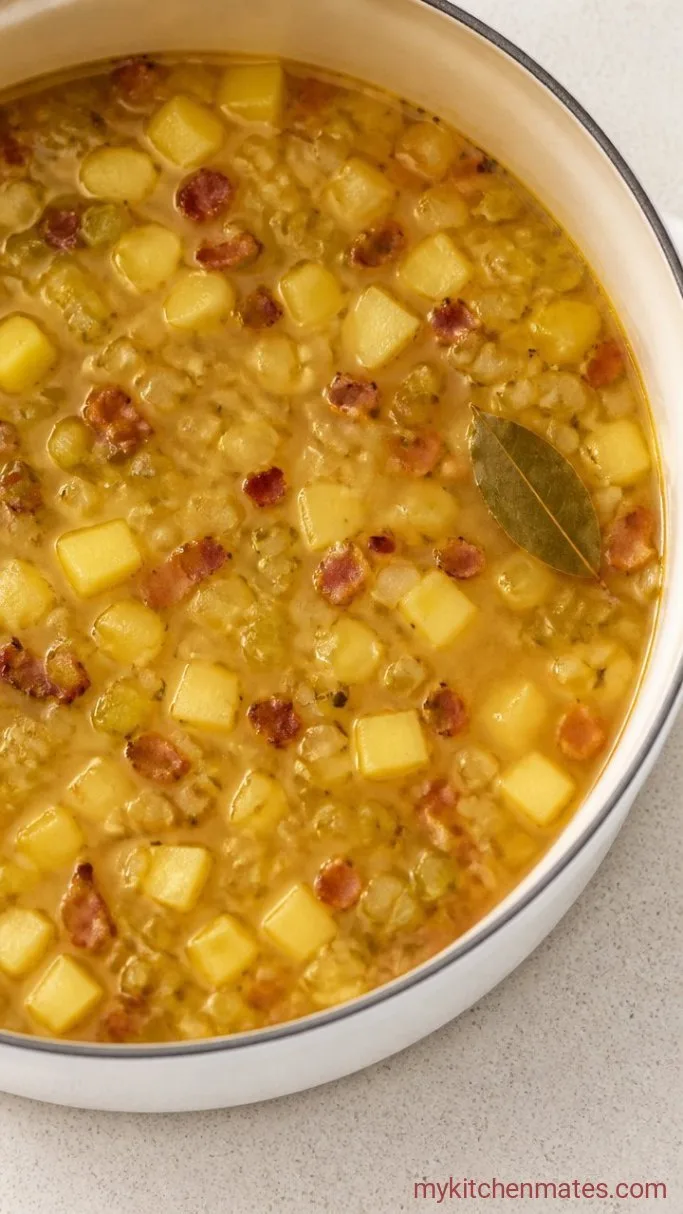
Pour in the reserved clam broth and add enough water to reach 3 cups total liquid. Add the diced potatoes, bay leaf, and a few grinds of black pepper. Bring to a boil, then reduce the heat so the liquid simmers gently. Cover partially and cook for 12 to 15 minutes, until the potatoes are just tender when pierced with a fork.
The liquid will look cloudy and start to thicken from the potato starch. Fish out the bay leaf and discard it. If you want an even thicker chowder, smash a few potato pieces against the side of the pot with a wooden spoon and stir them through.
Step 4: Return the Clams and Bacon
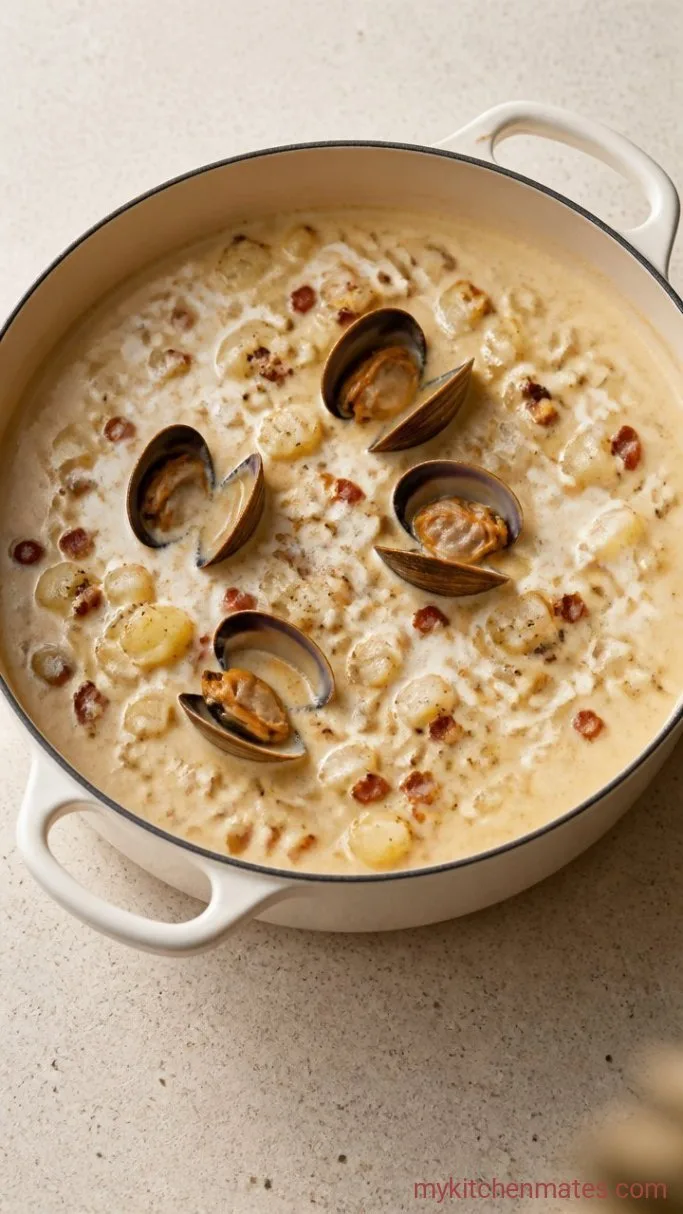
Stir the heavy cream into the pot and bring the chowder back to a bare simmer. Do not let it boil once the cream is in, or it can curdle. Add the reserved clam meat and the crisp bacon, and gently warm them through for 2 to 3 minutes.
Taste the chowder and season with salt and pepper. The clams and bacon are already salty, so go easy. As soon as the clams are hot, the soup is ready to serve.
Step 5: Ladle into Bowls and Garnish
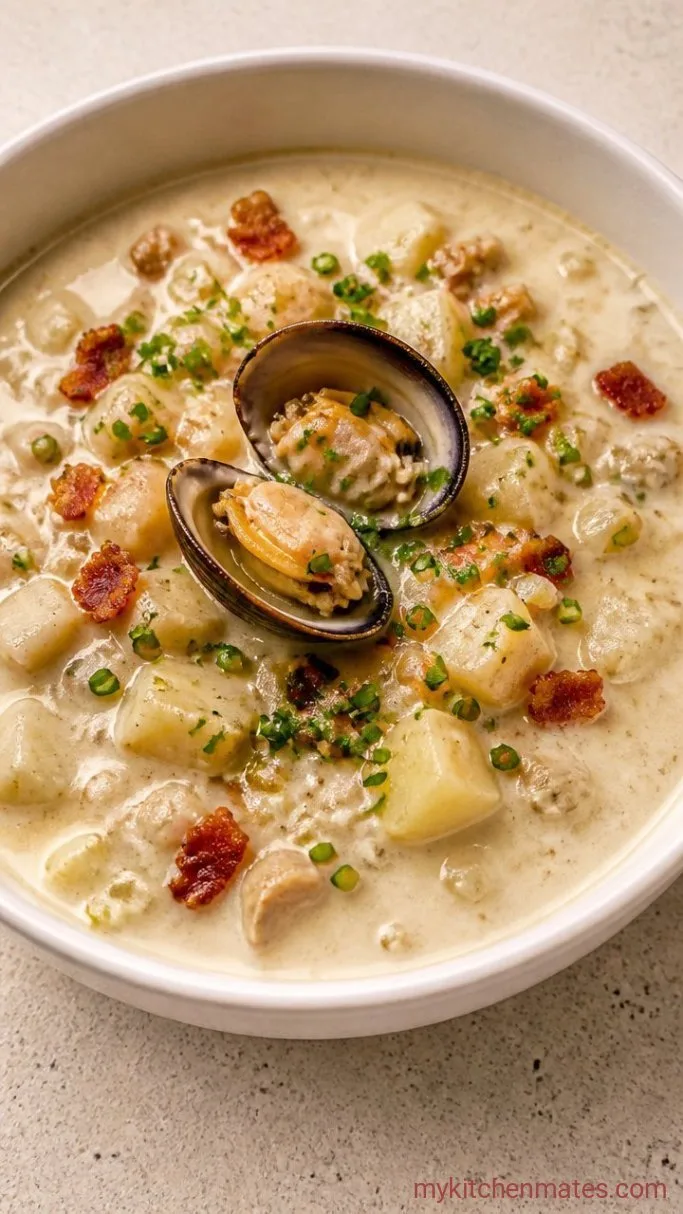
Ladle the steaming chowder into wide, shallow bowls and scatter fresh chopped chives or parsley over the top. Serve immediately with oyster crackers or crusty bread for dipping.
A Few Tips Before You Start
- Use the smallest fresh clams you can find, like littlenecks or cherrystones, for the sweetest meat. If you’re shucking raw clams instead of steaming them, strain the juice carefully to remove sand.
- Don’t rush the onions and celery; cooking them slowly until soft builds a deep savory base without any raw sharpness.
- If your chowder tastes flat, it almost always needs more salt or a tiny splash of lemon juice at the end to brighten the richness. Add a little at a time and taste as you go.
- For an even thicker chowder, scoop out a cup of the cooked potatoes and broth, purée it, and stir it back in. That way you keep whole clam pieces while boosting the body.
Storing Leftovers
- Refrigerate: Store leftover chowder in an airtight container for up to 3 days. The potatoes will soften and thicken the broth even more as they sit, so you may need to thin it with a splash of milk or water when reheating.
- Reheating: Warm gently over low heat on the stovetop, stirring often. Do not boil, or the cream can break. If you microwave, do it in short bursts at 50% power, stopping to stir.
- Serve Cold: This one’s best enjoyed hot.
What to Serve with New England Clam Chowder
Oyster crackers are the classic, but a crusty sourdough boule for dipping is even better. I like to pair the chowder with a simple arugula salad dressed with lemon vinaigrette, because the peppery greens and acid cut through the richness nicely. A cold, crisp lager or a glass of unoaked Chardonnay works, too.
Frequently Asked Questions
Can I use canned clams instead of fresh?
Yes, 4 (6.5 oz) cans of chopped clams work well. Drain and reserve the juice, then supplement with bottled clam juice to get 2 cups of broth. Add the clams right at the end so they stay tender, not rubbery.
Can I make this chowder ahead of time?
You can, but for the best texture, cook the base through until the potatoes are tender, then cool and refrigerate. Leave out the cream and clams. When you’re ready to serve, reheat the base, stir in the cream, and add the clams just before ladling.
Why is my chowder thin?
That usually means the potatoes didn’t simmer long enough to release their starch, or you added too much extra liquid. Let the soup bubble gently a few extra minutes until it coats the back of a spoon, and avoid adding more liquid after the potatoes are done.
Can I freeze clam chowder?
I don’t recommend it. Dairy-based soups can separate when frozen, and the potatoes turn grainy. The texture won’t be the same after thawing.
New England Clam Chowder Recipe
Ingredients
Method
- In a large pot over high heat, add clams and 1 cup water. Cover and cook 5-7 minutes until they open. Remove clams, discard any unopened ones, and strain the broth.
- Wipe the pot, then cook diced bacon over medium heat 5 minutes. Remove bacon, leave fat. Add butter, onion, celery, and a pinch of salt. Cook 6-8 minutes until soft. Stir in garlic and cook 30 seconds.
- Pour in clam broth plus enough water to make 3 cups. Add potatoes, bay leaf, and pepper. Simmer partially covered 12-15 minutes until potatoes are tender. Discard bay leaf.
- Stir in cream and return to a bare simmer. Add clams and bacon, warm through 2-3 minutes. Season to taste with salt and pepper.
- Ladle into bowls, top with chives, and serve right away.
Notes
