
Steamed Modak: The Classic Indian Sweet for Ganesh Chaturthi

Steamed Modak are soft rice flour dumplings packed with a sweet coconut and jaggery filling. They are the defining treat of Ganesh Chaturthi, a festival where these little parcels are offered to Lord Ganesha.

This recipe gives you a tender, thin outer shell with a delicate texture and a filling that stays moist and aromatic. No special molds required, just your hands and a steamer.
Why This Modak Recipe Works
The key to soft modak is scalding the rice flour with hot water, which cooks the starch just enough to make the dough pliable and unlikely to crack. Once steamed, they turn glossy and slightly translucent.
The filling gets its deep, caramel-like sweetness from jaggery, and the fresh coconut gives it body and a subtle chew. A pinch of cardamom ties it all together without overpowering.
This is the version I keep coming back to because it balances ease and tradition. You do not need any special skill, just a little patience while shaping.
Ingredients

- 1 cup fine rice flour: look for “modak flour” or “idiyappam flour” labeled fine, not coarse.
- 1 cup water: plus a splash more if needed based on the flour’s absorption.
- 1/4 tsp salt
- 1 tsp ghee or neutral oil: used in the dough and for greasing hands.
- 1 cup freshly grated coconut: or thawed frozen grated coconut, avoid desiccated unless rehydrated.
- 3/4 cup powdered jaggery: or grated jaggery, adjusted to taste.
- 1/2 tsp green cardamom powder: freshly ground brings the most aroma.
- 1 tsp poppy seeds (optional): lightly toasted, for garnish.
Variations / Substitutions
- Jaggery substitute: use coconut sugar or dark brown sugar. The flavor will be less caramelly but still sweet.
- Dried coconut: if fresh is unavailable, soak 1 cup desiccated coconut in 1/4 cup warm water for 10 minutes, then drain and use. The texture will be a bit firmer.
- Nutty filling: stir in 2 tbsp chopped cashews or almonds after cooking the filling for a little crunch.
- Fried modak: instead of steaming, deep fry the shaped modak in oil at 350°F until golden. They will be crisp outside and soft inside.
Peanut Chikki is next on our list if this recipe is your kind of dessert.
How to Make Steamed Modak
Step 1: Cook the Coconut Filling

In a heavy pan over low heat, combine the 1 cup grated coconut and 3/4 cup powdered jaggery. Stir continuously until the jaggery melts and the mixture starts to come together, about 5 minutes. Add the 1/2 tsp cardamom powder and cook for another minute until the moisture reduces and the filling is sticky but not runny.
You will know it is ready when you can press the back of a spoon into it and it holds a shallow dent. Take it off the heat and let it cool completely. The filling should be thick enough to roll into small balls later.
Step 2: Knead the Rice Flour Dough

Bring 1 cup water, 1/4 tsp salt, and 1 tsp ghee to a rolling boil in a saucepan. Reduce the heat to low and add the 1 cup rice flour all at once. Stir vigorously with a wooden spoon until no dry flour remains and the mixture becomes a cohesive, lump-free mass, about 1 minute. Turn off the heat, cover, and let it rest for 2 minutes.
Transfer the hot dough to a flat surface or wide plate. As soon as it is cool enough to handle but still very warm, knead it with greased palms until smooth and pliable, 3 to 4 minutes. Work quickly, the dough becomes harder to shape as it cools. Keep a little warm water or oil on hand to dip your fingers if it feels dry.
Step 3: Shape the Modak
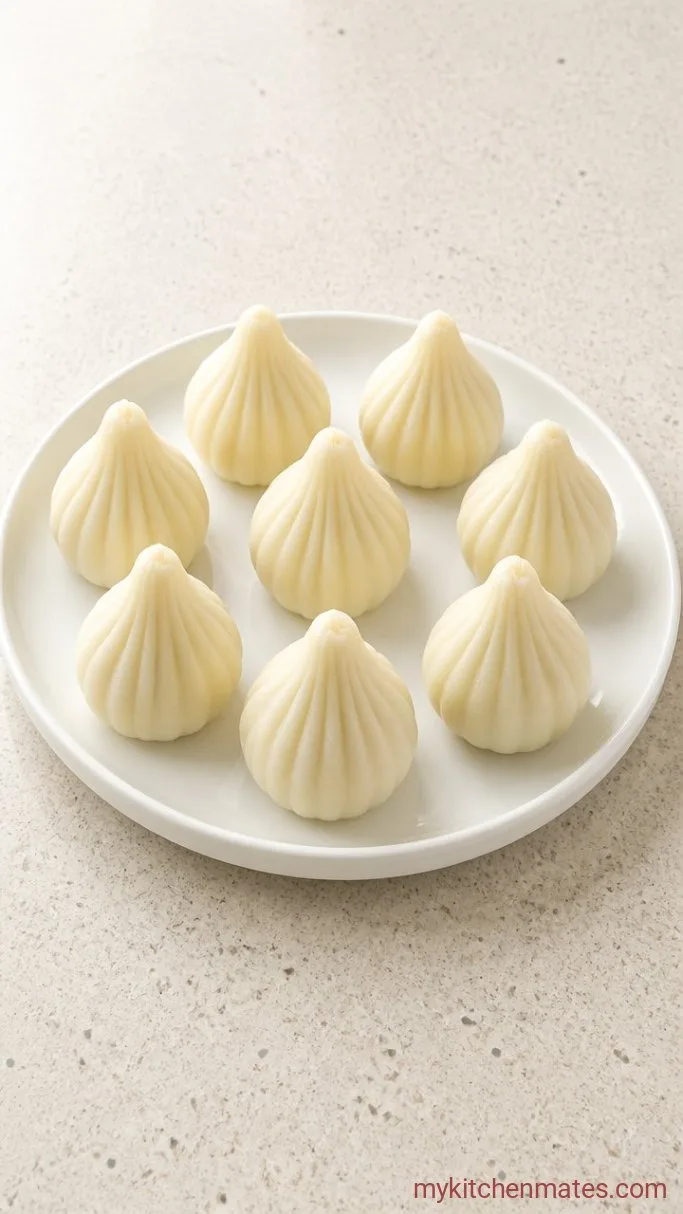
Divide the dough into 12 to 15 equal portions and roll each into a ball. Cover the balls with a damp cloth. Grease your palms with a drop of ghee. Take one ball and flatten it into a thin disc, about 3 inches wide, using your fingers or a small rolling pin. The edges should be slightly thinner than the center.
Place a heaped teaspoon of the cooled coconut filling in the center. Gently bring the edges together, pleating as you go if you like the traditional look, and pinch the top to seal into a pointed tip. If the dough cracks while shaping, dip your finger in water, smudge the crack, and keep going. Repeat with all portions, working with one ball at a time and keeping the rest covered.
Step 4: Steam the Modak
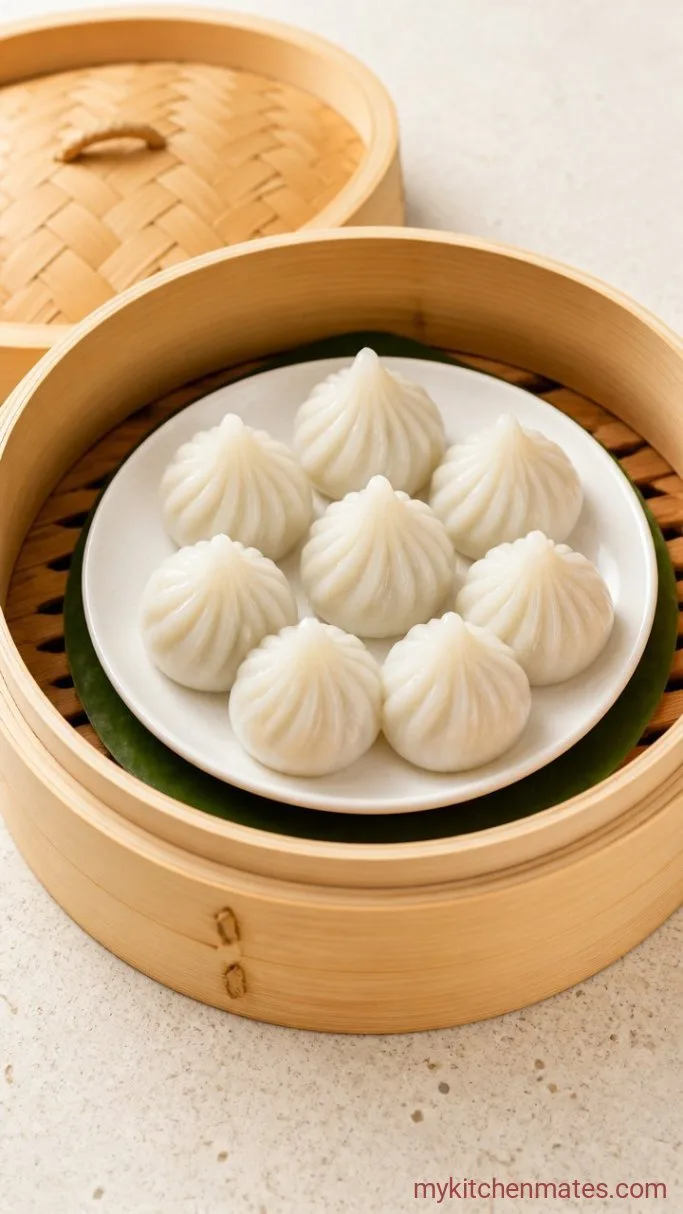
Set up a steamer basket or an idli steamer and bring the water to a boil. Grease the steamer plates lightly. Arrange the shaped modak in a single layer with a little space between them, as they will expand slightly.
Steam on medium heat for 10 to 12 minutes. The modak are done when the outer surface looks glossy and translucent, and they feel firm to the touch but soft when pressed. Avoid overcooking, or they can turn rubbery.
Step 5: Drizzle and Serve
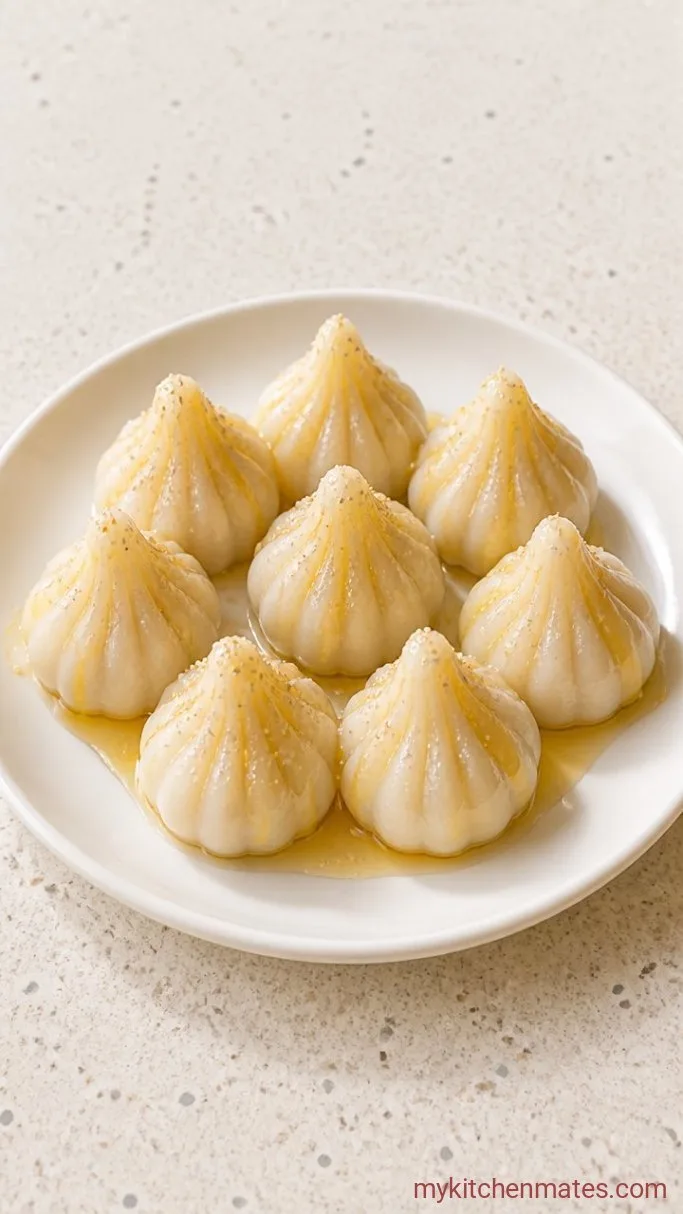
Transfer the steamed modak to a serving plate while still hot. Drizzle a teaspoon of warm ghee over the top and sprinkle toasted poppy seeds if you like.
The modak taste best warm, when the shell is soft and the filling is fragrant inside.
Tips for Perfect Steamed Modak
- Use the dough while it is still warm. If it cools and stiffens, you can briefly re-knead it with a few drops of hot water, but it will never be as cooperative as the first time.
- Grease your hands and the rolling surface lightly with ghee or oil. This prevents sticking and keeps the dough from drying out while you work.
- If the filling becomes too dry after cooling, mix in a teaspoon of warm milk or water to bring back the moisture. It should hold together when pressed.
- Do not crowd the steamer. Leave gaps so steam circulates freely and the modak cook evenly without sticking to each other.
- Check the water level in the steamer halfway through to ensure it has not run dry.
Storing Leftover Modak
- Refrigerate: store in an airtight container for up to 3 days. The outer skin will firm up slightly but get soft again when reheated.
- Reheating: steam the chilled modak for 3 to 4 minutes or microwave briefly with a damp paper towel. Avoid dry heat, which will toughen them.
Frequently Asked Questions
Why did my modak crack while steaming?
The dough was likely too dry or not kneaded long enough while warm. Next time, ensure you add the flour to boiling water and knead until it feels like soft play dough, with no visible cracks when you roll a test ball.
Can I use store-bought rice flour?
Yes, as long as it is finely ground (labeled for idiyappam or modak). Coarse rice flour will result in a gritty texture and is harder to shape without tearing.
How far ahead can I shape the modak before steaming?
You can shape them up to 2 hours ahead. Place them on a greased plate, cover with a damp cloth, and keep at room temperature. Do not refrigerate shaped raw modak, or the dough will stiffen and crack later.
Can I double this recipe?
Yes, you can double all ingredients. Boil the water in a larger pot, add the flour, and work quickly to knead the larger batch while warm. It helps to have an extra pair of hands for shaping.
Modak Indian Sweet Recipe
Ingredients
Method
- In a heavy pan, cook grated coconut, jaggery, and cardamom over low heat, stirring until jaggery melts and the mixture thickens to a sticky filling, about 5-6 minutes. Cool completely.
- Boil water, salt, and ghee. Lower heat, add rice flour all at once, and stir vigorously into a smooth mass. Cover, rest 2 minutes, then knead into a soft dough while warm.
- Divide dough into 12-15 balls. Flatten each into a disc, place a heaped teaspoon of filling in the center, and pinch the edges together to form a pointed modak.
- Arrange modak on a greased steamer basket, leaving space between each. Steam over medium heat for 10-12 minutes until glossy and firm.
- Transfer to a plate, drizzle with warm ghee, and scatter poppy seeds if using. Serve warm.
Notes
