
3-Ingredient Peanut Chikki (Indian Jaggery Brittle)

This chikki is the kind of sweet that cracks loud and clean, with a deep caramel note from jaggery you just don’t get from plain sugar. It takes three pantry ingredients and about fifteen minutes, and it outshines any packaged brittle you will find.
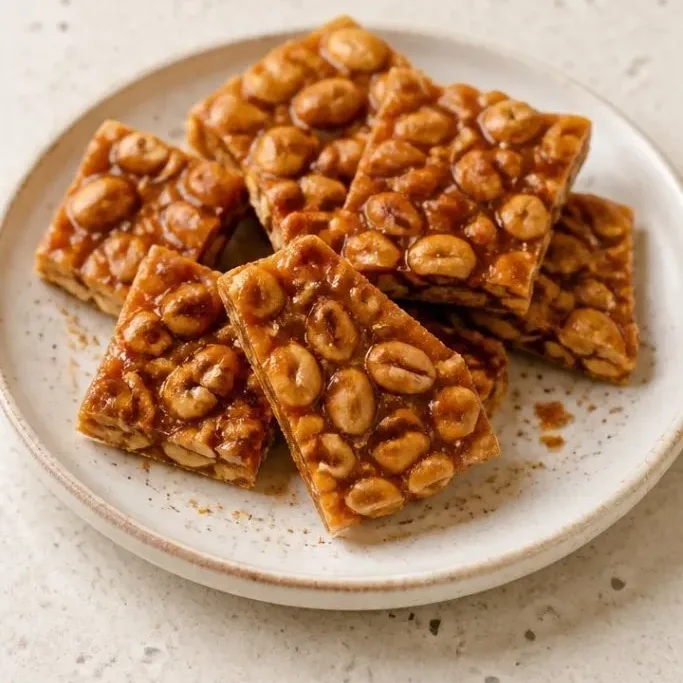
Even if you have never worked with jaggery before, the method is straightforward. Once you nail the syrup test, you get a shatteringly crisp, nutty slab that stores for weeks.
What Makes This 3-Ingredient Chikki So Good
I keep coming back to this version because the jaggery does all the heavy lifting. Its iron-rich, almost smoky sweetness hugs the peanuts without turning sticky or grainy, and the finished brittle stays crunchy for days in a tin on the counter.
The texture is exactly what I want in a chikki. Each bite gives a sharp snap, then a slow nutty chew as the thin layer of caramel softens just slightly. No soft spots, no teeth-sticking patches, just clean, golden shards.
Ingredients
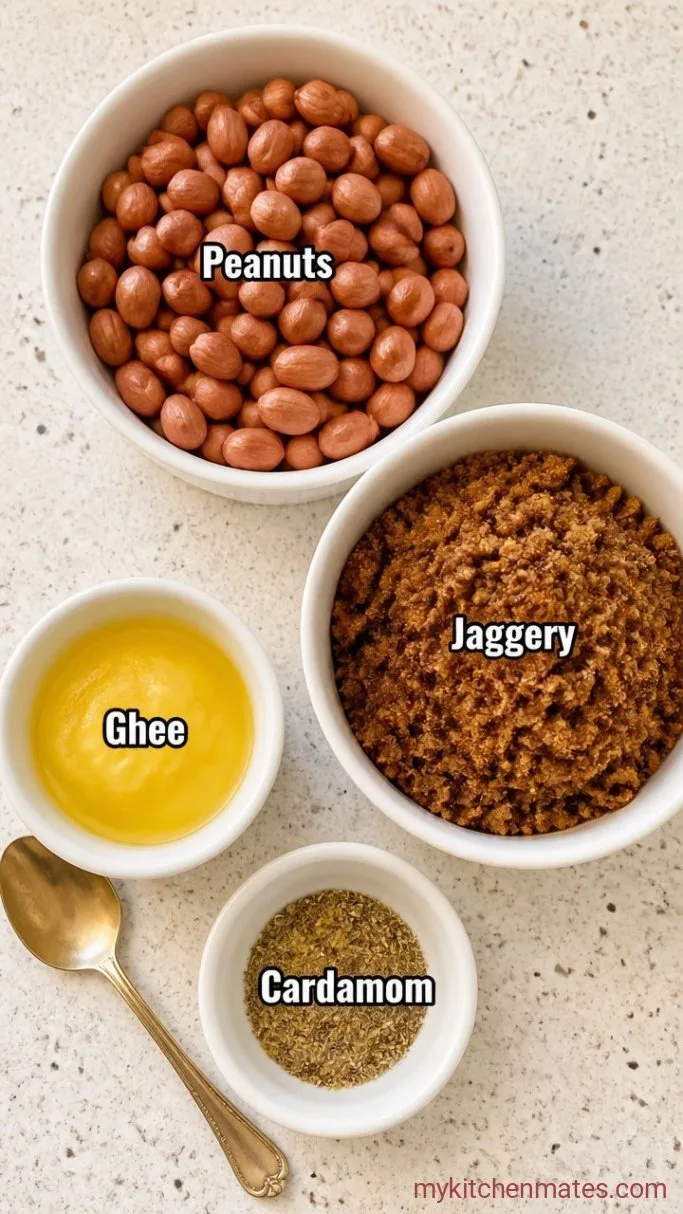
- 1 cup raw peanuts: with skins on for extra crunch and a rustic look
- 3/4 cup grated jaggery: lightly packed; use a soft ball of block jaggery, not the dry granulated kind if possible
- 1 tsp ghee: plus a little extra for greasing the work surface
- Pinch of ground cardamom: (optional): lifts the nuttiness without tasting perfumy
Variations / Substitutions
- Sesame chikki: swap the peanuts for white sesame seeds; roast them just until they start to pop, then proceed as written
- Mixed nut chikki: use half peanuts and half slivered almonds or cashews, roasted the same way
- Sugar swap: white sugar works in place of jaggery, but the brittle will be paler and lack jaggery’s deep, molasses-like notes; cook the sugar until it reaches a light amber colour
- Dairy-free: replace ghee with a neutral oil like sunflower or coconut oil
Crispy Outside, Soft Inside is another reader favorite dessert worth making next.
How to Make Peanut Chikki
Step 1: Roast the Peanuts
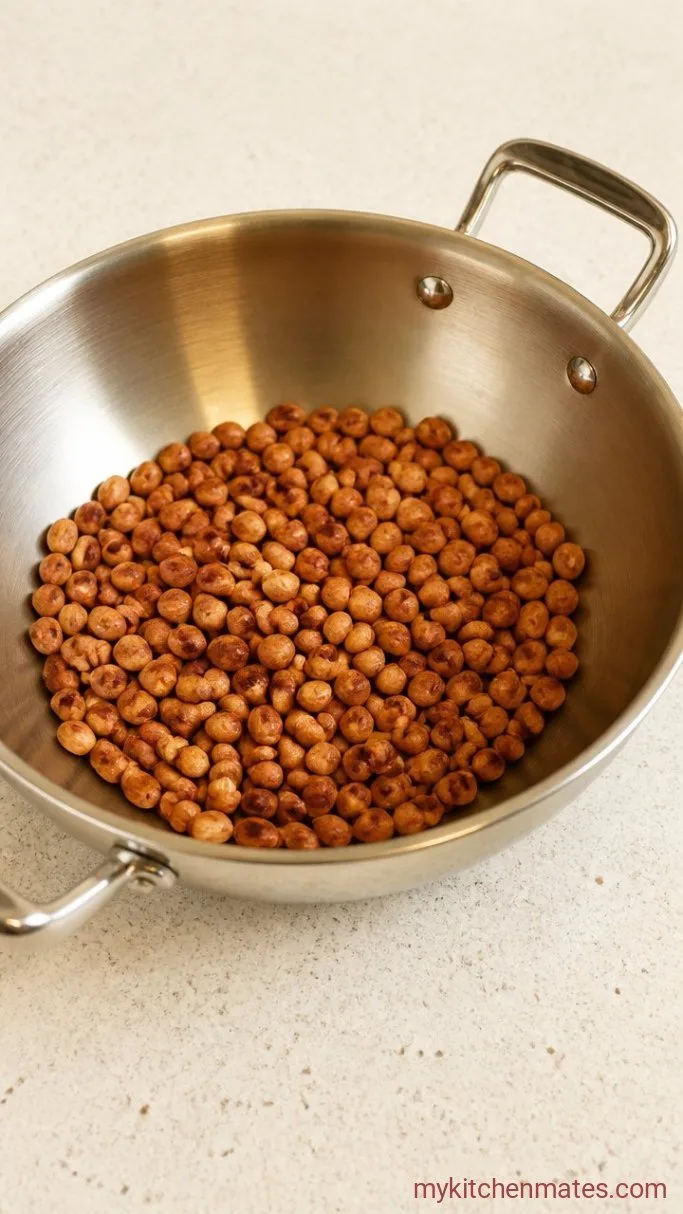
Place the 1 cup of raw peanuts in a dry, heavy skillet over medium heat. Shake the pan or stir often so they colour evenly, and cook for about 3 to 4 minutes, until the skins darken here and there and the kitchen smells deeply nutty. Tip them onto a plate and rub off any loose skins while they are still warm. There is no need to chop them; whole peanuts give the best crunch.
Step 2: Melt the Jaggery
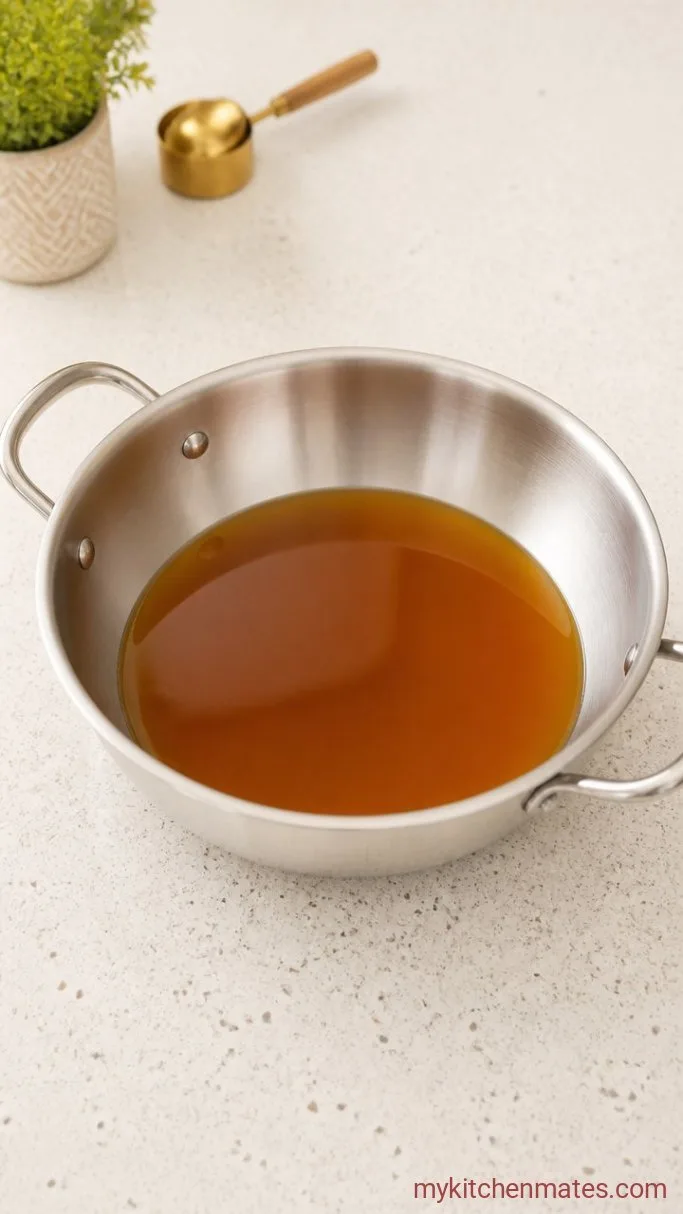
Return the skillet to low heat and add the 1 tsp ghee along with the 3/4 cup grated jaggery. Stir gently and let it melt into a thick, bubbling liquid, which will take around 5 to 7 minutes. You are looking for the hard crack stage. Drop a tiny bit of syrup into a bowl of cold water; if it hardens instantly into a brittle thread that snaps when you bend it, the syrup is ready. If it is still soft or stretchy, cook another minute and test again.
Step 3: Mix and Spread the Chikki
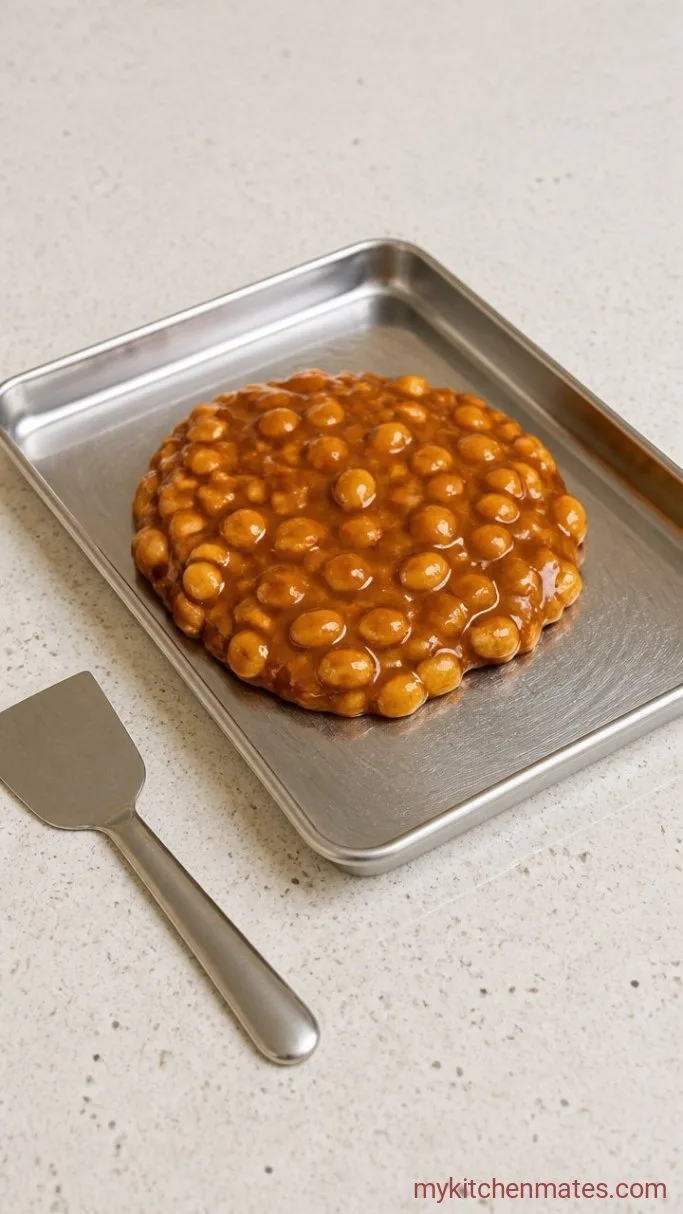
Take the pan off the heat and immediately fold in the roasted peanuts, plus the cardamom if you are using it. Stir fast until every nut is coated in glossy jaggery, then dump the whole mass onto a greased marble slab, baking tray, or sheet of parchment. Set a second sheet of greased parchment on top and roll it out as thin as you can, about a quarter inch. The chikki will start setting within thirty seconds, so work quickly.
Step 4: Cool and Snap Into Pieces
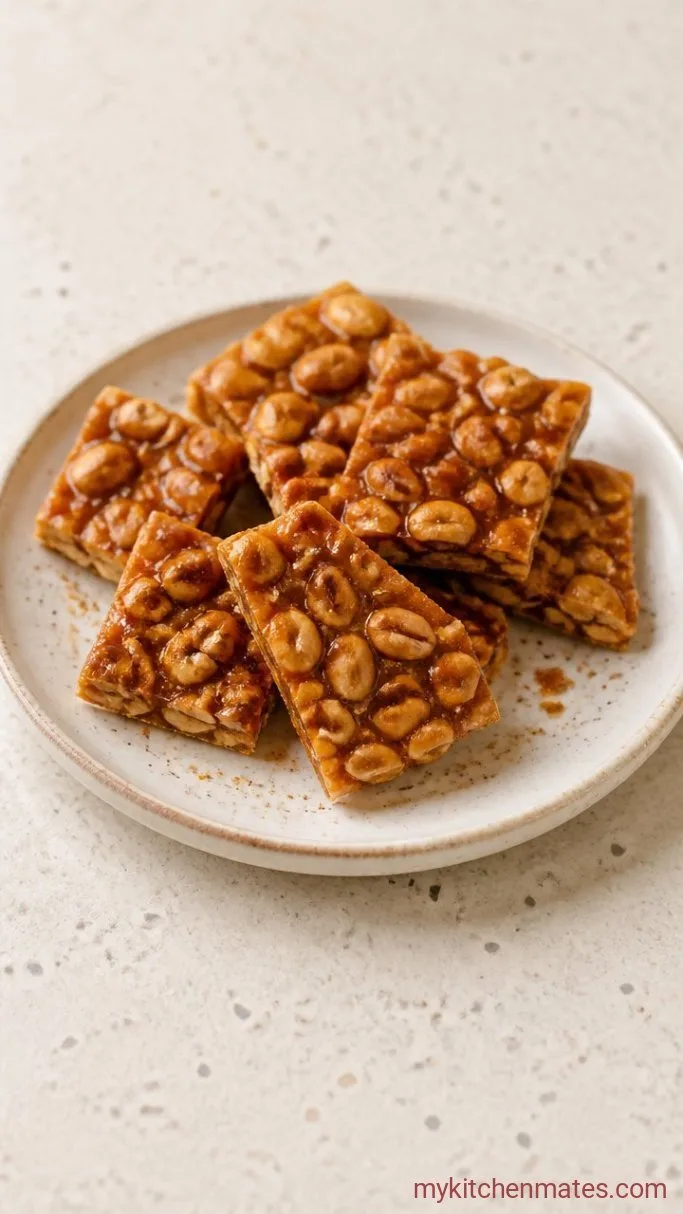
Let the slab cool for two minutes until it is firm enough to score but still slightly warm. Use a sharp knife or pizza cutter to mark deep lines into squares or diamonds. Once it is completely cool, simply snap along those lines. The shards should break with a sharp crack and show a smooth, shiny surface.
Tips for Foolproof Chikki
- Use a heavy-bottomed pan so the jaggery melts evenly without scorching at the edges.
- Grating block jaggery helps it dissolve quickly; large chunks can burn before they melt.
- If the syrup goes past the hard crack point and starts smoking, start over. Burnt jaggery tastes bitter and will not save.
- Keep the rolled slab thin. Thick chikki becomes tough and loses that clean snap.
- Once the peanuts hit the syrup, every second counts; have your greased surface ready before you start the jaggery.
How to Store Homemade Chikki
- Room temperature: Once completely cool, layer the pieces between sheets of parchment in an airtight tin. They stay crisp for up to 2 weeks.
- Avoid the fridge: Cold storage introduces moisture and makes the brittle sticky and soft. A dry cupboard is best.
Frequently Asked Questions
Can I use sugar instead of jaggery?
Yes, you can. Use 3/4 cup white sugar and cook it in the same way, but expect a lighter flavour and a harder snap. Jaggery gives that characteristic orange-brown colour and a rounder sweetness.
Why did my chikki turn out chewy?
The syrup was most likely undercooked. You need it to reach the hard crack stage, where it solidifies immediately in cold water. A drop of syrup that forms a soft or firm ball will give you a chewy, taffy-like result.
Can I use roasted, salted peanuts?
You can, though the salt will shift the balance. If you use them, skip any added salt in the recipe, but know that the chikki will be a little saltier and the roasted flavour will be more pronounced.
My jaggery turned grainy while melting. What went wrong?
Graininess happens when the syrup crystallizes, often from stirring too much or too hard. If it seizes, add a tablespoon of water, lower the heat, and let it melt again without stirring. It should smooth out.
Peanut Chikki Recipe
Ingredients
Method
- Dry roast the peanuts in a skillet over medium heat for 3-4 minutes until fragrant and speckled. Rub off loose skins and set aside.
- In the same pan over low heat, melt the ghee and jaggery together, stirring gently, until the syrup reaches the hard crack stage, about 5-7 minutes. Test by dropping a bit into cold water; it should harden instantly.
- Remove from heat and quickly stir in the peanuts and cardamom until well coated. Pour onto a greased surface and roll thinly between two sheets of parchment.
- Let it cool for a couple of minutes, score into pieces, then cool completely and snap along the scored lines.
Notes
