
Gochujang-Braised Korean Pot Roast

This Korean pot roast gets its deep, savory intensity from a slow braise in a gochujang-spiked sauce, and the beef turns so tender you can pull it apart with gentle pressure from a fork.
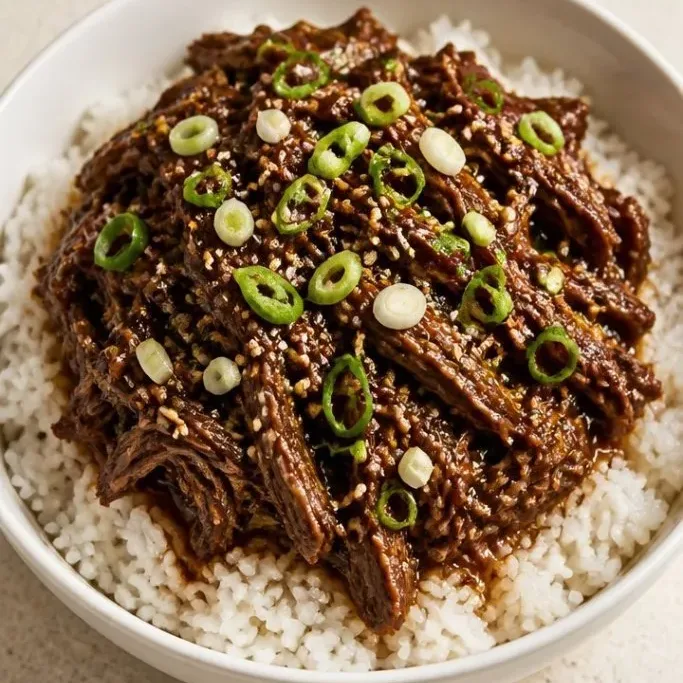
Serve it over rice with a handful of sesame seeds and some quick-pickled cucumbers for a weeknight meal that feels like a weekend spread.
What Makes This Roast So Tender
The combination of gochujang, soy sauce, and a low oven works real magic here. The meat stays moist, and the sauce thickens into a glossy, spicy-sweet finish that coats every shred.
It needs almost no attention once it slides into the oven, so you can knock out a couple of side dishes while the house fills with that rich, garlicky smell.
Ingredients
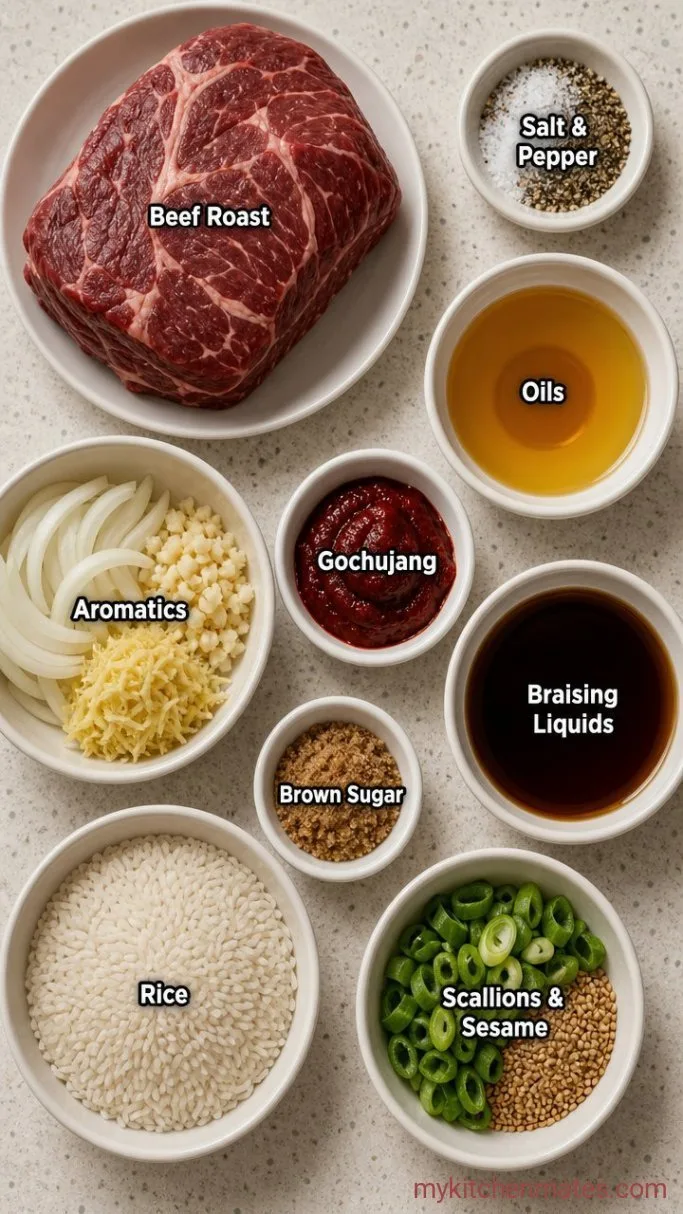
- 3 to 4 lb beef chuck roast: look for good marbling, it breaks down during the long cook
- Salt and black pepper: for seasoning the beef before searing
- 2 tbsp vegetable oil: any neutral oil works
- 1 large onion, sliced: yellow or sweet onion
- 6 cloves garlic, minced: don’t be shy, it mellows in the braise
- 1 tbsp grated fresh ginger: use the fine side of a box grater or a microplane
- ⅓ cup gochujang: the fermented chile paste that gives the sauce its backbone
- ¼ cup soy sauce: regular or low-sodium
- 2 tbsp mirin: adds a little sweetness and shine
- 2 tbsp brown sugar: light or dark
- 1 tbsp toasted sesame oil: stirred in at the end for nuttiness
- 1 cup beef broth: helps the braising liquid stay balanced
- Steamed rice, sliced scallions, and toasted sesame seeds: for serving
Variations / Substitutions
- Boneless chicken thighs: it work beautifully, just keep an eye on doneness (chicken cooks faster)
- Make it spicier: add 1 to 2 tsp gochugaru along with the gochujang
- Honey instead of brown sugar: use 2 tbsp honey for a slightly different sweetness
- Gluten-free option: swap soy sauce for tamari
Creamy Broccoli Cheddar Casserole is another reader favorite dinner worth making next.
How to Make Korean Pot Roast
Step 1: Sear the Beef
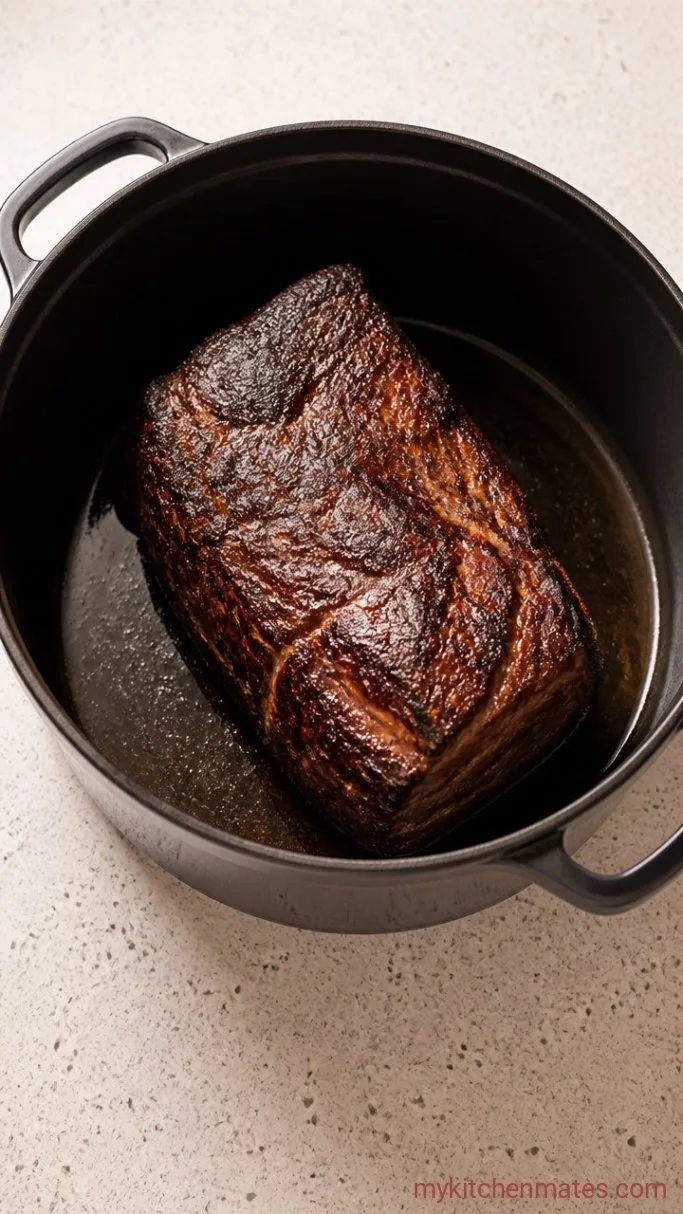
Pat the 3 to 4 lb chuck roast dry with paper towels and season it generously with salt and black pepper. Heat the 2 tbsp vegetable oil in a Dutch oven over medium-high, then brown the roast on all sides, about 4 minutes per side, until a deep, dark crust forms.
The crust you build now is the flavor base for the sauce, so let the meat sit untouched until it releases easily from the pot. You’ll hear the sizzle quiet down when it’s ready to flip.
Step 2: Sauté the Aromatics
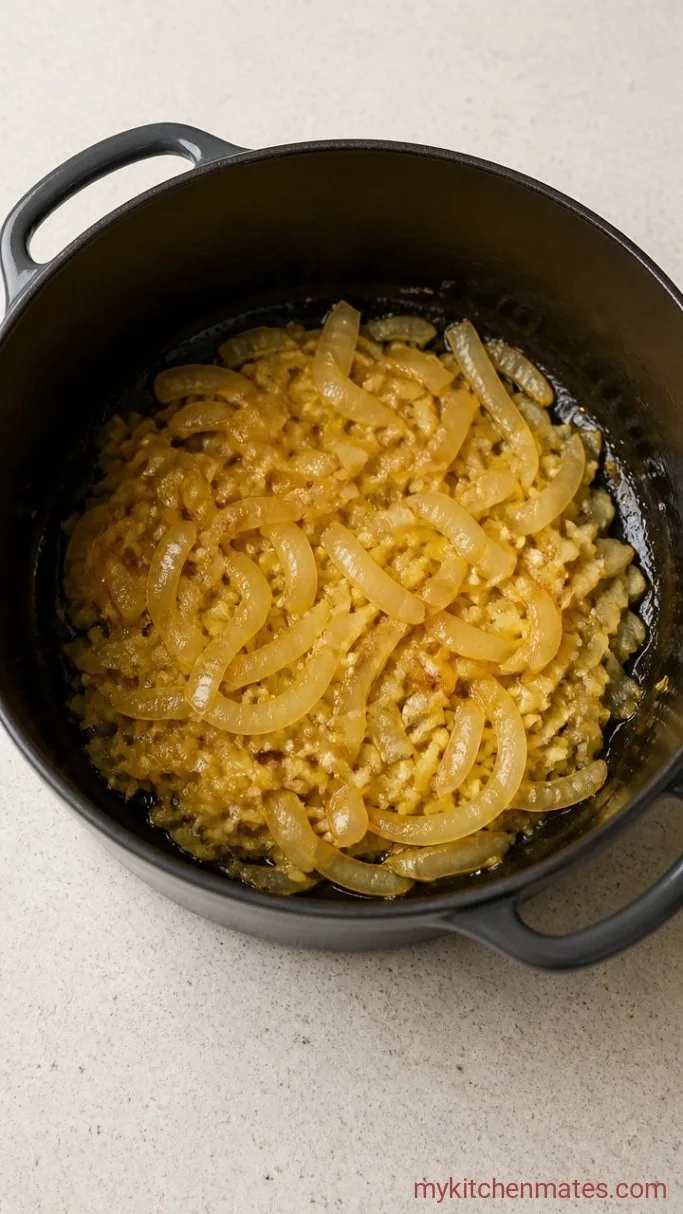
Remove the beef to a plate, drop the heat to medium, and toss in the sliced onion. Cook for 5 minutes, scraping up the browned bits stuck to the bottom, then stir in the minced garlic and grated ginger and let them go for 1 minute more.
The onion should soften and turn translucent, and your kitchen will smell hard to resist. If the garlic threatens to burn before the onion is ready, add a tiny splash of water.
Step 3: Braise the Roast
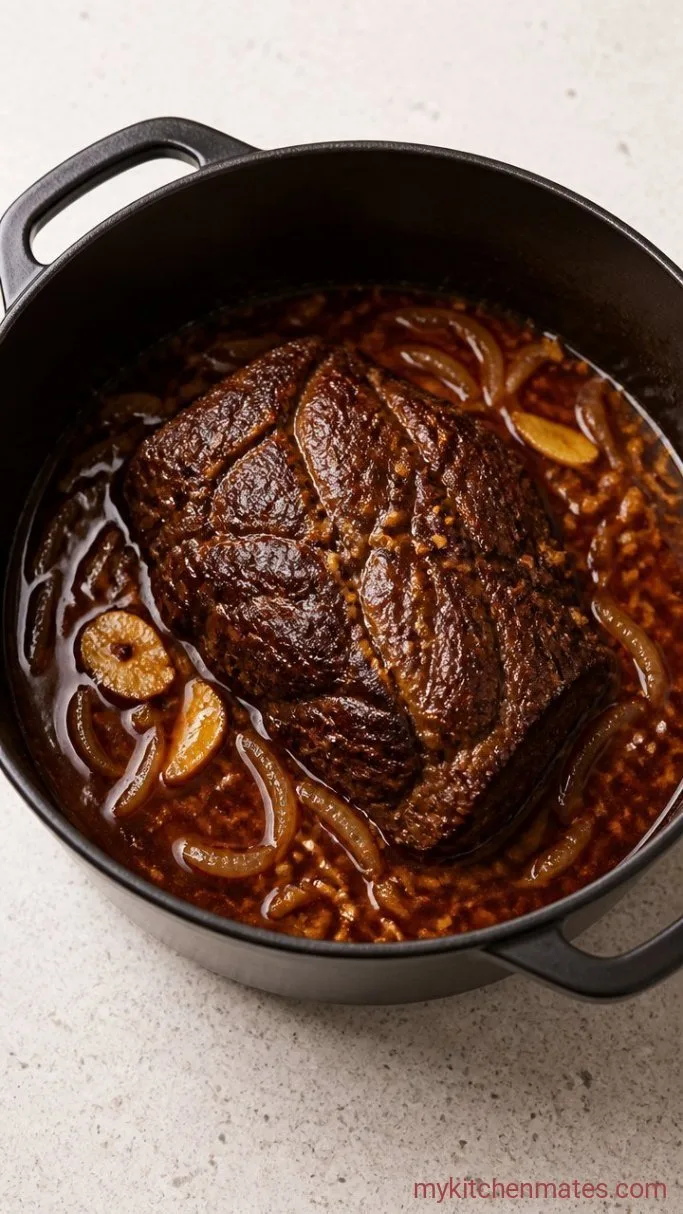
Preheat your oven to 325°F (165°C). In a bowl, whisk the gochujang, soy sauce, mirin, brown sugar, and sesame oil until smooth, then pour it into the pot along with the beef broth and give everything a stir. Nestle the roast back in and bring the liquid to a gentle simmer.
Cover with a tight lid and transfer to the oven. Braise for 2.5 to 3 hours, until a fork slides into the meat with almost no resistance. Check once halfway through to make sure the liquid level is holding steady; add a splash of water if it looks low.
Step 4: Shred the Meat
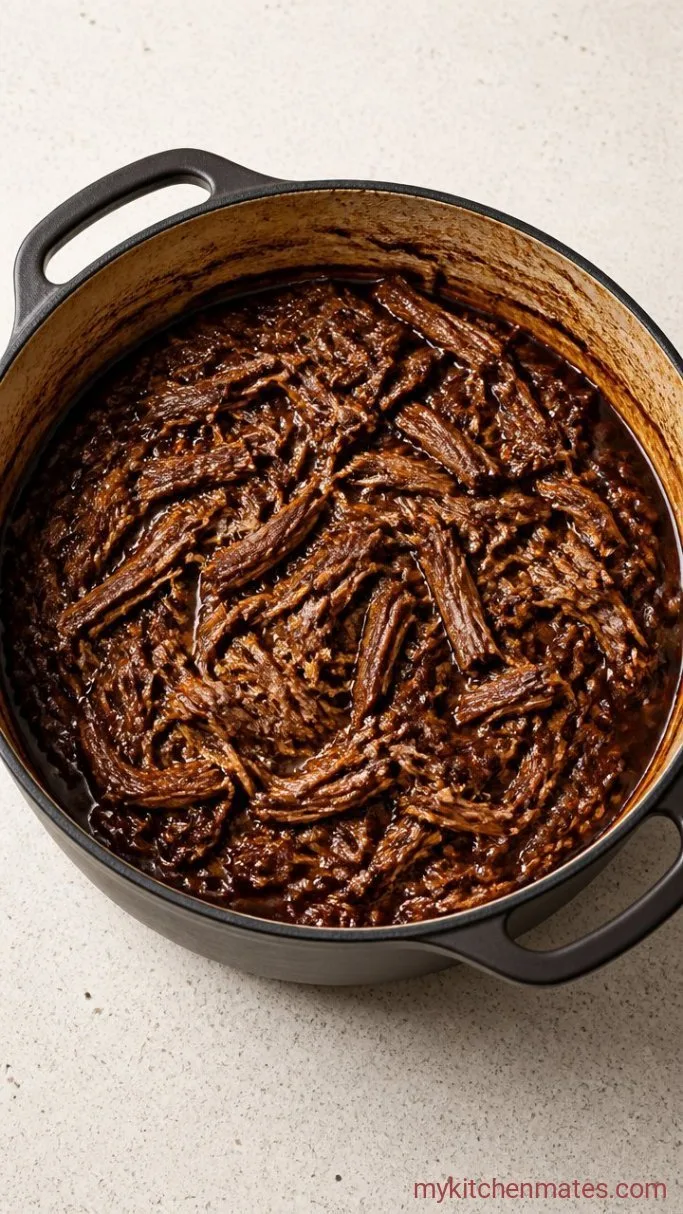
Lift the roast out of the sauce and let it rest on a cutting board for 5 minutes. Use two forks to pull the beef into large, irregular chunks, discarding any big pieces of fat you don’t want.
The meat should fall apart with barely any effort. If you hit a spot that fights you, that means it needs more time in the oven, so you can pop it back in for another 20 minutes.
Step 5: Finish with Sesame and Scallions
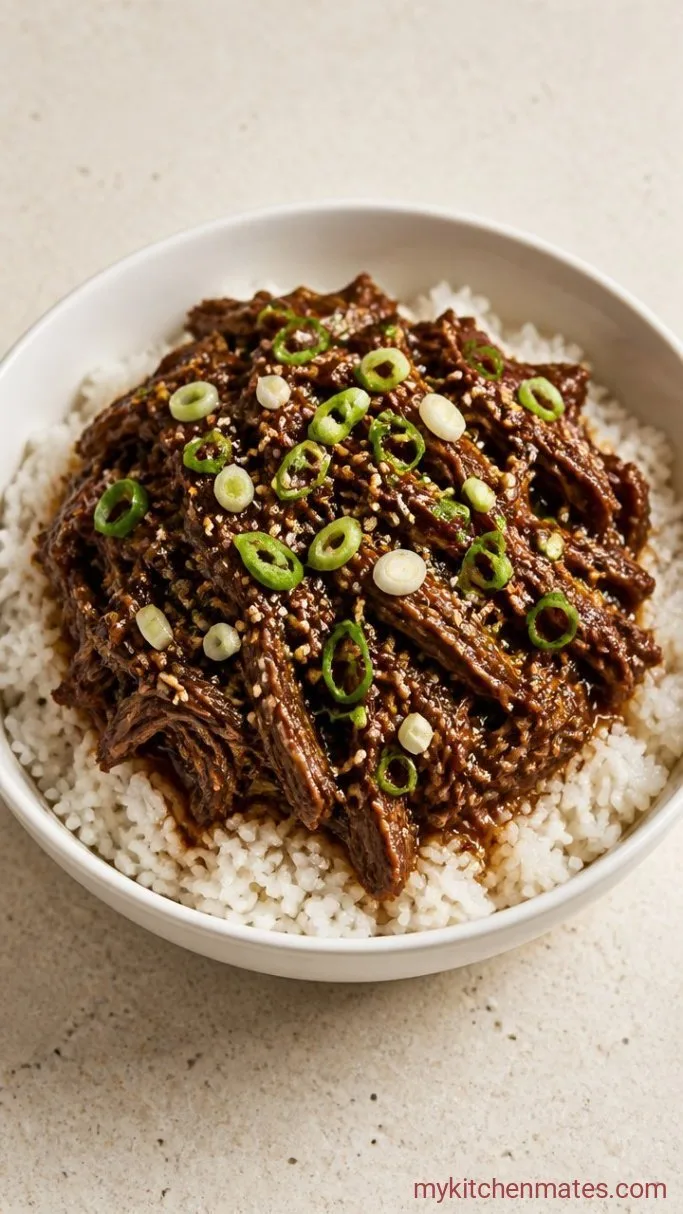
Skim the fat off the top of the sauce if you prefer a leaner finish, or stir it right back in for a richer one. Return the shredded beef to the pot and toss it gently in the sauce until every piece is coated. Serve over steamed rice, scattered with sliced scallions and toasted sesame seeds.
The sauce at this point is deep red and glossy, and that drizzle of sesame oil ties everything together. I like to pass extra gochujang at the table for anyone who wants more heat.
Tips for the Best Korean Pot Roast
- Choose a well-marbled chuck roast. The fat breaks down and keeps the meat juicy, while leaner cuts can turn dry even in a braise.
- Browning deeply is the one step you shouldn’t rush. Let the meat sit until a proper crust forms; that’s where the deep savory flavor lives.
- If the sauce still looks thin after you shredded the meat, simmer it uncovered on the stovetop for 10 minutes to reduce it.
- Leftover meat makes incredible tacos or bibimbap bowls the next day, so double the roast if you’re cooking for a small crowd.
Cook times by method:
| Method | Temperature/Pressure | Time |
|---|---|---|
| Dutch oven | 325°F (165°C) | 2.5 to 3 hours |
| Slow cooker | Low | 8 to 9 hours |
| Instant Pot | High pressure | 60 minutes + natural release |
Storing Leftover Korean Pot Roast
Keep any leftovers in an airtight container in the fridge for up to 4 days. Reheat gently on the stovetop with a splash of water, stirring now and then, until the meat is warmed through and the sauce loosens back up.
What to Serve with Korean Pot Roast
Steamed rice is a no-brainer, but pickled radish or a quick cucumber salad cuts the richness perfectly. A pile of kimchi on the side adds crunch and a fermented kick that plays off the sweet, savory sauce.
Frequently Asked Questions
Do I need to marinate the beef?
No, the long braise infuses the meat with flavor as it cooks, so marinating isn’t necessary.
Can I use a different cut of beef?
Chuck is ideal, but brisket or round can work. They tend to be leaner and may need up to an extra hour of cooking to become tender.
How do I thicken the sauce if it’s too thin?
After shredding, whisk a slurry of 1 tablespoon cornstarch with 2 tablespoons cold water into the simmering liquid and cook for a minute until glossy.
Can I cook this on the stovetop instead of the oven?
Yes, bring the pot to a low simmer on the stove, cover, and cook for the same amount of time, checking the liquid level once or twice to make sure it doesn’t run dry.
Korean Pot Roast Recipe
Ingredients
Method
- Pat the roast dry, season with salt and pepper, then brown on all sides in hot oil over medium-high heat.
- Remove the beef; cook the onion until softened, then stir in garlic and ginger and cook 1 minute.
- Whisk gochujang, soy sauce, mirin, brown sugar, and sesame oil together. Add to the pot along with the broth and return the roast. Bring to a simmer, cover, and braise in a 325°F oven for 2.5 to 3 hours until fork-tender.
- Lift the roast out, let it rest briefly, then shred with two forks.
- Skim fat from the sauce if desired, toss the shredded meat back in, and serve over rice with scallions and sesame seeds.
Notes
