
Extra Moist Blueberry Greek Yogurt Muffins

I make these blueberry muffins whenever I want something tender, tangy, and loaded with fruit, and the Greek yogurt does a quiet, heavy lift. They come out of the oven with tall, golden domes, and the berries stay plump instead of sinking to the bottom.

You only need one bowl and a whisk. No stand mixer, no softened butter, just a batter that bakes up soft and stays that way for days.
What Makes These Muffins So Good
Greek yogurt replaces most of the fat and brings a gentle tang that makes the blueberry flavor pop more than a plain butter muffin ever could. The crumb is tight but never rubbery, the kind that pulls apart into fluffy little sheets.
I bring these to weekend brunch, freeze half for busy mornings, and never worry about them drying out by Tuesday. That reliability, the way the yogurt keeps the crumb moist after the first day, is why I write this one down instead of hunting for a new recipe.
Ingredients
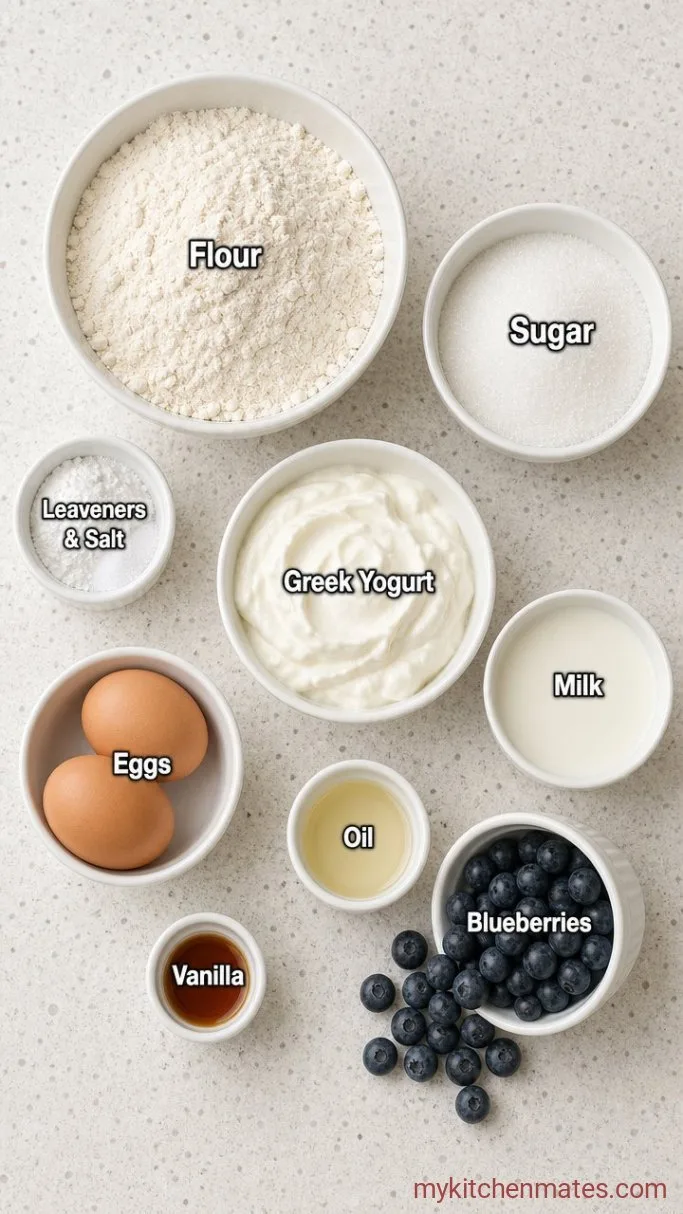
- 2 cups (250g) all-purpose flour: spooned and leveled, not scooped
- ⅔ cup (130g) granulated sugar: white sugar works best for a clean, sweet backdrop
- 1 tbsp baking powder: fresh, for a reliable rise
- ½ tsp baking soda: balances the acidity of the yogurt
- ½ tsp fine sea salt: brings the blueberry and tang forward
- 1 cup (245g) full-fat Greek yogurt: any plain style; whole-milk gives the softest crumb
- ½ cup (120ml) whole milk: or 2% in a pinch, but full-fat carries the flavor
- ⅓ cup (80ml) neutral oil: canola, sunflower, or a light olive oil
- 2 large eggs, room temperature: cold eggs can make the batter tighten
- 1½ tsp vanilla extract
- 1½ cups (210g) fresh blueberries: small, sweet ones hold their shape best
Variations / Substitutions
- Swap the fruit: raspberries, blackberries, or halved cherries work the same way; if using frozen, do not thaw them
- Dairy-free: use a thick plant-based yogurt and oat milk; the texture stays soft but the tang is milder
- Add lemon: stir 1 tablespoon finely grated lemon zest into the sugar before mixing, and swap the vanilla for ¼ teaspoon almond extract
- Crumb topping: cut 3 tbsp cold butter into ⅓ cup flour, 3 tbsp brown sugar, and a pinch of cinnamon, then sprinkle over the batter before baking
Egg White Omelette makes a great breakfast to go with these muffins.
How To Make Blueberry Greek Yogurt Muffins
Step 1: Mix the Dry Ingredients
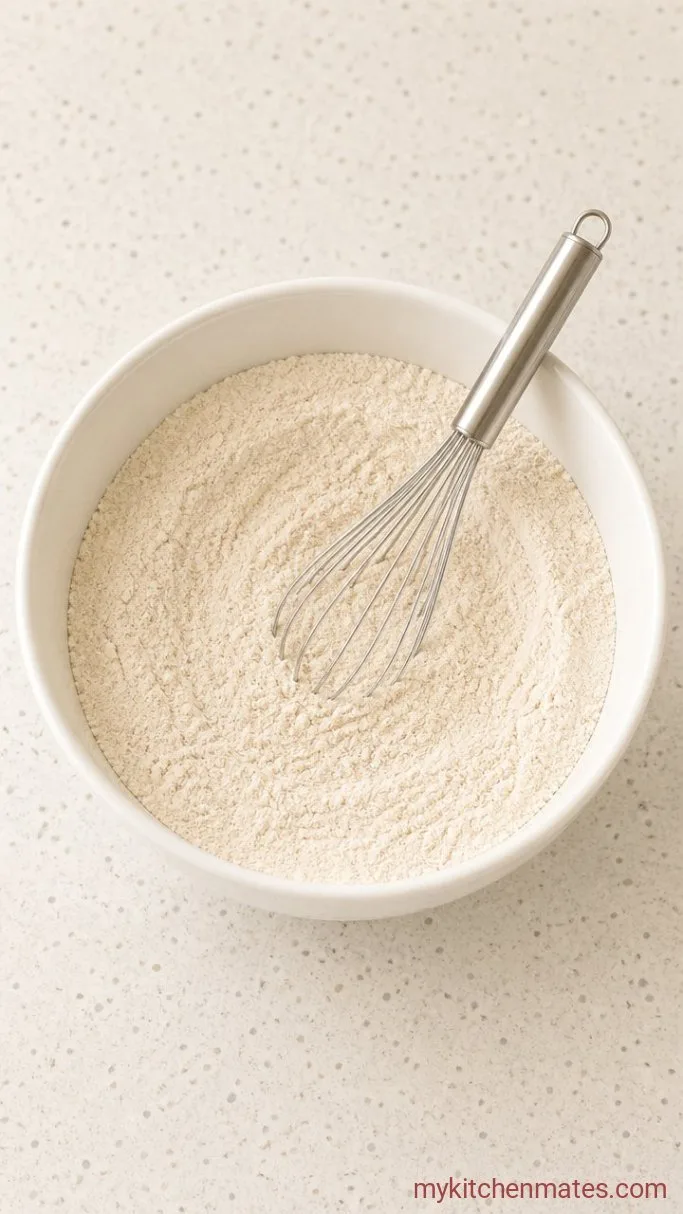
Preheat your oven to 400°F (200°C) and line a 12-cup muffin tin with paper liners. In a large mixing bowl, whisk together the 2 cups flour, ⅔ cup sugar, 1 tablespoon baking powder, ½ teaspoon baking soda, and ½ teaspoon salt.
You want everything dispersed evenly so the rise is consistent across every muffin. A quick whisk for about 30 seconds does the job; no sifting needed.
Step 2: Whisk the Wet Ingredients

Make a well in the center of the dry ingredients. Add the 1 cup Greek yogurt, ½ cup milk, ⅓ cup oil, the 2 eggs, and 1½ teaspoons vanilla. Whisk gently just until the flour disappears and the batter is mostly smooth, about 20 gentle strokes.
It will look thick and a little lumpy, and that is exactly right. Overmixing here wakes up the gluten and makes the final crumb tough, so stop the second the white streaks are gone.
Step 3: Fold in the Blueberries
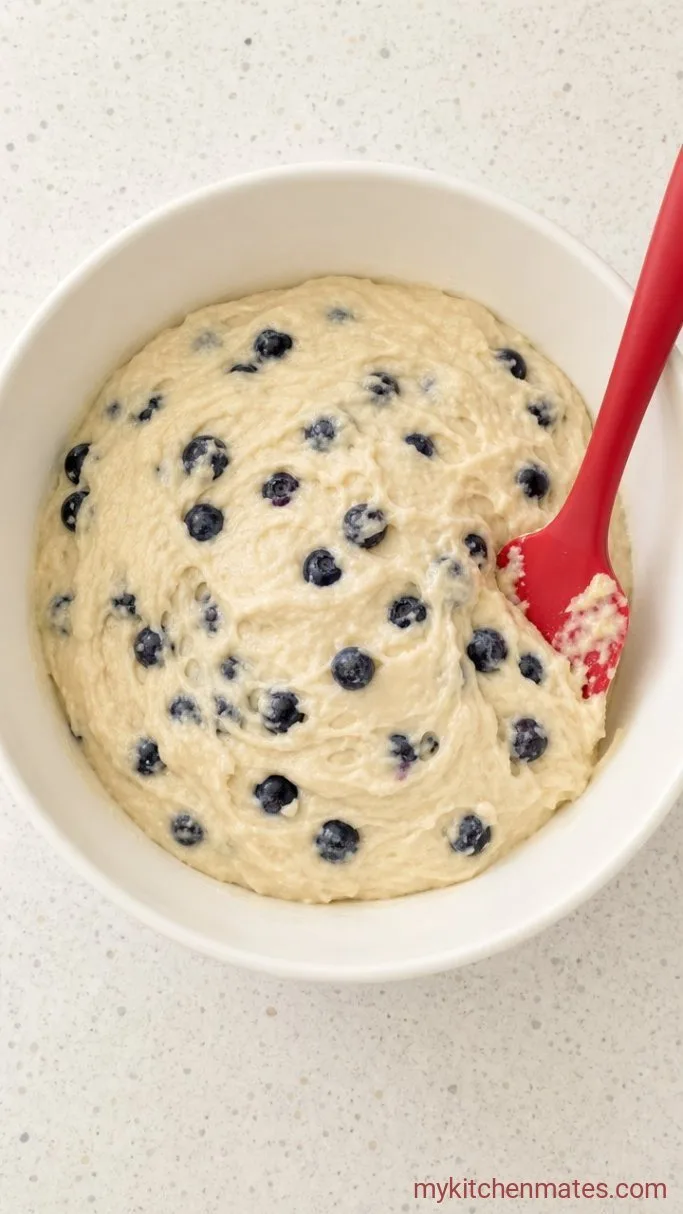
Scatter the 1½ cups blueberries over the batter. Use a flexible spatula to fold them in with 4 or 5 broad sweeps, turning the bowl as you go. The batter will streak purple in spots, and a few berries might break open.
Coating the berries lightly in flour before adding is a trick you will see in a lot of recipes, but I skip it. The thick batter holds the berries in place, and a little purple juice around the edges looks beautiful once the muffins bake.
Step 4: Fill and Bake the Muffins
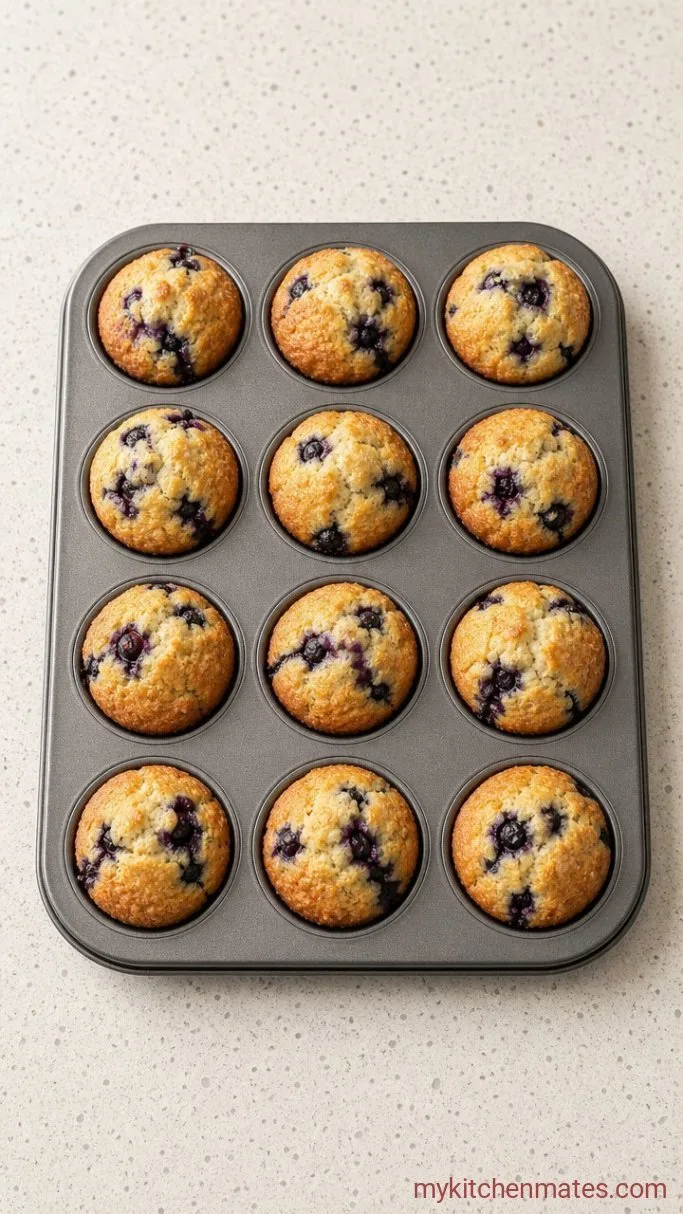
Divide the batter evenly among the 12 prepared cups. They will be filled nearly to the rim, which gives you those tall bakery tops. Bake on the center rack for 18 to 22 minutes, until the tops are puffed, deeply golden, and a toothpick inserted in the center of one muffin comes out with a few moist crumbs.
Rotate the pan halfway through if your oven has a hot spot. The smell, lightly caramelized sugar and warm blueberries, will hit you around minute 15, and that is your cue to pay attention.
Step 5: Cool and Serve
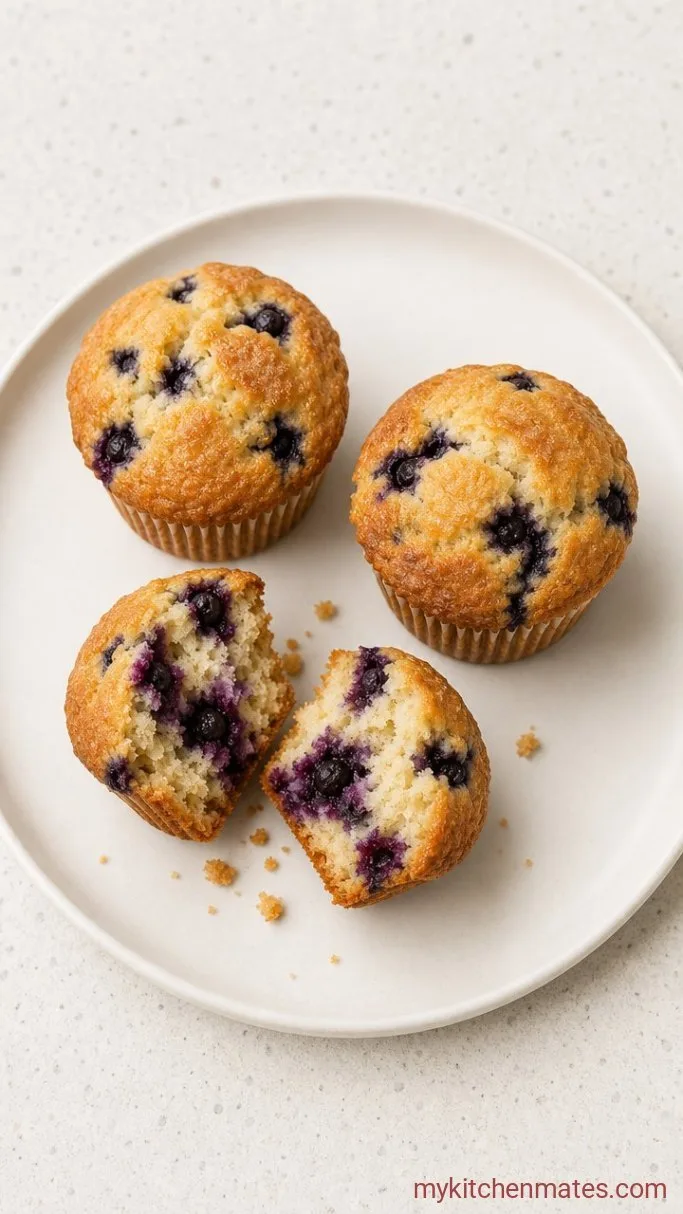
Let the muffins rest in the tin for 5 minutes, then lift them out. A butter knife run around the edge loosens any that stick to the paper. Transfer them to a wire rack and let them cool another 10 minutes if you can stand it.
Serve them warm, split open with a smear of salted butter, and the centers will be tender and stained purple where the berries burst. That last ten minutes of cooling keeps the crumb from steaming, so the texture stays fluffy instead of gummy.
A Few Notes Before You Start
- The biggest mistake is overmixing the wet into the dry. When you see just a bit of flour left, stop. The batter should still look shaggy before you fold in the berries.
- Room-temperature eggs and yogurt blend more smoothly and don’t seize the oil. If you forget to pull the eggs early, set them in a bowl of warm water for 5 minutes.
- If your blueberries are unusually large or wet, pat them dry with a paper towel so they don’t add extra moisture and sink.
- These muffins freeze beautifully. Once completely cool, wrap each one tightly in plastic and then in a freezer bag. A quick 20-second microwave reheats a frozen muffin until it tastes fresh-baked.
Bake times by muffin size:
| Pan type | Temp | Time |
|---|---|---|
| Standard 12-cup | 400°F (200°C) | 18–22 minutes |
| Mini 24-cup | 400°F (200°C) | 10–12 minutes |
| Jumbo 6-cup | 375°F (190°C) | 22–26 minutes |
Storing and Freezing
- Refrigerate: The muffins keep well in an airtight container at room temperature for 3 days; in warm weather, refrigerate for up to 5 days. Bring them to room temperature or warm gently before serving.
- Reheating: Pop a refrigerated muffin in the microwave for 15 seconds, or bake at 300°F (150°C) for 5 minutes to refresh the top.
- Freeze: Wrap each fully cooled muffin in plastic wrap, then stash in a zip-top bag. They hold for 3 months. Thaw overnight in the fridge or microwave straight from frozen for about 30 seconds.
Frequently Asked Questions
Can I use frozen blueberries?
Yes. Do not thaw them. Toss the frozen berries in 1 tablespoon of the measured flour from the recipe before folding them in, and bake immediately. The muffins may need 2 to 3 extra minutes.
Is there a substitute for Greek yogurt?
Sour cream works in the same amount and gives a near-identical texture. Plain skyr is even thicker and makes a slightly denser muffin, but still good.
Why did my muffins turn out dense?
Dense muffins almost always come from overmixing the batter after adding the flour, or from using yogurt and eggs straight from the fridge. Mix only until the flour disappears, and use room-temperature ingredients.
Can I reduce the sugar?
You can cut the sugar to ½ cup without ruining the structure, but the muffins will taste less sweet and a bit more tangy from the yogurt. The texture stays tender either way.
Blueberry Greek Yogurt Muffins Recipe
Ingredients
Method
- Preheat oven to 400°F (200°C) and line a 12-cup muffin tin. Whisk flour, sugar, baking powder, baking soda, and salt in a large bowl.
- Make a well and add yogurt, milk, oil, eggs, and vanilla. Stir just until combined, with a few lumps remaining.
- Fold in blueberries with a few broad strokes.
- Divide batter among cups, filling each nearly to the top. Bake 18–22 minutes until golden and a toothpick comes out with moist crumbs.
- Cool in the tin for 5 minutes, then transfer to a wire rack. Serve warm.
Notes
