
Homemade Napa Cabbage Kimchi

Most kimchi recipes call for ingredients that seem reasonable, until you realize you now own half a gallon of gochugaru and a jar of fermented shrimp you will never finish. This one keeps the ingredient list short and practical, so you can actually make it on a Tuesday and not feel like you opened a specialty store.

It still delivers the funk, heat, and deep garlicky tang you want from a good batch. And because you control the salt and spice, it lands right where your palate wants it.
Why This Kimchi Works for Me
I have tried the multi-day, salt-and-rinse cycle versions, and I always end up with a puddle of overly salty brine and cabbage that still tastes raw. Skipping the long soak and massaging the salt directly into the leaves solved that. The cabbage stays crisp and the seasoning clings better.
The paste is thick and sticky, not watery, so it coats every layer without floating off into the jar. After 24 hours on the counter, you get that gentle sourness that tells you the good bacteria are doing their thing. It only improves in the fridge over the next few weeks.
Ingredients

- 1 large napa cabbage (about 2 lbs): choose one that feels heavy for its size with tight, pale inner leaves
- 1/4 cup coarse sea salt: coarse salt draws moisture out slowly; fine salt can over-salt too fast
- 1/2 cup gochugaru (Korean red pepper flakes): the main source of heat and color; look for coarse flakes
- 1/4 cup fish sauce: adds depth and umami; use a good brand like Three Crabs or Red Boat
- 1 tbsp sugar: feeds the fermentation and rounds out the sharpness
- 6 cloves garlic, minced: fresh, not jarred
- 1-inch piece fresh ginger, grated: use a microplane for a paste that disappears into the sauce
- 4 scallions, cut into 2-inch pieces: green and white parts both go in
- 1/4 cup water: just enough to loosen the paste
Variations / Substitutions
- Make it vegetarian: swap the fish sauce for an equal amount of soy sauce plus 1 tsp miso paste dissolved in the water
- Less heat: reduce gochugaru to 1/4 cup and add 1 tbsp paprika for color without the burn
- Extra crunch: toss in 1/2 cup julienned daikon radish or carrot with the scallions
- More funk: add 1 tsp saeujeot (salted fermented shrimp) to the paste if you keep it around
Kimchi Fried Rice is the main dish we love pairing with this cabbage.
How to Make Korean Kimchi
Step 1: Salt the Cabbage

Slice the cabbage in half lengthwise, then cut each half crosswise into 2-inch pieces. Discard the tough core. Rinse the pieces under cold water, shake off excess, and scatter them in a large bowl. Sprinkle in the 1/4 cup coarse salt and use your hands to massage it into the leaves for about 3 minutes, until the cabbage starts to soften and release a little liquid. Let it sit for 30 minutes, tossing once halfway through. The pieces will look slightly wilted and will have shrunk in volume.
Step 2: Rinse and Drain

After 30 minutes, fill the bowl with cold water and swish the cabbage to rinse off the salt. Do this two or three times until the water runs clear and the cabbage tastes pleasantly salty, not like the ocean. Drain well and gently squeeze out excess water. Set the colander aside over a bowl to keep dripping while you make the paste.
Step 3: Whisk the Pepper Paste
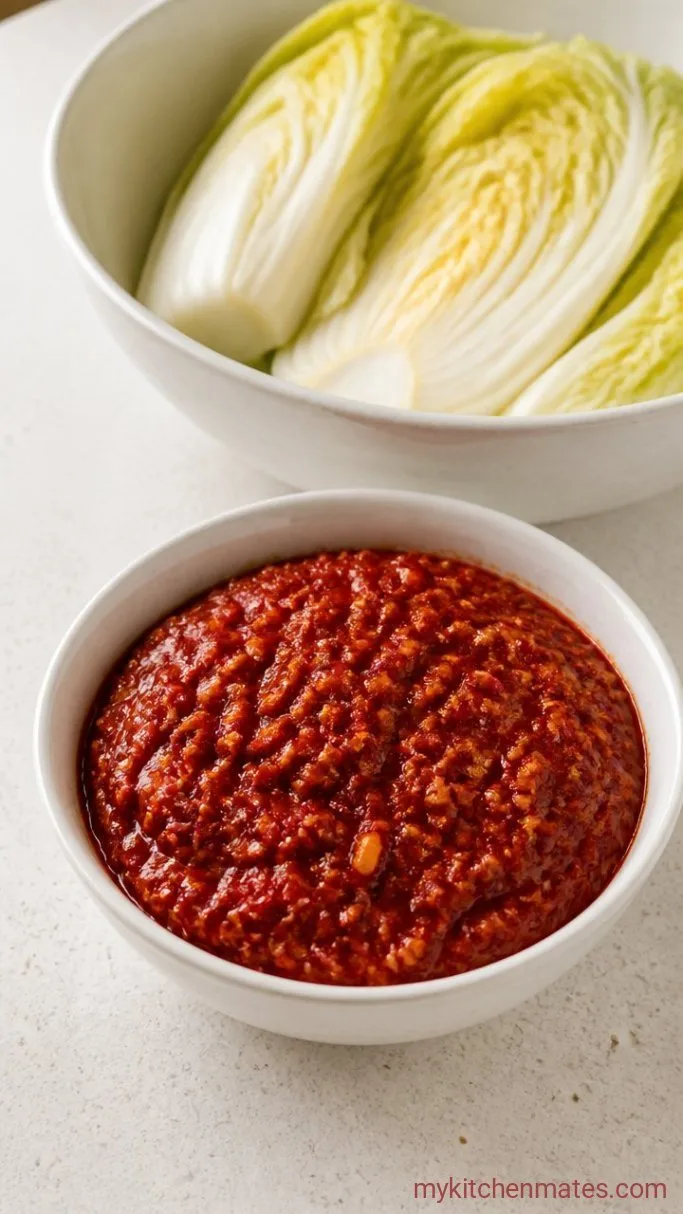
In a small bowl, combine the 1/2 cup gochugaru, 1/4 cup fish sauce, 1 tbsp sugar, minced garlic, grated ginger, and 1/4 cup water. Stir with a spoon until you have a thick, spreadable paste. It should look like wet sand or a stiff porridge. Taste it: it will be salty, spicy, and a little sweet. That balance will mellow as it ferments.
Step 4: Coat Every Leaf

Return the drained cabbage to the big bowl. Add the scallion pieces and pour the paste over the top. Put on a disposable glove or use a spatula and fold and mix until every piece of cabbage is coated and the red paste is worked into the folds. The mixture will look a bit dry at first, but keep massaging gently; the cabbage will release more moisture and the paste will spread evenly within a minute.
Step 5: Pack and Ferment

Pack the kimchi tightly into a clean 2-quart jar or airtight container, pressing down firmly so the cabbage is submerged under its own juices. Leave at least 1 inch of space at the top because the liquid will rise as gas builds up. Seal the lid loosely (or use a jar with an airlock) and set it on a plate on the counter at room temperature, away from direct sunlight. Let it ferment for 24 to 48 hours. You will start seeing small bubbles and a tangy smell after the first day.
Step 6: Scoop and Serve

Once the kimchi tastes sour enough for you, tighten the lid and transfer it to the fridge. To serve, use clean utensils to scoop out a portion and let it come to room temperature for 10 minutes if you like. Eat it straight from the jar as a side, tuck it into a bowl of rice, or chop it into a fried egg sandwich. The cold, crunchy, spicy-tart first bite is exactly why you made it yourself.
Tips for Getting a Reliable Ferment
- Room temperature matters: in a warm kitchen (above 72°F), the kimchi will sour faster, so start tasting around 18 hours. In a cool kitchen (below 65°F), give it 48 hours or more. Look for bubbles, a tangy smell, and a slightly softer texture.
- Keep everything submerged: if the liquid level drops, press the kimchi down with a clean spoon. Any cabbage poking above the brine can mold.
- Use a glove: capsaicin from the gochugaru and garlic will linger on your fingers. A disposable glove saves you from touching your eyes later.
- Don’t panic over a white film: a harmless yeast called kahm can form on the surface. Just scrape it off; the kimchi underneath is still good.
Below is a rough guide for fermentation time based on kitchen temperature. Always trust taste and smell over the clock.
| Kitchen temp (°F) | Ferment time (approx) |
|---|---|
| 60–65 | 48 hours or more |
| 66–72 | 24–36 hours |
| 73–78 | 18–24 hours |
Keeping Kimchi Fresh
- Refrigerate: once fermented, store sealed in the back of the fridge for up to 6 months. The flavor will deepen and the cabbage will soften over time.
- Use clean utensils every time: dipping a spoon that touched your mouth into the jar introduces unwanted bacteria and shortens shelf life.
What Goes Well With Homemade Kimchi
Kimchi is a natural partner to rich, fatty dishes because its acidity and spice cut right through. Try it alongside soy-glazed chicken thighs, where the sticky sweetness of the meat meets the tangy crunch. It also works piled into a simple bowl of steamed short-grain rice with a drizzle of sesame oil and a fried egg on top. For something untraditional but really good, tuck a spoonful into a grilled cheese sandwich; the sharpness makes the melted cheese taste even richer.
Frequently Asked Questions
Can I use regular green cabbage instead of napa?
Yes. Green cabbage is denser, so slice it thin and massage the salt a few extra minutes to soften it. The final texture will be crunchier and less tender.
My kimchi tastes too salty after fermentation. Can I fix it?
Unfortunately, you cannot remove salt once it is there. Next time, rinse the cabbage more thoroughly after salting and taste a piece before adding the paste.
How do I know if the kimchi has gone bad?
Trust your senses. A slimy texture, an ammonia-like or rotten smell, or visible fuzzy mold (not white film) means it should be discarded. Well-fermented kimchi smells sharp, garlicky, and pleasantly sour.
Can I ferment it longer than 2 days on the counter?
You can, especially in a cool kitchen. But after 3 days, the texture softens noticeably. Once it reaches the tanginess you like, move it to the fridge to slow the process.
Korean Kimchi Recipe
Ingredients
Method
- Cut the cabbage into 2-inch pieces, massage with salt for 3 minutes, and let sit 30 minutes.
- Rinse the cabbage thoroughly under cold water until no longer overly salty, then drain well.
- Stir together gochugaru, fish sauce, sugar, garlic, ginger, and water into a thick paste.
- Toss the drained cabbage and scallions with the paste until evenly coated.
- Pack tightly into a clean jar, press down, and ferment at room temperature 24 to 48 hours.
- Chill in the fridge and serve cold or at room temperature.
Notes
