
Sweet and Savory Korean Bulgogi (Stovetop or Grill)

Korean bulgogi is the kind of beef that hits every note in one bite: salty from soy, deeply sweet from brown sugar and pear, nutty from sesame oil, and just a little smoky from the sear. The marinade does all the heavy lifting, and once the meat hits a screaming-hot pan it cooks in under 10 minutes.
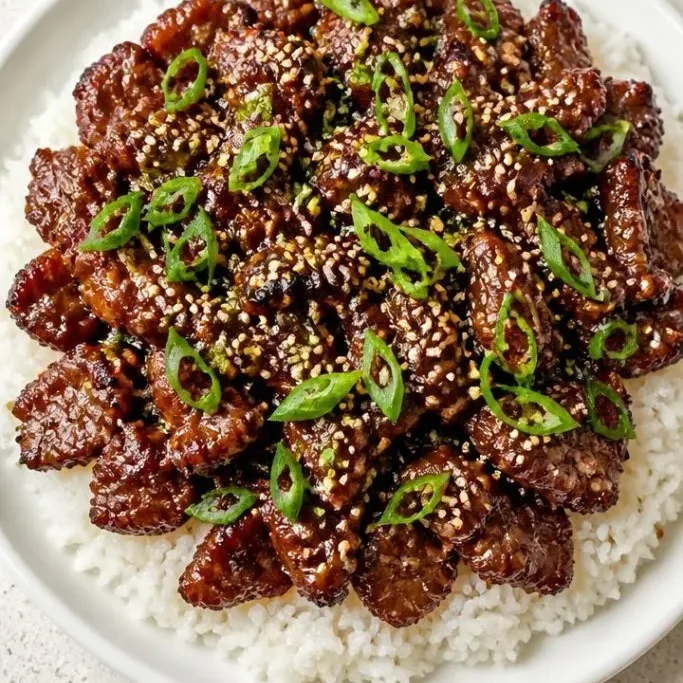
This version keeps things simple with a blender marinade that doubles as a tenderizer, thanks to a fresh pear. I’ll take you through it step by step so you get that caramelized, sticky crust every time, whether you’re on the stovetop or outside on a grill.
Why This Bulgogi Works
The pear is not just for sweetness. It has a natural enzyme that gently breaks down the beef, so thin slices stay tender even if they get a little extra color in the pan.
And because the marinade packs both sugar and soy, the meat develops those dark, lacquered edges fast. You end up with beef that is juicy on the inside and almost candy-crisp at the edges, no special equipment needed.
Ingredients
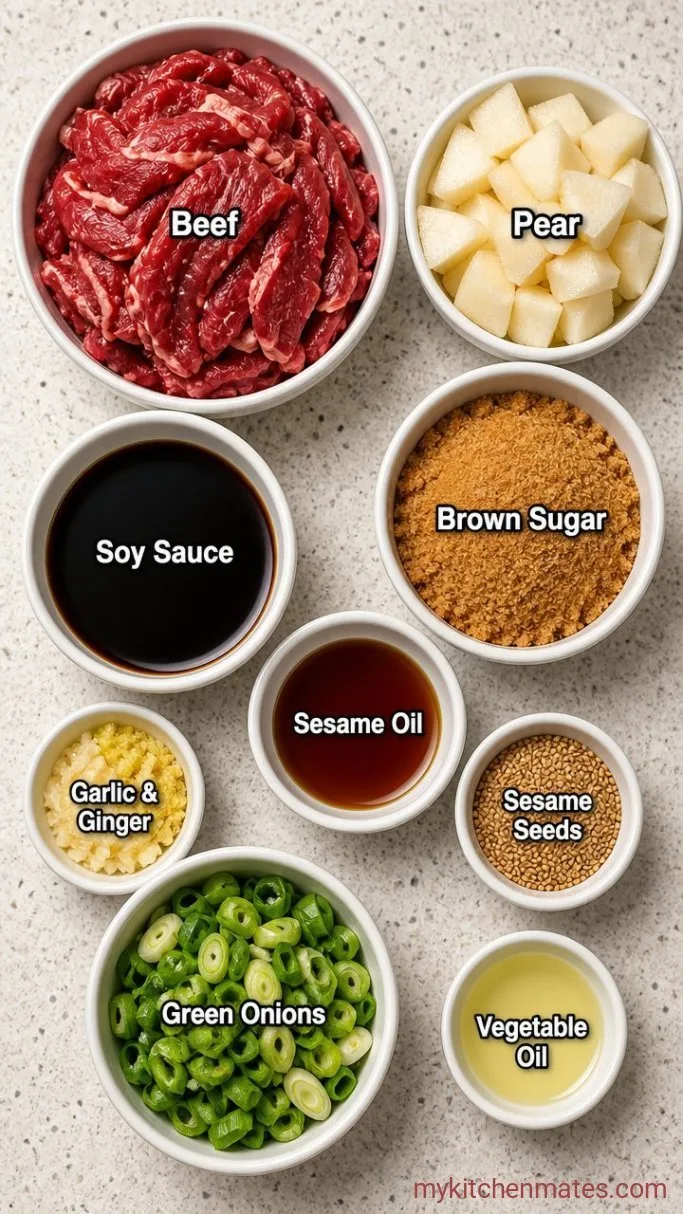
- 1 ½ lb thinly sliced beef sirloin or ribeye: slice against the grain into paper-thin strips, about ⅛ inch thick
- ½ ripe Asian pear (or 1 small Bosc pear): peeled, cored, and roughly chopped
- ⅓ cup soy sauce: regular sodium, not low-sodium, for the right salt balance
- 3 tbsp light brown sugar: packs the caramel note
- 2 tbsp toasted sesame oil: use the dark, fragrant kind
- 4 cloves garlic: smashed
- 1 tbsp minced fresh ginger
- 1 tbsp toasted sesame seeds: plus extra for serving
- 3 green onions: 2 thinly sliced for the marinade, 1 reserved for garnish
- 1 tbsp vegetable or canola oil: for the pan, not the marinade
Variations / Substitutions
- Beef swap: chicken thighs or turkey loin work well, sliced just as thin.
- Pear swap: a quarter of a peeled kiwi or half a Fuji apple both bring that same tenderizing effect.
- Extra heat: stir 1 tbsp gochujang into the marinade for a spicy-sweet bulgogi.
- Halal / alcohol-free: the recipe has no mirin, so it’s already free of those.
- Less sugar: reduce brown sugar to 2 tbsp and rely on the pear’s natural sweetness.
Crunchy Cabbage Cucumber Salad makes a bright, easy side salad for this bulgogi.
How to Make Korean Bulgogi
Step 1: Blend the Marinade
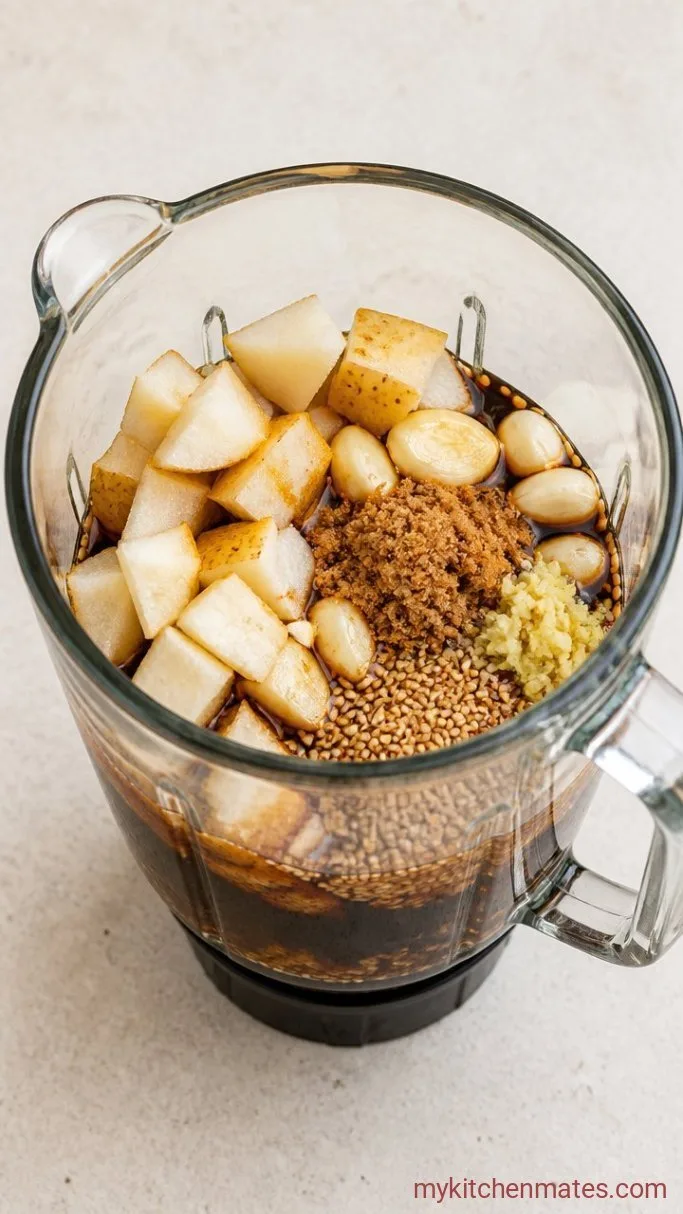
Combine the chopped pear, soy sauce, brown sugar, sesame oil, garlic, ginger, and the 2 sliced green onions in a blender or small food processor. Blend for about 30 seconds until smooth and the garlic is broken down. The mixture will be a little grainy from the pear but mostly liquid.
That purée is your all-in-one marinade. No need to mince anything separately. It looks thin, but it clings well once it meets the meat.
Step 2: Marinate the Beef
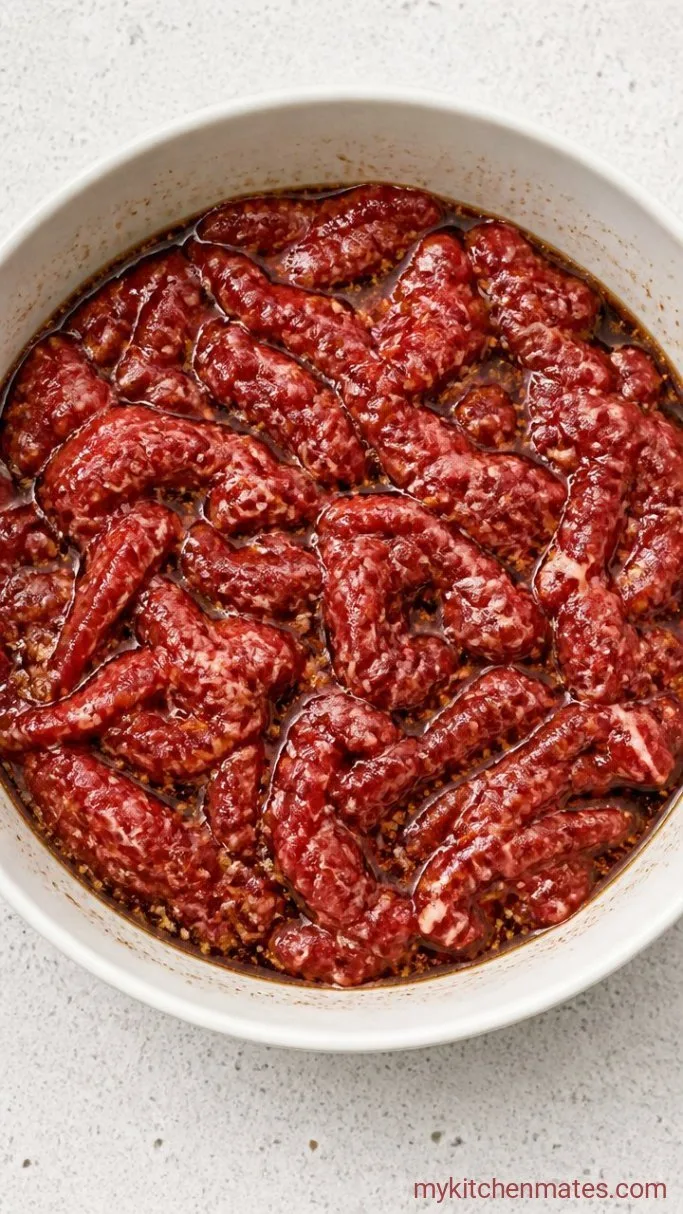
Place the sliced beef in a large bowl and pour the blended marinade over it. Use your hands to massage it in, making sure every piece is coated. Cover and refrigerate for at least 30 minutes. An overnight rest in the fridge is even better.
The pear enzymes go to work almost right away, so even a half-hour soak makes a noticeable difference in tenderness. Right before cooking, lift the beef out of the marinade with tongs and let the excess drip back into the bowl, but do not rinse it.
Step 3: Sear the Beef in Batches
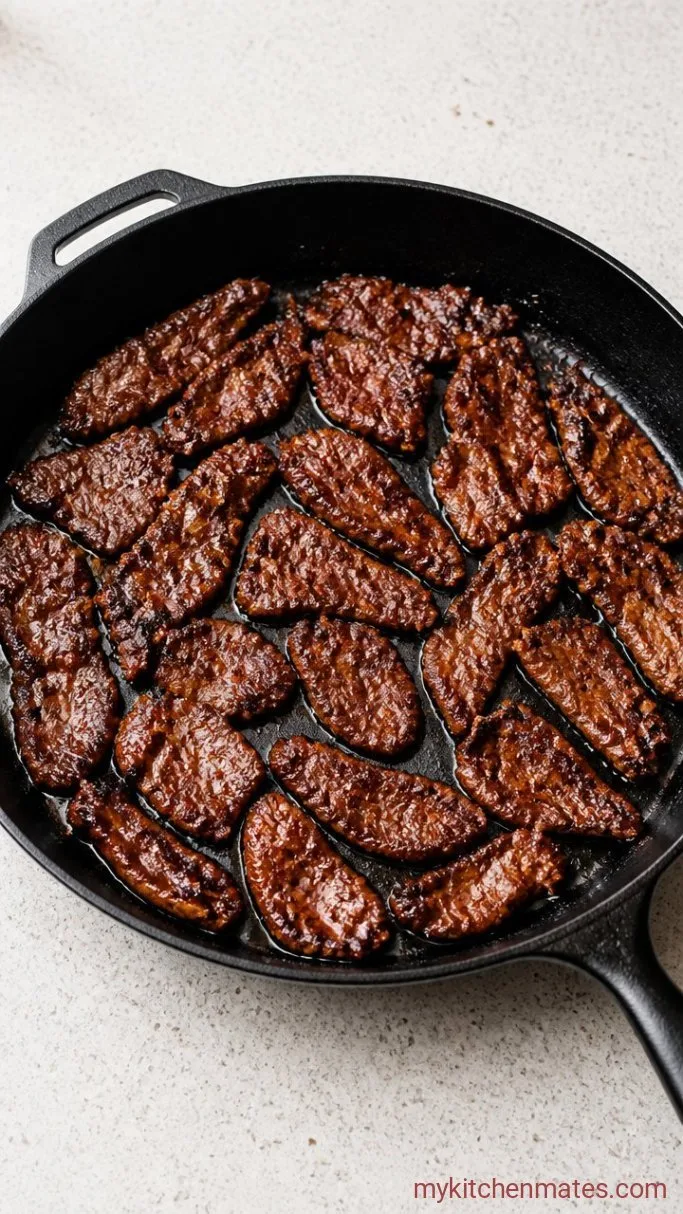
Set a large cast-iron skillet or grill pan over high heat and add the 1 tbsp vegetable oil. Once the oil shimmers, add about a third of the beef in a single layer. Let it sizzle without moving it for 2 minutes, until the underside gets dark charred spots, then flip and cook another 1 to 2 minutes.
Cook in batches so the meat sears instead of steaming. When a piece hits the pan you should hear a loud hiss. If it quiets down, the pan needs a moment to heat back up between batches. Repeat with the remaining beef, adding a tiny splash more oil only if the pan looks dry.
Step 4: Pile Over Rice and Finish with Sesame
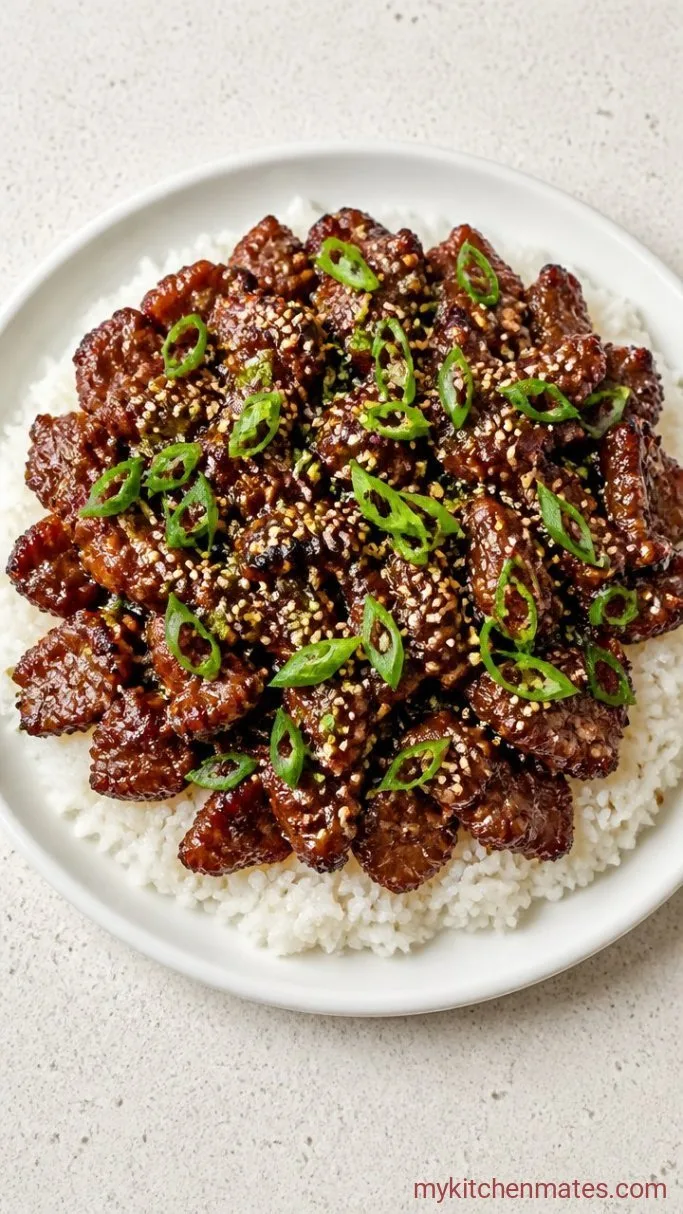
Mound the cooked bulgogi over warm white rice or nestle it into lettuce leaves for ssam. Sprinkle the reserved sliced green onion and a generous pinch of toasted sesame seeds on top. Serve while the edges are still hot and sticky, with any juices from the pan spooned over.
Tips for the Best Bulgogi
- Freeze the beef for 15 minutes before slicing.: Partially frozen meat is much easier to cut into even, paper-thin strips.
- Don’t crowd the pan.: Let the meat sit with space around each slice so it develops a char rather than simmering in its own juices.
- A cast-iron or carbon-steel pan gives the deepest sear.: If using a grill, cook on a flat griddle plate so the small pieces don’t fall through.
- Marinate up to 24 hours.: The longer soak deepens flavor, but the meat quality is best if you don’t go past a full day.
- Save any leftover marinade that didn’t touch raw meat for drizzling over rice.
Storing Leftover Bulgogi
- Refrigerate: cooled bulgogi in an airtight container for up to 4 days.
- Reheating: works best in a hot skillet over medium heat with a tiny splash of water to loosen the glaze. The microwave is fine in a pinch, though the edges lose some of their crispness.
What to Serve With Bulgogi
Steamed short-grain rice is the obvious partner, but lettuce wraps turn it into a handheld meal. Add a spoonful of kimchi for crunch and funk, or quick-pickled radish to cut through the richness. A simple cucumber salad dressed with rice vinegar and a little gochugaru brings a cooling contrast that balances the sweet beef.
Frequently Asked Questions
Can I use chicken instead of beef?
Yes, boneless skinless chicken thighs sliced thin against the grain work beautifully. The cook time stays about the same.
Do I have to use a pear?
No, a quarter of a peeled kiwi or half a sweet apple stand in nicely. You can even skip the fruit and rely solely on the brown sugar, though the meat won’t have that same enzyme-tenderized texture.
Is it okay to marinate overnight?
Absolutely. Overnight in the fridge deepens the flavor. Just avoid pushing past 24 hours, because the pear can start to make the beef mushy.
Can I make it spicy?
Stir 1 to 2 tablespoons of gochujang into the blender along with the other marinade ingredients, or simply serve a dab of gochujang on the side.
Korean Bulgogi Recipe
Ingredients
Method
- Blend the pear, soy sauce, brown sugar, sesame oil, garlic, ginger, and 2 sliced green onions until smooth.
- Pour the marinade over the sliced beef, massage to coat, cover, and refrigerate at least 30 minutes or overnight.
- Heat the vegetable oil in a large cast-iron skillet over high heat. Lift beef from marinade and sear in a single layer in batches, about 2 minutes per side until charred and cooked through.
- Pile the bulgogi over rice, top with the remaining sliced green onion and extra sesame seeds, and serve hot.
Notes
