
25-Minute Korean Beef Noodles

These Korean Beef Noodles come together fast, in one pan, with a sauce that hits savory, sweet, and just enough heat. The noodles soak up every bit of that glossy gochujang glaze while the beef stays tender and seared.
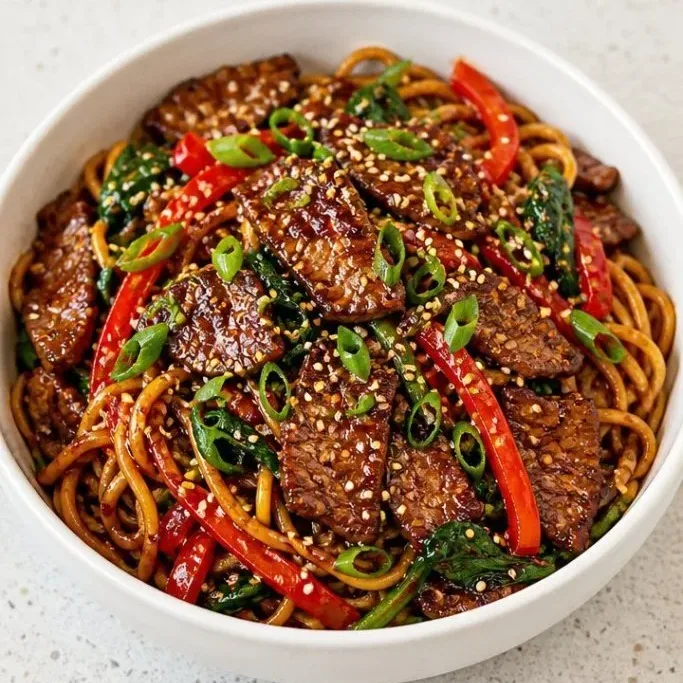
If you need a dinner that feels like a Friday night treat but clocks in under half an hour, this is it. Most of the time goes into slicing a few vegetables while the pan gets screaming hot.
Why These Noodles Land on My Table So Often
The sauce is the real star here. Gochujang brings a deep, fermented warmth that’s nothing like a raw hot sauce, and the brown sugar balances it without making the dish taste sweet. Sesame oil rounds everything out, so each bite has a toasted, nutty finish.
I lean on this recipe when the fridge looks sparse and everyone wants something bold. A handful of spinach or a stray bell pepper is all it takes to round out the bowl, and the whole thing leaves exactly one skillet to wash.
Ingredients
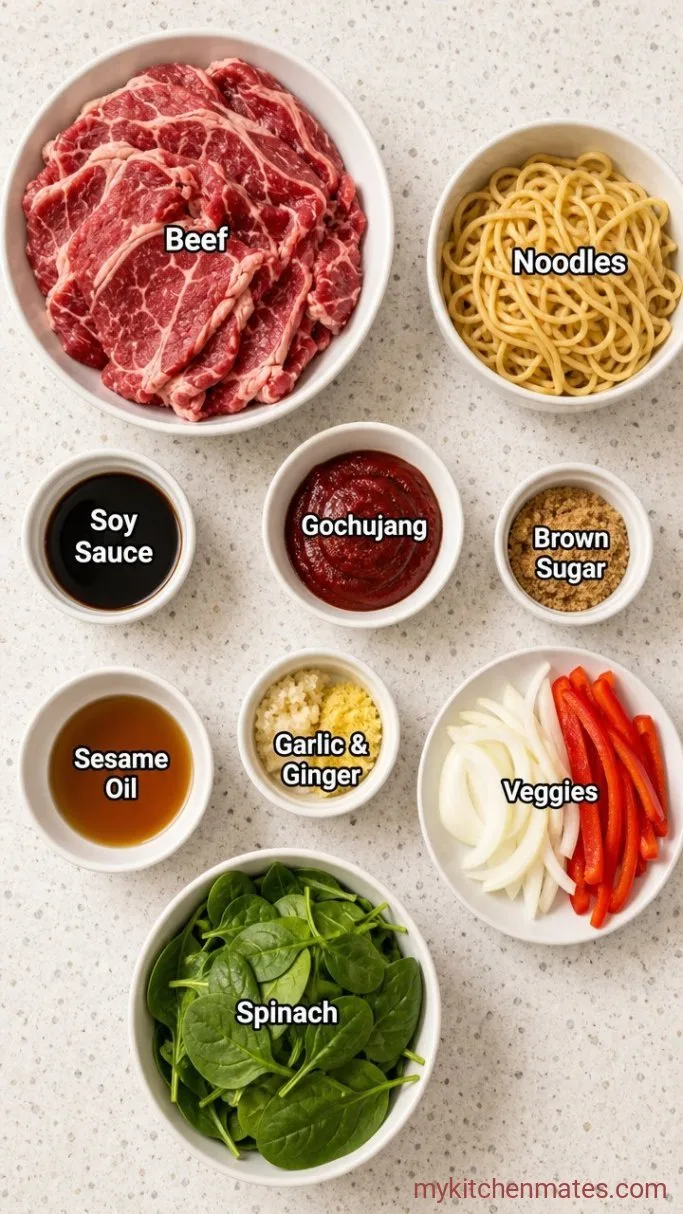
- 1 lb ribeye or sirloin, thinly sliced: any well-marbled cut works, it stays tender in a hot pan
- 8 oz lo mein noodles or udon noodles: fresh noodles cook fastest, but dried work too
- 3 tbsp soy sauce: I use regular, not low-sodium, to hold up against the gochujang
- 2 tbsp gochujang paste: the base of the sauce, start with 1 tbsp if you are heat-shy
- 1 tbsp brown sugar: melts into the sauce and softens the spice
- 1 tbsp toasted sesame oil: plus a little more for finishing
- 1 tsp rice vinegar: just enough to brighten the heavy flavors
- 2 cloves garlic, minced
- 1 tsp grated fresh ginger
- 1 tbsp vegetable oil: for searing, any neutral oil works
- 1 small onion, thinly sliced
- 1 red bell pepper, sliced into strips
- 2 cups fresh spinach leaves: they wilt down to almost nothing
- 1 tsp toasted sesame seeds, for serving
- 2 green onions, sliced, for serving
Variations / Substitutions
- Swap the protein: sliced chicken thigh works well, just sear until cooked through, about 4-5 minutes total.
- Make it gluten-free: use tamari instead of soy sauce and choose rice noodles or gluten-free ramen.
- Turn down the heat: use only 1 tbsp gochujang and increase the brown sugar by 1 tsp for a milder, kid-friendly version.
- Add more crunch: toss in shredded carrot or thinly sliced cabbage along with the bell pepper.
Napa Cabbage Kimchi goes great on the side with these noodles.
How to Make Korean Beef Noodles
Step 1: Whisk the Sauce
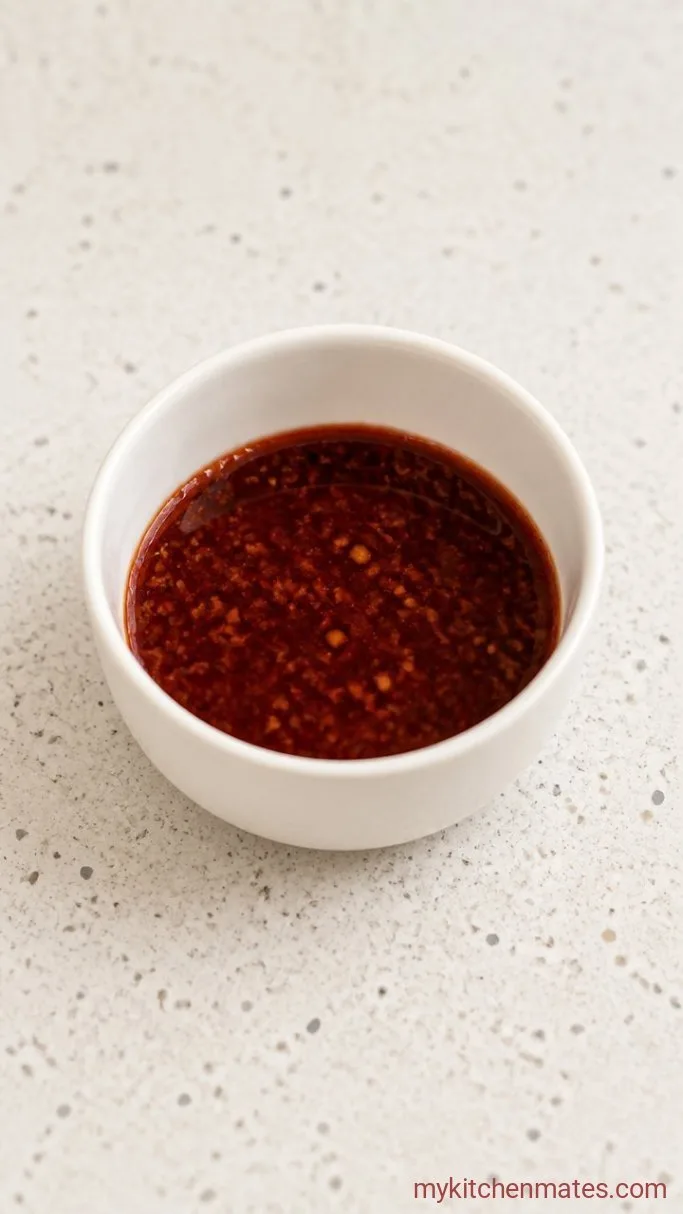
In a small bowl, whisk together the 3 tbsp soy sauce, 2 tbsp gochujang, 1 tbsp brown sugar, 1 tbsp sesame oil, and 1 tsp rice vinegar. Keep stirring for about 30 seconds until the brown sugar dissolves and the sauce looks glossy and deep red.
Step 2: Sear the Beef
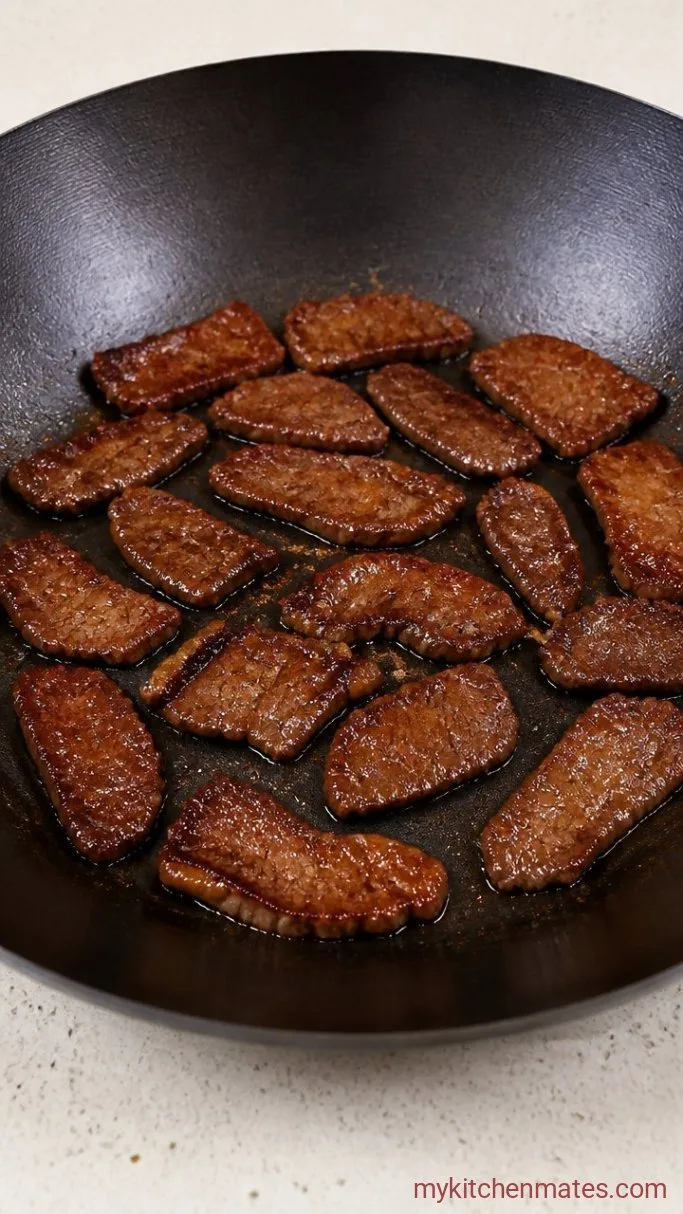
Heat the 1 tbsp vegetable oil in a large skillet or wok over high heat. When the oil shimmers, add the sliced beef in a single layer. Let it cook undisturbed for 2 minutes so a crust forms, then flip and sear the other side for another 2 minutes. The meat should be just cooked through with charred edges. Transfer the beef to a plate and set it aside.
Step 3: Sauté the Aromatics and Veggies
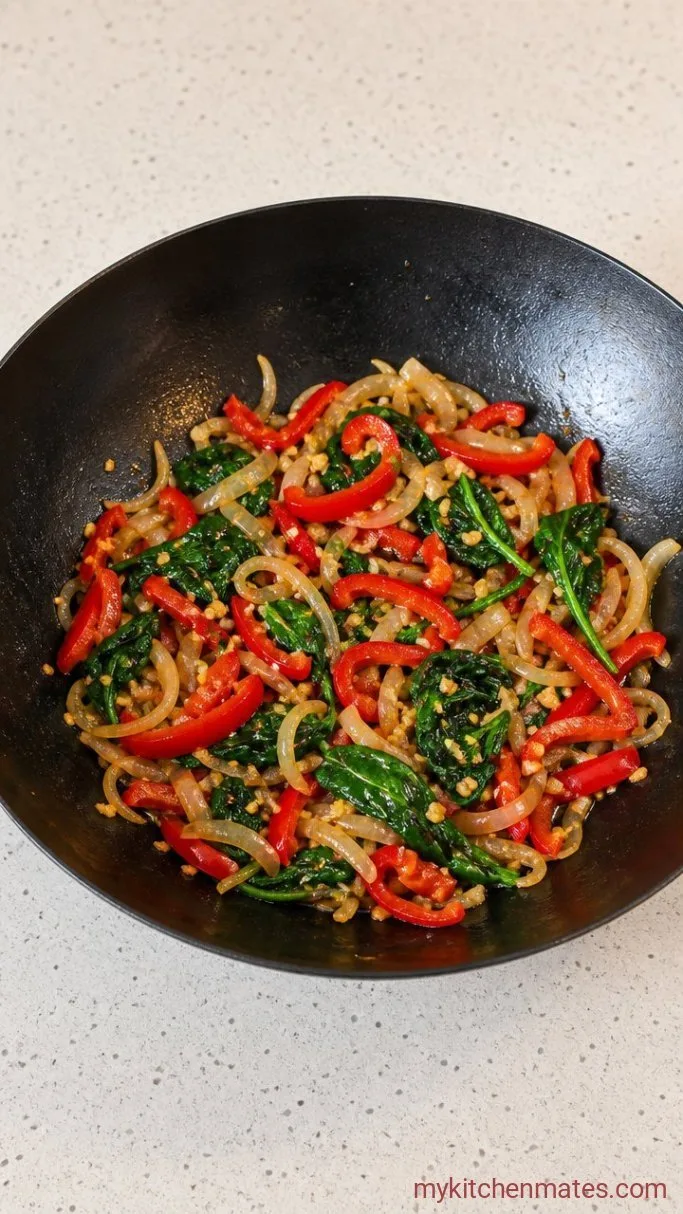
Drop the heat to medium-high and add the sliced onion to the same pan, along with a splash of water if the pan looks dry. Cook for 2 minutes, scraping up any browned bits. Stir in the minced garlic and grated ginger, cook for 30 seconds, then add the sliced bell pepper. Keep everything moving for another 3 minutes until the pepper softens noticeably but still has some bite.
Step 4: Add Noodles and Sauce
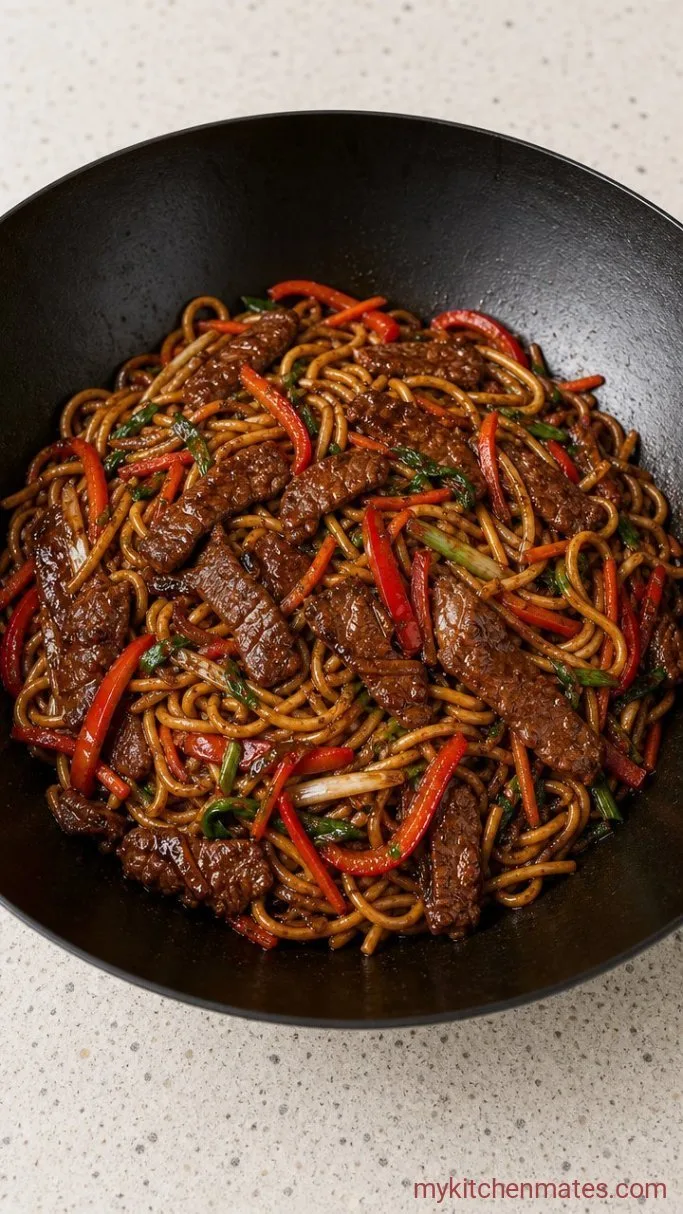
Push the vegetables to the sides of the pan and add the noodles directly to the center. Pour the prepared sauce over the noodles, then use tongs to toss everything together. Let the noodles cook in the sauce for 2-3 minutes, stirring often, until they are hot and coated. Add the spinach and toss until it just wilts, about 1 minute.
Step 5: Toss and Serve
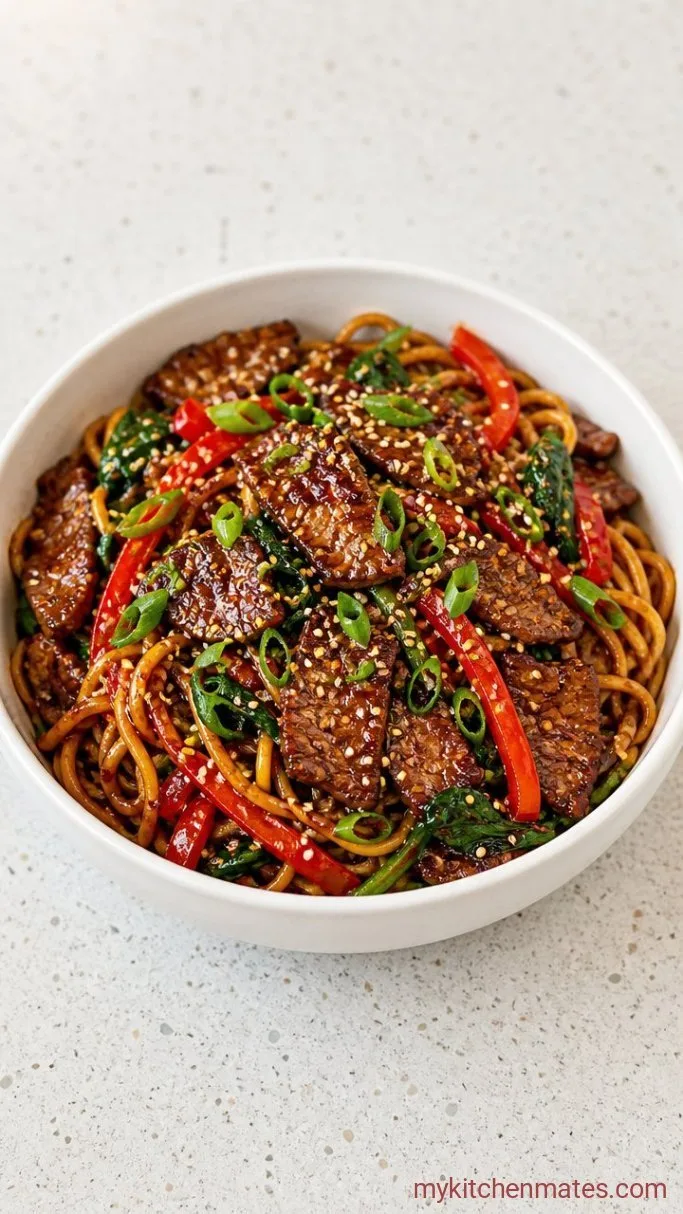
Return the seared beef to the pan and toss one final time over the heat for 30 seconds so it warms through and picks up some of the sauce. Pile the noodles into bowls, scatter sesame seeds and sliced green onions over the top, and serve right away while the dish is hot and glossy.
Three Things Worth Knowing Before You Cook
- Slice the beef when it is partially frozen. Pop the steak in the freezer for 20 minutes before cutting. A firmer slab lets you get those paper-thin slices a hot pan needs.
- Do not crowd the beef.: If your skillet is small, sear it in two batches. A single layer gets you the dark, savory crust that tastes like the grill, and steaming the meat under a pile gives you a gray, dull result.
- The pan stays hot the whole time.: You want constant sizzle from start to finish. Medium-high keeps the vegetables cooking without burning the garlic, while high heat is only for the beef.
Storing Leftovers
- Refrigerate: transfer any cooled leftovers to an airtight container and keep for up to 4 days. The noodles will absorb more sauce as they sit, so the dish may taste even richer the next day.
- Reheating: warm in a skillet over medium-low with a splash of water or a drizzle of sesame oil to loosen the noodles back up. The microwave works too, just cover the bowl so it steams.
What to Serve with Korean Beef Noodles
A crunchy side gives nice contrast against the soft noodles. Quick-pickled cucumbers, sliced thin and tossed with rice vinegar and a pinch of sugar, cut through the richness. Steamed bok choy with a drizzle of sesame oil keeps the meal simple but adds a fresh, green note. If you want something traditional, a small bowl of kimchi brings extra fermented tang that pairs well with the gochujang.
Frequently Asked Questions
Can I use ground beef instead?
You can. Brown it over high heat, breaking it into crumbles, and season with a pinch of salt. It cooks faster than sliced steak, so the texture changes, but the sauce will still coat it well.
How spicy is this recipe?
With 2 tbsp of gochujang, the dish has a medium, warming heat that builds slowly. Cutting it to 1 tbsp drops the spice down to a mild background note without losing the flavor.
Can I make this ahead of time?
The components cook quickly, so fresh is best. You can slice the beef and whisk the sauce a day ahead, storing them separately in the fridge, and toss everything together in 15 minutes when you are ready to eat.
My sauce tastes too salty. What happened?
Soy sauce and gochujang both bring salt. If the dish feels heavy on salt, add a squeeze of fresh lime juice over your bowl or toss in an extra handful of plain spinach to dilute the intensity.
Korean Beef Noodles Recipe
Ingredients
Method
- Whisk soy sauce, gochujang, brown sugar, 1 tbsp sesame oil, and rice vinegar until smooth.
- Heat vegetable oil in a large skillet over high heat. Sear the beef in a single layer for about 2 minutes per side. Remove to a plate.
- Reduce heat to medium-high and cook the onion for 2 minutes. Stir in garlic and ginger, cook 30 seconds, then add bell pepper and cook 3 minutes more.
- Add noodles and sauce to the pan, toss, and cook for 2-3 minutes. Add spinach and stir until wilted, about 1 minute.
- Return beef to the pan, toss for 30 seconds, then serve topped with sesame seeds and green onions.
Notes
