
10-Minute Korean Bean Sprout Side Dish (Kongnamul Muchim)

This Korean bean sprout side dish, kongnamul muchim, turns a bag of humble sprouts into a crisp, nutty banchan in about ten minutes. It is the side that makes a simple rice bowl feel like a spread without any real work.

The dressing is nothing more than sesame oil, soy sauce, garlic, and a handful of scallions, yet the result tastes deep and savory. The key is blanching the sprouts just long enough to soften them while keeping their snap.
What Makes This Kongnamul Muchim So Good
The texture is the whole point. Each sprout keeps a clean crunch, and the ice water bath is what locks that in. Cool, snappy sprouts coated in toasted sesame oil have a clean richness that never gets heavy.
I also love how adaptable it is. You can add a spoonful of gochugaru for gentle heat or leave it out entirely for a mild, nutty side. It plays well with almost any main, but honestly, I often eat it straight from the bowl with a spoon.
Ingredients
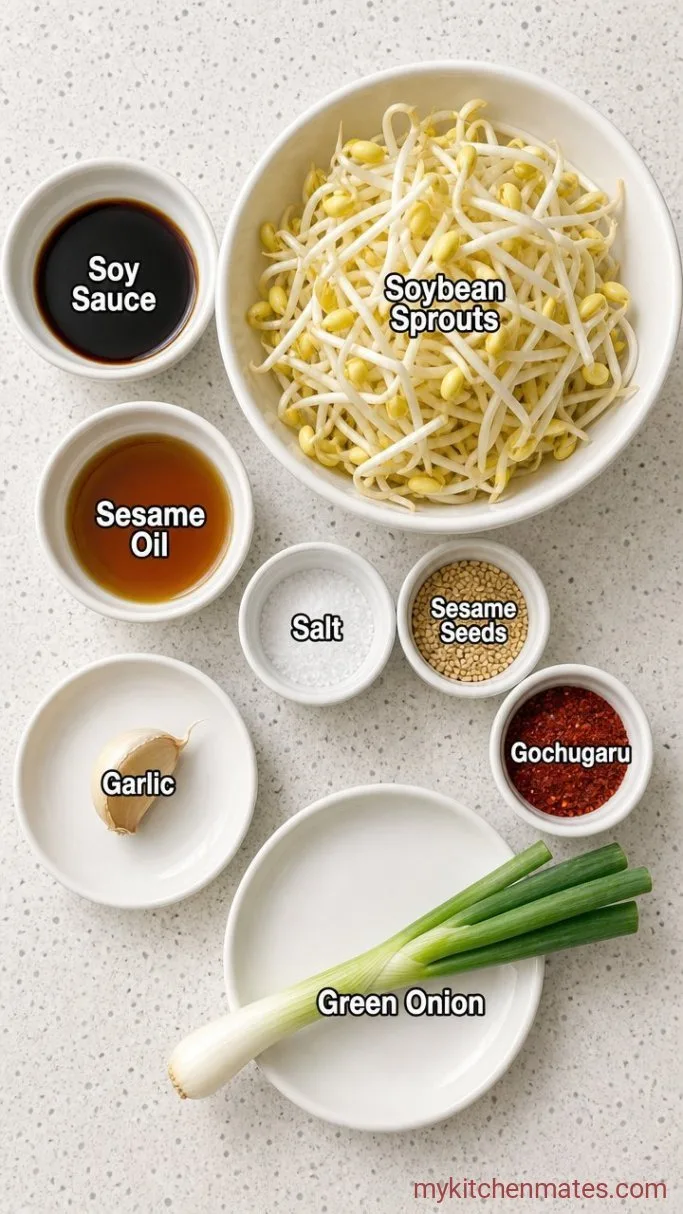
- 12 oz soybean sprouts: plump white stalks with yellow heads; mung bean sprouts work too but give a milder crunch
- 1 tsp salt: for the blanching water
- 1 garlic clove, minced
- 1 green onion, chopped
- 1 tbsp soy sauce
- 1 tbsp toasted sesame oil
- 1 tbsp toasted sesame seeds
- 1 tsp gochugaru (Korean chili flakes): optional, for a little warmth
Variations / Substitutions
- No soybean sprouts?: Use mung bean sprouts. They will be less nutty and the texture is lighter, so blanch them for 2 minutes instead.
- Gluten-free: Swap the soy sauce for tamari.
- No fresh garlic: A pinch of garlic powder can stand in, though the punch is softer.
- Mild version: Skip the gochugaru. The dish will be savory and toasty without any heat.
Korean Beef Rice Bowls are a great main dish to serve alongside this recipe.
How to Make Korean Bean Sprout Side Dish
Step 1: Blanch the Sprouts
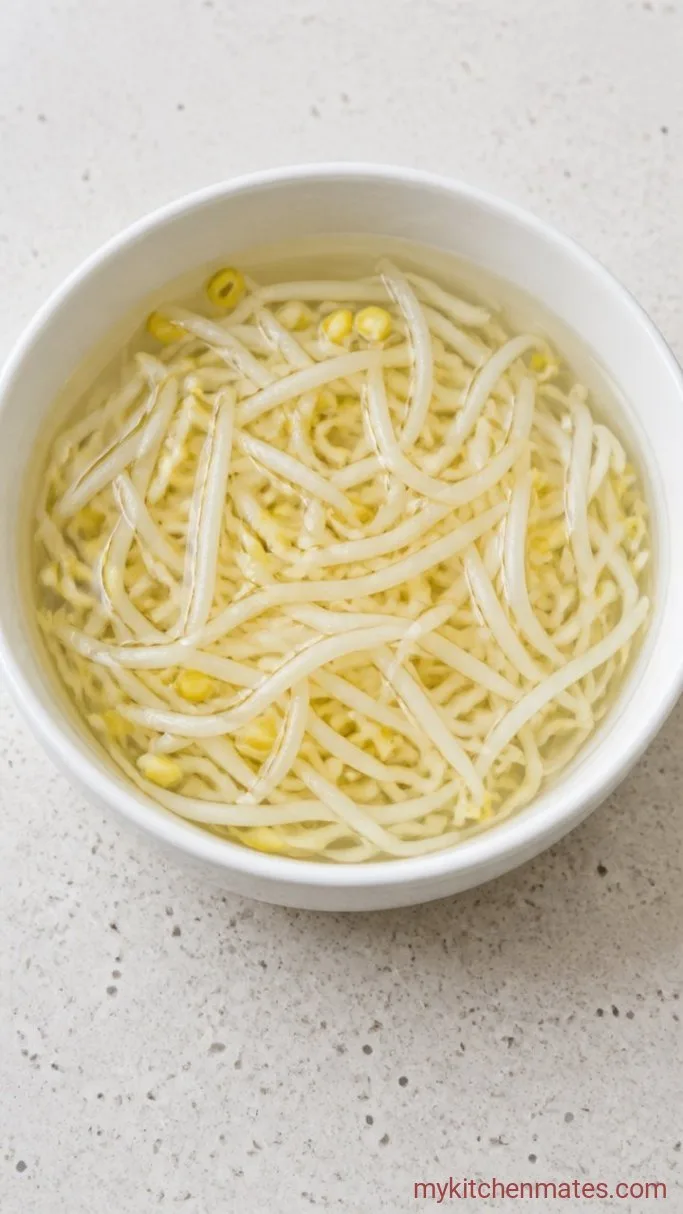
Bring a medium pot of water to a boil and add the 1 tsp salt. Once it’s boiling hard, drop in the 12 oz soybean sprouts and set a timer for 3 to 4 minutes. They should turn slightly translucent and bend easily but still have a noticeable snap when you bite one.
If they go past 4 minutes, they start to lose that crisp bite and get a little mushy. A quick 3 minutes is usually enough for fat soybean sprouts, so test one early.
Step 2: Shock in Ice Water
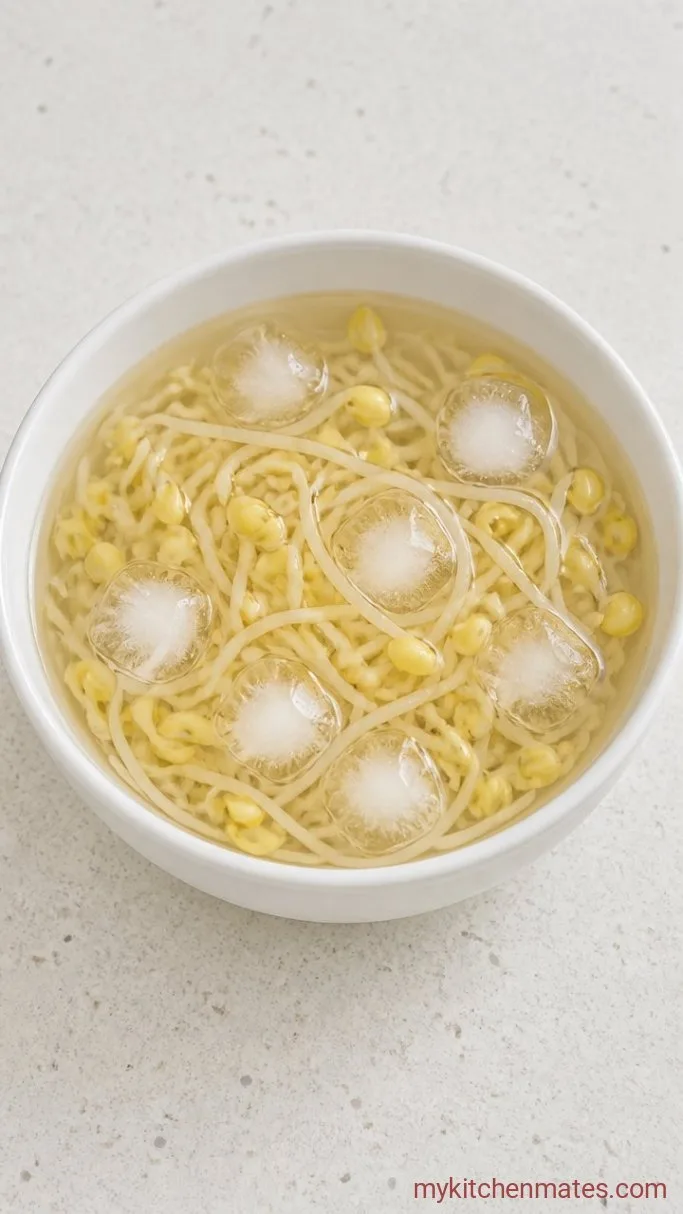
Drain the sprouts immediately and dump them into a bowl of ice water. Let them sit for 1 to 2 minutes until they feel completely cold to the touch, then drain again and give them a gentle squeeze to remove excess water.
This step stops the cooking dead and keeps the texture snappy. Avoid wringing them out like a towel; just a light press between your palms is plenty.
Step 3: Toss with the Sesame Dressing

In a mixing bowl, combine the cooled, squeezed sprouts with 1 minced garlic clove, 1 chopped green onion, 1 tbsp soy sauce, 1 tbsp toasted sesame oil, and the 1 tsp gochugaru if you’re using it. Toss everything gently until the sprouts are evenly coated.
Scatter the 1 tbsp toasted sesame seeds over the top and give it one last toss. Taste a strand and add a tiny splash more soy sauce or sesame oil if it needs it, then pile it into a serving bowl.
A Few Tips for the Crunch
- The ice bath is non-negotiable if you want crunch. Skipping it leaves the sprouts soft and sad.
- Squeeze the cooled sprouts with a light hand. You want to remove clinging water, not crush them into a sad little ball.
- Toast your own sesame seeds in a dry pan for 2 minutes. The nuttiness is louder and noticeably better than pre-toasted seeds from a jar.
Scale it up for a crowd:
| Servings | Soybean sprouts | Soy sauce | Sesame oil |
|---|---|---|---|
| 4 | 12 oz | 1 tbsp | 1 tbsp |
| 8 | 24 oz | 2 tbsp | 2 tbsp |
| 12 | 36 oz | 3 tbsp | 3 tbsp |
Storing Leftover Kongnamul Muchim
- Refrigerate: Pack the sprout mixture into an airtight container and it will keep well for up to 4 days. The garlic flavor deepens as it sits, so the next day often tastes even better.
- Serve cold: There’s no need to reheat; this banchan is meant to be eaten chilled or at room temperature straight from the fridge.
What Goes Well With This Bean Sprout Side Dish
It’s a classic partner for Korean barbecue like bulgogi or kalbi. The cool, nutty sprouts cut through the richness of grilled meat and add a clean crunch between bites. A rice bowl with a fried egg and a pile of this on the side is a quick dinner that feels considered.
Frequently Asked Questions
Can I use canned bean sprouts?
No, canned sprouts are far too soft. You will lose all the crunch that makes this side dish work, so stick with fresh.
Is this dish gluten-free?
Yes, as long as you swap the soy sauce for tamari. All the other ingredients are naturally gluten-free.
My sprouts turned out mushy, what went wrong?
They were likely overcooked or not cooled fast enough. Set a timer for 3 minutes next time and don’t skip the ice water bath.
What is the difference between soybean sprouts and mung bean sprouts?
Soybean sprouts have larger heads, a nuttier taste, and a firmer crunch. Mung bean sprouts are thinner, milder, and cook faster; they’re often labeled simply “bean sprouts” in supermarkets.
Korean Bean Sprout Side Dish Recipe
Ingredients
Method
- Bring a medium pot of water to a boil and add the salt. Add the soybean sprouts and cook for 3 to 4 minutes until tender with a bite.
- Drain and immediately transfer the sprouts to an ice water bath. Let them cool completely, about 1 to 2 minutes, then drain and gently squeeze out excess water.
- In a bowl, combine the sprouts with the garlic, green onion, soy sauce, sesame oil, and gochugaru if using. Toss well, top with the sesame seeds, and serve.
Notes
