
Extra-Crispy Japanese Fried Chicken (Karaage)

Japanese fried chicken, or karaage, is the weeknight dinner that vanishes in minutes. Juicy, garlicky, and coated in a shatteringly crisp crust, it has a crunch you can hear from across the table.
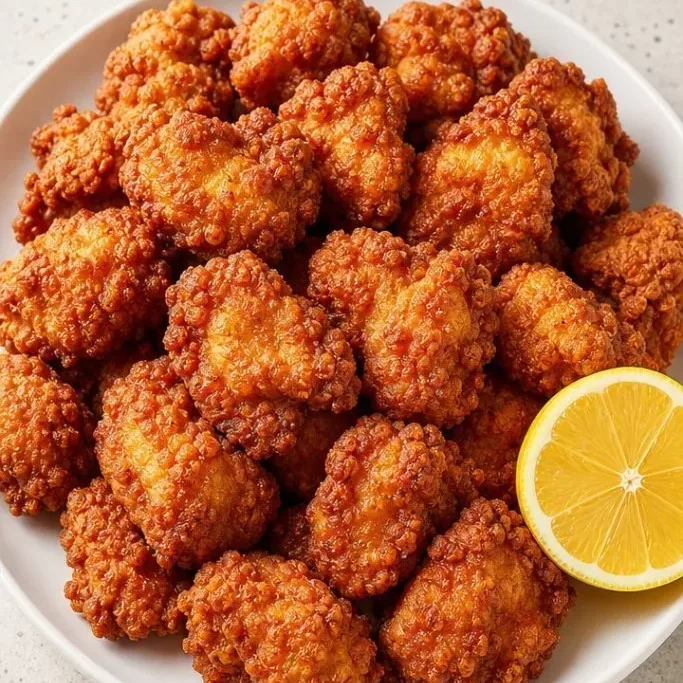
It comes together with pantry ingredients and a double fry that takes less effort than you think. Once you nail that crackly coating, it is the only fried chicken you will want to make.
Why This Karaage Stays So Crispy
The double fry is the real secret. A gentle first fry cooks the chicken through without burning the starch and a fast second fry at higher heat drives off moisture, locking in a shell that crackles.
Potato starch is the other piece. It fries up lighter and sharper than cornstarch, giving you a crust that holds its crunch even as the chicken cools. No chew, no sogginess.
The marinade does not just season it keeps the meat unbelievably moist. Soy, sake, ginger, and garlic soak in fast, so you get deep flavor in under half an hour.
Ingredients
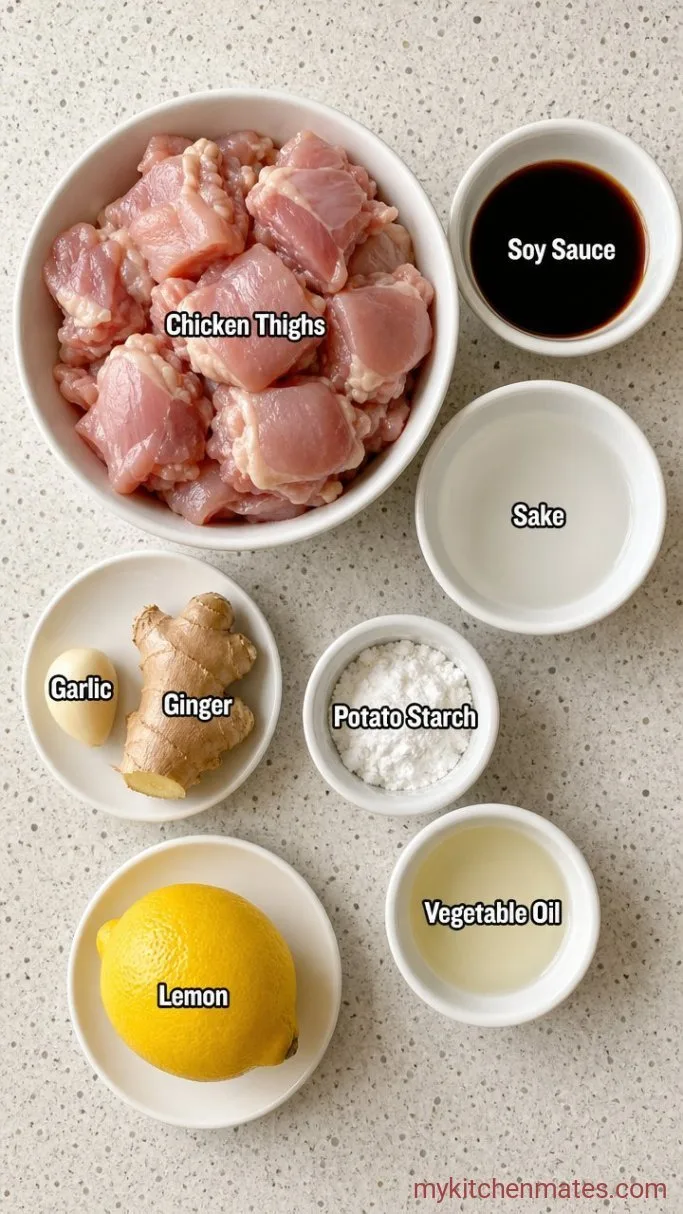
- 1½ lbs (680 g) boneless skinless chicken thighs: cut into bite‑size pieces, about 2 inches
- 3 tbsp soy sauce: use a Japanese‑style dark soy sauce like Kikkoman
- 2 tbsp sake: adds sweetness and tenderizes; choose cooking sake or regular drinking sake
- 1 clove garlic: grated on a microplane
- 1 tsp fresh ginger: grated on a microplane
- ½ cup (60 g) potato starch: also sold as katakuriko, this makes the crust airy and crisp
- Vegetable oil, for frying: about 2 to 3 cups, enough to reach 2 inches in a pot
Variations / Substitutions
- Swap chicken thighs for breast: the meat will be less juicy; cut into larger pieces and shave 1 minute off the first fry. Watch it closely so it does not dry out.
- Use tamari for gluten‑free: a 1:1 swap works perfectly, the flavor will be a little deeper and saltier so reduce the soy sauce by 1 tsp if you are sensitive.
- No sake on hand: use an equal amount of dry sherry or omit it and add 1 tsp rice vinegar for a touch of acidity. The crust will still hold up.
- Potato starch alternative: cornstarch gives a good crunch but the coating will soften a bit faster after frying. Drain on a rack right away to keep it as crisp as possible.
- Dialing up the heat: stir a pinch of shichimi togarashi or a drizzle of chili oil into the marinade.
Crunchy Quick Japanese Pickled Vegetables make a perfect side for this chicken.
How to Make Japanese Fried Chicken
Step 1: Marinate the Chicken
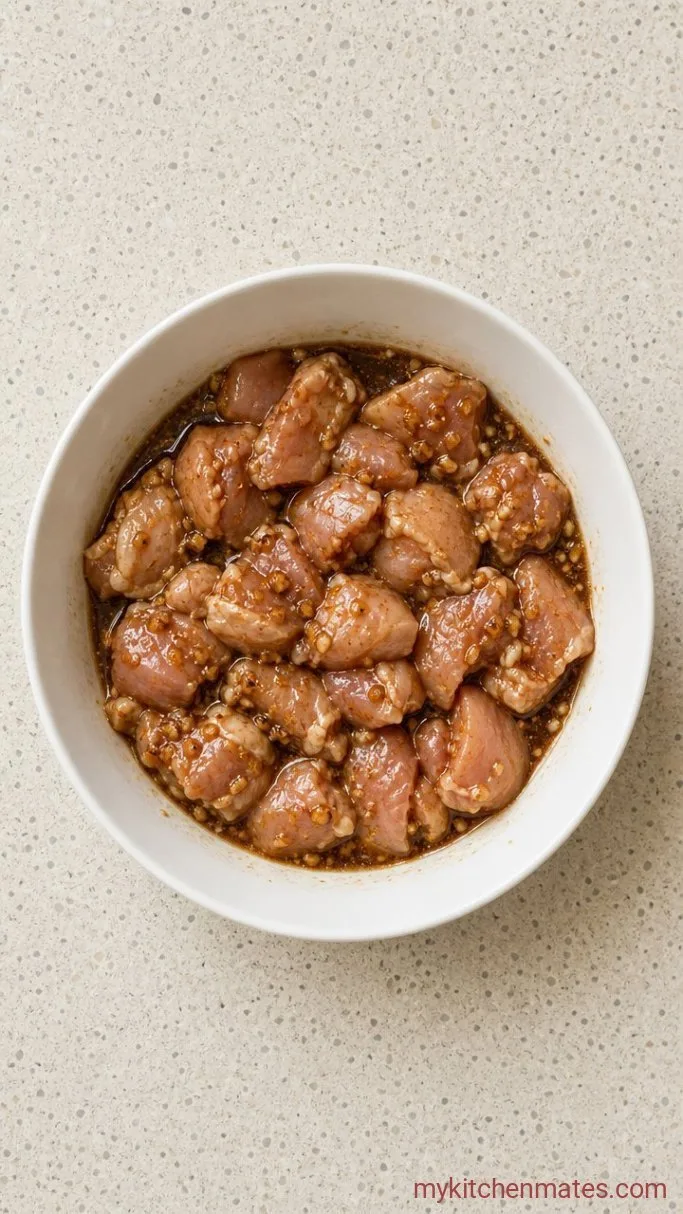
Place the cut chicken, 3 tbsp soy sauce, 2 tbsp sake, the grated garlic, and the grated ginger in a bowl. Mix well, cover, and let it sit at room temperature for 15 minutes. If you have more time, refrigerate for up to 2 hours to deepen the flavor.
The meat will look glossy and darken slightly. Drain off any excess marinade before coating, but do not pat the chicken dry — a little wetness helps the starch grab on.
Step 2: Dredge in Potato Starch
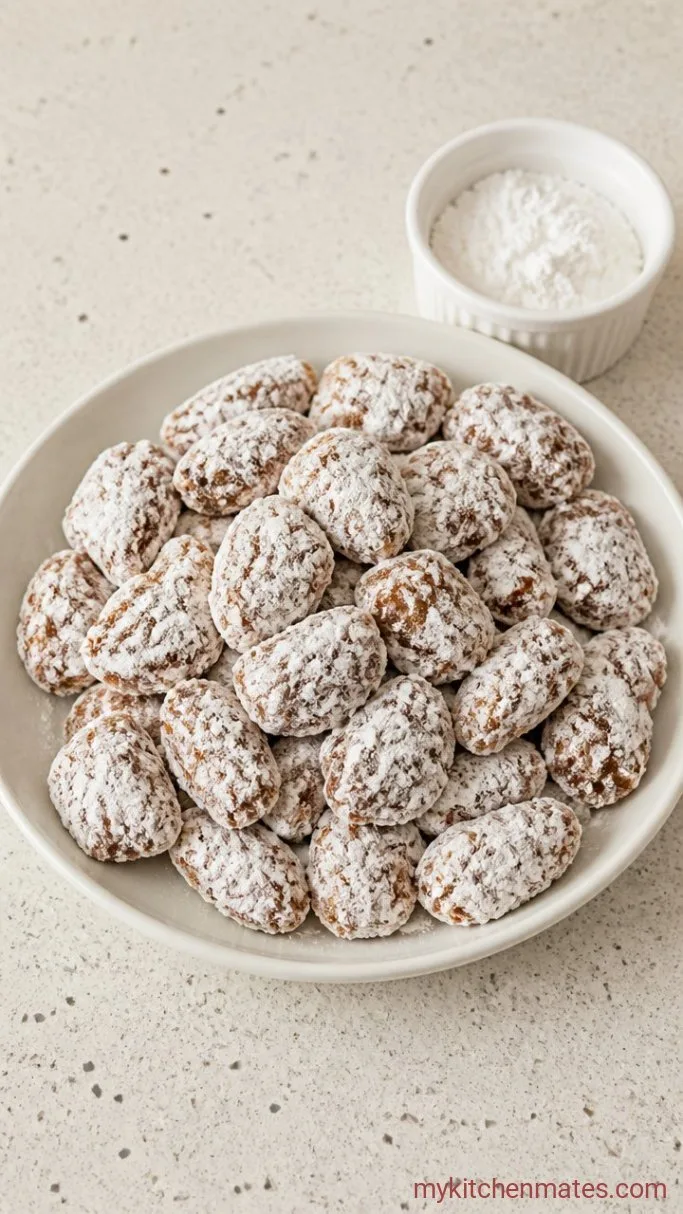
Pour the ½ cup potato starch into a wide shallow bowl or a zip‑top bag. Toss half the chicken pieces in the starch, pressing gently so every surface gets a thin even coating. Shake off any loose powder and set the pieces aside on a wire rack.
The coating should look dry and floury, like a light dusting. If it clumps wet and gummy, you are not shaking off enough. Work in sets so the pieces do not steam each other.
Step 3: First Fry at Low Heat
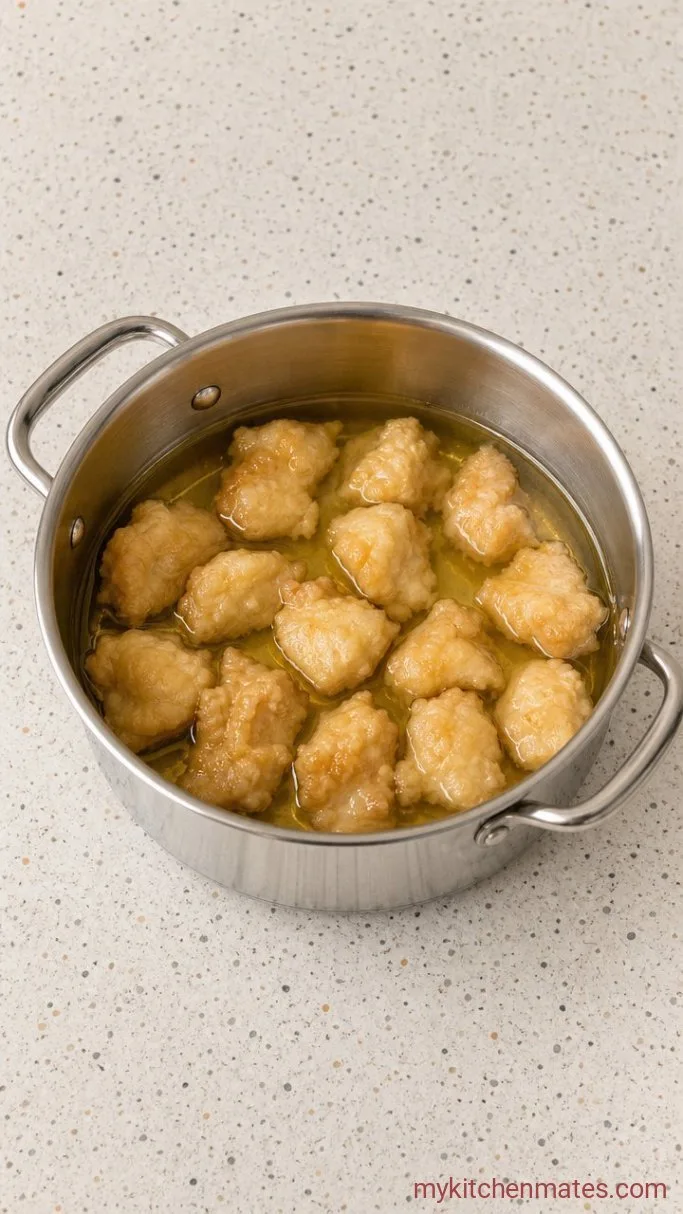
Pour the oil into a deep, heavy‑bottomed pot and clip on a thermometer. Heat the oil to 320°F (160°C). Fry the chicken in 2 to 3 small batches — do not crowd — and cook for about 4 minutes, until the pieces are pale golden and just firm.
The oil will bubble gently and the coating will look set but not deeply colored. Lift the chicken with a spider strainer and let it rest on a rack. That cool‑down period is what lets the second fry turn the crust shatteringly crisp.
Step 4: Crisp in Hot Oil
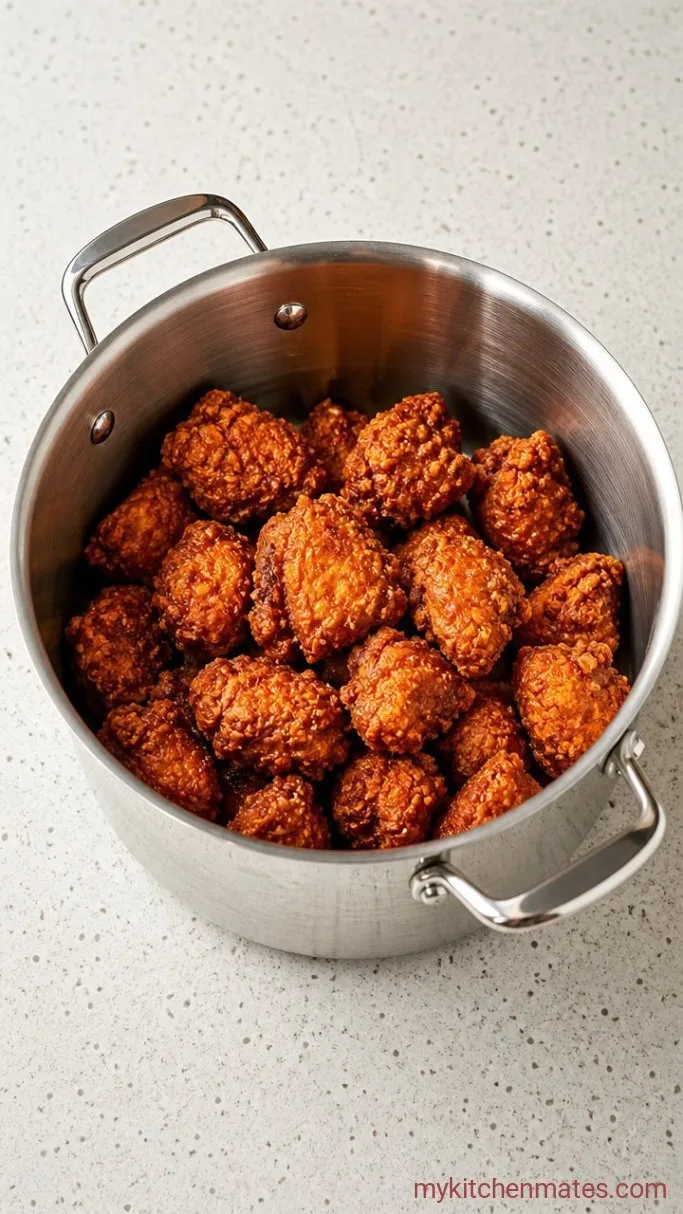
Raise the oil temperature to 350°F (175°C). Return the rested chicken to the oil in small batches and fry for 1 to 2 minutes more, just until the crust turns a deep amber and feels stiff when you tap it with the spider.
You will hear a louder sizzle and see the surface blister into tiny airy ridges. Drain on a rack and hit it with a pinch of salt as soon as it comes out.
Step 5: Plate and Serve with Lemon
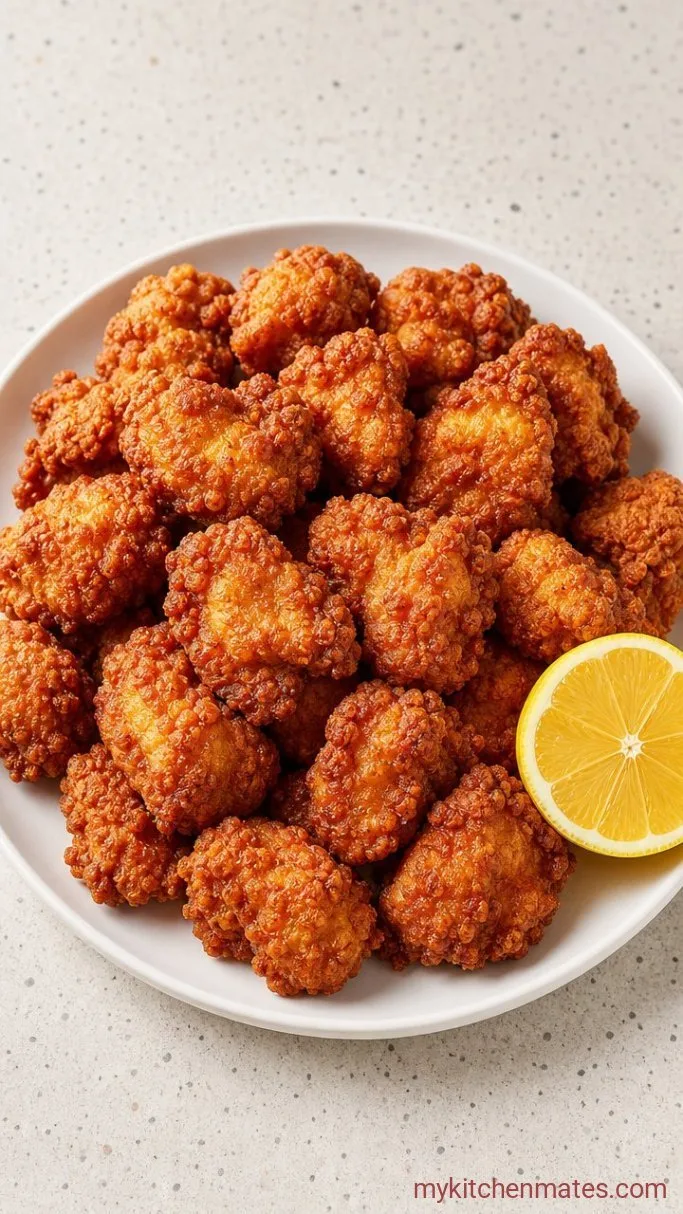
Pile the hot chicken onto a plate, tuck a few lemon wedges alongside, and get it to the table right away. A squeeze of lemon cuts the richness and brightens the garlic and ginger.
The crust should crackle under your fork and the chicken inside stays steamy and tender. It is best eaten within minutes while the contrast is at its sharpest.
Getting the Crunch Just Right
- Use dark meat: chicken thighs have more fat and collagen than breast, so they stay juicy even if you fry them a little longer. That margin makes the double fry more forgiving.
- Don’t over‑marinate: past 2 hours, the soy sauce can start to cure the chicken and make the texture dense instead of tender. If you need to prep ahead, freeze the marinated raw chicken instead; thaw, coat, and fry straight from the fridge.
- Potato starch is not interchangeable: cornstarch works in a pinch but potato starch creates air pockets that cornstarch cannot match. The difference is a light, shattering crust versus a harder shell.
- Keep the oil between batches: after adding cold chicken, the temperature drops. Give the oil 2 to 3 minutes to climb back to the target before adding the next batch. A thermometer is your best friend here.
Fry times for crispy karaage:
| Step | Oil temp | Time per batch |
|---|---|---|
| First fry | 320°F (160°C) | 4 minutes |
| Second fry | 350°F (175°C) | 1 to 2 minutes |
Keeping Leftovers Crisp
- Refrigerate: cool the chicken completely, then store in a single layer in an airtight container for up to 2 days.
- Reheating: spread the pieces on a wire rack set over a sheet pan and warm in a 375°F (190°C) oven for 8 to 10 minutes. An air fryer at 350°F (175°C) for 3 to 4 minutes also works and brings back a lot of the crunch. Microwaving will steam the crust and is worth avoiding.
What to Serve with Japanese Fried Chicken
A bowl of short‑grain rice and a quick shredded cabbage salad tossed with a little rice vinegar and sesame oil are my go‑tos. The cold crunchy salad balances the hot crispy chicken, and the rice soaks up any stray salty juice. For a fuller meal, add a cup of miso soup with silken tofu — the warmth rounds out the garlic and ginger without competing.
Frequently Asked Questions
Can I use chicken breast instead of thighs?
Yes, but expect a firmer bite. Slice the breast across the grain into thicker pieces and check the internal temp after the first fry; pull it at 155°F (68°C) so the second fry does not dry it out.
Can I bake this instead of frying?
You can, but the crust will be softer. A 425°F (220°C) oven with a wire rack and a light spray of oil gets you close, though it loses the shattery crispness. The marinade recipe stays the same.
What if I don’t have a thermometer?
Heat the oil over medium and drop in a pinch of potato starch: if it sizzles gently and floats, you are near 320°F (160°C). For the second fry, look for a more vigorous sizzle and a faster browning. Practice helps, but an instant‑read thermometer takes the guesswork out.
Is there a way to make this ahead for a party?
Fry the chicken through the first fry, cool it on a rack, and refrigerate for up to 4 hours. When guests arrive, flash‑fry it straight from the fridge at 350°F (175°C) for 2 minutes. The crust stays just as crisp.
Extra-Crispy Japanese Fried Chicken (Karaage) Recipe
Ingredients
Method
- Toss chicken with soy sauce, sake, garlic, and ginger. Marinate 15 minutes at room temperature, then drain excess liquid.
- Dredge chicken in potato starch, shaking off loose powder, and set on a rack.
- Heat oil to 320°F (160°C) and fry in small batches for about 4 minutes until pale golden. Drain on a rack.
- Raise oil to 350°F (175°C) and fry the rested chicken in small batches for 1 to 2 minutes until deep amber and crisp. Salt immediately.
- Pile the chicken on a plate with lemon wedges and serve hot.
Notes
