
Creamy Homemade Almond Milk (Just 2 Ingredients)

Homemade almond milk tastes fresher than anything from a carton, and it takes only a blender and a nut milk bag. With just almonds and water, it’s a five-minute project that gives you a week of creamy, real-almond flavor.
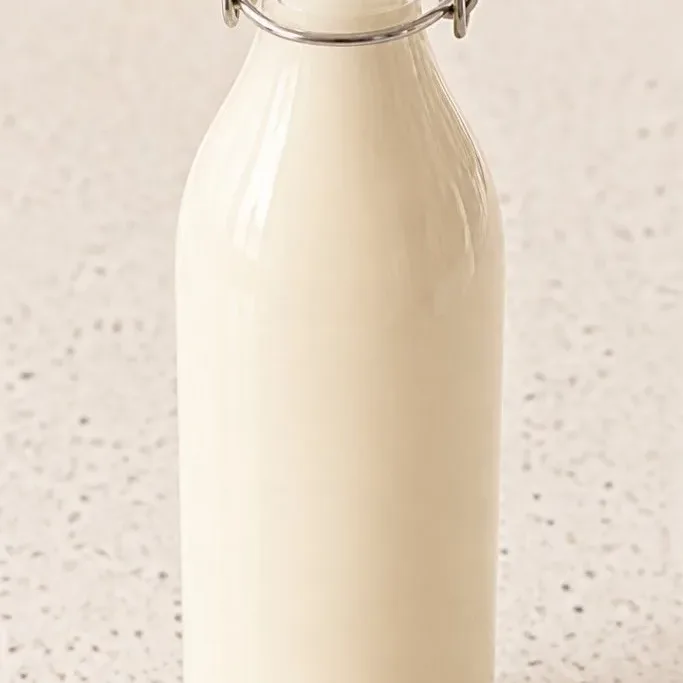
Once you see how easy it is, you’ll wonder why you ever bought the store version. You control the sweetness, the thickness, and the ingredients from start to finish.
Why This Almond Milk Works So Well
This milk is silky and lightly nutty, without the chalky aftertaste you sometimes get from cartons. It’s fresh, so the almond flavor actually tastes like almonds, not just an echo.
I keep coming back to this recipe because it’s forgiving. The method is reliable, and the result is consistently smooth, whether I’m pouring it over cereal or steaming it for a latte.
Ingredients
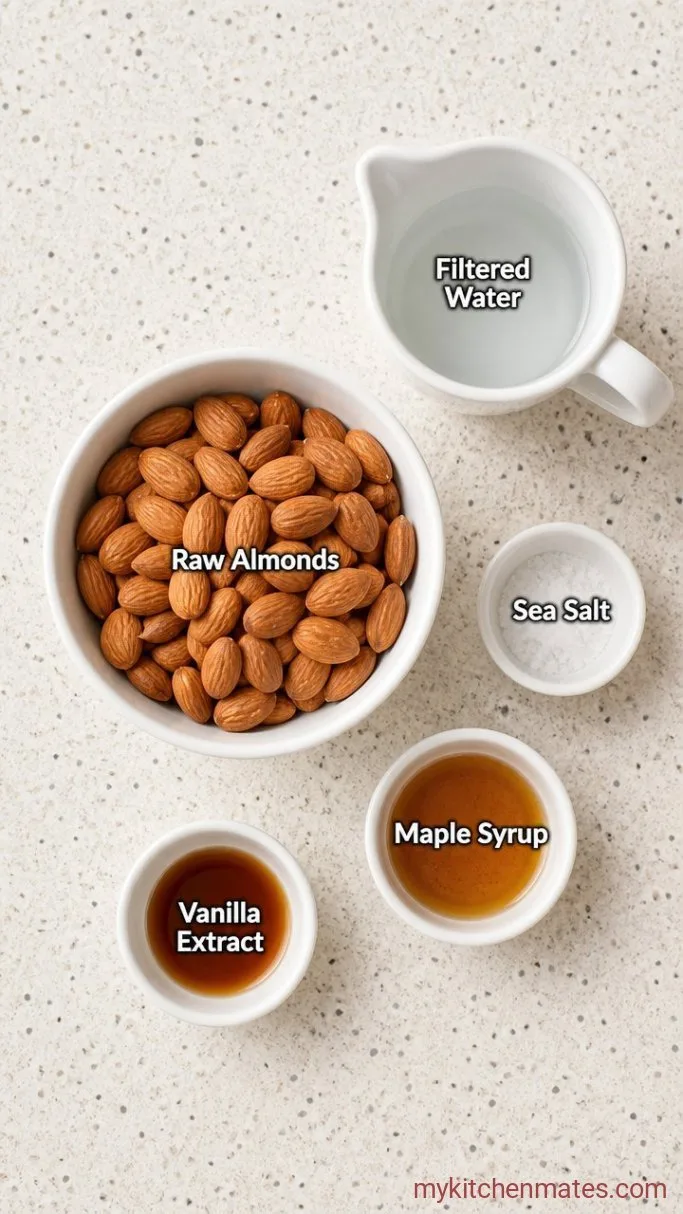
- 1 cup raw almonds: look for unsalted, unroasted almonds; organic if you prefer.
- 4 cups filtered water: plus more for soaking; filtered water keeps the flavor clean.
- 1 pinch sea salt: optional, but it rounds out the nuttiness.
- 1 teaspoon maple syrup or 2 soft dates: optional, for a lightly sweet milk.
- ½ teaspoon vanilla extract: optional, for vanilla almond milk.
Variations / Substitutions
- Other nuts: Swap almonds for raw cashews (no straining needed) or hazelnuts for a richer milk.
- Sweetness: Try honey, agave, or a few soaked raisins for natural sweetness.
- Chocolate almond milk: Blend in 1 tablespoon cocoa powder and an extra teaspoon of sweetener.
- Spiced: Add a pinch of cinnamon or a scrape of nutmeg before blending.
Soft & Buttery Vanilla Almond Cake makes a lovely sweet pairing for this almond milk.
How To Make Homemade Almond Milk
Step 1: Soak the Almonds
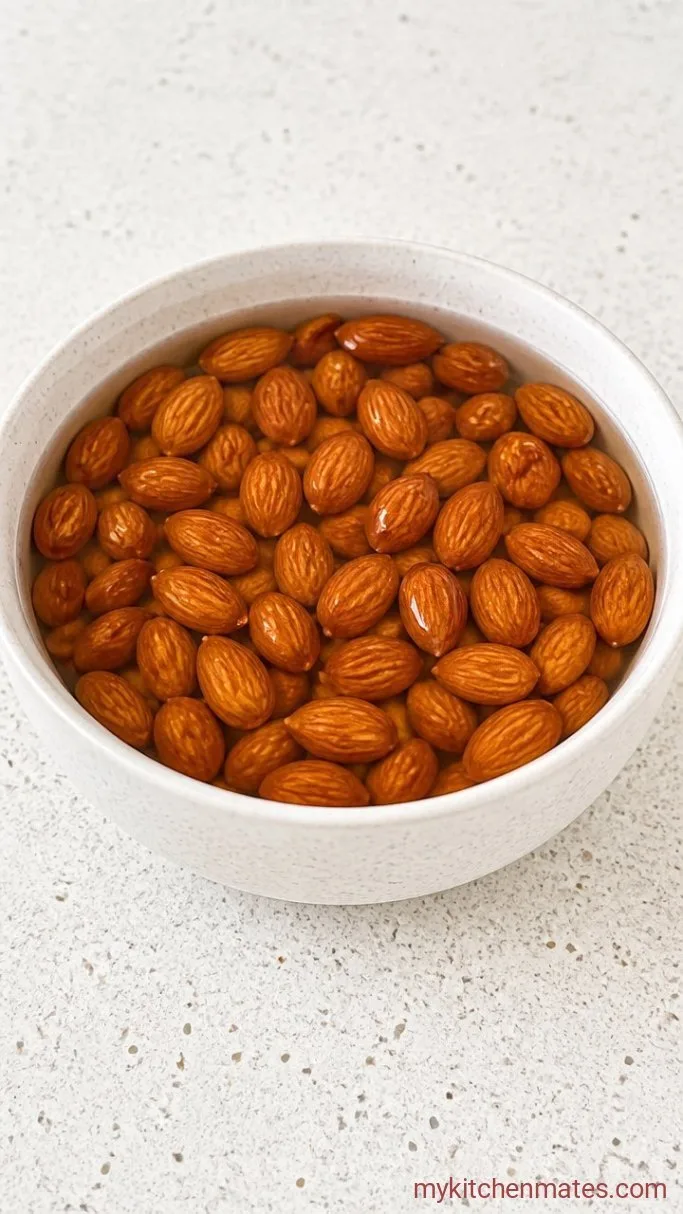
Place the 1 cup raw almonds in a bowl and add enough filtered water to cover them by an inch. Let them soak at room temperature for at least 8 hours or overnight, until they are plump and split easily between your fingers.
The almonds will swell to nearly double in size and look a bit pearly. That hydration is what gives the milk its creamy texture, so don’t skip this step.
Step 2: Blend with Fresh Water
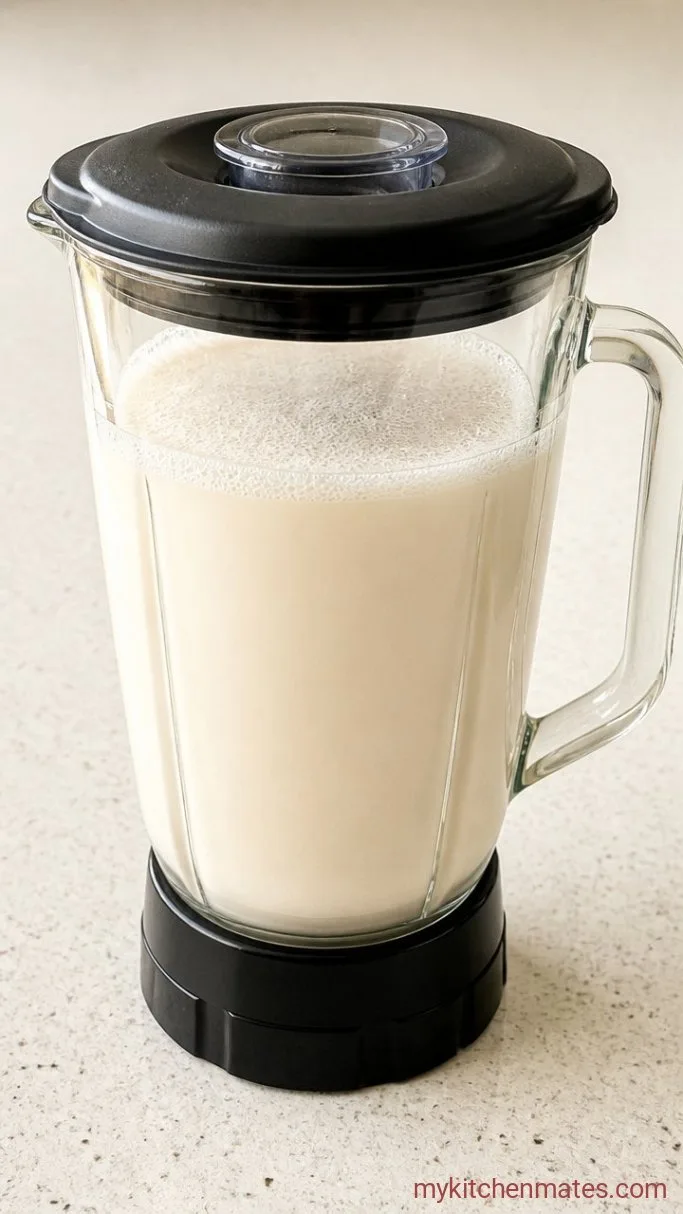
Drain and rinse the soaked almonds, then add them to a blender with the 4 cups of fresh filtered water. If you’re using any of the optional add-ins like the salt, sweetener, or vanilla, drop them in now. Blend on high for 1 to 2 minutes, until the mixture looks frothy and opaque white.
You’ll see the water turn milky and the nuts break down completely, leaving a coarse sandy texture at the bottom. Stop as soon as the liquid looks smooth and no large almond bits remain.
Step 3: Strain the Milk
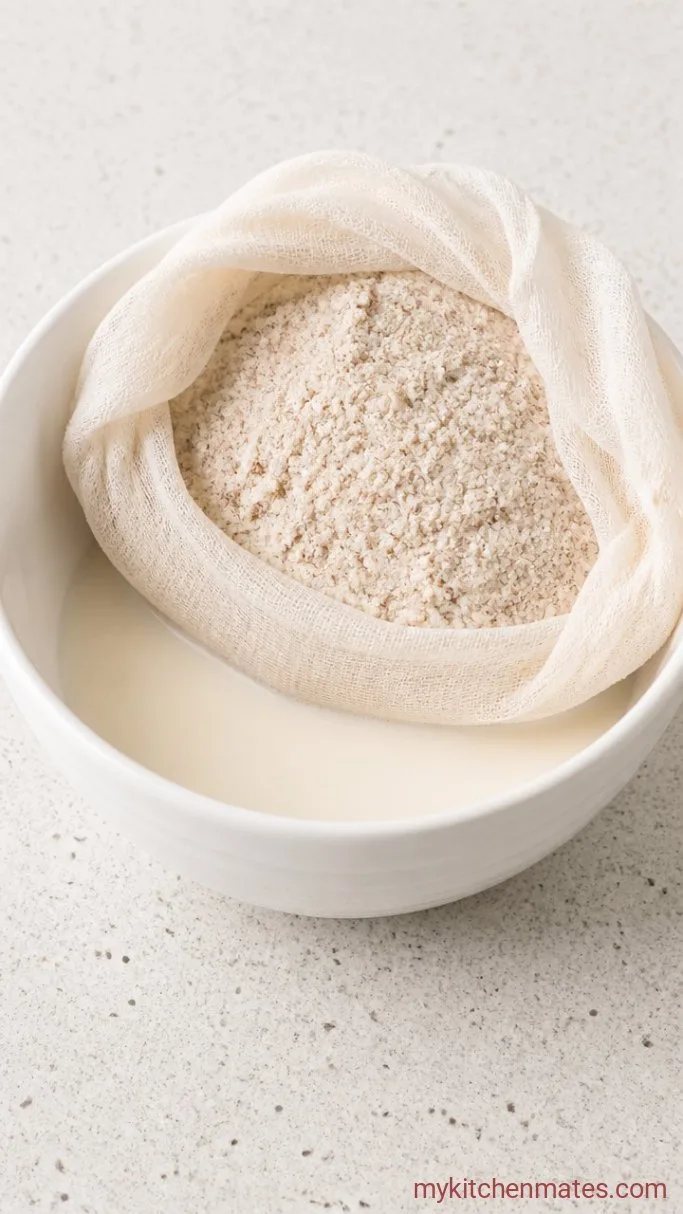
Position a nut milk bag or a double layer of fine cheesecloth over a large bowl or a 4-cup liquid measuring cup. Slowly pour the blended almond mixture into the bag, then gather the top and twist to close. Squeeze firmly with both hands, pressing out as much liquid as possible, until the pulp inside feels dry. This takes about a minute of steady pressure.
The milk will look like thinned cream, and the pulp will be crumbly and nearly dry. A good squeeze here means you get every last drop of the good stuff.
Step 4: Bottle and Chill
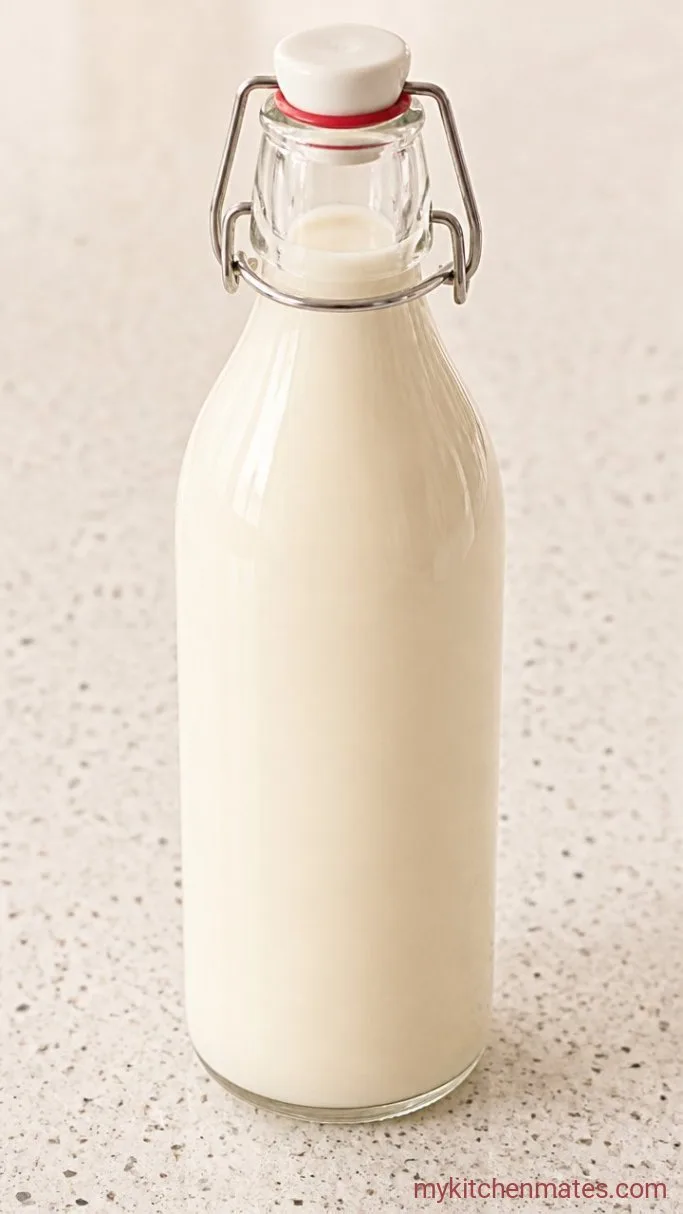
Pour the strained milk into a clean glass jar or bottle and seal tightly. Refrigerate immediately, and shake well before each use.
It will keep for up to 4 to 5 days in the fridge, but it rarely lasts that long. The milk will separate as it sits, which is normal, so give it a good shake and it’ll be ready to drink.
Tips for the Creamiest Almond Milk
- Adjust the thickness: For a richer milk, use only 3 cups of water; for a lighter one, use 5 cups. The ratio is flexible.
- Save the pulp: Spread the almond pulp on a baking sheet, dry it in a low oven, then blend into almond flour for baking or granola.
- Sweeten after straining if using dates: Dates can leave tiny flecks even after blending. For the smoothest sweetened milk, strain plain milk, then blend it with dates a second time and strain again.
- Shake it like you mean it: Homemade almond milk always separates. Give the bottle a thorough shake right before you pour, and it’ll be perfectly uniform.
Scale the batch to fit your week:
| Yield (cups) | Almonds | Water |
|---|---|---|
| 2 cups | ½ cup | 2 cups |
| 4 cups | 1 cup | 4 cups |
| 8 cups | 2 cups | 8 cups |
Storing Your Almond Milk
Refrigerate: Store the milk in a sealed jar or airtight bottle. It stays fresh for 4 to 5 days. Always shake before using, as separation is natural.
Frequently Asked Questions
Can I use roasted almonds?
No, roasted almonds have a different fat structure and won’t create as creamy a milk; they can also add a bitter edge.
Do I need a high-speed blender?
A standard blender works, but you may need to blend a minute longer and strain through a finer mesh to catch any grit.
Why did my milk turn out slimy?
This can happen if the almonds soak too long in warm weather. Soak in the refrigerator if your kitchen is hot, and keep the soak to 8–12 hours max.
Can I skip straining?
Yes, but expect a gritty texture; a powerful blender can get it smooth enough for some, but straining yields the best result.
How can I make it froth for lattes?
Add a little more water and blend in a teaspoon of neutral oil (like avocado) before straining; the fat helps create microfoam.
Homemade Almond Milk Recipe
Ingredients
Method
- Soak almonds in water to cover by 2 inches for at least 8 hours; drain and rinse.
- Blend soaked almonds with 4 cups fresh water and any optional add-ins on high for 1–2 minutes until smooth.
- Strain through a nut milk bag or cheesecloth, squeezing until pulp is dry.
- Pour into a jar, seal, and refrigerate; shake well before serving.
Notes
