
5-Minute Greek Salad Dressing

A great Greek salad lives and dies by its dressing. This homemade version comes together in about five minutes using pantry staples, and it leaves bottled dressings far behind.
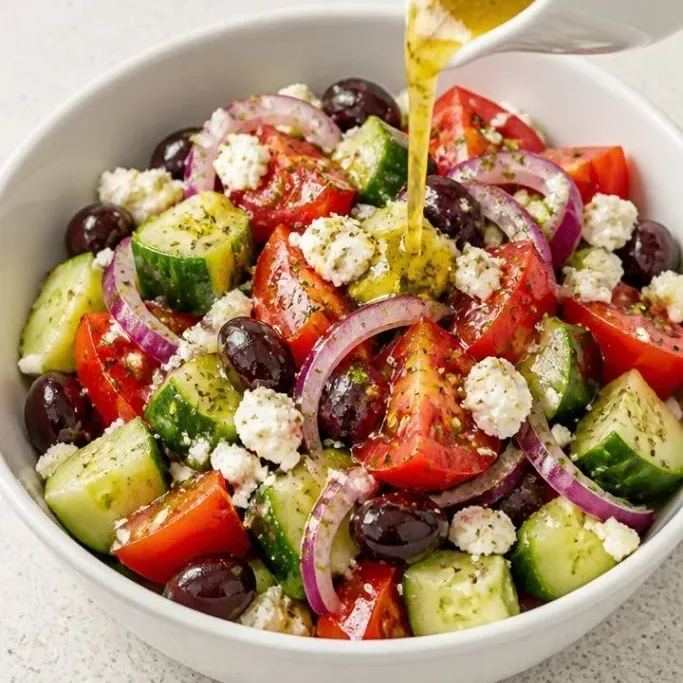
There is no mystery here: olive oil, lemon, vinegar, oregano, and garlic do the heavy lifting. You get a bright, lemony tang with just enough garlic to wake things up, and the oregano gives it that unmistakably Greek character.
Why Homemade Dressing Wins
Bottled dressings often land too sharp or too sweet with a one-note flavor. Mixing your own lets you control the balance. The lemon leads without stripping enamel, and the garlic hangs back just enough to add warmth.
Good olive oil carries the dried oregano and rounds out the acidity, so the dressing tastes clean, not harsh. It soaks into crumbly feta and ripe tomatoes without making the salad greasy or limp.
Ingredients
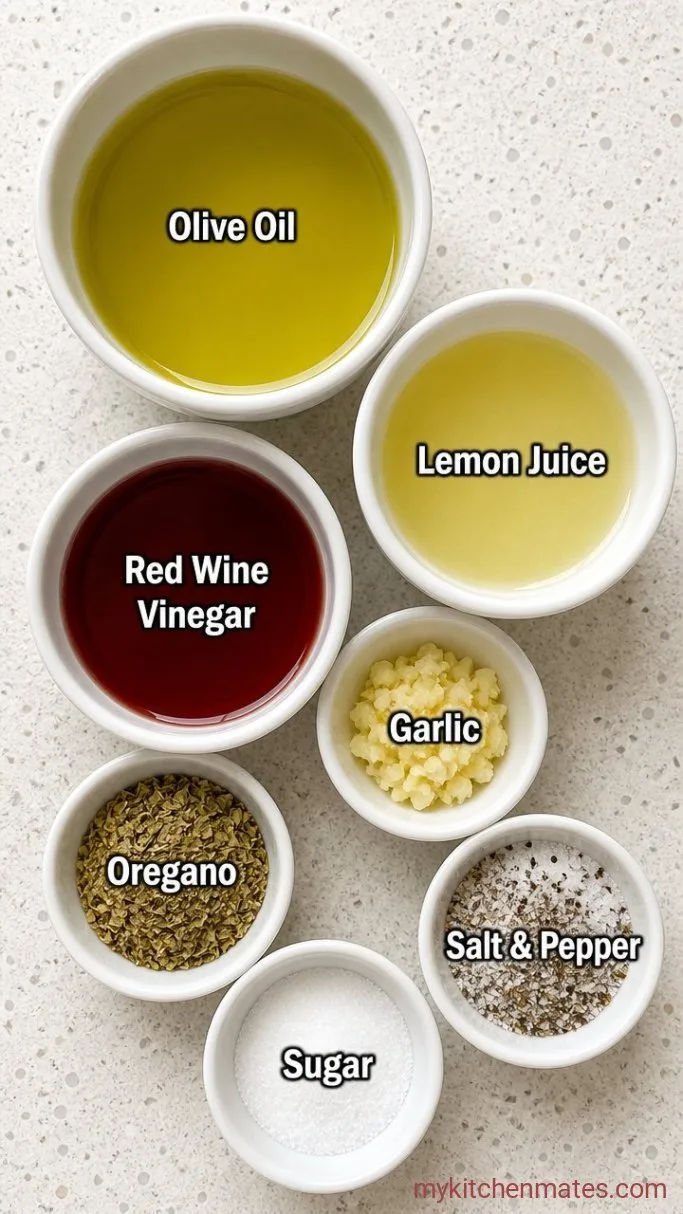
- 1/2 cup extra-virgin olive oil: a fruity one shines here
- 1/4 cup fresh lemon juice: roughly 1 large lemon, bottled works if needed but fresh is brighter
- 2 tbsp red vinegar: gives the classic sharp bite
- 1 to 2 cloves garlic, finely minced: start with 1 for a milder note
- 1 tsp dried oregano: rub it between your fingers to wake up the oils
- 1/2 tsp fine sea salt: plus more to taste
- 1/4 tsp freshly ground black pepper
- Pinch of sugar: (optional): rounds out very tart lemons
Variations / Substitutions
- Fresh oregano: use 1 tablespoon chopped fresh oregano, but add it right before serving because the leaves brown in the fridge.
- No lemon: replace the lemon juice with 4 more tablespoons red vinegar for a sharper, less fruity dressing.
- Creamy twist: stir in 1 teaspoon Dijon mustard or a spoonful of crumbled feta at the end.
- Skip the sugar: the dressing works without it, or swap in a tiny drop of honey.
- Make it a marinade: add 1 extra minced garlic clove and a crack of black pepper, then use on chicken or shrimp.
Juicy Stuffed Turkey Breast is one of our favorite ways to use this dressing.
How to Make Greek Salad Dressing
Step 1: Whisk the Dressing
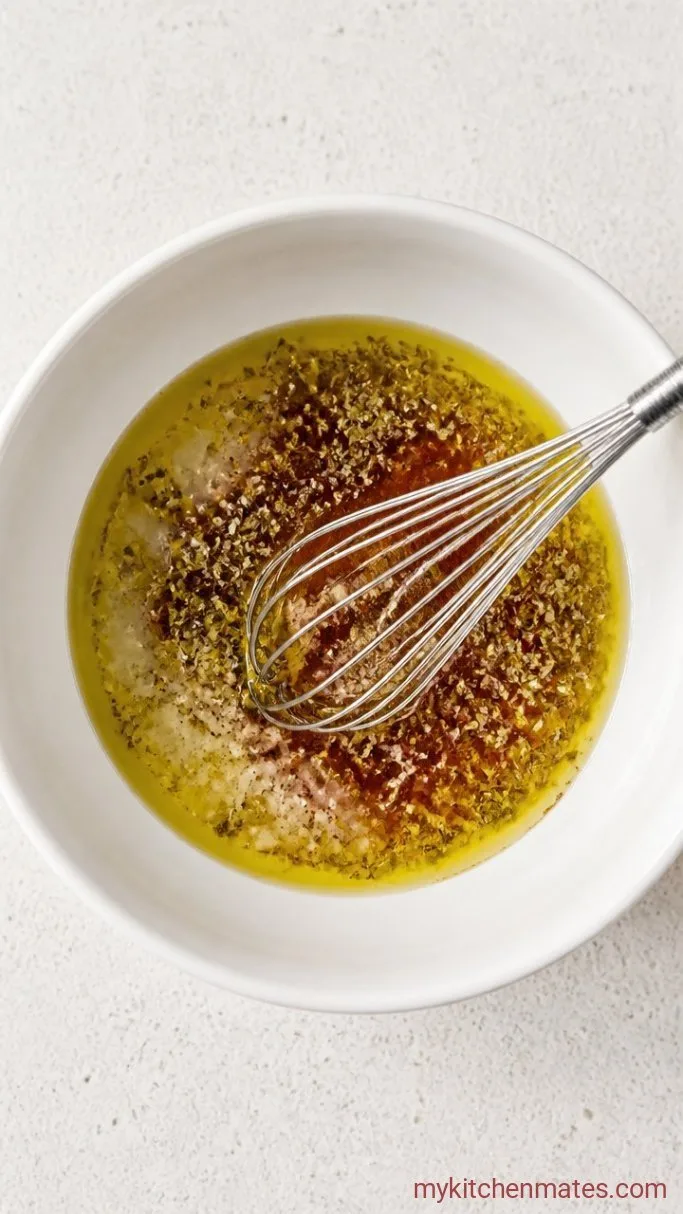
In a small bowl or a jar with a tight-fitting lid, combine the 1/2 cup olive oil, 1/4 cup lemon juice, 2 tbsp red vinegar, the minced garlic, 1 tsp dried oregano, 1/2 tsp salt, 1/4 tsp pepper, and the pinch of sugar if using. Whisk hard for about 30 seconds, or seal the jar and shake, until the mixture looks creamy and emulsified. Dip a clean spoon or a corner of lettuce in to get a first taste.
Step 2: Season to Taste

Now dial it in. Taste the dressing on a piece of cucumber or bread; it should be bright and lemony with a soft garlic hum underneath. If it feels flat, add a pinch more salt or up to 1/4 teaspoon extra oregano. Too sharp? A small drizzle of olive oil or another pinch of sugar will smooth it without dulling the flavors.
Step 3: Drizzle and Serve
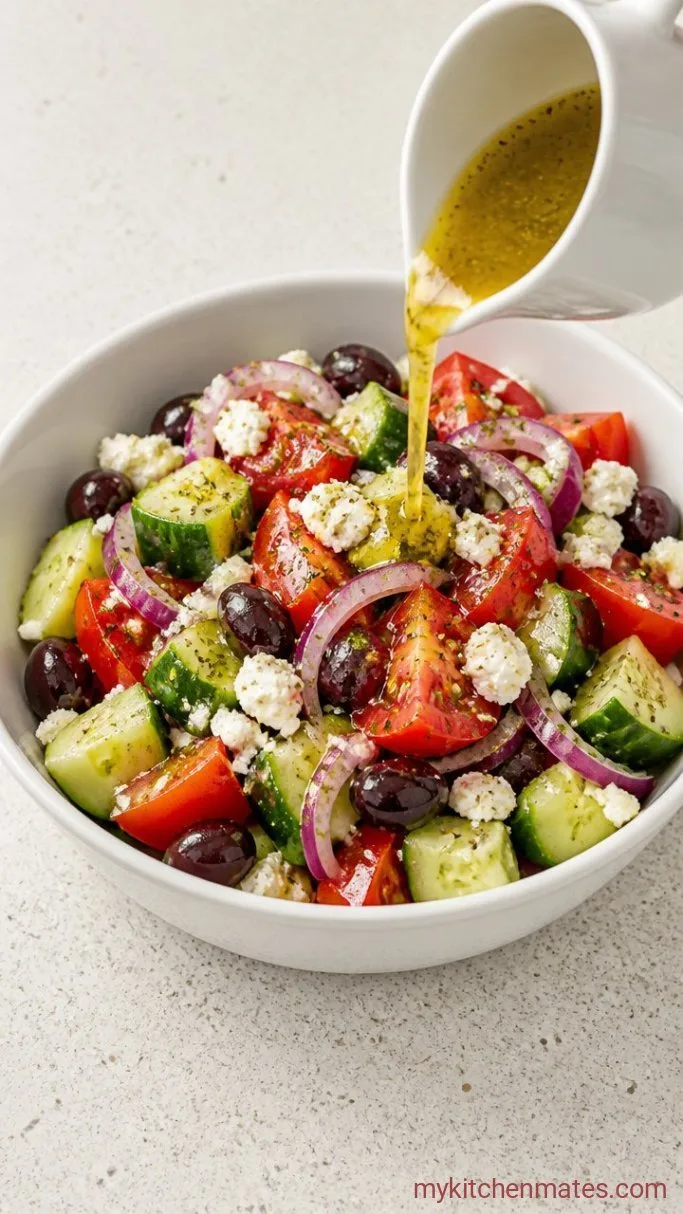
Pour the dressing over a classic Greek salad loaded with tomatoes, cucumber, red onion, Kalamata olives, and a thick slab of feta, and serve right away. If you are not using all of it, transfer the leftovers to a clean jar and refrigerate. The lemon and garlic mellow overnight, so the dressing tastes even better the next day. Let it sit out for 10 minutes to loosen up before drizzling.
A Few Tips for the Best Dressing
- Make it ahead when you can: Even 30 minutes in the fridge lets the oregano infuse the oil and softens the garlic bite. Shake or whisk again before using.
- The jar trick: Skip the whisk and combine everything in a lidded jar. Shake hard for 30 seconds and you get an emulsified dressing with almost no cleanup.
- Balance acid without sugar: If your lemon is extra-tart, reach for a little more olive oil before adding sugar. It brings the same roundness without making the dressing sweet.
- Use it beyond salads: This makes a quick marinade for grilled chicken thighs or shrimp. Let the protein sit for 20 minutes before it hits the heat.
Scale it up for meal prep:
| Servings | Olive Oil | Lemon Juice | Red Vinegar | Dried Oregano |
|---|---|---|---|---|
| 6 (as written) | 1/2 cup | 1/4 cup | 2 tbsp | 1 tsp |
| 12 (double batch) | 1 cup | 1/2 cup | 1/4 cup | 2 tsp |
| 24 (party size) | 2 cups | 1 cup | 1/2 cup | 4 tsp |
Storing Leftover Dressing
Keep the dressing in a sealed jar in the refrigerator for up to 5 days. The olive oil may firm up when cold; just let the jar sit at room temperature for 10 minutes and shake it again to bring everything back together. If you added fresh oregano, plan to use it within a day or two.
What to Pour It On
Beyond the obvious Greek salad, this dressing wakes up simple grain bowls. Spoon it over warm farro with roasted vegetables and a handful of herbs for a punchy, no-cook sauce. It also livens up grilled lamb chops or a pan of roasted potatoes, where the lemon and oregano really stand out against the char.
Frequently Asked Questions
Can I use bottled lemon juice?
You can, but cut back the red vinegar to 1 tablespoon so the dressing does not get overly sharp. Fresh juice gives a cleaner, fruitier finish.
My dressing tastes bitter. What went wrong?
Overwhisking or blending extra-virgin olive oil can make it taste bitter. Stick to a quick whisk or a shake in a jar, and the bitterness stays away.
Is this dressing vegan?
Yes, as long as you skip the optional honey and use sugar or nothing at all. It is naturally dairy-free and egg-free.
Can I make it without garlic?
Absolutely. You end up with a simpler lemon-oregano vinaigrette that is still lovely on raw or cooked vegetables. The garlic adds warmth but the dressing works without it.
Greek Salad Dressing Recipe
Ingredients
Method
- Combine the olive oil, lemon juice, red wine vinegar, minced garlic, dried oregano, salt, pepper, and sugar (if using) in a small bowl or a jar with a tight lid. Whisk or shake hard for about 30 seconds until emulsified.
- Taste on a cucumber slice or a piece of bread. Add more salt or oregano if needed. If the dressing is too sharp, drizzle in a little more olive oil or a pinch of sugar.
- Pour over a prepared Greek salad and serve right away, or refrigerate in a sealed jar.
Notes
