
20-Minute Spicy Gochujang Ramen

A steaming bowl of gochujang ramen with a rich, spicy broth, jammy eggs, and chewy noodles comes together in 20 minutes. It is the kind of dinner you throw together when you need something warm and bold, fast.
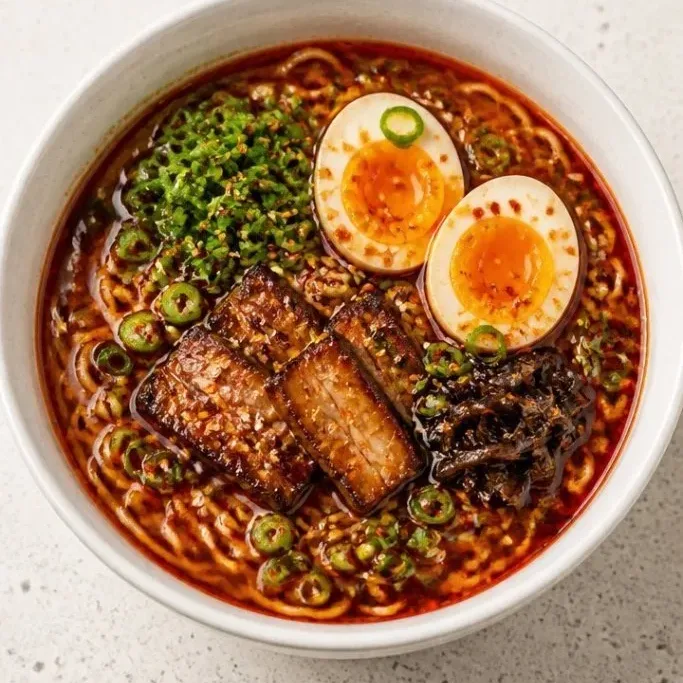
The broth is the star here. Gochujang paste gives it a deep, savory heat with a faint sweetness, while garlic and ginger round out the edges. Finish with a drizzle of sesame oil and a handful of scallions, and you have a bowl that tastes like it simmered all afternoon.
Why This Ramen Works
Gochujang carries the whole dish. A couple tablespoons are enough to build a broth with layers of flavor: fermented depth, a gentle kick, and that slight stickiness that clings to the noodles. It never tastes flat or one-note.
Because everything cooks in one pot (plus a quick boil for eggs and noodles), cleanup is minimal. You can lean on pantry staples and still serve a bowl that feels like a treat, not a compromise.
Ingredients
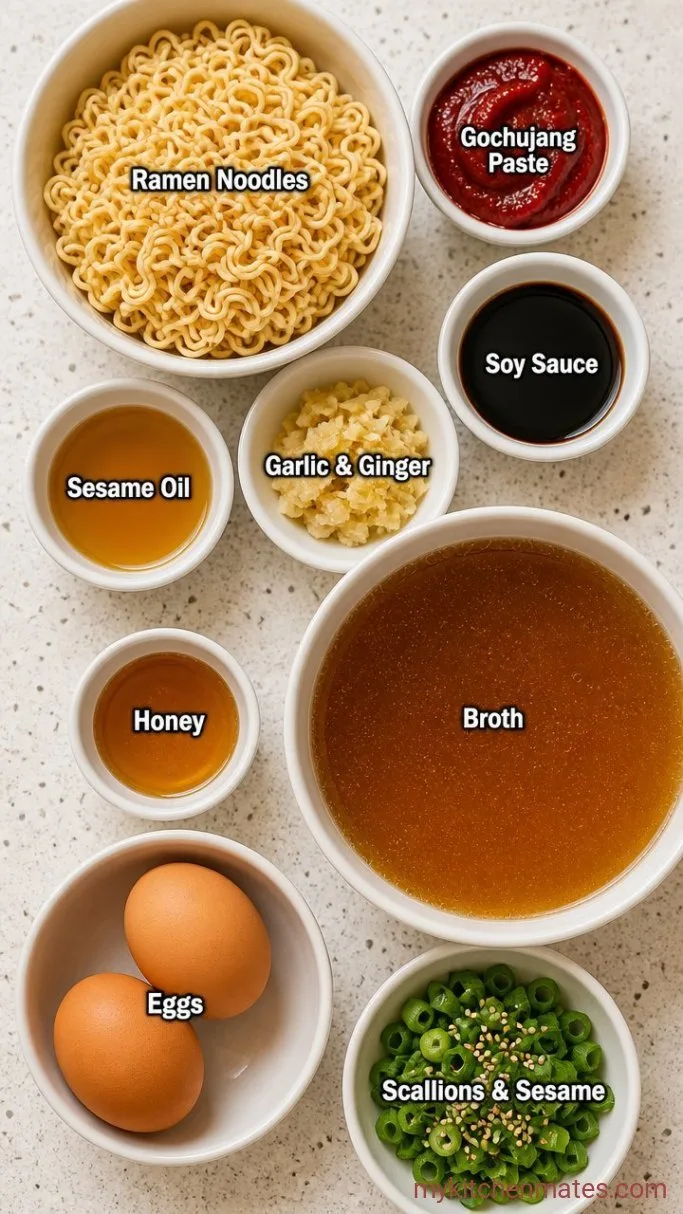
- 2 servings fresh ramen noodles: or 2 packs instant ramen, seasoning packets discarded
- 2 tbsp gochujang paste: use 1 tbsp for less heat, or up to 3 tbsp if you want serious fire
- 1 tbsp soy sauce: regular or low-sodium both work; adjust to taste
- 1 tsp toasted sesame oil: plus extra for drizzling
- 2 cloves garlic: minced
- 1 tsp grated fresh ginger
- 4 cups vegetable or chicken broth: low-sodium is best so you control the salt
- 1 tsp sugar or honey: rounds out the heat
- 2 large eggs: for soft-boiling
- Sliced scallions and toasted sesame seeds: for serving
- Optional protein: shredded cooked chicken, cubed tofu, or seared mushrooms
Variations / Substitutions
- Noodles: Swap in udon, soba, or rice noodles. Cook each according to package directions.
- Protein: Add shredded rotisserie chicken, pan-fried tofu, or a handful of edamame.
- Extra veggies: Toss in a handful of baby spinach, sliced mushrooms, or bok choy during the last minute of simmering.
- Gochujang-free version: Whisk 1 tbsp miso paste with 1 tsp gochugaru (Korean chili flakes) and 1 tsp honey as a decent stand-in.
- Vegan: Use vegetable broth, skip the egg, and top with crispy tofu or sautéed shiitakes.
Crispy Gochujang Chicken Rice Bowls make an easy main to round out the meal with this ramen.
How To Make Gochujang Ramen
Step 1: Sauté the Aromatics and Gochujang
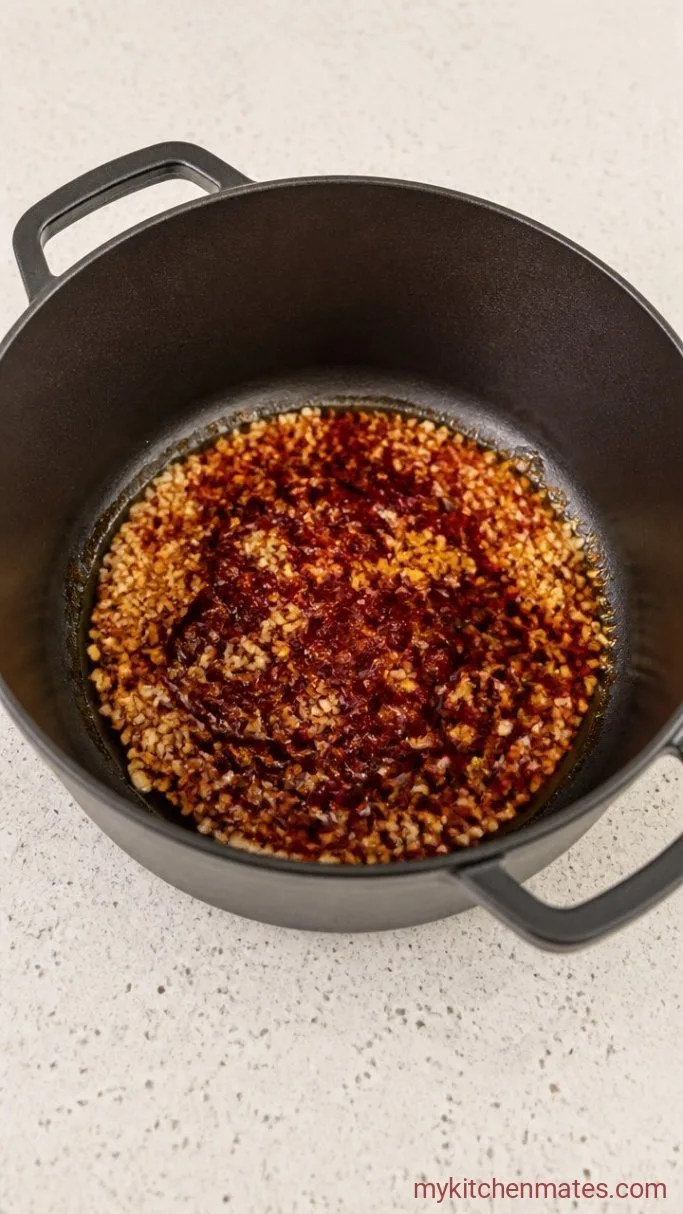
Set a medium pot of water over high heat for the eggs and noodles. In a separate Dutch oven or large saucepan, warm 1 teaspoon of sesame oil over medium heat. Add the 2 minced garlic cloves and 1 teaspoon grated ginger and cook until fragrant, about 30 seconds. Stir in the 2 tablespoons of gochujang paste and let it sizzle for another minute, breaking it up with a wooden spoon so it melts into the oil.
The paste will darken and smell deeply savory. Scrape any bits that cling to the bottom so they toast without burning.
Step 2: Cook the Eggs and Noodles

Once the water comes to a rolling boil, gently lower the 2 eggs in with a slotted spoon. Boil for exactly 7 minutes for a jammy yolk, then transfer them to an ice bath. Add the ramen noodles to the same boiling water and cook until just tender, usually 2 to 3 minutes for fresh noodles or according to the package for instant. Drain and rinse briefly under cool water to stop the cooking, then divide between two deep bowls.
Look for the egg white to be fully set and the yolk to feel slightly soft when pressed. The noodles should be pliable and chewy, never mushy.
Step 3: Ladle and Garnish the Ramen

While the noodles drain, pour the 4 cups of broth into the gochujang mixture along with the 1 tablespoon soy sauce and 1 teaspoon sugar. Bring to a gentle simmer and cook for 5 minutes, stirring occasionally, until the flavors meld and the broth turns a deep brick red. Taste and add more soy sauce if it needs salt. Spoon a ladleful of hot broth into each bowl over the noodles. Peel the eggs, halve them, and arrange one egg half in each bowl. Scatter scallions and sesame seeds on top and finish with a thin drizzle of sesame oil. Serve right away while the broth is steaming hot.
Tips for the Best Gochujang Ramen
- Choose your noodles wisely: Fresh ramen noodles give the best chewy texture, but good-quality dried ramen works too. If you use instant packs, toss the seasoning packet and treat the noodles just like fresh ones.
- Adjust the heat like a dial: Start with 1½ tablespoons of gochujang if you are heat-shy, then add more to the finished broth. You can always stir in a little extra paste at the table.
- Soft-boiled egg shortcut: If you are in a hurry, fry an egg in a slick of sesame oil and slide it onto the bowl. A runny yolk tastes just as good.
- Boost the broth body: For a creamier texture, whisk a spoonful of the hot broth into a tablespoon of peanut butter or tahini before pouring it back into the pot. It adds body without dairy.
- Go heavy on the toppings: A handful of fresh cilantro, a spoonful of kimchi, or a few drops of chili crisp push the bowl into restaurant territory.
Cook times by noodle type:
| Noodle Type | Cook Time |
|---|---|
| Fresh ramen | 2-3 mins |
| Dried ramen | 3-4 mins |
| Udon | 4-5 mins |
| Soba | 4-5 mins |
What To Serve With Gochujang Ramen
A quick cucumber salad with rice vinegar and a pinch of sugar cuts through the rich broth. A scoop of cold, tangy kimchi is even better. If you want a lighter companion, blanch some bok choy in the noodle water for 30 seconds and serve it on the side with a sprinkle of salt.
Frequently Asked Questions
Why is my broth bland?
The most common reason is not enough gochujang or soy sauce. Stir in an extra teaspoon of each, let the broth simmer another minute, and taste again. A lack of salt can flatten the whole bowl.
How do I get a perfect jammy yolk?
Keep an eye on the timer. 7 minutes in boiling water yields a set white and a yolk that is soft and spreadable. Transfer the eggs straight to ice water so they stop cooking immediately.
Can I cook the noodles directly in the broth?
You can, but the starches cloud the broth and the noodles drink up liquid fast. Cooking them separately gives you more control over both texture and broth clarity.
Gochujang Ramen Recipe
Ingredients
Method
- Warm 1 tsp sesame oil in a large saucepan over medium heat. Sauté garlic and ginger until fragrant, about 30 seconds, then stir in gochujang and cook 1 minute more.
- While the aromatics cook, bring a pot of water to a boil. Boil eggs for 7 minutes, then ice-bathe. Cook ramen in the same water until tender, about 2-3 minutes, then drain and divide between bowls.
- Pour broth, soy sauce, and sugar into the gochujang mixture. Simmer 5 minutes. Ladle hot broth over noodles, top with halved eggs, scallions, sesame seeds, and a drizzle of sesame oil.
Notes
