
Gluten-Free Stuffing

Classic stuffing doesn’t have to go off the menu when you avoid gluten. This gluten-free stuffing has a buttery, herb-flecked interior and a crisp, golden top that tastes just like the one you remember.
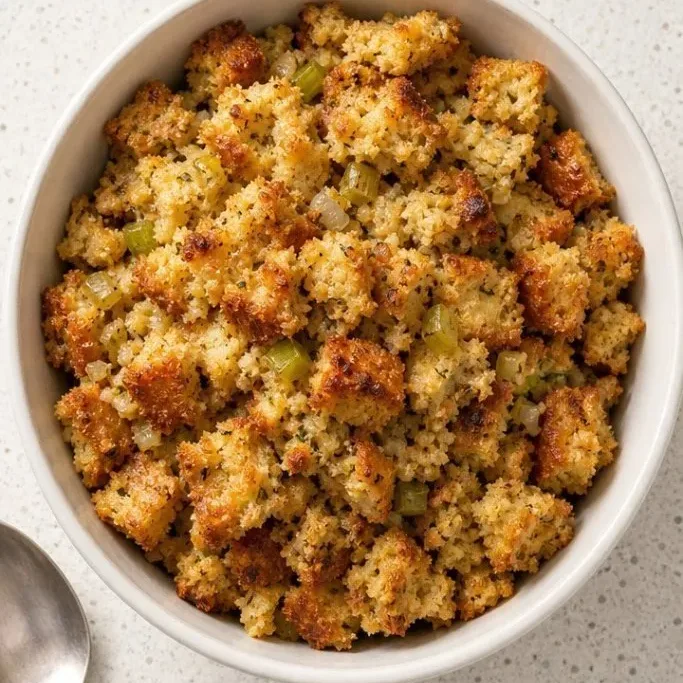
It comes together with a few simple swaps and a loaf of good gluten-free bread. A quick bake gives you a side dish that holds its own next to turkey, ham, or any holiday roast.
Why This Gluten-Free Stuffing Works
I keep this recipe in my back pocket for every holiday because it delivers everything I want in a stuffing: savory depth from fresh sage and thyme, a soft, almost custardy middle, and plenty of crunch on top.
It’s simple enough to assemble while the turkey rests. And since it uses gluten-free bread, everyone at the table can dig in without hesitation.
Ingredients

- 1 lb gluten-free bread, cubed: a sturdy sandwich loaf or sourdough style works best
- 1/2 cup unsalted butter: lets you control the salt
- 1 large onion, diced
- 3 celery stalks, diced
- 2 cloves garlic, minced
- 2 teaspoons chopped fresh sage
- 1 teaspoon chopped fresh thyme
- 1/4 cup chopped fresh parsley
- 2 cups chicken or vegetable broth
- 1 large egg
- 1 teaspoon salt
- 1/2 teaspoon black pepper
Variations / Substitutions
- Dairy-free: use olive oil instead of butter
- Add sausage: brown 8 oz of bulk sausage with the onion and celery
- Nutty crunch: stir in 1/2 cup toasted pecans or walnuts after tossing the bread
- Apple stuffing: add 1 diced apple with the vegetables
- Herb swap: use 1 teaspoon each of dried sage and thyme if fresh isn’t available
Crispy Leftover Turkey Stuffing Balls are the main dish we love pairing with this stuffing.
How To Make Gluten-Free Stuffing
Step 1: Sauté the Aromatics

Preheat your oven to 350°F (175°C) and grease a 9×13-inch baking dish. Melt the 1/2 cup butter in a large skillet over medium heat. Add the diced onion, celery, and a pinch of salt, and cook, stirring often, for about 8 minutes, until the vegetables are soft and the onion is translucent. Stir in the minced garlic, the 2 teaspoons sage, and 1 teaspoon thyme, and cook for 1 more minute until fragrant.
The kitchen will smell like the holidays at this point, and the vegetables should have a glossy, buttery sheen without any browning.
Step 2: Toss the Bread with the Vegetables

Place the cubed gluten-free bread in a very large bowl. Scrape the warm buttery vegetable mixture over the bread, add the 1/4 cup chopped parsley, and toss gently with your hands or two large spoons until the bread is evenly coated.
The bread will start to absorb the butter and herbs immediately. Some cubes may crumble a little, which is fine — those bits will help bind the stuffing later.
Step 3: Moisten with the Broth Mixture

In a separate bowl, whisk together the 2 cups broth, the egg, 1 teaspoon salt, and 1/2 teaspoon pepper. Pour this mixture over the bread, then fold everything together gently until the bread is evenly moistened. Let the bowl sit for 5 minutes so the cubes soak up the liquid without turning to mush.
At this stage the stuffing will look quite wet, but it bakes into a soft, tender interior with crisp edges on top. Try not to stir too aggressively, or the bread will break down faster than you want.
Step 4: Bake the Stuffing
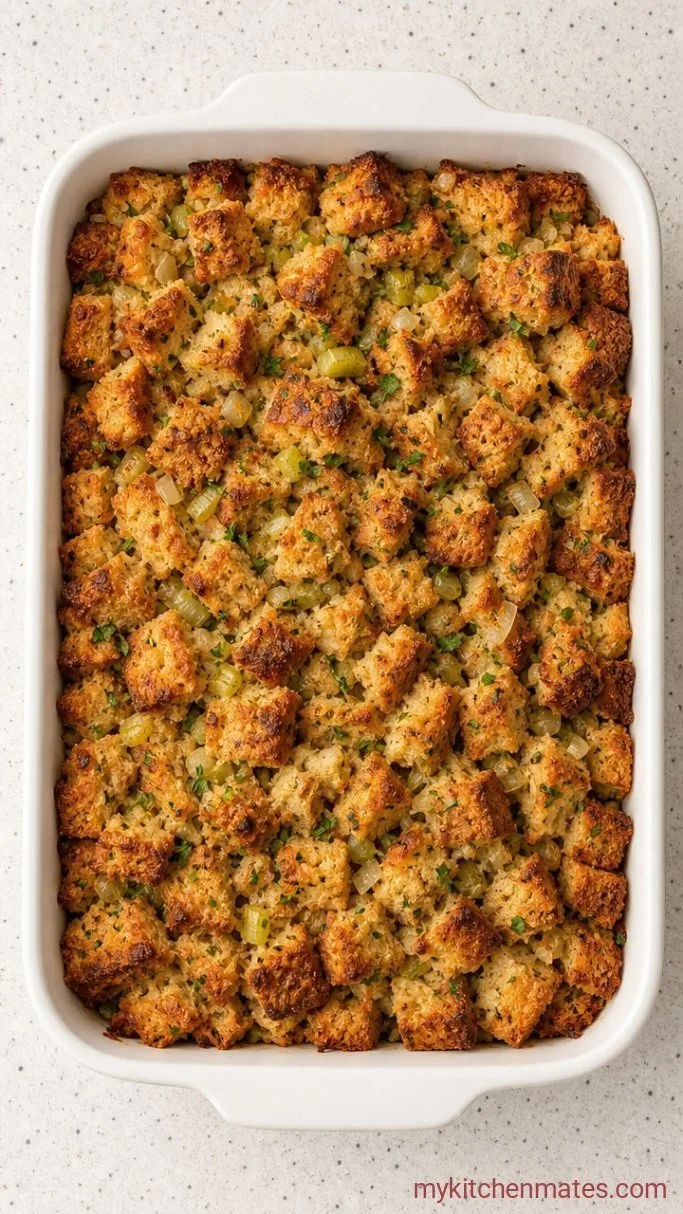
Transfer the stuffing mixture to the prepared baking dish and spread it in an even layer. Bake, uncovered, for 30 to 40 minutes, or until the top is deeply golden and the edges are bubbling. If you prefer an extra-crisp top, switch the oven to broil for the last 2 minutes, watching carefully so it doesn’t burn.
The aroma of baked sage and butter will fill the kitchen, and the top should crack lightly when you press it with a spoon.
Step 5: Spoon and Serve
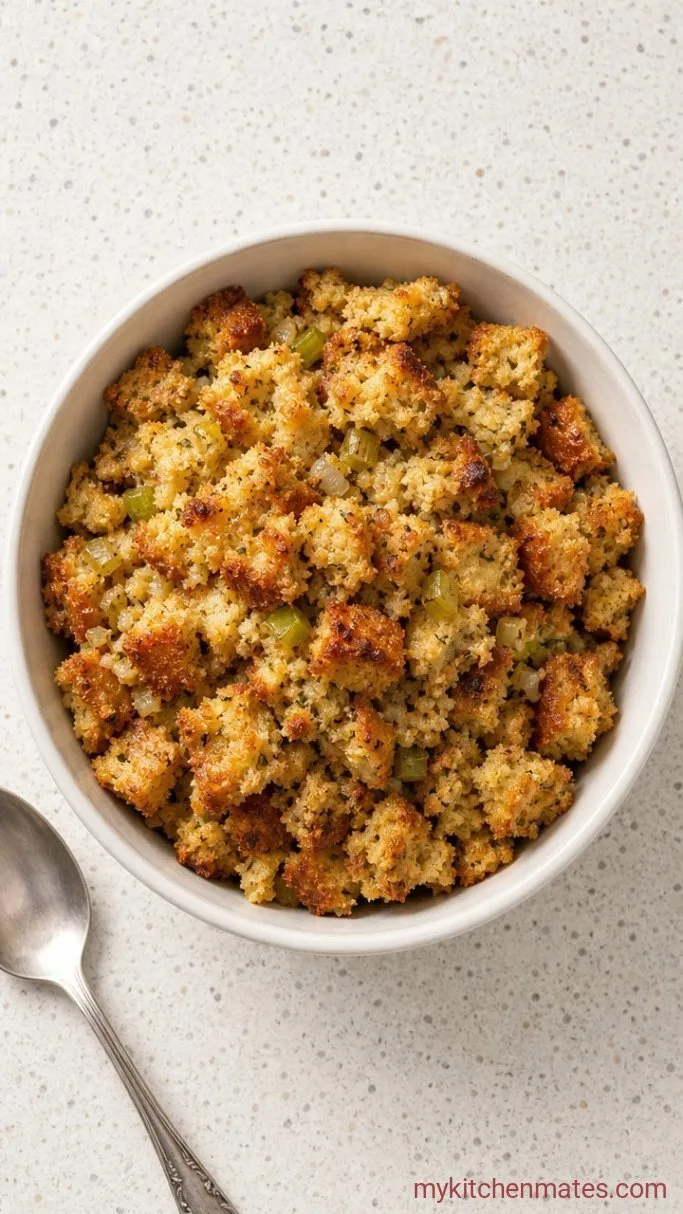
Scoop the stuffing onto plates while it’s hot, making sure each portion includes some of the crispy golden top and the soft herby center.
This is the moment when the dish looks its best — a pile of toasted bread cubes flecked with green herbs and shiny from butter. Serve it right away alongside your main dish.
Tips for the Best Gluten-Free Stuffing
- The most important step is drying the bread. Gluten-free bread is often softer and can turn mushy. Leave the cubes out on a sheet pan overnight, or toast them in a 300°F oven for 10 to 15 minutes until they feel dry but not browned.
- Taste your broth before adding salt. Some broths are saltier than others, so start with the 1 teaspoon of salt in the egg mixture and adjust after tasting the soaked bread (you can safely taste it at that point).
- Don’t over-stir after adding the broth. Fold just enough to distribute the liquid, or the bread will disintegrate.
- For a make-ahead option, assemble the stuffing through Step 3 in the baking dish, cover, and refrigerate overnight. The next day, bake as directed, adding about 10 extra minutes since it’s cold from the fridge.
Bake times by dish shape:
| Pan Shape | Bake Time |
|---|---|
| 9×13-inch (2 inches deep) | 30 to 40 minutes |
| 8×8-inch (3 inches deep) | 40 to 45 minutes |
| Muffin tins (individual) | 20 to 25 minutes |
Storing Leftovers
- Refrigerate: Keep leftover stuffing in an airtight container for up to 4 days.
- Reheating: Sprinkle a tablespoon of broth over the stuffing, then reheat in a 350°F oven for 10 to 15 minutes to bring back the crisp top. The microwave works in a pinch, but the top will soften.
What Goes Well With Gluten-Free Stuffing
Roast turkey is the classic partner: the herb and butter notes in the stuffing echo the seasoned bird, and the crisp top is a welcome contrast to tender slices of breast meat. A glossy brown-sugar glazed ham is another natural match, with the sweet and salty balance playing off the savory stuffing. For a vegetarian plate, ladle a rich mushroom gravy over everything; the earthy depth makes the dish feel complete without meat.
Frequently Asked Questions
Can I use fresh gluten-free bread instead of stale?
It’s better to use day-old or lightly dried bread. Very fresh gluten-free bread soaks up broth too quickly and can turn gummy. If your loaf is fresh, spread the cubes on a sheet pan and toast at 300°F for about 10 minutes to dry them out before using.
What’s the best gluten-free bread for stuffing?
A sturdy loaf with a tight crumb, like a gluten-free sourdough or a sandwich bread that doesn’t crumble apart, works best. Avoid soft, cakey breads; they’ll break down into mush.
Can I make this stuffing egg-free?
Yes, swap the egg for a flax egg (1 tablespoon flaxseed meal mixed with 2 1/2 tablespoons water, let sit 5 minutes). The texture will be slightly less custardy but still holds together well.
Why did my stuffing come out dry?
Dry stuffing usually means there wasn’t enough broth or the bread absorbed it faster than expected. Before baking, the mixture should look quite wet. If it seems dry at that point, add a splash more broth and fold it in. Also, covering with foil for the first 20 minutes of baking can help the interior steam and stay moist.
Can I freeze leftover stuffing?
Yes. Let it cool completely, then portion it into freezer-safe bags or containers. Freeze for up to 2 months. Reheat straight from frozen in a 350°F oven until hot, adding a drizzle of broth to refresh the texture.
Gluten-Free Stuffing Recipe
Ingredients
Method
- Preheat oven to 350°F (175°C). Melt butter in a skillet over medium heat, then cook onion and celery with a pinch of salt for 8 minutes. Add garlic, sage, and thyme; cook 1 minute.
- Toss bread cubes and parsley with the buttery vegetable mixture in a large bowl until coated.
- Whisk broth, egg, salt, and pepper together, pour over bread, and fold gently. Let sit 5 minutes.
- Spread into a greased 9×13-inch baking dish and bake 30 to 40 minutes until golden.
- Spoon onto plates, making sure to include the crispy top, and serve hot.
Notes
