
Fluffy Gluten Free German Pancakes (Oven-Baked Dutch Baby)

Gluten free German pancakes, also called Dutch babies, are the kind of breakfast that looks impressive but takes almost no work. You blend a simple batter, pour it into a hot skillet, and the oven does the rest, turning it into a giant golden puff.

This version uses a gluten-free flour blend that keeps the edges crisp and the center custardy, just like the classic. It is a reliable recipe that is fast enough for a Tuesday but special enough for a lazy weekend.
Why This Dutch Baby Works Every Time
The batter comes together in a blender in under a minute, and the oven does the heavy lifting. There is no flipping, no standing over a hot griddle, and no guessing when to turn.
The edge puffs up high and crisp while the bottom stays soft and almost eggy, like a cross between a crepe and a popover. A dusting of powdered sugar and a squeeze of lemon is all it needs.
Every time I bring one to the table, someone asks how to make it. That is the sign of a keeper.
Ingredients
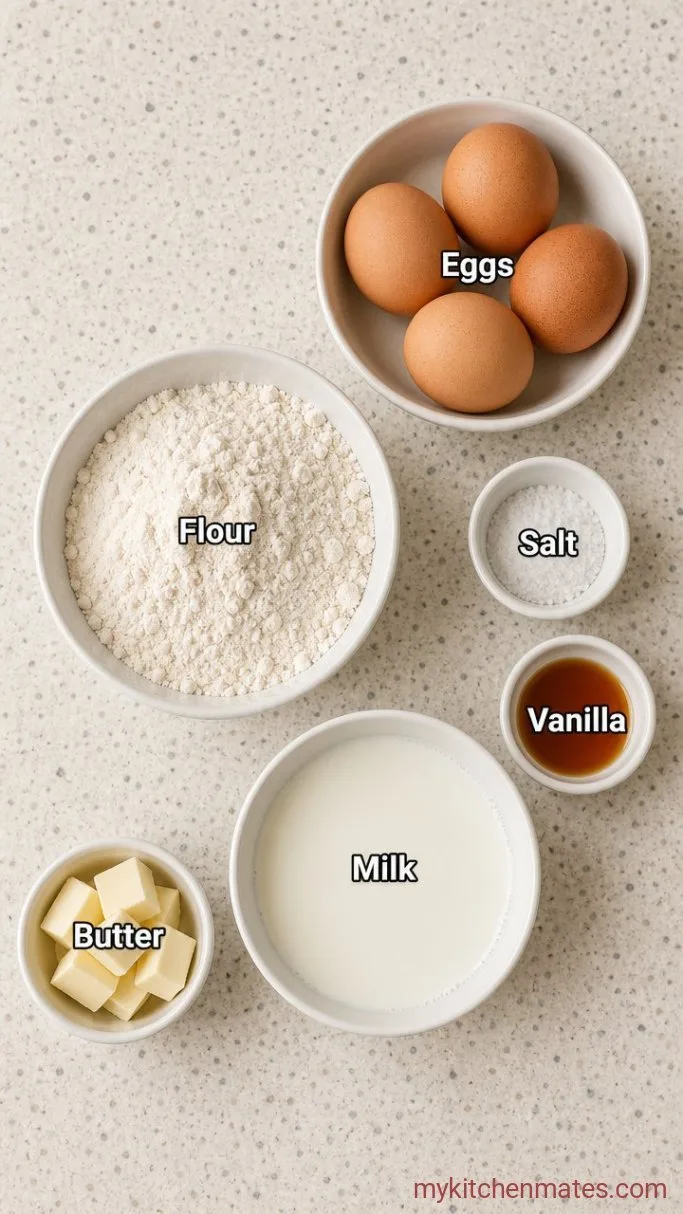
- 4 large eggs: room temperature for the best rise.
- 2/3 cup whole milk: warmed slightly to take the chill off.
- 2/3 cup gluten-free all-purpose flour blend: one with xanthan gum works best.
- 1/4 teaspoon fine sea salt.
- 1 teaspoon vanilla extract.
- 2 tablespoons unsalted butter: for the pan.
Variations / Substitutions
- Dairy-free: Swap whole milk for oat milk and use a neutral oil or vegan butter; the pancake will still puff but loses a little richness.
- Flour blend: Any 1:1 gluten-free flour blend with xanthan gum works. Avoid straight almond or coconut flour, as they will not puff the same way.
- Spices: Add 1/4 teaspoon cinnamon or cardamom to the batter for warmth.
Fluffy Gluten-Free Vegan Pancakes are next on our list if these pancakes are your kind of breakfast.
How to Make Gluten Free German Pancakes
Step 1: Blend the Batter
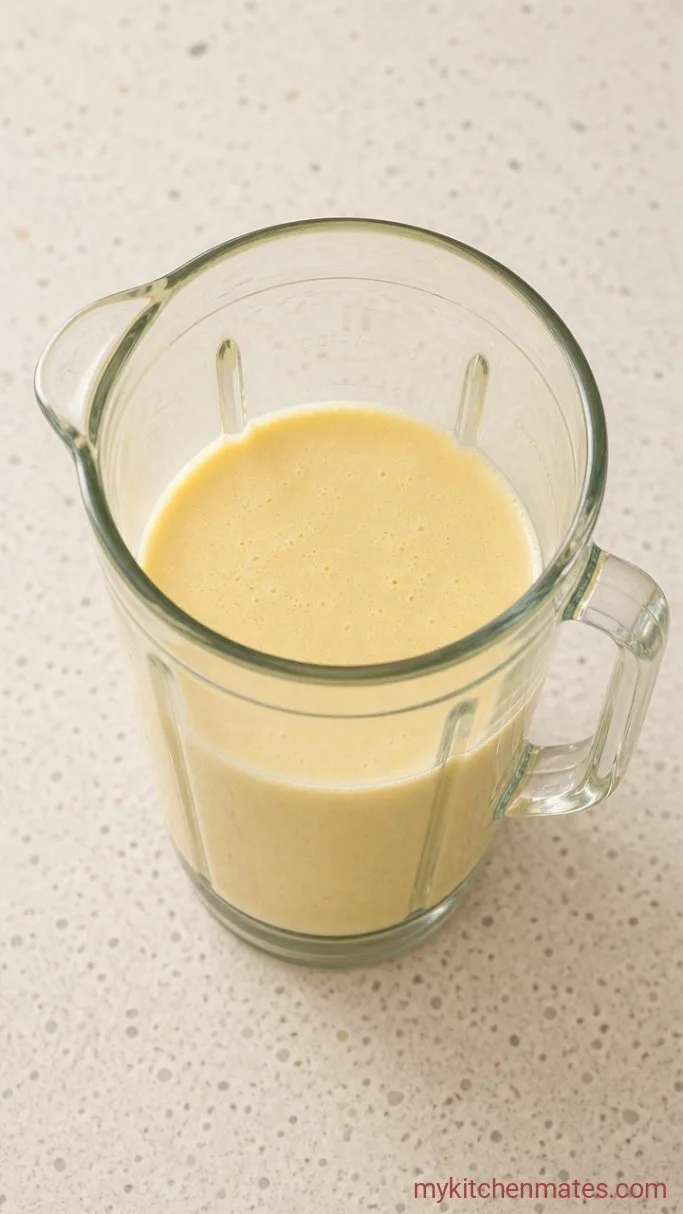
Combine 4 large eggs, 2/3 cup whole milk, 2/3 cup gluten-free flour, 1/4 teaspoon salt, and 1 teaspoon vanilla in a blender. Run it for 30 seconds until completely smooth, scraping down the sides if needed.
The batter will be thin, like heavy cream, with no visible lumps. Let it rest on the counter while the oven heats up, which gives the flour a moment to hydrate.
Step 2: Heat the Skillet and Melt the Butter
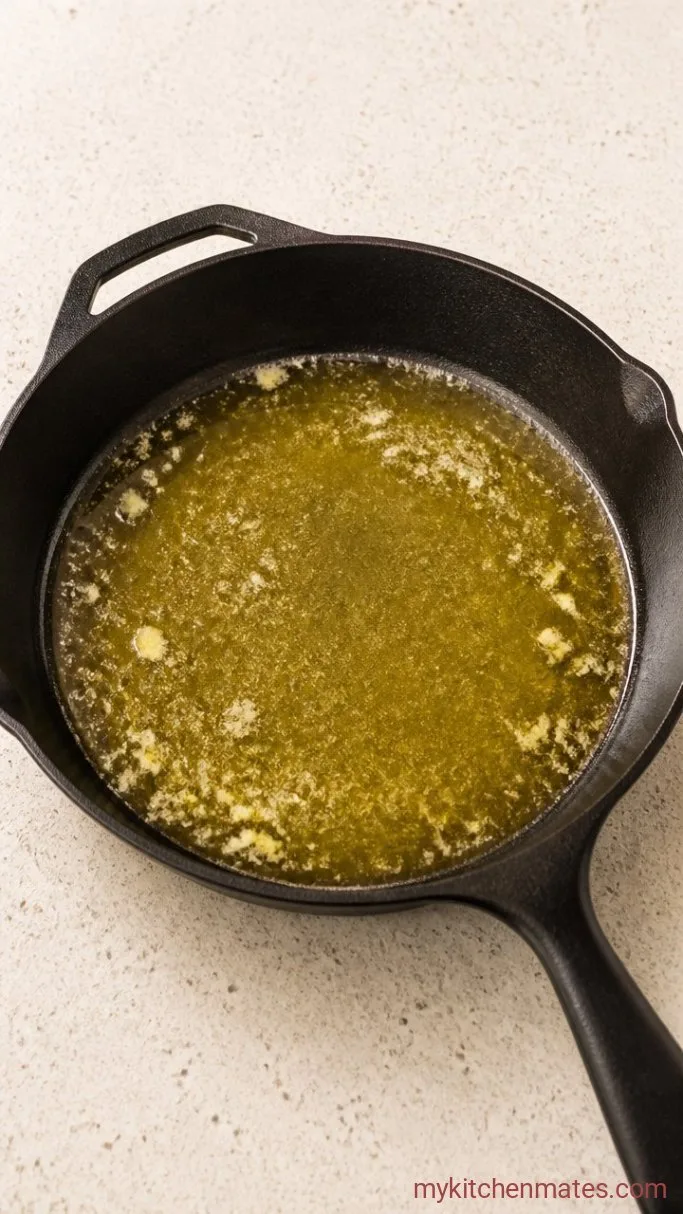
Place a 10-inch cast iron skillet on the middle rack and heat the oven to 425°F (220°C). Once the oven signals it is fully preheated, carefully pull out the hot skillet and drop in the 2 tablespoons of butter.
The butter should foam and sizzle immediately, turning slightly nutty but not brown. Swirl it to coat the bottom and partway up the sides, then immediately move on to the next step.
Step 3: Pour the Batter and Bake
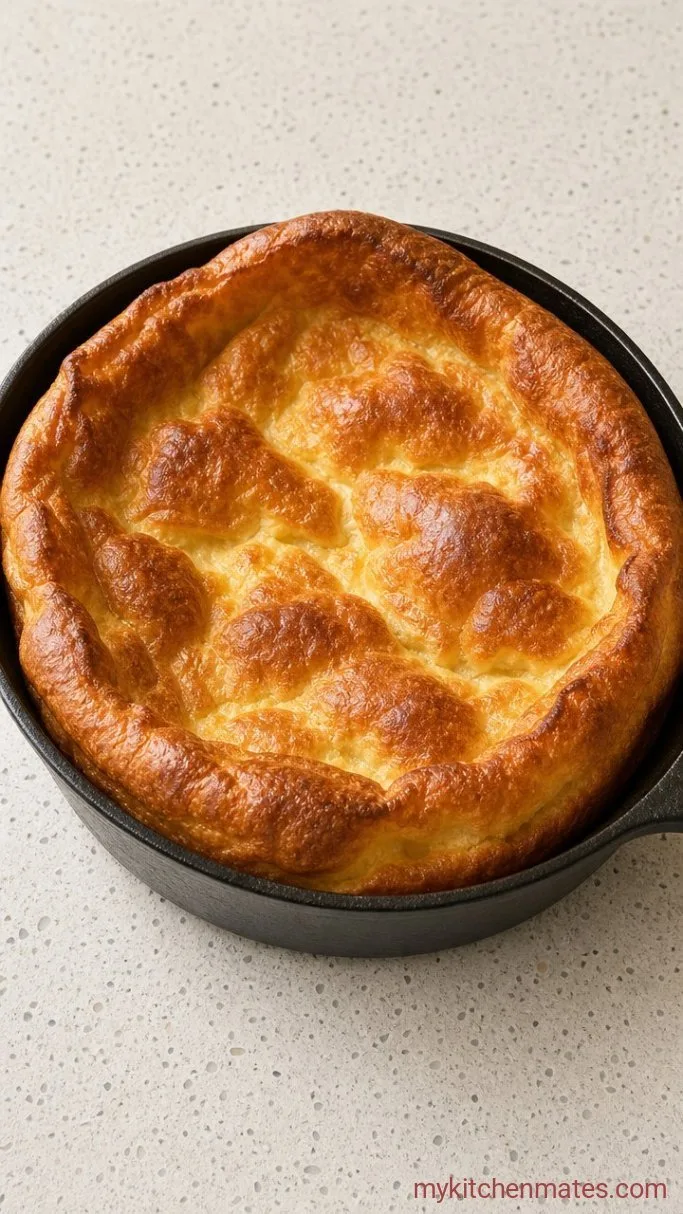
Pour the batter straight into the center of the hot buttered skillet. Slide the skillet back onto the middle rack and bake for 18 to 20 minutes, until the pancake is puffed high and the edges are deeply golden.
Do not open the oven door during the first 15 minutes. The steam inside is what makes it rise, and even a quick peek can let too much heat escape. The center will look set with the faintest wobble at the very end.
Step 4: Dust and Serve
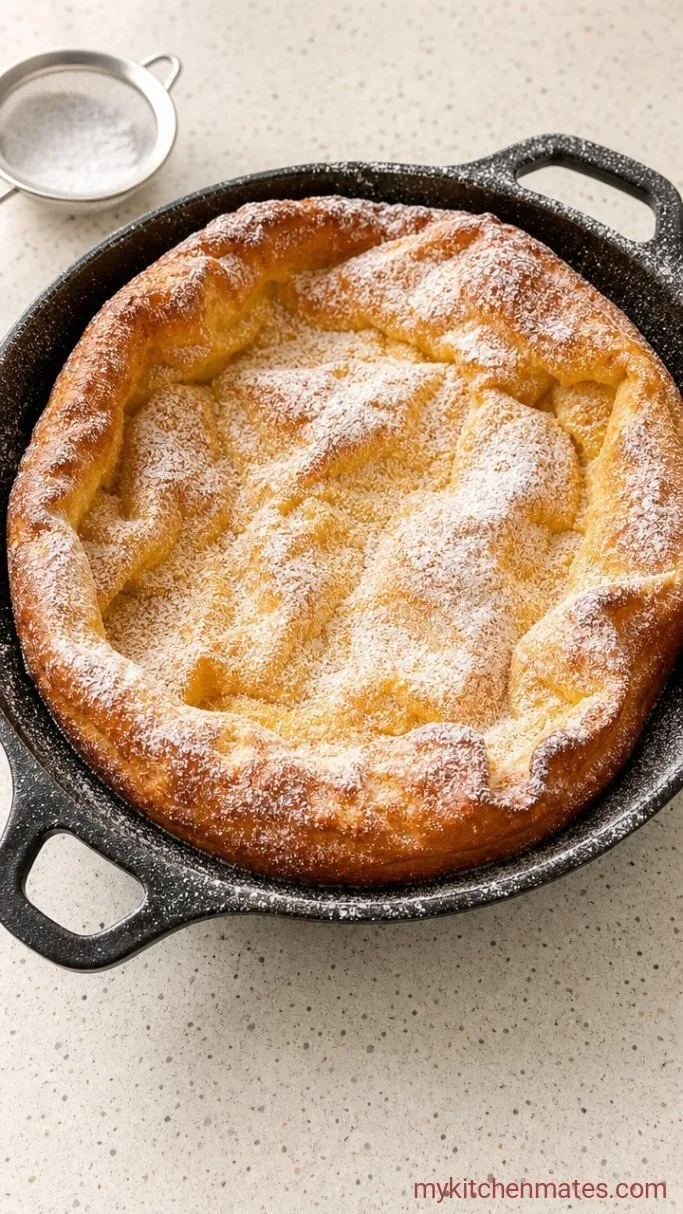
Remove the skillet from the oven. The dramatic puff will begin to settle within a minute or two, which is completely normal. Dust generously with powdered sugar and serve right away with lemon wedges on the side.
Slice into wedges at the table while the pancake is still warm and the edges are crisp. Each bite gives you a mix of tender custard and a thin, crackly rim.
Tips for the Best Puff
- A blender makes the smoothest batter with zero effort, but you can whisk by hand. Just be sure no lumps remain.
- Have all ingredients measured before you heat the skillet. Once the oven is hot, the bake moves fast.
- If the pancake sticks, let the skillet cool for a minute and it will release easily. A well-seasoned cast iron pan should give you no trouble.
Scale it for your skillet size:
| Skillet Size | Eggs | Gluten-Free Flour | Milk | Bake Time |
|---|---|---|---|---|
| 8-inch | 2 | 1/3 cup | 1/3 cup | 14–16 mins |
| 10-inch | 4 | 2/3 cup | 2/3 cup | 18–20 mins |
Keeping Leftover Pancakes
Refrigerate: Store any leftover slices in an airtight container for up to 2 days.
Reheating: Warm slices in a 350°F (175°C) oven for about 5 minutes to recrisp the edges, or give them a quick turn in a skillet with a little butter.
What to Serve with Gluten Free German Pancakes
A simple dusting of powdered sugar and a squirt of lemon is classic, but a bowl of macerated strawberries or a quick blueberry compote turns it into a showstopper. For a savory twist, skip the sugar and serve with crispy bacon and a drizzle of maple syrup. The salty-sweet combination works beautifully together.
Frequently Asked Questions
Why did my pancake not puff up?
The oven or skillet likely was not hot enough. Make sure the oven is fully preheated to 425°F and the skillet is smoking hot before butter is added.
Can I make the batter ahead of time?
Yes, blend it up to 2 hours ahead and refrigerate. Whisk it briefly before pouring, and expect an extra minute or two of bake time if the batter is very cold.
Is the center supposed to be eggy?
Yes, a custard-like center is exactly what you want. It sets up as the pancake finishes baking and will firm a bit more as it cools in the skillet.
Can I freeze a baked Dutch baby?
Freezing is not recommended. The texture becomes spongy, and the crisp edges soften. This is a dish best made fresh.
Gluten Free German Pancakes Recipe
Ingredients
Method
- Blend eggs, milk, flour, salt, and vanilla for 30 seconds until smooth. Let rest.
- Place a 10-inch cast iron skillet in a cold oven and heat to 425°F (220°C). Carefully remove the hot skillet, add butter, and swirl until melted and foamy.
- Pour batter into the center, return the skillet to the oven, and bake 18–20 minutes without opening the door until puffed and golden.
- Remove from oven, dust with powdered sugar, and serve immediately with lemon wedges.
Notes
