
Easy Gluten Free Focaccia Bread (No Knead)

This gluten-free focaccia is soft, airy, and pocked with olive oil, with a crisp top and a tender, chewy crumb. It stays fresh for days and nobody will guess it’s missing gluten.

It bakes up golden and fragrant, and the dough comes together without any kneading or special equipment. Just stir, rest, and spread.
What Makes This Focaccia Work
Gluten-free bread is usually a choice between dry and crumbly or weirdly gummy. This one skips both problems.
The dough gets its stretch and open texture from psyllium husk gel and a generous amount of olive oil. You never have to knead, and the long rise builds real bread flavor even without traditional flour. The crumb stays soft, and the oiled pan gives the bottom crust that fried chew you want from a bakery focaccia.
Ingredients

- 1 1/2 cups warm water (110°F): too hot kills the yeast, too cold won’t wake it up.
- 1 tbsp granulated sugar: feeds the yeast, doesn’t sweeten the bread.
- 1 packet (2 1/4 tsp) active dry yeast: or instant yeast, see variations.
- 2 1/2 cups gluten-free all-purpose flour blend: must contain xanthan gum; if your blend doesn’t, add 1/2 tsp.
- 1 tbsp psyllium husk powder: the secret to that stretchy, open crumb.
- 1 tsp fine sea salt
- 3 tbsp extra-virgin olive oil, plus more for the pan and drizzling
- Flaky sea salt and fresh rosemary: for topping
Variations / Substitutions
- Yeast: instant yeast works the same way; you can stir it straight into the flour without proofing first.
- Herb swap: rosemary is classic, but thyme or oregano are great if that’s what you have.
- Psyllium: there is no perfect swap, but ground flaxseed mixed with water (1 tbsp flax + 3 tbsp water) can hold things together in a pinch. The chew won’t be the same.
Gluten Free Lasagna Soup goes perfectly with this bread for a cozy meal.
How to Make Gluten Free Focaccia Bread
Step 1: Mix the Dough

Pour the 1 1/2 cups warm water into a large bowl, then stir in the 1 tbsp sugar and the yeast. Let it stand for 5 minutes, until a creamy foam forms on top. If you don’t see that foam, the yeast might be old and the bread won’t rise, so grab a fresh packet.
Stir in the 3 tbsp olive oil, 1 tbsp psyllium husk powder, and the salt. Add the 2 1/2 cups of flour all at once and mix with a wooden spoon until no dry streaks remain. The batter will be thick and sticky, closer to muffin batter than bread dough, and that’s exactly what you want.
Step 2: Let the Dough Rise

Cover the bowl with plastic wrap or a damp kitchen towel and put it in a warm, draft-free spot. Let the dough rise for about 45 minutes, until it looks puffy and nearly doubled. If your kitchen is cold, it might take closer to an hour; check the surface for tiny bubbles and a spongy jiggle.
The batter will feel lighter when you peek underneath, and you’ll see air pockets forming all through it. That bubbly, stretchy look is the psyllium gel trapping fermentation gases, which is what gives gluten-free bread an open crumb.
Step 3: Shape and Second Rise
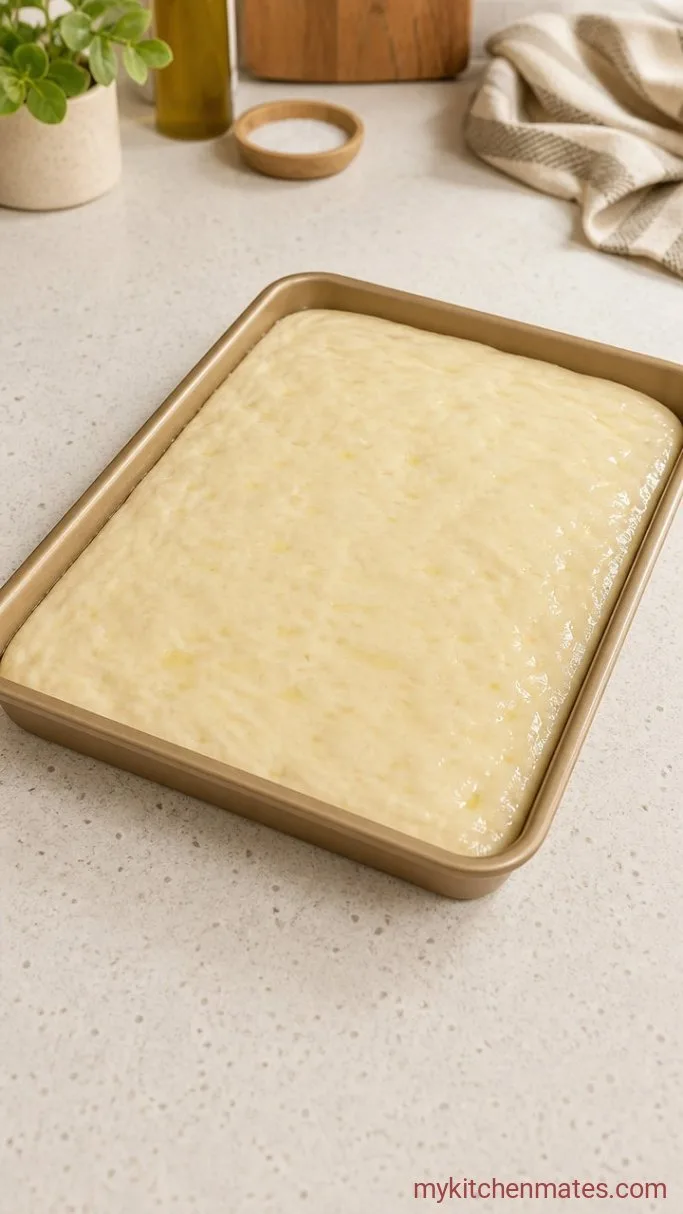
Pour a generous coating of olive oil into a 9×13-inch metal baking pan. Scrape the dough into the center and use an oiled spatula or wet fingers to gently push it toward the corners. It won’t spread to the edges yet. Let it rest for 20 minutes, then spread it again; the dough will be relaxed and will easily reach the sides.
Drizzle a little more olive oil on top, cover the pan loosely with plastic, and let the focaccia rise a second time for 30 minutes. By the end, the surface will look quilted and puffy, and large bubbles will be visible underneath.
Step 4: Dimple, Bake, and Serve

While the dough finishes rising, heat your oven to 425°F (220°C). Once the focaccia is puffy, dip your fingertips in water or oil and press down firmly all over the surface, creating deep dimples that almost reach the bottom of the pan. Drizzle with another round of olive oil, then scatter flaky salt and rosemary across the top.
Bake for 20 to 25 minutes, until the crust is deeply golden and the edges pull away from the pan. Let the focaccia cool in the pan for 5 minutes so the bottom stays crisp, then slide it onto a rack. Slice into squares and serve warm.
A Few Notes Before You Start
- A metal cake pan gives the best crisp bottom. Glass will work but produces a softer crust.
- Be patient with spreading. The batter relaxes as it sits, so don’t force it or you’ll tear the dough.
- If your psyllium husk powder is coarse, buzz it in a blender for a few seconds until fine. Don’t skip it.
- For deeper flavor, refrigerate the dough after the first mix (Step 1) overnight. Bring it to room temperature before shaping.
- If the top browns too fast, tent loosely with foil after the first 15 minutes of baking.
Bake times by pan:
| Pan material | Pan size | Bake time |
|---|---|---|
| Metal | 9×13-inch | 20-25 mins |
| Glass | 9×13-inch | 25-30 mins |
Storing Leftover Focaccia
- Refrigerate: wrap the focaccia tightly and store at room temperature for up to 2 days, or in the fridge for up to 5 days. The olive oil keeps it from drying out.
- Reheating: warm slices in a 350°F oven for 5 minutes to re-crisp the crust.
What Goes Well With This Focaccia
Tear off a warm square and dip it in good balsamic vinegar and olive oil while it’s still hot. It also soaks up broth beautifully, so a bowl of minestrone or a garlicky white bean soup turns it into a meal. For a simple lunch, serve it next to a tomato salad dressed with salt, basil, and a splash of red vinegar.
Frequently Asked Questions
Can I make this without psyllium husk?
The psyllium is what creates the chewy, bread-like texture. Without it, the focaccia will be much more crumbly. In a pinch, you can try 1 tablespoon ground flaxseed mixed with 3 tablespoons water, but the crumb won’t have the same spring and open holes.
Why is my focaccia gummy inside?
Gluten-free dough can turn gummy if it’s underbaked or if there is too much liquid. Make sure you bake until the top is a deep golden brown and the edges have pulled away from the pan, and resist the urge to add extra flour, which can throw off the hydration.
Can I freeze it?
Yes. Wrap cooled squares tightly in plastic and foil, then freeze for up to 2 months. Thaw at room temperature and recrisp in a 350°F oven for a few minutes.
Can I add olives or sun-dried tomatoes?
Definitely. Press pitted olives or chopped sun-dried tomatoes into the dough just before the second rise or right before you dimple it. The oil from the toppings will flavor the bread as it bakes.
Gluten Free Focaccia Bread Recipe
Ingredients
Method
- In a large bowl, whisk together the warm water, sugar, and yeast. Let stand for 5 minutes until foamy.
- Stir in the 3 tbsp olive oil, psyllium husk powder, and salt. Add the flour and mix with a wooden spoon until a sticky, smooth batter forms.
- Cover the bowl and let the dough rise in a warm spot until puffy and bubbly, about 45 minutes.
- Generously oil a 9×13-inch metal baking pan. Scrape the dough into the pan, gently spread it with oiled fingers, and let it rest 20 minutes. Spread the dough to the corners, drizzle with more oil, cover loosely, and let rise again for 30 minutes.
- Heat oven to 425°F (220°C). Use wet fingertips to press deep dimples all over the dough. Drizzle with olive oil, scatter flaky salt and rosemary, and bake 20 to 25 minutes until deeply golden. Cool in the pan 5 minutes, then slice and serve.
Notes
