
Everything Bagel Sourdough Bread

This everything bagel sourdough bread gives you the garlicky, seedy crunch of an everything bagel baked into a crusty, tangy sourdough loaf.
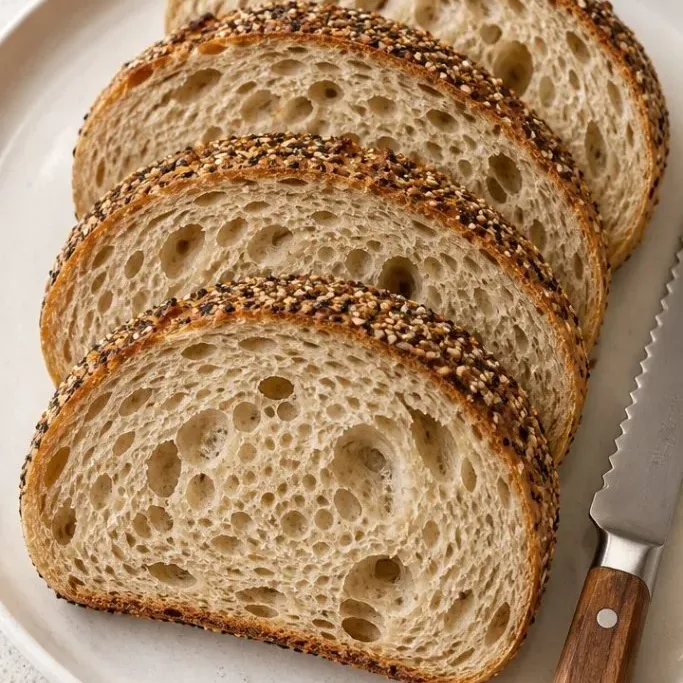
The dough is straightforward, with an overnight rise that does the hard work while you sleep. In the morning, you shape, top with seasoning, and bake.
What Makes This Loaf So Good
The first thing you taste is the crust. The everything seasoning toasts against the hot Dutch oven until the garlic and onion bits turn crisp and savory, while the sesame and poppy seeds add a nutty crunch.
Inside, the crumb is open and chewy with the mellow tang that only a long cold ferment delivers. It’s as good plain as it is loaded with butter, and the next day’s toast might even be better.
Ingredients

- 1 cup (227g) active sourdough starter: fed and bubbly, at its peak
- 3 1/2 cups (420g) bread flour: all-purpose works in a pinch but the crumb will be less chewy
- 1 1/2 cups (340g) warm water: about 85°F (29°C)
- 2 tsp fine sea salt: not table salt, which can taste metallic
- 3 tbsp everything bagel seasoning, divided: 1 tbsp for the dough, 2 tbsp for the crust
Variations / Substitutions
- Make your own everything seasoning: Combine 1 tbsp each sesame seeds, poppy seeds, dried minced garlic, dried minced onion, and 1/2 tsp flaky salt.
- Swap the flour: Use up to half whole wheat flour for a nuttier loaf; add an extra 2 tbsp water.
- Seeds only: If you don’t love onion and garlic bits, just coat the top in sesame and poppy seeds.
Creamy Cauliflower Potato Soup goes perfectly with this bread for a cozy meal.
How to Make Everything Bagel Sourdough Bread
Step 1: Mix the Dough
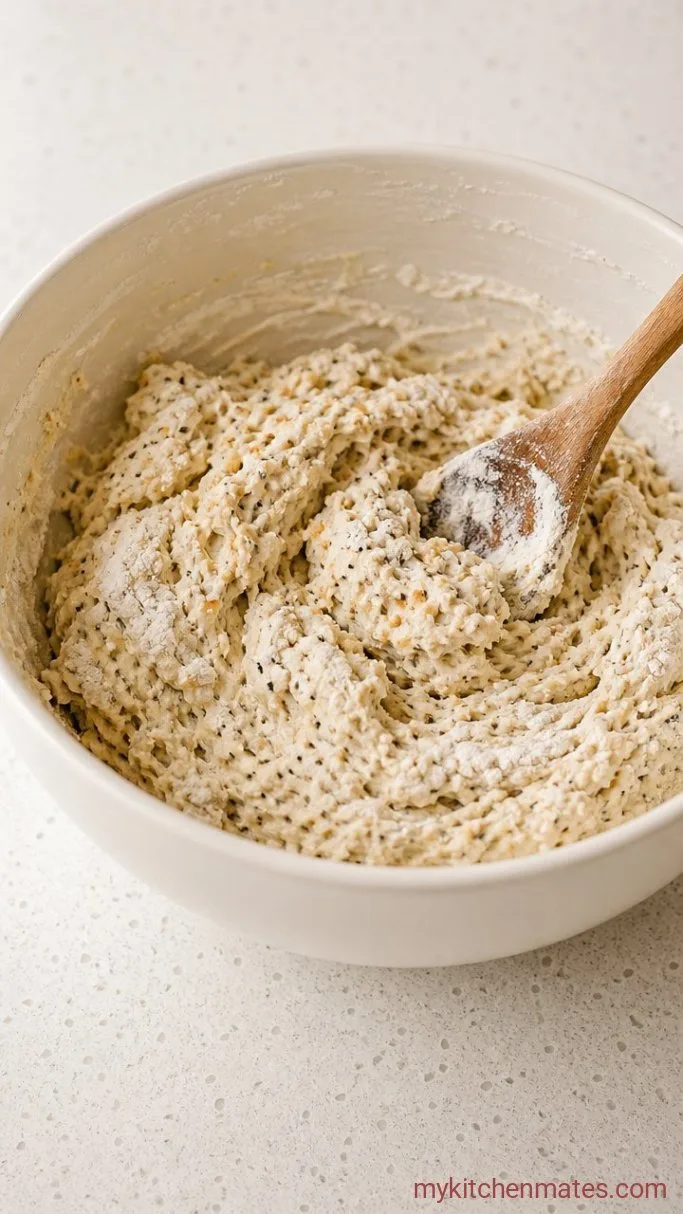
In a large bowl, combine the 1 1/2 cups warm water, 1 cup active starter, and 1 tbsp of the everything bagel seasoning. Whisk until the starter dissolves and the water looks cloudy.
Add the 3 1/2 cups bread flour and 2 tsp sea salt. Mix with a dough whisk or your hands until no dry flour remains, about 2 minutes. The dough will look shaggy and feel sticky but shouldn’t leave flour on the sides.
Let it rest, covered, for 30 minutes. This short rest lets the flour hydrate and makes the stretch and folds much easier.
Step 2: Stretch and Fold the Dough

After the rest, grab a corner of the dough, stretch it up, and fold it over the top. Rotate the bowl and repeat, working around the dough until you’ve folded each side, about 4 to 6 folds. Cover and wait 30 minutes. Repeat this two more times for a total of 3 sets, once every 30 minutes.
You’ll feel the dough change with each round. It goes from slack and shaggy to smooth and elastic, holding its shape in a rounded mound.
Don’t skip this step. The folds build gluten without kneading, giving the bread its open crumb.
Step 3: Shape the Loaf
Once the dough has nearly doubled and the surface shows a few bubbles, flour your counter lightly and scrape the dough out. Using a bench scraper or your hands, fold the edges into the center repeatedly until the dough forms a rough ball. Dust the top with a little flour and let it rest, seam side down, for 20 minutes.
This preshape relaxes the gluten so you can do a tight final shape. If you try to shape it into a tight boule right away, it fights back and tears.
After the rest, flip the dough over so the smooth side is down. Pull the edges into the center and pinch them together, then turn it over and cup your hands around the ball, pulling it toward you to create surface tension. You want a tight, smooth skin on top.
Step 4: Proof and Top the Loaf

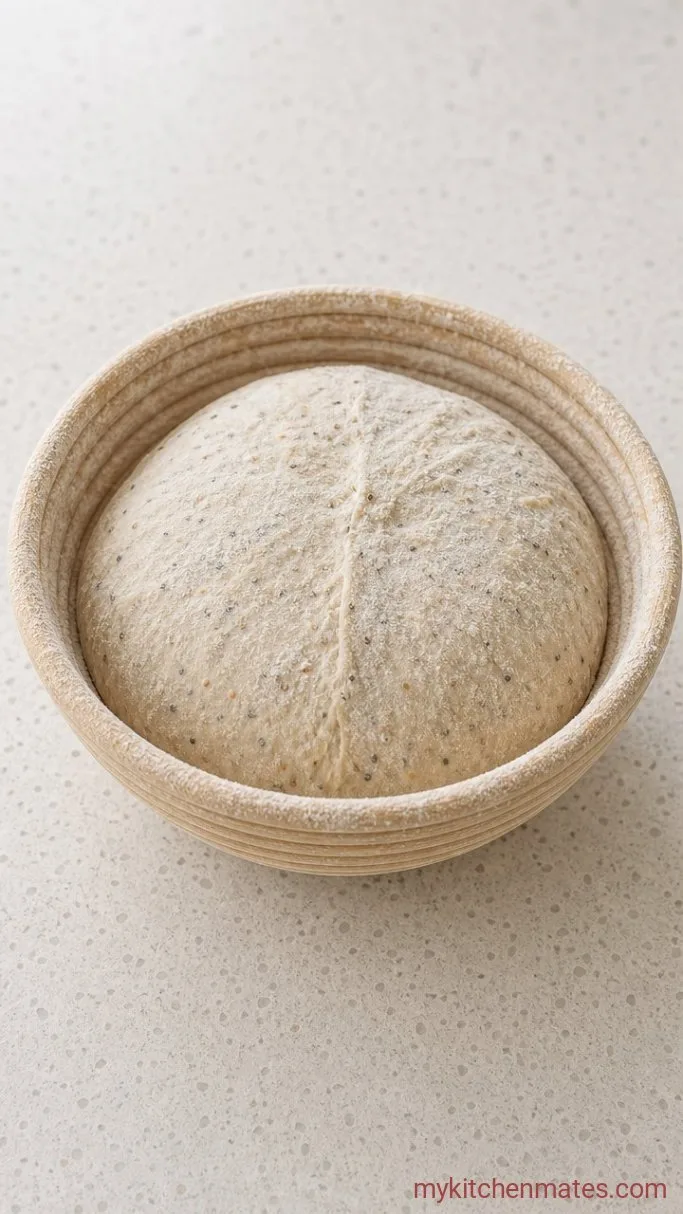
Place the shaped dough seam side up in a floured banneton or a bowl lined with a floured kitchen towel. Cover with a damp towel or plastic wrap and put it in the fridge for 8 to 12 hours. The cold temperature slows fermentation, building flavor and making the dough firmer and easier to score.
In the morning, the dough should look puffy, about 50% larger, and a light poke with a floured finger should leave a small indent that springs back slowly. While the oven preheats, turn the dough out onto a sheet of parchment paper, seam side down. Sprinkle the remaining 2 tbsp everything bagel seasoning evenly over the top and press it gently so it sticks.
Score a cross or a slash about 1/2 inch deep with a bread lame or sharp serrated knife. The score controls where the bread expands, so it doesn’t burst randomly.
Step 5: Bake the Loaf

Place a Dutch oven, lid and all, into the oven and preheat to 450°F (230°C) for at least 45 minutes. The heavy pot needs to be screaming hot to create steam when the dough hits it. Carefully lift the parchment with the dough and lower it into the pot. Cover with the lid and bake for 25 minutes.
When you take the lid off, the bread will have sprung up but the crust will look pale. Bake uncovered for another 20 to 25 minutes, until the crust is a deep golden brown and the internal temperature hits about 205°F (96°C).
That long uncovered bake melts the cheese-like garlic bits in the seasoning and toasts the seeds until they’re fragrant and crunchy. If your oven runs hot, check at 20 minutes to avoid burning the seeds.
Step 6: Cool and Slice the Loaf
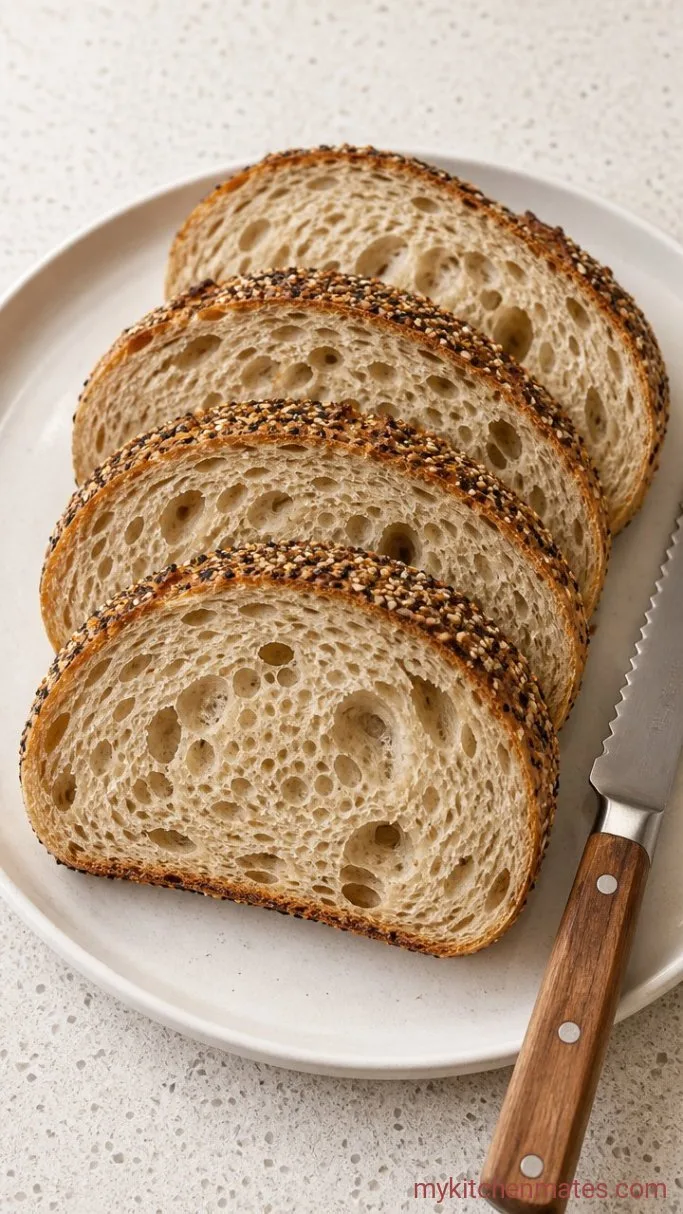
Lift the finished loaf out of the pot by the parchment corners and transfer it to a wire rack. You’ll hear it crackle as it cools. Let it cool completely, at least 2 hours, before you slice, otherwise the crumb turns gummy.
Once it’s cool, grab a sharp bread knife and cut through the crackling crust. The inside should be open and soft, with small pockets from the long fermentation.
Tips for a Sure Loaf
- Use an active, bubble-filled starter that doubles within 4-6 hours of feeding. If it doesn’t float in water, it’s not ready.
- Weighing your flour and water with a scale rules out a lot of sourdough frowns. If you use the cup measures, spoon the flour into the cup and level it.
- The long cold proof does more than build tang. It makes the dough easier to score and helps the crumb open up.
- Wait until the loaf is completely cool before slicing, or the crumb will be gummy. If you must have warm bread, cut a single slice and let the rest wait.
- No Dutch oven? A heavy preheated baking stone and a pan of water on the bottom rack works, though the crust won’t be quite as blistery.
Storing Leftovers
- Refrigerate: Wrap the cut loaf in beeswax wrap or a zip-top bag and keep in the fridge up to 5 days.
- Reheating: Revive slices in a toaster or warm the whole loaf in a 350°F (175°C) oven for 10 minutes to get the crust crisp again.
What Goes Well With Everything Bagel Sourdough Bread
The savory crunch makes it an obvious partner for cream cheese and capers, but it also turns a simple bowl of tomato soup into something worth taking a nap after. Smashed avocado with a squeeze of lemon and chili flakes really sings against the onion-garlic crust. Or just toast a thick slice and butter it while it’s hot.
Frequently Asked Questions
Can I use active dry yeast instead of a starter?
Yes, you’d make a yeasted loaf, not sourdough. Swap in 2 teaspoons of instant yeast, skip the long cold proof, and rest the dough at room temperature for 1 to 2 hours until doubled before shaping. The flavor will be milder.
Can I mix the everything seasoning straight into the whole dough?
You can, but the garlic and onion pieces can tear the gluten strands, leading to a denser crumb. Adding a small amount to the mix and the rest on top gives you the flavor without losing the open structure.
Can I freeze this bread?
Yes, slice the cooled loaf and freeze in a zip-top bag for up to 3 months. Thaw at room temperature or toast straight from frozen.
Do I really have to wait 2 hours to cut it?
If you cut into hot bread, steam escapes and the crumb turns dense and sticky. Give it at least an hour if you can’t manage two, but the texture will be noticeably better after a full cool.
Everything Bagel Sourdough Bread Recipe
Ingredients
Method
- In a large bowl, whisk the warm water, starter, and 1 tbsp everything bagel seasoning until the starter dissolves.
- Add the bread flour and sea salt. Mix until no dry flour remains, about 2 minutes. Cover and rest 30 minutes.
- Perform 3 sets of stretch and folds, once every 30 minutes over 1 1/2 hours. Grab a corner of the dough, stretch it up, and fold over the top; repeat around the bowl until the dough tightens.
- After the last fold, let the dough bulk ferment at room temperature until nearly doubled, 4 to 6 hours.
- Turn the dough onto a floured surface, shape into a tight round, and rest seam side down for 20 minutes.
- Flip the dough, pull edges into the center to tighten, and place seam side up in a floured banneton or lined bowl. Cover and refrigerate 8 to 12 hours.
- Preheat the oven to 450°F (230°C) with a Dutch oven inside for 45 minutes. Turn the cold dough onto parchment, sprinkle the remaining 2 tbsp everything bagel seasoning over the top, and score a cross about 1/2 inch deep.
- Lower the dough into the hot Dutch oven, cover, and bake 25 minutes. Remove the lid and bake another 20 to 25 minutes until deep golden and an instant-read thermometer reads 205°F (96°C).
- Transfer to a wire rack and cool completely, at least 2 hours, before slicing.
Notes
