
Gluten Free Baguette That’s Light and Crusty

If you’ve been missing the crackle of a real French baguette since going gluten free, this loaf is for you. It bakes up with a dark, crisp crust that shatters under your fingers, and inside the crumb is airy and chewy, not a brick.
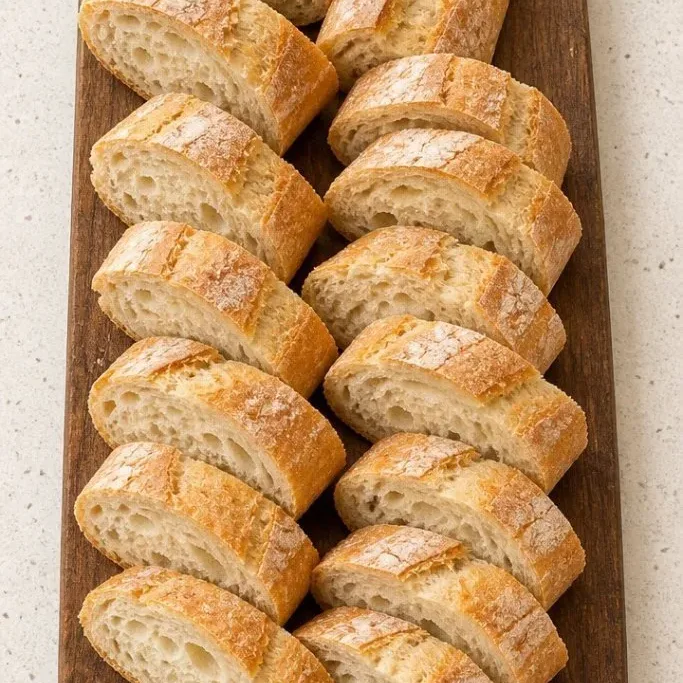
A simple flour blend and a quick steam trick do all the heavy lifting. It’s the kind of bread you’ll want on the table with butter and a warm bowl of soup.
Why This Baguette Works
Gluten free bread often disappoints by being heavy and crumbly. This recipe solves both problems with psyllium husk, which mimics the structure gluten normally provides, and a hot, steamy oven that delivers a real crackling crust. The result is a loaf that actually bends and tears like wheat bread.
I’ve made this dozens of times and it’s always reliable, even on busy weeknights. No finicky rolling or shaping, just a straightforward dough that comes together in one bowl.
Ingredients
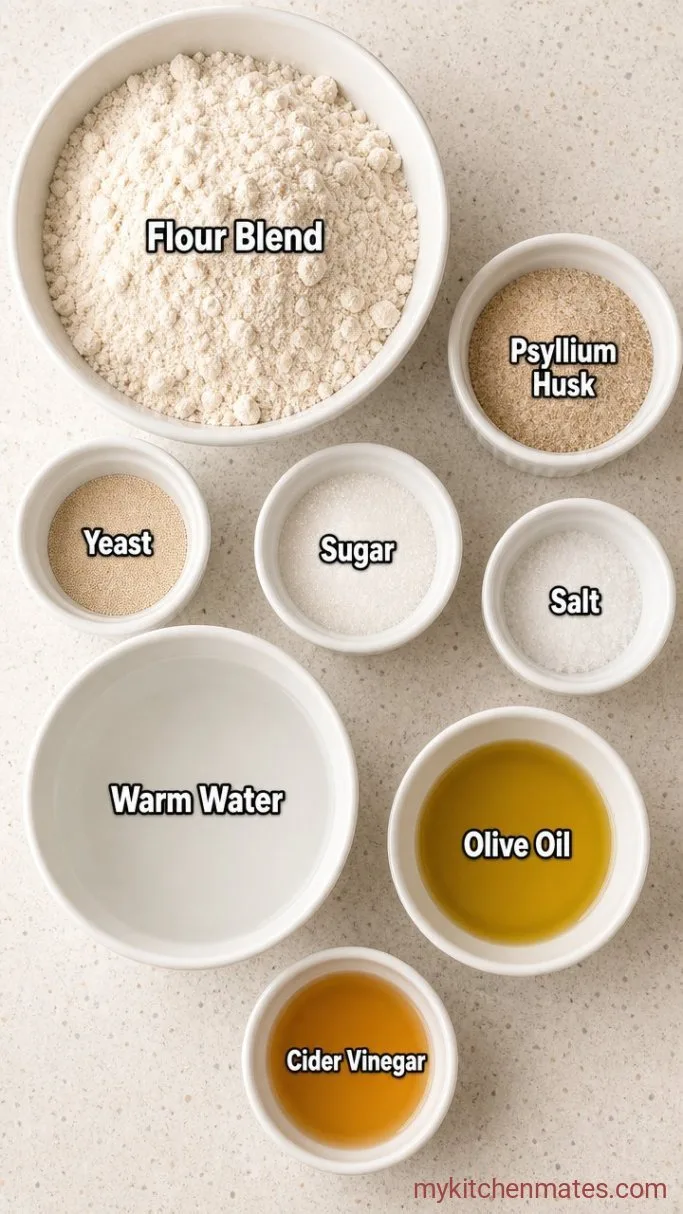
- 2 cups (280g) gluten-free all-purpose flour blend: use one that already contains xanthan gum, like Bob’s Red Mill 1:1
- 2 tbsp psyllium husk powder: essential for structure and chew
- 1 tsp instant yeast: or active dry (see FAQ)
- 1 tsp granulated sugar: feeds the yeast
- 1 tsp fine sea salt
- 1 cup (240ml) warm water: about 110°F (43°C)
- 2 tbsp olive oil: plus more for shaping
- 1 tsp apple cider vinegar: adds a subtle tang and helps tenderness
Variations / Substitutions
- Flour blends: If your blend has no xanthan gum, add 1 tsp of it separately.
- Psyllium husk alternative: Replace with 1 tbsp flaxseed meal and 1 tsp xanthan gum; texture will be slightly less springy.
- Dairy-free: This recipe is already dairy-free.
- Herb baguette: Add 1 tbsp dried herbs de Provence to the flour.
Creamy Gluten-Free White Chicken Chili is a cozy soup to serve with this baguette.
How to Make Gluten Free Baguette
Step 1: Mix the Dough
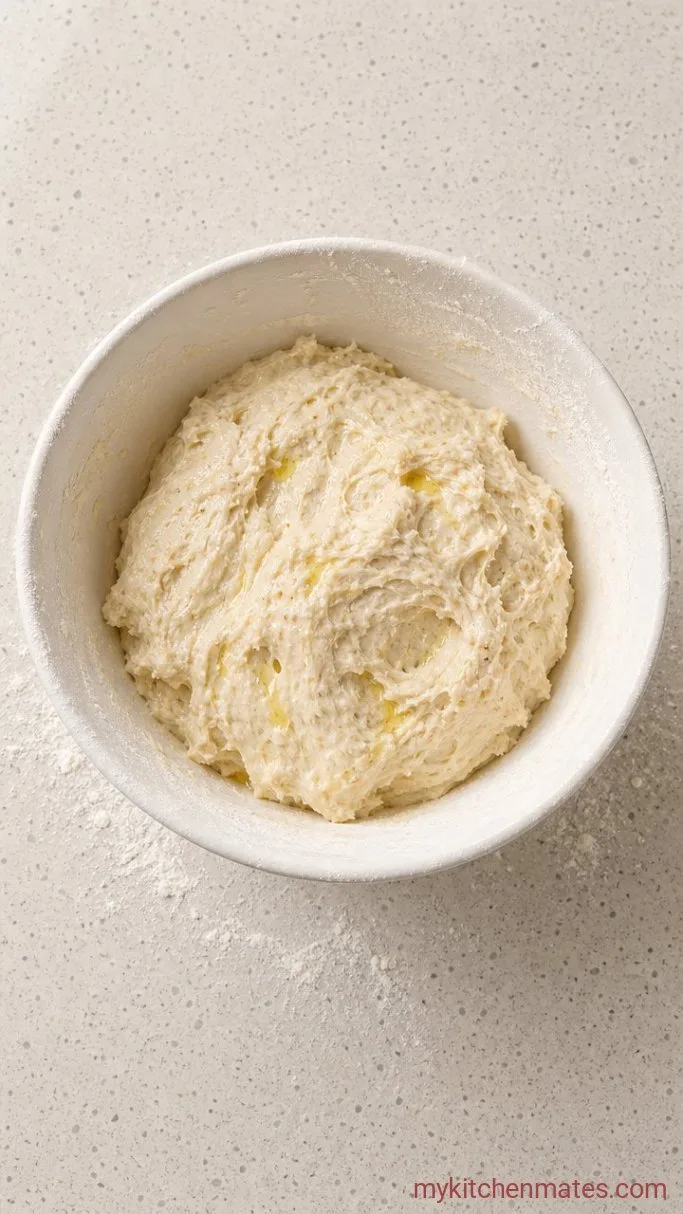
In a large mixing bowl, whisk together the 2 cups flour, 2 tbsp psyllium husk powder, 1 tsp instant yeast, 1 tsp sugar, and 1 tsp salt. Make a well in the center, then add the 1 cup warm water, 2 tbsp olive oil, and 1 tsp cider vinegar. Stir with a sturdy spoon until a shaggy mass forms, then use your hand to knead it together right in the bowl. The dough will come together into a soft, slightly tacky ball in about 2 minutes.
It will feel very different from wheat dough, more like moist Play-Doh. If it seems too dry and crumbly, add water a teaspoon at a time. If it’s too sticky, dust with a little extra flour.
Step 2: Shape the Baguette
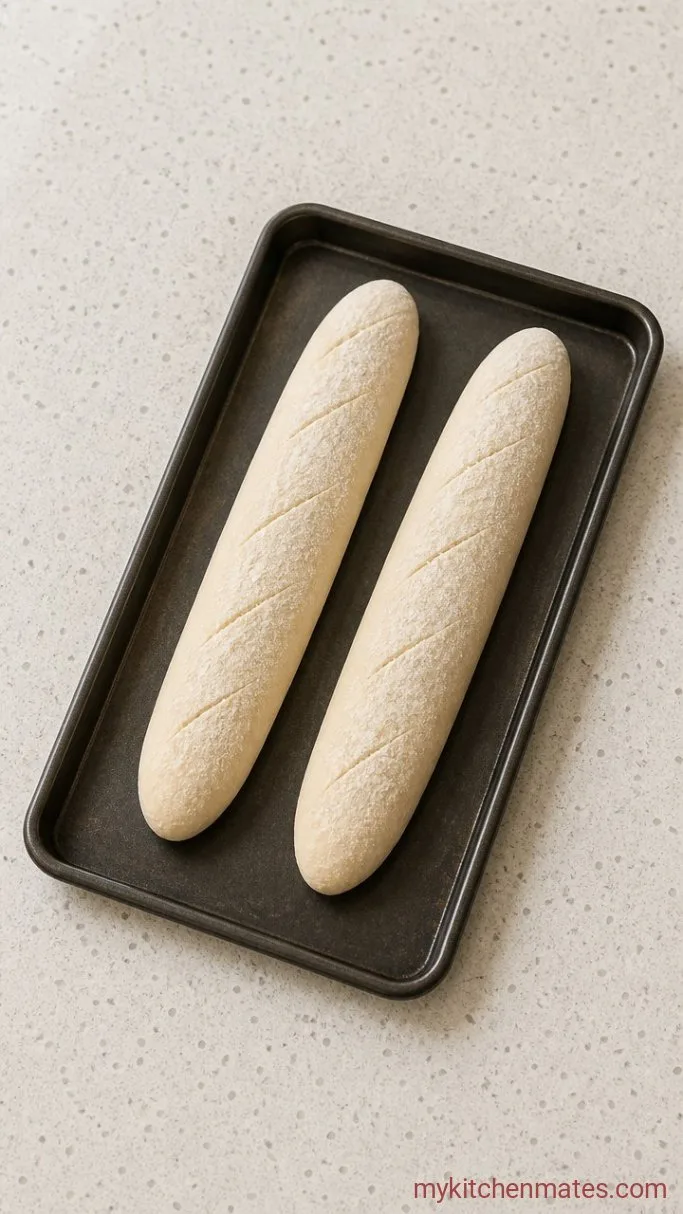
Turn the dough out onto a lightly floured piece of parchment paper. Dust your hands with flour, then gently press the dough into a rough 8×6-inch rectangle. Starting from a long side, roll it up tightly into a log, then pinch the seam and ends closed. Roll the log back and forth under your palms until it stretches to about 14 inches long, the length of your baking sheet.
Don’t overwork it. A few cracks on the surface are fine and contribute to the rustic, artisan look. The log should feel slightly firm and hold its shape. Transfer it, seam side down, to a baguette pan or a baking sheet lined with the parchment it was shaped on.
Step 3: Proof the Baguettes
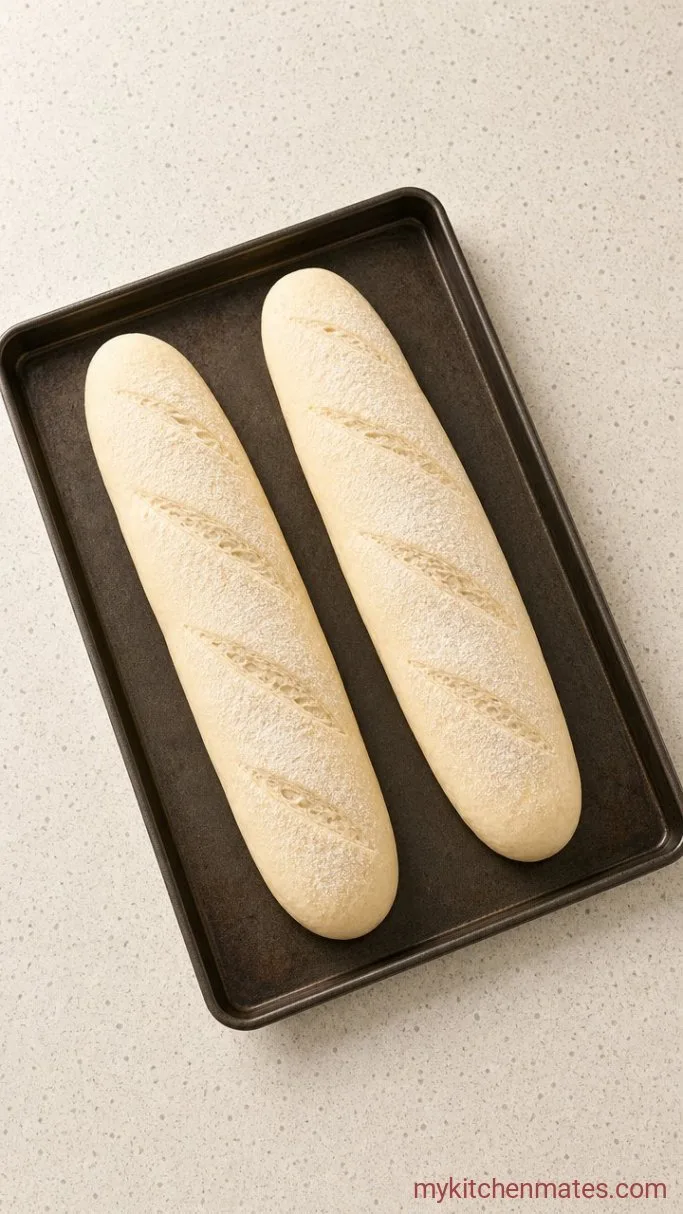
Cover the shaped loaf loosely with plastic wrap or a clean tea towel and set it in a warm, draft-free spot. Let it rise until puffy and visibly larger, about 45 to 60 minutes.
You’ll know it’s ready when it has increased by about 50% and a gentle poke leaves a slight indent that slowly springs back. About 20 minutes before the rise is done, place a rimmed baking pan on the bottom rack of the oven and preheat the oven to 450°F (230°C). If you have a baking stone or heavy inverted sheet pan, set it on the middle rack to preheat as well.
Step 4: Bake with Steam
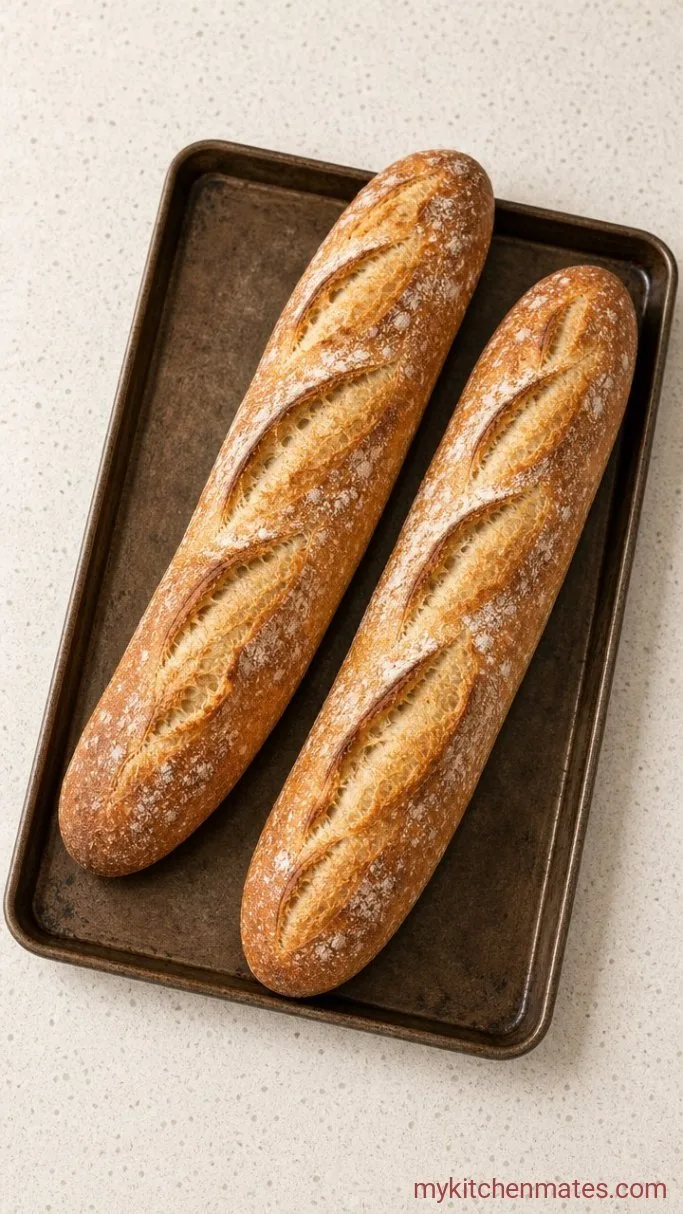
Once the dough is proofed and the oven is fully heated, carefully slide the loaf, still on its parchment, onto the hot stone or middle rack. Immediately pour 1 cup of hot water into the hot rimmed pan on the bottom rack—it will sizzle and create steam. Close the oven door quickly to trap the steam.
Bake for 25 to 30 minutes, until the baguette is deeply golden brown and sounds hollow when tapped on the bottom. Avoid opening the oven for the first 20 minutes; the steam is what gives you that crispy, blistered crust. The internal temperature should reach about 205°F (96°C) at the center.
Step 5: Slice and Serve
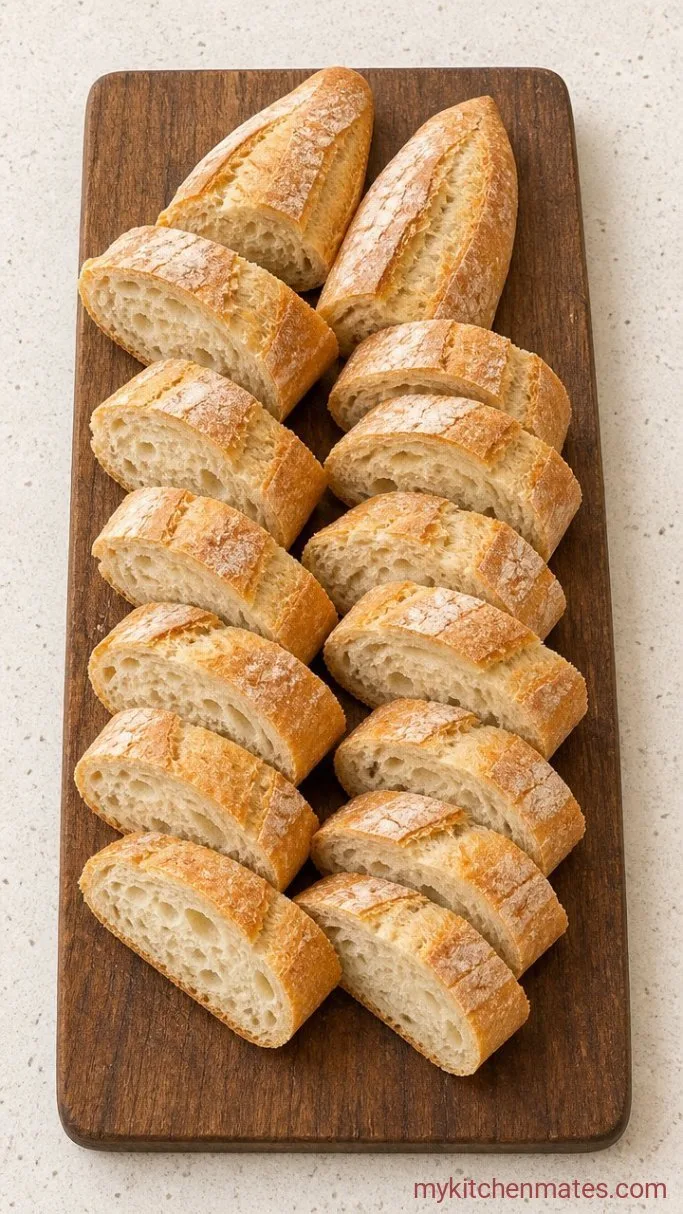
Use tongs to transfer the baguette to a wire rack. Let it cool for at least 20 minutes—this is the hardest part but it prevents a gummy crumb. Then grab a serrated knife and slice on a slight angle through the crackling crust.
The loaf will faintly hiss and release a puff of steam as you cut, revealing the open, chewy crumb inside. Serve while still slightly warm, with good butter or olive oil for dipping.
A Few Notes Before You Start
- Weigh your flour if you can. A kitchen scale is the most reliable way to hit the right dough consistency.
- Before baking, mist the shaped loaf lightly with water from a spray bottle for extra crackly blisters on the crust.
- If your oven tends to run cool, use an oven thermometer to confirm 450°F. The high heat is crucial for oven spring.
- For a deeper, more sourdough-like tang, replace 1 tbsp of the water with plain yogurt or kefir (dairy or dairy-free).
- Don’t slice it until it’s nearly fully cool, or the crumb will be gummy. If you must, wait at least 15 minutes.
Bake times by oven setup:
| Oven Setup | Temperature | Bake Time |
|---|---|---|
| With baking stone | 450°F (230°C) | 25-30 mins |
| Without stone (sheet pan only) | 450°F (230°C) | 28-33 mins |
Keeping Your Baguette Fresh
- Room temperature: Wrap loosely in a tea towel for up to 2 days. The crust will soften a bit; re-crisp for 5 minutes in a 350°F oven.
- Freeze: Slice and freeze in a zip-top bag for up to 2 months. Toast slices straight from frozen.
What to Serve with Gluten Free Baguette
This bread is a natural alongside a steaming bowl of potato leek soup or a simple tomato basil soup—it’s perfect for dunking. For a light meal, pile it with soft cheese, prosciutto, and peppery arugula. It also makes the best crostini: slice thinly, toast, and rub with a cut garlic clove before piling on toppings.
Frequently Asked Questions
Can I use active dry yeast instead of instant?
Yes. Dissolve the yeast in the warm water with the sugar and let it foam for 10 minutes before adding the other ingredients. Proceed as written.
Why is my baguette dense and gummy?
It’s likely under-proofed or your flour blend didn’t contain enough binder. Make sure the dough is noticeably puffy before baking, and use a blend with xanthan gum or add psyllium as directed.
Do I need a baguette pan?
No, a simple baking sheet lined with parchment works fine if you gently tuck the sides of the loaf with your hands after shaping. A baguette pan just helps hold a tight, round shape.
Can I double this recipe?
Definitely. Divide the dough into two loaves and either bake them side by side on a sheet pan or, if they don’t both fit on your stone, bake one after the other.
Gluten Free Baguette Recipe
Ingredients
Method
- In a large bowl, whisk flour, psyllium, yeast, sugar, and salt. Add water, olive oil, and vinegar; stir then knead in the bowl until a soft dough forms.
- Turn onto a lightly floured parchment, shape into an 8×6-inch rectangle, roll up tightly, and stretch into a 14-inch log. Transfer to a baguette pan or baking sheet seam side down.
- Cover and let rise in a warm place until puffy, 45 to 60 minutes. During the last 20 minutes, preheat oven to 450°F with a pan of water on the bottom rack and a stone or heavy sheet on the middle rack.
- Slide loaf onto stone, pour hot water into the pan, and bake 25 to 30 minutes until deep golden and hollow-sounding.
- Cool on a wire rack for at least 20 minutes, then slice with a serrated knife and serve warm.
Notes
