
Crispy French Bread French Toast with a Custardy Center

French bread French toast takes a day-old baguette and turns it into a golden, crackly breakfast that still feels like a treat. The thick slices soak up a vanilla-scented custard without going limp, so you get a real crunch on the outside and an almost pudding-like center.
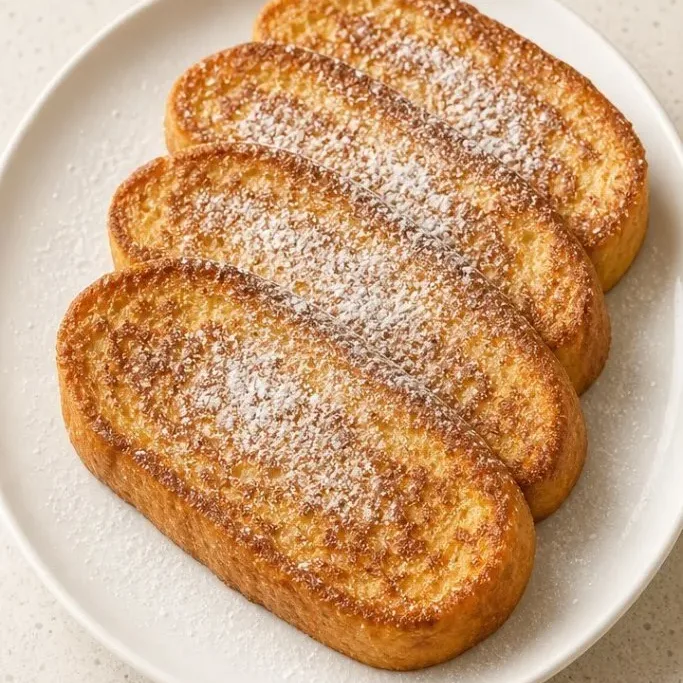
It is the kind of breakfast that tastes like it took far more effort than it does. A hot skillet and a few minutes are all you need.
What Makes This French Toast So Good
The loaf itself does most of the work. French bread has a sturdy, airy crumb and a thin crust that crisps back up in hot butter. Because it is not as soft as sandwich bread, the slices hold their shape in the custard and come out of the pan with distinct, craggy edges.
The custard is just eggs, whole milk, vanilla, and cinnamon. No half-and-half, no long soak. That mix delivers a clean, eggy richness that soaks into the holes and leaves the crust dry enough to fry. Every bite has two textures, a shattery shell and a warm, tender middle.
Ingredients
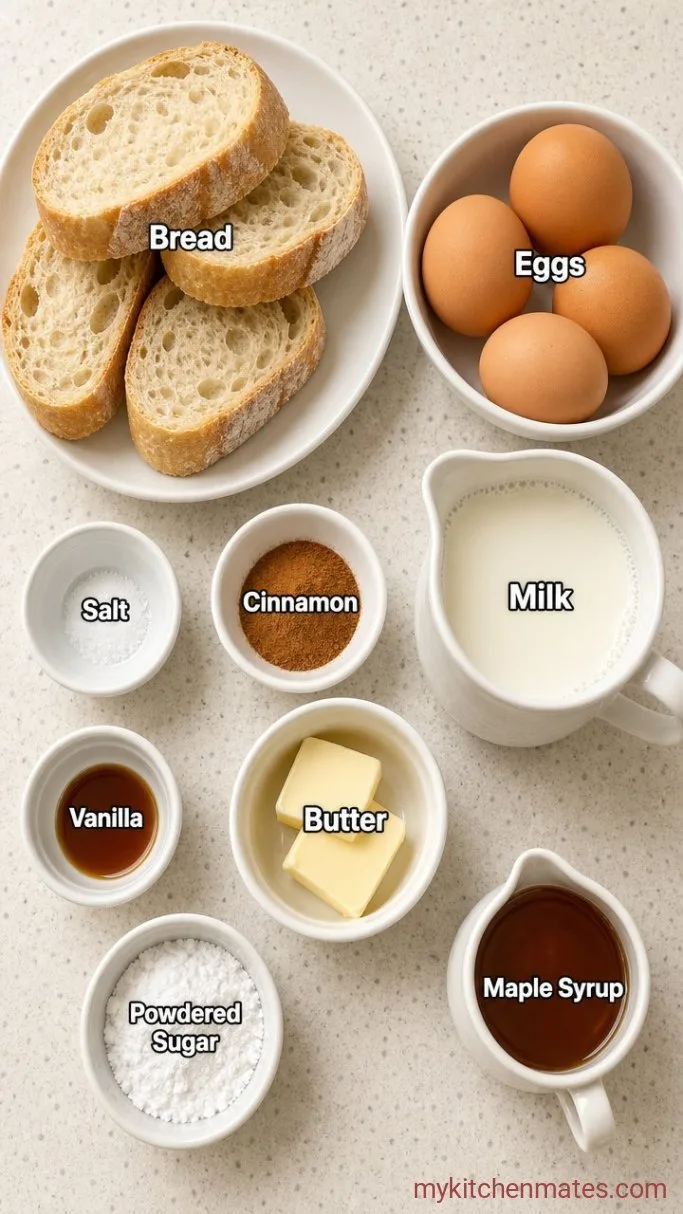
- 1 loaf day-old French bread: a baguette or a wider pain parisien both work; it should feel dry to the touch, not crumbly
- 4 large eggs: room temperature eggs whisk in more smoothly
- 1 cup whole milk: 2% works in a pinch, but whole milk gives the custard more body
- 1 tsp vanilla extract: use pure vanilla if you have it
- 1/2 tsp ground cinnamon: fresh, fragrant cinnamon makes a big difference
- Pinch of salt: lifts the sweetness and rounds out the egg flavor
- 2 tbsp unsalted butter: for frying, plus a little more as the pan needs it
- Powdered sugar, maple syrup, or fresh fruit: for serving
Variations
- Swap the milk: use buttermilk for a tangy custard that plays well with fresh berries
- Add citrus: whisk in 1 tsp orange zest or lemon zest to brighten the whole plate
- Change the spice: a few scrapes of nutmeg or a pinch of cardamom warms it up differently
- Go dairy-free: use oat milk and a neutral oil for frying; the toast will be a little less rich but still crisp
- Turn it savory: skip the cinnamon and vanilla, add black pepper and a little grated parmesan to the custard, and serve with a fried egg on top. If you want more savory breakfast ideas, try our Herbed Dutch Baby.
Sausage Quiche is another reader favorite breakfast worth making next.
How to Make French Bread French Toast
Step 1: Slice the Bread
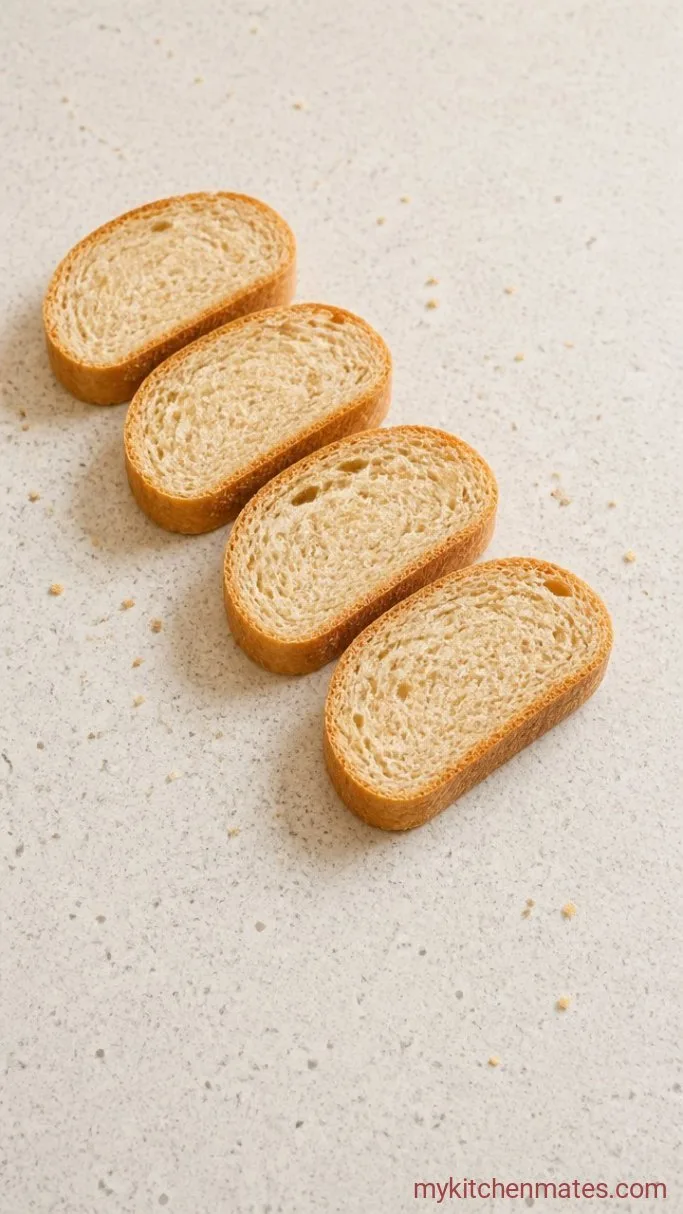
Take the day-old French bread and slice it on a slight diagonal into 1-inch thick pieces. Thicker slices give you that custardy center without falling apart. If the bread is very fresh, lay the slices on a rack for 30 minutes to dry them out a bit.
You are looking for slices that feel dry on the surface but still have some give when you press them. That open, holey crumb will gulp up the custard.
Step 2: Whisk the Custard
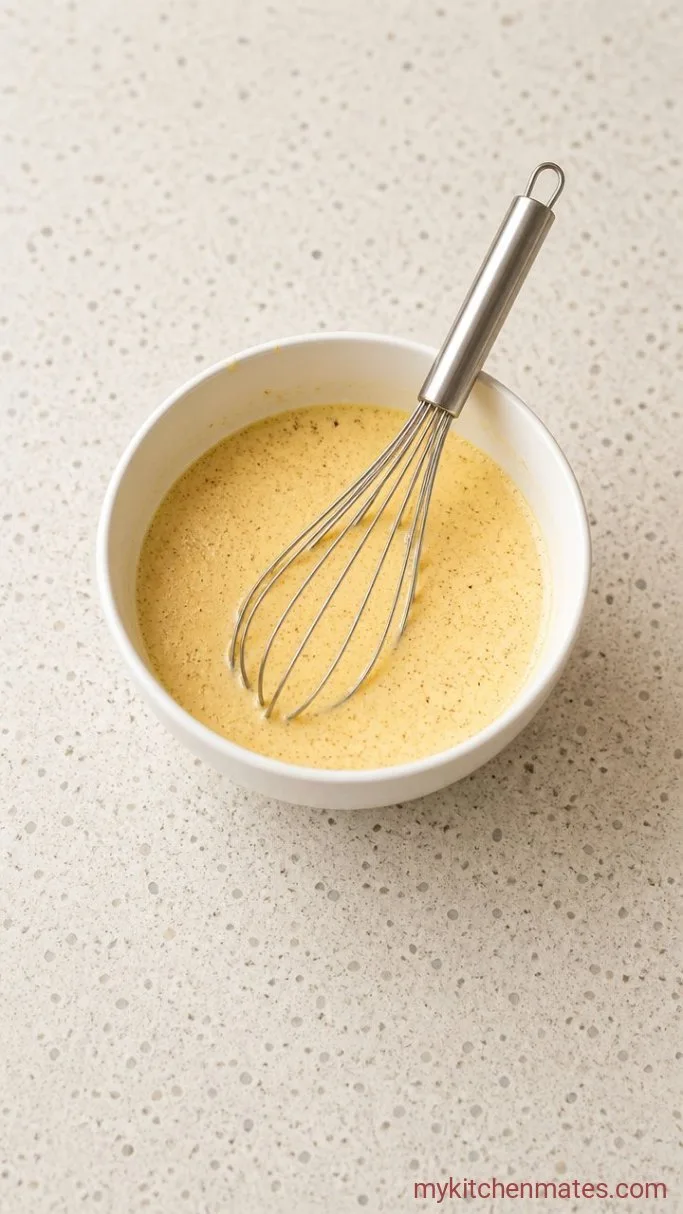
Crack the 4 large eggs into a wide, shallow bowl and whisk them until the whites and yolks are completely blended. Pour in the 1 cup whole milk, the 1 tsp vanilla, the 1/2 tsp cinnamon, and a pinch of salt. Whisk until the mixture is smooth and the cinnamon is evenly speckled, about 30 seconds.
The custard should look pale tan and smell like fresh vanilla. A shallow bowl makes it easy to dip each slice later without bending it.
Step 3: Soak the Bread
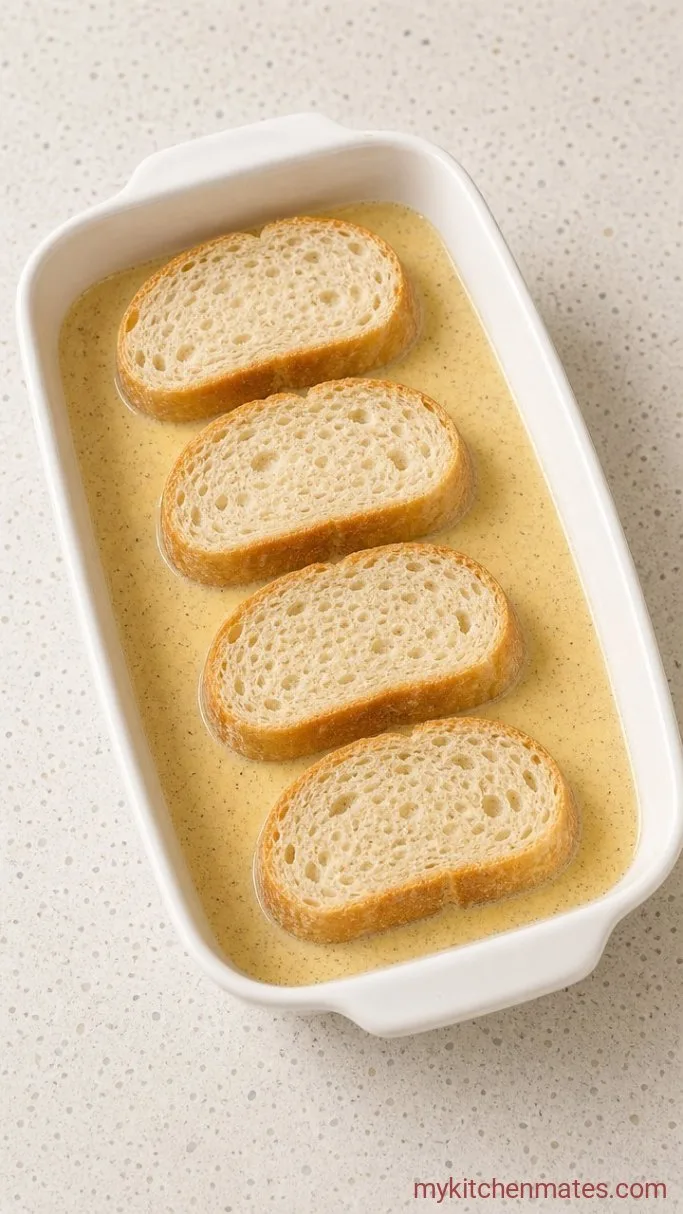
Lay a slice of bread in the custard. Let it sit for about 30 seconds, then flip and soak the other side for another 30 seconds. Use your fingers to gently press the bread down so it absorbs evenly. Lift the slice and let any excess drip off before moving it to a plate.
You want the bread saturated but not disintegrating. The crust should still look pale and firm, not soggy. If a slice starts to slump in your hand, pull it sooner next time.
Step 4: Fry the French Toast

Set a large nonstick skillet or griddle over medium heat and drop in 1 tbsp of the unsalted butter. When the butter melts and foams, swirl the pan. Lay in as many soaked slices as fit without touching, usually 2 or 3. Cook for about 3 to 4 minutes on the first side, until the bottoms are deep golden with a few darker spots.
Flip each slice carefully and cook the second side for another 3 minutes. The toast will puff up a little in the middle. Add a small pat of butter to the pan between batches, and watch that the heat does not climb too high. If the toast browns too fast, lower the heat and let it cook through more slowly.
Step 5: Plate and Dust with Sugar
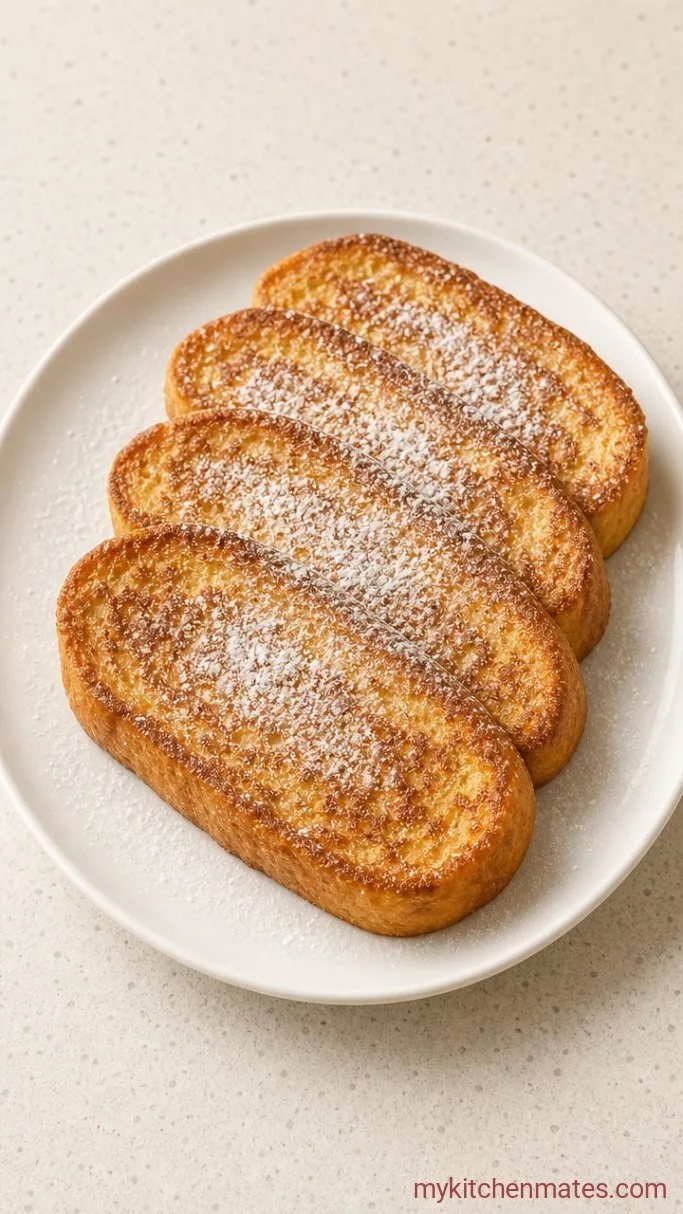
Transfer the hot French toast straight to warm plates. Dust each stack with a light snowfall of powdered sugar, then pour over maple syrup or spoon on some fresh berries. Serve while the crust is still crackly and the center feels soft and warm.
Tips for the Best French Toast
- Start with truly stale bread.: Day-old or even two-day-old French bread that feels firm and leathery soaks up custard without turning mushy.
- Don’t oversoak.: Thirty seconds per side is long enough for 1-inch slices. Any longer and the crust gets waterlogged instead of frying crisp.
- Keep the pan at medium heat.: Too hot and the outside burns before the egg cooks through. Too low and the toast steams in the butter instead of frying.
- Hold cooked slices in a warm oven.: Set your oven to 200°F (93°C) and slide the cooked toast onto a rack set over a baking sheet. It stays crisp while you finish the rest.
Keeping French Toast Warm and Storing Leftovers
- Refrigerate:: Cool any leftover French toast completely, then stack it with parchment between slices. It keeps well in an airtight container for up to 3 days.
- Reheating:: Pop the slices into a toaster or toaster oven on a medium setting until the outside crisps up again and the inside is heated through. The microwave works in a hurry but will soften the crust.
What to Serve with French Bread French Toast
A pile of fresh berries or sliced peaches cuts through the richness and adds a little brightness. Crispy bacon or breakfast sausage on the side makes the whole plate feel more substantial, the salty, smoky flavors playing off the sweet custard. If you want something fruitier, a quick blueberry compote spooned over the top is fast and looks beautiful.
Frequently Asked Questions
Can I use fresh French bread instead of stale?
Yes, but the toast will be softer and may turn a little soggy. Dry the slices in a 300°F (150°C) oven for 5 to 7 minutes before soaking to firm them up.
How do I avoid eggy-tasting French toast?
A pinch of salt and a full teaspoon of vanilla round out the egg flavor. Using whole milk instead of a higher ratio of eggs to milk also keeps the custard creamy rather than overly eggy.
Can I make this dairy-free?
Yes. Oat milk replaces the whole milk well for a similar richness. Use a neutral oil instead of butter to fry, though you may lose a bit of the buttery crispness on the crust.
How many slices does one loaf make?
A standard baguette yields about 8 thick diagonal slices. A wider loaf of French bread might give you 10 to 12 slices, so you may need to fry in a few extra batches.
Can I prep the custard the night before?
Yes. Whisk the custard, cover it, and refrigerate. Give it a quick whisk again in the morning before you start dipping, as the cinnamon may settle.
French Bread French Toast Recipe
Ingredients
Method
- Slice the French bread on a diagonal into 1-inch thick pieces.
- In a shallow bowl, whisk together the eggs, milk, vanilla, cinnamon, and salt until smooth.
- Soak each slice in the custard for about 30 seconds per side, then let excess drip off.
- Melt 1 tbsp of butter in a nonstick skillet over medium heat. Fry the slices in batches, about 3 to 4 minutes per side, until deep golden and crisp.
- Transfer to warm plates, dust with powdered sugar, and serve right away with maple syrup or fresh fruit.
Notes
