
Cast Iron Filet Mignon with Garlic Butter

A properly seared filet mignon feels like a special occasion, but the method is simple enough for any night you want a truly tender steak. The cast iron skillet gives you a deep, crusty sear while garlic butter basting adds richness without fuss.
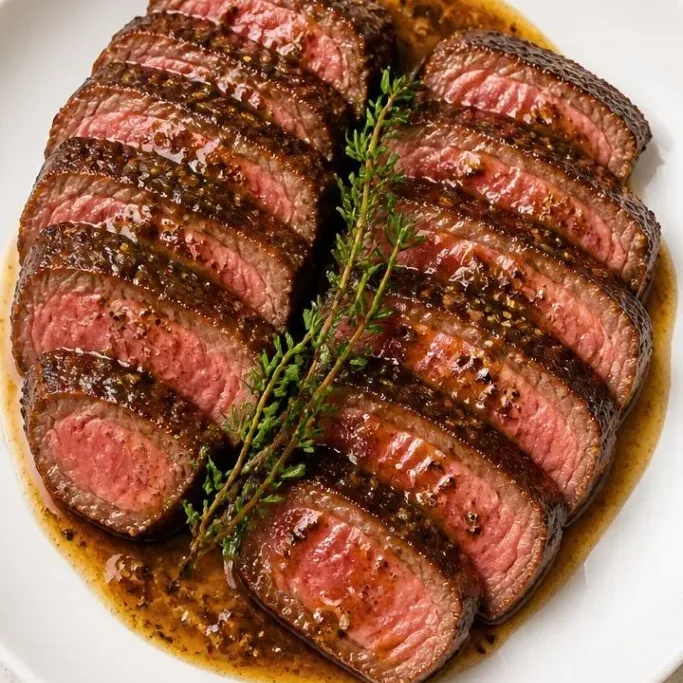
No steakhouse reservation needed. With a handful of pantry ingredients and about 15 minutes of hands-on time, you can put two gorgeous medallions on the table.
Why This One Stays in the Rotation
The crust is the first thing you notice. It is deeply browned, almost mahogany, with a salty edge that shatters under your fork. Beneath it, the meat stays buttery and pink from edge to edge because the even heat of cast iron cooks these thick cuts gently once you lower the temperature.
Basting with melted butter, smashed garlic, and fresh herbs right in the same skillet layers in an aroma that hits you before the first bite. The whole thing takes one pan and ten minutes of actual cooking, so it never feels like a project.
Ingredients
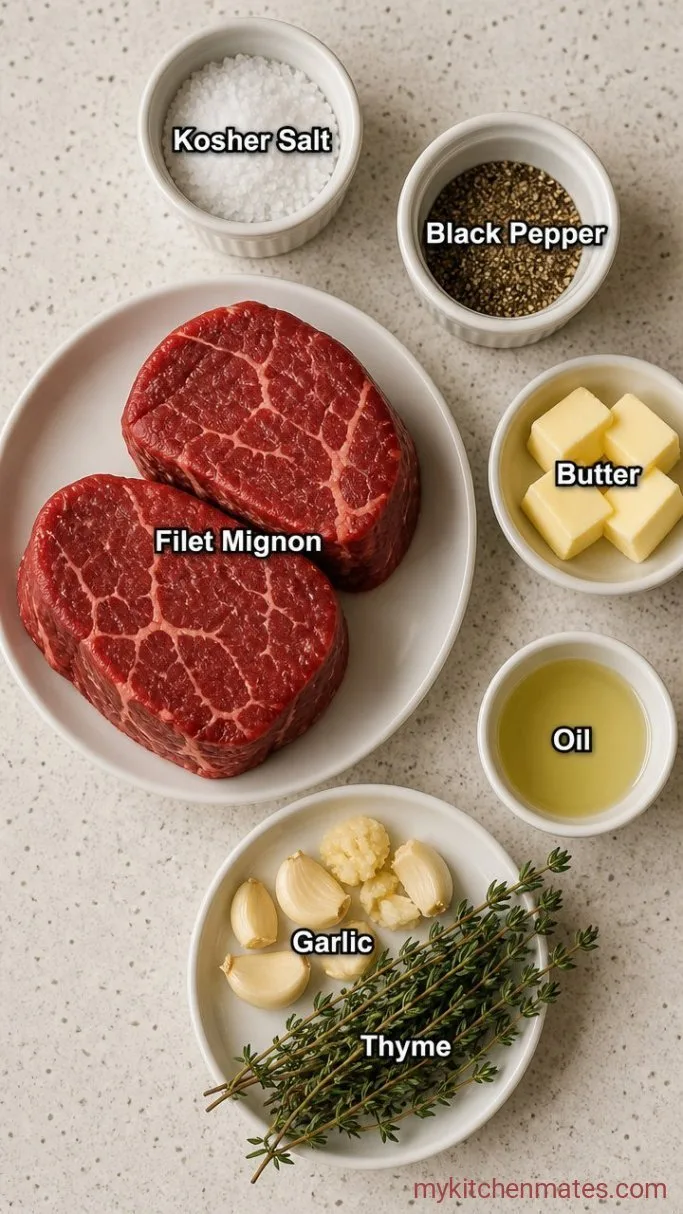
- 2 filet mignon steaks, 6 to 8 oz each (about 1.5 to 2 inches thick): look for a marbled rim of fat for the best flavor
- 1 tsp kosher salt: coarse salt helps build the crust
- ½ tsp freshly ground black pepper
- 1 tbsp vegetable oil or another neutral, high-heat oil: grapeseed or avocado oil both work
- 2 tbsp unsalted butter: cold from the fridge is fine; it melts fast in the hot pan
- 2 garlic cloves, crushed with the side of a knife: you want them mostly whole so they perfume without burning
- 2 to 3 sprigs fresh thyme or rosemary: either herb works, so pick what you like
Variations / Substitutions
- Herb swap: rosemary gives a more piney note while thyme stays a little brighter. Use either, or swap in a few sprigs of sage if you have it.
- Dairy-free option: replace the butter with 2 tbsp of a good olive oil and skip the garlic. The steak will still sear beautifully, but you lose the nutty browned butter layer.
- No cast iron?: a heavy stainless steel skillet will do the job. Just let it heat long enough that a drop of water skitters across the surface before adding the oil.
- Cut preference: this method works for any evenly thick, tender cut like a center-cut ribeye. Timing will shift based on thickness, so use an instant-read thermometer if you try a different steak.
Crispy Skillet Potatoes and Onions go great on the side with this recipe.
How to Make Cast Iron Filet Mignon
Step 1: Season and Prep the Steaks
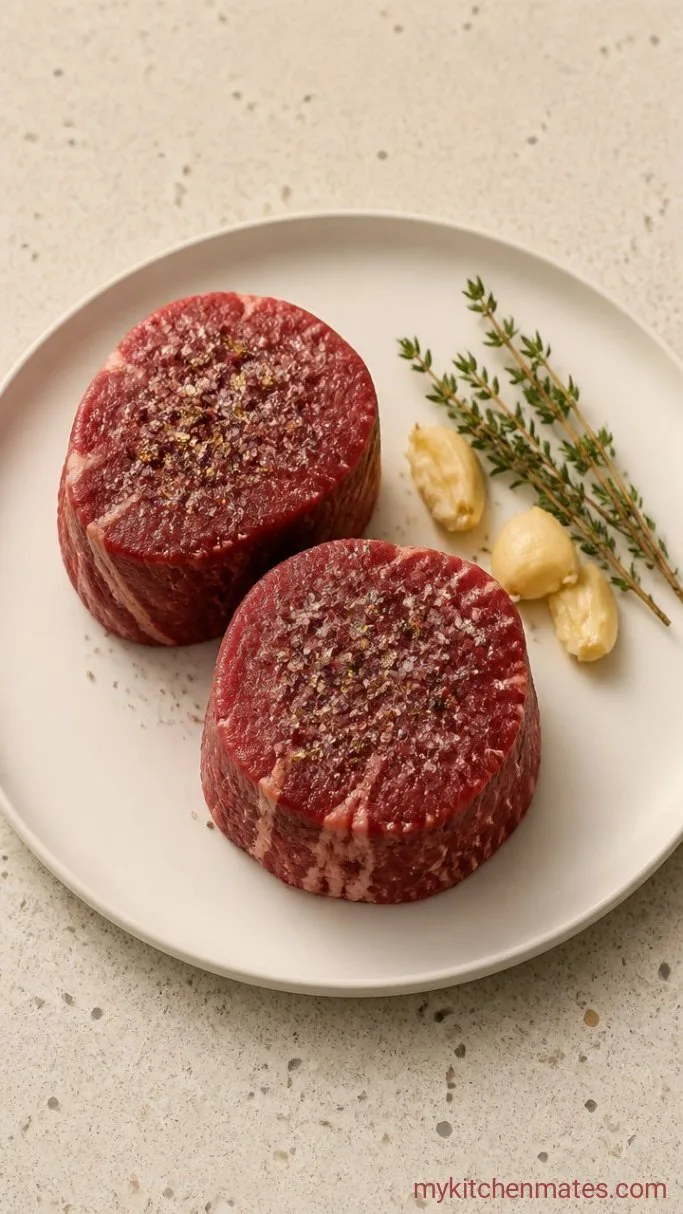
Take the filets out of the fridge 30 minutes before you cook and pat them completely dry with paper towels. Season both sides generously with the 1 tsp kosher salt and ½ tsp black pepper, pressing it in gently. Set your cast iron skillet over high heat at the same time so it has a chance to get roaring hot.
Letting the meat lose its chill helps it cook evenly from edge to edge. The salt will start to dissolve into the surface after a few minutes, and that slightly tacky feel helps the crust form.
Step 2: Sear the Filets
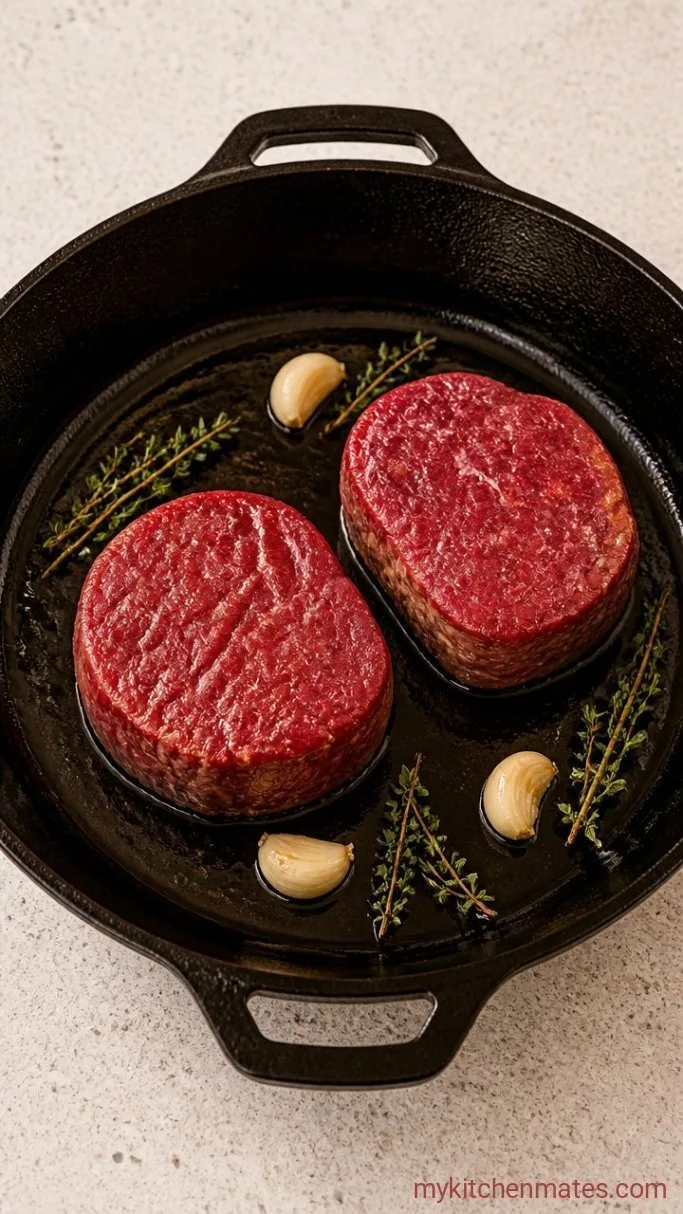
When the skillet is smoking lightly, pour in the 1 tbsp oil and swirl to coat. Lay the steaks in the pan away from you. Do not move them for a full 3 minutes. You want a deep brown crust that releases cleanly from the iron, and that takes patience.
The first side should look almost dark chocolate, not pale gold. Flip each steak using tongs and sear the second side for another 3 minutes. The pan will smoke, so turn on the vent and open a window if you can.
Step 3: Baste with Garlic Butter
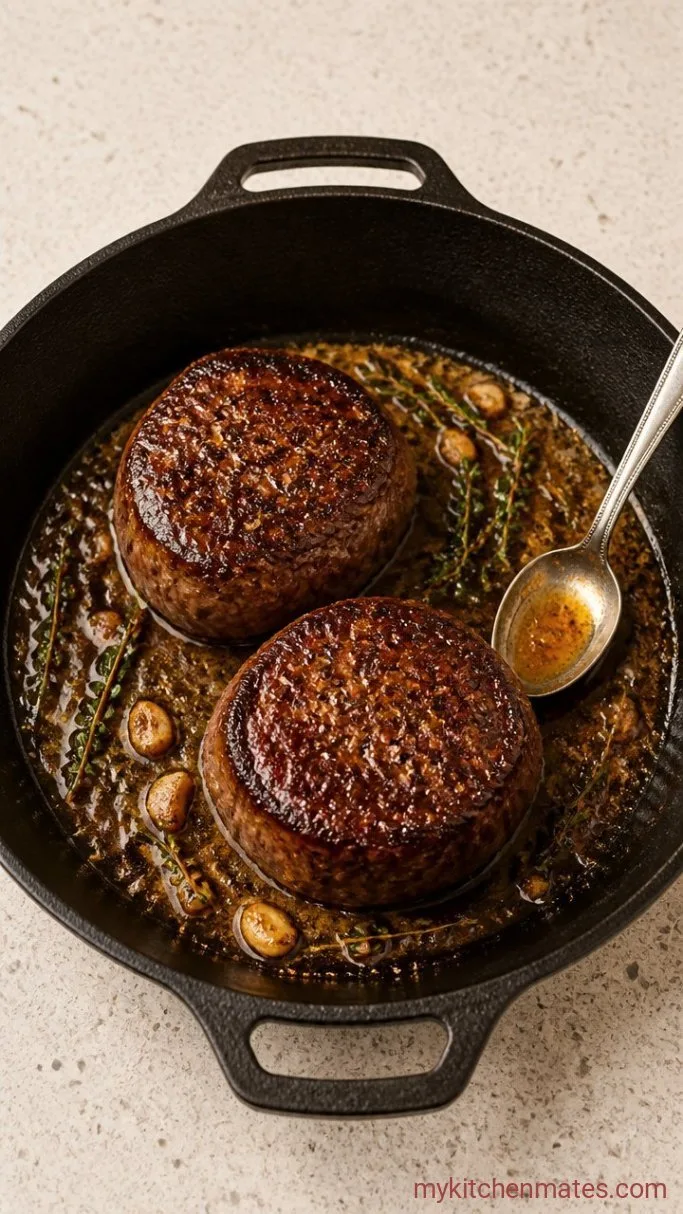
Reduce the heat to medium and drop in the 2 tbsp butter, the crushed garlic cloves, and the herb sprigs. As soon as the butter melts and starts to foam, tilt the skillet slightly toward you. Use a large spoon to scoop the bubbling butter and pour it over the steaks repeatedly for 1 to 2 minutes.
This is where the meat soaks up all that richness. The garlic and herbs will perfume the butter, and the basting builds a deeper savory layer on that crust. Keep spooning until the butter smells nutty and a quick press with your finger tells you the steaks feel slightly springy for medium-rare.
Step 4: Slice and Serve
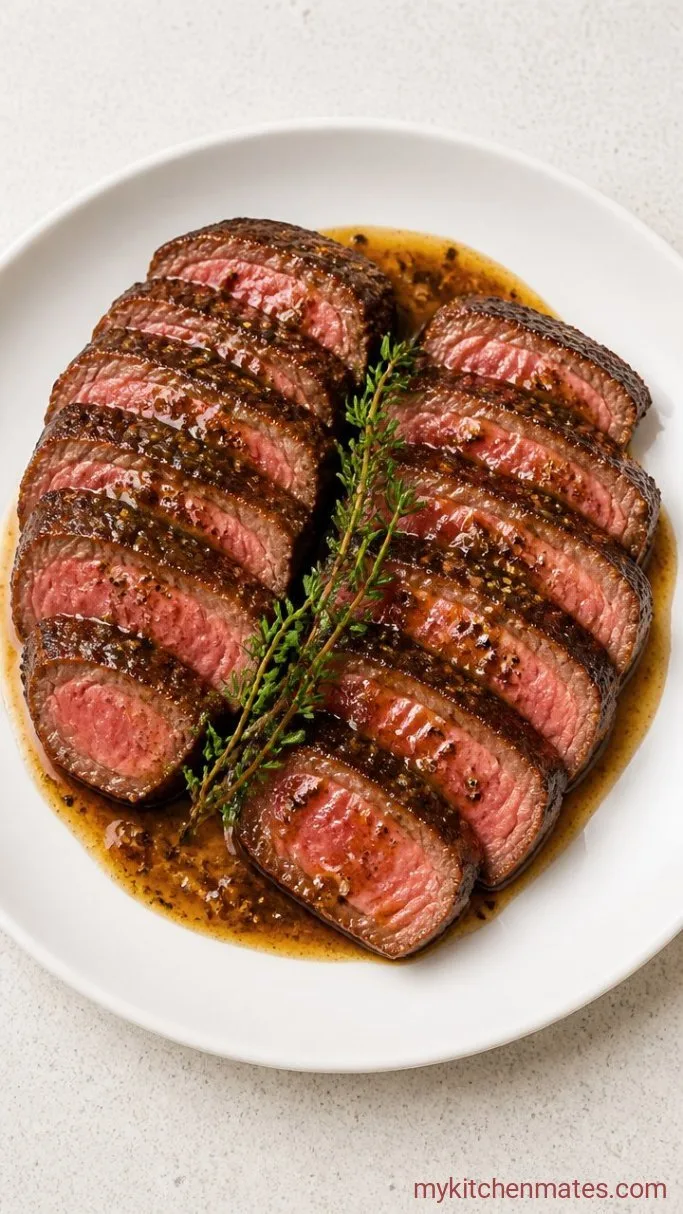
Move the filets to a cutting board and tent them loosely with a piece of foil. Let them rest for 5 to 7 minutes. Cutting too soon lets all the juice run out, and a filet this good deserves to hold onto every drop.
Slice each steak against the grain into thick medallions and fan them out on warm plates. Spoon the garlic butter left in the skillet right over the top and add a light sprinkle of flaky salt if you like.
A Few Tips for Steakhouse Results
- Use a paper towel to dry the surface of the meat thoroughly before seasoning. Any moisture left on the steak steams instead of searing.
- Let the pan preheat at least 5 minutes over high heat before the oil goes in. A skillet that is not hot enough will glue the meat to the surface.
- Crush the garlic cloves just enough to split them open but leave them mostly whole. Minced garlic burns fast in high heat and turns bitter.
- Baste quickly and keep the butter moving. If the pan gets too hot and the butter starts to brown too dark, pull the skillet off the heat for a few seconds.
Timing for 1.5-inch steaks:
| Doneness | Internal Temp | Sear Time per Side | Baste Time |
|---|---|---|---|
| Rare | 120°F to 125°F | 2.5 minutes | 1 minute |
| Medium Rare | 130°F to 135°F | 3 minutes | 1 to 2 minutes |
| Medium | 140°F to 145°F | 3.5 to 4 minutes | 1 to 2 minutes |
Storing Leftovers
- Refrigerate: wrap cooled steaks tightly in foil or store in an airtight container for up to 3 days.
- Reheating: warm them gently in a skillet over low heat with a small pat of butter, turning once, just until the center loses its chill. The microwave will turn that beautiful pink to gray, so skip it.
- Cold plates: sliced filet mignon makes a wonderful topping for a salad of bitter greens and shaved parmesan the next day.
What to Serve with Cast Iron Filet Mignon
Creamy mashed potatoes catch every drop of the garlic butter sauce. A pile of roasted asparagus tossed with olive oil and salt brings a crisp, bright contrast to the richness of the steak. For something lighter, a handful of arugula dressed with lemon and a shaving of parmesan cuts through the fat and cleans the palate between bites.
Frequently Asked Questions
My steak stuck to the pan, what went wrong?
The pan was likely not hot enough, or you tried to move the steak before the crust released. Give it the full 3 minutes without nudging; it will lift on its own when ready.
Can I use a stainless steel skillet instead of cast iron?
Yes, a heavy tri-ply stainless steel pan works well. Just be sure it is fully preheated so the oil shimmers before the meat goes in.
How do I tell when the steak is done without a thermometer?
Use the finger test. Touch the fleshy pad below your thumb while touching different fingers. The firmness with your index finger mimics rare, middle finger is medium-rare, ring finger is medium. The steak should feel similarly springy.
Can I finish the steak in the oven after searing?
It is not necessary for a 1.5-inch filet, but if your cut is thicker than 2 inches, transfer the skillet to a 400°F (200°C) oven after searing the first side and cook for 3 to 4 minutes, then return to the stovetop to baste.
Cast Iron Filet Mignon Recipe
Ingredients
Method
- Remove steaks from fridge 30 minutes ahead. Pat dry, season with salt and pepper, and heat a cast iron skillet over high heat.
- Add oil to the hot skillet, lay in steaks, and sear without moving for 3 minutes per side.
- Reduce heat to medium, add butter, garlic, and herbs. Tilt skillet and baste continuously for 1 to 2 minutes.
- Rest steaks on a cutting board 5 to 7 minutes, then slice against the grain and spoon pan butter over the top.
Notes
