
Simple No-Knead Farmhouse On Boone Sourdough Bread

This rustic sourdough bread is the one I keep coming back to when I want a loaf with a deep, tangy flavor and a crackly crust, but none of the fussy stand mixer work or endless kneading. A few gentle folds and a Dutch oven do all the heavy lifting, so you can mix the dough in the morning and still have fresh bread by dinner.
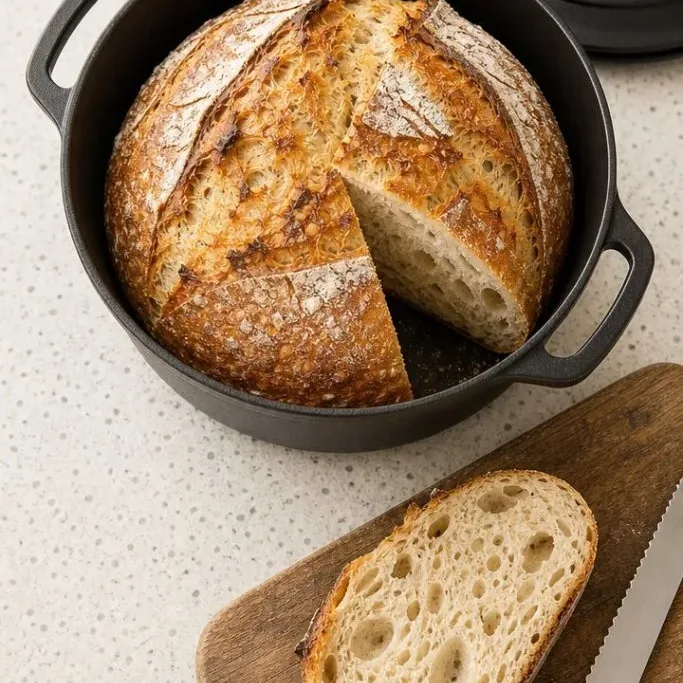
You do not need to be a seasoned baker to pull this off. The dough is forgiving, the timeline is flexible, and the result looks and tastes like a loaf you would find in a proper farmhouse kitchen.
Why This Sourdough Earns a Spot on the Counter
It is hands-off enough to fit a busy day. You spend maybe 15 minutes of actual work spread across the afternoon, and the bread rewards you with a deep, sourdough tang and an open, glossy crumb that holds puddles of butter.
The Dutch oven traps steam to create that shatteringly crisp crust. I have tried open baking with a pan of water, but nothing produces the same oven spring and deep brown shell as a preheated pot with the lid on for the first half of the bake.
The flavor gets better as the loaf cools. A slow bulk rise gives the natural yeasts time to work, so every bite has that real sourdough character, not just a faint whisper.
Ingredients
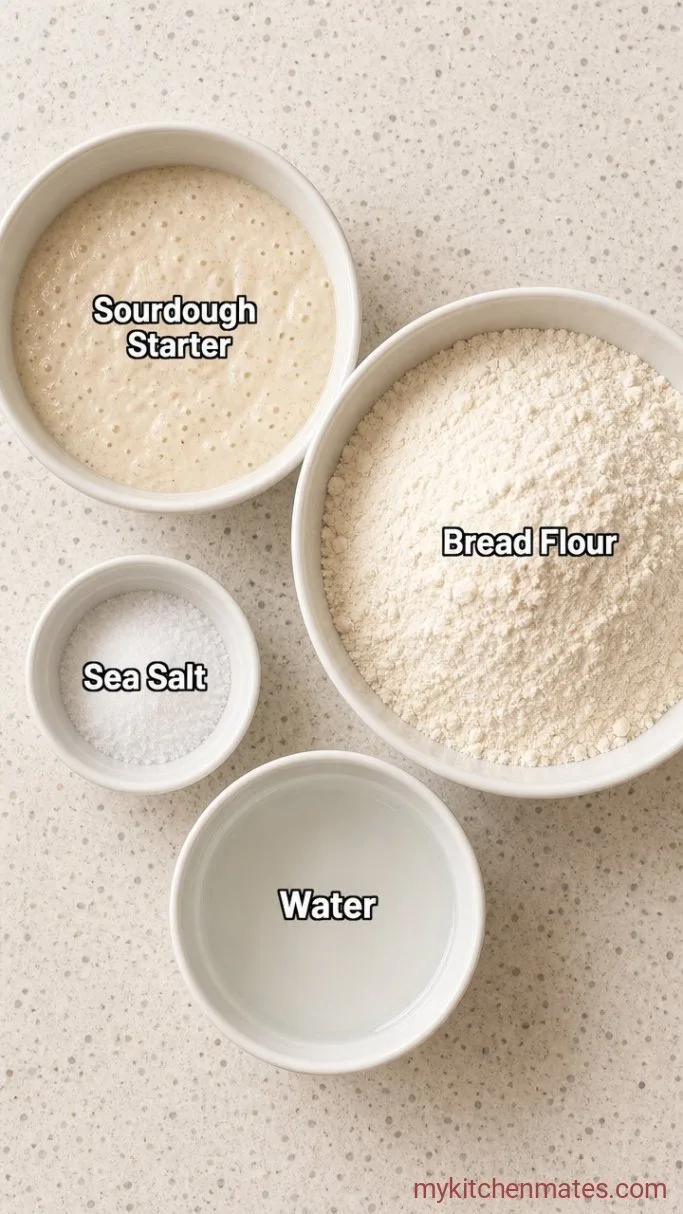
- 150g active sourdough starter: fed and bubbly, about 4 to 6 hours after its last feeding
- 350g water: room temperature, around 75°F (24°C)
- 500g bread flour: 12 to 13% protein works best
- 10g fine sea salt: not coarse, so it dissolves evenly
Variations and Substitutions
- Swap half the bread flour for whole wheat: the loaf will be heartier and slightly denser, with a nuttier crumb.
- Use all-purpose flour in a pinch: your crust may be a little less crisp and the rise a touch shorter, but it still makes a solid loaf.
- Add a tablespoon of caraway or fennel seeds: mix them in after the first fold to give the bread a rustic rye-like note.
- Replace the water with buttermilk: the acid tightens the gluten a bit, so expect a more tender crumb and a milder tang.
Garden Vegetable Soup makes a comforting soup to pair with this bread.
How to Make Farmhouse On Boone Sourdough Bread
Step 1: Mix the Dough
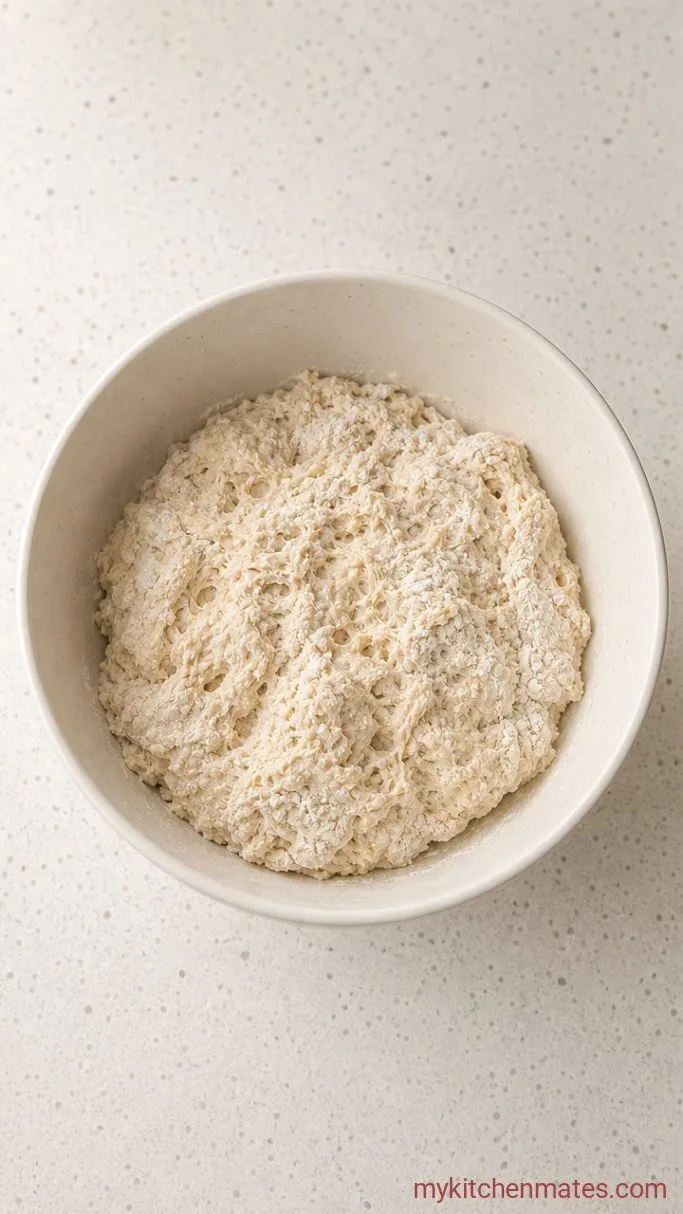
In a large bowl, whisk together the 150g active starter and the 350g water until the starter disperses and the liquid turns milky. Add the 500g bread flour and 10g salt, then stir with a wooden spoon or your hand until no dry pockets remain. The dough will look shaggy and a little sticky, and that is exactly what you want.
Cover the bowl with a damp tea towel or a reusable shower cap and let it rest for 30 minutes. This short rest lets the flour hydrate fully before you start working the gluten, so the folds later do not tear the dough apart.
Step 2: Stretch and Fold the Dough
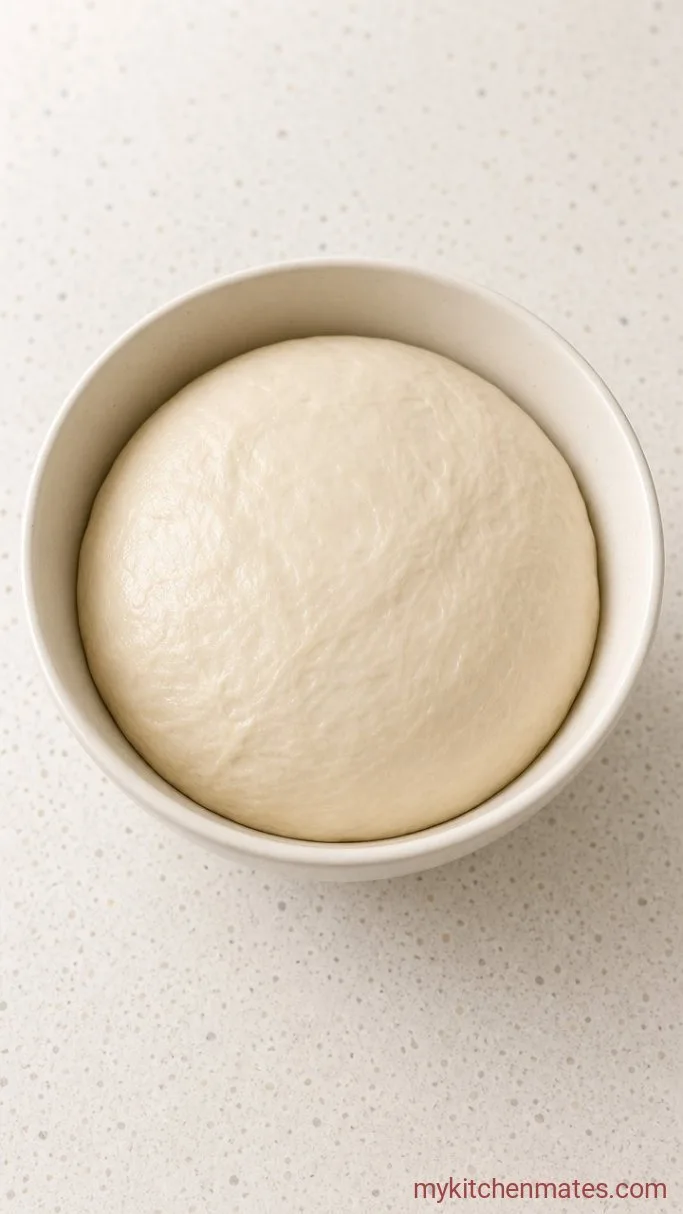
With a wet hand, reach under one side of the dough, pull it up until you feel a little resistance, then fold it over the center. Rotate the bowl a quarter turn and repeat three more times until you have folded all four sides. Cover the bowl again.
Repeat this set of folds every 30 minutes for 2 hours, for a total of 4 sets. By the final set, the dough should feel noticeably smoother and hold its shape in the bowl instead of slumping flat. If your kitchen is cool, give it an extra half hour between folds.
Step 3: Shape the Loaf
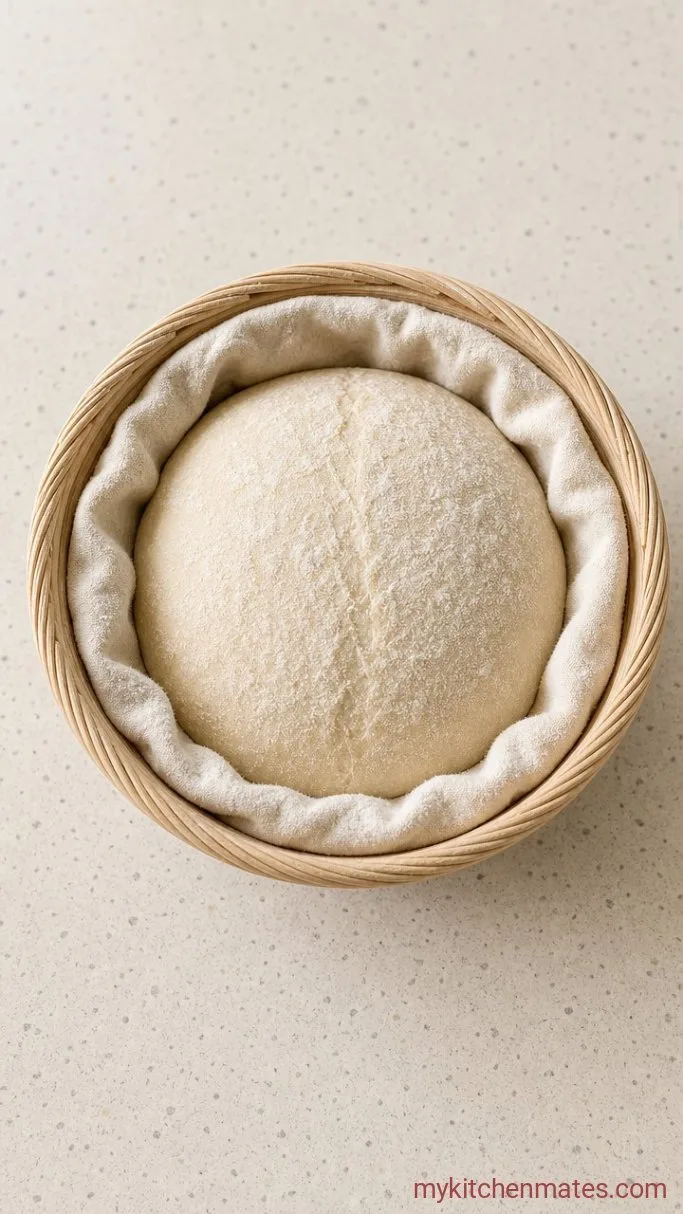
Tip the dough onto a lightly floured surface and use floured hands to gently pull it into a rough rectangle. Fold the top third down to the middle and the bottom third up over it, like folding a letter, then turn the dough 90 degrees and roll it up from the short end into a tight log. Tuck the ends under and use your palms to pull the dough toward you, creating tension on the surface of the ball.
Place the shaped loaf seam side up in a floured banneton or a medium bowl lined with a floured tea towel. The surface should feel taut and smooth, and the skin should not tear when you press it lightly.
Step 4: Proof the Loaf
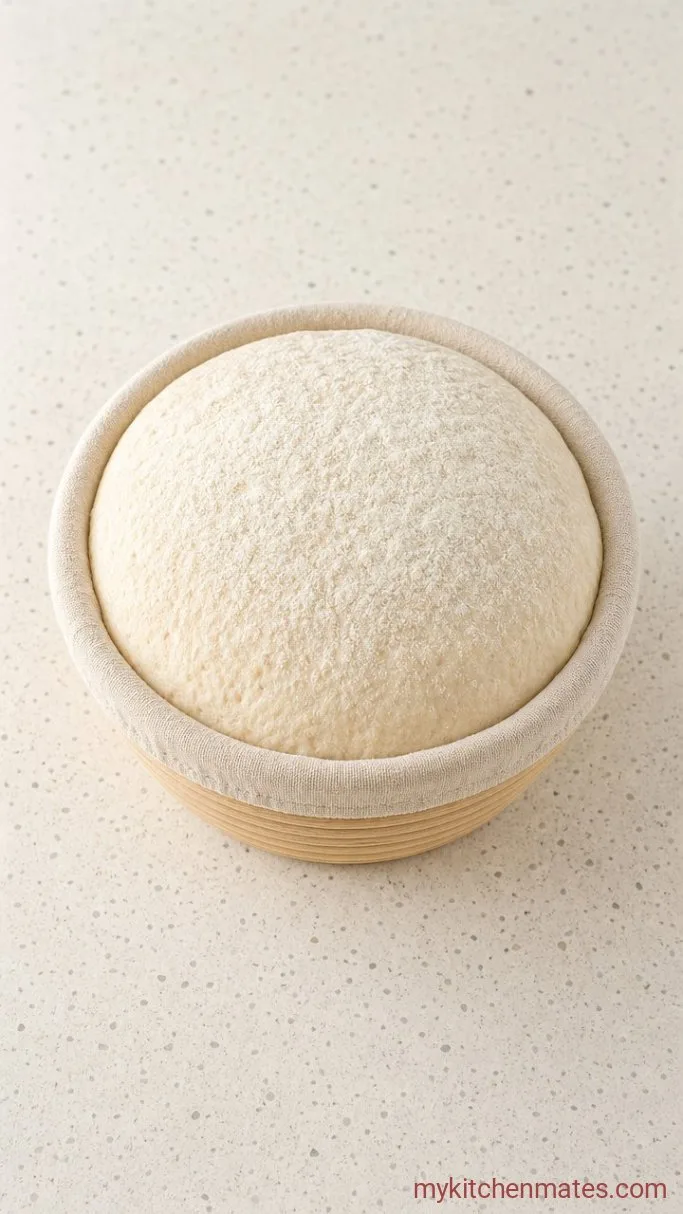
Cover the banneton and let the dough rise at room temperature until it has increased by about half and a gentle poke springs back slowly, leaving a slight indent. This usually takes 1 to 2 hours, depending on how warm your kitchen is.
While the loaf proofs, place a Dutch oven, with its lid on, in the oven and preheat to 450°F (230°C). Give the pot a full 30 minutes to come up to temperature after the oven reaches the set point, so the bread hits intense heat the moment it goes in.
Step 5: Bake and Slice the Loaf
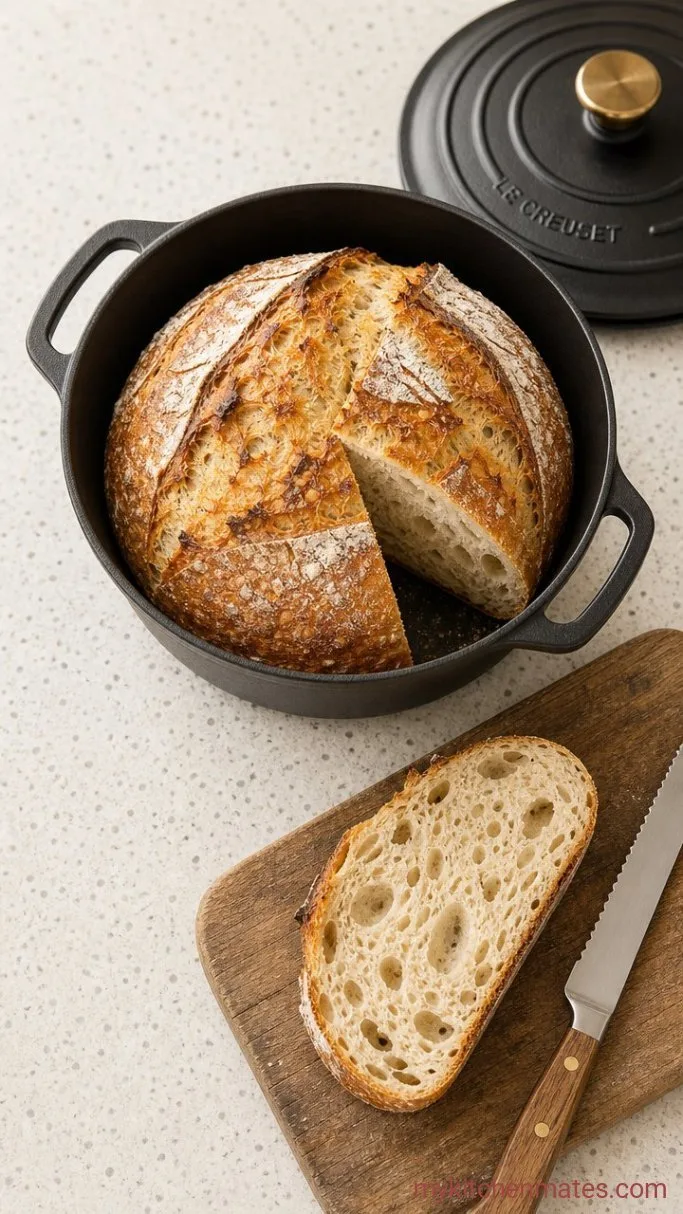
Carefully invert the proofed loaf onto a sheet of parchment paper. Score the top quickly with a sharp knife or lame, making one long slash about half an inch deep, then lift the parchment into the hot Dutch oven, cover it, and bake for 25 minutes.
Remove the lid, lower the heat to 425°F (220°C), and bake another 20 to 25 minutes until the crust is deep brown and the loaf sounds hollow when tapped on the bottom. Let the bread cool on a wire rack for at least 45 minutes before slicing. That first cut through the crackling crust, revealing an open, glossy crumb, is worth every minute of the wait.
Tips for the Best Crust and Oven Spring
- Feed your starter 4 to 6 hours before mixing: so it passes the float test. A sluggish starter will give you a flat, dense loaf.
- Cold proofing adds tang: after shaping, pop the banneton in the fridge for 8 to 12 hours instead of proofing at room temperature. Bake straight from the cold, and the loaf gets an extra sour kick.
- Do not skip the preheat: the Dutch oven needs to be screaming hot, or the bread will not get that rapid initial puff.
- Use a digital scale: for all ingredients. Volume measurements for flour can be wildly off, and sourdough is sensitive to hydration.
Bulk fermentation timing by room temperature:
| Kitchen temperature | Approximate bulk time (with folds) |
|---|---|
| 68°F (20°C) | 5 to 6 hours |
| 73°F (23°C) | 4 to 5 hours |
| 78°F (26°C) | 3 to 4 hours |
Keeping the Bread Fresh
The whole loaf stays good on the counter for 3 days, cut side down on a board. After that, wrap it in a tea towel and tuck it in a paper bag, not plastic, or the crust gets soft.
To refresh a day-old loaf, spritz the crust with water and warm it in a 350°F (175°C) oven for 8 to 10 minutes. The outside crisps back up almost like new.
What to Serve with Sourdough Bread
A thick slice, toasted until the edges turn dark gold, is made for a swipe of salted butter and a drizzle of honey. The tangy bread cuts through the richness of a creamy tomato soup just as nicely. For a simple lunch, pile on smashed avocado, flaky salt, and a squeeze of lemon.
Frequently Asked Questions
Can I use all-purpose flour instead of bread flour?
Yes. The loaf will be a little less chewy and the rise slightly shorter, but it still bakes up well. Stick with a high-protein unbleached all-purpose if you can.
How do I know when my starter is ready to use?
Drop a spoonful into a glass of water. If it floats, it is ready. If it sinks, feed it and wait another hour or two.
Why did my loaf come out flat?
The most common cause is an underactive starter or a proofing time that went too long and overinflated the dough. Next time, do the poke test at the 45-minute mark during proofing.
Can I bake this without a Dutch oven?
You can, but the crust will not be as crisp. Place a metal pan of boiling water on the bottom rack when you load the bread, and spritz the oven walls a few times in the first 10 minutes to create steam.
Farmhouse On Boone Sourdough Bread Recipe
Ingredients
Method
- In a large bowl, whisk together the 150g starter and 350g water, then stir in the 500g flour and 10g salt until no dry bits remain.
- Cover and rest 30 minutes, then perform a set of 4 stretch-and-folds every 30 minutes for 2 hours.
- Turn the dough onto a floured surface, shape it into a tight boule, and place it seam side up in a floured banneton.
- Cover and proof at room temperature for 1 to 2 hours until puffy and a poke springs back slowly.
- Preheat a Dutch oven in a 450°F (230°C) oven for 30 minutes. Invert the loaf onto parchment, score the top, and bake covered for 25 minutes, then uncovered at 425°F (220°C) for 20 to 25 minutes. Cool on a rack 45 minutes before slicing.
Notes
